2.5.9Chemical Bonding, Application Of Chemical Reactions and Organic Chemistry
Cracking Hydrocarbons
5 min read 4 parts Lesson 49 of 54 1 quiz
Section 1 of 4Crude oil, alkanes and alkenes
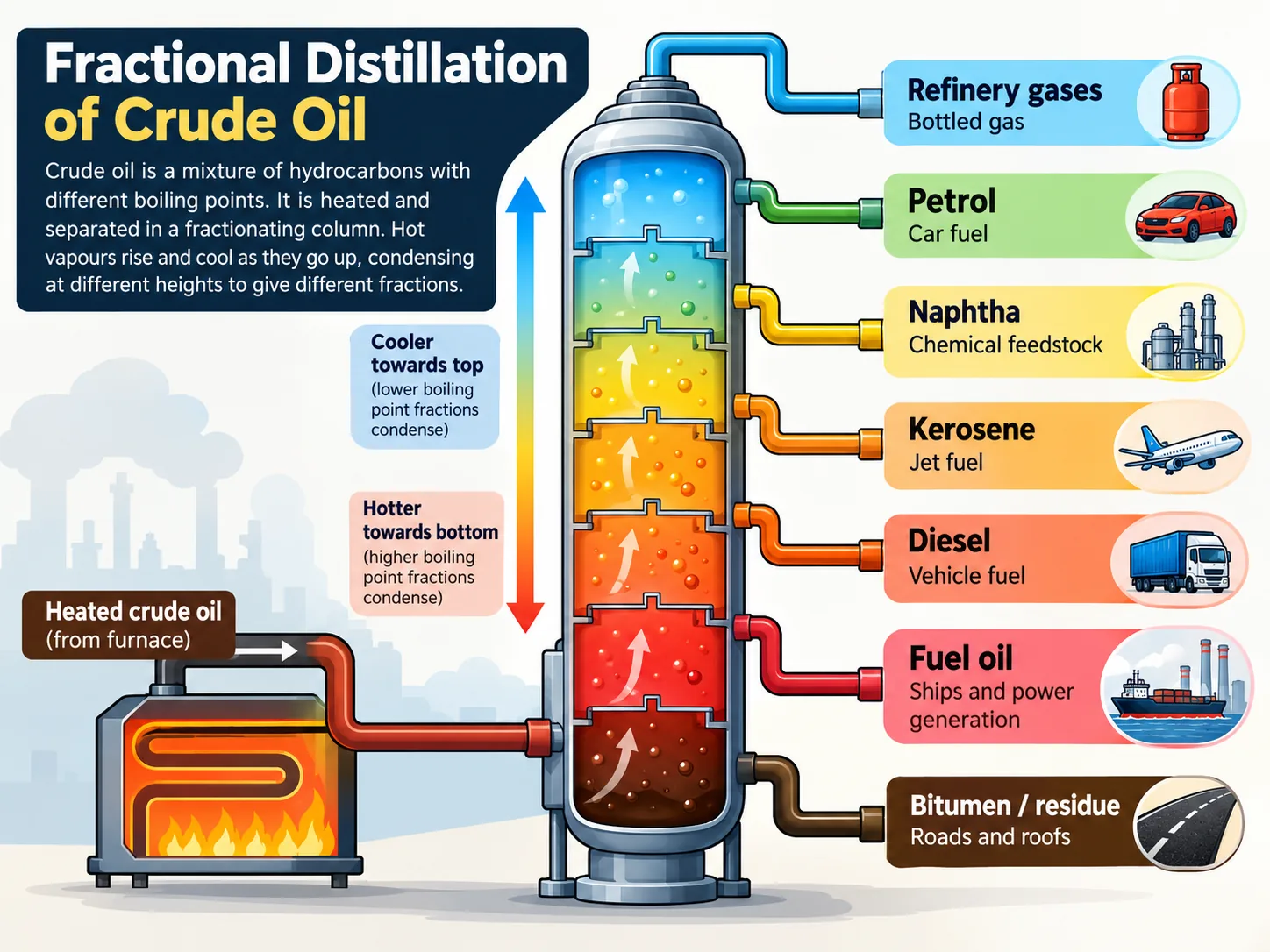


Crude oil
A finite fossil fuel mixture of hydrocarbons separated by fractional distillation based on boiling points.
Alkanes
Saturated hydrocarbons with single C-C bonds only; general formula CnH2n+2 (Methane, Ethane, Propane, Butane).
Alkenes
Unsaturated hydrocarbons with at least one C=C double bond; general formula CnH2n.
- Test for unsaturation
- Alkenes decolourise orange bromine water from orange to colourless by an addition reaction.
- Saturated alkanes do not react.
Cracking
Thermal decomposition of long-chain alkanes into more useful short-chain alkanes (for petrol) and reactive alkenes (for plastics):
C10H22 → C8H18 + C2H4
Section 2 of 4Polymers: Addition and condensation


| Feature | Addition Polymerisation | Condensation Polymerisation |
|---|---|---|
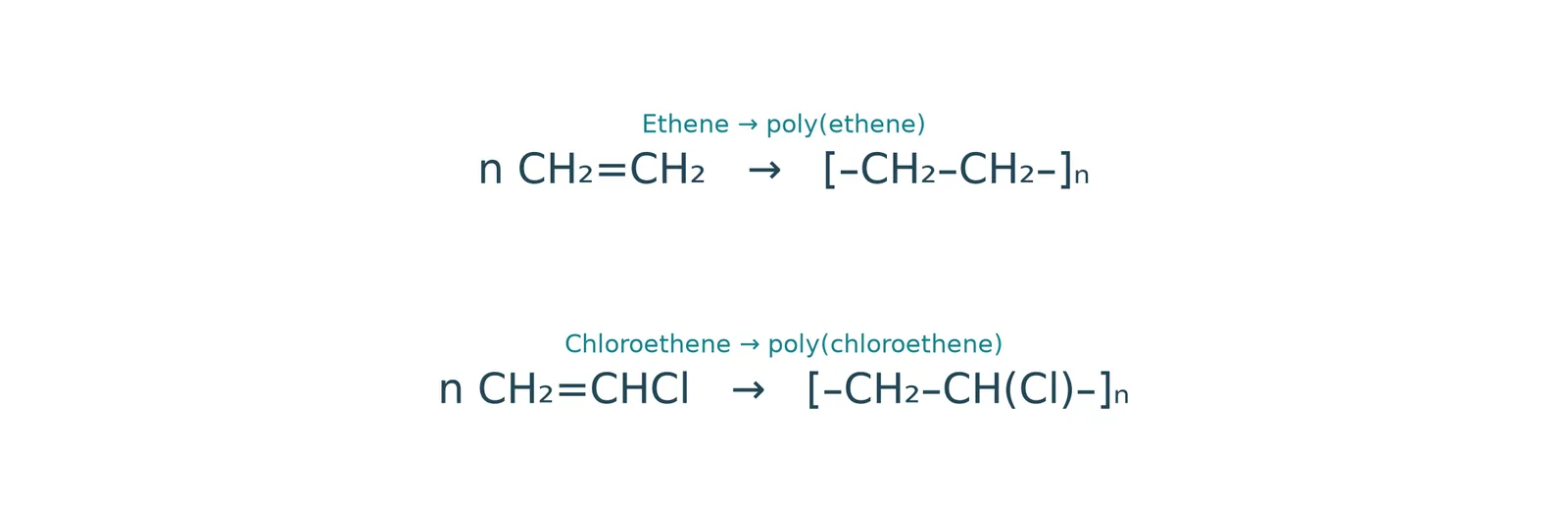
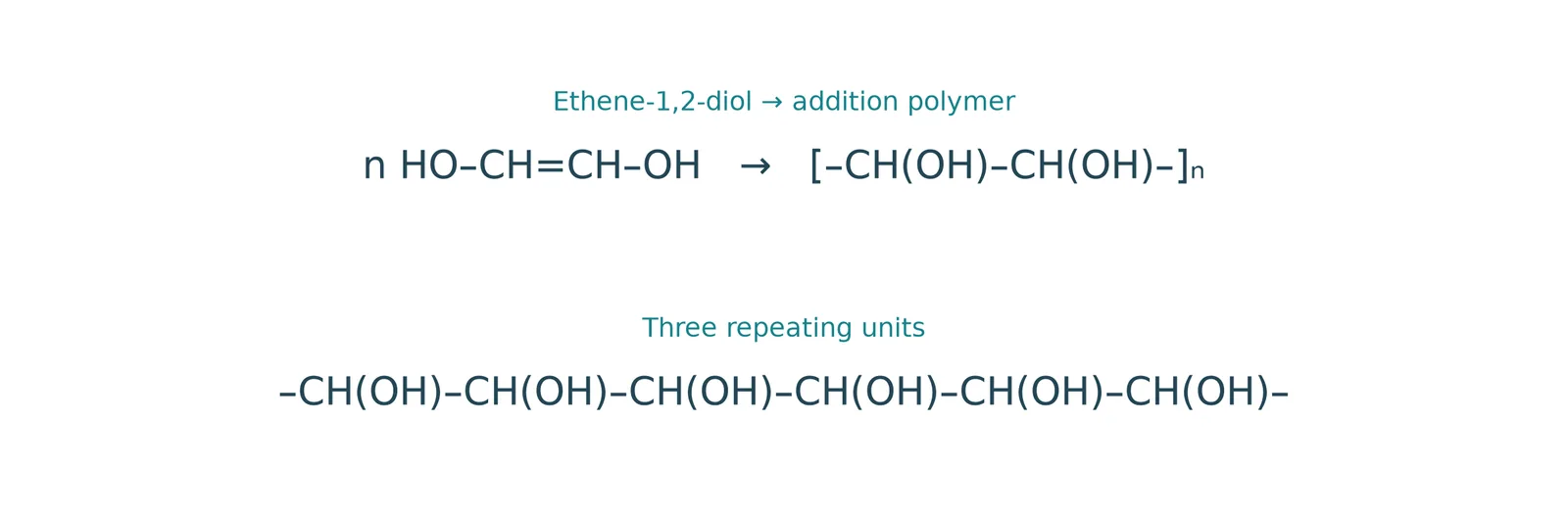
| Monomers | Single alkene monomer with C=C double bond | Monomers with two functional groups (e.g. dicarboxylic acid + diol) |
| Number of products | Only one product (the polymer chain); 100% atom economy | Two products: the polymer and a small molecule (usually H2O) |
| Key examples | Poly(ethene), Poly(propene), PVC, Teflon | Polyesters (Terylene), Polyamides (Nylon) |
| Natural polymers | — | DNA (nucleotides), Proteins (amino acids), Starch/Cellulose (glucose) |
Section 3 of 4Key terms
| Term | Meaning |
|---|---|
| Hydrocarbon | A compound containing hydrogen and carbon atoms exclusively. |
| Cracking | Thermal breakdown of long-chain alkanes into smaller alkanes and alkenes. |
| Monomer | A small reactive molecule that bonds to others forming a long polymer macromolecule. |
| Condensation polymerisation | Polymerisation involving bifunctional monomers that eliminate small molecules like water during chain growth. |
Section 4 of 4Exam technique
Avoid these mistakes
Drawing C=C double bonds in the repeating unit of an addition polymer — the double bond breaks to form single C-C bonds with open extension arms.
Writing "clear" instead of "colourless" for bromine water decolourisation.