2.5.11Chemical Bonding, Application Of Chemical Reactions and Organic Chemistry
Isomerism in Hydrocarbons
5 min read 7 parts Lesson 51 of 54 1 quiz
Section 1 of 7What isomers are (HT only)
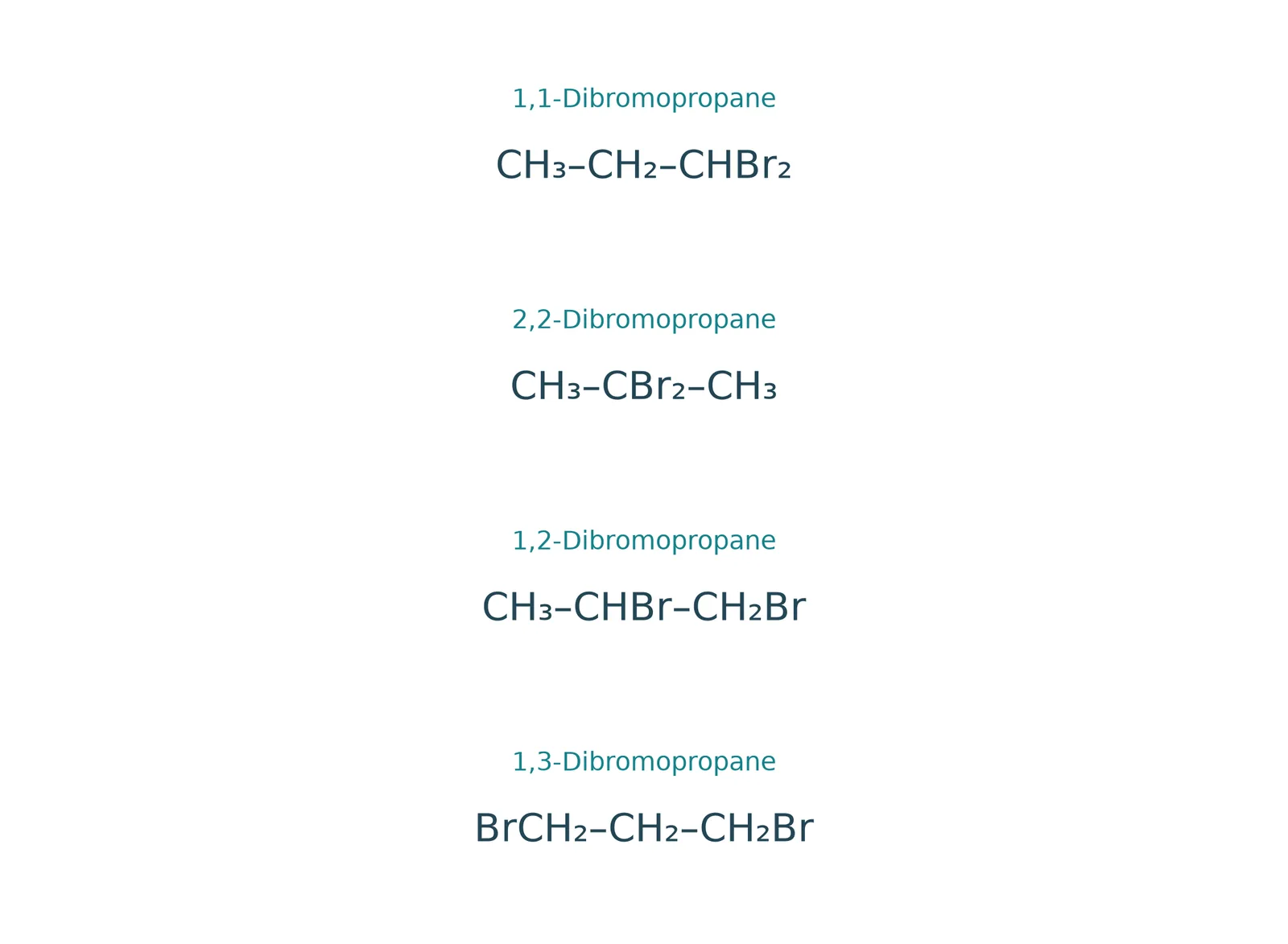
Definition
- Definition Isomers are compounds with the same molecular formula but different structural formulae.
- They have the same number and type of atoms, arranged in a different way.
Different properties
- Different properties Because their structures differ, isomers have different physical properties such as boiling point, even though the atoms are the same.
Rules for drawing
- Rules for drawing Each carbon must keep four bonds and each hydrogen one bond.
- Two drawings are only isomers if the longest chain or the position of a branch or double bond truly differs.
Section 2 of 7Alkanes with no isomers

1Methane, ethane, propane
- Methane, ethane, propane There is only one way to arrange 1, 2 or 3 carbon atoms with four bonds each.
2A common trap
- A common trap Propane drawn bent,
- or with the carbon chain written in a different direction, is still the same molecule: a CH3 group, a CH2 group,
- then another CH3 group.
3First isomers
- First isomers The first alkane with isomers is butane, C4H10.
Section 3 of 7Isomers of alkanes


| Formula | Number | Isomers |
|---|---|---|
| C4H10 | 2 | butane (straight chain); 2-methylpropane (3-carbon chain with a methyl group) |
| C5H12 | 3 | pentane (straight chain); 2-methylbutane; 2,2-dimethylpropane (two methyl groups on the middle carbon of a 3-carbon chain) |
Section 4 of 7How to find isomers of an alkane
1
Draw the straight-chain molecule first, with all carbons in one line.
2
Shorten the main chain by one carbon and attach that carbon as a methyl branch to an inner carbon of the chain, not an end carbon.
3
Add hydrogen atoms so every carbon has exactly four bonds.
4
Shorten the chain again if the formula allows, placing two methyl groups on the same or on different inner carbons.
5
Check each new drawing against the others; if the longest chain and the branches match, they are the same molecule.
Section 5 of 7Isomers of alkenes (HT only)


C4H8 and C5H10
No isomers
- No isomers Ethene and propene have no isomers, since there is only one way to place the double bond.
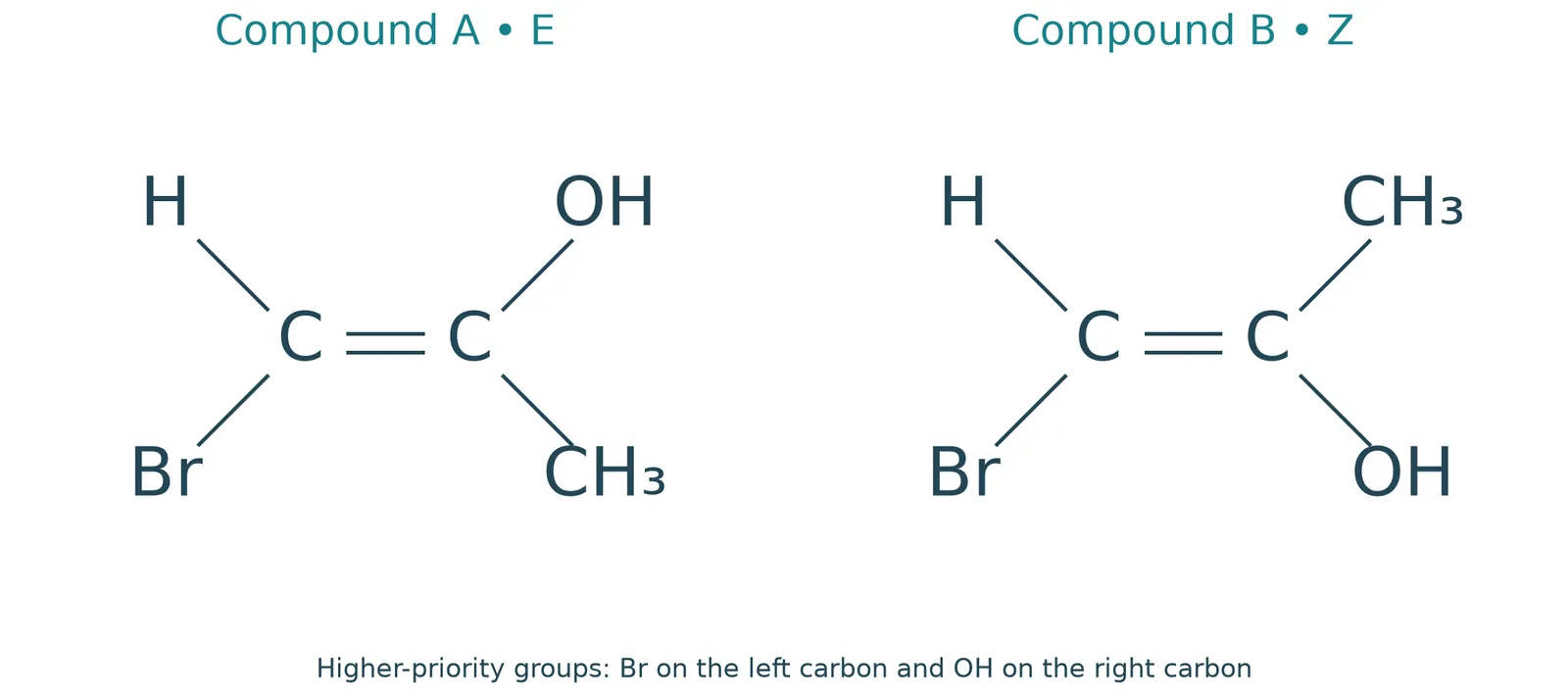
C4H8 (3 isomers)
- C4H8 (3 isomers) but-1-ene (double bond between carbons 1 and 2);
- but-2-ene ; 2-methylpropene (a methyl branch on a 3-carbon chain with the double bond).
- (double bond between carbons 2 and 3)
- but-2-ene ; 2-methylpropene (a methyl branch on a 3-carbon chain with the double bond).
Method for any alkene
- Method for any alkene Vary three things in turn: the length of the main chain, the position of any methyl branch,
- and the position of the double bond.
- Longer alkenes such as C5H10 have more isomers than C4H8.
Exam tip
- Exam tip You should be able to draw all isomers of C4H8 and C5H12.
- Draw full structural formulae showing every bond; skeletal formulae are not required.
Section 6 of 7Key terms
| Term | Meaning |
|---|---|
| Isomers | Compounds with the same molecular formula but different structural formulae. |
| Molecular formula | The actual number of atoms of each element in a molecule, such as C4H10. |
| Structural formula | A formula showing how the atoms in a molecule are arranged. |
| Branched chain | A carbon chain with one or more side-chains attached. |
| Straight chain | A carbon chain with no branches. |
Section 7 of 7Exam technique
1
Counting a bent drawing of propane as a second isomer. Check the longest chain; it is still three carbons in a row.
2
Putting a methyl group on an end carbon. That just lengthens the chain and gives the straight-chain molecule again.
3
Leaving a carbon with only three bonds. Each carbon must have exactly four, so count them every time.
4
Assuming that all drawings of a formula are isomers. Isomers must be genuinely different arrangements.