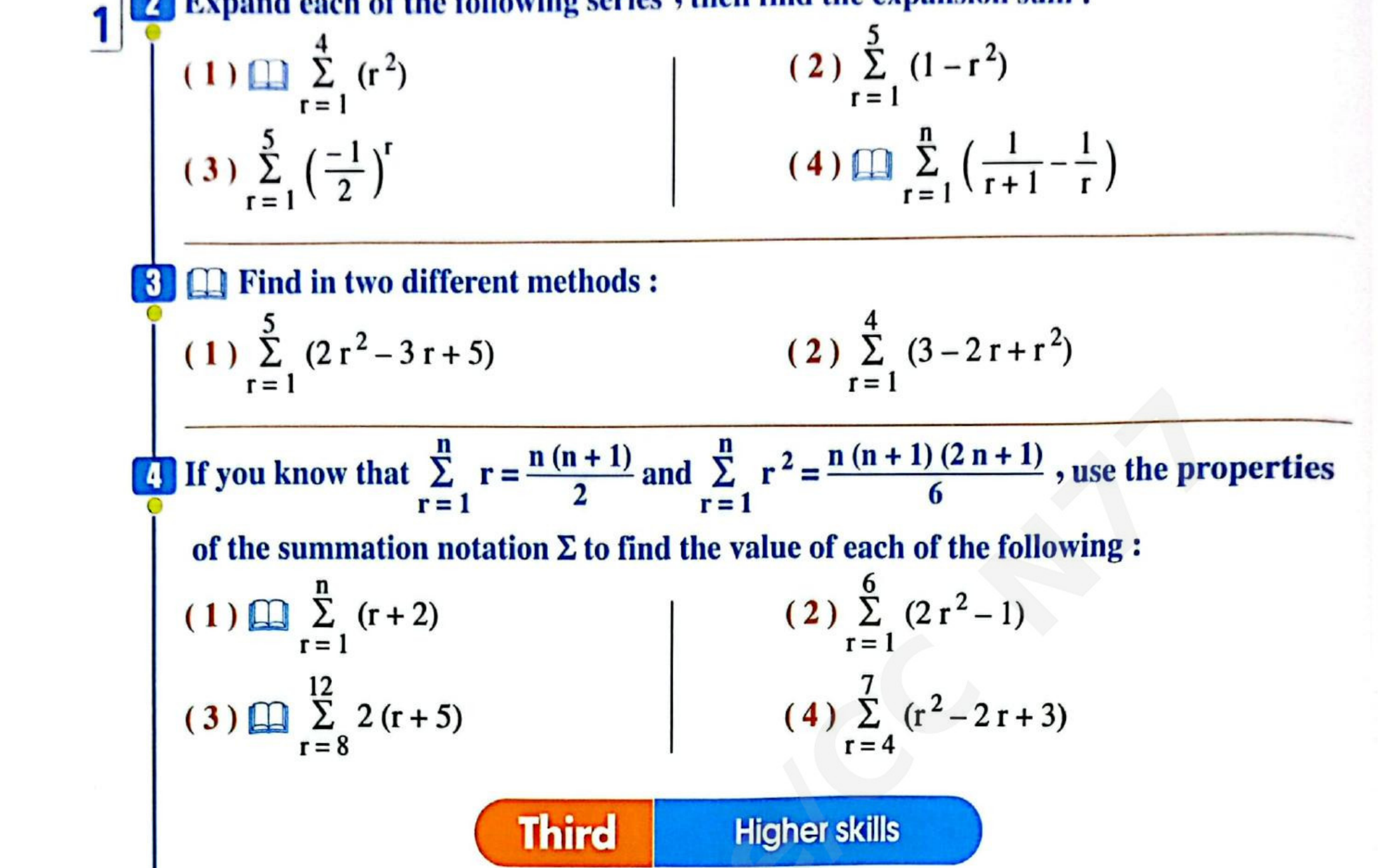
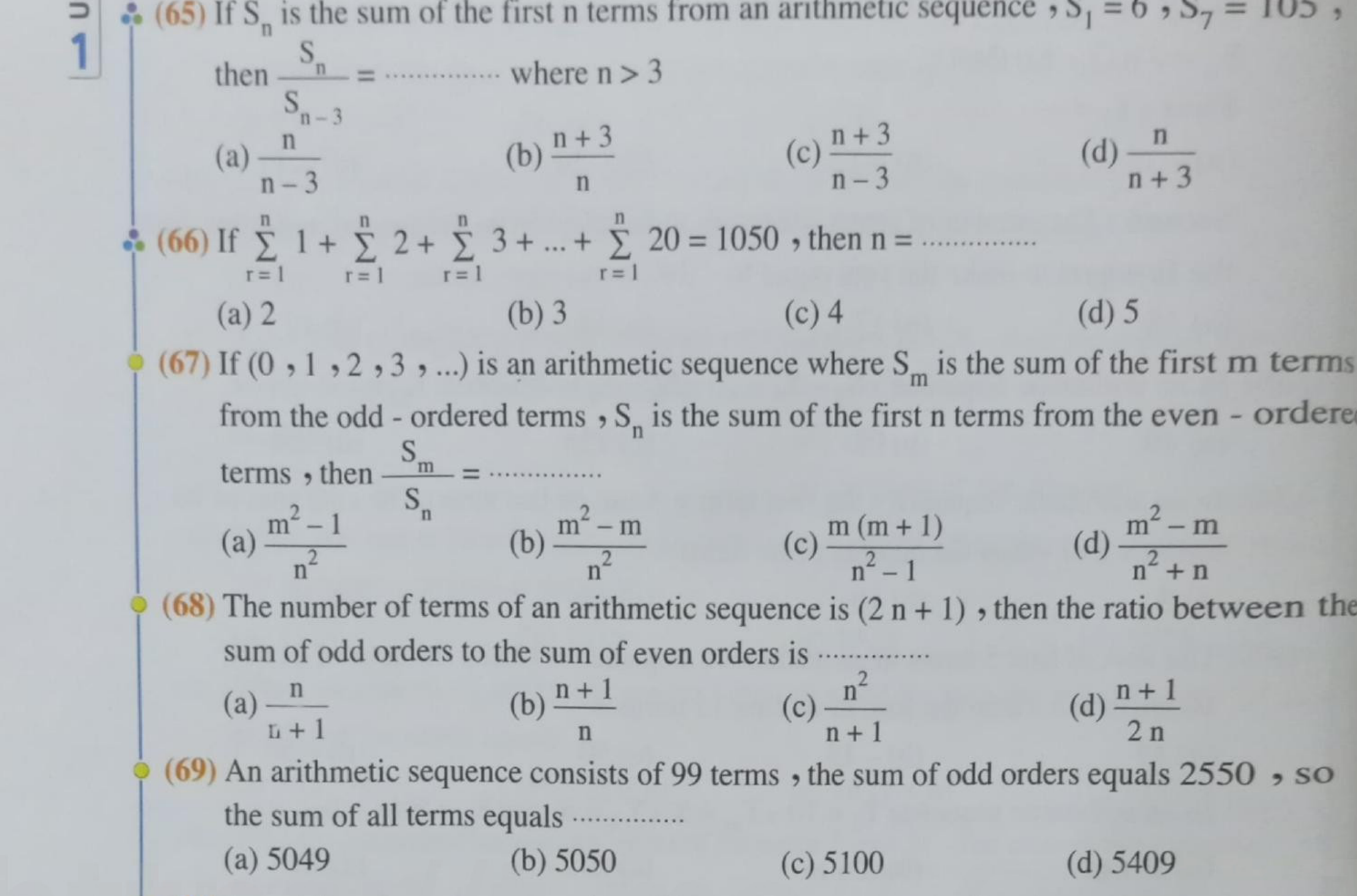
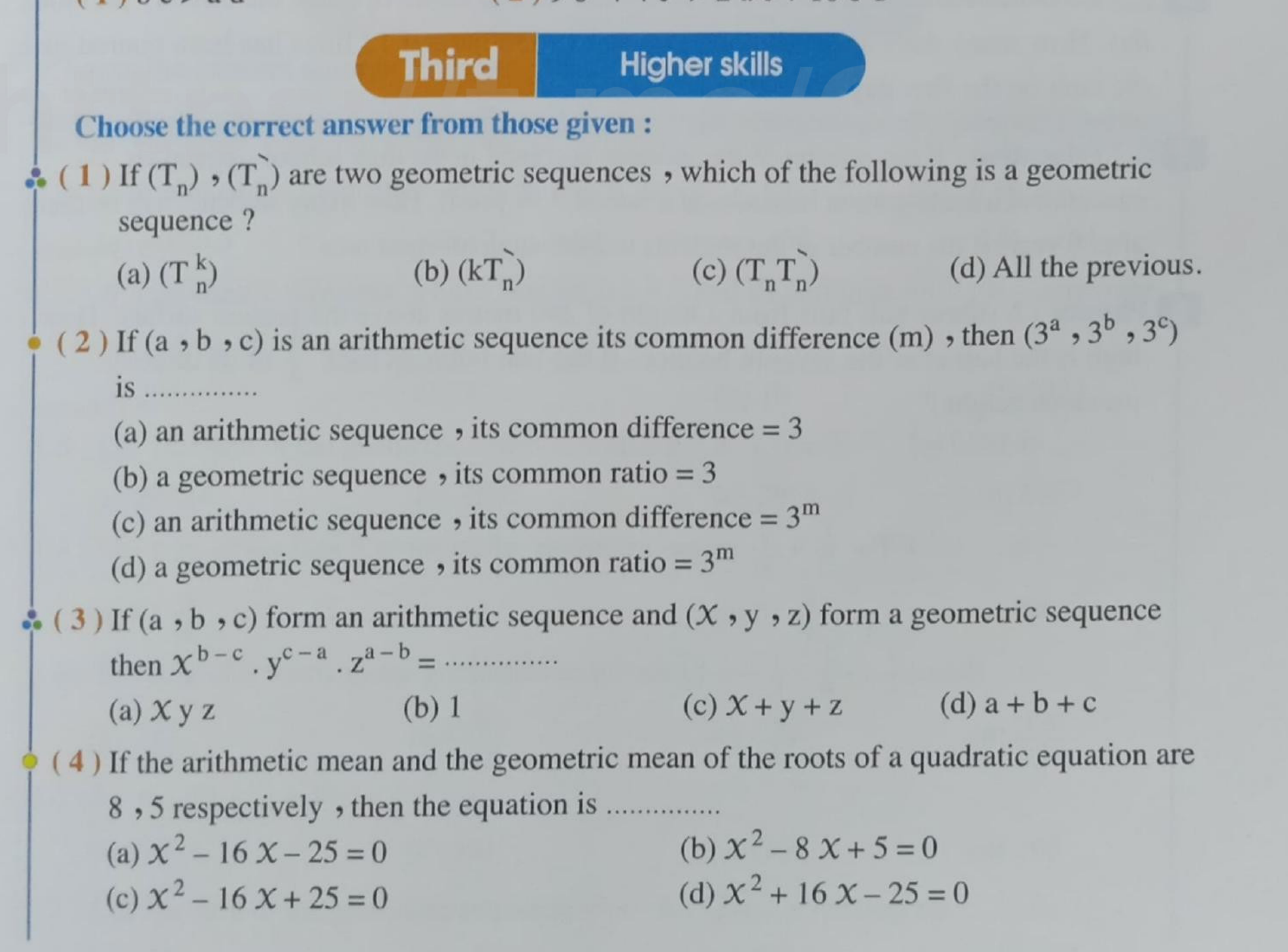
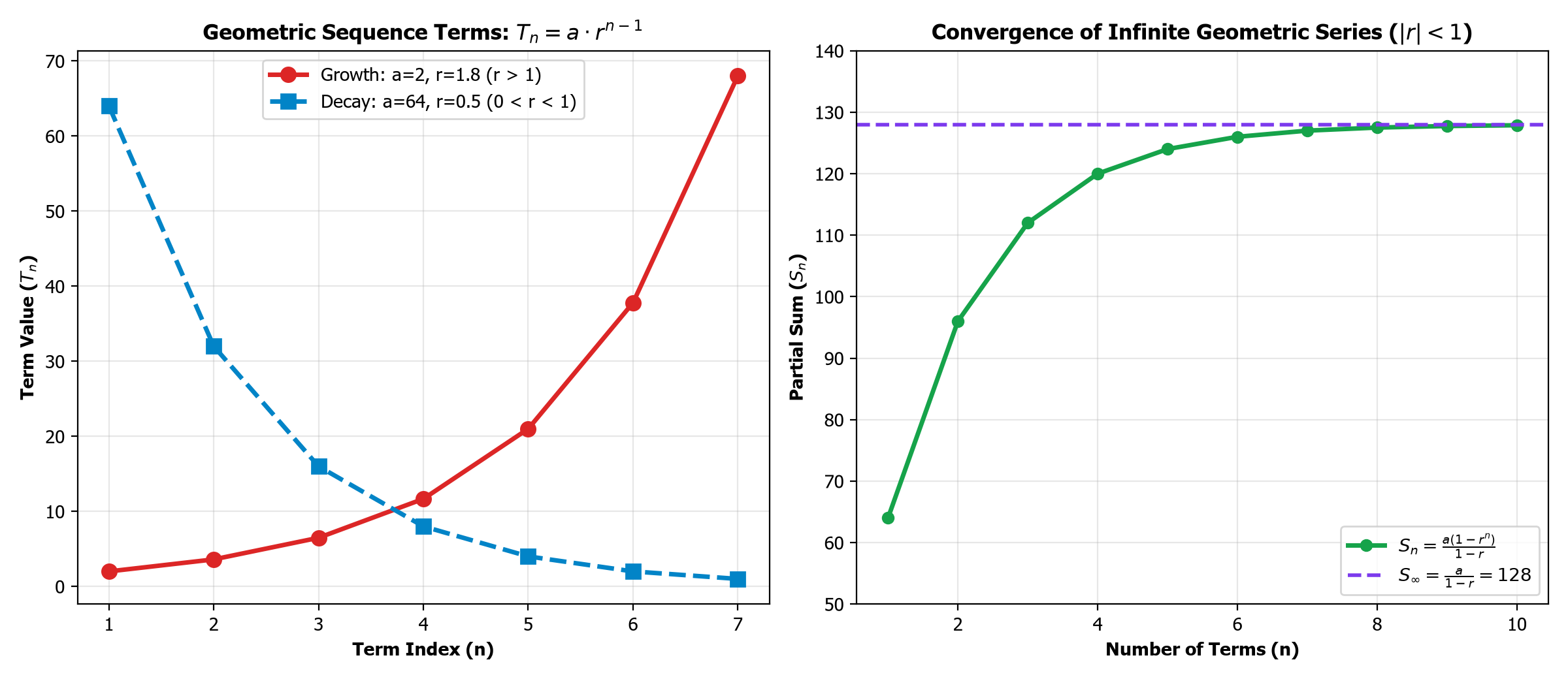
| قانون وعلاقة حاكمة | Figure (Table 1 – Summation Formulas and Mathematical Induction Rules.png): Complete reference table for arithmetic and geometric series sums and sigma algebra rules | FigureTableSummationFormulas |
| • | 🧮 Exemplary Step-by-Step Worked Problems & Applied Exercises | ExemplaryStepWorkedProblems |
| Worked Example 1 | Finding the Maximum Partial Sum of an Arithmetic Sequence | FindingMaximumPartialArithmetic |
| Problem Statement | - Given the arithmetic progression (35
- …): (1) Find the number of positive terms
- (2) Calculate the maximum sum of this sequence and state how many terms must be taken to achieve it
| GivenarithmeticprogressionFind |
| Detailed Solution & Derivation | - Step 1: First term a = 35. Common difference d = 31 – 35 = -4. Step 2: To find the number of positive terms
- solve Tn > 0: a + (n – 1)d > 0 -> 35 + (n – 1)(-4) > 0 -> 35 – 4n + 4 > 0 -> 39 > 4n -> n < 39/4 = 9.75. Because n ∈ ℤ+
- the sequence has exactly 9 positive terms (T9 is positive
- T10 is negative). Step 3: The maximum sum occurs when adding all positive terms (adding negative terms would reduce the sum). Therefore
- n = 9 terms give the maximum sum. Step 4: Calculate S9: S9 = (9/2)[2(35) + (9 - 1)(-4)] = 4.5 [70 + 8(-4)] = 4.5 [70 - 32] = 4.5 × 38 = 171. (Note: S10 gives 171 + (-1) = 170)
| StepFirsttermCommon |