Curriculum
Login

Curriculum

English

More lessons

0/46
Text lesson

Lesson 1 Questions: Creative Arts, Crafts and Inventions

English

Lesson 1 Questions: Creative Arts, Crafts and Inventions

مقدمة الدرس

مقدمة الدرس

  • ★ Comprehensive Study & Detailed Pedagogical Guide ★
  • Comprehensive Explanation Creative Arts, Traditional Egyptian Crafts and Inventions
  • English Language (Connect – Primary Stage) | Grade 6 (Primary 6) | 2026 / 2027 Official Curriculum | Unit 1: Celebrating Creativity
  • • Acquire and use specialized vocabulary related to Egyptian cultural heritage and craftsmanship.
  • • Master past continuous and past simple tenses using connectors: while, as, when, and during.
  • • Differentiate between background progressive actions and sudden interrupting past actions.
  • • Analyze reading passages detailing traditional pottery, hand-loom weaving, and copper engraving.
  • • Produce coherent descriptive and narrative paragraphs incorporating sensory imagery and transitional linkers.
Figure 1 – Traditional Crafts Pottery and Weaving in Egypt
  • Figure (Figure 1 – Traditional Crafts Pottery and Weaving in Egypt.png): Photographic illustration of Egyptian artisan workshop producing hand-thrown pottery and kilim textiles.
  • ✔ Unit Theme Celebrating Creativity & Egyptian Traditional Crafts (Pottery, Weaving, Glassblowing).
Lesson 1 Questions: Creative Arts, Crafts and Inventions · 1 / 6
المفاهيم والمصطلحات الأساسية

المفاهيم والمصطلحات الأساسية

📖 📖 Core Terminology, Scientific Definitions & Glossaries:

Comparison aspectMain ideaKeywords
Artisan / CraftsmanA skilled manual worker who creates high-quality decorative or functional objects entirely or predominantly by handskilledmanualworkercreates
Kiln
  • A thermally insulated chamber or specialized oven capable of producing temperatures exceeding 1
  • 000°C to fire
  • harden
  • and glaze ceramic pottery
thermallyinsulatedchamberspecialized
LoomA mechanical or manual wooden apparatus used for weaving vertical warp threads and horizontal weft yarns into textile fabrics or carpetsmechanicalmanualwoodenapparatus
Past Continuous TenseA grammatical aspect indicating that an action was ongoing and in progress at a specific temporal moment in the pastgrammaticalaspectindicatingaction
Time Clause
  • A subordinate adverbial clause introduced by a temporal conjunction (while
  • when) indicating the temporal context of the main clause
subordinateadverbialintroducedtemporal
Lesson 1 Questions: Creative Arts, Crafts and Inventions · 2 / 6
الشرح والتفصيل العلمي الشامل

الشرح والتفصيل العلمي الشامل

  • قانون وعلاقة حاكمة ⚖️ Governing Scientific Laws, Theorems & Mathematical Models:
  • ★ Interrupted Past Action Rule (While vs.
  • When): [ Formula: While / As + Past Continuous [was/were + v-ing], Past Simple [v2 / -ed] ] When an ongoing past activity is intersected by a shorter instantaneous past event, ‘while’ precedes the progressive background action, whereas ‘when’ precedes the interrupting event: When + Past Simple, Past Continuous.
  • ★ Prepositional Rule of ‘During’ [ Formula: During + Noun / Noun Phrase (NEVER followed by Subject + Verb) ] ‘During’ functions as a preposition indicating the temporal period across which an event transpires (e.g., ‘During the vacation’).
  • 📌 Exhaustive In-Depth Pedagogical Breakdown:
  • ◄ 1. Lexical Field & Historical Heritage: Traditional Egyptian Crafts
  • Egypt boasts an unbroken continuum of artisanal craftsmanship spanning over five thousand years.
  • From Pharaonic stone sculptors and Coptic weavers to Islamic arabesque woodturners and metal engravers, traditional handicrafts represent an enduring pillar of national identity and cultural heritage.
  • Major Craft Disciplines in Modern Egypt (1) Pottery and Ceramics in Fustat: Located in Old Cairo, the Pottery Village (Qaryat Al-Fakhareen) is a world-renowned creative hub.
  • Artisans take moist Nile silt or ball clay, center it on a spinning foot-powered or electric potter’s wheel, and shape vessels using manual finger pressure.
  • The finished clay vessels (amphoras, zeer water coolers, decorative tagines) are dried under open air and fired inside high-heat kilns.
  • (2) Kilim and Carpet Weaving in Harraniya and Akhmim Using vertical and horizontal wooden looms, weavers interlace hand-spun sheep’s wool dyed with natural plant extracts (madder for crimson red, indigo for deep blue). The intricate geometric motifs depict pastoral life, desert fauna, and Nilotic flora.
  • (3) Glassblowing & Arabesque Woodwork Artisans in historic alleys near Al-Azhar blow molten recycled glass into exquisite stained perfume bottles and traditional fanous lanterns, while carpenters assemble interlocking geometric mashrabiya lattice screens without nails.
  • Target Vocabulary artisan, workshop, apprentice, spinning wheel, pottery, kiln, glaze, loom, warp and weft, tapestry, arabesque, heritage, sustainable, exquisite, showcase, preserve.
  • Figure (Figure 1 – Traditional Crafts Pottery and Weaving in Egypt.png): Photographic illustration of Egyptian artisan workshop producing hand-thrown pottery and kilim textiles.
  • ◄ 2. Advanced Grammar Synthesis: Past Tense Aspects and Temporal Linkers
  • Mastery of past narration requires contrasting the Past Simple (completed actions) with the Past Continuous (actions in progress).
  • A.
Comparison aspectMain ideaKeywords
Past Continuous Form & MechanicsSubject + was/were + verb(-ing)Subjectwereverb
Negationwas not (wasn’t) / were not (weren’t)wasnwereweren
InterrogativeWas/Were + subject + verb(-ing)?Weresubjectverb
It is employed to
  • (1) Describe an action occurring at a precise past hour (‘Yesterday at 5 PM
  • the artisan was firing the kiln’)
  • (2) Establish background descriptive atmosphere in a narrative (‘The sun was setting and pigeons were circling over the workshop’)
Describeactionoccurringprecise
•
•
  • Temporal Connectors for Interrupted Actions: When an ongoing progressive action is suddenly interrupted by a brief
  • punctual past action
TemporalConnectorsInterruptedActions
Formula 1
  • While / As / Just as + Past Continuous
  • Past Simple. Example: ‘While Uncle Mahmoud was carving the wooden frame
  • his chisel slipped.’ (Or without a comma: ‘Uncle Mahmoud’s chisel slipped while he was carving the wooden frame.’)
WhileJustPastContinuous
  • Formula 2 When + Past Simple, Past Continuous. Example: ‘When the electricity failed, we were weaving a large wool rug.’
  • C.
  • Parallel Concurrent Actions: If two continuous activities were taking place simultaneously in the past without mutual interruption, BOTH clauses remain in the Past Continuous: ‘While Mona was sketching the vase, Hany was preparing the clay.’
  • D.
  • Prepositional Usage of ‘During’: ‘During’ is strictly a preposition followed by a noun phrase: ‘During our guided tour of Khan el-Khalili, we watched a master copper engraver.’ Note: It is grammatically incorrect to say ‘during we were visiting’.
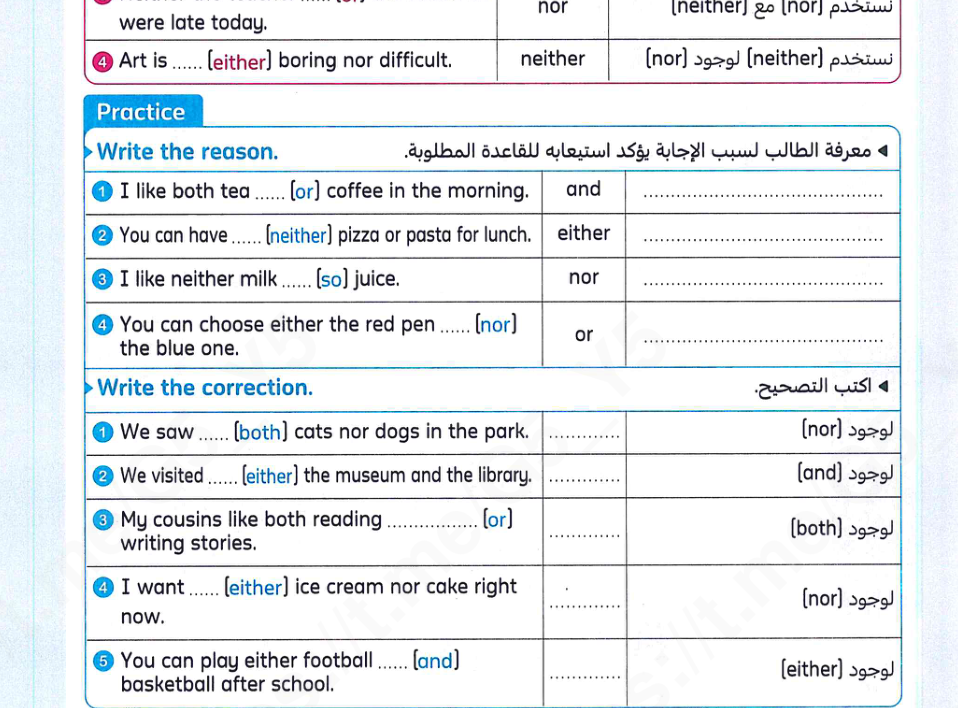
  • Figure (Figure 2 – Vocabulary and Grammar Study Frames (While and When).png): Grammar study charts explaining past continuous timelines and clause connecting rules.
Comparison aspectMain ideaKeywords
•◄ 3. Writing Competencies: Sensory Descriptive and Heritage ParagraphsWritingCompetenciesSensoryDescriptive
Writing a High-Scoring Descriptive Paragraph
  • When students compose an essay or paragraph on Egyptian cultural crafts
  • they must organize their text into three structural tiers
studentscomposeessayEgyptian
(a) The Topic Sentence
  • Captures reader attention and establishes location and theme (‘Last Thursday
  • our school organized an unforgettable cultural excursion to the historic Pottery Village in Fustat’)
Capturesreaderattentionestablishes
(b) Supporting Sensory Details
  • Incorporating visual
  • auditory
  • and tactile descriptions (‘As we entered the open-air workshops
  • the moist
  • earthy aroma of natural clay filled the air. We watched in awe as master artisans gracefully shaped rotating lumps of clay into elegant vases with their bare hands. In the courtyard
  • gigantic brick kilns were roaring with heat’)
Incorporatingvisualauditorytactile
Comparison aspectMain ideaKeywords
(c) Concluding ReflectionExpressing cultural pride and personal insight (‘Preserving these timeless handicrafts is essential for sustaining our national heritage and supporting traditional artisan communities’)Expressingculturalpridepersonal
•
  • Figure (Table 1 – Regular and Irregular Verbs and Reading Comprehension.png): Lexical matrix of base verbs
  • past forms
  • and context sentence models for craftsmanship
FigureTableRegularIrregular
•🧮 Exemplary Step-by-Step Worked Problems & Applied ExercisesExemplaryStepWorkedProblems
Worked Example 1Grammar Sentence Synthesis with ‘While’ and ‘When’GrammarSentenceSynthesisWhile
Problem StatementCombine the two sentences into one correct sentence using the specified word: (1) ‘I was polishing the brass lamp.’ + ‘The telephone rang.’ (Use: While). (2) ‘Salma heard a loud noise outside.’ + ‘She was sewing a tapestry.’ (Use: When)Combinesentencescorrectsentence
Comparison aspectMain ideaKeywords
Detailed Solution & Derivation
  • (1) ‘While I was polishing the brass lamp
  • the telephone rang.’ (Or: ‘The telephone rang while I was polishing the brass lamp.’) Note: While is followed immediately by the past continuous clause. (2) ‘When Salma heard a loud noise outside
  • she was sewing a tapestry.’ (Or: ‘Salma was sewing a tapestry when she heard a loud noise outside.’) Note: When is followed immediately by the past simple clause
Whilepolishingbrasslamp
Worked Example 2Error Correction in Temporal Past SentencesErrorCorrectionTemporalPast
Problem Statement
  • Identify and correct the grammatical error in: (a) ‘During I was walking in Khan el-Khalili
  • I bought a souvenir.’ (b) ‘While she was made the clay bowl
  • the potter’s wheel stopped.’
Identifycorrectgrammaticalerror
Comparison aspectMain ideaKeywords
Detailed Solution & Derivation
  • (a) Error: ‘During I was walking’. Correction: Change ‘During’ to ‘While’ (While I was walking…) OR change the clause to a noun phrase: ‘During my walk in Khan el-Khalili
  • I bought a souvenir.’ (b) Error: ‘was made’. Correction: Past continuous requires was + verb-ing: ‘While she was making the clay bowl
  • the potter’s wheel stopped.’
ErrorDuringwalkingCorrection
•💡 Master Teacher Insights & Critical Exam CautionsMasterTeacherInsightsCritical
★ Exam Secret
  • If ‘While’ has NO subject immediately following it
  • the verb takes the -ing form directly: ‘While walking in the workshop
  • I noticed an ancient loom’ (Active participle construction)
Whilesubjectimmediatelyfollowing
Comparison aspectMain ideaKeywords
★ Stative Verbs Alert
  • Stative verbs describing mental states
  • emotions
  • senses
  • or possession (e.g
  • know
  • believe
  • like
  • understand
  • belong
  • own) are NEVER used in the continuous form. Say: ‘While I knew the answer’
  • NOT ‘While I was knowing’
describingmentalstatesemotions
★ Punctuation Rule
  • When a time clause begins the sentence (e.g
  • ‘While he was weaving
  • …’)
  • a COMMA is mandatory between the two clauses. When the time clause comes second
  • NO comma is used
timeclausebeginssentence
•
  • 🌍 Practical Real-World
  • Industrial & Societal Connections
PracticalRealWorldIndustrial
✔ Cultural Tourism & Economic ExportEgyptian handmade kilims from Akhmim and hand-blown perfume bottles from Cairo generate millions in export revenue across European and North American artisanal marketsEgyptianhandmadekilimsAkhmim
Comparison aspectMain ideaKeywords
✔ Sustainable Zero-Waste Crafting
  • Traditional pottery utilizes natural
  • biodegradable alluvial clay without chemical synthetic plastics
  • offering eco-friendly household alternatives for water storage and cooking
Traditionalpotteryutilizesnatural
✔ Youth Apprenticeship & Vocational SchoolsModern vocational academies in Egypt are integrating digital 3D modeling with traditional artisan workshops to train a new generation of master craftsmenModernacademiesEgyptintegrating
Figure 2 – Vocabulary and Grammar Study Frames (While and When)
  • Figure (Figure 2 – Vocabulary and Grammar Study Frames (While and When).png): Grammar study charts explaining past continuous timelines and clause connecting rules.
Table 1 – Regular and Irregular Verbs and Reading Comprehension
  • Figure (Table 1 – Regular and Irregular Verbs and Reading Comprehension.png): Lexical matrix of base verbs, past forms, and context sentence models for craftsmanship.
Lesson 1 Questions: Creative Arts, Crafts and Inventions · 3 / 6
المقارنات وخريطة المفاهيم الجوهرية

المقارنات وخريطة المفاهيم الجوهرية

🗺️ ★ High-Yield Summary, Mind Maps & Comparison Tables ★

Comparison aspectMain ideaKeywords
Summary
  • Creative Arts
  • Traditional Egyptian Crafts and Inventions
CreativeArtsTraditionalEgyptian
•English Language (Connect – Primary Stage) | Grade 6 (Primary 6) | 2026 / 2027 Official Curriculum | Unit 1: Celebrating CreativityEnglishLanguageConnectPrimary
•🗺️ Core Concept Map & Knowledge ArchitectureCoreConceptKnowledgeArchitecture
✔ Unit Theme
  • Celebrating Creativity & Egyptian Traditional Crafts (Pottery
  • Weaving
  • Glassblowing)
CelebratingCreativityEgyptianTraditional
✔ Grammar CorePast Continuous (was/were + v-ing) for background actionsPastContinuouswerebackground
✔ Connectors
  • While/As (+ Past Continuous)
  • When (+ Past Simple)
  • During (+ Noun phrase)
WhilePastContinuousSimple
✔ Writing OutputDescriptive paragraphs highlighting sensory details and cultural appreciationDescriptiveparagraphshighlightingsensory
  • 📊 Classification & Comparative Summary Tables:
  • Table Grammar Connector Rules: While, When, and During
  • 💡 Exam Flashcard Capsules & High-Yield Secrets:
  • ★ Never use a continuous tense with stative verbs (e.g., know, believe, like, seem, understand, belong).
  • ★ Remember ‘During’ is always followed by a noun phrase (e.g., during the match), NOT by a subject and verb clause.
  • ★ If ‘While’ has no subject following it, use the verb-ing form directly (e.g., ‘While studying, I drank tea’).
Connector Followed Immediately By Second Clause Tense Example Sentence
While / As Past Continuous (was/were + v-ing) Past Simple While I was studying, the bell rang.
When Past Simple (v2 / ed) Past Continuous When the bell rang, I was studying.
While (Parallel) Past Continuous Past Continuous While Ali was reading, Mona was drawing.
During Noun / Noun Phrase Past Simple During the workshop, we saw ancient looms.
Lesson 1 Questions: Creative Arts, Crafts and Inventions · 4 / 6
أمثلة ومسائل محلولة بالخطوات

أمثلة ومسائل محلولة بالخطوات

  • مثال تطبيقي نموذجي:
  • مسألة شاملة على قوانين Lesson 1 – Creative Arts, Crafts and Inventions مع بيان خطوات الحل والتعويض المباشر والوحدات الدولية.
Lesson 1 Questions: Creative Arts, Crafts and Inventions · 5 / 6
تريكات الامتحان وكبسولة التفوق الوزاري

تريكات الامتحان وكبسولة التفوق الوزاري

  • كبسولة التفوق لطلاب الثانوية والإعدادية احرص على حفظ الوحدات بدقة، والانتباه للرسومات البيانية والمحاور والتحويلات، ومراجعة بنك الأسئلة أدناه.
  • Watch the stative verbs.
  • Verbs of mental state, emotion, the senses and possession, such as know, believe, like, understand, belong and own, are not normally used in the continuous form.
  • Write “While I knew the answer”, not “While I was knowing”.
  • When a time clause starts the sentence, put a comma after it, as in “While he was weaving, …”.
  • When the time clause comes second, no comma is used.
  • If “while” is not followed by a subject, the verb takes the -ing form directly, as in “While walking in the workshop, I noticed an ancient loom.”
  1. After “during” use a noun phrase
  2. never a subject and a verb. “During my walk in Khan el-Khalili
  3. I bought a souvenir” is correct. “During I was walking” is wrong
  4. and “While I was walking” corrects it.
Lesson 1 Questions: Creative Arts, Crafts and Inventions · 6 / 6