
Support provides structural rigidity, internal protection, and shape maintenance for living organisms. We thoroughly analyze physiological and structural support in plants, and axial and appendicular skeletons in humans.
🖼️ Lesson illustrations



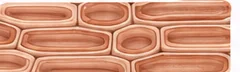
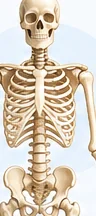
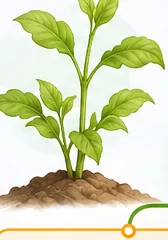

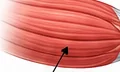

01 1. Physiological vs. Structural Support in Plants
Plants maintain posture and rigidity through two complementary mechanisms:
| Feature | Physiological Support | Structural Support |
|---|---|---|
| Nature | Temporary (water-dependent) | Permanent (chemical deposition) |
| Mechanism | Osmosis and turgor pressure in vacuoles | Deposition of cellulose, lignin, suberin, and cutin |
| Targeted Scope | Entire cell volume | Cell walls and intercellular junctions |
| Applications | Herbaceous stem turgidity after watering | Wood xylem vessels, sclerenchyma stone cells |
02 2. The Human Axial and Appendicular Skeleton
The adult human skeleton comprises 206 bones:
- Axial Skeleton (80 bones): Vertebral column (33 vertebrae: 7 cervical, 12 thoracic, 5 lumbar, 5 sacral, 4 coccygeal), skull (29 bones), and thoracic cage (12 pairs of ribs + sternum).
- Appendicular Skeleton (126 bones): Pectoral girdle (scapula + clavicle) + upper limbs (humerus, radius, ulna, carpals, metacarpals, phalanges), and pelvic girdle + lower limbs (femur, patella, tibia, fibula, tarsals, metatarsals, phalanges).
⚠️ High-Yield Ministerial Exam Traps & Misconceptions
- Confusion in units of measurement: Always pay attention to converting standard international units before substituting in the rules.
- Read the question until the last word: Beware of negative and exclusionary words such as (except, except, not from, does not apply).
- Distinguish between effect and cause: Interpret phenomena based on the direct scientific basis and do not be satisfied with superficial descriptions.
💡 The Golden Review Capsule for Rapid Revision
The learning outcomes in this lesson have been extracted and condensed to enable the student to consolidate basic structural concepts and solve combined multi-level questions in less than One minute for each question.
Challenge Yourself: Interactive Ministerial Assessment
Original ministerial-level questions exclusive to this lesson with complete scientific reasoning.
Physiological support in plant cells directly depends upon:
Which of the following cellular changes occurs directly when a wilted plant shoot is irrigated with fresh water?
During maximal skeletal muscle contraction according to Huxley's sliding filament model, which region experiences NO change in its absolute length?
What is the biochemical cause of continuous, non-relaxing muscle spasm that can cause muscular tearing?
How many cervical vertebrae are present in the adult human vertebral column?
Ready for the Complete 300+ Question Ministerial Bank?
Test your comprehensive mastery with timed mode, automated scoring, and detailed answer keys.
🚀 Launch Full 300+ Question Bank Now