4.4Chapter 4: Chemical Reactions 1
Precipitation reactions — Alhussan Chemistry - Stage 7 Revision Notes & Topical Questions
5 min read 10 parts Lesson 4 of 6 3 quizzes
4.4 Precipitation reactions — Insoluble Solids from Solutions — Alhussan International Academy — Chemistry (Stages 7–9) notes: Describe and explain precipitation reactions, predict whether a precipitate forms and explain how precipitation reactions are useful.Precipitation reacti…
- Soluble and insoluble
- Other pairs
- Potassium iodide and lead nitrate
- Silver nitrate and sodium chloride
- Cobalt sulfate and sodium hydrogencarbonate solutions
- Change in properties
Section 1 of 10What a precipitation reaction is
- It appears as a cloudy suspension that gradually settles at the bottom.
- Soluble and insoluble a soluble substance dissolves and an insoluble substance does not.
- Cause particles in the two solutions combine to make a compound that cannot stay dissolved.
- Other pairs other pairs of soluble substances react to make a precipitate if one product is insoluble.
Section 2 of 10Examples
- Potassium iodide and lead nitrate colourless solutions make tiny pieces of a yellow lead iodide precipitate, and potassium nitrate stays dissolved.
- potassium iodide + lead nitrate → lead iodide + potassium nitrate.
- Silver nitrate and sodium chloride a white precipitate of silver chloride forms, and sodium nitrate stays dissolved.
- Cobalt sulfate and sodium hydrogencarbonate solutions they make a cobalt carbonate precipitate.
- Change in properties colour and solubility differ between the reactants and the products.
Section 3 of 10Other types of reaction
- Combustion reaction a substance reacts quickly with oxygen and gives out light and heat, for example burning magnesium.
- Precipitation reaction two solutions react to form an insoluble solid.
- All types atoms are rearranged and join together differently to make new substances.
Section 4 of 10Predicting precipitates
- Method swap the partners of the two mixed solutions and check whether either new compound is insoluble.
- Barium chloride and sodium sulfate give a white precipitate of barium sulfate.
- Copper sulfate and sodium hydroxide give a pale blue precipitate of copper hydroxide.
- Sodium carbonate and calcium chloride give a white precipitate of calcium carbonate.
- Potassium nitrate and sodium chloride give two soluble salts, so no precipitate forms.
Section 5 of 10Identifying metals
- Test add a few drops of sodium hydroxide solution to a solution of an unknown compound.
- Blue precipitate a copper compound, as in copper chloride + sodium hydroxide → copper hydroxide + sodium chloride.
- Dark green or brown precipitate an iron compound, with green for iron(II) and brown for iron(III).
- Light green precipitate a nickel compound.
| Reactants | Precipitate | Colour |
|---|---|---|
| Silver nitrate + sodium chloride | Silver chloride | White |
| Lead nitrate + potassium iodide | Lead iodide | Yellow |
| Copper sulfate + sodium hydroxide | Copper hydroxide | Blue |
Section 6 of 10Using precipitates
- Separation filter the precipitate, wash it with distilled water to remove soluble impurities and dry it, which is a way to make insoluble salts.
- Waste water precipitation removes harmful metal ions in industry.
Section 7 of 10Spectator ions
- Reacting ions the metal particles and hydroxide particles find each other and stick together as a solid.
- Amounts adding more of the same solution gives more precipitate until one reactant is used up.
Section 8 of 10Safety
- Hazard symbols they show that a substance can help other substances to burn (oxidising), is a health hazard, can burn skin and eyes (corrosive) or damages things that live in water.
- Evidence the cloudy solid in a clear liquid is evidence of a chemical change, and total mass is unchanged.
Section 9 of 10Key terms
| Term | Meaning |
|---|---|
| Precipitation reaction | A reaction between solutions that makes an insoluble solid. |
| Precipitate | A suspension of tiny solid particles formed in a reaction. |
| Soluble | Able to dissolve. |
| Insoluble | Not able to dissolve. |
| Spectator ion | An ion that stays dissolved and takes no part in a reaction. |
| Hazard symbol | A symbol showing how a substance can cause harm. |
Section 10 of 10Exam technique
Marked practiceQuizzes for this lesson
?What do you want to solve now?
✓Checkpoint Quiz
13 multiple-choice + 1 written questions from real exam papers on this lesson.
Question 1 of 13 1:30
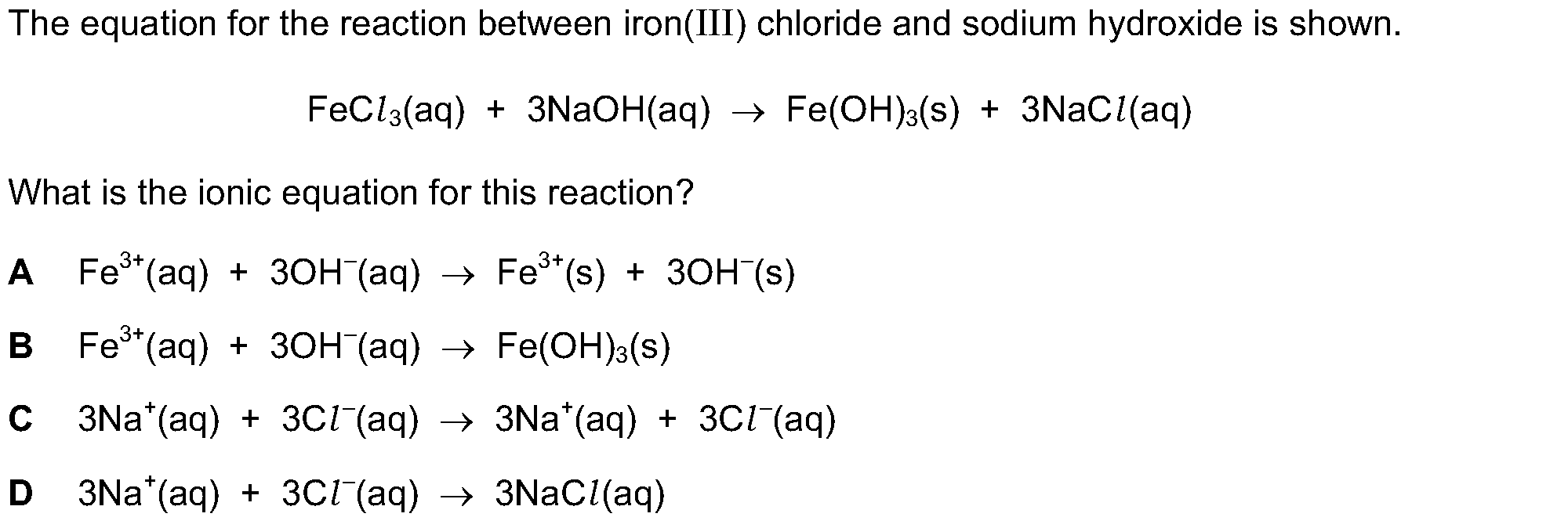
Question 2 of 13 1:30

Question 3 of 13 1:30
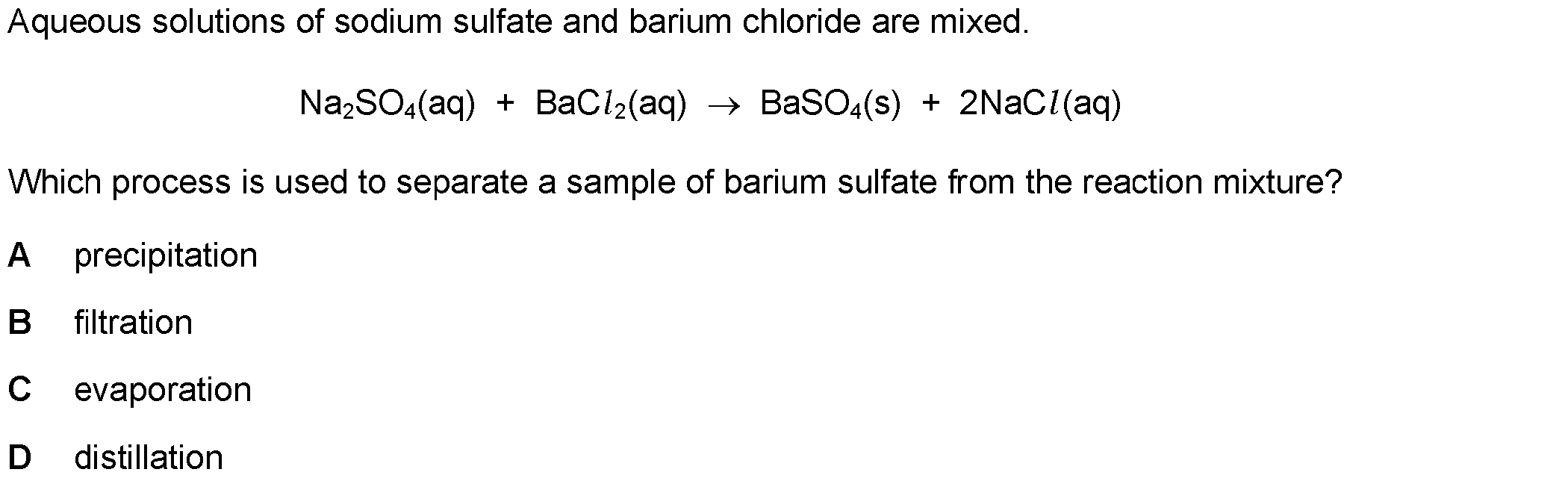
Question 4 of 13 1:30

Question 5 of 13 1:30
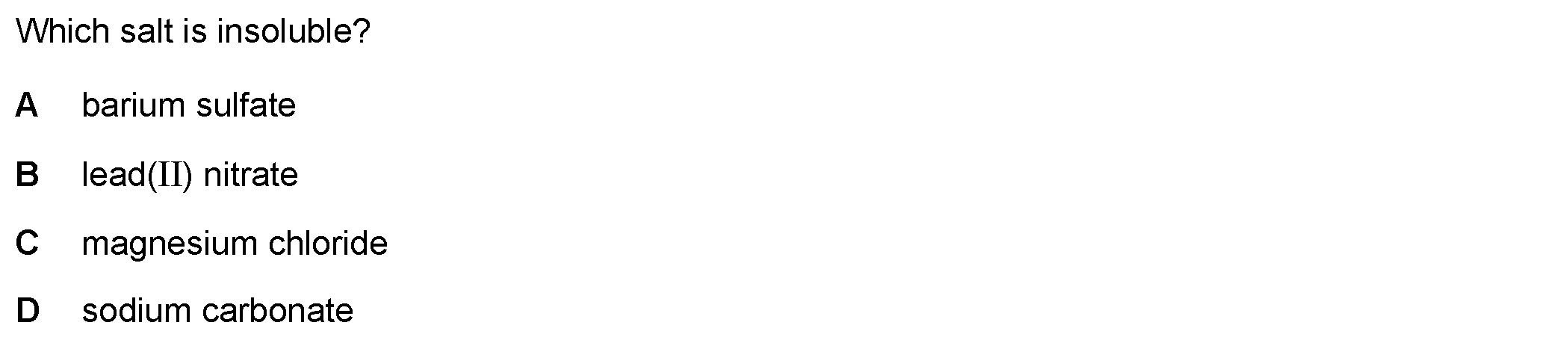
Question 6 of 13 1:30

Question 7 of 13 1:30
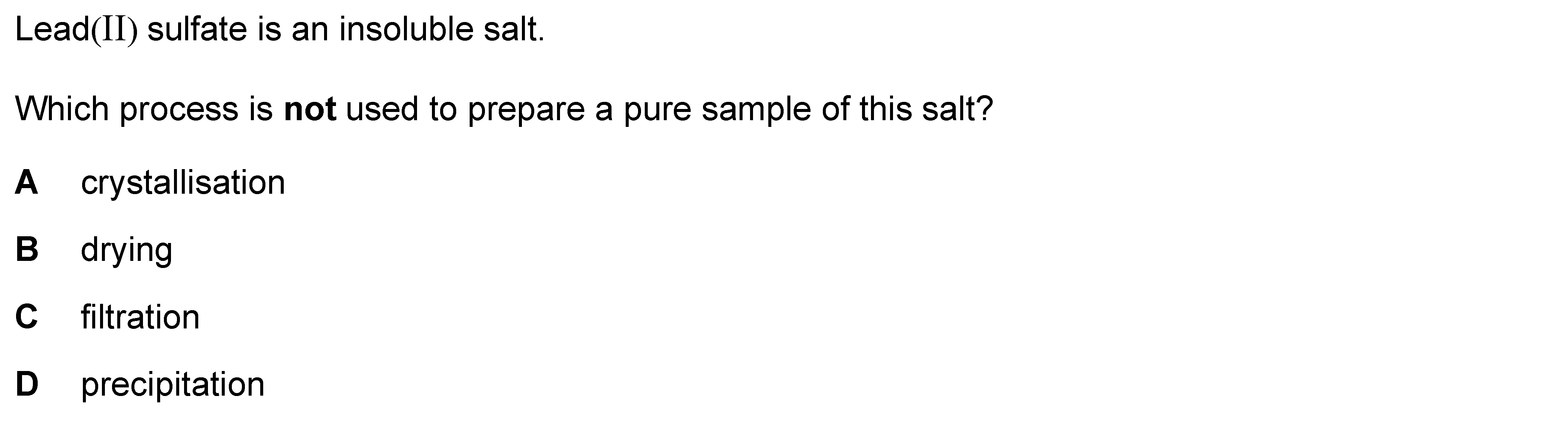
Question 8 of 13 1:30

Question 9 of 13 1:30
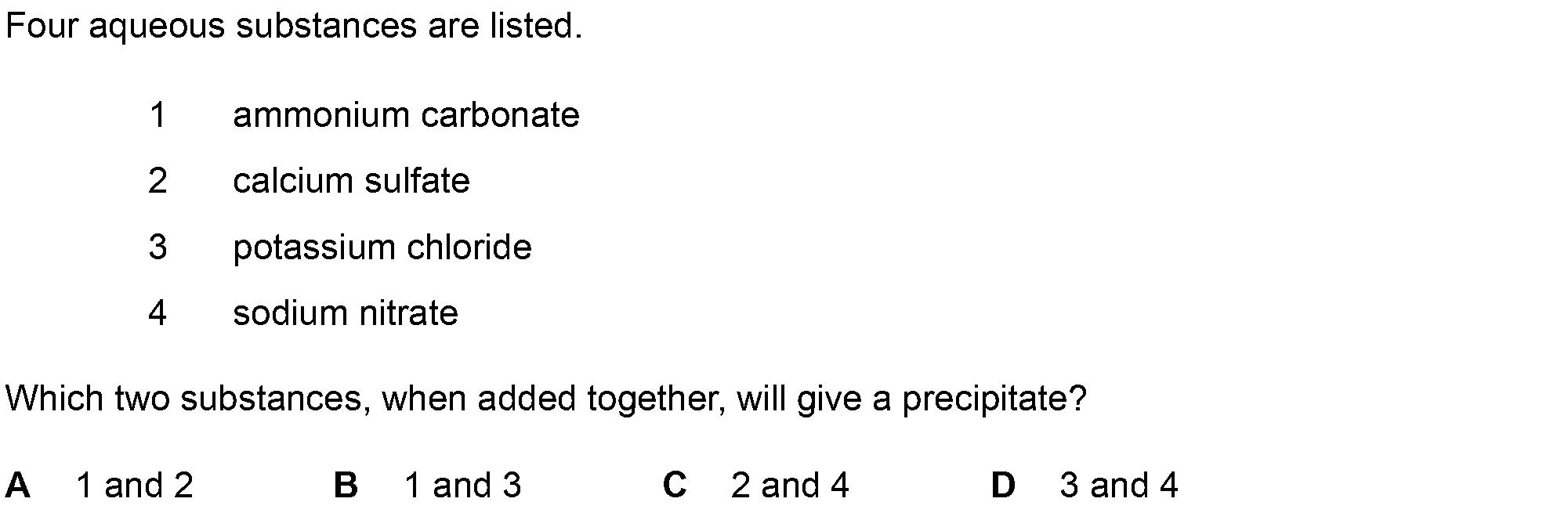
Question 10 of 13 1:30
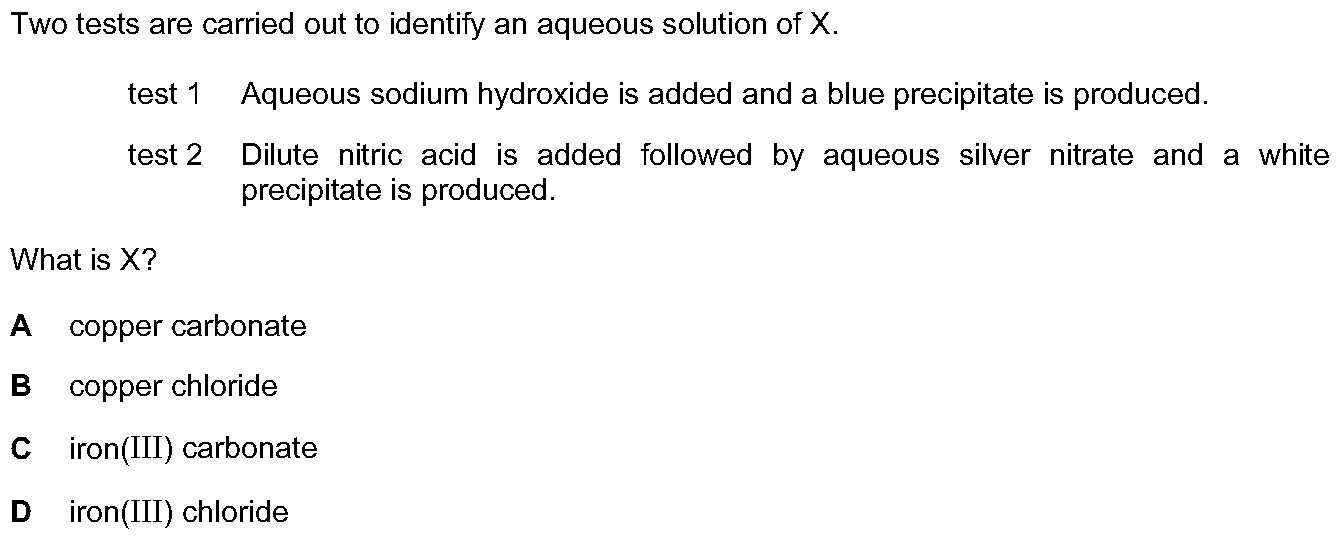
Question 11 of 13 1:30
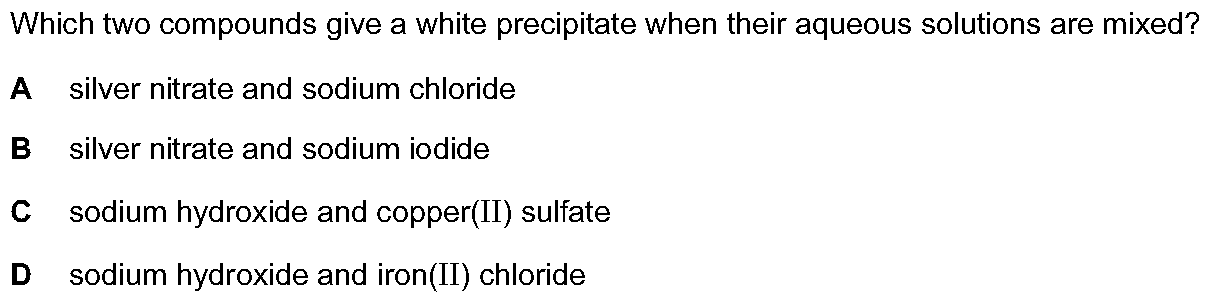
Question 12 of 13 1:30
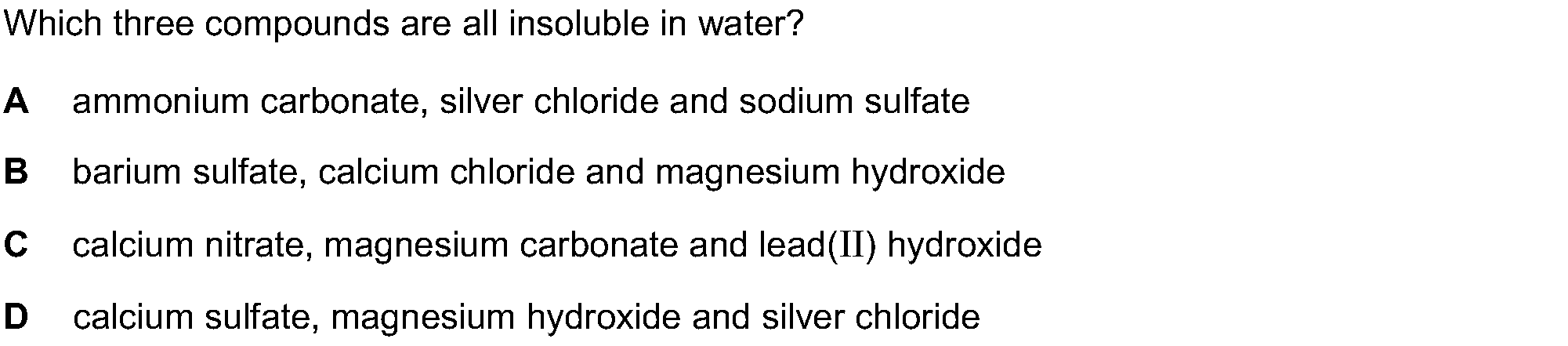
Question 13 of 13 1:30

Answer key
1 B2 A3 B4 C5 A6 D7 A8 C9 A10 B11 A12 D13 C
Written question 1 of 1 · part (a) (1 / 8) 3:00

Show the answer

Written question 1 of 1 · part (b) (2 / 8) 3:00

Show the answer
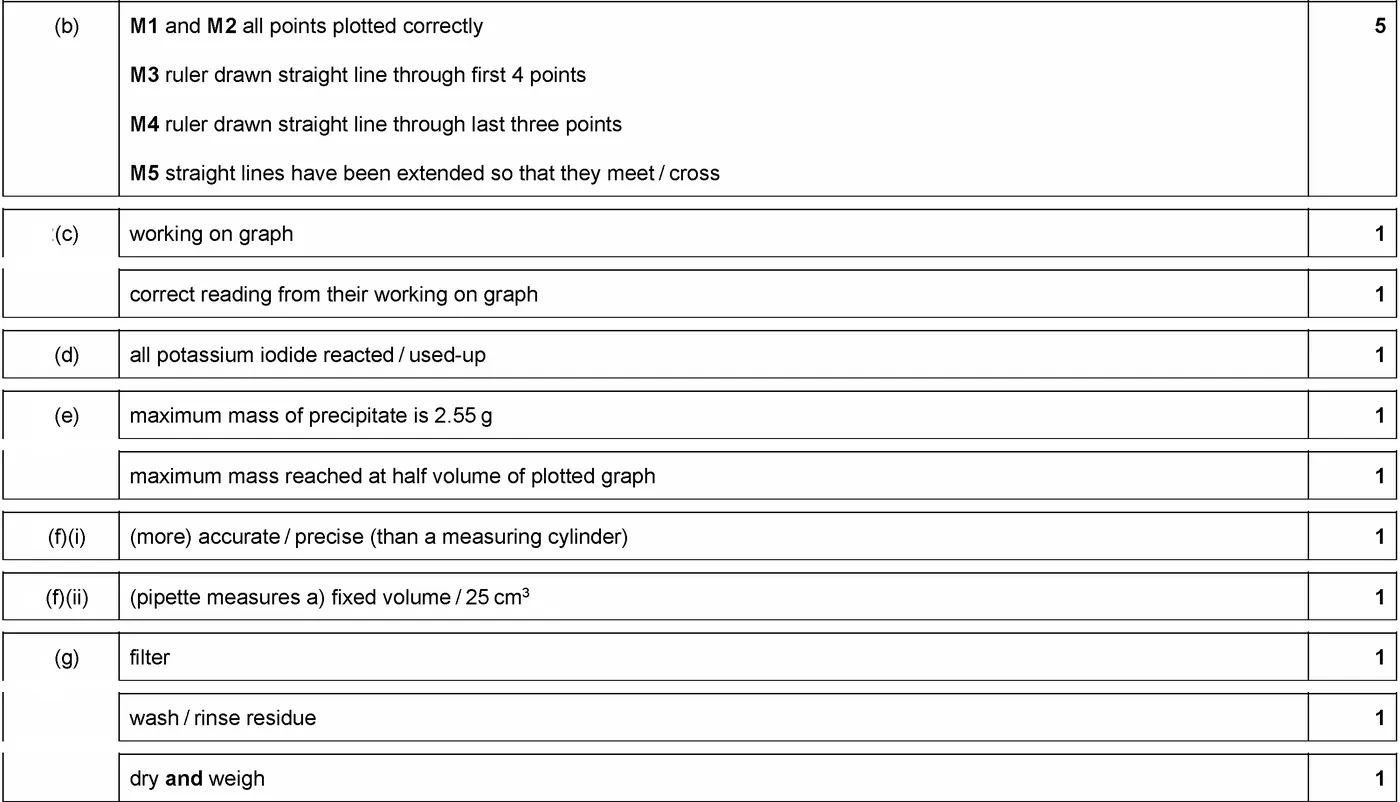
Written question 1 of 1 · part (c) (3 / 8) 3:00

Show the answer
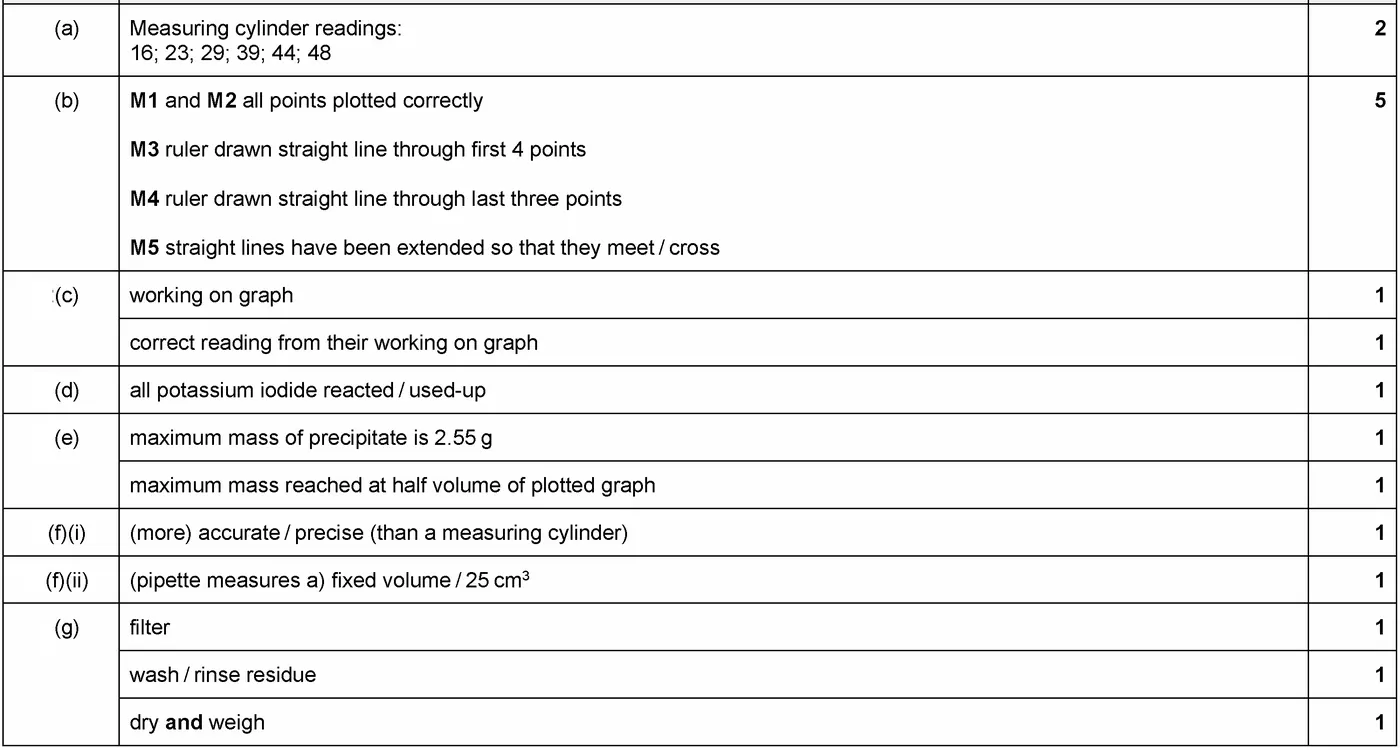
Written question 1 of 1 · part (d) (4 / 8) 3:00
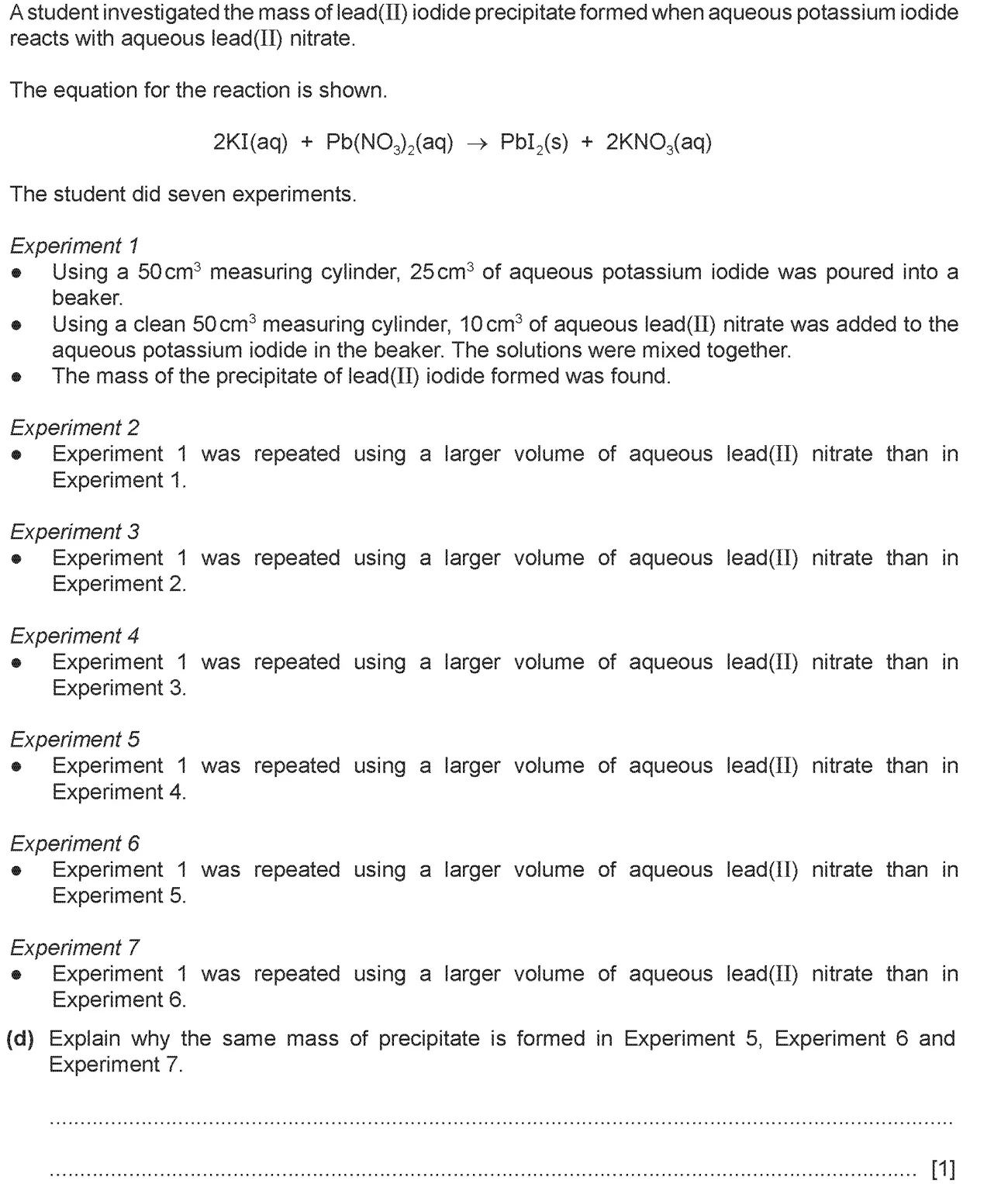
Show the answer
Written question 1 of 1 · part (e) (5 / 8) 3:00
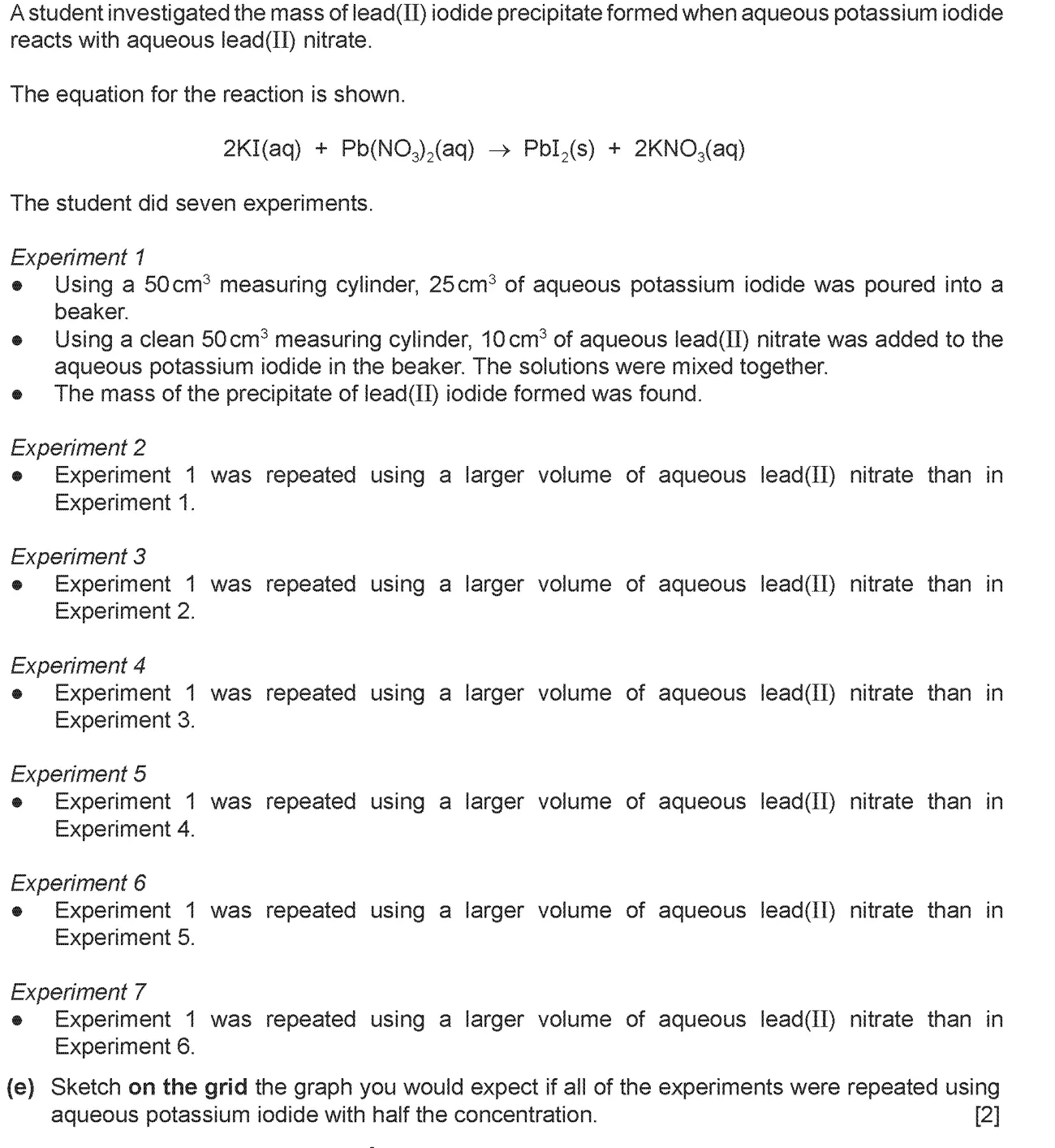
Show the answer
Written question 1 of 1 · part (f)(i) (6 / 8) 3:00

Show the answer
Written question 1 of 1 · part (f)(ii) (7 / 8) 3:00

Show the answer
Written question 1 of 1 · part (g) (8 / 8) 3:00

Show the answer
Each part of a written question is on its own screen. Write your answer first, then open "Show the answer" to check it against the mark scheme.
Last updated: