5.1Chapter 5: Acids and Alkalis
Acids and alkalis — Alhussan Chemistry - Stage 7 Revision Notes & Topical Questions
5 min read 10 parts Lesson 1 of 7 4 quizzes
5.1 Acids and alkalis — Hazard Symbols, Properties and Litmus — Alhussan International Academy — Chemistry (Stages 7–9) notes: Describe the properties of acids and alkalis, state that acidity is a chemical property and use litmus and other indicators.Acids — lemons, limes and vom…
- Laboratory chemicals
- Universal indicator
- Making an indicator
- Precautions
- Dilute solutions
- Pure water
Part 1 of 8Acids and alkalis in daily life
- Acids lemons, limes and vomit taste sour because they contain acids.
- Lemon juice and vinegar are acids, and so are fizzy drinks and vitamin C.
- Alkalis toothpaste, soap, baking soda and oven cleaner are alkaline.
- Neutral some substances are not acidic or alkaline, and pure water is neutral.
- Chemical property the acidity or alkalinity of a substance is a chemical property.
- Laboratory chemicals hydrochloric, sulfuric and nitric acid are acids,
- and sodium hydroxide, potassium hydroxide and calcium hydroxide (limewater) are alkalis.
Part 2 of 8Properties
| Property | Acids | Alkalis |
|---|---|---|
| Taste (never test in the lab) | Sour | Bitter, soapy feel |
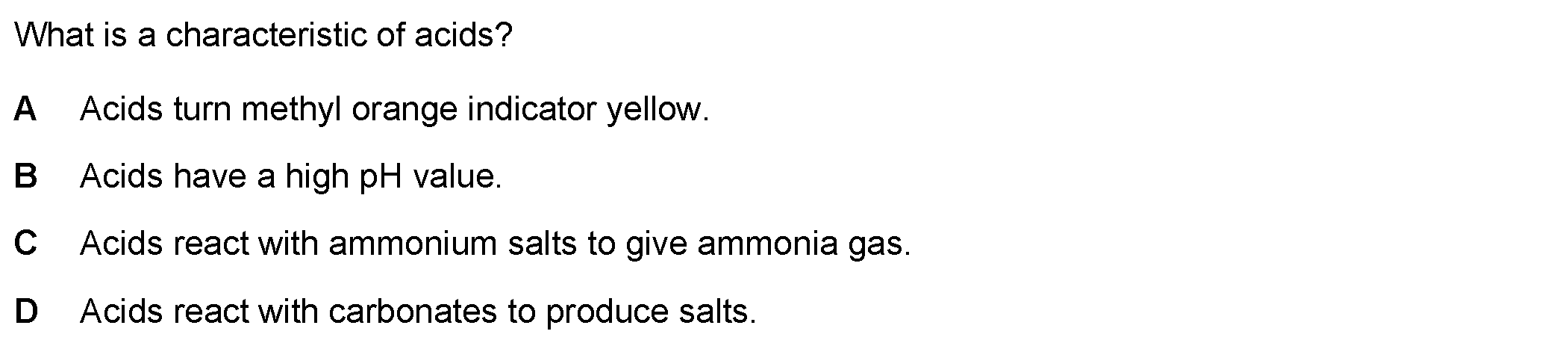
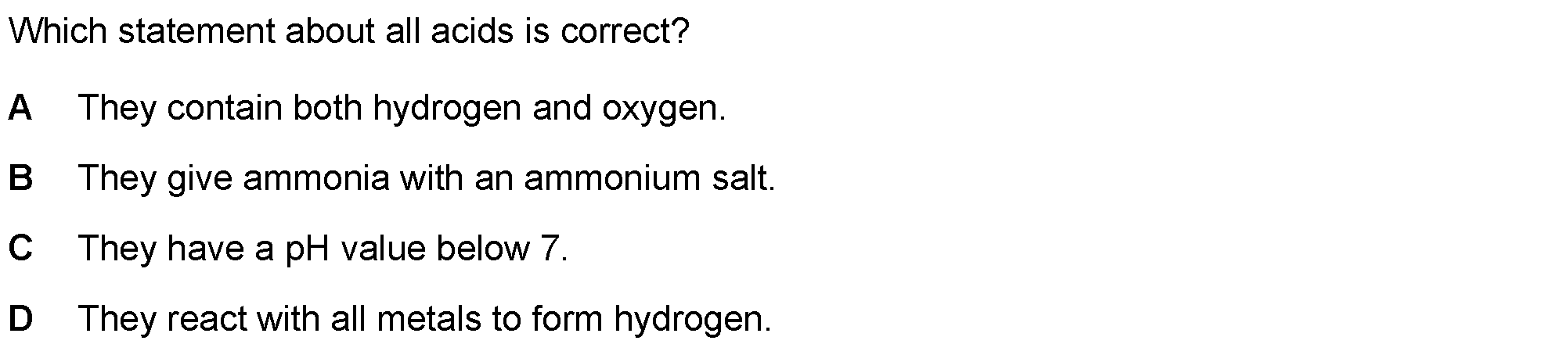
| pH | Less than 7 | More than 7 |
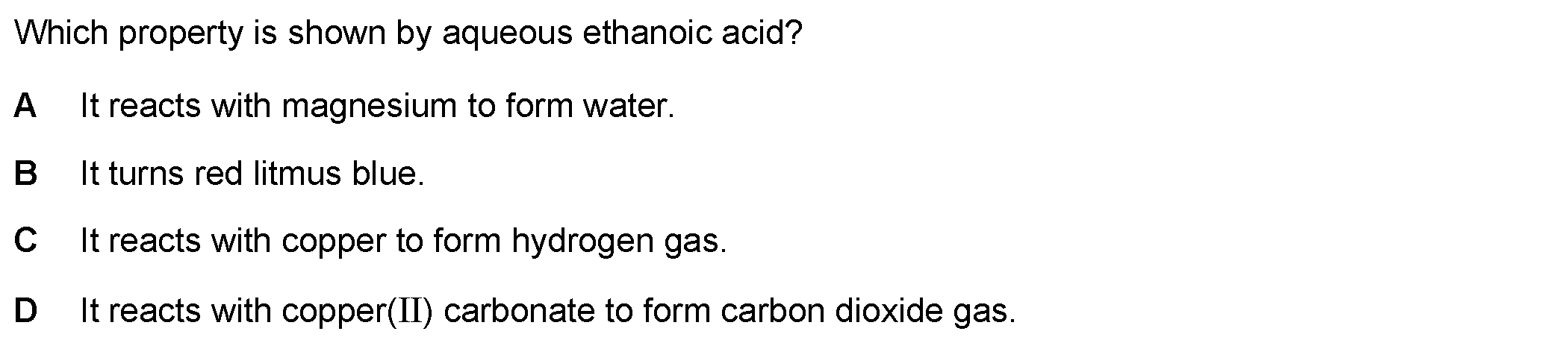
| Litmus | Turns red | Turns blue |
| Reactions | React with metals, carbonates and bases | React with acids |
| Ions in water | Hydrogen ions, H+ | Hydroxide ions, OH− |
Part 3 of 8Indicators
- Litmus litmus solution is red in acid, blue in alkali and purple in neutral solution.
- Paper soaked in litmus makes litmus paper: blue litmus paper turns red in acid and red litmus paper turns blue in alkali.
- Litmus cannot tell you how strong the acid is.
- Other indicators phenolphthalein is colourless in acid and pink in alkali, and methyl orange is red in acid and yellow in alkali.
- Universal indicator it gives a range of colours showing the pH value.
Part 4 of 8Plant indicators
| Indicator | Colour in acidic solution | Colour in alkaline solution |
|---|---|---|
| Red cabbage | Red | Yellow, green or blue |
| Hibiscus flower | Dark pink or red | Dark green |
| Beetroot | Red or purple | Yellow |
- Femi added hibiscus flowers to warm water in a cooking pot, poured the mixture through a colander and collected the solution in a cup.
- Adamma heated hibiscus flowers in a beaker with a Bunsen burner, filtered the mixture and collected it in a conical flask.
- Both made a working indicator, and hibiscus flowers make a good acid-alkali indicator.
- Femi could not see the colours on a green plate, so her apparatus was not suitable there, and Adamma's test tube was a better choice.
Part 5 of 8Hazard symbols and safety
- Corrosive a hand and a surface being eaten away means it destroys skin and eyes.
- Irritant an exclamation mark means it causes redness or irritation.
- Toxic a skull and crossbones means it can kill if swallowed or inhaled.
- Flammable it catches fire easily.
- Oxidising it helps other things burn.
- Precautions wear eye protection, clear up spills with plenty of water and wash hands afterwards.
- Dilution always add acid slowly to water with stirring, because the reaction releases heat and could spit.
- Dilute solutions they are usually irritant or less hazardous than concentrated ones.
Part 6 of 8Strong and weak
- Examples hydrochloric acid is a strong acid and ethanoic acid (vinegar) is a weak acid.
Part 7 of 8Acids and alkalis at the particle level
- Acids when dissolved in water the molecules release hydrogen ions (H+), and more hydrogen ions means more acidic.
- Alkalis they release hydroxide ions (OH−).
- Pure water it has equal tiny amounts of both, so it is neutral.
- Neutralisation hydrogen ions and hydroxide ions combine to make water.
- Conduction acids conduct electricity when dissolved because ions carry charge.
Part 8 of 8Everyday uses
- Sulfuric acid the most widely made industrial chemical, used for fertilisers, paints and batteries.
- Sodium hydroxide used in making soap and paper.
- Citric acid added to sweets and drinks as a preservative and for flavour.
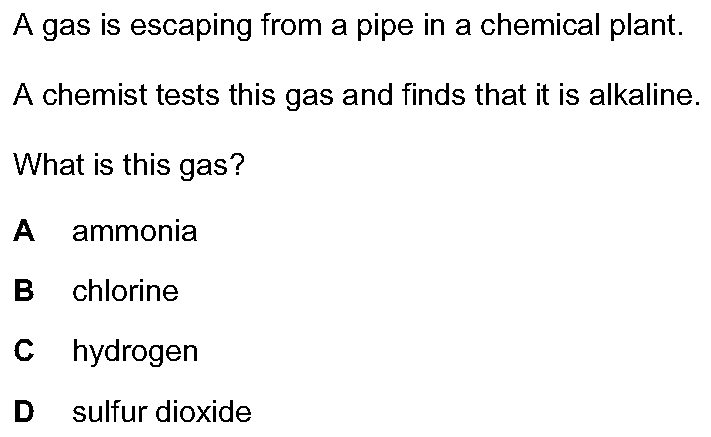
- Ammonia solution an alkali used in cleaning products and fertilisers.
Key terms
| Term | Meaning |
|---|---|
| Acid | A substance with pH below 7 that releases hydrogen ions in water. |
| Alkali | A soluble base with pH above 7. |
| Indicator | A dye solution that changes colour in acidic and alkaline solutions. |
| Neutral | Neither acidic nor alkaline, with pH 7. |
| Hazard symbol | A symbol showing how a substance can cause harm. |
| Base | A substance that neutralises an acid. |
Avoid these mistakes
Marked practiceQuizzes for this lesson
?What do you want to solve now?
✓Checkpoint Quiz
11 multiple-choice questions from real exam papers on this lesson.
Question 1 of 11 1:30
Question 2 of 11 1:30

Question 3 of 11 1:30
Question 4 of 11 1:30

Question 5 of 11 1:30

Question 6 of 11 1:30
Question 7 of 11 1:30
Question 8 of 11 1:30

Question 9 of 11 1:30

Question 10 of 11 1:30
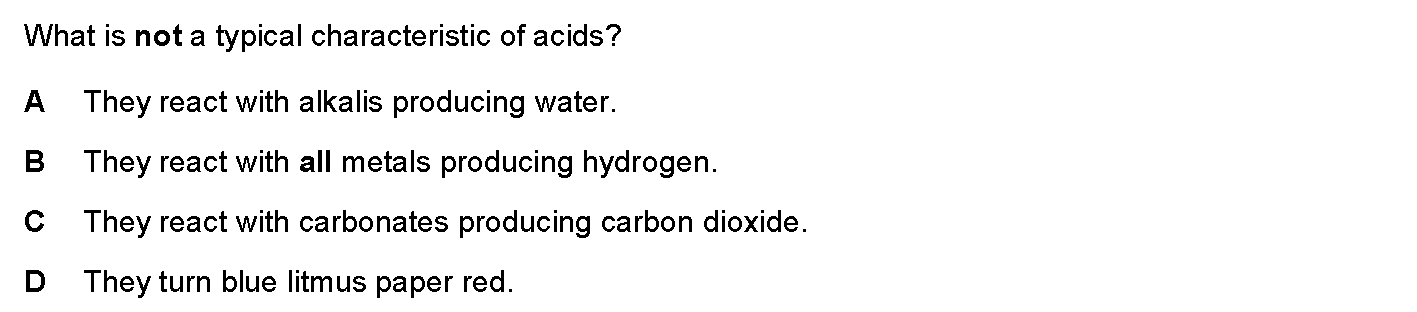
Question 11 of 11 1:30

Answer key
1 D2 A3 A4 D5 B6 D7 C8 B9 B10 B11 C
Last updated: