11.6Chapter 11: Patterns in the Periodic Table
The periodic table: Group 2 and Group 7/8 Trends — Alhussan Chemistry - Stage 9 Revision Notes & Topical Questions
5 min read 8 parts Lesson 6 of 7 2 quizzes
11.6 The periodic table: Group 2 and Group 7/8 Trends — Alhussan International Academy — Chemistry (Stages 7–9) notes: Describe patterns in the physical and chemical properties of Group 2, and the trends in Group 7 and Group 0.Position — Group 2 is the second column of the period…
- Compared with Group 1
- With water
- Prediction
- Hypothesis
- Conclusion
- Limitation
Section 1 of 8Group 2: the alkaline earth metals
- Group 2 is the second column of the periodic table: beryllium, magnesium, calcium, strontium, barium and radium.
- Electrons atoms of all Group 2 elements have two electrons in the outer shell and form 2+ ions.
- Their similar configurations give them similar chemical properties.
- Compared with Group 1 they are harder and denser, have higher melting points and react less vigorously.
- Beryllium the 18 mirror segments of the James Webb Space Telescope are beryllium coated with gold,
- because beryllium is strong for its weight and holds its shape over a range of temperatures.
Section 2 of 8Physical properties of Group 2
| Element | Melting point (°C) |
|---|---|
| Beryllium | 1287 |
| Magnesium | 650 |
| Calcium | 842 |
| Strontium | 777 |
| Barium | 727 |
| Radium | 700 |
- Trend in general melting point decreases from top to bottom of Group 2.
- Exception the melting point of magnesium does not fit the pattern.
- Variables the independent variable is the element and the dependent variable is the melting point in °C.
Section 3 of 8Chemical properties of Group 2
- With acid all Group 2 elements react with dilute hydrochloric acid to make a solution of a chloride and hydrogen gas.
- strontium + hydrochloric acid → strontium chloride + hydrogen.
- calcium + hydrochloric acid → calcium chloride + hydrogen.
- With water magnesium reacts very slowly with cold water, whereas calcium produces a steady stream of bubbles.
- calcium + water → calcium hydroxide + hydrogen.
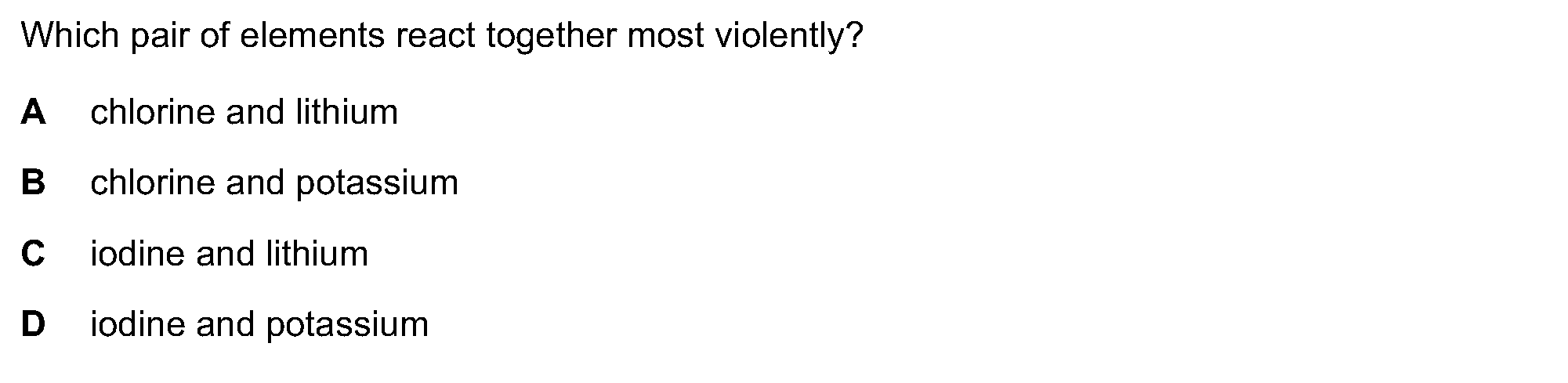
- Trend reactivity increases down the group because the outer electrons are further from the nucleus in larger atoms and are lost more easily.
- Prediction strontium would react faster than calcium.
Section 4 of 8Investigating the reactivity of Group 2
- Question what is the pattern in reactivity of the Group 2 elements with hydrochloric acid?
- Hypothesis from top to bottom the outer electrons get further from the nucleus and are easier to give away, so reactions get more vigorous.
- Prediction calcium, which is below magnesium, will react more vigorously.
- Method add each metal to dilute hydrochloric acid in a test tube, collect the gas, and test it with a lighted splint.
- The splint goes out with a squeaky pop, which shows the gas is hydrogen.
- Conclusion calcium reacted more vigorously than magnesium, so for the elements tested the reactions get more vigorous down the group.
- Limitation only two Group 2 elements were tested, and reacting more of them would make the conclusion more certain.
Section 5 of 8Group 7: the halogens
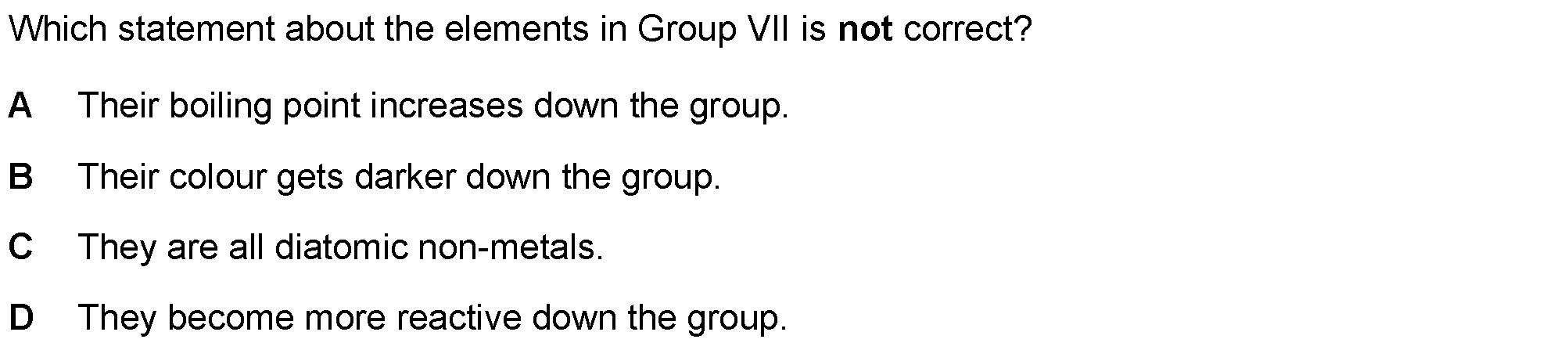
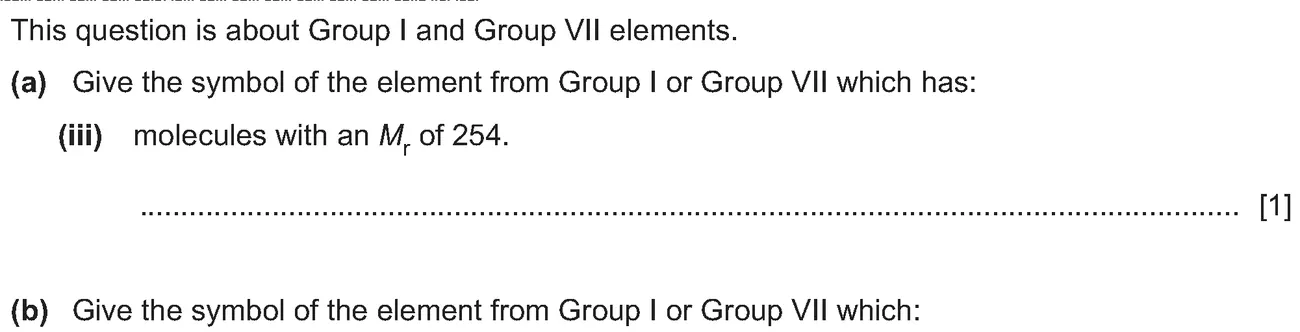
- Properties fluorine, chlorine, bromine and iodine are non-metals with seven outer electrons that exist as diatomic molecules F2, Cl2, Br2 and I2.
- Down the group the colour darkens and the melting point rises.
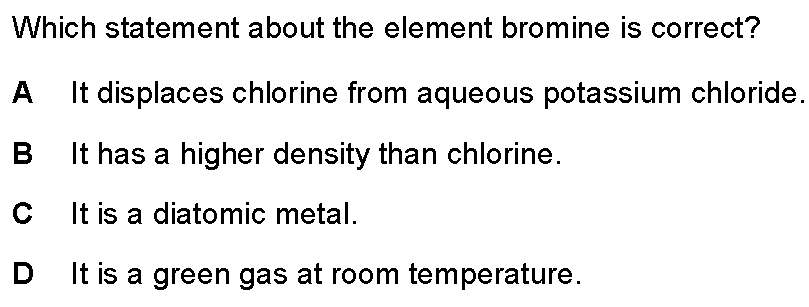
- Chlorine is a pale green gas, bromine an orange-brown liquid and iodine a grey-black solid.
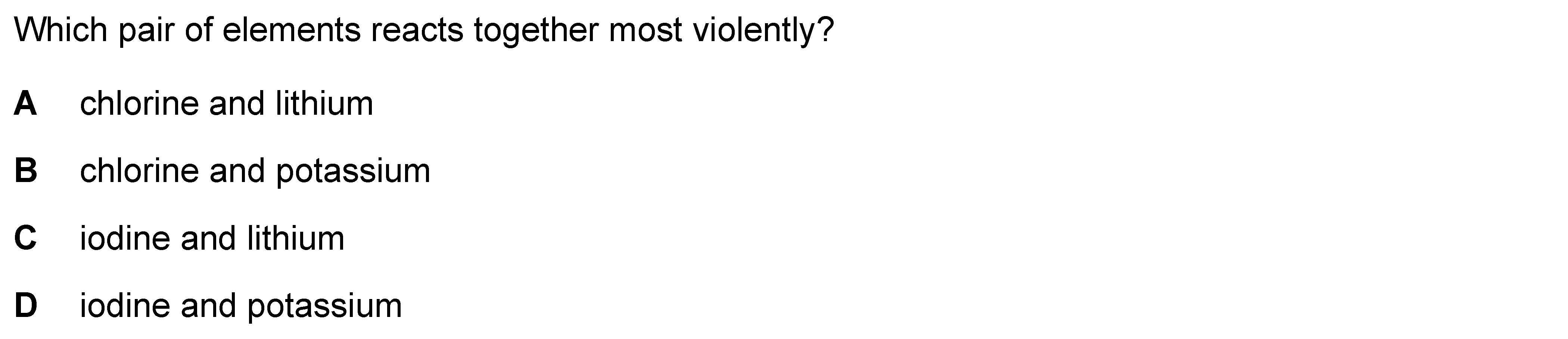
- Reactivity it decreases down the group because a larger atom finds it harder to attract an extra electron into its outer shell.
- Displacement a more reactive halogen displaces a less reactive one from its salt solution.
- chlorine + potassium bromide → potassium chloride + bromine, and the solution turns orange.
- chlorine with potassium iodide turns the solution brown as iodine forms, and iodine with potassium chloride gives no change.
- Safety halogens are toxic: chlorine irritates the lungs and bromine causes burns, so they are used in a fume cupboard.
Section 6 of 8Group 0: the noble gases
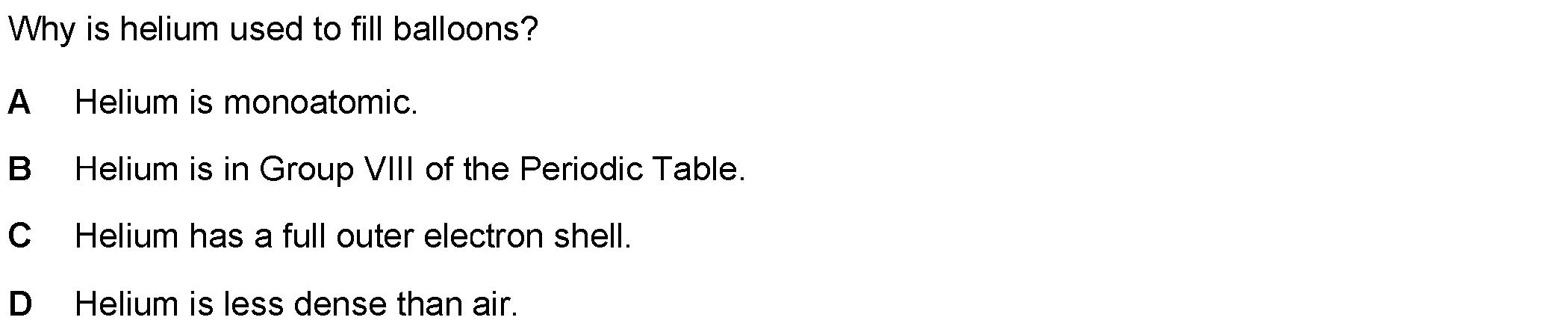
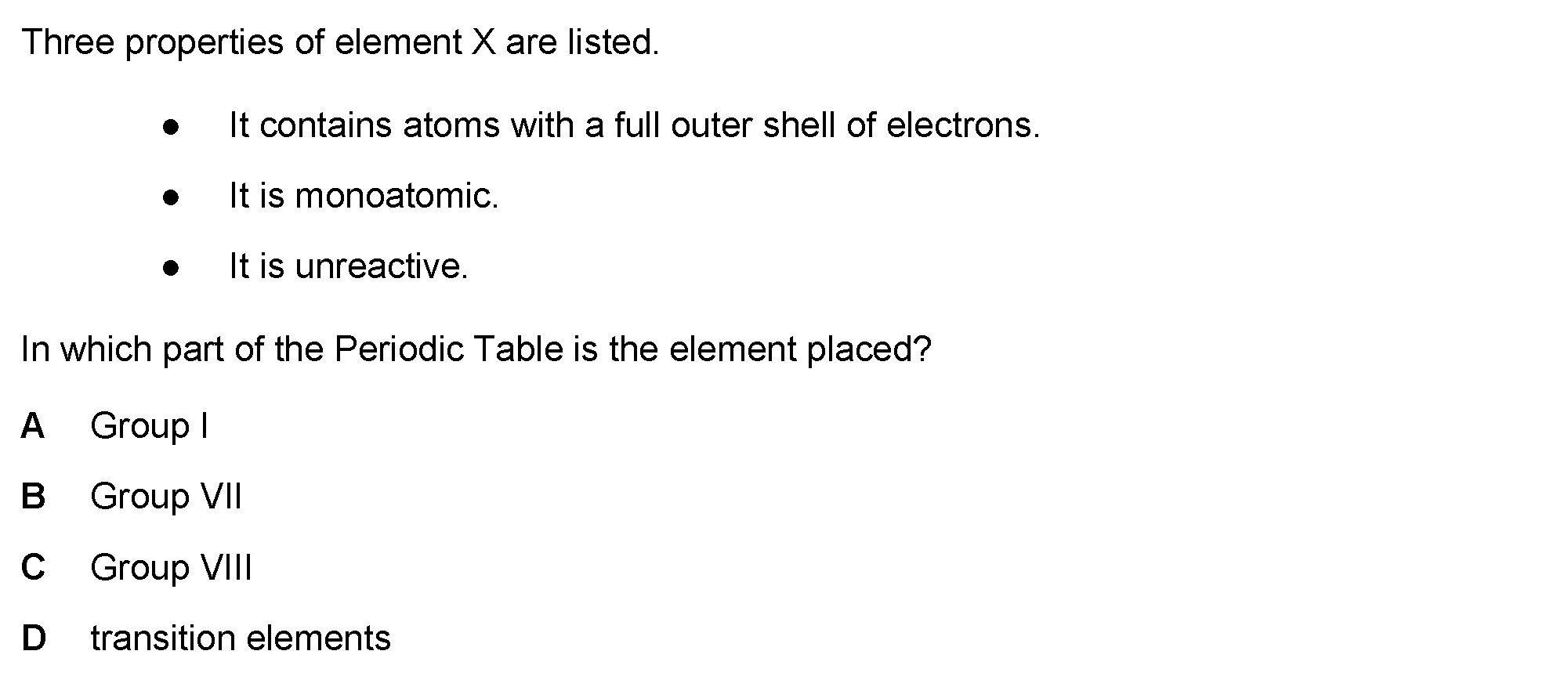
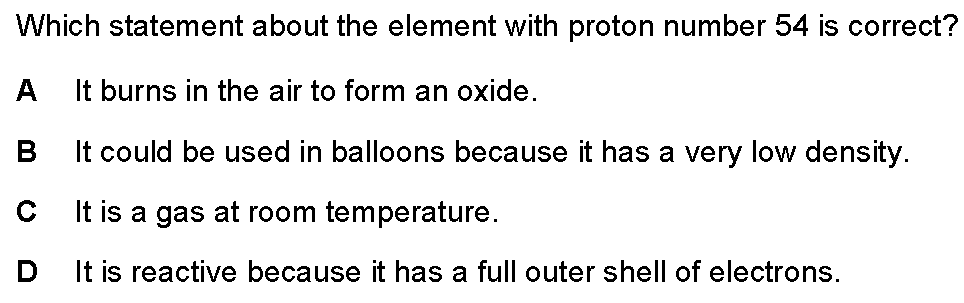
- Properties helium, neon, argon, krypton and xenon have full outer shells, so they are unreactive and exist as single atoms.
- Boiling points they increase down the group because bigger atoms have stronger attractions between them.
- Helium boils at -269 °C, neon at -246 °C and argon at -186 °C.
- Uses helium is used in balloons, neon in advertising signs and argon in filament lamps (an inert atmosphere).
- (low density and non-flammable)
| Group | Outer electrons | Ion | Reactivity down the group |
|---|---|---|---|
| 1 | 1 | 1+ | Increases |
| 2 | 2 | 2+ | Increases |
| 7 | 7 | 1- | Decreases |
| 0 | 8 (2 for He) | None | Unreactive |
Section 7 of 8Key terms
| Term | Meaning |
|---|---|
| Halogen | a reactive non-metal in Group 7. |
| Noble gas | an unreactive Group 0 element. |
| Diatomic | a molecule with two atoms. |
| Displacement | a more reactive element replacing a less reactive one in a compound. |
| Alkaline earth metal | a Group 2 element. |
| Hypothesis | a possible explanation based on evidence that can be tested. |
Section 8 of 8Exam technique
Marked practiceQuizzes for this lesson
?What do you want to solve now?
✓Checkpoint Quiz
17 multiple-choice + 5 written questions from real exam papers on this lesson.
Question 1 of 17 1:30
Question 2 of 17 1:30
Question 3 of 17 1:30

Question 4 of 17 1:30
Question 5 of 17 1:30

Question 6 of 17 1:30

Question 7 of 17 1:30
Question 8 of 17 1:30

Question 9 of 17 1:30
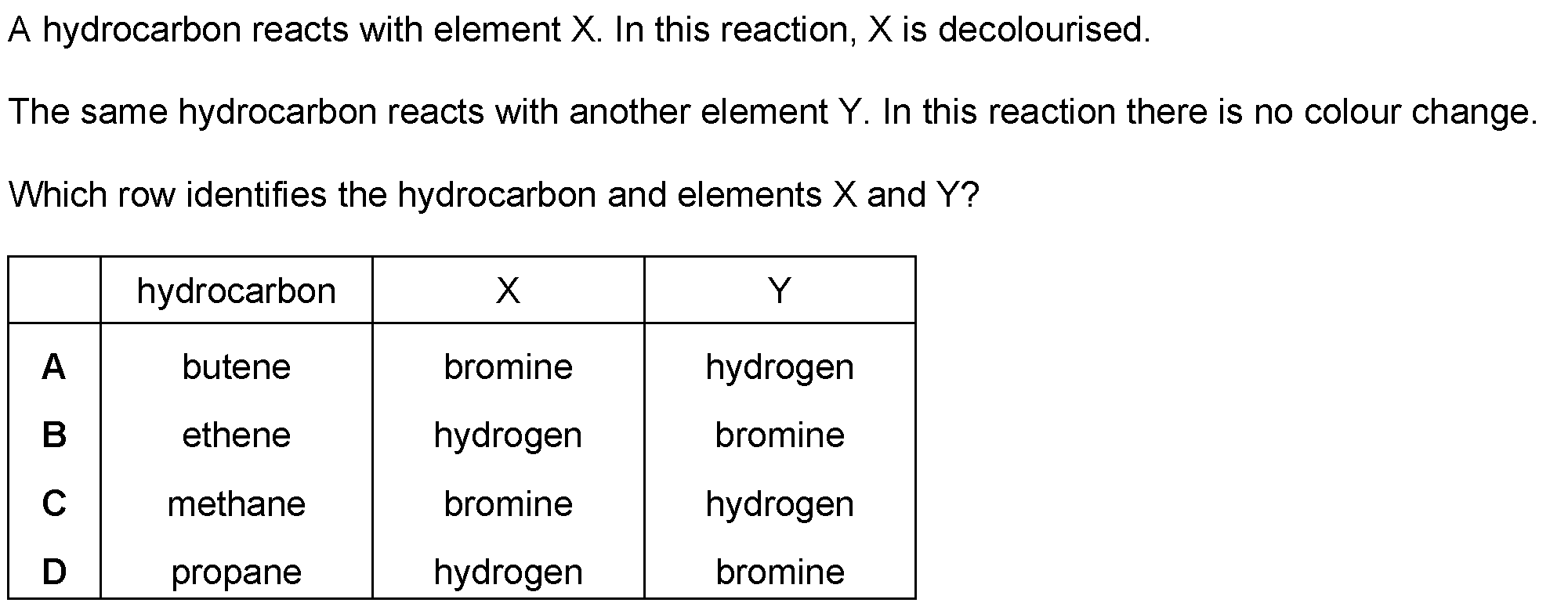
Question 10 of 17 1:30
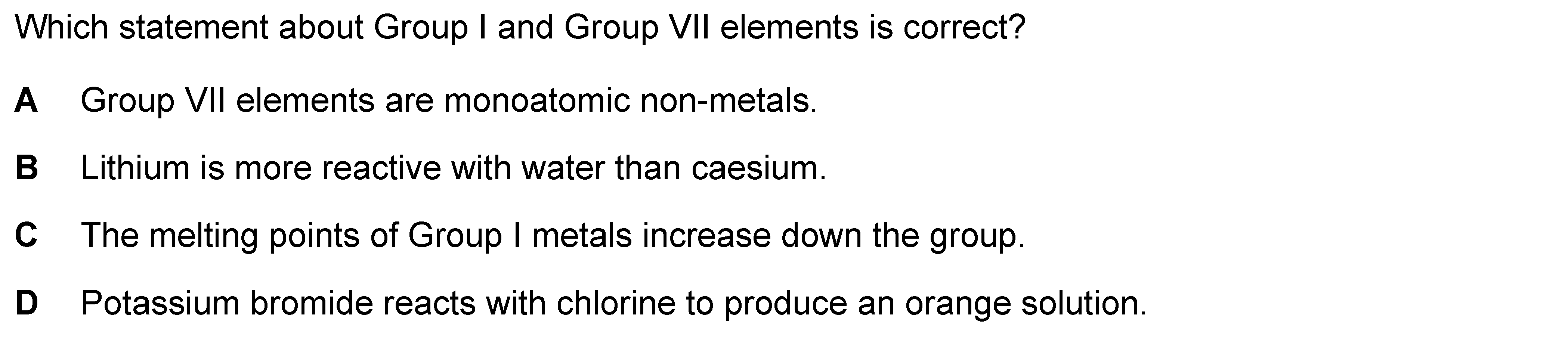
Question 11 of 17 1:30
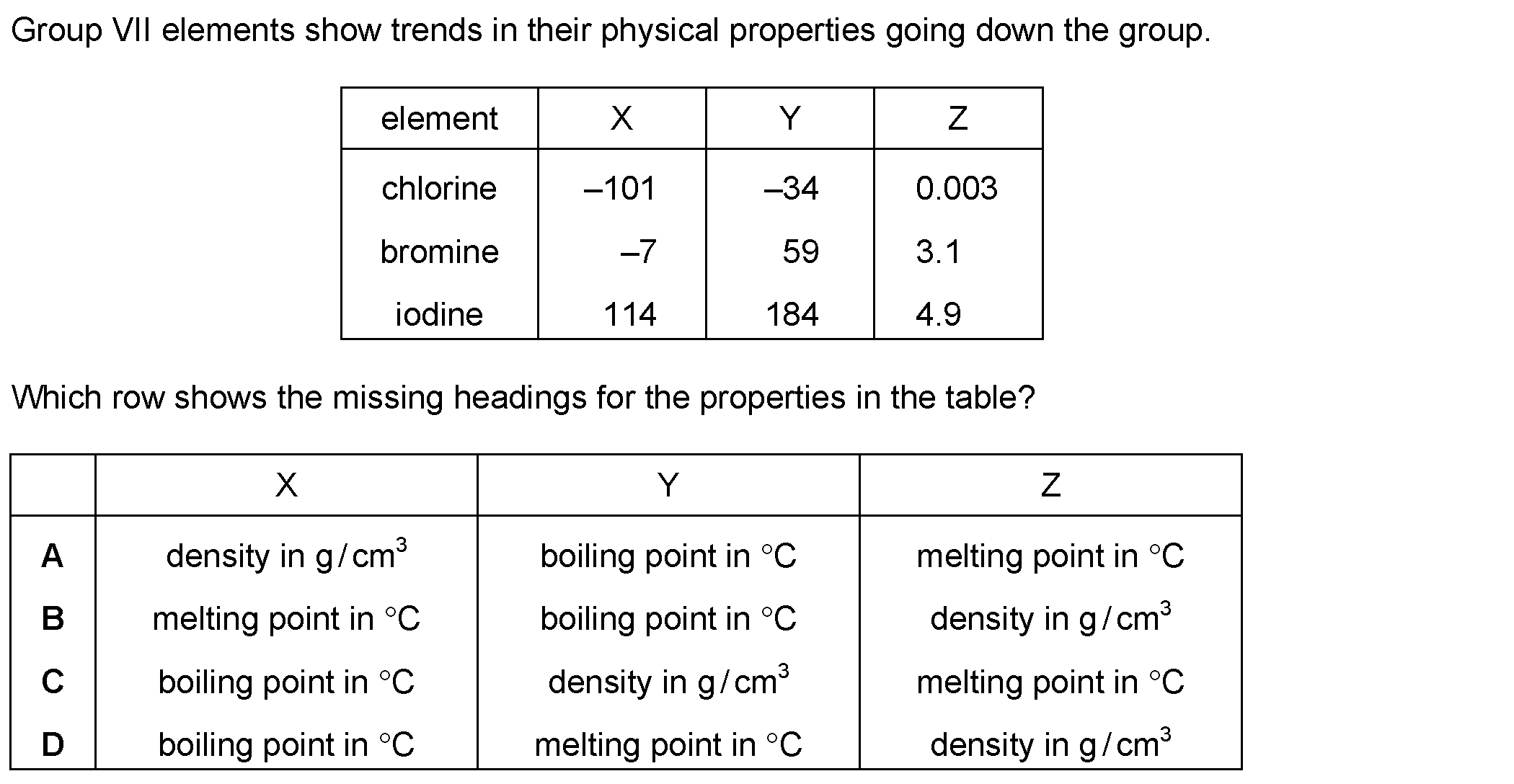
Question 12 of 17 1:30
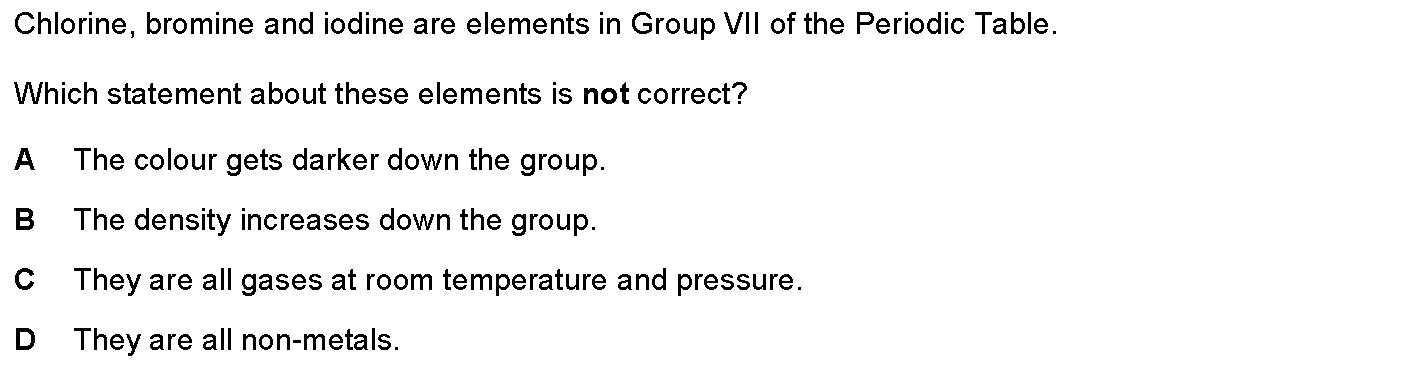
Question 13 of 17 1:30

Question 14 of 17 1:30
Question 15 of 17 1:30
Question 16 of 17 1:30
Question 17 of 17 1:30

Answer key
1 B2 B3 B4 D5 B6 A7 C8 A9 A10 D11 B12 C13 D14 D15 B16 C17 B
Written question 1 of 5 · part (a)(i) (1 / 6) 3:00

Show the answer

Written question 1 of 5 · part (a)(ii) (2 / 6) 3:00

Show the answer

Written question 1 of 5 · part (a)(iii) (3 / 6) 3:00
Show the answer

Written question 1 of 5 · part (b)(i) (4 / 6) 3:00

Show the answer

Written question 1 of 5 · part (b)(ii) (5 / 6) 3:00

Show the answer

Written question 1 of 5 · part (b)(iii) (6 / 6) 3:00

Show the answer

Written question 2 of 5 · part (a) (1 / 10) 3:00

Show the answer

Written question 2 of 5 · part (b) (2 / 10) 3:00

Show the answer

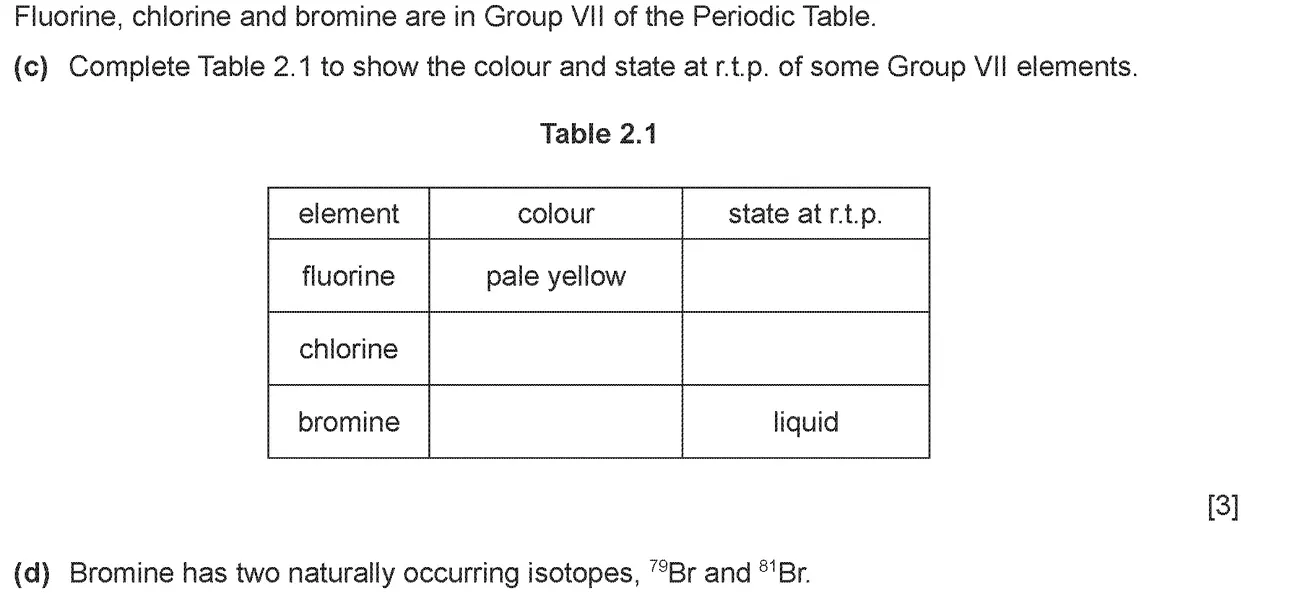
Written question 2 of 5 · part (c) (3 / 10) 3:00
Show the answer

Written question 2 of 5 · part (d)(i) (4 / 10) 3:00

Show the answer

Written question 2 of 5 · part (d)(ii) (5 / 10) 3:00

Show the answer

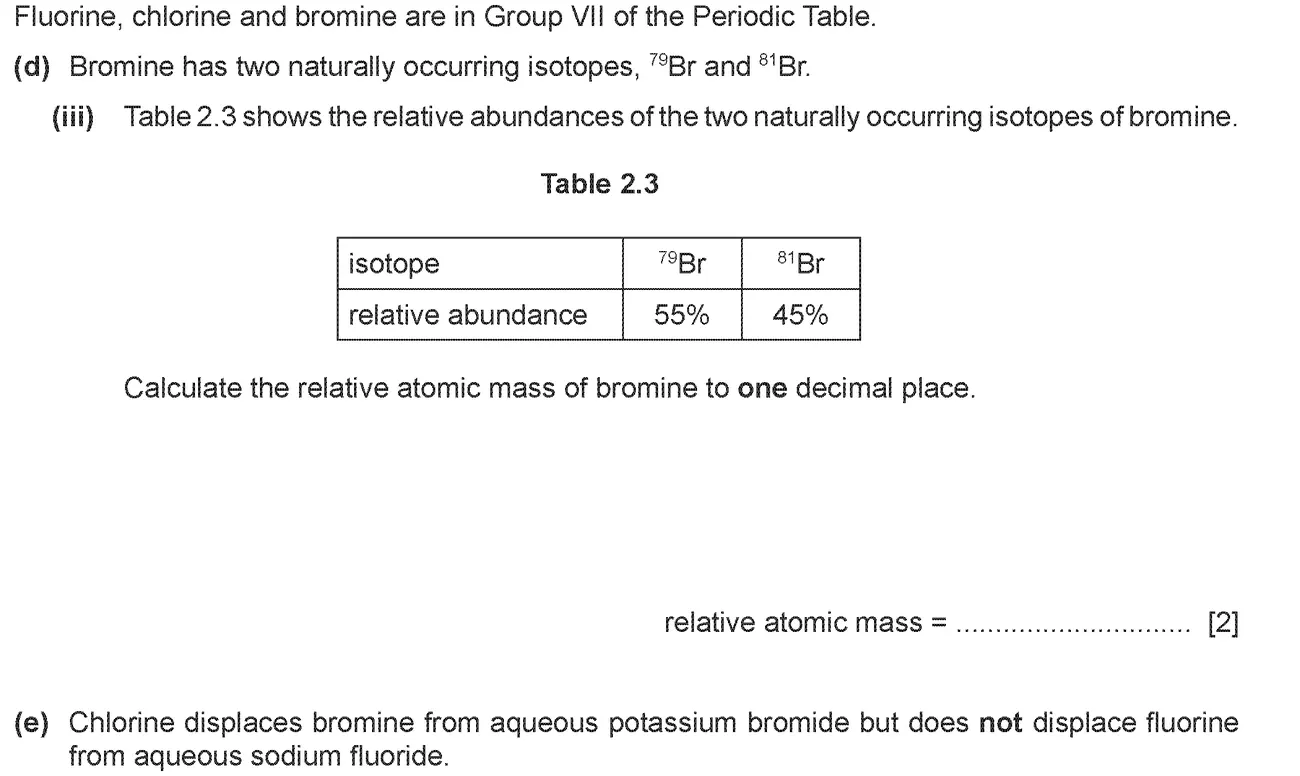
Written question 2 of 5 · part (d)(iii) (6 / 10) 3:00
Show the answer

Written question 2 of 5 · part (e)(i) (7 / 10) 3:00

Show the answer
Written question 2 of 5 · part (e)(ii) (8 / 10) 3:00

Show the answer
Written question 2 of 5 · part (f)(i) (9 / 10) 3:00

Show the answer
Written question 2 of 5 · part (f)(ii) (10 / 10) 3:00

Show the answer
Written question 3 of 5 · part (a) (1 / 8) 3:00

Show the answer

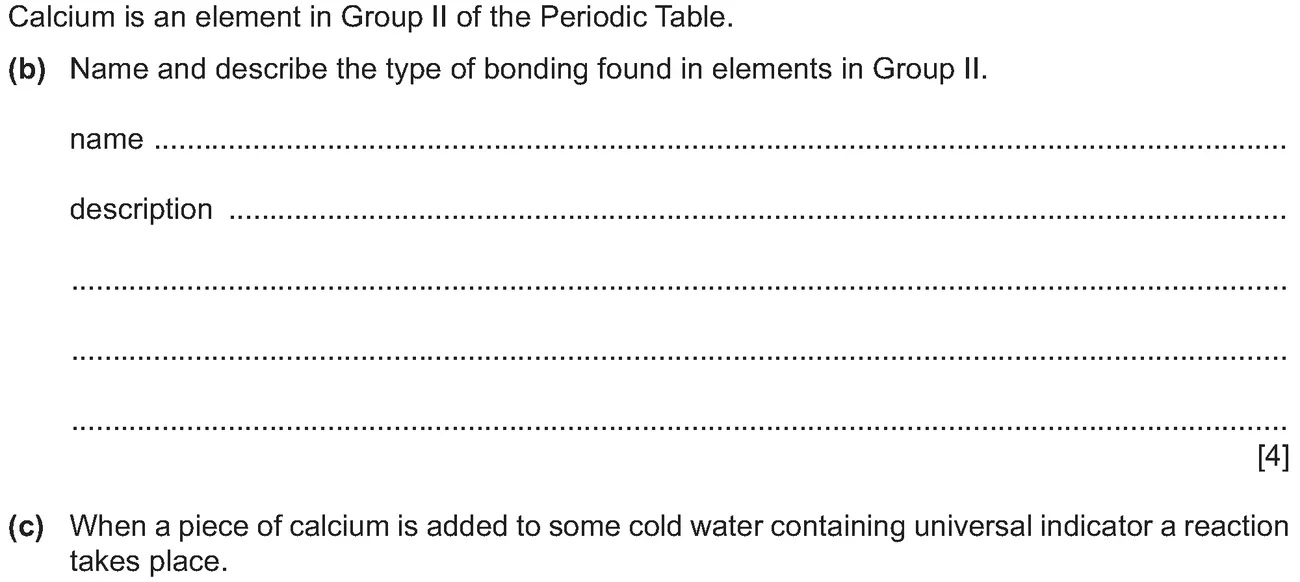
Written question 3 of 5 · part (b) (2 / 8) 3:00
Show the answer

Written question 3 of 5 · part (c)(i) (3 / 8) 3:00

Show the answer
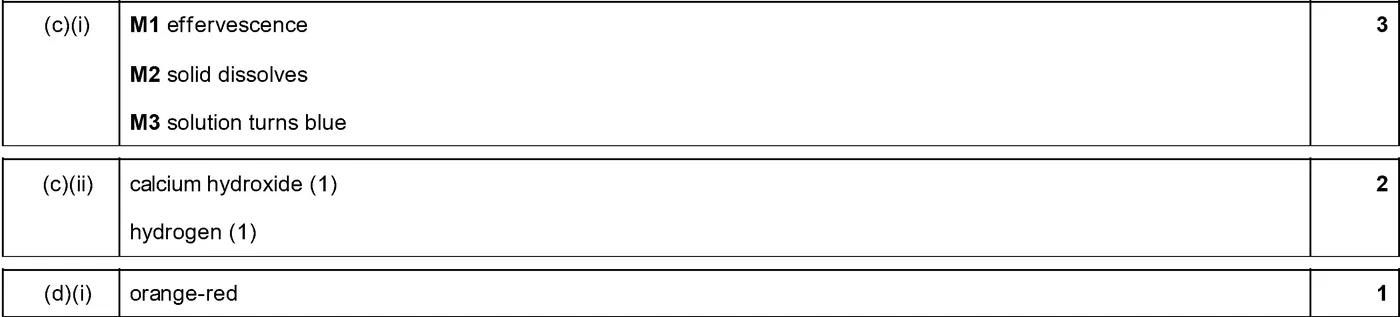
Written question 3 of 5 · part (c)(ii) (4 / 8) 3:00

Show the answer
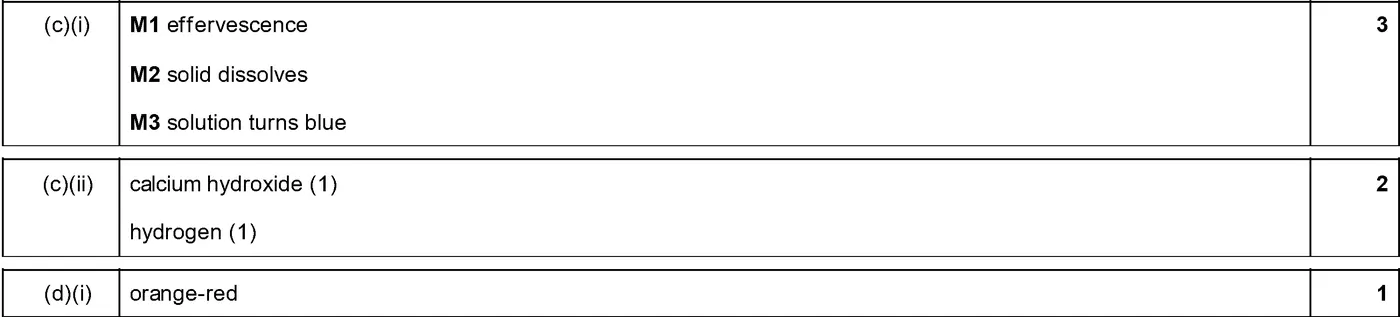
Written question 3 of 5 · part (d)(i) (5 / 8) 3:00

Show the answer

Written question 3 of 5 · part (d)(ii) (6 / 8) 3:00
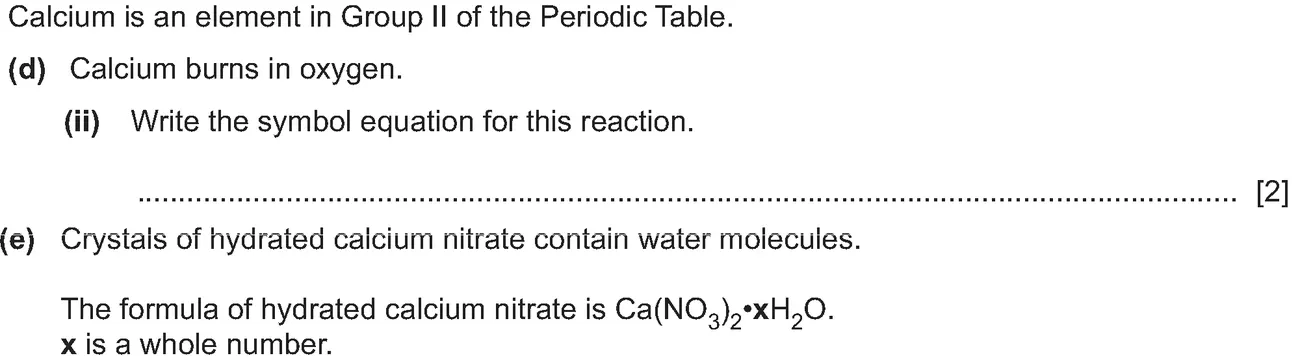
Show the answer
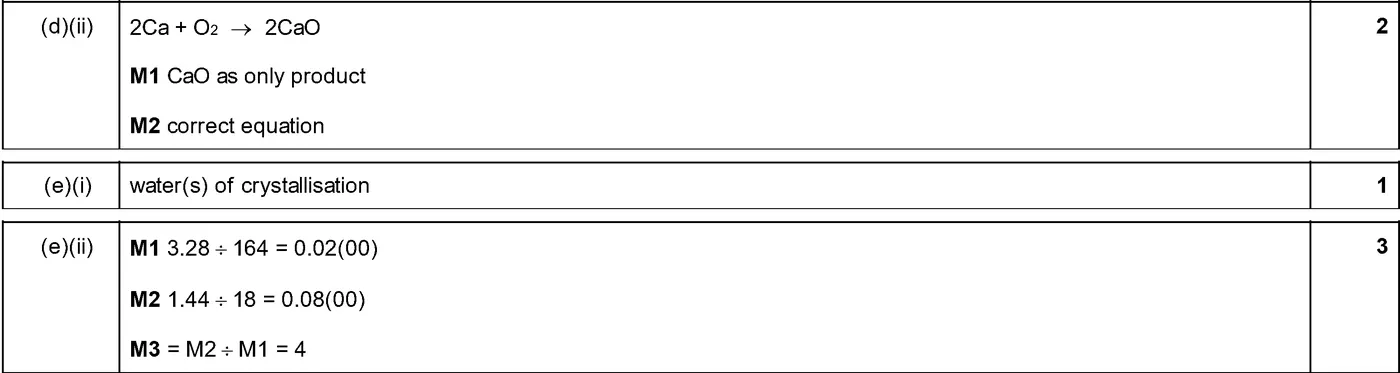
Written question 3 of 5 · part (e)(i) (7 / 8) 3:00

Show the answer
Written question 3 of 5 · part (e)(ii) (8 / 8) 3:00
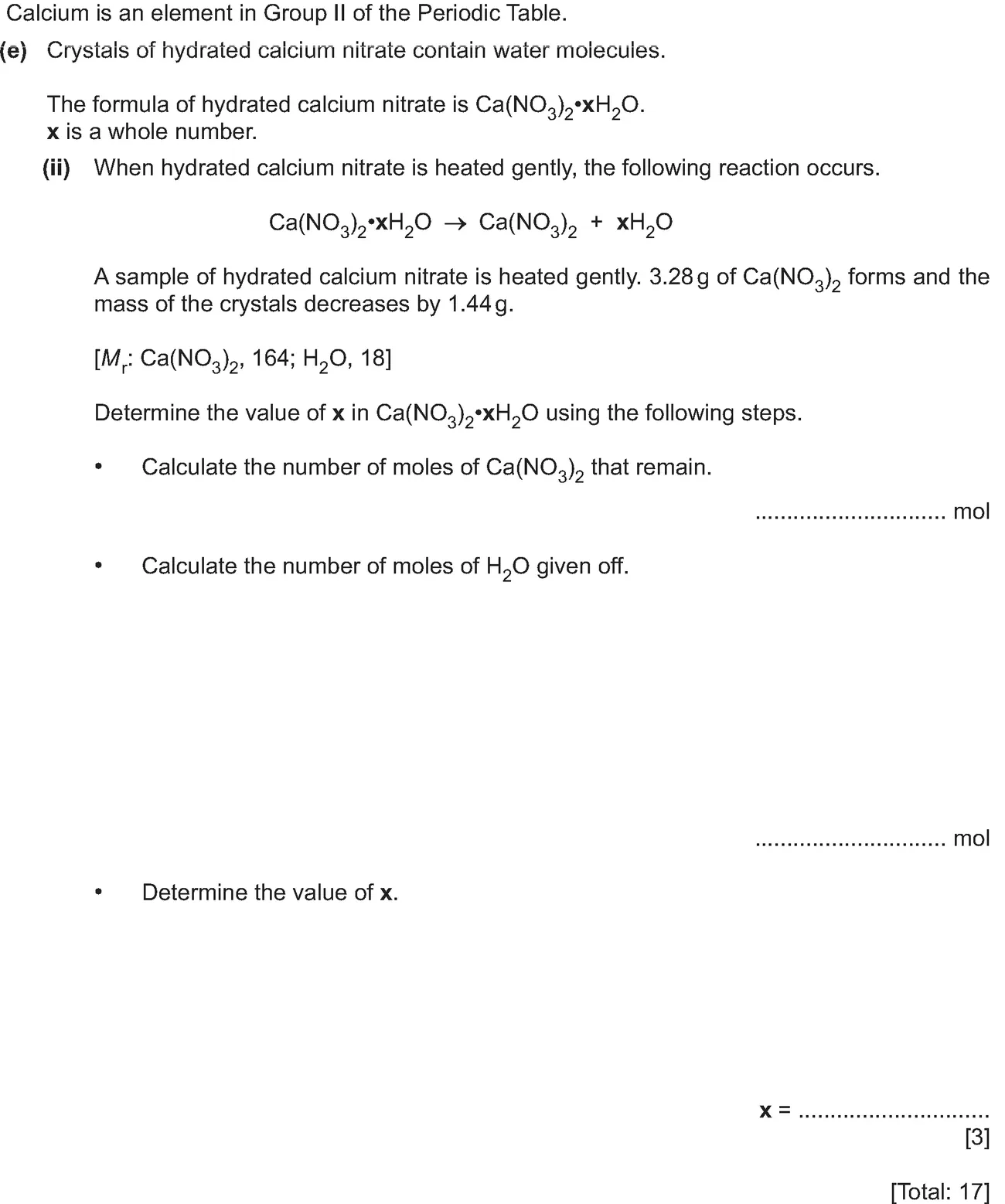
Show the answer
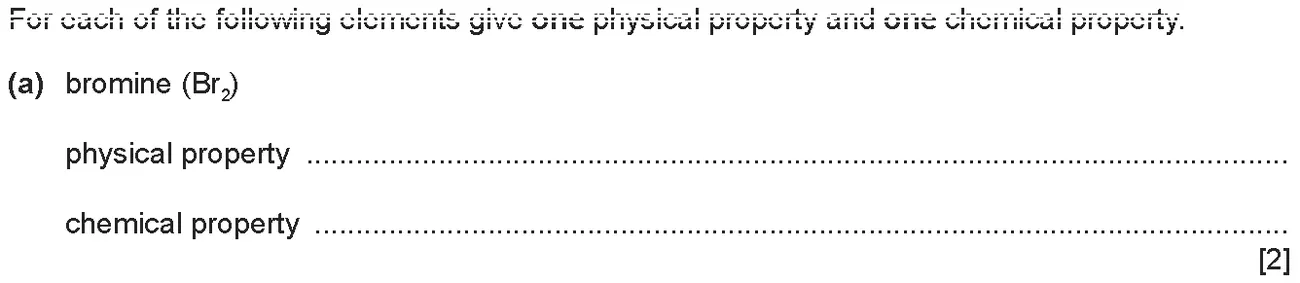
Written question 4 of 5 · part (a) (1 / 3) 3:00
Show the answer
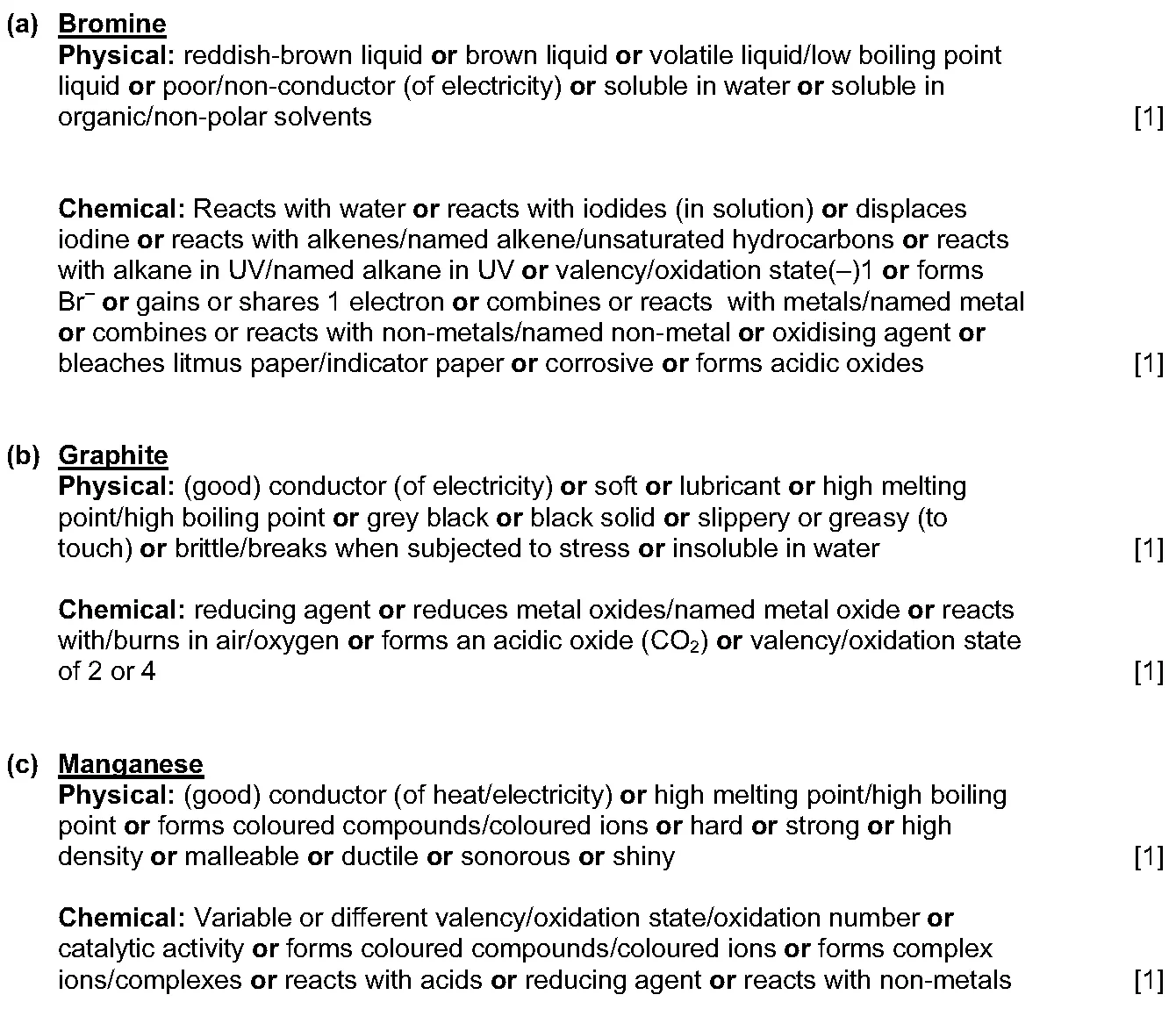
Written question 4 of 5 · part (b) (2 / 3) 3:00

Show the answer

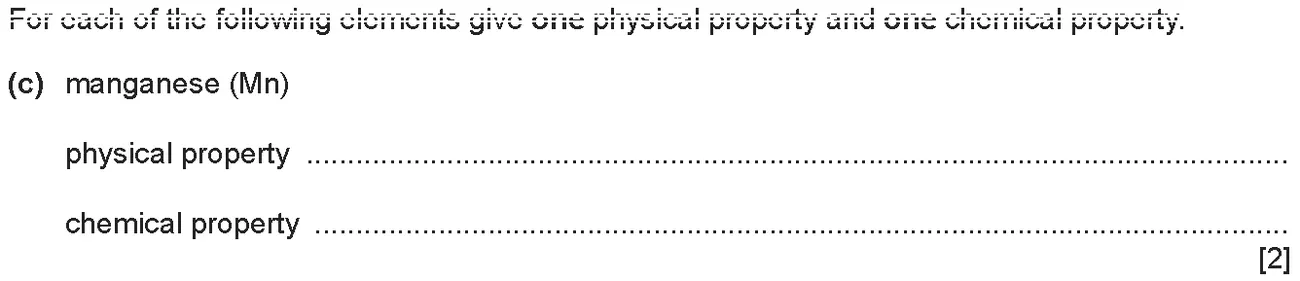
Written question 4 of 5 · part (c) (3 / 3) 3:00
Show the answer
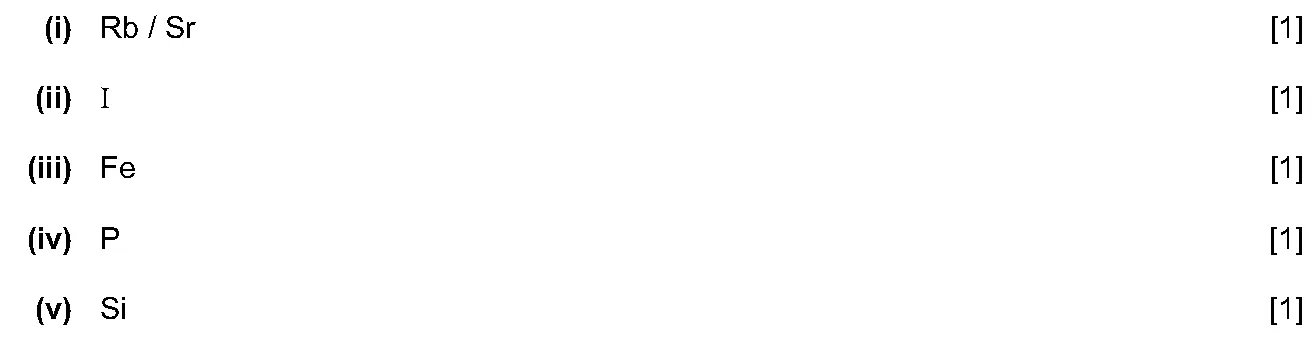
Written question 5 of 5 · part (a) (1 / 5) 3:00

Show the answer
Written question 5 of 5 · part (b) (2 / 5) 3:00

Show the answer
Written question 5 of 5 · part (c) (3 / 5) 3:00

Show the answer
Written question 5 of 5 · part (d) (4 / 5) 3:00

Show the answer
Written question 5 of 5 · part (e) (5 / 5) 3:00

Show the answer
Each part of a written question is on its own screen. Write your answer first, then open "Show the answer" to check it against the mark scheme.
Last updated: