15.3Chapter 15: The Earth in Space (Universe and Stars)
Collisions and the Moon — Alhussan Physics - Stage 9 Revision Notes & Topical Questions
5 min read 8 parts Lesson 3 of 6 2 quizzes
Lesson summary
Physics 15.3 Collisions and the Moon — The Giant Impact Hypothesis (Theia) — Alhussan International Academy — Physics (Stages 7–9) notes: Describe the giant-impact hypothesis for the formation of the Moon, the evidence for and against it and the other theories.Earth's origin — Th…
- Later impacts
- Molten surface
- Cores merged
- Moon formed
- Iron core evidence
- Not certain
Section 1 of 8Formation of the Earth
Earth's origin
- The Earth formed about 4.54 billion years ago from gas and dust left over from the formation of the Sun.
Later impacts
- Various objects hit the Earth later and were absorbed into it.
Iron core
- Gravity pulled dust and gas together, and iron made in other stars formed the central core.
Molten surface
- Debris raining on the young Earth probably kept its surface molten for a long time.
The Moon
- It was not there when the Earth formed.
Section 2 of 8The giant-impact hypothesis
Theia
- An object the size of Mars collided with the young Earth, at some time before 4 billion years ago.
Heating
- The energy of the collision heated both bodies.
Cores merged
- The molten iron cores of the two objects merged to form the Earth's present core.
Moon formed
- The lighter rock was thrown out into orbit and formed the Moon.
Cooling
- The surfaces of both the Earth and the Moon then cooled to form a crust.
Section 3 of 8Predictions and evidence
| Prediction | Evidence |
|---|---|
| The Earth should have an iron core | Not directly seen, but an iron core accounts for the Earth's density and its magnetic field |
| The Moon should orbit at a distance predicted by models | It does orbit at that distance |
| The Moon's orbit should align with the Earth's | The orbits do align |
| Some Moon material should match the Earth and some should differ | Apollo samples show very little difference in composition, which is evidence against |
- Iron core evidence
- A rock core would make the Earth's density too low, and a magnetic field suggests a moving heavy metal in the core.
Section 4 of 8Co-formation theory
Idea
- The Moon formed alongside the Earth as gravity pulled dust and gas together.
- In another version two objects the size of Mars collided and the Earth and Moon formed from them.
For
- The Moon has a similar composition to the Earth, and it would be in orbit at its present location.
Against
- The Moon is less dense than the Earth and does not seem to have a heavy core.
Section 5 of 8Capture theory
Idea
- The Moon formed elsewhere in the Solar System and the Earth's gravity captured it as it passed by.
For
- The Moon is less dense than the Earth.
Against
- Captured objects are not usually spherical, and their orbits do not align with the planet's.
Mars
- Some astronomers think its two small moons, Phobos and Deimos, are captured asteroids.
Section 6 of 8A hypothesis, not a certainty
Not certain
- We are not completely sure the giant-impact hypothesis is correct.
Testing
- Scientists compare predictions with evidence from Moon rocks collected by Apollo astronauts and from computer models.
Accepted
- A hypothesis is accepted when it explains most of the evidence and is kept open to change.
Old theories
- The co-formation and capture theories have been around for a long time.
Section 7 of 8Key terms
| Term | Meaning |
|---|---|
| Giant-impact hypothesis | The idea that the Moon formed from debris after a Mars-sized object (Theia) hit the Earth. |
| Theia | The Mars-sized object thought to have hit the young Earth. |
| Co-formation theory | The idea that the Moon formed alongside the Earth. |
| Capture theory | The idea that Earth's gravity captured a passing Moon. |
| Hypothesis | Scientific knowledge used to explain a prediction. |
Section 8 of 8Exam technique
1
Thinking the Moon was always there — it formed after the Earth.
2
Thinking the giant-impact hypothesis is proven — there is evidence both for and against.
3
Thinking Theia was a small asteroid — it was about the size of Mars.
4
Thinking the Earth's iron core has been directly observed — it is inferred from density and magnetism.
Marked practiceQuizzes for this lesson
?What do you want to solve now?
✓Checkpoint Quiz
1 multiple-choice questions from real exam papers on this lesson.
Question 1 of 1 1:30
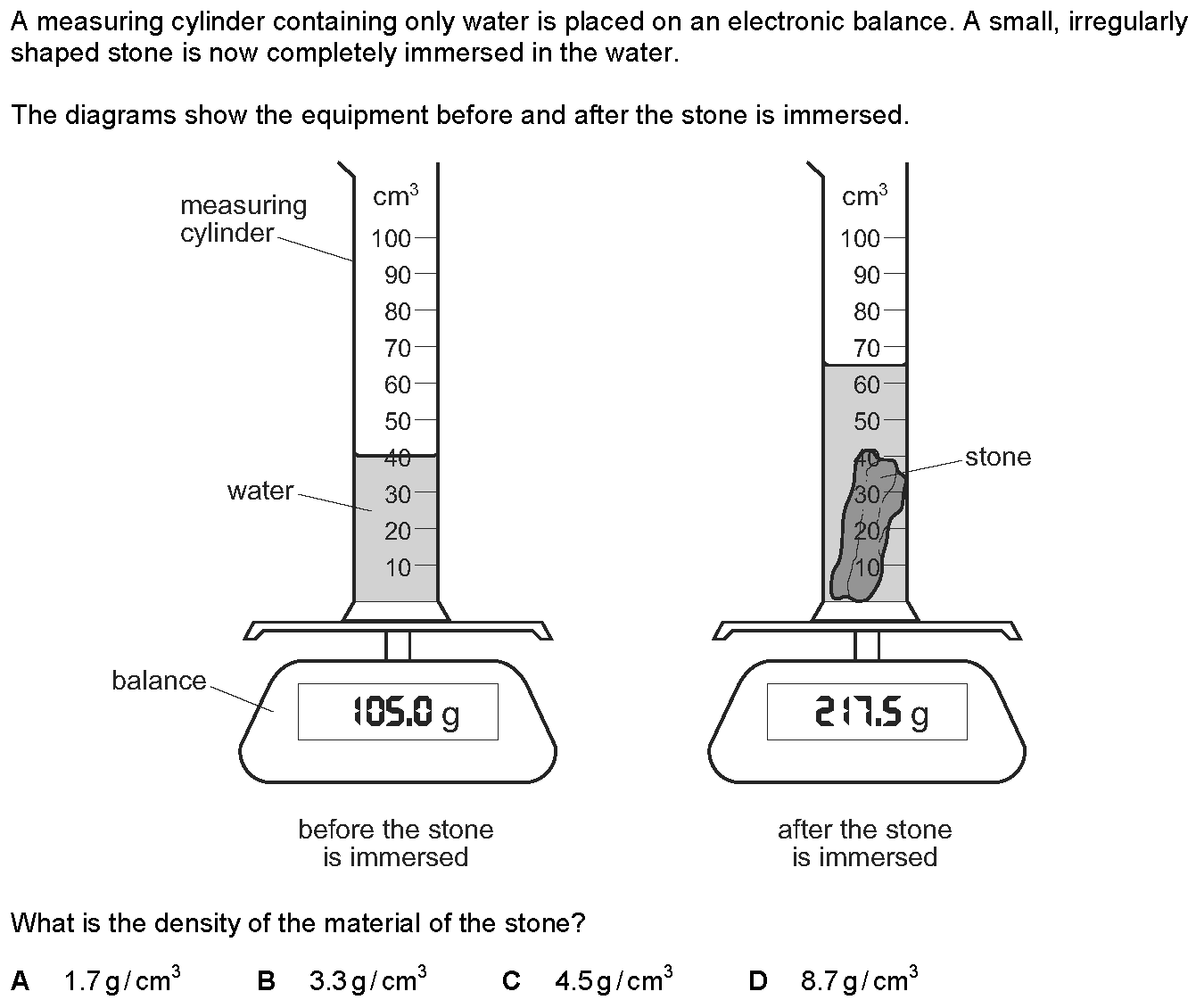
Score: 0 / 1
Answer key
1 C
Last updated: