3.2.12Reproduction and Inheritance
Variation with a Species
5 min read 7 parts Lesson 25 of 28 1 quiz
Section 1 of 7What variation is
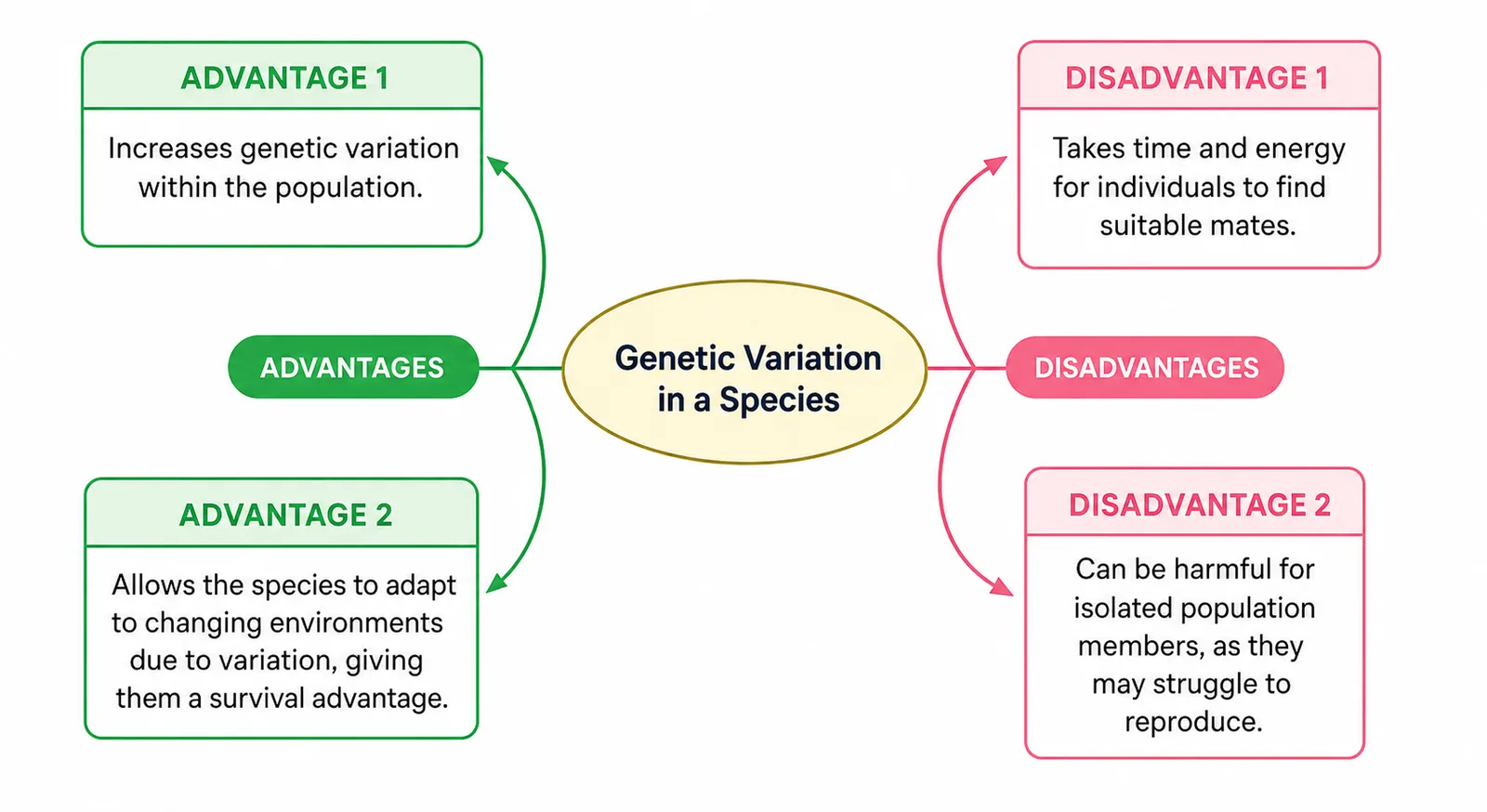
Definition
- Definition Variation means the differences between individuals of the same species.
Three possible causes
- Three possible causes Differences in genes, which arise from the random fusion of gametes at fertilisation.
- Differences in the environment the individual lives in.
- A combination of genes and the environment acting together.
Section 2 of 7Environmental variation
Environmental causes
What 'environmental' means
- What 'environmental' means It simply means anything outside the organism, including climate, diet, culture, lifestyle and accidents.
Accidents
- Accidents An injury can leave a scar on the body.
Diet and lifestyle
- Diet and lifestyle Eating too much and taking little exercise leads to weight gain.
Culture
- Culture The country where a person grows up determines the language and accent they speak.
Plants
- Plants A plant growing in the shade of a large tree grows taller and thinner to reach more light.
Section 3 of 7Discontinuous and continuous variation


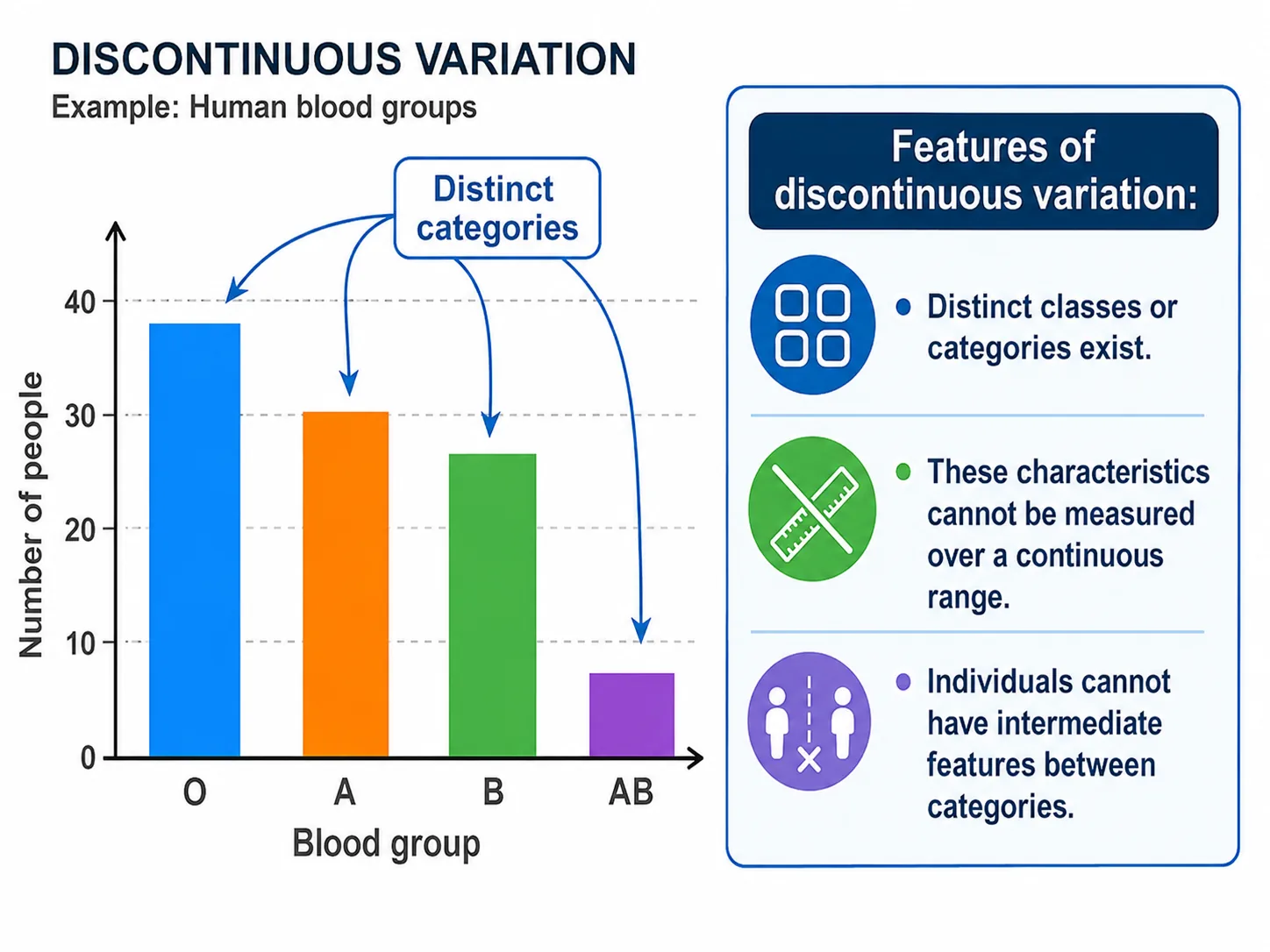
| Feature | Discontinuous variation | Continuous variation |
|---|---|---|
| Appearance | Distinct categories with no in-between values | A smooth range of values between two extremes |
| Main cause | Genes alone | Genes and the environment together |
| Genes involved | Usually a single gene (monogenic) | Often many genes (polygenic) |
| Examples | Blood group, tongue rolling, ability to taste a bitter chemical | Height, body mass, skin colour |
| Graph | Bar chart | Line graph or histogram forming a bell shape |
Section 4 of 7Worked example: height
1Genes inherited
- Genes inherited Tall parents pass on many alleles for height to their children.
2Genetic potential
- Genetic potential The children have the genetic potential to be tall.
3Environment acts
- Environment acts If the diet is poor, the children cannot make enough protein and grow poorly.
4Outcome
- Outcome Their final height is lower than their potential.
- Genes decide the characteristics we inherit, but the environment affects how they develop.
Section 5 of 7Deciding which cause applies
1
Ask whether the characteristic falls into clear categories, such as blood group A, B, AB or O. If so, it is discontinuous and mostly genetic.
2
Ask whether the values form a range, such as heights from 140 cm to 190 cm. If so, it is continuous and probably affected by several genes and the environment.
3
Ask whether the difference could appear during a person's life, such as a scar or a suntan. If so, it is environmental.
4
If identical twins raised apart still differ in a characteristic, the difference must be caused by the environment, because their genes are the same.
5
Always explain your choice by naming the cause: genes, environment or both.
Section 6 of 7Key terms
| Term | Meaning |
|---|---|
| Variation | Differences between individuals of the same species. |
| Discontinuous variation | Variation where individuals fall into distinct categories, with no intermediates. |
| Continuous variation | Variation where individuals show a full range of values between two extremes. |
| Polygenic | Controlled by many genes acting together. |
| Environmental variation | Differences caused by factors outside the organism, such as diet or climate. |
Section 7 of 7Exam technique
1
Saying that variation is always inherited; scars, accents and weight gain are environmental.
2
Confusing continuous with discontinuous variation. Height is continuous because values form a smooth range.
3
Writing that the environment changes the genes. It affects how the inherited characteristic develops.
4
Suggesting that blood group is affected by diet; it is controlled by genes alone.