Curriculum
Login

Curriculum

Science

More lessons

0/52
Text lesson

Lesson 1 Questions: Chemical Bonding and Types of Compounds

Science

Lesson 1 Questions: Chemical Bonding and Types of Compounds

مقدمة الدرس

مقدمة الدرس

  • ★ Comprehensive Study & Detailed Pedagogical Guide ★
  • Comprehensive Explanation Chemical Bonding, Valency and Classification of Compounds
  • Science (Preparatory Stage – 1st Prep) | Grade 7 (1st Prep) | 2026 / 2027 Official Curriculum | Unit 1: Chemical Reactions & Matter
  • • Classify elements into metals, non-metals, and noble gases based on electronic orbital occupancy.
  • • Trace cation and anion formation and explain the electrostatic origin of ionic bonding.
  • • Contrast single, double, and triple covalent bonds with molecular Lewis electron-dot models.
  • • Deduce chemical valency and write systematic chemical formulas of polyatomic ionic salts.
• Classify inorganic matter into four families→Acids, Alkalis/Bases, Oxides, and Salts.
Figure 1 – Electronic Configuration of Metals and Non-Metals
  • Figure (Figure 1 – Electronic Configuration of Metals and Non-Metals.png): Electronic orbital configurations of sodium, chlorine, and magnesium during cation/anion formation.
Lesson 1 Questions: Chemical Bonding and Types of Compounds · 1 / 6
المفاهيم والمصطلحات الأساسية

المفاهيم والمصطلحات الأساسية

📖 📖 Core Terminology, Scientific Definitions & Glossaries:

Comparison aspectMain ideaKeywords
Metal
  • An electropositive element containing 1
  • or 3 electrons in its outermost valence energy level
  • exhibiting a tendency to lose electrons during chemical reactions to form positive cations
electropositiveelementcontainingelectrons
Non-Metal
  • An electronegative element containing 5
  • or 7 valence electrons
  • exhibiting a tendency to gain or share electrons to attain a stable octet
  • forming negative anions or covalent bonds
electronegativeelementcontainingvalence
Ionic BondA chemical bond resulting from strong electrostatic attraction between a positive metallic cation and a negative non-metallic anion formed via complete electron transferchemicalresultingstrongelectrostatic
Covalent BondA chemical bond formed between non-metal atoms through mutual sharing of one or more pairs of valence electronschemicalformedbetweenmetal
Valency
  • The number of electrons that an atom loses
  • gains
  • or shares with other atoms during a chemical reaction to achieve an inert noble gas electron configuration
numberelectronsatomloses
Lesson 1 Questions: Chemical Bonding and Types of Compounds · 2 / 6
الشرح والتفصيل العلمي الشامل

الشرح والتفصيل العلمي الشامل

Comparison aspectMain ideaKeywords
قانون وعلاقة حاكمة
  • ⚖️ Governing Scientific Laws
  • Theorems & Mathematical Models
GoverningScientificLawsTheorems
★ Octet Rule of Chemical Stability[ Formula: Outer shell valence electrons = 8 (or 2 for He) ] Atoms interact chemically by transferring or sharing valence electrons so that their outermost energy level achieves the stable electronic configuration of the nearest noble gasFormulaOutershellvalence
★ Electrical Neutrality Principle in Chemical Compounds
  • [ Formula: ∑ (Positive Oxidation States) + ∑ (Negative Oxidation States) = 0 ] In any stable neutral chemical compound
  • the total positive charge donated by cations must exactly balance the total negative charge accepted by anions
FormulaPositiveOxidationStates
  • 📌 Exhaustive In-Depth Pedagogical Breakdown:
  • ◄ 1. Atomic Architecture: Metals, Non-Metals and Noble Gases
  • All matter in the universe is constructed from 118 chemical elements, categorized into three distinct families based on their outermost electronic orbital configurations:
  • A.
  • Metals: Elements possessing 1, 2, or 3 electrons in their outermost valence energy level.
  • Physical properties: Solid state at room temperature (with the sole liquid exception of Mercury Hg), lustrous metallic shine, high thermal and electrical conductivities, malleable (can be hammered into sheets), ductile (can be drawn into wires), and possess high melting points.
  • Chemical behavior During chemical reactions, metals tend to lose their valence electrons to reach the stable electron arrangement of the preceding noble gas. In doing so, the number of positive nuclear protons exceeds the remaining orbital electrons, turning the neutral atom into a positively charged Cation (e.g., ₁₁Na: 2,8,1 loses 1e− -> Na+: 2,8; ₁₂Mg: 2,8,2 loses 2e− -> Mg2+: 2,8; ₁₃Al: 2,8,3 loses 3e− -> Al3+: 2,8).
  • B.
Comparison aspectMain ideaKeywords
Non-Metals
  • Elements possessing 5
  • or 7 electrons in their outermost shell (Hydrogen has 1 and Carbon has 4)
Elementspossessingelectronsoutermost
Physical properties
  • Exist as solids (Carbon
  • Sulfur
  • Phosphorus)
  • liquid (Bromine Br₂ is the only liquid non-metal)
  • or gases (Oxygen
  • Nitrogen
  • Chlorine)
ExistsolidsCarbonSulfur
•
  • They lack metallic luster
  • are brittle (fragment when hammered)
  • and are thermal and electrical insulators (with the sole exception of Graphite/Carbon
  • which conducts electricity)
lackmetalliclusterbrittle
Chemical behavior
  • During chemical reactions with metals
  • non-metals tend to gain electrons to complete an octet
  • becoming negatively charged Anions (e.g
  • ₁₇Cl: 2
  • 7 gains 1e− -> Cl−: 2
  • ₈O: 2
  • 6 gains 2e− -> O2−: 2
  • ₇N: 2
  • 5 gains 3e− -> N3−: 2
Duringreactionsmetalstend
  • C.
  • Noble (Inert) Gases: Elements whose outermost energy level is completely saturated with 8 electrons (Helium has 2 in its single K-shell).
  • Members: Helium He, Neon Ne, Argon Ar, Krypton Kr, Xenon Xe, Radon Rn.
  • They do not participate in chemical reactions under standard conditions, have a valency of zero, and exist exclusively as monoatomic gases.
  • Figure (Figure 1 – Electronic Configuration of Metals and Non-Metals.png): Electronic orbital configurations of sodium, chlorine, and magnesium during cation/anion formation.
  • ◄ 2. Detailed Mechanism of Ionic vs. Covalent Chemical Bonding
  • Chemical bonds are the electromagnetic forces binding atoms together to form stable compounds:
  • A.
  • The Ionic Bond: Occurs strictly between a metal atom and a non-metal atom.
  • Mechanistically: (1) The metal atom donates its valence electrons, becoming a positive cation; (2) The non-metal atom accepts these electrons, becoming a negative anion; (3) Enormous electrostatic attraction (Coulomb force) draws cations and anions into rigid, three-dimensional crystalline lattices.
  • Classic Case Sodium Chloride (NaCl). ₁₁Na (2,8,1) donates 1 electron to ₁₇Cl (2,8,7). Result: Na+ [2,8] and Cl− [2,8,8] attract electrostatically to form crystalline NaCl table salt. Important property: Ionic bonds do not possess physical molecular shape (they form giant lattices) and cannot form between two metals or between two non-metals.
  • B.
  • The Covalent Bond: Occurs between two non-metal atoms of identical or similar electronegativities.
  • Because neither atom can extract electrons completely, they mutually share electron pairs:
  • (1) Single Covalent Bond Each atom contributes 1 electron, sharing 1 electron pair (denoted by a single line —). Examples: Hydrogen gas H₂ (H—H), Chlorine gas Cl₂ (Cl—Cl), Water molecule H₂O (two single bonds H—O—H), and Methane CH₄.
  • (2) Double Covalent Bond Each atom contributes 2 electrons, sharing 2 electron pairs (denoted by double lines =). Classic example: Oxygen gas O₂ (O=O), where each oxygen atom (2,6) needs 2 electrons to complete its octet.
Comparison aspectMain ideaKeywords
(3) Triple Covalent Bond
  • Each atom contributes 3 electrons
  • sharing 3 electron pairs (denoted by triple lines ≡). Classic example: Nitrogen gas N₂ (N≡N)
  • where each nitrogen atom (2
  • 5) shares 3 electrons
  • forming a tremendously strong triple bond that makes N₂ chemically inert at room temperature
atomcontributeselectronssharing
•Figure (Figure 2 – Ionic vs Covalent Bond Electron Sharing Models.png): Electron dot Lewis representations of ionic transfer in NaCl vs covalent sharing in H2O and O2.FigureIonicCovalentBond
قانون وعلاقة حاكمة◄ 3. Systematic Chemical Formulas and the Four Families of CompoundsSystematicChemicalFormulasFour
Valency of Elements
  • Monovalent (H
  • Divalent (O
  • Pb)
  • Trivalent (Al
  • Fe3+
  • Tetravalent (C
  • Si). Variable valency metals: Iron (Fe2+ Ferrous
  • Fe3+ Ferric)
  • Copper (Cu+ Cuprous
  • Cu2+ Cupric)
MonovalentDivalentTrivalentTetravalent
Comparison aspectMain ideaKeywords
Polyatomic Atomic Groups (Radicals)
  • Monovalent: Hydroxide OH−
  • Nitrate NO₃−
  • Nitrite NO₂−
  • Bicarbonate HCO₃−
  • Ammonium NH₄+ (the only positive radical). Divalent: Sulfate SO₄2−
  • Carbonate CO₃2−
  • Sulfite SO₃2−. Trivalent: Phosphate PO₄3−
MonovalentHydroxideNitrateNitrite
قانون وعلاقة حاكمة
  • Algorithm for Writing Formulas: (1) Write symbols side by side (Metal/Cation on left
  • Non-metal/Anion on right)
  • (2) Write valencies beneath symbols
  • (3) Simplify ratios if possible
  • (4) Crisscross valencies. Example: Aluminum Sulfate -> Al (valency 3)
  • SO₄ (valency 2) -> Crisscross gives: Al₂(SO₄)₃
AlgorithmWritingFormulasWrite
•Classification of Chemical CompoundsClassificationChemicalCompounds
(1) Acids
  • Hydrogen-containing compounds that dissociate in water releasing hydrogen ions (H+ or hydronium H₃O+). Properties: Sour taste
  • turn litmus paper from blue to red
  • react with active metals releasing H₂ gas. Mineral acids: Hydrochloric HCl
  • Sulfuric H₂SO₄
  • Nitric HNO₃
Hydrogencontainingcompoundsdissociate
Comparison aspectMain ideaKeywords
(2) Alkalis / Bases
  • Compounds dissociating in water releasing hydroxide ions (OH−). Properties: Bitter taste
  • slippery soap-like feel
  • turn litmus paper from red to blue. Examples: Sodium hydroxide NaOH (Caustic soda)
  • Potassium hydroxide KOH
  • Calcium hydroxide Ca(OH)₂ (Limewater). Note: ‘All alkalis are bases
  • but not all bases are alkalis’ (only water-soluble bases are alkalis)
Compoundsdissociatingwaterreleasing
(3) Oxides
  • Binary compounds resulting from the combination of oxygen with another element. Basic Oxides: Metal + Oxygen (e.g
  • Na₂O
  • MgO
  • CuO). Acidic Oxides: Non-metal + Oxygen (e.g
  • CO₂
  • SO₂
  • SO₃)
Binarycompoundsresultingcombination
(4) Salts
  • Ionic compounds formed from positive metal cations (or NH₄+) bonded with negative non-metal anions (except O2−) or negative radicals. Water-soluble salts: NaCl
  • K₂SO₄
  • NaNO₃
  • Ca(HCO₃)₂. Insoluble salts (precipitates): Silver chloride AgCl (white)
  • Lead iodide PbI₂ (yellow)
  • Barium sulfate BaSO₄ (white)
  • Calcium carbonate CaCO₃
Ioniccompoundsformedpositive
Comparison aspectMain ideaKeywords
•
  • Figure (Table 1 – Chemical Valencies and Polyatomic Groups Chart.png): Systematic valencies table of monovalent
  • divalent
  • and trivalent elements and polyatomic ions
FigureTableChemicalValencies
•🧮 Exemplary Step-by-Step Worked Problems & Applied ExercisesExemplaryStepWorkedProblems
Worked Example 1Systematic Chemical Formula Derivation and Atom CountingSystematicChemicalFormulaDerivation
Problem Statement
  • Derive the chemical formula for Calcium Phosphate and calculate: (1) The number of different chemical elements involved
  • (2) The total number of individual atoms present in one formula unit
DerivechemicalformulaCalcium
Detailed Solution & Derivation
  • Step 1: Write chemical symbols: Calcium is Ca
  • Phosphate radical is PO₄
StepWritechemicalsymbols
Comparison aspectMain ideaKeywords
Step 2
  • Determine valencies: Calcium is divalent (valency 2)
  • Phosphate is trivalent (valency 3)
DeterminevalenciesCalciumdivalent
Step 3
  • Crisscross valencies: The valency 3 of phosphate goes to calcium (Ca₃)
  • and the valency 2 of calcium goes to the whole phosphate group in parentheses: (PO₄)₂
Crisscrossvalenciesvalencyphosphate
Step 4Formula: Ca₃(PO₄)₂Formula
Step 5
  • Element count: 3 distinct elements (Calcium Ca
  • Phosphorus P
  • Oxygen O)
Elementcountdistinctelements
Step 6Total atoms count: 3 Ca atoms + (2 × 1) P atoms + (2 × 4) O atoms = 3 + 2 + 8 = 13 atomsTotalatomscount
قانون وعلاقة حاكمةWorked Example 2: Identifying Compound Families from Chemical FormulasWorkedExampleIdentifyingCompound
Problem Statement
  • Classify the following substances into Acids
  • Alkalis
  • Oxides
  • or Salts: (a) H₂SO₄
  • (b) KOH
  • (c) Fe₂O₃
  • (d) NaNO₃
  • (e) SO₃
  • (f) NH₄Cl
ClassifyfollowingsubstancesAcids
Detailed Solution & Derivation→(a) H₂SO₄ is an Acid because its formula starts with hydrogen (H+).
  • (b) KOH is an Alkali/Base because it terminates with the hydroxide radical (OH−).
  • (c) Fe₂O₃ is a Basic Metallic Oxide (Iron(III) oxide).
  • (d) NaNO₃ is a soluble Salt composed of Na+ cation and NO₃− nitrate radical.
  • (e) SO₃ is an Acidic Non-metallic Oxide (Sulfur trioxide).
  • (f) NH₄Cl is a Salt composed of positive ammonium radical NH₄+ and negative chloride ion Cl−.
  • 💡 Master Teacher Insights & Critical Exam Cautions:
  • ★ Exam Secret Ammonium (NH₄+) is the ONLY common polyatomic radical that carries a POSITIVE charge (+1) and behaves as a metal cation in forming salts.
  • ★ Crucial Distinction All alkalis are bases (bases that dissolve in water to liberate OH−), but NOT all bases are alkalis. For example, Copper hydroxide Cu(OH)₂ and Iron(III) hydroxide Fe(OH)₃ are insoluble bases, so they are not alkalis.
Figure 2 – Ionic vs Covalent Bond Electron Sharing Models
Comparison aspectMain ideaKeywords
•
  • ★ In ionic bond formation
  • no molecules are formed
  • instead
  • a continuous crystal lattice of alternating positive and negative ions is established
ionicbondformationmolecules
•
  • 🌍 Practical Real-World
  • Industrial & Societal Connections
PracticalRealWorldIndustrial
✔ Industrial Manufacturing of Chemical FertilizersAmmonium nitrate (NH₄NO₃) and Calcium superphosphate provide essential nitrogen and phosphorus to Egyptian Nile cropsAmmoniumnitrateNH₄NO₃Calcium
✔ Medical Antacids
  • Magnesium hydroxide Mg(OH)₂ (Milk of Magnesia) neutralizes excess hydrochloric acid in the human stomach
  • alleviating acid reflux and heartburn
MagnesiumhydroxideMilkMagnesia
✔ Water Purification & TreatmentCalcium oxide CaO (Quicklime) and aluminum sulfate Al₂(SO₄)₃ (Alum) are utilized in municipal water treatment plants across Egypt to flocculate suspended particulatesCalciumoxideQuicklimealuminum
Table 1 – Chemical Valencies and Polyatomic Groups Chart
  • Figure (Table 1 – Chemical Valencies and Polyatomic Groups Chart.png): Systematic valencies table of monovalent, divalent, and trivalent elements and polyatomic ions.
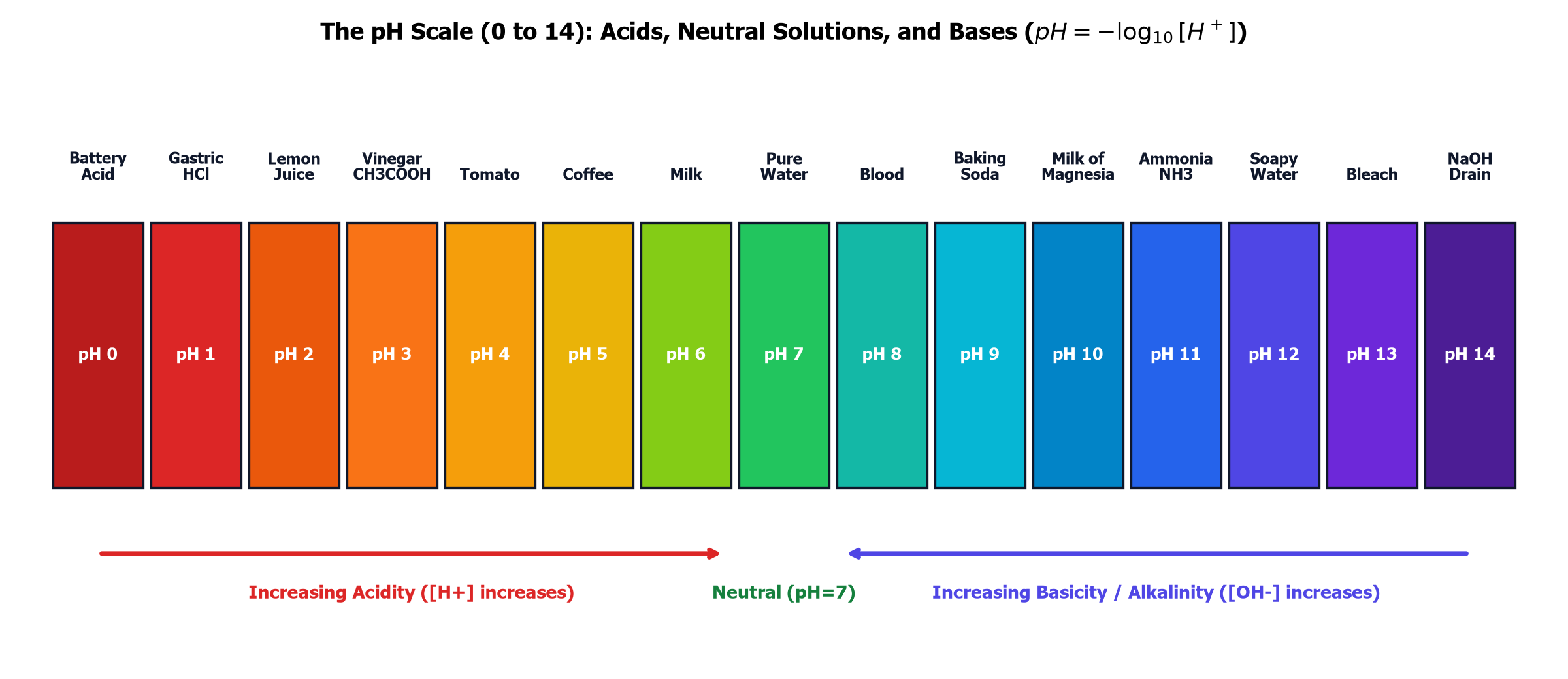
pH_Scale_Acids_and_Bases
pH_Scale_Acids_and_Bases→الشرح والتفصيل العلمي الشامل
Lesson 1 Questions: Chemical Bonding and Types of Compounds · 3 / 6
المقارنات وخريطة المفاهيم الجوهرية

المقارنات وخريطة المفاهيم الجوهرية

🗺️ ★ High-Yield Summary, Mind Maps & Comparison Tables ★

Comparison aspectMain ideaKeywords
Summary
  • Chemical Bonding
  • Valency and Classification of Compounds
ChemicalBondingValencyClassification
•Science (Preparatory Stage – 1st Prep) | Grade 7 (1st Prep) | 2026 / 2027 Official Curriculum | Unit 1: Chemical Reactions & MatterSciencePreparatoryStagePrep
•🗺️ Core Concept Map & Knowledge ArchitectureCoreConceptKnowledgeArchitecture
✔ Element Classification
  • Metals (lose e− -> Cations)
  • Non-Metals (gain/share e− -> Anions)
  • Noble Gases (inert)
MetalsloseCationsgain
✔ Chemical Bonding
  • Ionic (Electrostatic attraction
  • electron transfer) & Covalent (Electron sharing: Single
  • Double
  • Triple)
IonicElectrostaticattractionelectron
✔ Chemical Valency
  • Number of lost
  • gained
  • or shared electrons
  • Polyatomic radicals (OH−
  • CO₃2−
  • SO₄2−
  • PO₄3−)
Numberlostgainedshared
  • ✔ Compound Families Acids (H+ donor), Bases (OH− donor), Oxides (Metal/Non-metal + O), Salts (Cation + Anion).
  • 📊 Classification & Comparative Summary Tables:
  • Table Classification of Common Polyatomic Groups (Radicals)
  • 💡 Exam Flashcard Capsules & High-Yield Secrets:
  • ★ Ammonium (NH₄+) is the ONLY common positive polyatomic group; all other standard radicals carry negative charges.
  • ★ An atom that loses electrons becomes a POSITIVE ion because the number of positive nuclear protons exceeds negative orbital electrons.
  • ★ In chemical formulas, the sum of positive and negative oxidation states in a neutral compound must equal zero.
Group Name Chemical Formula Valency Electric Charge
Hydroxide OH Monovalent (1) -1
Nitrate NO₃ Monovalent (1) -1
Nitrite NO₂ Monovalent (1) -1
Bicarbonate HCO₃ Monovalent (1) -1
Ammonium NH₄ Monovalent (1) +1 (Positive radical)
Sulfate SO₄ Divalent (2) -2
Carbonate CO₃ Divalent (2) -2
Phosphate PO₄ Trivalent (3) -3
Lesson 1 Questions: Chemical Bonding and Types of Compounds · 4 / 6
أمثلة ومسائل محلولة بالخطوات

أمثلة ومسائل محلولة بالخطوات

  • مثال تطبيقي نموذجي:
  • مسألة شاملة على قوانين Lesson 1 – Chemical Bonding and Types of Compounds مع بيان خطوات الحل والتعويض المباشر والوحدات الدولية.
Lesson 1 Questions: Chemical Bonding and Types of Compounds · 5 / 6
تريكات الامتحان وكبسولة التفوق الوزاري

تريكات الامتحان وكبسولة التفوق الوزاري

  • كبسولة التفوق لطلاب الثانوية والإعدادية احرص على حفظ الوحدات بدقة، والانتباه للرسومات البيانية والمحاور والتحويلات، ومراجعة بنك الأسئلة أدناه.
  • Key points for the exam:
  • An ionic bond forms between a metal and a non-metal through complete transfer of electrons. Two metals, or two non-metals, cannot form an ionic bond.
  • An ionic compound does not form separate molecules. Its ions are arranged in a continuous three-dimensional crystal lattice.
  • Ammonium (NH4+) is the only common polyatomic group with a positive charge, so it takes the place of a metal ion when salts form.
  • When you write a formula, cross the valencies over and simplify the ratio, so that the total positive charge balances the total negative charge.
Lesson 1 Questions: Chemical Bonding and Types of Compounds · 6 / 6