1.3Chapter 1: Classification and Life
Classification and species — Alhussan Biology - Stage 7 Revision Notes & Topical Questions
5 min read 7 parts Lesson 3 of 11 2 quizzes
Biology 1.3 Classification and species — Alhussan International Academy — Biology (Stages 7–9) notes: Explain why organisms are classified, define a species, and use two-part scientific names.Classification = sorting organisms into groups using their similarities and differences.…
- Importance
- Big groups first
- Smaller groups
- Living organisms
- Different species
- Identified species
Part 1 of 5Why classify
- Features can be easy to see, such as the number of legs or type of flower, or harder to see, such as root length or whether an animal has a backbone.
- Importance it shows how many different types of living organisms there are, makes them easy to identify and compare,
- and helps scientists worldwide know which organisms are discussed.
- Carl Linnaeus sorted organisms by physical features in the 1700s, and modern scientists also compare DNA.
Part 2 of 5Classifying organisms into groups
- Big groups first is it a plant or an animal?
- Plants make their own food, but animals eat other living things.
- Smaller groups this level is helpful but does not identify particular organisms,
- since birds all have feathers but include an ostrich and a hummingbird.
- Living organisms a basic classification covers animals, plants, fungi and other groups, and asks about viruses.
- Levels kingdom, phylum, class, order, family, genus and species, from largest to smallest.
- Organisms in each smaller group have more features in common, and members of one species are the most closely related.
Part 3 of 5What is a species
- Different species they cannot usually breed with each other.
- Hybrids when different species do breed, the offspring are hybrids, which are usually infertile.
- A mule, the strong, intelligent offspring of a female horse and male donkey, cannot breed,
- so horses and donkeys are separate species and mules are not a species.
- Limits asexual organisms and fossils cannot be tested by breeding,
- and some species form fertile hybrids,
- so structure, behaviour and DNA are also used.
Part 4 of 5Number of species
- Identified species about 2 million species have been identified.
- Estimates biologists think there may be as many as 5 million species on Earth.
- Why new species are hard to find they may be very small or rare, live in unexplored places such as the deep ocean,
- or live in areas with many species such as rainforests.
Part 5 of 5Naming species
- Local names they vary and cause confusion, such as the clouded leopard, called the tree tiger in Borneo and the mint leopard in southern China.
- Scientific name each species has a two-part name, and similar species share the first part.
- Lions are Panthera leo, tigers Panthera tigris, horses Equus caballus and donkeys Equus asinus.
- Humans are Homo sapiens.
- Rules the first part is the genus, with a capital letter, and the second is the species, in lower case, both in italics or underlined.
- Importance it tells scientists around the world exactly which organism is meant.
Key terms
| Term | Meaning |
|---|---|
| Classification | Sorting organisms into groups by shared features. |
| Species | A group of organisms that can breed to produce fertile offspring. |
| Genus | A group of closely related species. |
| Kingdom | The largest group in classification. |
| Scientific name | A two-part Latin name made of genus and species. |
| Hybrid | The offspring of two different species, usually infertile. |
Avoid these mistakes
Marked practiceQuizzes for this lesson
?What do you want to solve now?
✓Checkpoint Quiz
2 multiple-choice + 1 written questions from real exam papers on this lesson.
Question 1 of 2 1:30

Question 2 of 2 1:30

Answer key
1 D2 C
Written question 1 of 1 · part (1 / 5) 3:00

Show the answer
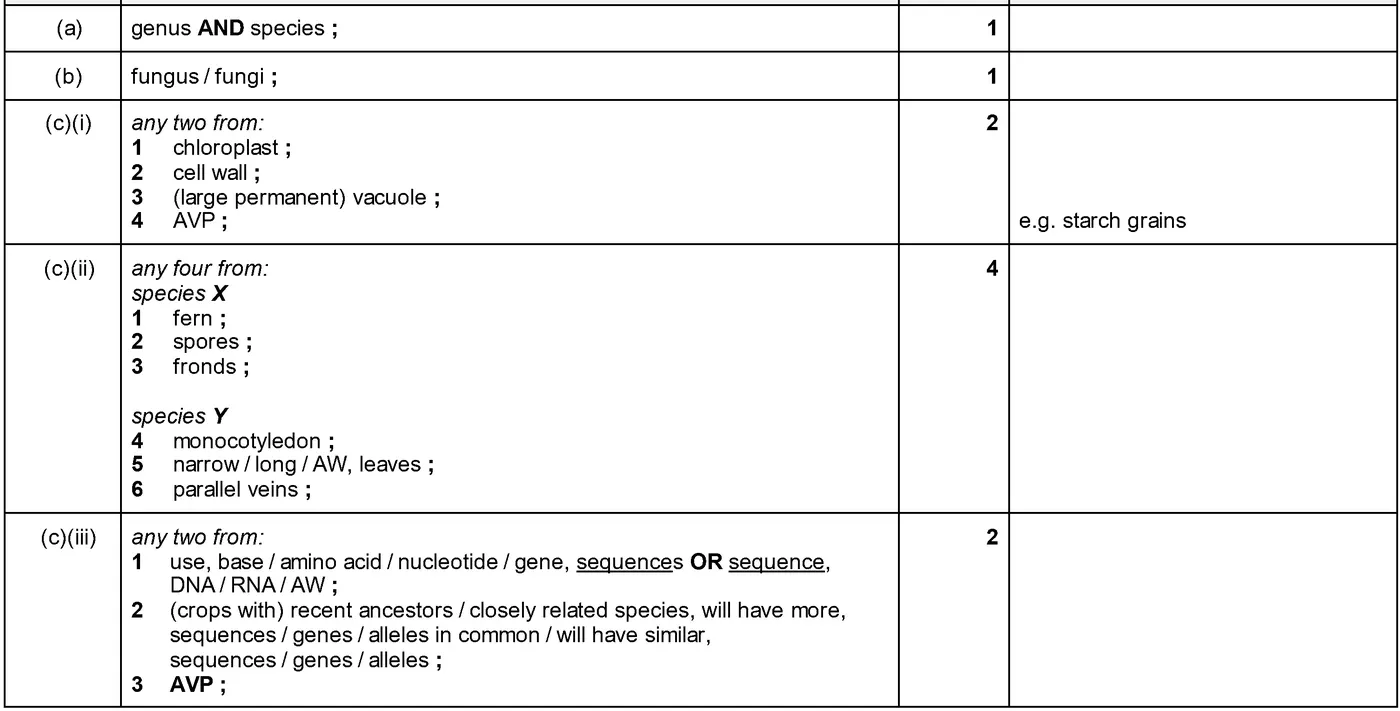
Written question 1 of 1 · part (2 / 5) 3:00

Show the answer
Written question 1 of 1 · part (3 / 5) 3:00

Show the answer
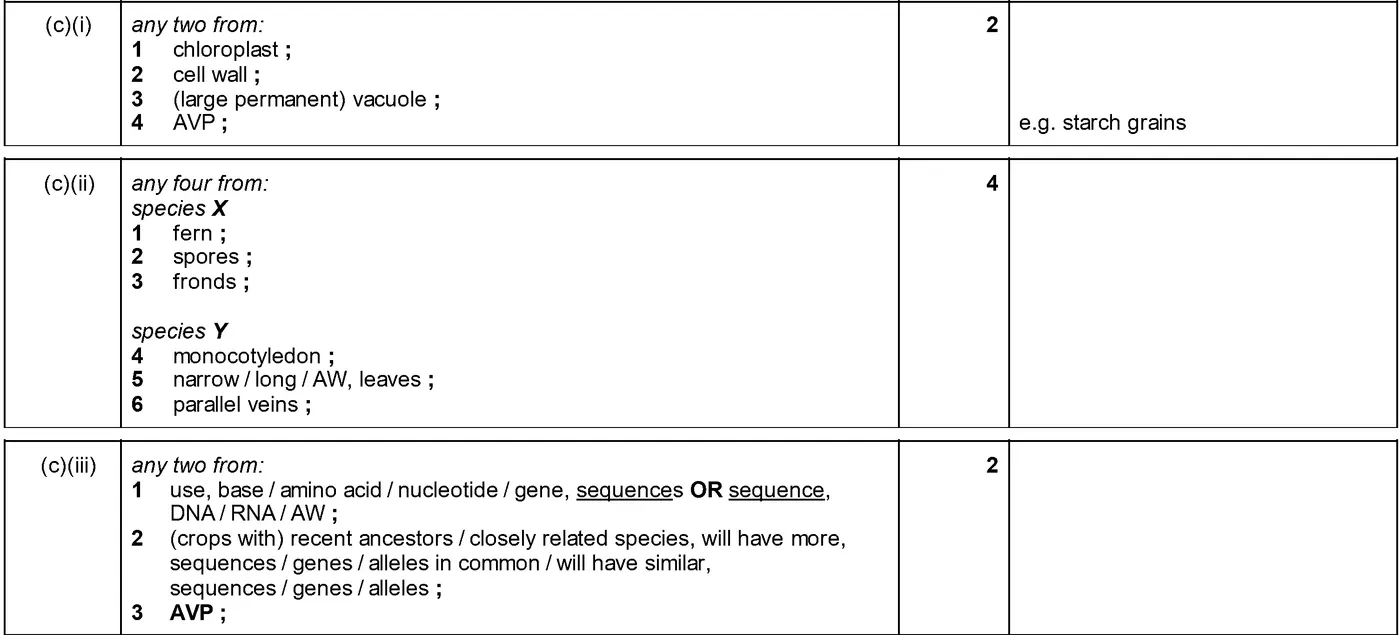
Written question 1 of 1 · part (4 / 5) 3:00

Show the answer

Written question 1 of 1 · part (5 / 5) 3:00
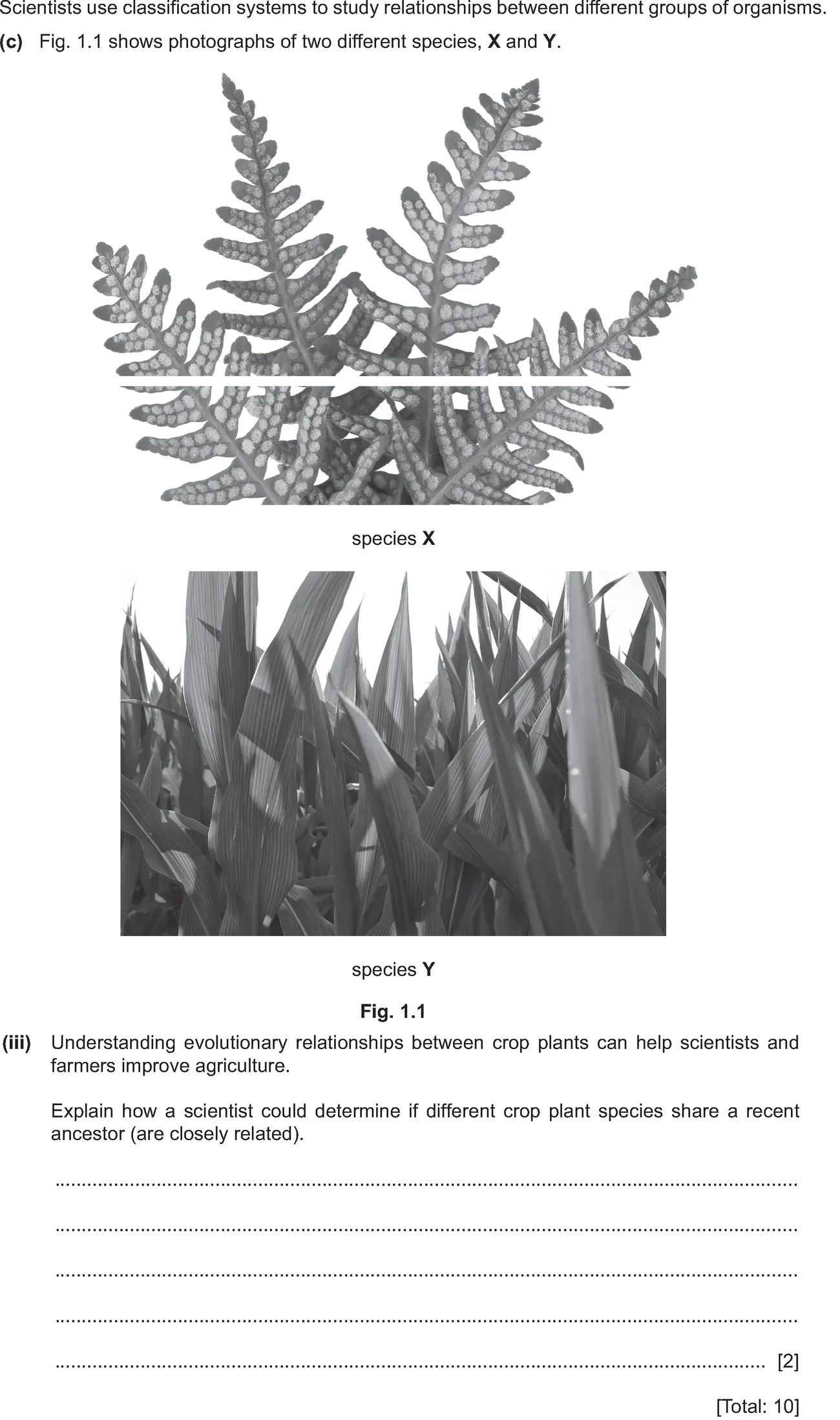
Show the answer

Each part of a written question is on its own screen. Write your answer first, then open "Show the answer" to check it against the mark scheme.
Last updated: