3.5Chapter 3: Metals and Non-Metals
Explaining metal and non-metal properties — Alhussan Chemistry - Stage 7 Revision Notes & Topical Questions
5 min read 9 parts Lesson 5 of 7 3 quizzes
3.5 Explaining metal and non-metal properties — Alhussan International Academy — Chemistry (Stages 7–9) notes: Explain the physical properties of metals and non-metals in terms of how their particles are arranged and held together.PropertyMetalsNon-metalsAppearanceShinyDull when …
- Delocalised electrons
- Metallic bonding
- High melting points
- Conductivity
- Malleable and ductile
- Low melting points
Part 1 of 7Typical properties
| Property | Metals | Non-metals |
|---|---|---|
| Appearance | Shiny | Dull when solid |
| State at 20 °C | Mostly solid (mercury is liquid) | Many are gases |
| Conductivity | Good | Poor (graphite is an exception) |
| Shaping | Malleable and ductile | Brittle |
| Melting and boiling points | High | Mostly low |
| Strength | Strong | Weak when solid |
| Sound | Sonorous | Not sonorous |
- Method
- consider how the particles are arranged and how strongly they are held together.
Part 2 of 7Metallic bonding
- Structure in a metal the atoms are packed closely in regular layers.
- Delocalised electrons the outer electrons are not held to one atom but move freely throughout the structure.
Part 3 of 7Explaining metal properties
- High melting points the atoms or ions are held together strongly, so much energy is needed to overcome the attraction.
- Most metals are therefore solid at 20 °C.
- Strength the particles are held together strongly, especially when mixed with other elements in alloys.
- Conductivity the free electrons carry electric charge and pass on energy rapidly when heated.
- Malleable and ductile layers of atoms can slide over each other without breaking the bonding,
- because the electrons keep holding the structure together.
Part 4 of 7Explaining non-metal properties
- Low melting points most non-metals exist as single atoms or molecules that are attracted to each other only weakly.
- Helium, neon, argon and krypton exist as single atoms.
- An oxygen molecule has two atoms held tightly together, but the molecules are attracted to one another only weakly.
- Small molecules most non-metals such as O2 and S8 have strong covalent bonds inside the molecule but weak forces between molecules.
- Little energy is needed to separate the molecules, so many are gases.
- Low melting points are explained by weak forces between molecules, not weak bonds inside molecules.
- No conduction there are no free electrons, so non-metals do not conduct electricity.
- Brittleness iodine exists as two-atom molecules arranged in a pattern in the crystal.
- Molecules are attracted weakly, so a dropped crystal breaks between one row of molecules and another.
- The pieces have straight edges.
Part 5 of 7Giant non-metal structures
- Diamond every carbon atom is bonded to four others in a rigid network, so it is extremely hard with a very high melting point but does not conduct.
- Graphite carbon atoms form layers in which each atom has a spare electron that can move along the layer.
- It conducts electricity.
- The layers slide easily, so it is soft and used in pencils.
Part 6 of 7Choosing materials
- Copper is used for wires because free electrons conduct electricity and it is ductile.
- Non-metals plastics, made largely from carbon compounds, suit insulation.
- Exceptions silicon is a shiny solid and a semiconductor, and mercury is a liquid metal, which shows that classification is a model.
Part 7 of 7Link to the periodic table
- Boundary a stepped line separates metals from non-metals.
- Metalloids elements next to the line, such as silicon and germanium, look metallic but behave in between.
- Silicon is a semiconductor, used in microchips and solar cells.
- Oxides metal oxides are usually basic and non-metal oxides acidic.
Key terms
| Term | Meaning |
|---|---|
| Delocalised electrons | Outer electrons that move freely through a metal. |
| Metallic bonding | Attraction between metal ions and delocalised electrons. |
| Covalent bond | A bond in which atoms share electrons. |
| Brittle | Breaking easily when hit. |
| Metalloid | An element with properties between metals and non-metals. |
| Semiconductor | A material that conducts electricity only partly. |
Avoid these mistakes
Marked practiceQuizzes for this lesson
?What do you want to solve now?
✓Checkpoint Quiz
4 multiple-choice + 3 written questions from real exam papers on this lesson.
Question 1 of 4 1:30

Question 2 of 4 1:30
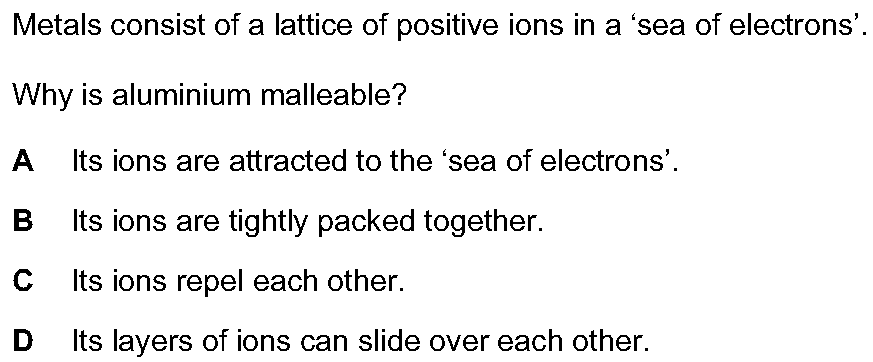
Question 3 of 4 1:30

Question 4 of 4 1:30

Answer key
1 D2 D3 D4 A
Written question 1 of 3 · part (a) (1 / 13) 3:00

Show the answer

Written question 1 of 3 · part (b)(i) (2 / 13) 3:00

Show the answer

Written question 1 of 3 · part (b)(ii) (3 / 13) 3:00

Show the answer

Written question 1 of 3 · part (c)(i) (4 / 13) 3:00

Show the answer
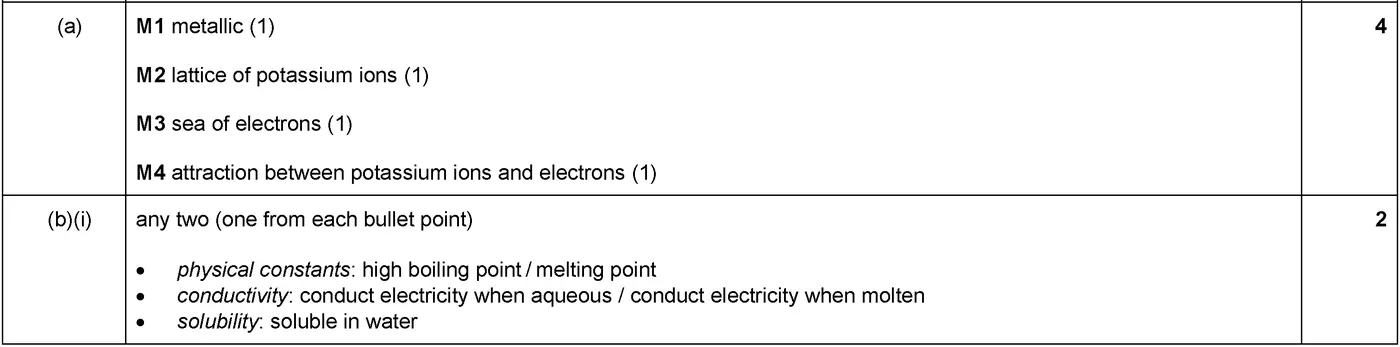
Written question 1 of 3 · part (c)(ii) (5 / 13) 3:00

Show the answer
Written question 1 of 3 · part (c)(iii) (6 / 13) 3:00

Show the answer
Written question 1 of 3 · part (c)(iv) (7 / 13) 3:00

Show the answer
Written question 1 of 3 · part (d)(i) (8 / 13) 3:00

Show the answer
Written question 1 of 3 · part (d)(ii) (9 / 13) 3:00

Show the answer
Written question 1 of 3 · part (d)(iii) (10 / 13) 3:00

Show the answer
Written question 1 of 3 · part (e)(i) (11 / 13) 3:00

Show the answer
Written question 1 of 3 · part (e)(ii) (12 / 13) 3:00

Show the answer
Written question 1 of 3 · part (e)(iii) (13 / 13) 3:00

Show the answer
Written question 2 of 3 · part (a)(i) (1 / 6) 3:00

Show the answer

Written question 2 of 3 · part (a)(ii) (2 / 6) 3:00

Show the answer

Written question 2 of 3 · part (b) (3 / 6) 3:00

Show the answer

Written question 2 of 3 · part (c)(i) (4 / 6) 3:00

Show the answer

Written question 2 of 3 · part (c)(ii) (5 / 6) 3:00
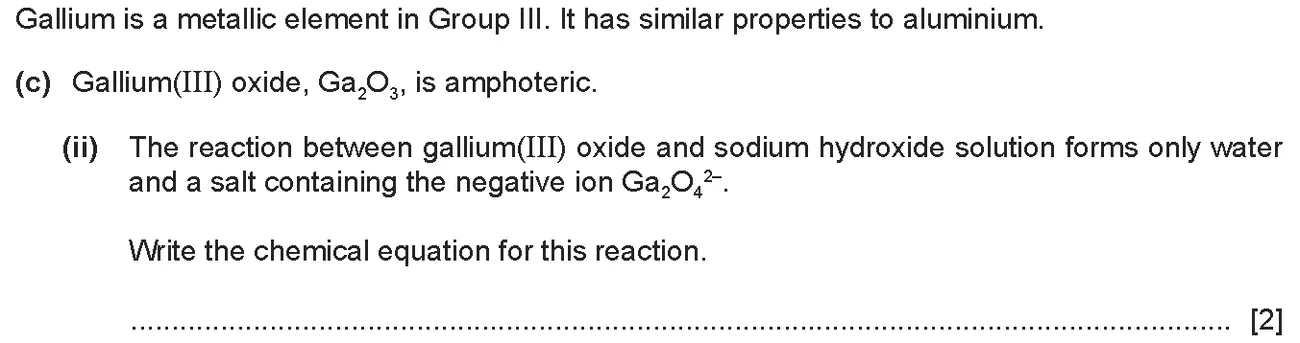
Show the answer

Written question 2 of 3 · part (d) (6 / 6) 3:00

Show the answer

Written question 3 of 3 · part (a) (1 / 6) 3:00

Show the answer

Written question 3 of 3 · part (b)(i) (2 / 6) 3:00
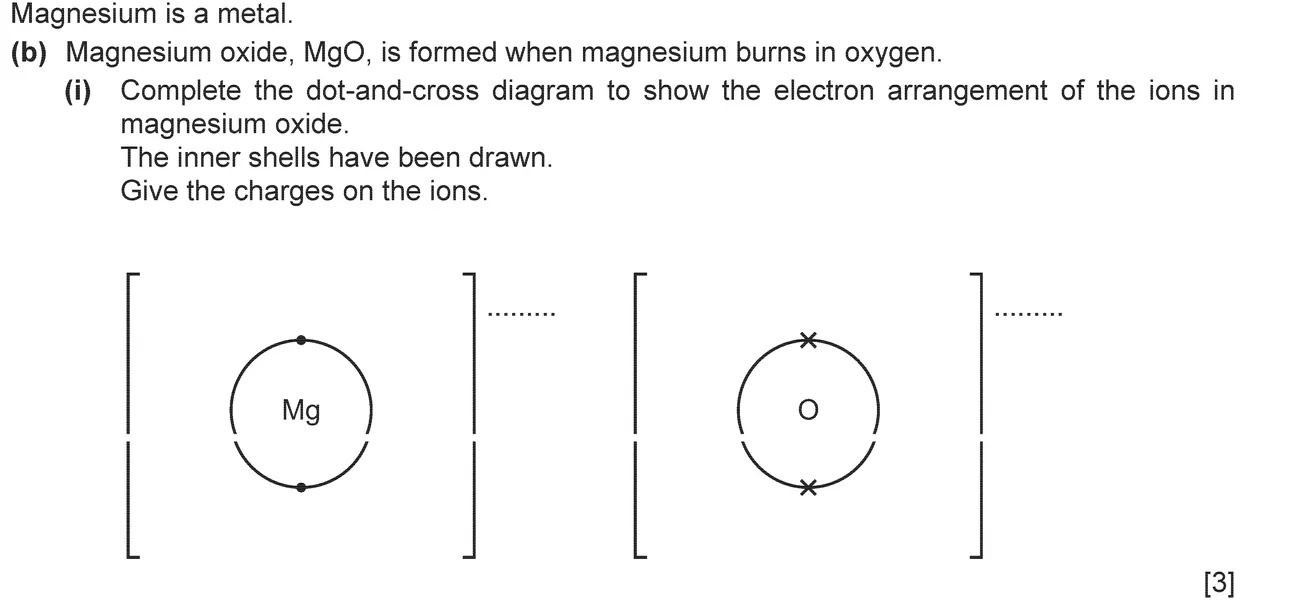
Show the answer

Written question 3 of 3 · part (b)(ii) (3 / 6) 3:00
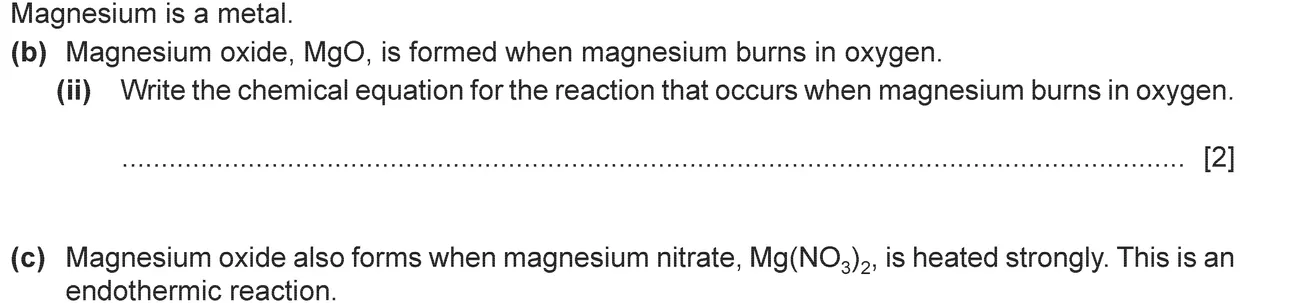
Show the answer

Written question 3 of 3 · part (c)(i) (4 / 6) 3:00

Show the answer

Written question 3 of 3 · part (c)(ii) (5 / 6) 3:00

Show the answer

Written question 3 of 3 · part (c)(iii) (6 / 6) 3:00
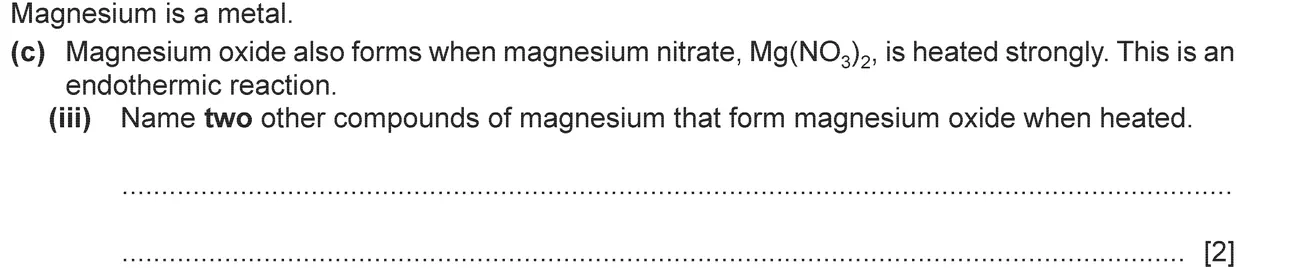
Show the answer

Each part of a written question is on its own screen. Write your answer first, then open "Show the answer" to check it against the mark scheme.
Last updated: