3.3Chapter 3: Metals and Non-Metals
Amazing alloys — Alhussan Chemistry - Stage 7 Revision Notes & Topical Questions
5 min read 8 parts Lesson 3 of 7 2 quizzes
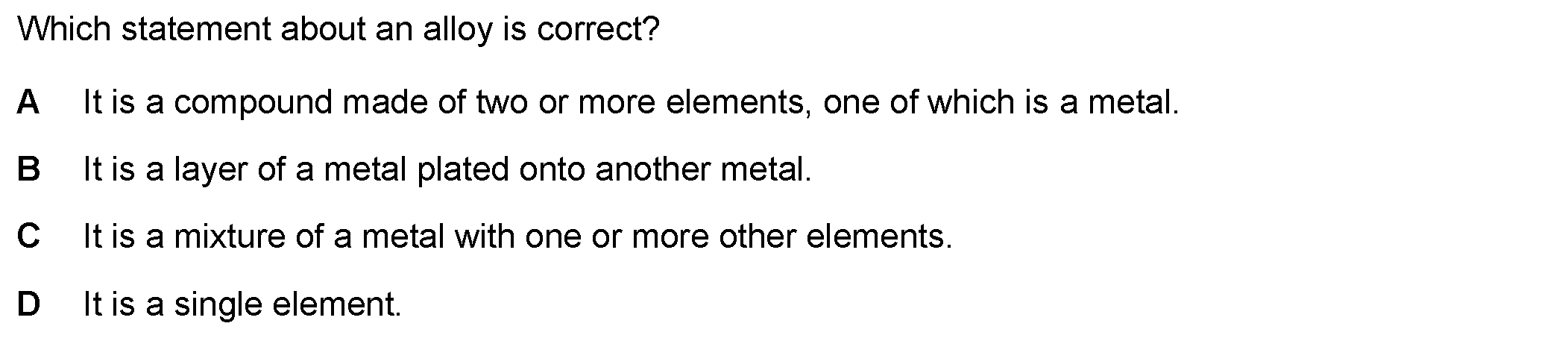
3.3 Amazing alloys — Steel, Brass, Bronze and Particle Structure — Alhussan International Academy — Chemistry (Stages 7–9) notes: Define alloy and steel, compare the properties of alloys with the elements in them and explain why alloys are harder than pure metals.Alloy = a mixtur…
- Mixture, not compound
- Why alloys are needed
- Pure aluminium
- Alloy 7075
- Types of steel
- Gold jewellery
Part 1 of 6What an alloy is
- Alloys are made by melting the metals together and letting the mixture cool.
- Mixture, not compound the parts are not chemically combined in a fixed ratio, so the proportions can vary.
- Why alloys are needed pure metals are often too soft, too weak or too reactive.
- Pure iron is soft and rusts, and pure copper, gold and aluminium bend easily.
Part 2 of 6Aluminium and its alloys
- Pure aluminium it is light for its size, which suits aeroplanes because lighter aeroplanes burn less fuel, but it is not strong and not hard.
- It breaks easily and is easy to scratch and dent.
- Alloy 7075 it is about 90% aluminium with 6% zinc, 2% magnesium, 1% copper and 1% other metals.
- Relative hardness rises from 23 for pure aluminium to 150.
- Strength when pulled rises from 8 MPa to 572 MPa.
- Duralumin aluminium with copper is strong and light, and is used in aircraft.
Part 3 of 6Steels
- Iron is plentiful and cheap, but iron alone is too soft and bendy to be useful.
- Types of steel each has its own properties and uses.
| Alloy | Other elements | Properties | Uses |
|---|---|---|---|
| Low carbon steel | Carbon | Strong, easily shaped | Bridges, buildings, ships, vehicles |
| Manganese steel | Manganese, carbon | Hard, tough | Mining equipment, railway points |
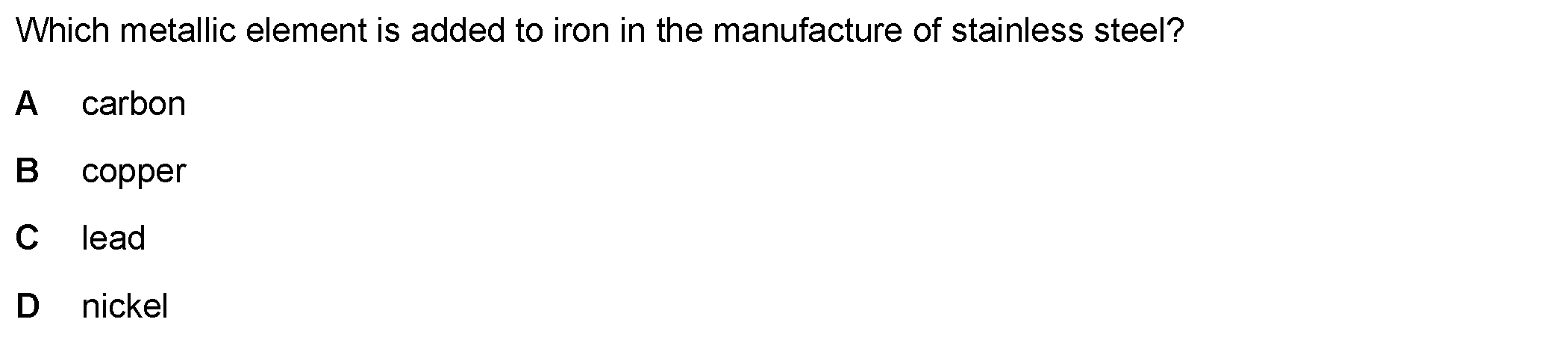
| Stainless steel | Chromium, nickel, carbon | Does not rust | Knives and forks, surgical instruments |
Part 4 of 6Other common alloys
| Alloy | Made from | Properties and uses |
|---|---|---|
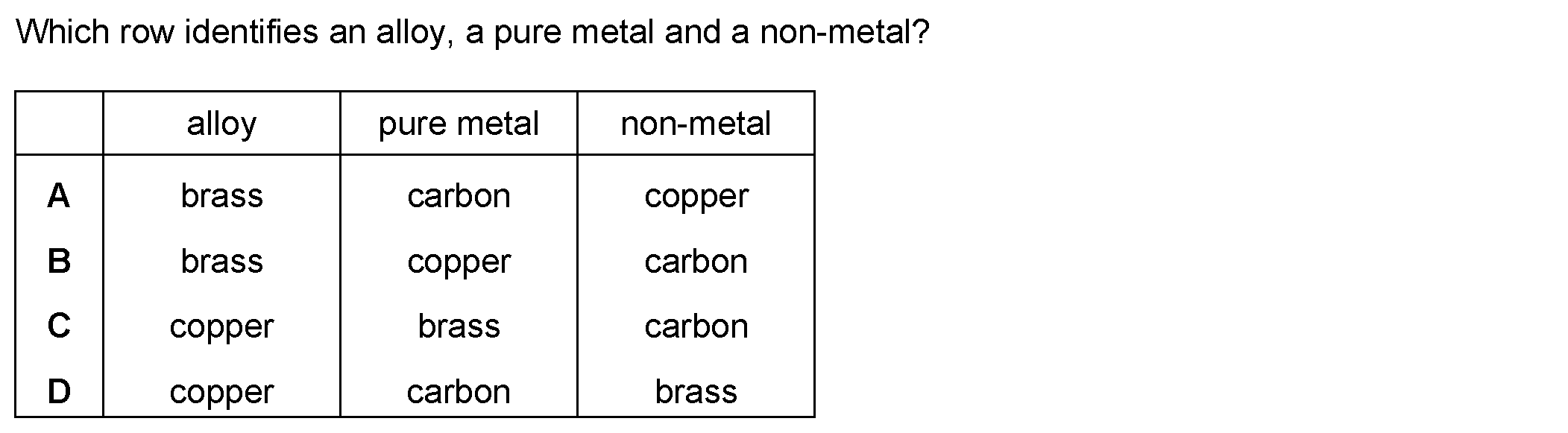
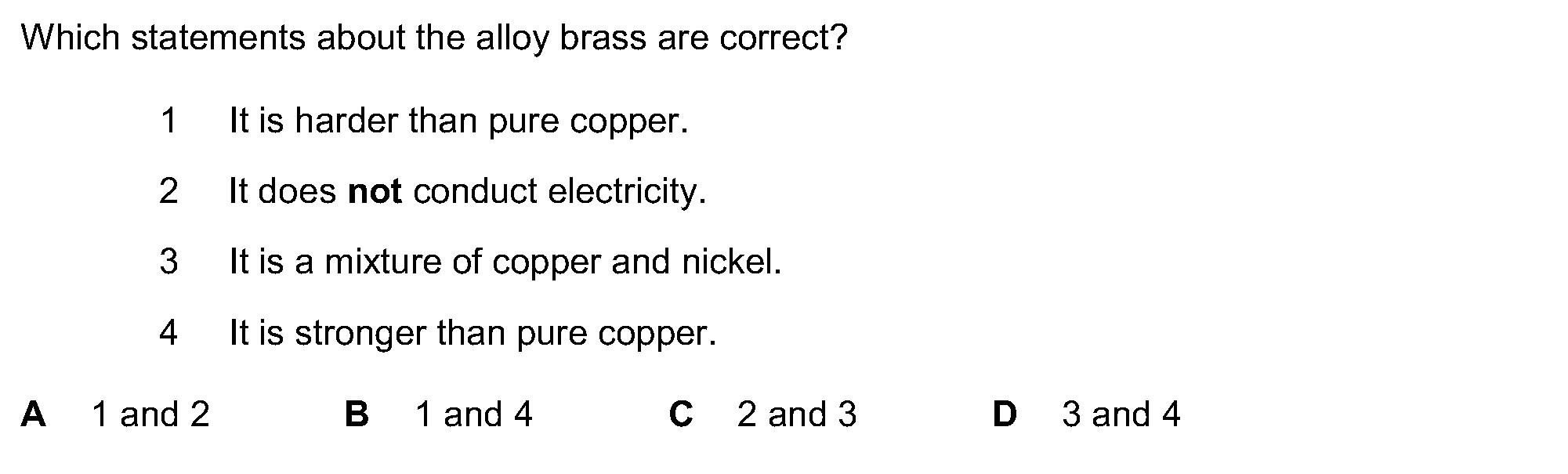
| Brass | Copper and zinc | Hard, shiny, easy to shape; taps, instruments |
| Bronze | Copper and tin | Hard, resists corrosion; statues, bells, ship parts |
| Solder | Tin and lead (or lead-free) | Low melting point; joining electrical wires |
| Pewter | Tin with antimony and copper | Used for tankards |
| Amalgam | Mercury with silver and tin | Dental fillings |
- Bronze it is an ancient alloy first used about 6000 years ago to make tools and weapons, and it is harder than the stone used before.
- Bronze motors and gears do not need oiling because bronze has low friction with other metals.
- Gold jewellery pure gold is 24 carat but too soft, so 18 carat gold contains 75 per cent gold mixed with copper or silver.
Part 5 of 6Why alloys are harder
- Pure metal the atoms are the same size and arranged in layers that slide over each other easily, so the metal is soft and not very strong.
- Alloy atoms of another element have a different size and disturb the regular layers.
- In steel, smaller carbon atoms get between the iron atoms.
- The layers cannot slide as easily, so more force is needed to deform the material.
- This makes the alloy harder and stronger.
- Diagrams a pure metal shows identical circles in neat rows, and an alloy shows circles of different sizes mixed in.
- Chemical properties an alloy may also differ chemically, since pure iron rusts but stainless steel does not.
- Conductivity an alloy keeps metallic bonding and still conducts electricity, but usually less well than the pure metal.
Part 6 of 6Choosing alloys
- Aircraft they need strong but low-density materials, so aluminium alloys are chosen.
- Ship propellers they must resist sea water, so bronze is used.
- Comparing materials use strength, density, cost, corrosion resistance and appearance, and justify a choice with at least two.
- Smart alloys shape memory alloys such as nitinol return to their original shape when heated and are used in spectacle frames and medical stents.
- (nickel and titanium)
Key terms
| Term | Meaning |
|---|---|
| Alloy | A mixture of a metal with one or more other elements. |
| Steel | An alloy of iron with small amounts of carbon and sometimes other metals. |
| Brass | An alloy of copper and zinc. |
| Bronze | An alloy of copper and tin. |
| Stainless steel | A steel containing chromium and nickel that does not rust. |
| Layer | A row of atoms in a metal that can slide over other rows. |
Avoid these mistakes
Marked practiceQuizzes for this lesson
?What do you want to solve now?
✓Checkpoint Quiz
14 multiple-choice + 2 written questions from real exam papers on this lesson.
Question 1 of 14 1:30
Question 2 of 14 1:30
Question 3 of 14 1:30
Question 4 of 14 1:30
Question 5 of 14 1:30
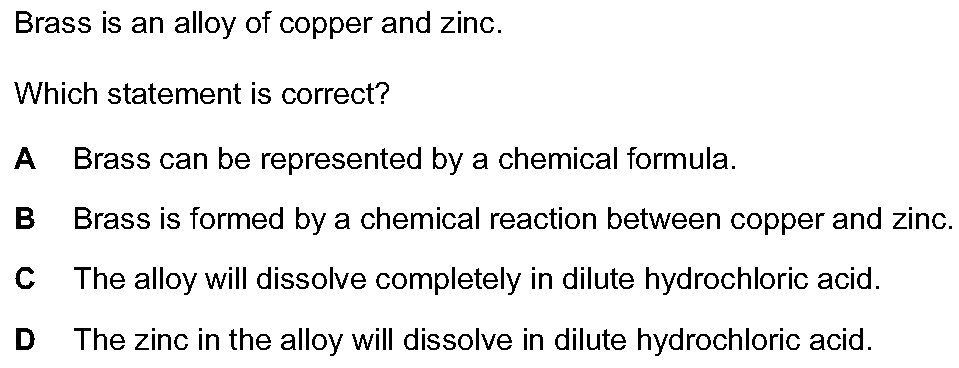
Question 6 of 14 1:30
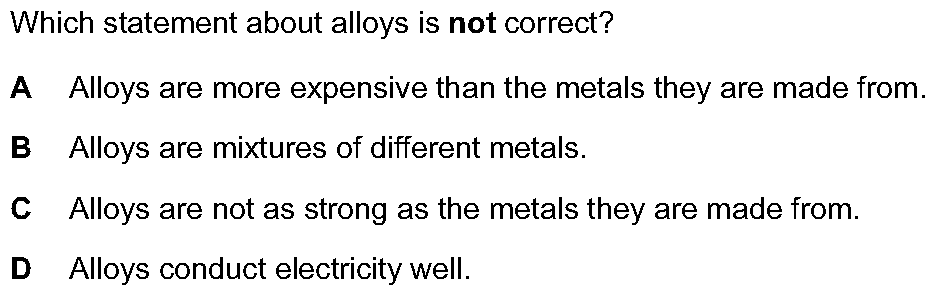
Question 7 of 14 1:30

Question 8 of 14 1:30
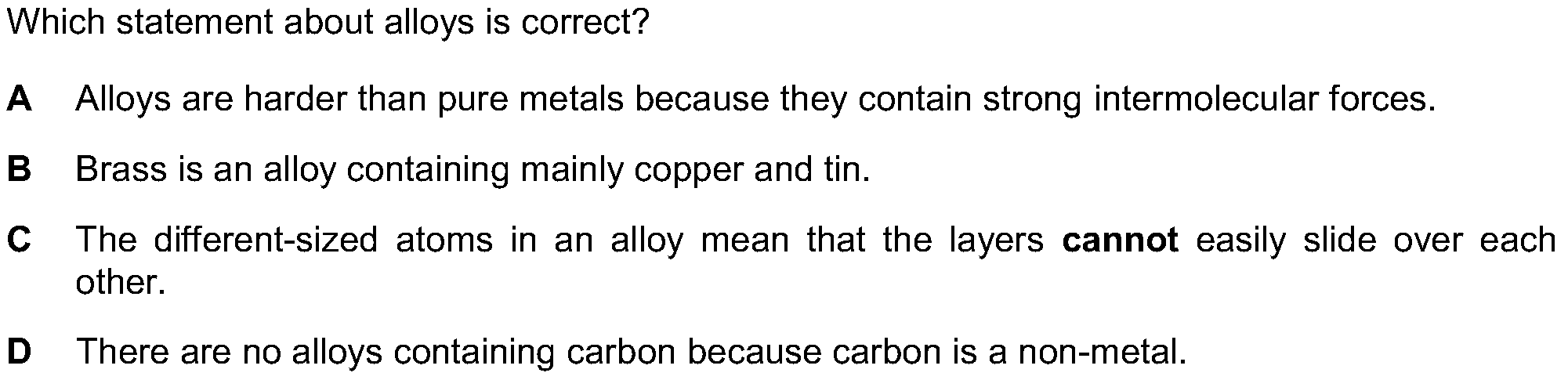
Question 9 of 14 1:30
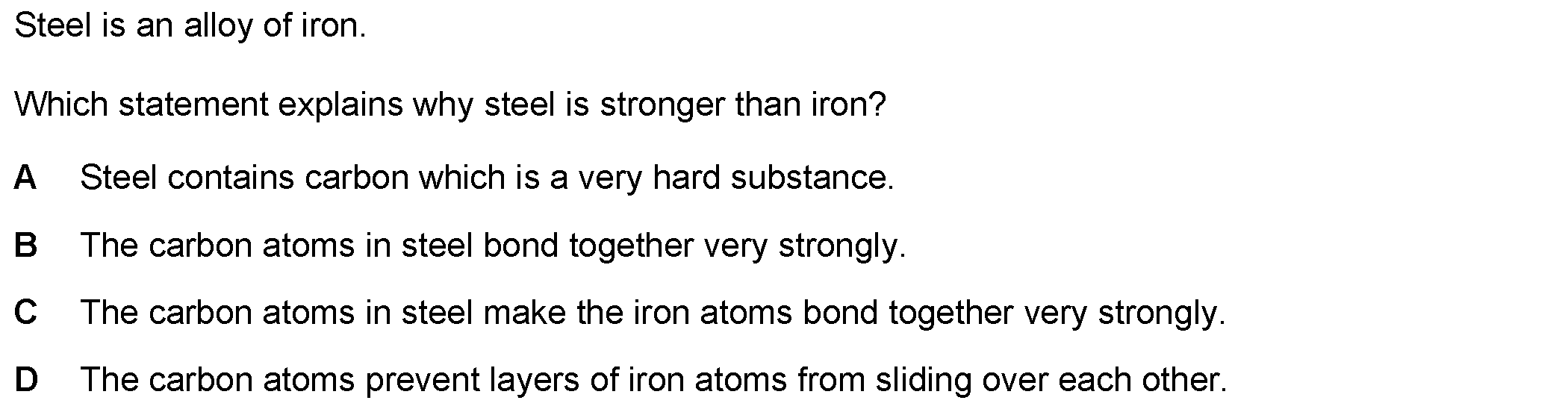
Question 10 of 14 1:30
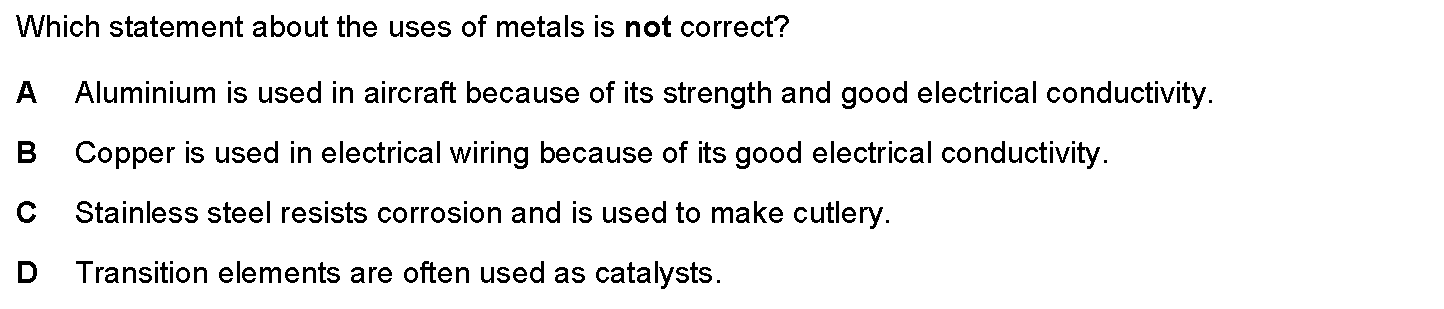
Question 11 of 14 1:30
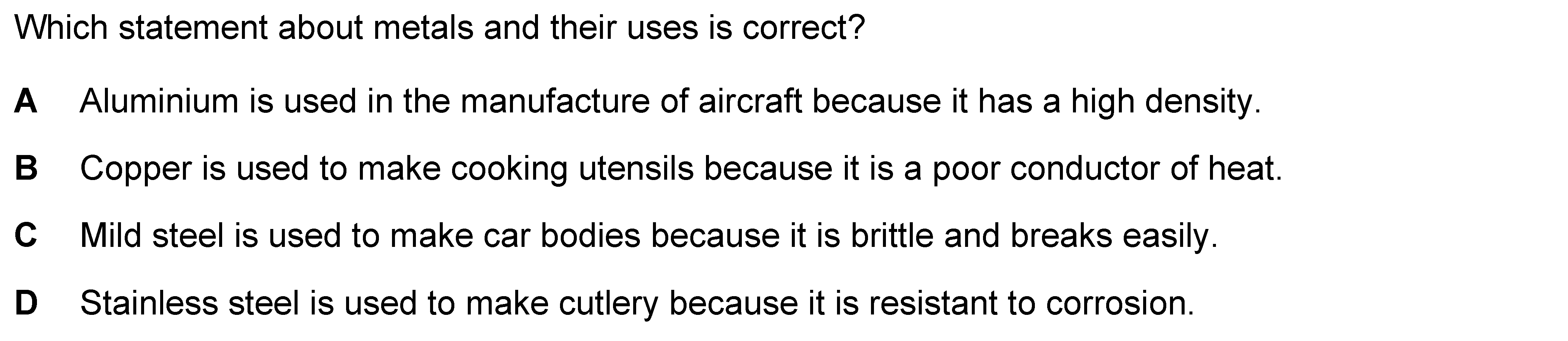
Question 12 of 14 1:30

Question 13 of 14 1:30
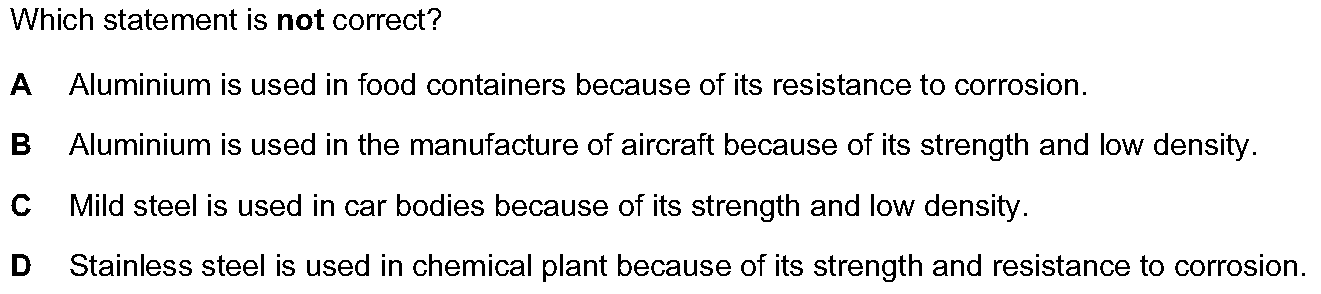
Question 14 of 14 1:30
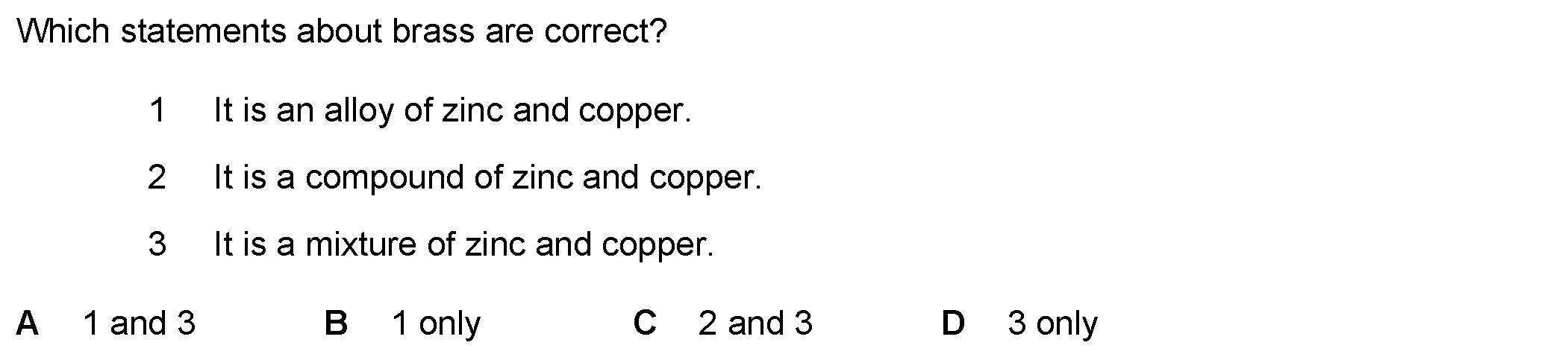
Answer key
1 C2 D3 B4 B5 D6 C7 D8 C9 D10 A11 D12 D13 C14 A
Written question 1 of 2 · part (a) (1 / 8) 3:00

Show the answer
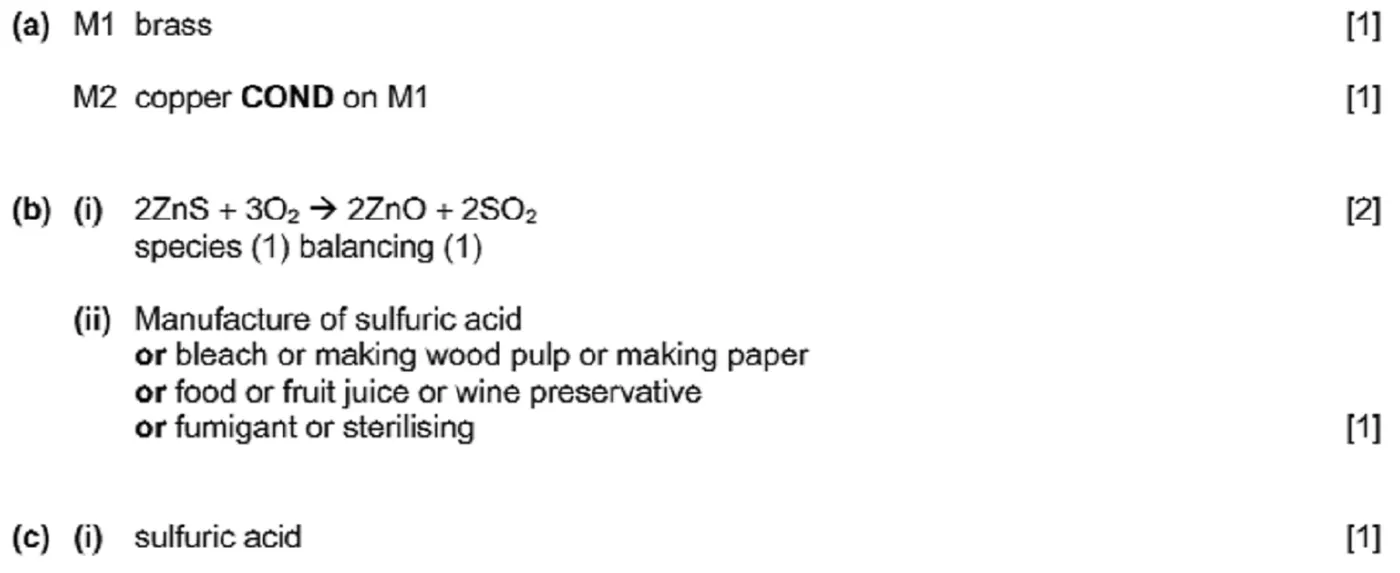
Written question 1 of 2 · part (b)(i) (2 / 8) 3:00

Show the answer

Written question 1 of 2 · part (b)(ii) (3 / 8) 3:00

Show the answer
Written question 1 of 2 · part (c)(i) (4 / 8) 3:00
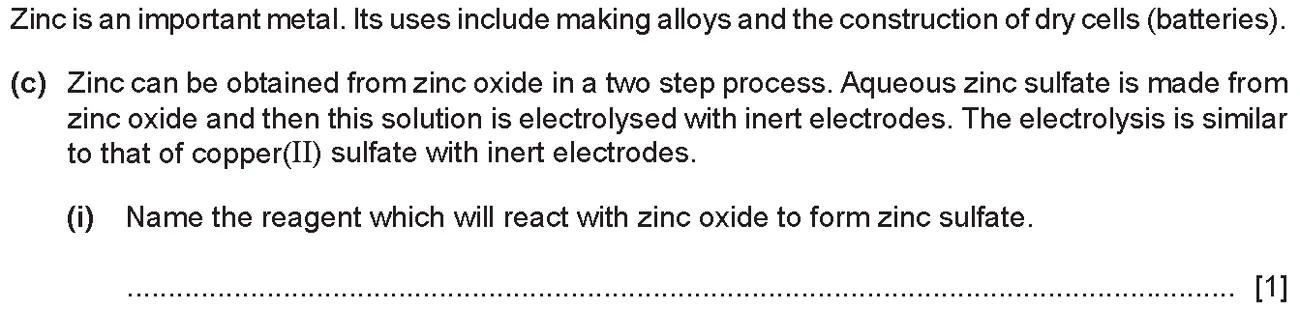
Show the answer
Written question 1 of 2 · part (c)(ii) (5 / 8) 3:00

Show the answer
Written question 1 of 2 · part (d)(i) (6 / 8) 3:00

Show the answer
Written question 1 of 2 · part (d)(ii) (7 / 8) 3:00

Show the answer
Written question 1 of 2 · part (d)(iii) (8 / 8) 3:00
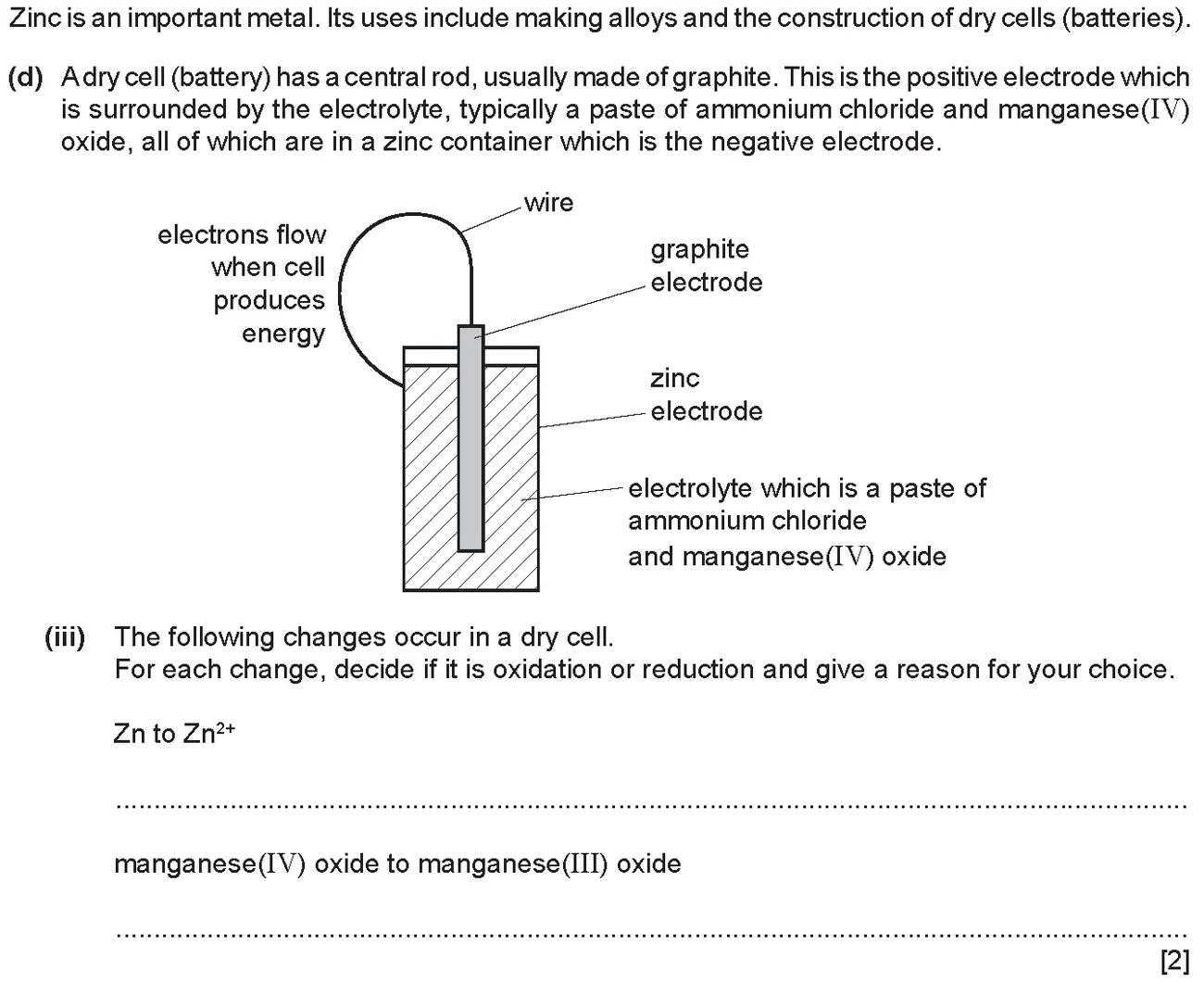
Show the answer
Written question 2 of 2 · part (a)(i) (1 / 10) 3:00

Show the answer
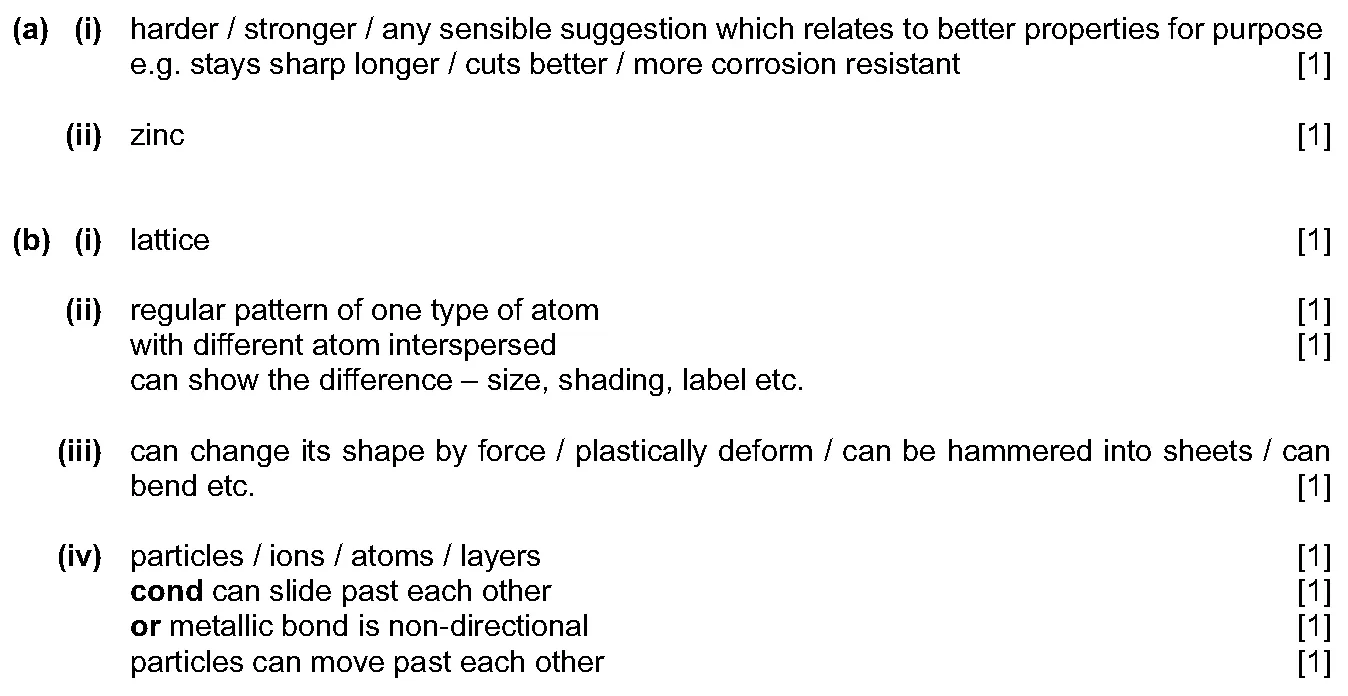
Written question 2 of 2 · part (a)(ii) (2 / 10) 3:00

Show the answer
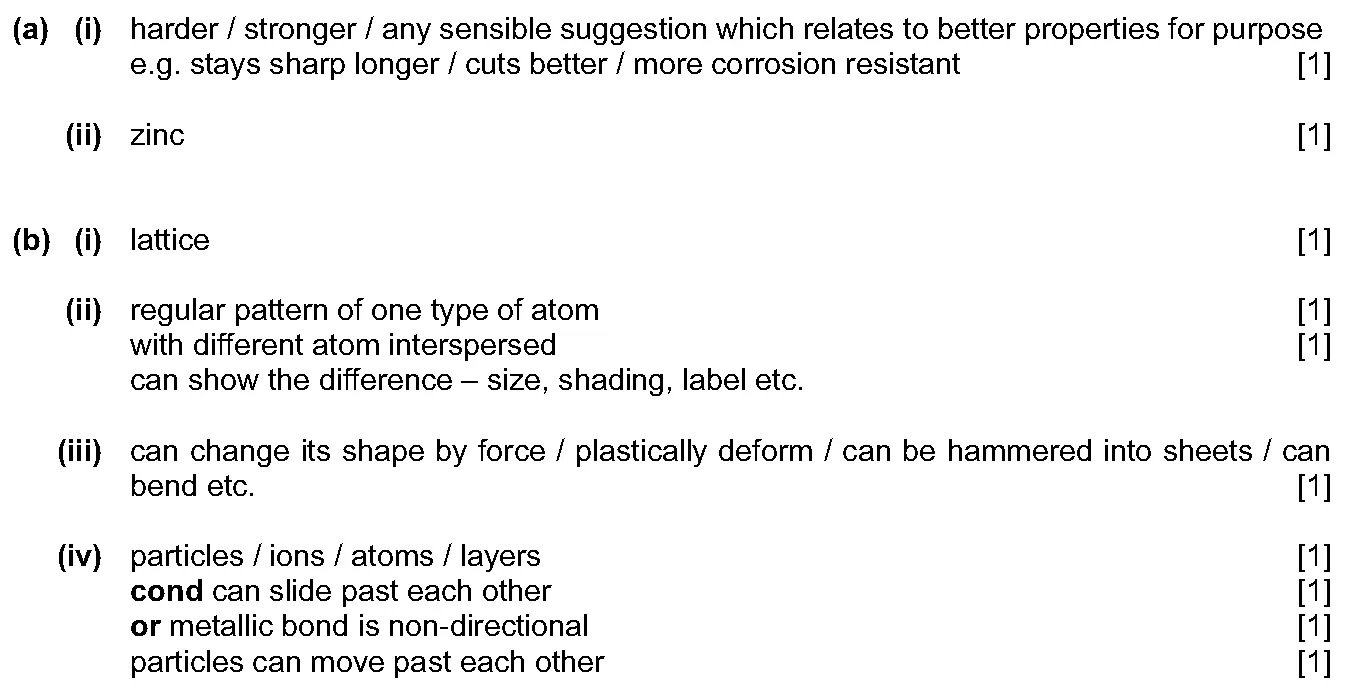
Written question 2 of 2 · part (b)(i) (3 / 10) 3:00
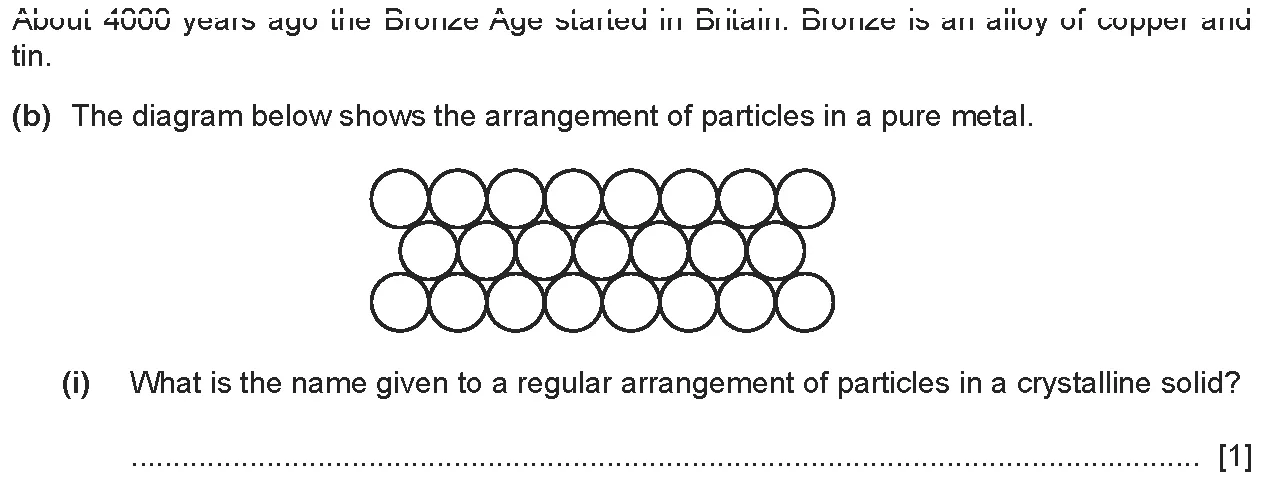
Show the answer

Written question 2 of 2 · part (b)(ii) (4 / 10) 3:00

Show the answer
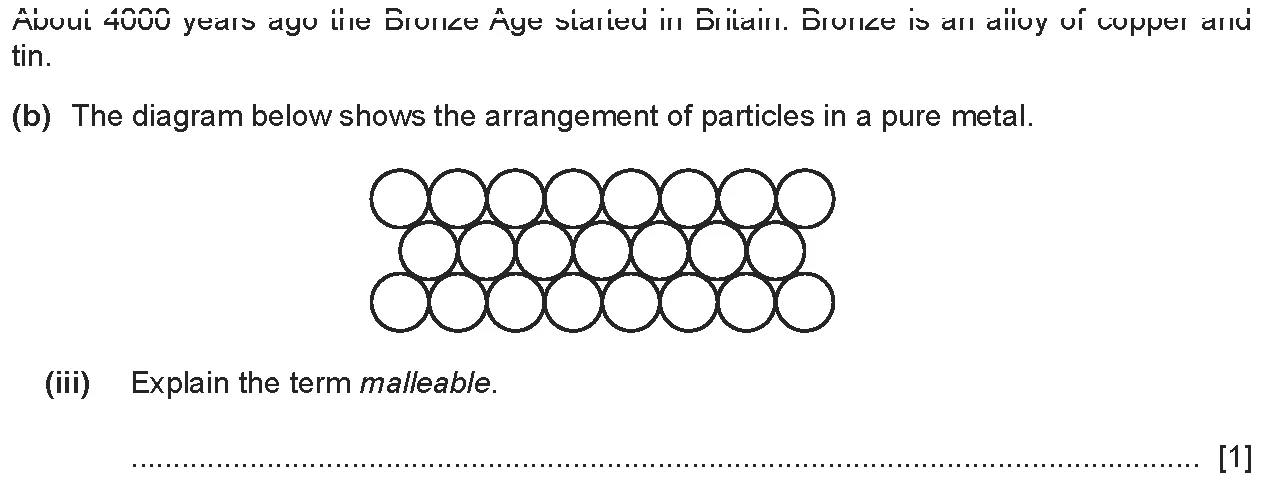
Written question 2 of 2 · part (b)(iii) (5 / 10) 3:00
Show the answer
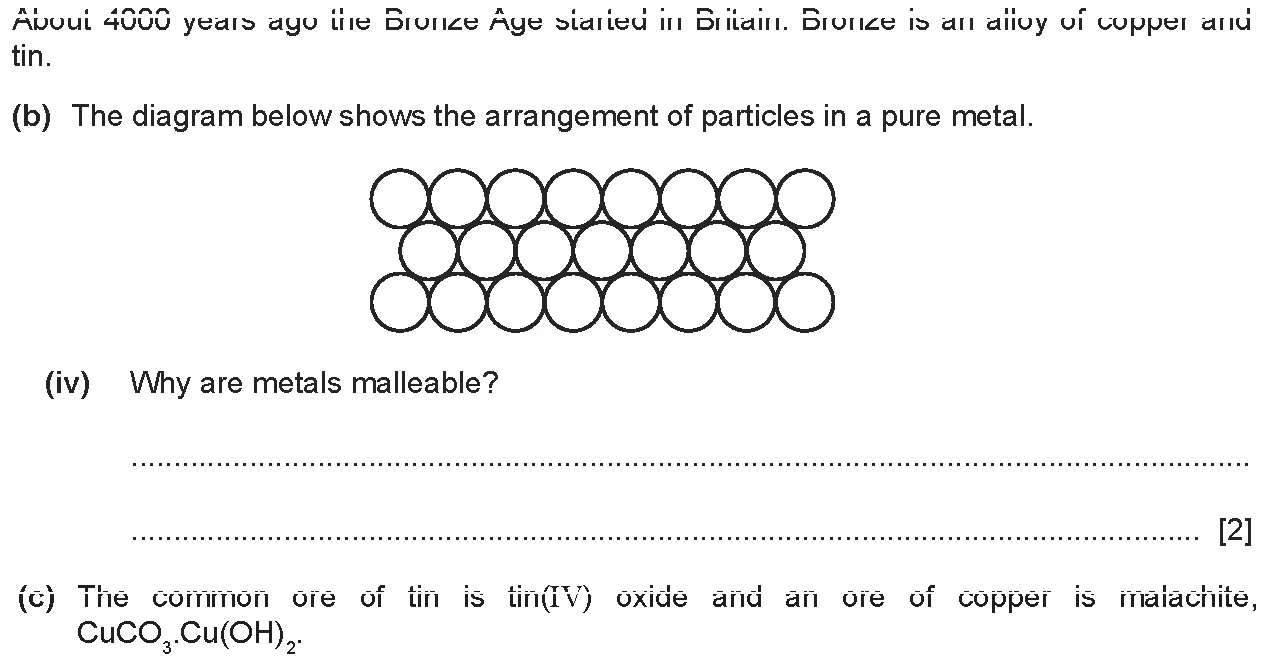
Written question 2 of 2 · part (b)(iv) (6 / 10) 3:00
Show the answer
Written question 2 of 2 · part (c)(i) (7 / 10) 3:00
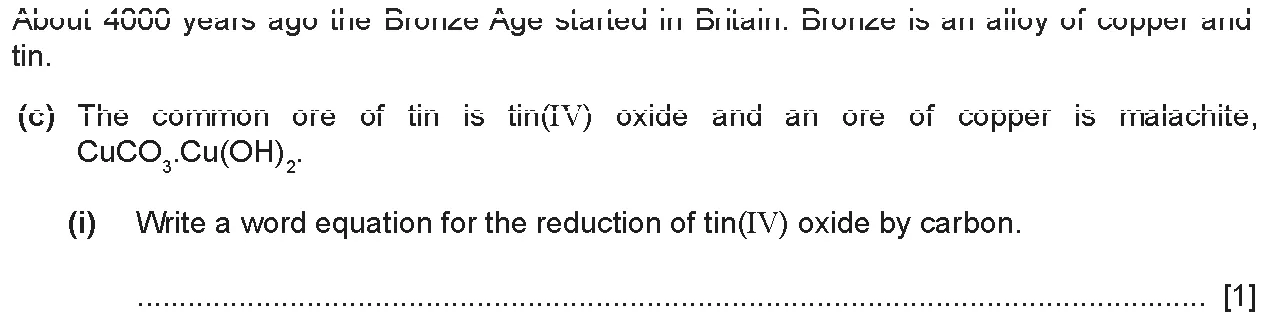
Show the answer
Written question 2 of 2 · part (c)(ii) (8 / 10) 3:00

Show the answer
Written question 2 of 2 · part (c)(iii) (9 / 10) 3:00

Show the answer
Written question 2 of 2 · part (c)(iv) (10 / 10) 3:00

Show the answer
Each part of a written question is on its own screen. Write your answer first, then open "Show the answer" to check it against the mark scheme.
Last updated: