5.5Chapter 5: Acids and Alkalis
Acid rain — Alhussan Chemistry - Stage 7 Revision Notes & Topical Questions
5 min read 8 parts Lesson 5 of 7 4 quizzes
5.5 Acid rain — Environmental Causes, Effects and Soil Liming — Alhussan International Academy — Chemistry (Stages 7–9) notes: Explain how acid rain forms, its effects on buildings, trees and lakes, and how its impact can be reduced.Normal rain — it is slightly acidic (about pH 5…
- Cars and lorries
- Burning rubbish
- Power stations
- Sulfur dioxide
- Nitrogen oxides
- Buildings and statues
Section 1 of 8What acid rain is
- Normal rain it is slightly acidic (about pH 5.6) because carbon dioxide dissolves in it to form carbonic acid.
- They form sulfuric and nitric acids.
- Spread winds carry the pollution hundreds of kilometres, so acid rain can fall in different countries from where it was produced.
Section 2 of 8Sources of acidic gases
- Cars and lorries they burn fossil fuels and make acidic gases.
- Factories some make glass, process leather or make products from oil and produce acidic waste gases.
- Burning rubbish it makes acidic gases.
- Power stations those that burn coal make waste products including acidic gases, and some neutralise the gases while others send them into the air.
- Sulfur dioxide it forms when fossil fuels containing sulfur are burned and when sulfur-containing metal ores are roasted, and volcanoes release it.
- sulfur + oxygen → sulfur dioxide; sulfur dioxide + water + oxygen → sulfuric acid.
- Nitrogen oxides they form when nitrogen and oxygen in the air react at the high temperatures in car engines and furnaces, and during lightning.
Section 3 of 8Effects of acid rain
- Buildings and statues limestone and marble, which are calcium carbonate, are eroded.
- Nitric acid + calcium carbonate → calcium nitrate + water + carbon dioxide.
- Sulfuric acid + calcium carbonate → calcium sulfate + water + carbon dioxide.
- The marble is damaged for ever.
- Lakes and rivers they become acidic, so some plants and animals cannot live in them.
- Aluminium is released from soil into water and is toxic.
- Trees acid rain damages leaves and washes nutrients such as magnesium and calcium out of the soil.
- Rock acid rain damages some types of rock, and scientists think it may have caused a landslide in China.
- Metal structures they corrode faster.
Section 4 of 8Case study: the Taj Mahal
- Problem the white marble of the Taj Mahal in India is turning yellow because acid rain reacts with it.
- Cars, lorries, factories and burning rubbish near it make the acidic gases.
- Possible actions factories can neutralise their acidic waste, and people can drive electric or hydrogen cars, walk or cycle.
- Some methods are easier, more effective or cheaper than others.
- Decision the government used science to evaluate methods and also considered the jobs factories provide.
- It told factories to neutralise waste or move away and banned petrol and diesel vehicles in the area.
- Some people obeyed and others did not, and in 2021 acid rain continued to damage the Taj Mahal.
- Lesson every possible action has advantages and disadvantages, and governments need to evaluate them before deciding.
Section 5 of 8Reducing the problem
- Prevention it is better than cure.
- Remove sulfur from fuel before burning.
- Use flue gas desulfurisation in power stations, where calcium carbonate or calcium oxide reacts with sulfur dioxide.
- Fit catalytic converters to cars to change nitrogen oxides into nitrogen.
- Use cleaner methods to make electricity, such as wind turbines or solar cells, and use public transport.
- International limits governments agree limits on emissions.
- Repairing damage liming adds calcium hydroxide (slaked lime) or calcium carbonate to acidic lakes and soils to neutralise the acid and raise the pH.
- It is a short-term fix and costly, so reducing emissions is the long-term solution.
Section 6 of 8Data and decisions
- Monitoring scientists collect rainwater and measure its pH at different places and times.
- pH change if the average pH falls from 5.6 to 4.2, the rain has become about 25 times more acidic.
- Regulation after laws lowered emissions in Europe and North America the pH of rain in many areas rose.
- Recovery is slow because soils and lake sediments hold acid for years.
- Cost desulfurisation raises electricity prices but reduces damage to health, buildings and farming.
- Natural sources volcanoes also contribute to acid rain.
Section 7 of 8Key terms
| Term | Meaning |
|---|---|
| Acid rain | Rain with a pH below about 5.0 caused by sulfur dioxide and nitrogen oxides. |
| Sulfur dioxide | An acidic gas made when sulfur-containing fuels burn. |
| Nitrogen oxides | Acidic gases made at high temperatures in engines. |
| Liming | Adding calcium hydroxide or carbonate to neutralise acidic soil or water. |
| Flue gas desulfurisation | Removing sulfur dioxide from power station gases. |
| Catalytic converter | A device that changes harmful exhaust gases into less harmful ones. |
Section 8 of 8Exam technique
Marked practiceQuizzes for this lesson
?What do you want to solve now?
✓Checkpoint Quiz
23 multiple-choice + 1 written questions from real exam papers on this lesson.
Question 1 of 23 1:30

Question 2 of 23 1:30

Question 3 of 23 1:30
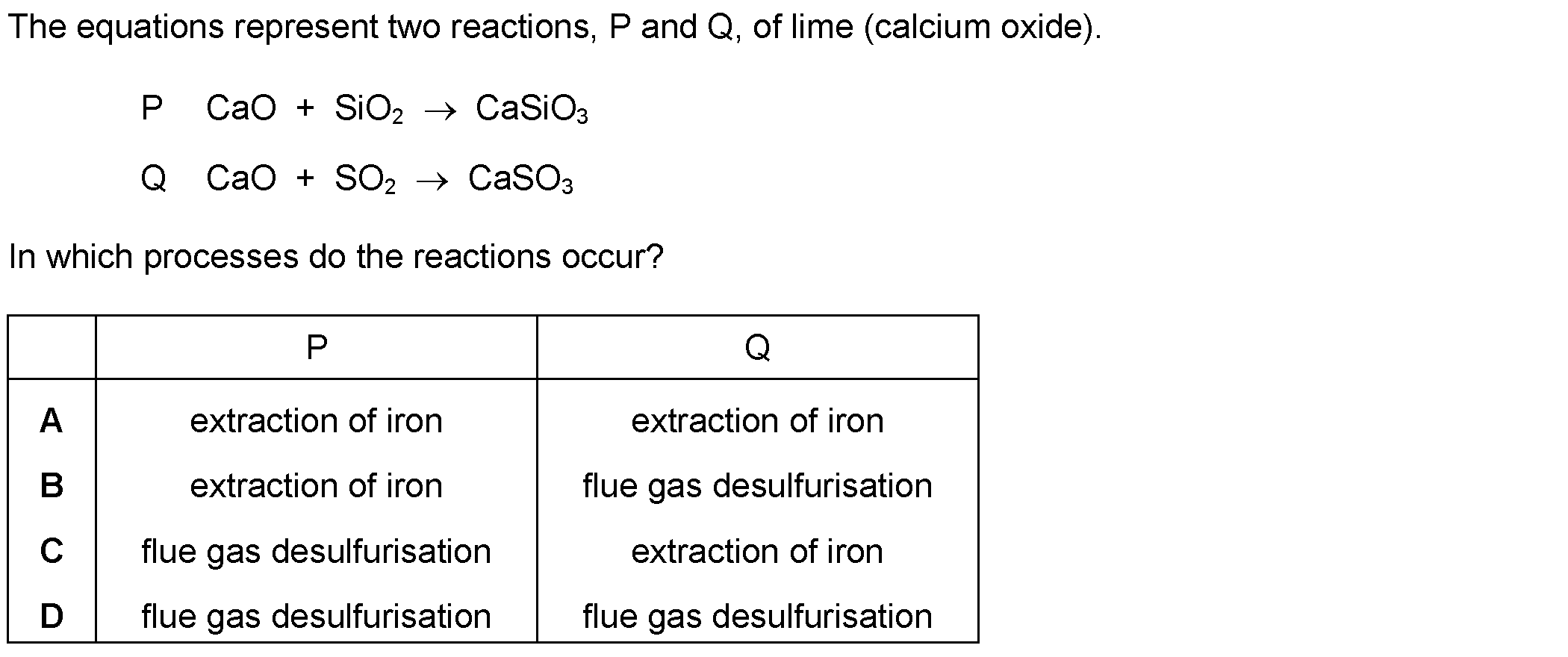
Question 4 of 23 1:30

Question 5 of 23 1:30

Question 6 of 23 1:30
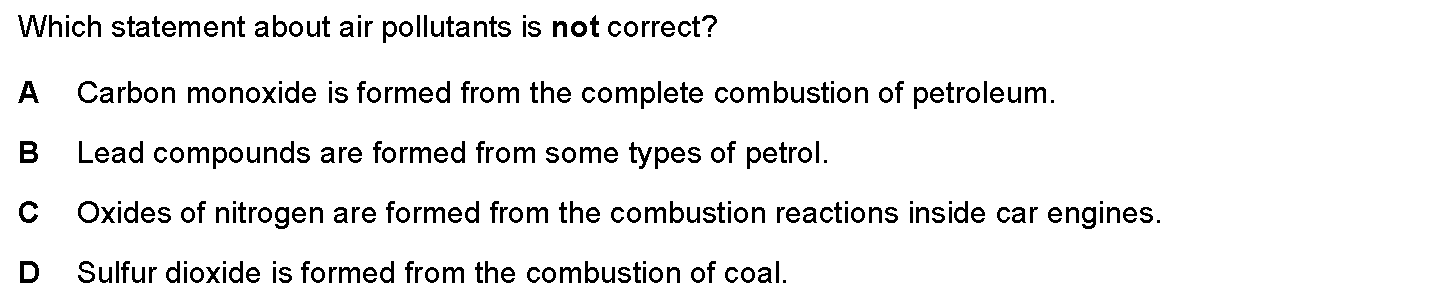
Question 7 of 23 1:30
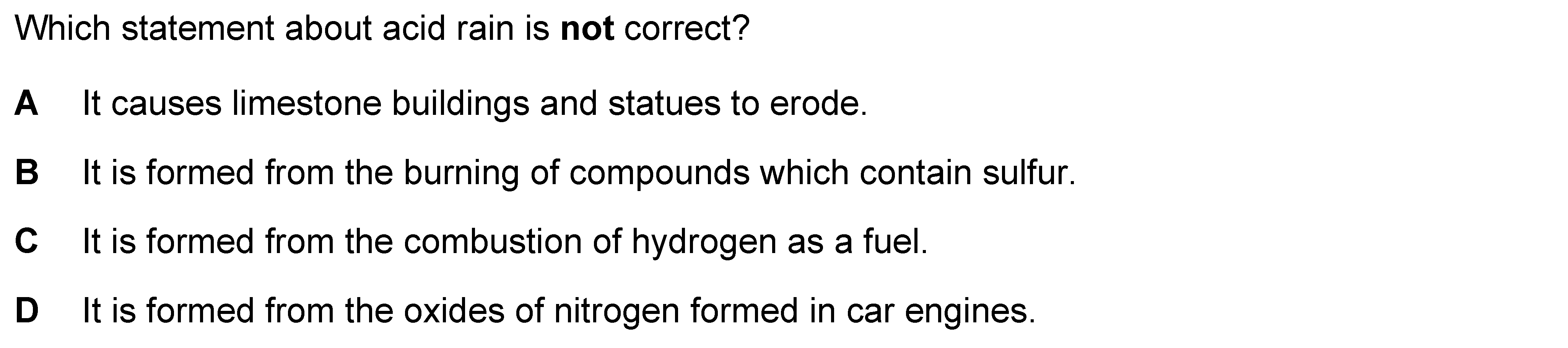
Question 8 of 23 1:30

Question 9 of 23 1:30
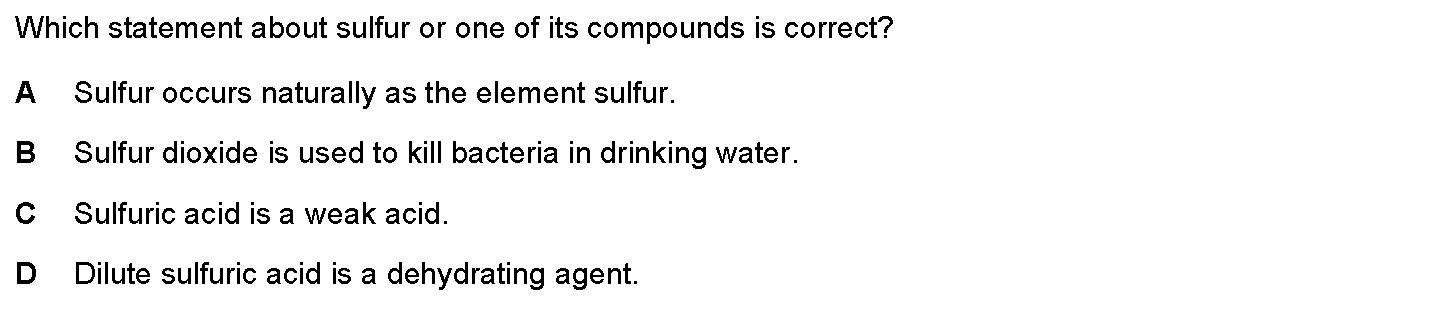
Question 10 of 23 1:30

Question 11 of 23 1:30
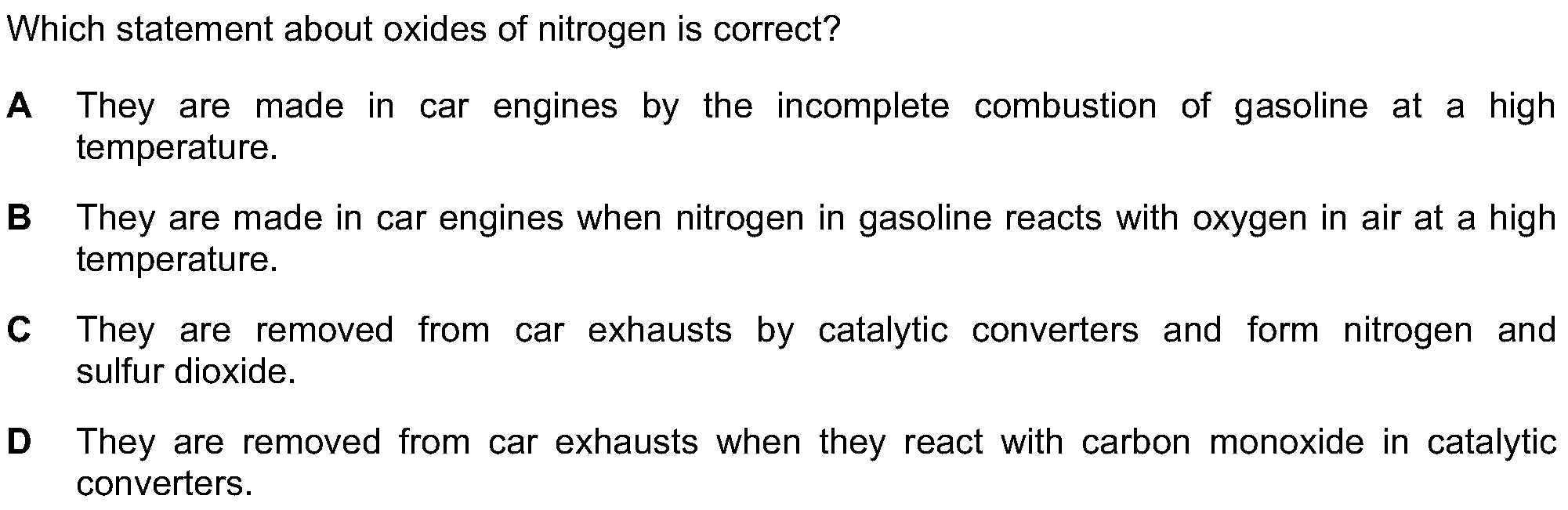
Question 12 of 23 1:30

Question 13 of 23 1:30
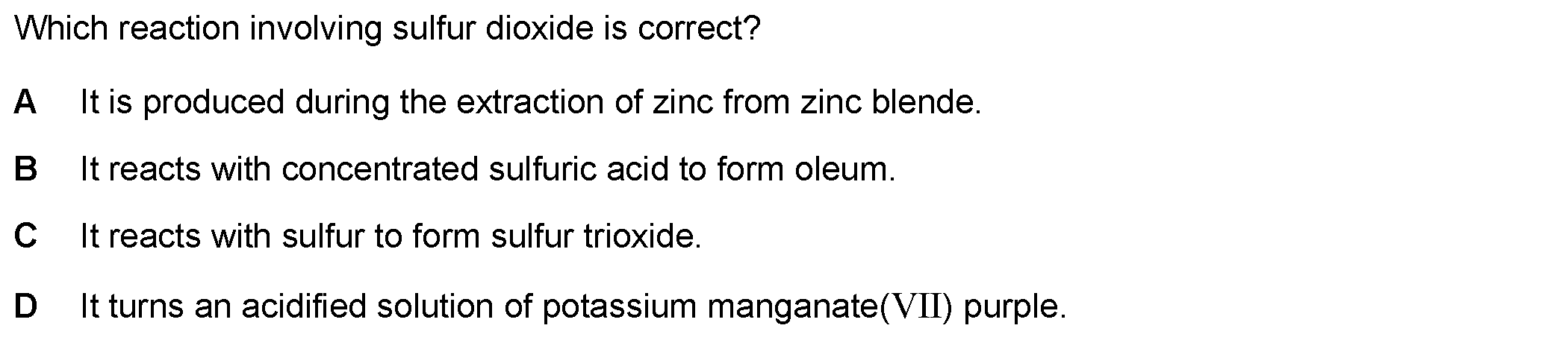
Question 14 of 23 1:30

Question 15 of 23 1:30
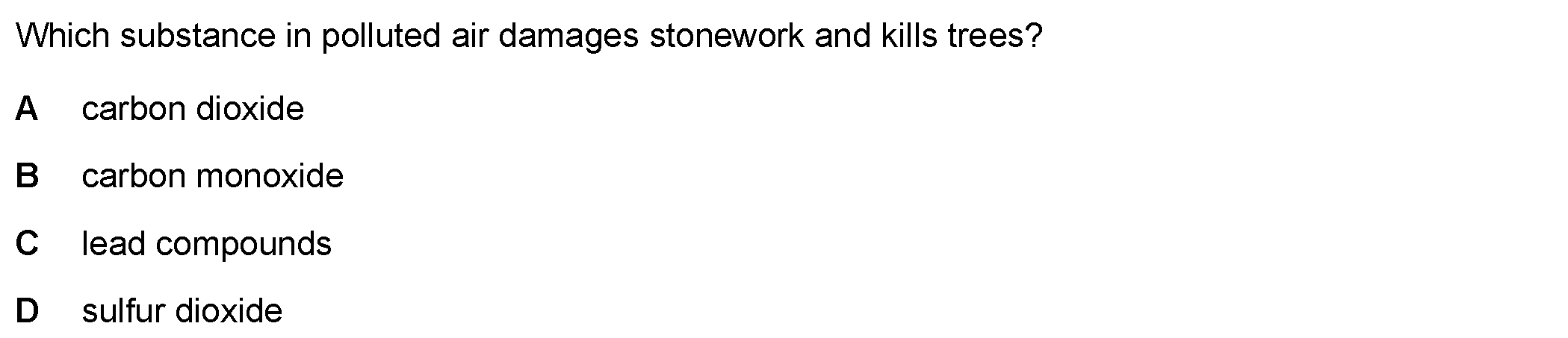
Question 16 of 23 1:30

Question 17 of 23 1:30

Question 18 of 23 1:30

Question 19 of 23 1:30

Question 20 of 23 1:30

Question 21 of 23 1:30
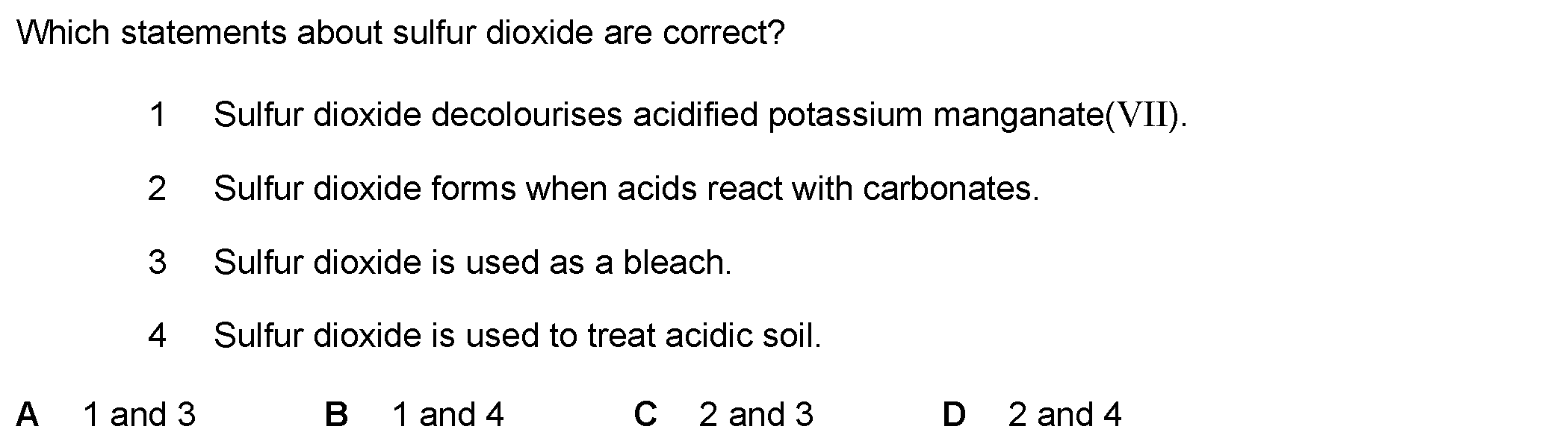
Question 22 of 23 1:30

Question 23 of 23 1:30

Answer key
1 C2 C3 B4 B5 C6 A7 C8 A9 A10 C11 D12 C13 A14 B15 D16 D17 B18 D19 D20 D21 A22 C23 D
Written question 1 of 1 · part (a)(i) (1 / 5) 3:00

Show the answer

Written question 1 of 1 · part (a)(ii) (2 / 5) 3:00

Show the answer
Written question 1 of 1 · part (b) (3 / 5) 3:00

Show the answer

Written question 1 of 1 · part (c) (4 / 5) 3:00

Show the answer
Written question 1 of 1 · part (d) (5 / 5) 3:00

Show the answer

Each part of a written question is on its own screen. Write your answer first, then open "Show the answer" to check it against the mark scheme.
Last updated: