3.3Chapter 3: Sound
Echoes — Alhussan Physics - Stage 7 Revision Notes & Topical Questions
5 min read 9 parts Lesson 3 of 4 2 quizzes
3.3 Echoes — Sound Reflection, Sonar and Echolocation — Alhussan International Academy — Physics (Stages 7–9) notes: Describe how echoes are formed and how humans and animals use echoes, and calculate distance from the time for an echo to return.Echo = a reflection of sound, hear…
- Time delay
- Not a new sound
- Large rooms
- Reverberation
- Reducing echoes
- Ultrasound
Part 1 of 7What an echo is
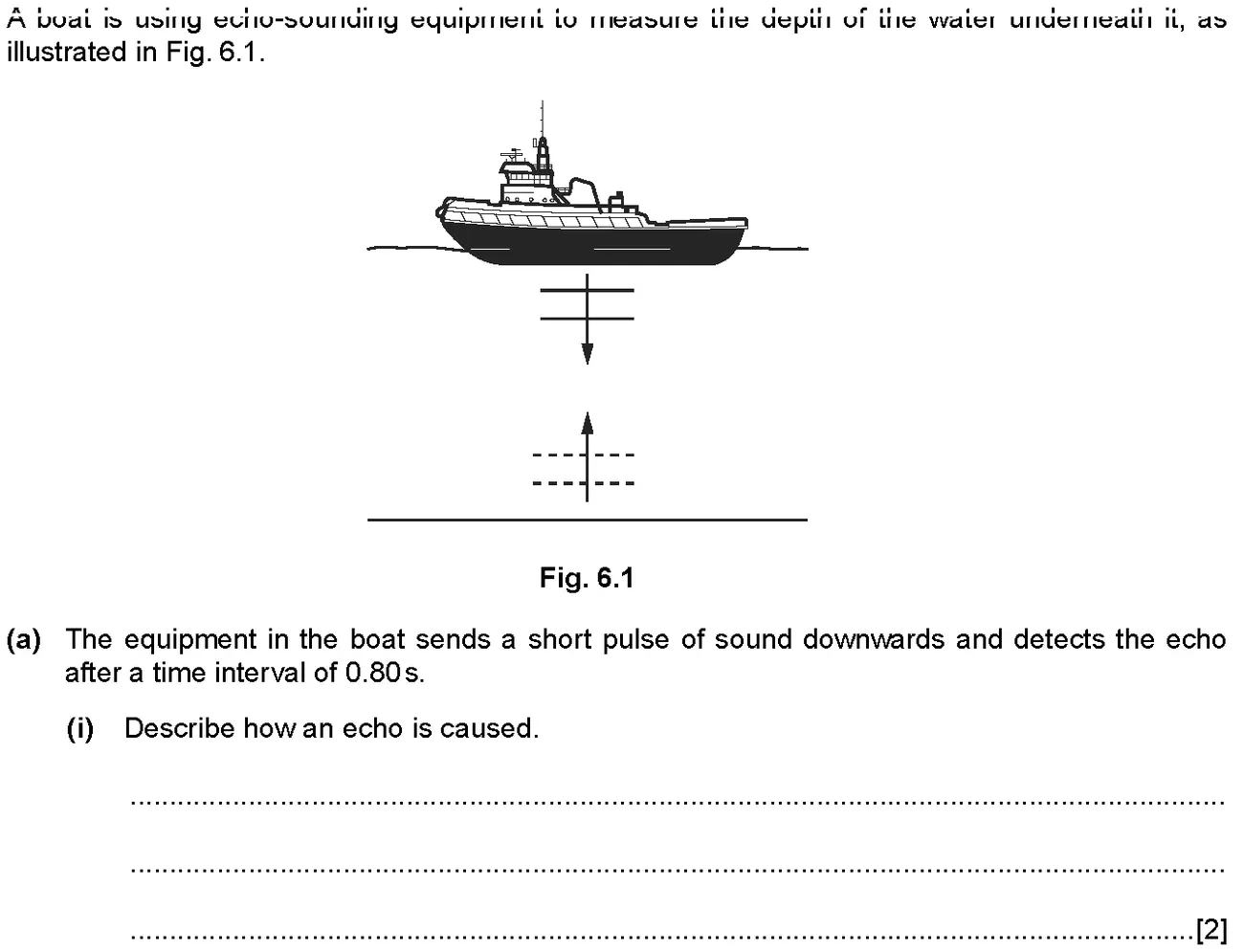
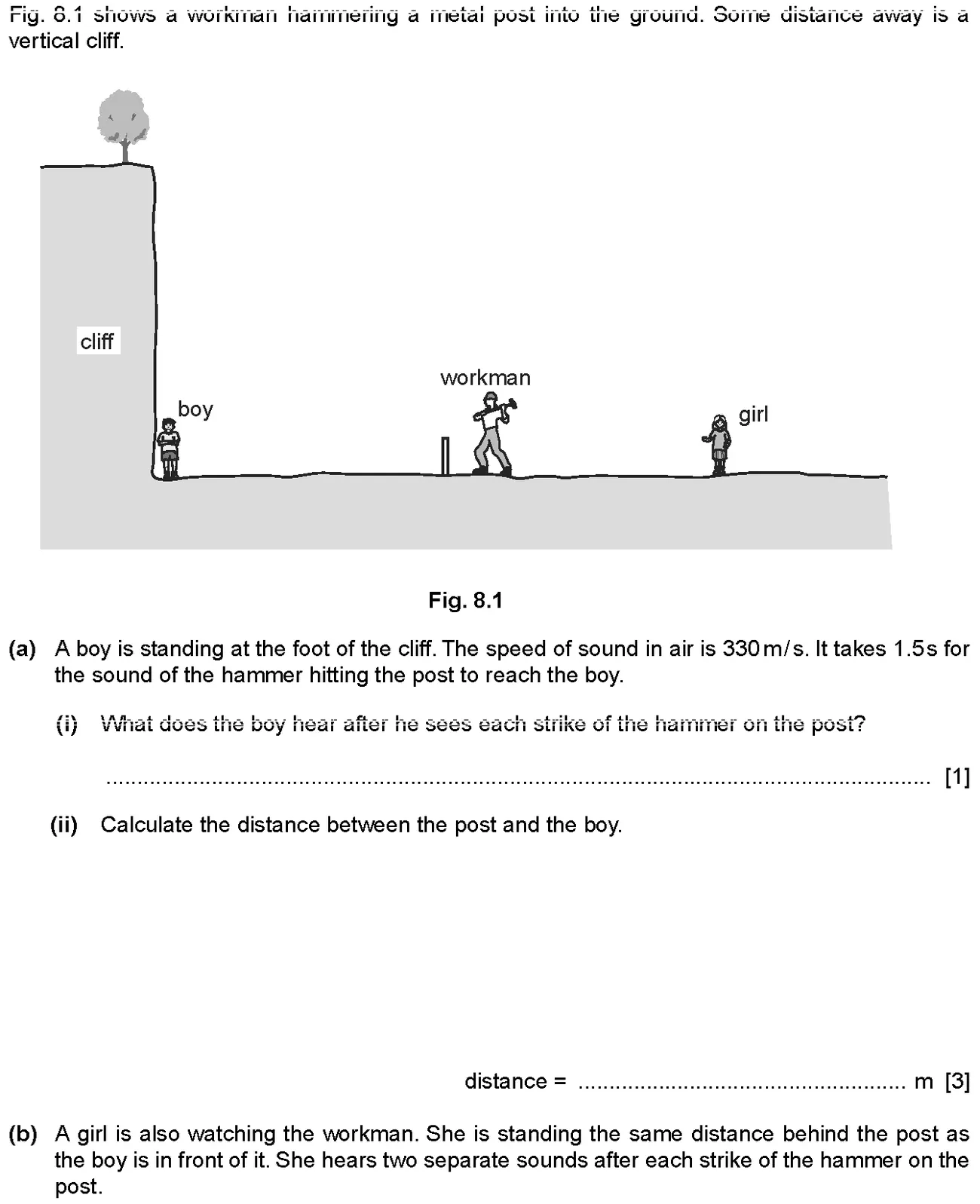
- The sound wave spreads out and reflects off surfaces such as the walls of a cave.
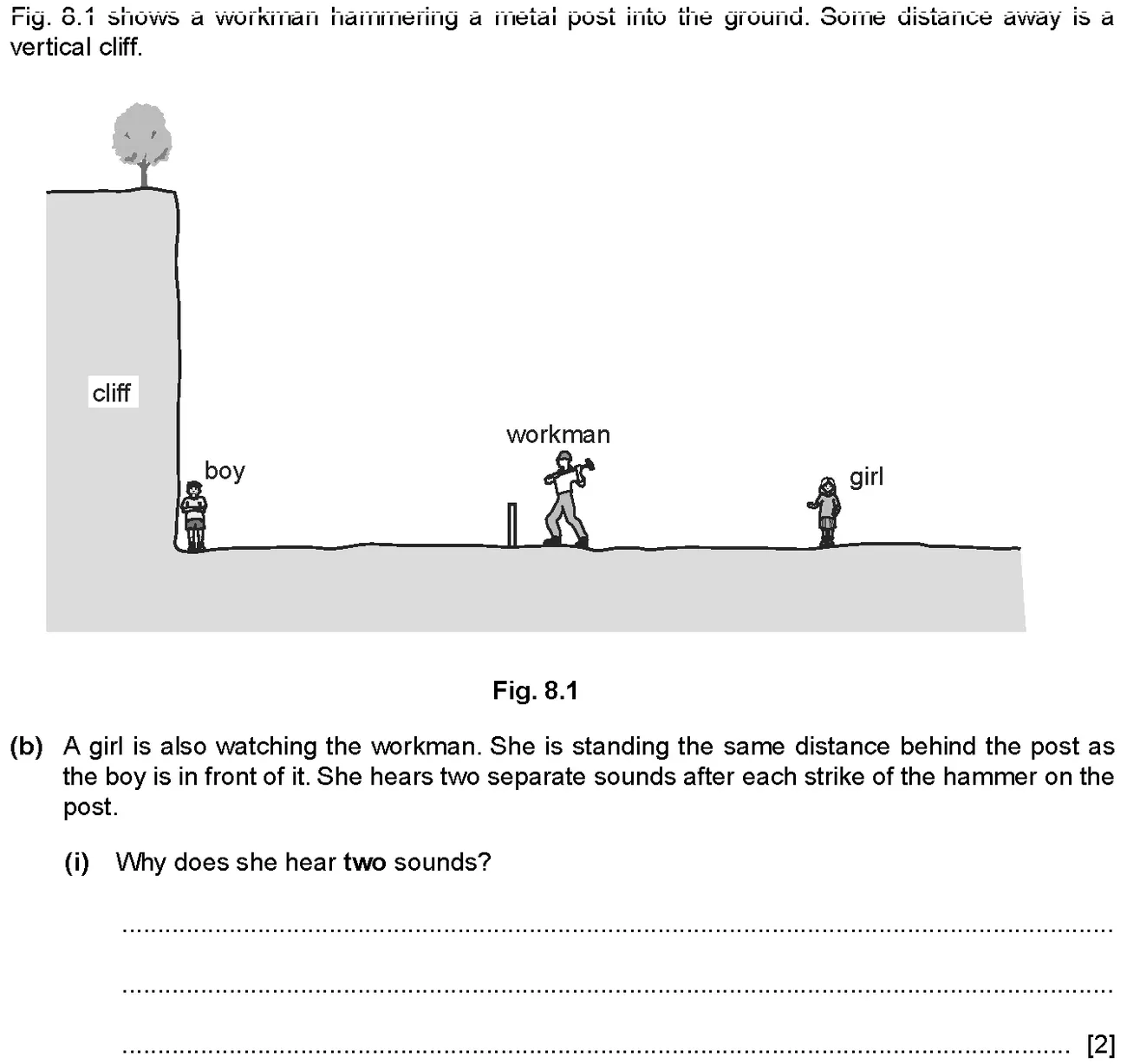
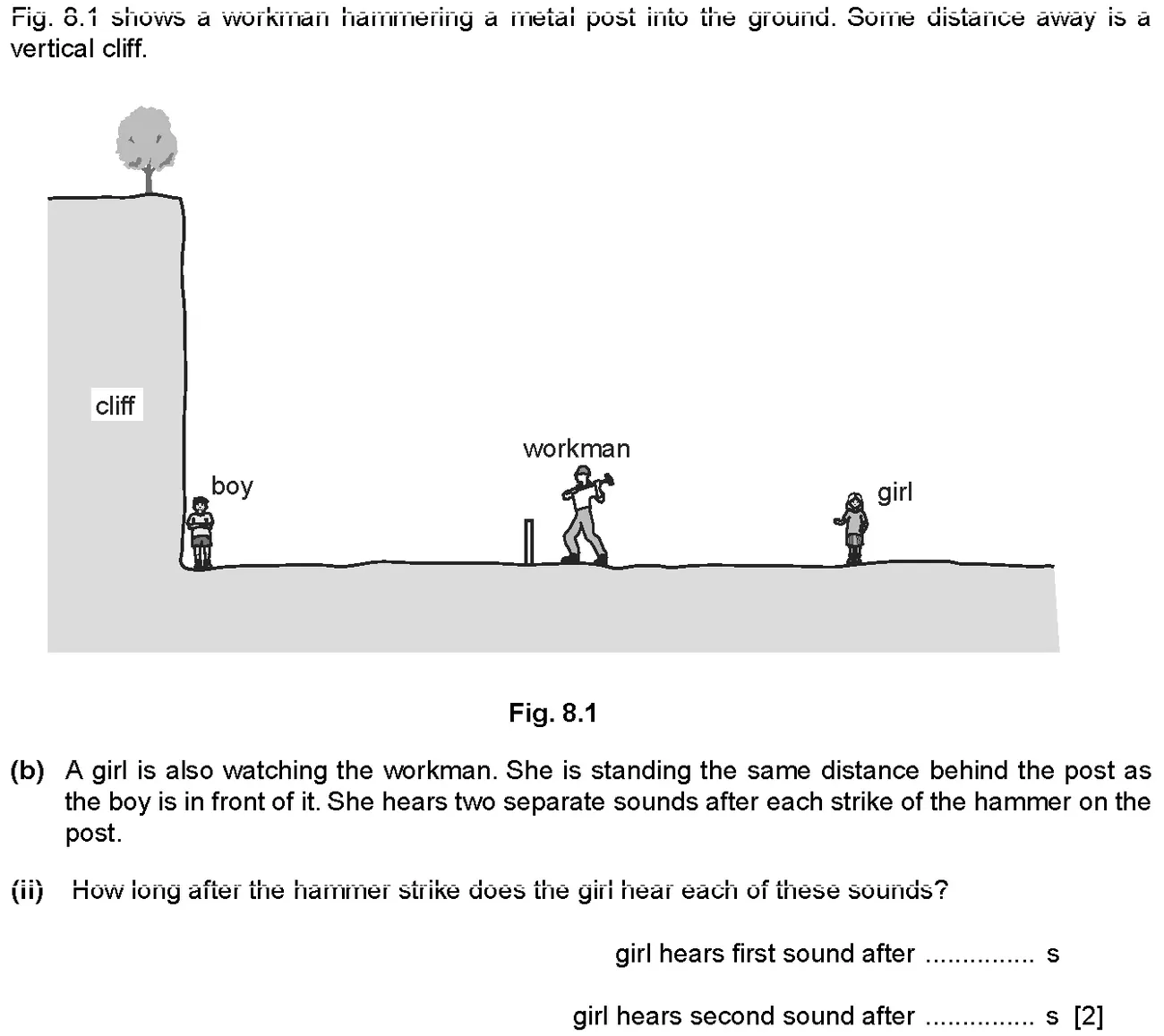
- Time delay sound travels relatively slowly, so there is a time delay between a shout and the echo.
- Not a new sound an echo is the original sound reflected, not a new sound made by the wall.
Part 2 of 7Problems with echoes
- Large rooms echoes can be a nuisance in cinemas and theatres,
- where sound reflects off all surfaces and echoes can last for several seconds, muddying the sound.
- Reducing echoes cinema walls and ceilings are covered with soft, sound-absorbing materials.
Part 3 of 7Ultrasound
- Use humans and animals use sound that we cannot hear.
- Why ultrasound beams of ultrasound are more focused than beams of audible sound,
- and they will not be confused with sounds made by people, animals or other boats.
Part 4 of 7Sonar
- Sonar
- the word comes from sound navigation and ranging.
- Submarines use it to navigate underwater and ships use it to measure the depth of water.
- Fishermen use it to find fish.
Part 5 of 7Calculating distance from an echo
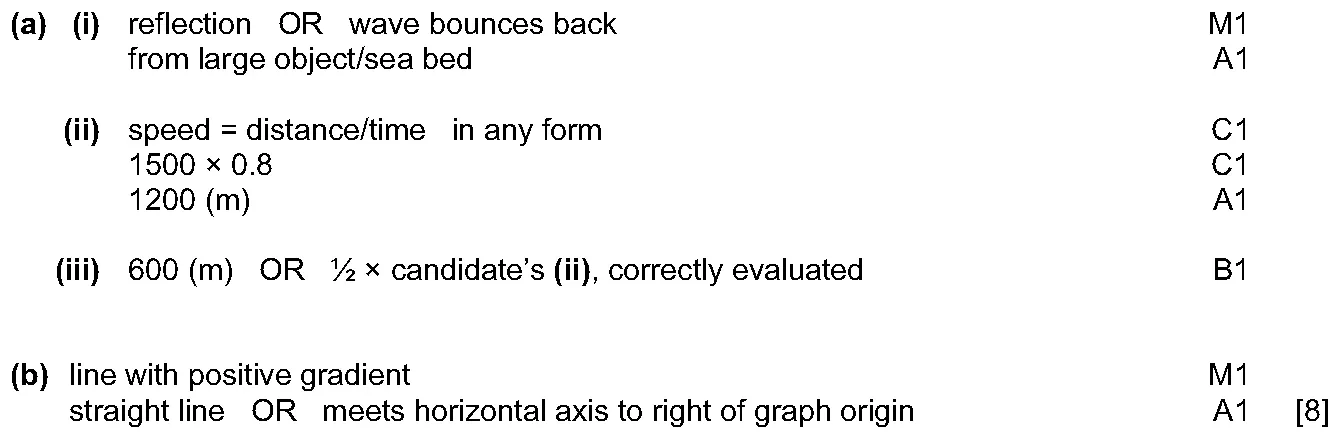
- Formula distance = speed × time.
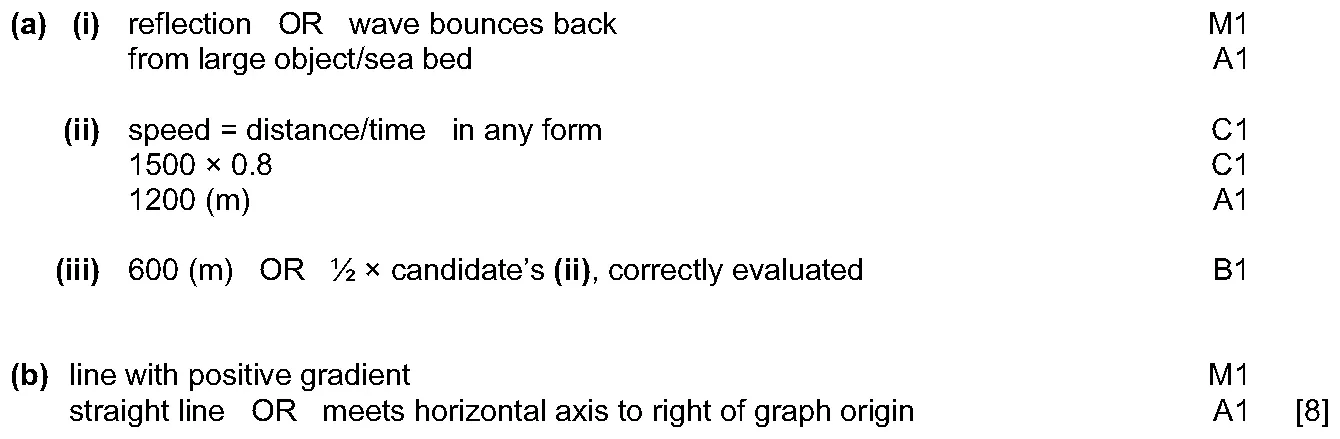
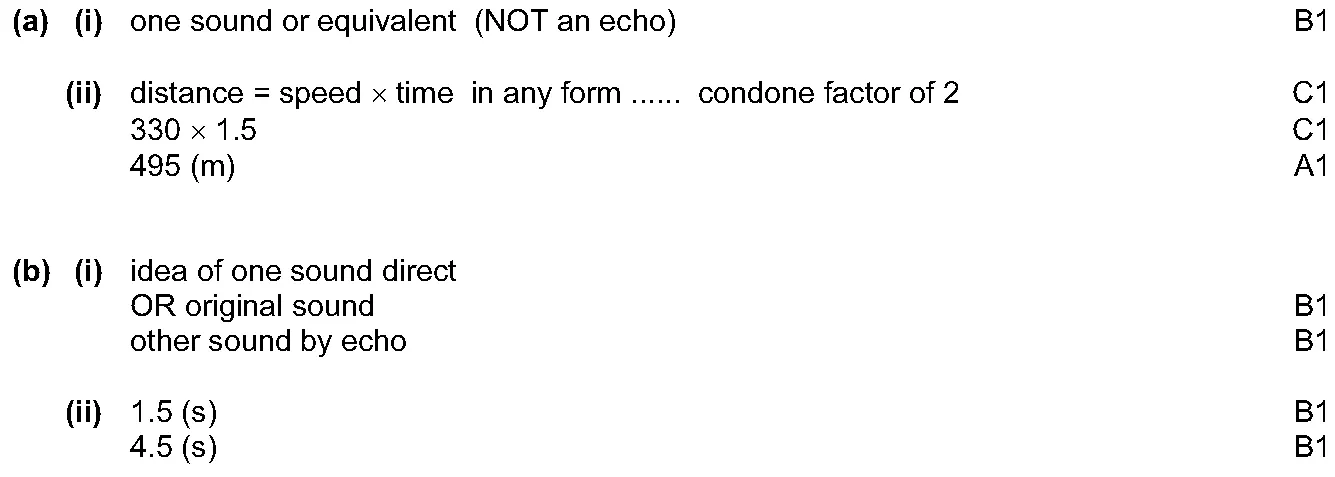
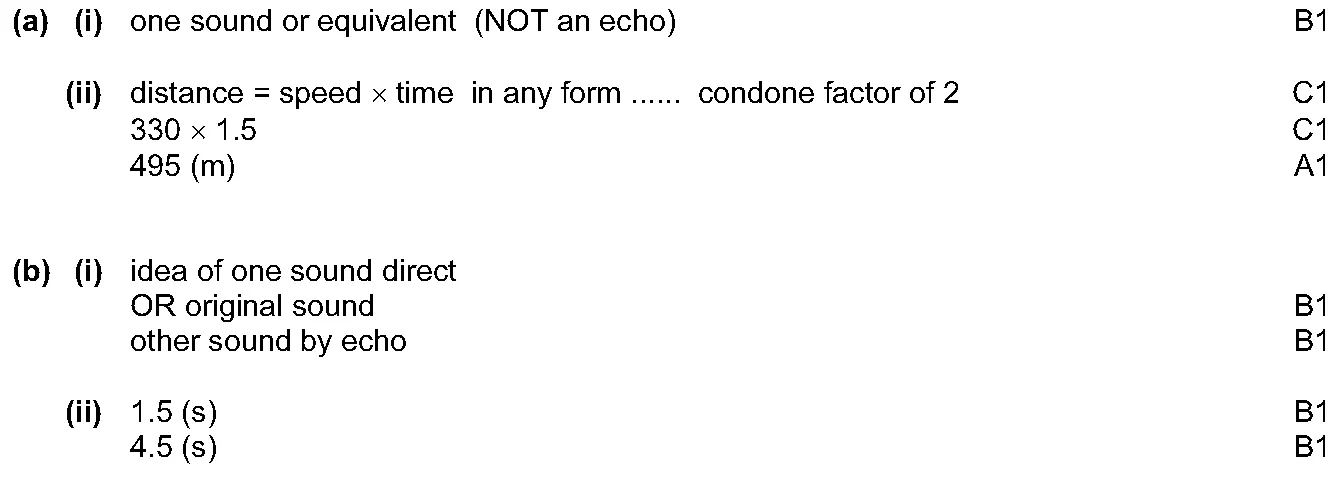
- Halve the time the measured time is for the journey there and back, so the time to the object is half of it.
- distance = speed × (time ÷ 2).
- Speeds of sound about 330 m/s in air and 1500 m/s in water.
- Reason for halving if the echo takes 1 second, the wave takes 0.5 s to reach the object and 0.5 s to come back.
Part 6 of 7Echolocation in animals
- Dolphins and whales they use echolocation more than sight, to find food or recognise family members in the dark or when the water is not clear.
- The dolphin makes a series of clicking sounds.
- The sound reflects off a fish.
- The dolphin detects the echoes and uses the time to work out the location of the fish.
- Bats they find the distance to objects using echolocation.
- Distance sound travels much faster in water than in air, so dolphins and whales can also communicate over very long distances.
- Dolphins can find food at greater distances than bats because sound travels faster and further in water.
Part 7 of 7Ultrasound scanning
- Safety pregnant women are not given X-rays because they could harm both the fetus and the mother,
- so doctors use ultrasound to check the development of the fetus.
- Method a transducer transmits ultrasound waves into the woman's body.
- The waves are reflected by boundaries between soft tissue and by hard surfaces such as bone.
- The transducer detects the echo and uses the time delay to calculate where the boundary is.
- Image by taking lots of pictures it is possible to build up a three-dimensional picture of the baby.
Key terms
| Term | Meaning |
|---|---|
| Echo | a reflected sound heard a short time after the original sound. |
| Ultrasound | sound with a frequency higher than 20 000 Hz. |
| Sonar | sound navigation and ranging, using ultrasound pulses and echoes to find depth or objects underwater. |
| Echolocation | finding the position of an object by using echoes of sound. |
| Reverberation | the muddying of sound by echoes that last for several seconds. |
| Transducer | a device that converts energy from one form to another. |
Avoid these mistakes
Marked practiceQuizzes for this lesson
?What do you want to solve now?
✓Checkpoint Quiz
1 multiple-choice + 2 written questions from real exam papers on this lesson.
Question 1 of 1 1:30

Answer key
1 C
Written question 1 of 2 · part (a)(i) (1 / 3) 3:00
Show the answer
Written question 1 of 2 · part (a)(ii) (2 / 3) 3:00

Show the answer
Written question 1 of 2 · part (a)(iii) (3 / 3) 3:00

Show the answer

Written question 2 of 2 · part (a)(ii) (1 / 3) 3:00
Show the answer
Written question 2 of 2 · part (b)(i) (2 / 3) 3:00
Show the answer
Written question 2 of 2 · part (b)(ii) (3 / 3) 3:00
Show the answer
Each part of a written question is on its own screen. Write your answer first, then open "Show the answer" to check it against the mark scheme.
Last updated: