4.1Chapter 4: Electricity
Charging up — Alhussan Physics - Stage 7 Revision Notes & Topical Questions
5 min read 9 parts Lesson 1 of 6 1 quiz
4.1 Charging up — Static Electricity, Electrons and Electrostatic Forces — Alhussan International Academy — Physics (Stages 7–9) notes: Name the two types of charge, explain why objects become charged, and explain the difference between conductors and insulators.Phenomenon = some…
- Forces between charges
- Charged balloon
- Origin of the word
- Atom model
- Neutral atom
- Which particles move
Part 1 of 7Electrostatic phenomena
- Examples a balloon rubbed on clothes sticks to a wall, deflects a stream of water from a tap and picks up small pieces of paper.
- A comb rubbed through dry hair can attract a thin stream of water or small pieces of paper.
- Clothes crackle when pulled apart because charge builds up by friction and then discharges.
- Cause these things happen because rubbing charges the balloon.
- Static it means stationary or standing still, so electrostatic phenomena are caused by charges that are not moving.
Part 2 of 7What charge is
- Charge it is a property of a particle or object, like mass.
- Two types positive (+) charge and negative (-) charge.
- Forces between charges when charges are brought together, electrostatic attraction or repulsion occurs.
- Like charges repel, so a positive charge repels another positive charge and a negative charge repels another negative charge.
- Unlike charges attract, so a positive charge attracts a negative charge.
- Charged balloon it can repel the negative charge in scraps of paper, running water or a wall, leaving a positive charge that produces attraction.
- Origin of the word in 600 BCE a Greek scientist picked up leaves with rubbed amber, and the Greek word for amber is elektron.
Part 3 of 7Charges in atoms
- Atom model protons and neutrons make up the central nucleus, and electrons orbit the nucleus.
- Neutral atom the number of electrons (negative) always equals the number of protons (positive), so the atom has no net charge and is neutral.
- Which particles move only electrons move from one object to another, and protons stay in the nuclei.
- Gaining or losing gaining electrons makes an object negative and losing electrons makes it positive.
Part 4 of 7How rubbing charges an object
- Polythene rod when it is rubbed with a cloth, electrons are transferred from the cloth to the rod.
- The rod has a net negative charge, because there is not enough positive charge to neutralise the negative charge.
- The cloth has a net positive charge, because there is not enough negative charge to neutralise the positive charge.
- Perspex rod when it is rubbed, electrons are transferred from the rod to the cloth,
- so the rod has a net positive charge and the cloth a net negative charge.
- Only some electrons not all electrons are transferred, just some.
- Conservation of charge the total amount of charge in the rod and the cloth is always the same,
- since charge cannot be created or destroyed, just like energy or mass.
| Object | Electron change | Net charge |
|---|---|---|
| Polythene rod (rubbed with cloth) | Gains electrons | Negative |
| Cloth rubbed on polythene | Loses electrons | Positive |
| Perspex rod (rubbed) | Loses electrons | Positive |
Part 5 of 7Testing with rods
- Kunala rubbed a polythene rod and hung it by a string, then brought a second rubbed rod close, and the first rod was repelled.
- Both rods are negatively charged, so the net charge on both is the same.
- Perspex rod when a rubbed Perspex rod is brought near the polythene rod, it is attracted.
- The rods have unlike charges, and the net charge on the Perspex rod is positive.
Part 6 of 7Electric field
- Electric field the region around any charge where another charge experiences a force.
Part 7 of 7Insulators and conductors
- Insulator electrons stay on the rod once you have rubbed it, so the charge stays in place, as with polythene and Perspex.
- Conductor electrons can move in it, as in metals.
- A metal rod rubbed with a cloth also becomes charged,
- but extra electrons move through the metal to your hand and through you to earth,
- so the rod seems uncharged.
- Insulated person if charge is transferred to a person insulated from the ground, the charge stays on them.
- Their hairs all gain the same charge, so they repel each other and the hair stands away from the body.
Key terms
| Term | Meaning |
|---|---|
| Electrostatic | relating to electric charges that are stationary. |
| Net charge | the overall charge once positive and negative charges are added together. |
| Electric field | the region around a charge where another charge experiences a force. |
| Insulator | a material in which electrons cannot move freely, so charge stays in place. |
| Conductor | a material in which charge can move freely. |
| Neutral | having no net charge. |
Avoid these mistakes
Topic quiz · 166 questionsQuiz for this lesson
?What do you want to solve now?
✓Checkpoint Quiz
1 written questions from real exam papers on this lesson.
Written question 1 of 1 · part (a)(ii) (1 / 3) 3:00

Show the answer
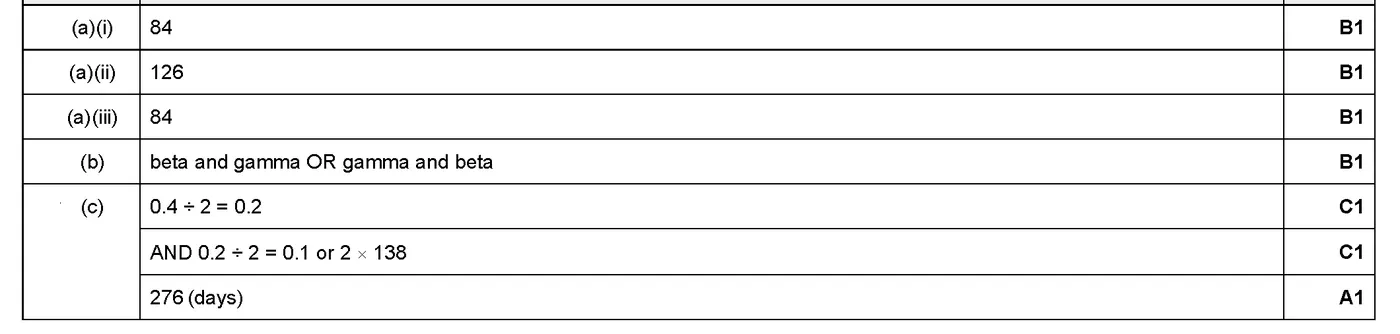
Written question 1 of 1 · part (a)(iii) (2 / 3) 3:00

Show the answer
Written question 1 of 1 · part (b) (3 / 3) 3:00

Show the answer
Each part of a written question is on its own screen. Write your answer first, then open "Show the answer" to check it against the mark scheme.
Last updated: