4.5Chapter 4: Electricity
Dangers of electricity — Alhussan Physics - Stage 7 Revision Notes & Topical Questions
5 min read 7 parts Lesson 5 of 6 2 quizzes
Lesson summary
4.5 Dangers of electricity — Fuses, Insulation and Electrical Safety — Alhussan International Academy — Physics (Stages 7–9) notes: Describe how electricity can be dangerous and explain how the risk of damage or injury can be reduced.Spark = charge moving through the air, heating…
- Thundercloud
- Lightning strike
- Useful current
- Static shocks
- Lightning conductor
- Refuelling cars and planes
Section 1 of 7Sparks and lightning
Spark
Spark charge moving through the air, heating it up.
- We see light and hear a sound, and the moving charge is an electric current.
Air
- Air it does not usually allow a current to flow, but a big difference in charge can make the air conduct electricity.
Lightning
- Lightning it is an example of an electrostatic phenomenon, and there are lightning storms all over the world every day.
Thundercloud
- Thundercloud the air moves around inside the cloud like rubbing a rod with a cloth.
- This forms a region that is positively charged and a region that is negatively charged.
- Negative charges at the bottom of the cloud can make a huge spark as they travel to Earth, which we see as lightning.
- Sometimes a spark is produced between positive and negative regions inside the cloud.
Section 2 of 7Electric shocks
Lightning strike
- Lightning strike if lightning strikes a person it can break bones, cause burns or even kill them.
- The charge travels through the person to earth, and the current can damage the heart or stop it beating.
Useful current
- Useful current doctors use an electric current to try to restart a patient's heart if it stops beating,
- which can save lives.
- (a defibrillator uses charge to do this)
Static shocks
- Static shocks people sometimes feel a small shock when they touch a car door, because the car has become charged by friction as it moves along.
- You may hear sparks crackle as you remove clothing, or feel a shock from a door handle.
- A student charged by walking across a carpet gets a shock from a metal handle because charge flows to it.
- She would not get a shock from a plastic handle, because plastic is an insulator and charge cannot flow through it.
Section 3 of 7Risk and earthing
Risk
Risk the probability of something happening combined with the consequence if it did.
- We cannot change the probability of lightning hitting a building, but we can change what happens if it does.
Earthing
Earthing connecting an object to the ground with a conductor so that charge flows away safely and the risk of damage by an electric current is reduced.
Lightning conductor
- Lightning conductor a thick strip of metal such as copper running from the top of a tall building down the wall to a copper plate buried underground.
- If lightning strikes, electrons flow down the strip into the ground, because metal conducts much better than the building.
Section 4 of 7Earthing in other situations
1Refuelling cars and planes
- Refuelling cars and planes friction of fuel moving along the pipe can cause charge to build up, and a spark could make the fuel catch fire.
- Fuel pipes are earthed by attaching a metal wire, so any charge flows down the wire to earth.
2Electronics
- Electronics engineers who make circuits for TVs or phones wear wristbands connected to a metal wire that goes to the ground.
- Any build-up of charge flows down the wire to earth rather than through the delicate components.
Section 5 of 7Safety in mains circuits
Insulation
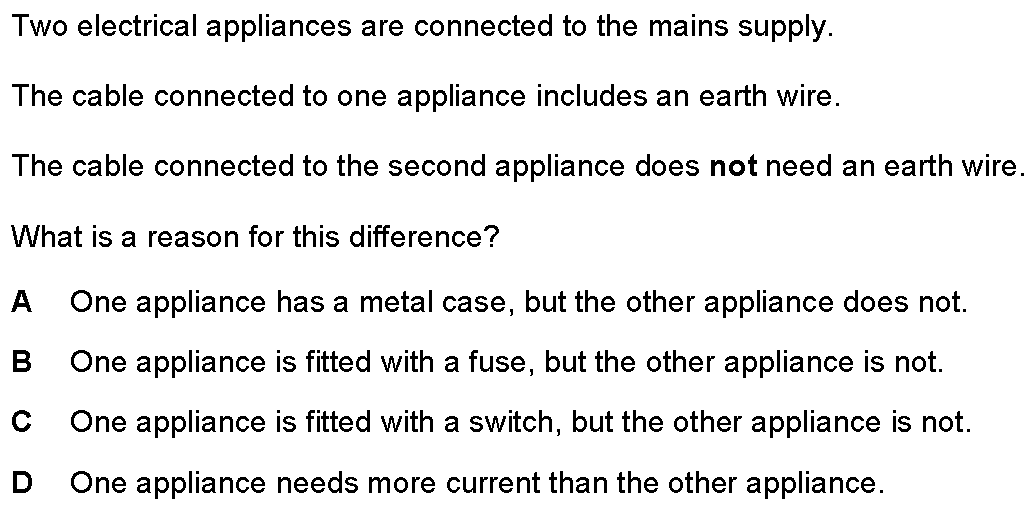
- Insulation appliance wires are covered in insulation to prevent electric shocks.
Fuse
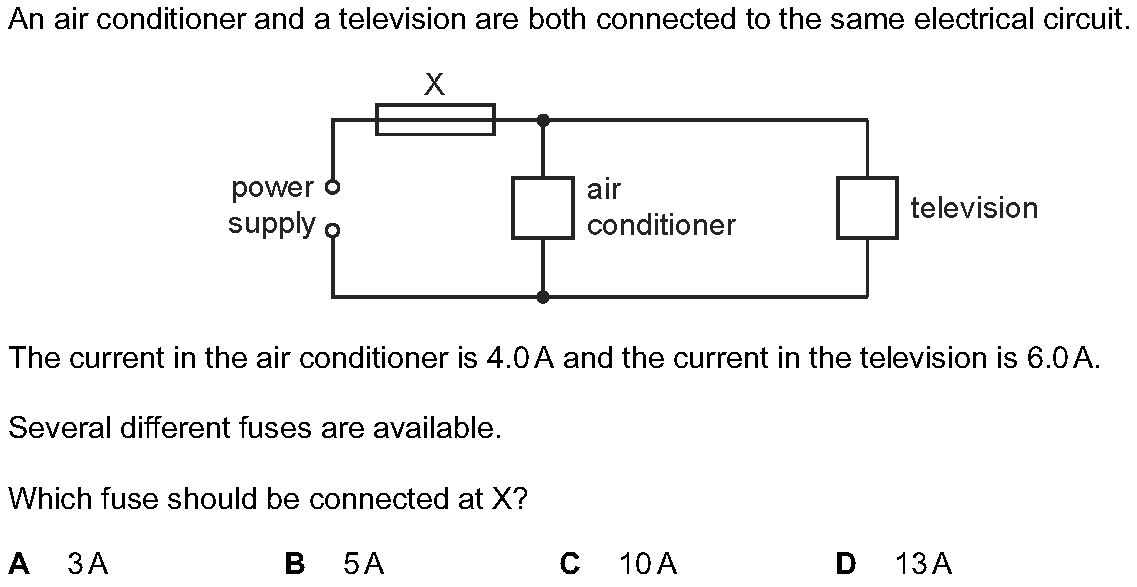
Fuse a safety device containing a thin wire in a circuit that melts if too much current flows, breaking the circuit and preventing overheating and fires.
Earth wire
- Earth wire it gives an escape route for current if a fault occurs.
Section 6 of 7Key terms
| Term | Meaning |
|---|---|
| Electrostatic phenomenon | an observable effect caused by static electric charge, such as lightning. |
| Earthing | connecting an object to the ground with a conductor so that charge flows away. |
| Lightning conductor | a metal strip from the top of a building to the ground that carries lightning current safely. |
| Risk | the probability of something happening combined with its consequence. |
| Fuse | a safety device containing a thin wire that melts when the current is too large. |
| Spark | charge moving through air, heating it. |
Section 7 of 7Exam technique
1
Thinking lightning is not electrical — it is a huge electrostatic discharge.
2
Thinking earthing removes charge by magic — it provides a conducting path to the ground.
3
Thinking air is a good conductor — it only conducts when there is a very big difference in charge.
4
Thinking you can reduce the probability of lightning by earthing a building — earthing reduces the consequences.
Marked practiceQuizzes for this lesson
?What do you want to solve now?
✓Checkpoint Quiz
5 multiple-choice questions from real exam papers on this lesson.
Question 1 of 5 1:30
Question 2 of 5 1:30
Question 3 of 5 1:30

Question 4 of 5 1:30

Question 5 of 5 1:30

Score: 0 / 5
Answer key
1 A2 D3 C4 B5 B
Last updated: