6.17Chapter 6: Forces, Motion and Pressure
Pressure in gases — Alhussan Physics - Stage 8 Revision Notes & Topical Questions
5 min read 8 parts Lesson 17 of 19 2 quizzes
Physics 6.17 Pressure in gases — Particle Collisions and Atmospheric Pressure — Alhussan International Academy — Physics (Stages 7–9) notes: Explain gas pressure using particles and describe the factors that affect gas pressure and atmospheric pressure.Particle model — The partic…
- Cause of pressure
- Adding more gas
- Smaller volume
- Higher temperature
- Oxygen tanks
- Reason for compression
Section 1 of 8Gas pressure and particles
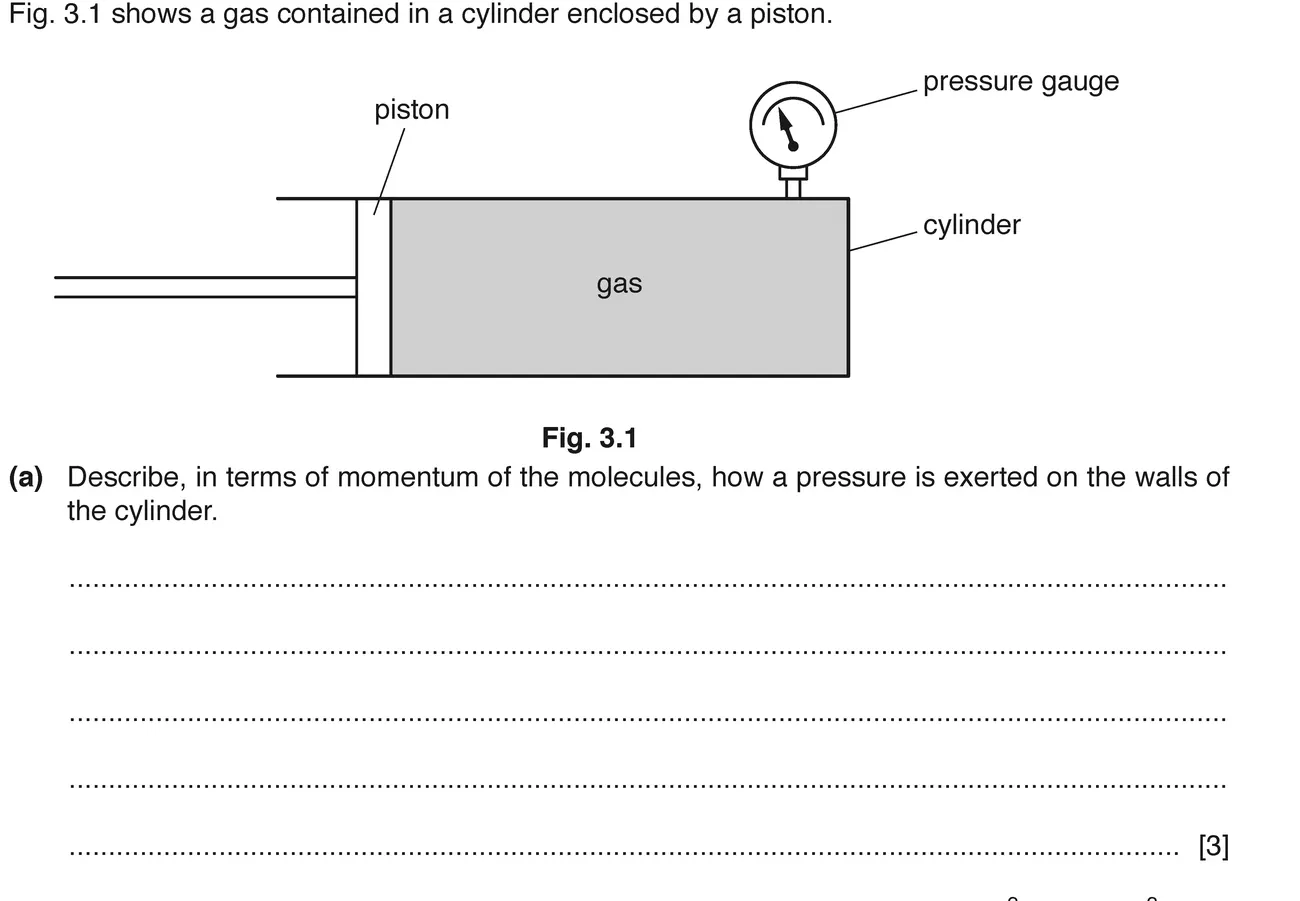
- The particles in a gas are far apart, moving fast in random directions.
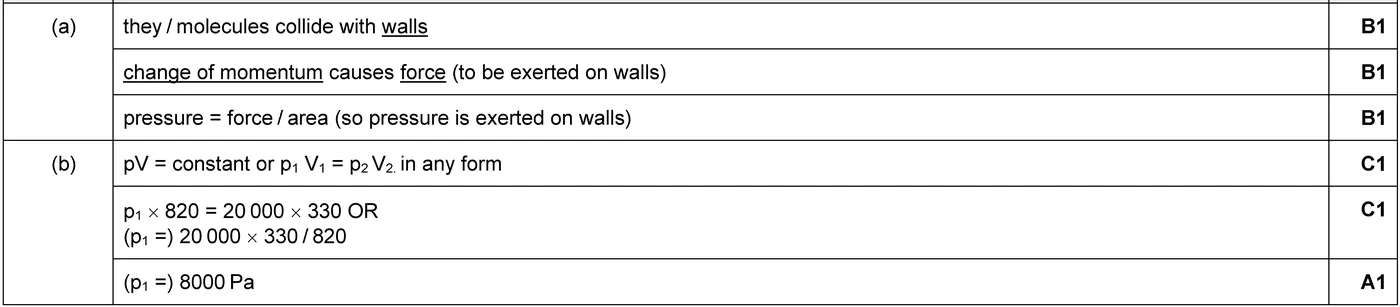
- Gas particles bump into each other and into the walls of their container.
- The collisions with the walls produce gas pressure.
- All gases, including gases inside you, exert a pressure on the walls of their container.
- Air particles hit the inside and outside of the balloon, and more collisions on the inside make it bigger.
Section 2 of 8Factors affecting gas pressure
- More particles mean more collisions with the walls, so the pressure increases.
- In a container of fixed shape the pressure rises as air is pumped in.
- Too much gas can make a balloon burst.
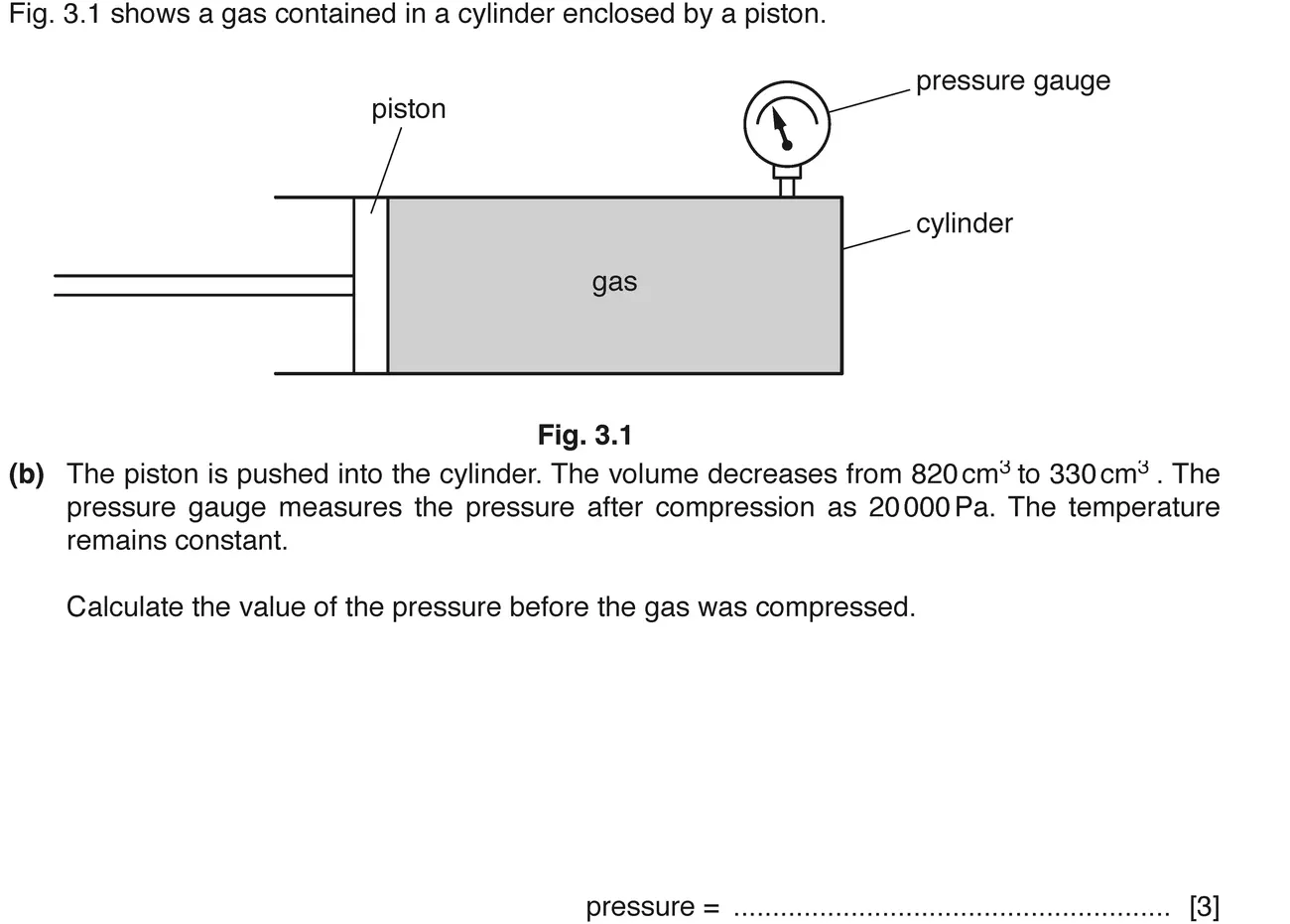
- The same particles in a smaller volume collide with the walls more often, so the pressure is higher.
- Particles move faster, so there are more and harder collisions and the pressure is higher.
Section 3 of 8Atmospheric pressure
- We do not feel it because it is balanced by the pressure of gases and liquids in our bodies pushing outwards.
- Atmospheric pressure at sea level is bigger than high up a mountain.
- Gravity pulls air particles towards the Earth, so the air near the surface is compressed.
- Closer particles mean more collisions and a bigger force.
- Higher up there is less air above, so fewer particles and fewer collisions.
- Marshmallows contain air pockets that expand when the air around them is pumped out,
- because outside pressure falls while inside pressure stays the same.
Section 4 of 8Compressed gases
- Firefighters and people in places with low oxygen use tanks of oxygen compressed into a small volume.
- Otherwise they could not carry enough oxygen.
- The pressure inside is very high, so the tanks are made of metal that can withstand it.
- Gas flows out of the valve because its pressure is higher than the atmospheric pressure outside.
Section 5 of 8Comparing gases and liquids
| Property | Gas | Liquid |
|---|---|---|
| Particle spacing | Far apart | Touching |
| Compressible | Yes, easily | Almost not at all |
| Cause of pressure | Collisions with walls | Collisions and the weight of liquid above |
Section 6 of 8Everyday gas pressure
- Pumping adds more air particles into a fixed volume, so collisions with the inner wall increase.
- At altitude the outside pressure falls but the trapped gas pressure stays the same, so the packet swells.
- Sucking lowers the pressure inside the straw, and the greater atmospheric pressure pushes liquid up.
Section 7 of 8Key terms
| Term | Meaning |
|---|---|
| Gas pressure | The pressure caused by gas particles colliding with a surface. |
| Atmospheric pressure | The pressure of the air above a surface. |
| Compress | To squeeze into a smaller volume. |
| Particle model | A model in which matter is made of moving particles. |
| Collision | When particles hit each other or a surface. |
Section 8 of 8Exam technique
Marked practiceQuizzes for this lesson
?What do you want to solve now?
✓Checkpoint Quiz
2 multiple-choice + 1 written questions from real exam papers on this lesson.
Question 1 of 2 1:30

Question 2 of 2 1:30

Answer key
1 C2 B
Written question 1 of 1 · part (a) (1 / 2) 3:00
Show the answer
Written question 1 of 1 · part (b) (2 / 2) 3:00
Show the answer
Each part of a written question is on its own screen. Write your answer first, then open "Show the answer" to check it against the mark scheme.
Last updated: