12.5Chapter 12: Energy Transfer
Energy transfer: radiation — Alhussan Physics - Stage 9 Revision Notes & Topical Questions
5 min read 8 parts Lesson 5 of 7 2 quizzes
Physics 12.5 Energy transfer: radiation — Infrared Thermal Radiation, Absorbers and Emitters — Alhussan International Academy — Physics (Stages 7–9) notes: Describe how energy is transferred by radiation, compare the three methods of energy transfer and explain the greenhouse eff…
- Thermal (infrared) radiation
- Like light
- All objects emit it
- Conduction and convection
- From the Sun
- Dark dull surfaces
Section 1 of 8What radiation is
- Infrared warms your skin, travels from the Sun to the Earth as a wave and can be reflected, transmitted and absorbed.
- The type of radiation emitted depends on temperature.
- The wire in a torch bulb is hot enough to emit infrared and light, but a person emits only infrared.
Section 2 of 8Comparing radiation with conduction and convection
- Both need a material for the energy to travel through.
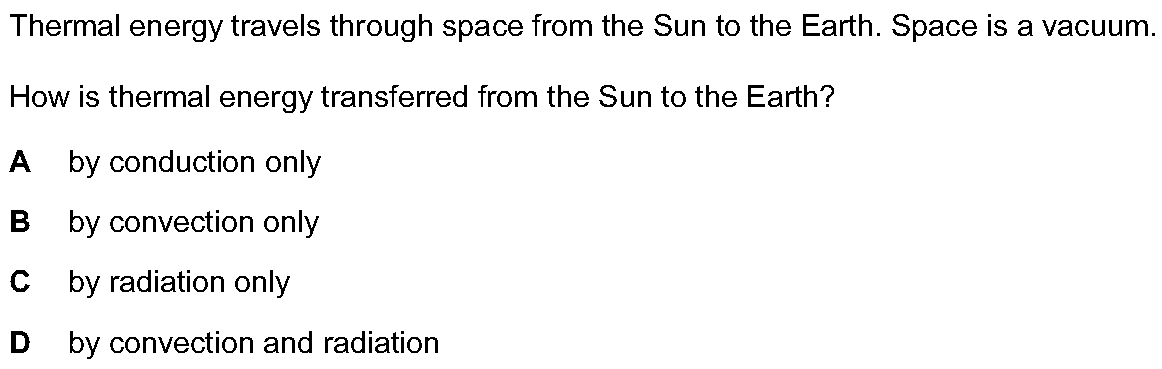
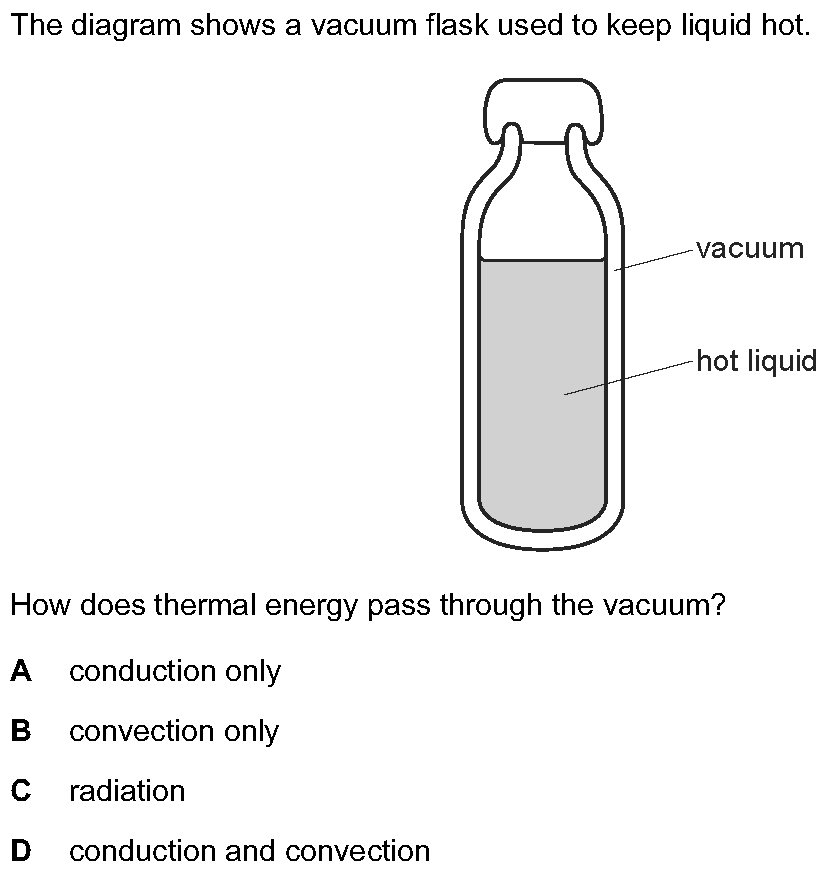
- It does not need a material and can travel through a vacuum.
- Light and infrared reach the Earth by travelling through space, which is a vacuum.
| Property | Light | Infrared |
|---|---|---|
| Emitted by | Hot objects | Hot objects |
| Reflected well by | Shiny surfaces | Shiny surfaces |
| Absorbed by | Objects and the retina | Objects and the skin |
| Detected by | A camera | A thermal imaging camera |
| Travels through a vacuum | Yes, as a wave | Yes, as a wave |
Section 3 of 8Absorbers and emitters
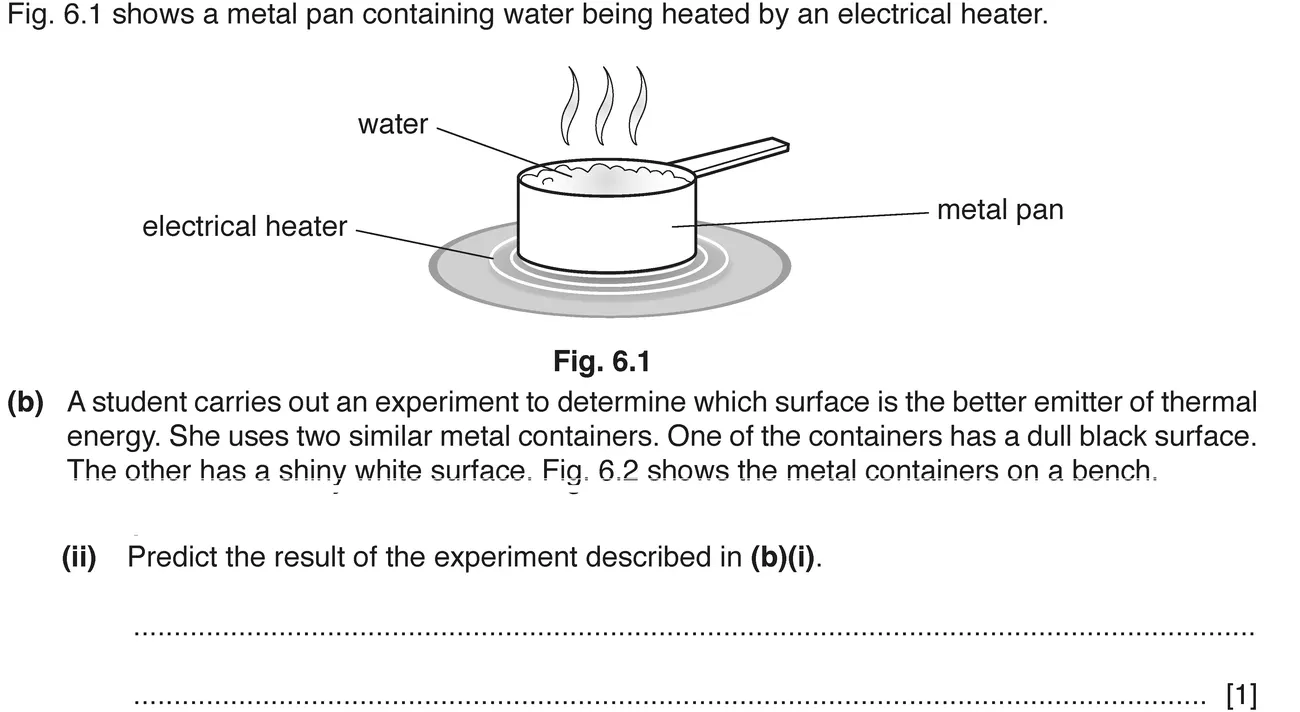
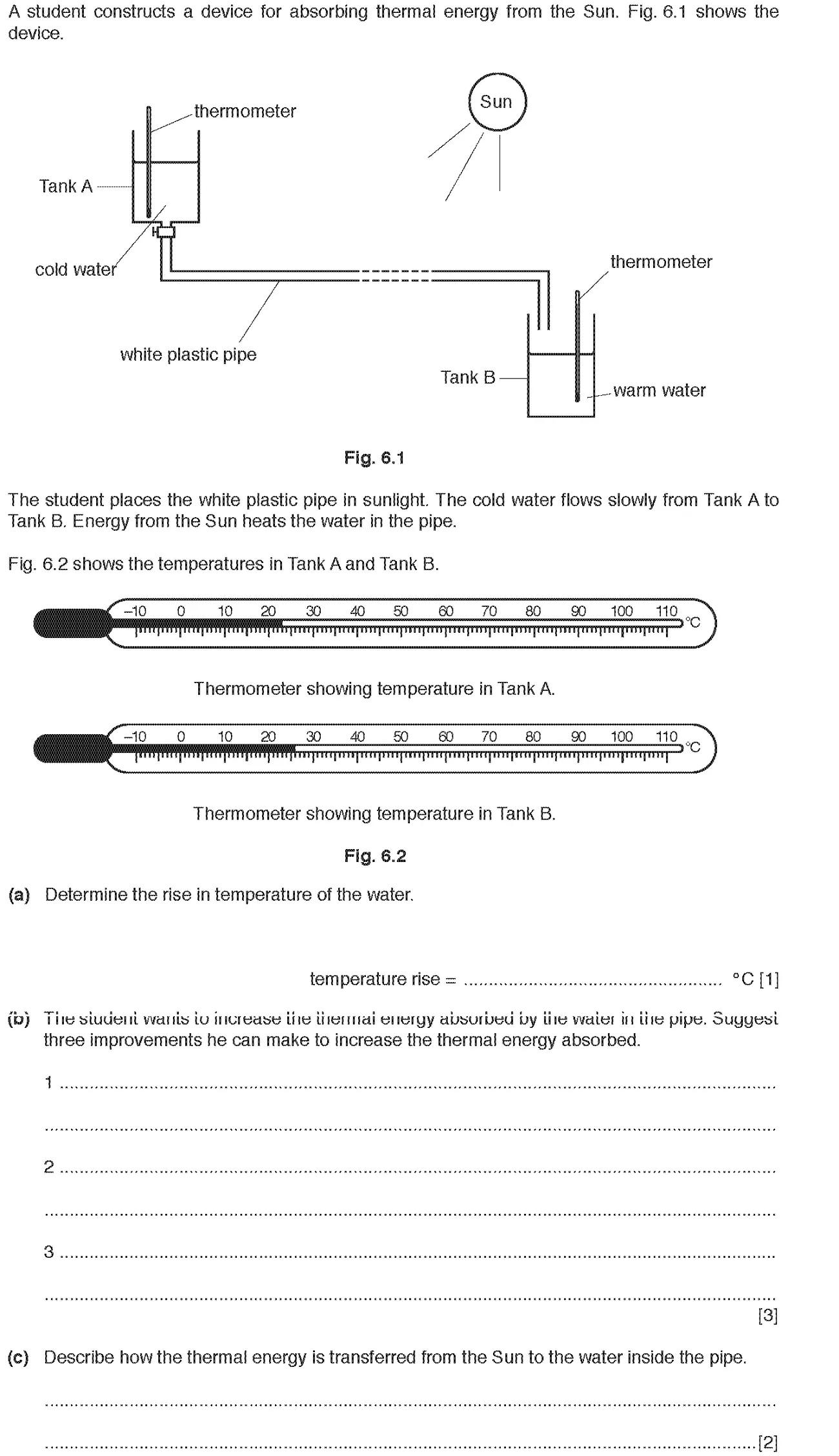
- They absorb more infrared than light shiny surfaces and also emit more.
- They are poor absorbers and poor emitters but good reflectors.
- Marathon runners use foil wraps to keep warm because shiny foil reflects infrared back to the body.
- Pale houses stay cooler in summer.
- Dark clothes dry first on a washing line.
Section 4 of 8The greenhouse effect
- The Earth's temperature depends on the balance between radiation absorbed and radiation emitted.
- If more is absorbed than emitted, the temperature increases.
- Some radiation is reflected by the atmosphere and the rest is absorbed by land and oceans.
- Some is reflected back by the atmosphere and the rest passes into space.
- Carbon dioxide, methane, water vapour and nitrous oxide absorb infrared and re-emit it.
- Some is re-emitted back towards Earth instead of out into space.
- This is the greenhouse effect.
- The Earth would be very hot in the day and very cold at night.
Section 5 of 8Climate change
- The concentration of greenhouse gases is increasing.
- It raises the average global temperature, alters the weather, melts the icecaps and affects how easy it is to grow food.
Section 6 of 8The electromagnetic spectrum
- Light and infrared are two of the waves of this spectrum, just as blue and green are two colours of light.
- All can travel through a vacuum and all travel at the same speed in a vacuum.
- They have different uses and some are more dangerous than others.
| Wave | Example use |
|---|---|
| Radio waves | Broadcasting |
| Microwaves | Cooking, mobile phones |
| Infrared | Remote controls, thermal imaging |
| Visible light | Seeing |
| Ultraviolet | Sterilising, security marks |
| X-rays and gamma rays | Medical imaging, treating cancer |
Section 7 of 8Key terms
| Term | Meaning |
|---|---|
| Infrared radiation | Thermal radiation emitted by all objects, which can travel through a vacuum. |
| Greenhouse gas | A gas that absorbs and re-emits infrared radiation. |
| Electromagnetic spectrum | The family of waves including radio waves, light and X-rays. |
| Absorber | A surface that takes in radiation. |
| Emitter | A surface that gives out radiation. |
Section 8 of 8Exam technique
Marked practiceQuizzes for this lesson
?What do you want to solve now?
✓Checkpoint Quiz
5 multiple-choice + 2 written questions from real exam papers on this lesson.
Question 1 of 5 1:30
Question 2 of 5 1:30
Question 3 of 5 1:30

Question 4 of 5 1:30

Question 5 of 5 1:30

Answer key
1 C2 C3 D4 D5 B
Written question 1 of 2 · part (a)(i) (1 / 5) 3:00

Show the answer

Written question 1 of 2 · part (a)(ii) (2 / 5) 3:00

Show the answer

Written question 1 of 2 · part (a)(iii) (3 / 5) 3:00

Show the answer

Written question 1 of 2 · part (b)(i) (4 / 5) 3:00

Show the answer

Written question 1 of 2 · part (b)(ii) (5 / 5) 3:00
Show the answer

Written question 2 of 2 7:00
Show the answer
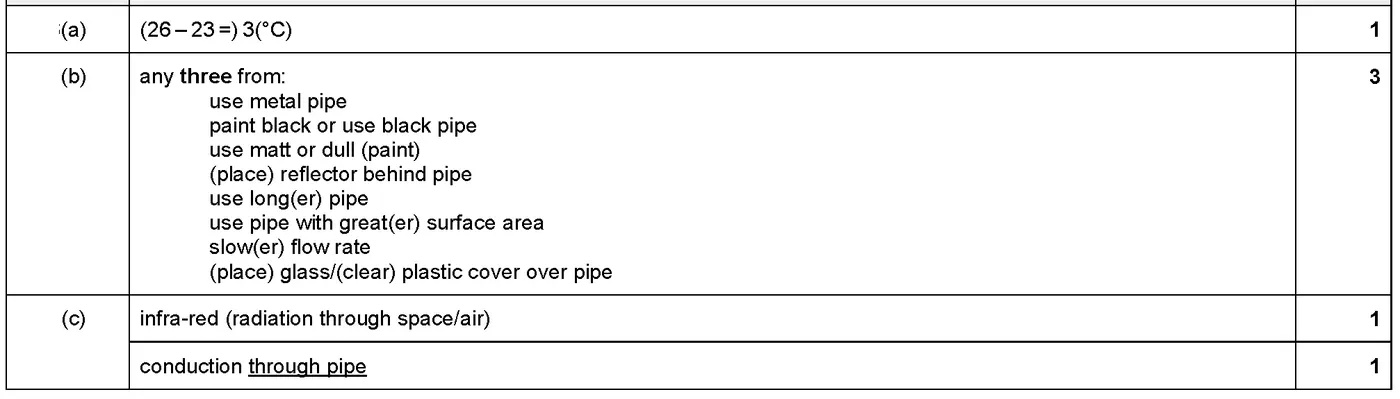
Each part of a written question is on its own screen. Write your answer first, then open "Show the answer" to check it against the mark scheme.
Last updated: