14.4Chapter 14: Electrical Circuits, Resistance and Power
Planning investigations: resistance of a wire — Alhussan Physics - Stage 9 Revision Notes & Topical Questions
5 min read 8 parts Lesson 4 of 6 2 quizzes
Lesson summary
Physics 14.4 Planning investigations: resistance of a wire — Length and Cross-Sectional Area — Alhussan International Academy — Physics (Stages 7–9) notes: Decide when to use primary data and describe how to plan an investigation.Observations — The filaments of lamps are very thi…
- Testable questions
- Not easily testable
- Independent variable
- Possible variables
- Control variables
- Secondary sources
Part 1 of 6Choosing a question to test
Observations
- The filaments of lamps are very thin, curled wires, which leads to questions about length, thickness and material.
Testable questions
- Choose ideas that can be tested by collecting data, such as how the resistance of a wire depends on its length.
Not easily testable
- A question such as why some bulbs look brighter than others is interesting but hard to test with data.
Part 2 of 6Variables
Independent variable
- The length of the wire.
- (or its thickness, cross-sectional area)
Dependent variable
- The resistance, calculated from voltage and current.
Possible variables
- Length, thickness, material and voltage of the battery.
Control variables
- They are kept the same so the data show the link between the chosen variable and the resistance.
- When changing length, keep the thickness, material, voltage and temperature the same.
- When changing thickness, keep the length, material, voltage and temperature the same.
Part 3 of 6Preliminary work
Purpose
- Preliminary work decides how to do the experiment safely and how to get a good range of results.
Secondary sources
- Use them to find the most suitable wire.
Trying voltages
- Try out different voltages for different lengths.
Choice
- The wire gets very hot at high voltages, so a lower voltage such as 1.5 V is chosen.
Part 4 of 6Choosing equipment
Ammeter
- A digital ammeter measures the current in the wire to the nearest 0.1 A.
Changing length
- Clips connect to different positions on the wire.
Ruler
- It measures the length of wire between the clips to the nearest 1 mm.
Circuit
- A variable power supply is connected in series with the wire and the ammeter.
Part 5 of 6Assessing hazards
Hot wire
- The wire can get very hot.
Control measures
- Put the wire on a heatproof mat and do not leave the battery connected for long.
Effect on results
- A hot wire also gives a higher resistance, so switch off between readings.
Part 6 of 6Obtaining and analysing evidence
1
Measure the current for different lengths of wire.
2
Repeat each measurement three times to make results more reliable.
3
Discard anomalous results before calculating averages.
4
Calculate resistance R = V ÷ I for each length.
5
Plot resistance against length to find a pattern.
Length
- For a uniform wire the points lie on a straight line through the origin, so resistance is proportional to length.
Cross-sectional area
- Resistance is inversely proportional to the area; a wire of twice the area has half the resistance.
Key terms
| Term | Meaning |
|---|---|
| Primary data | Data you collect yourself in an experiment. |
| Preliminary work | Trial experiments to choose methods, values and safe conditions. |
| Cross-sectional area | The area of a cut across a wire, showing its thickness. |
| Anomalous result | A result that does not fit the pattern. |
| Control variable | A variable kept the same in a fair test. |
Avoid these mistakes
1
Changing more than one variable at once — change only length (or only thickness).
2
Using a high voltage to get big readings — a hot wire changes the resistance and is unsafe.
3
Using the average without removing anomalies — discard anomalous results first.
4
Skipping preliminary work — it decides safe values and a good range.
Marked practiceQuizzes for this lesson
?What do you want to solve now?
✓Checkpoint Quiz
4 multiple-choice + 2 written questions from real exam papers on this lesson.
Question 1 of 4 1:30
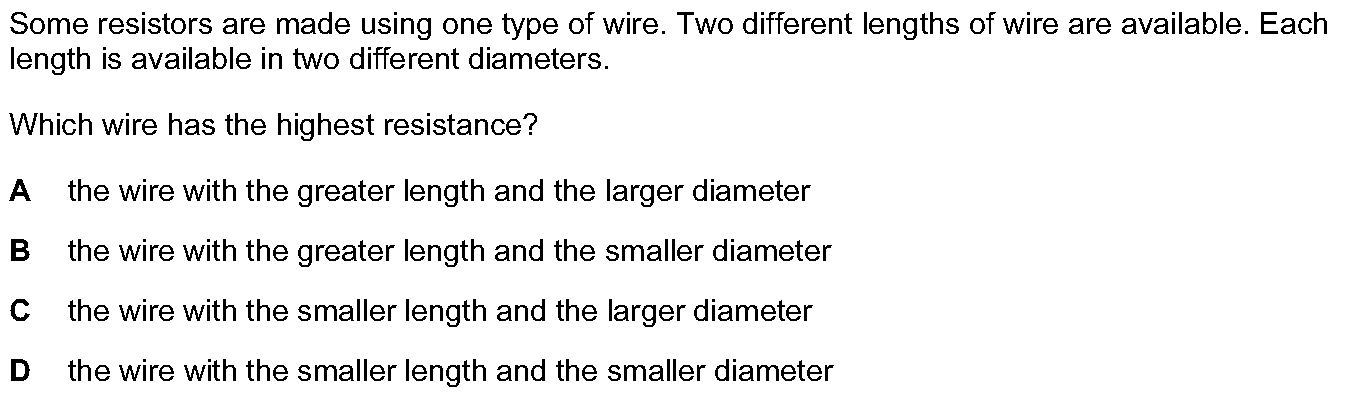
Question 2 of 4 1:30
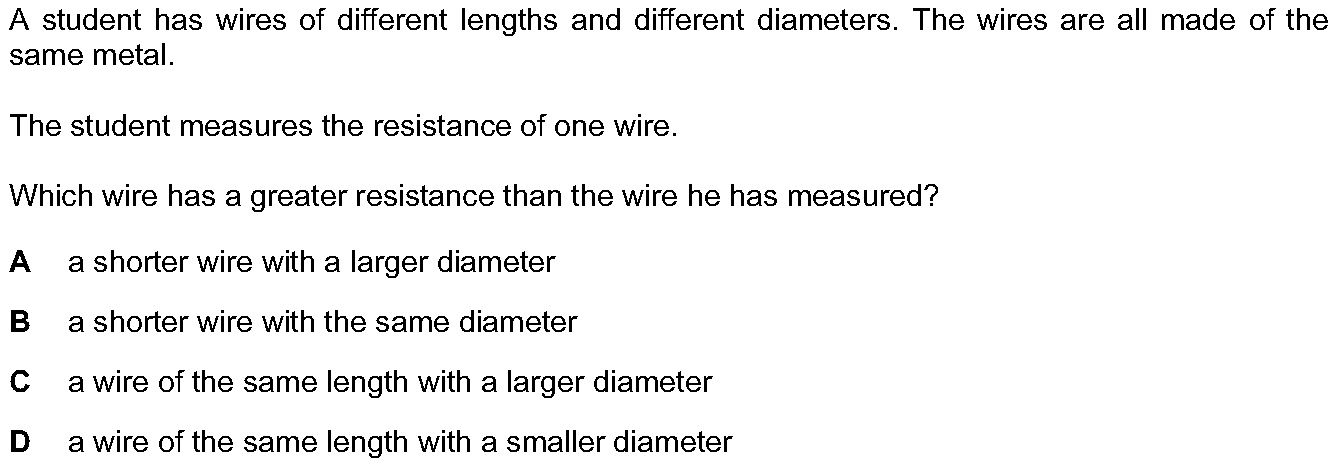
Question 3 of 4 1:30

Question 4 of 4 1:30

Score: 0 / 4
⇩ Answer key (PDF) 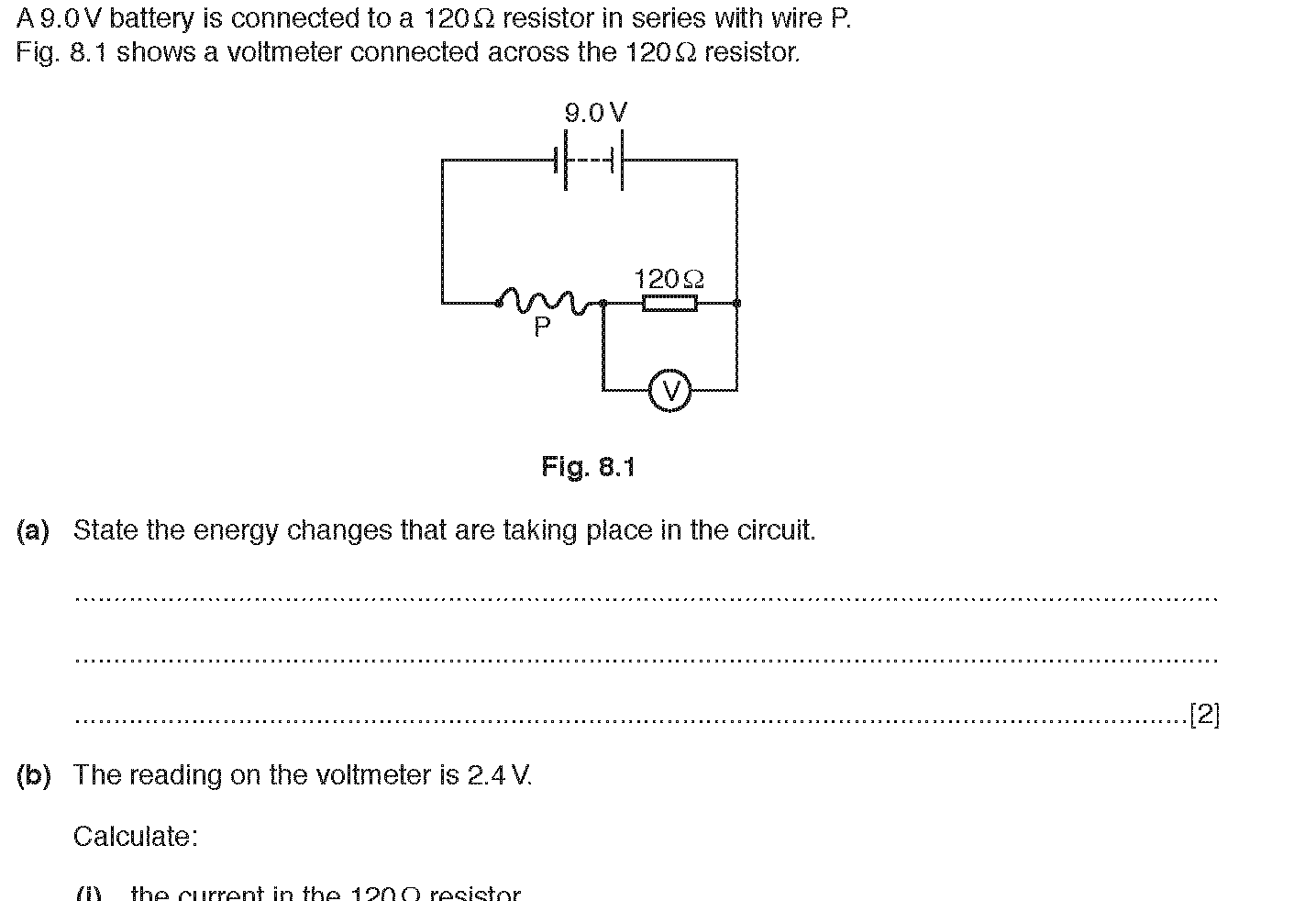
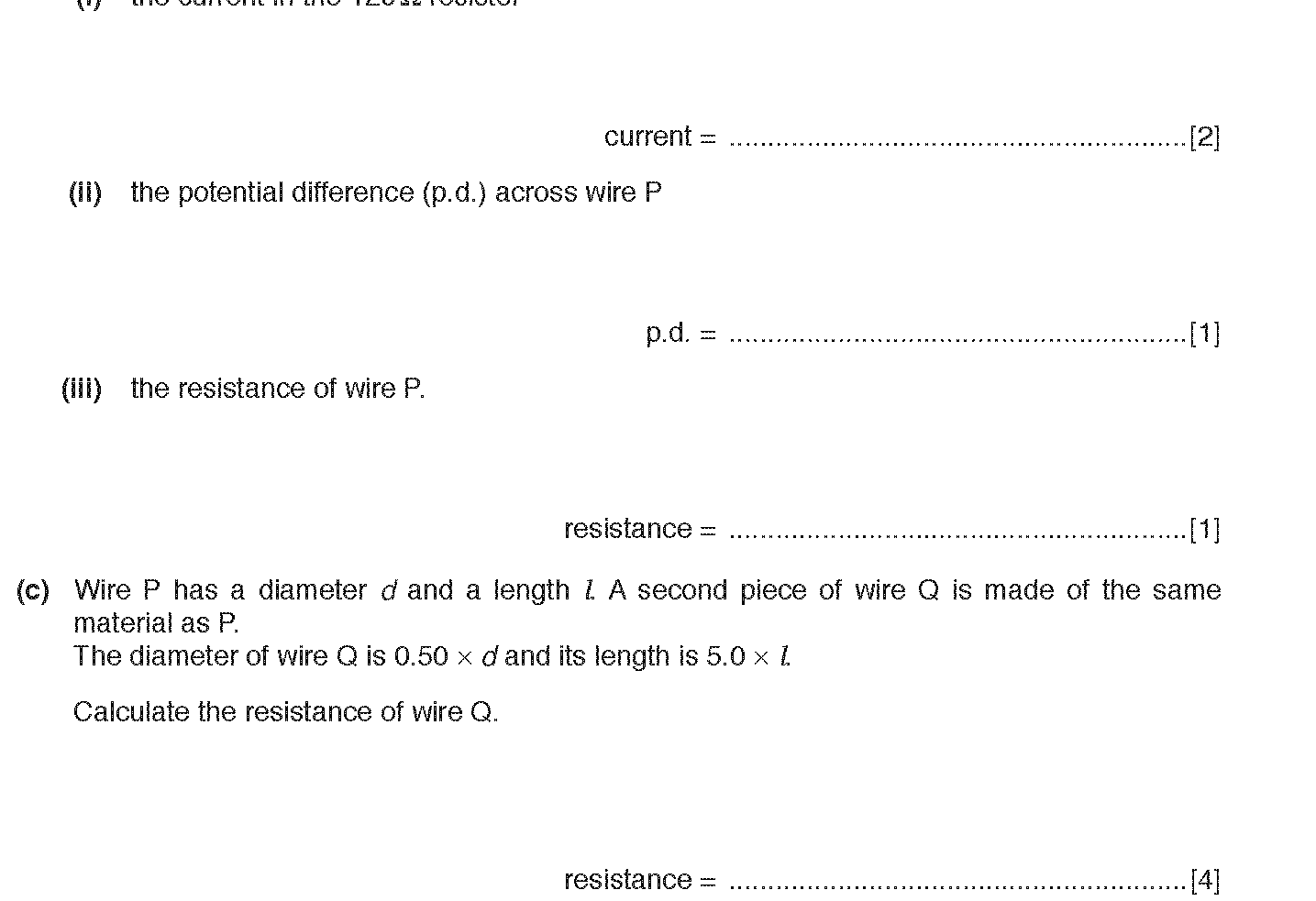

Answers to written questions are not published. Write your answer, then send the question number on WhatsApp to get the model answer.
Last updated: