14.5Chapter 14: Electrical Circuits, Resistance and Power
Energy and power — Alhussan Physics - Stage 9 Revision Notes & Topical Questions
5 min read 7 parts Lesson 5 of 6 2 quizzes
Physics 14.5 Energy and power — Watts (W), Kilowatt-Hours (kWh) and Electrical Appliances — Alhussan International Academy — Physics (Stages 7–9) notes: Describe the difference between energy and power, calculate power and electrical energy, and compare lamps.Power = the rate at …
- Bright lamps
- Lighthouse
- Meaning of watts
- Filament (incandescent)
- Small size
- Paying for electricity
Section 1 of 7Power
- Power is measured in watts (W) or kilowatts (kW), where 1 W = 1 joule per second and 1 kW = 1000 W.
- A bright lamp transfers more energy per second and emits more light per second than a dim lamp.
- Its lamp is much brighter than a torch lamp, which transfers energy more slowly, so it is far more powerful.
Section 2 of 7Power equations
- Power (W) = energy transferred (J) ÷ time taken (s), or P = E ÷ t.
- Energy (J) = power (W) × time (s).
- Convert time to seconds before calculating in joules and watts.
- A 60 W bulb transfers 60 J every second.
Section 3 of 7Types of lamp
- A very thin wire glows when it gets hot, and most of the energy is wasted as heat.
- Compact fluorescent lamps are energy-saving lamps first sold in 1981.
- Light-emitting diode lamps are very efficient.
| Lamp | Typical power for similar light | Efficiency |
|---|---|---|
| Filament | 60 W | Low (about 5%) |
| CFL | 12 W | Medium |
| LED | 6 W | High |
Section 4 of 7Uses of LEDs
- LEDs produce a lot of light for their size and can be sewn into clothes.
- Doctors use their intense light in cancer treatments.
- LEDs were used in the London and Rio de Janeiro Olympics to make patterns in the stadium.
- LEDs cost more to buy but last a long time and save money.
Section 5 of 7The kilowatt-hour
- A bill pays for fuel burned to produce a current that transfers energy.
- The energy transferred depends on the power of appliances and how long they are used.
- People transfer very many joules each month, so a larger unit is used.
- Energy (kWh) = power (kW) × time (h).
- Cost = energy (kWh) × price per kWh.
Section 6 of 7Key terms
| Term | Meaning |
|---|---|
| Power | The rate at which energy is transferred. |
| Watt (W) | The unit of power, one joule per second. |
| Kilowatt-hour (kWh) | The energy transferred by 1 kW in 1 hour. |
| LED | A light-emitting diode lamp that is very efficient. |
| Filament lamp | A lamp with a thin wire that glows when hot. |
Section 7 of 7Exam technique
Marked practiceQuizzes for this lesson
?What do you want to solve now?
✓Checkpoint Quiz
10 multiple-choice + 5 written questions from real exam papers on this lesson.
Question 1 of 10 1:30

Question 2 of 10 1:30

Question 3 of 10 1:30

Question 4 of 10 1:30

Question 5 of 10 1:30

Question 6 of 10 1:30

Question 7 of 10 1:30

Question 8 of 10 1:30

Question 9 of 10 1:30

Question 10 of 10 1:30


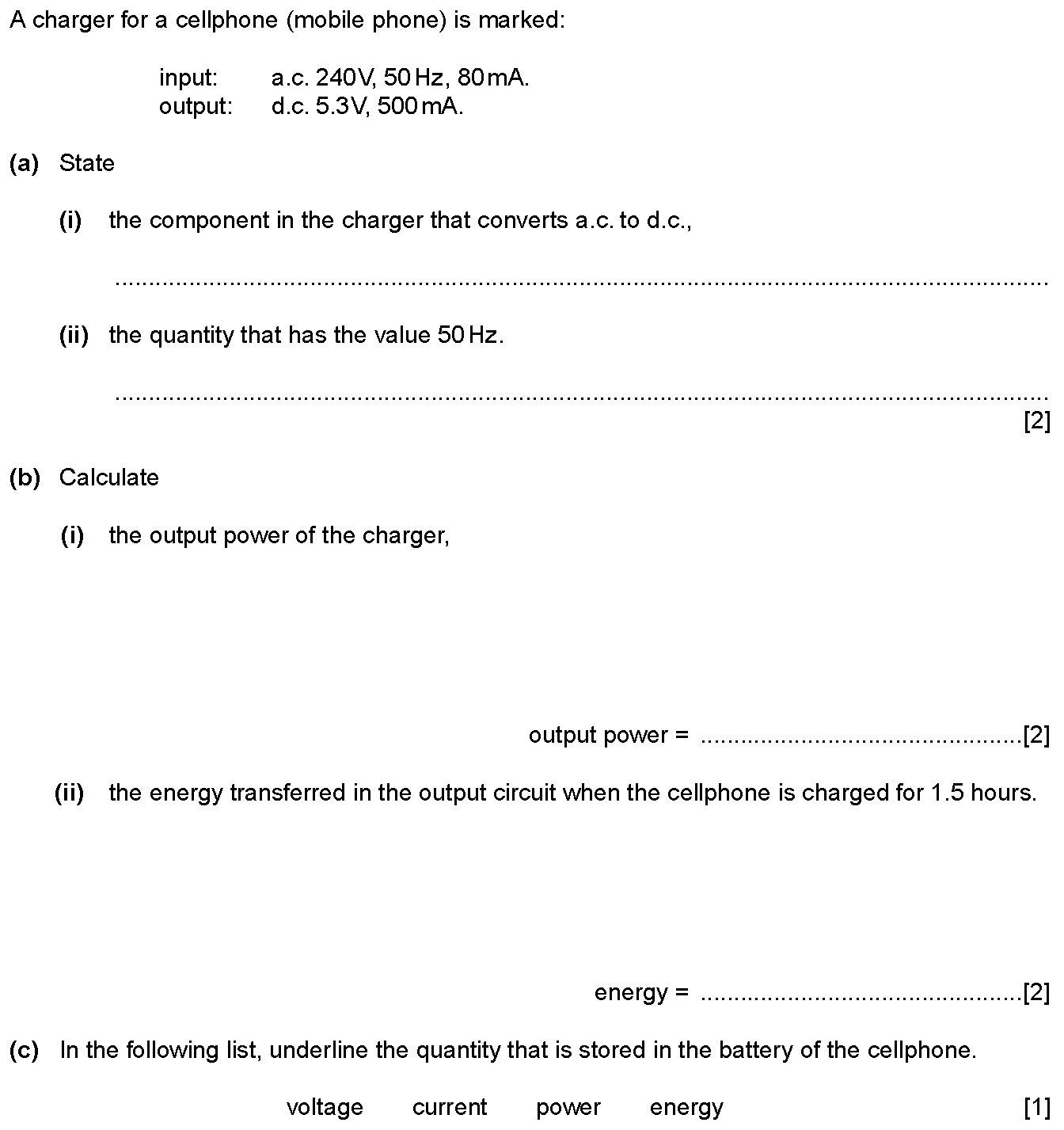
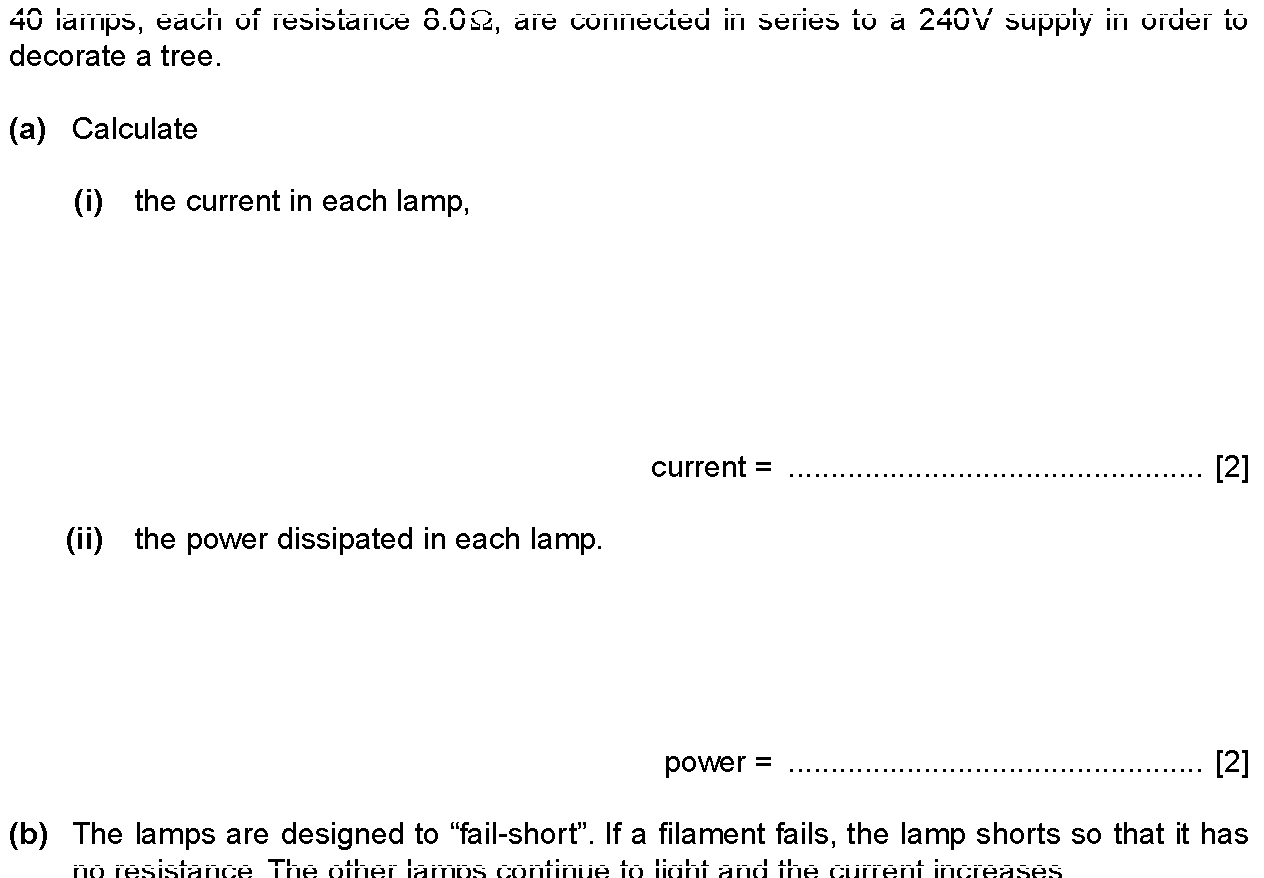

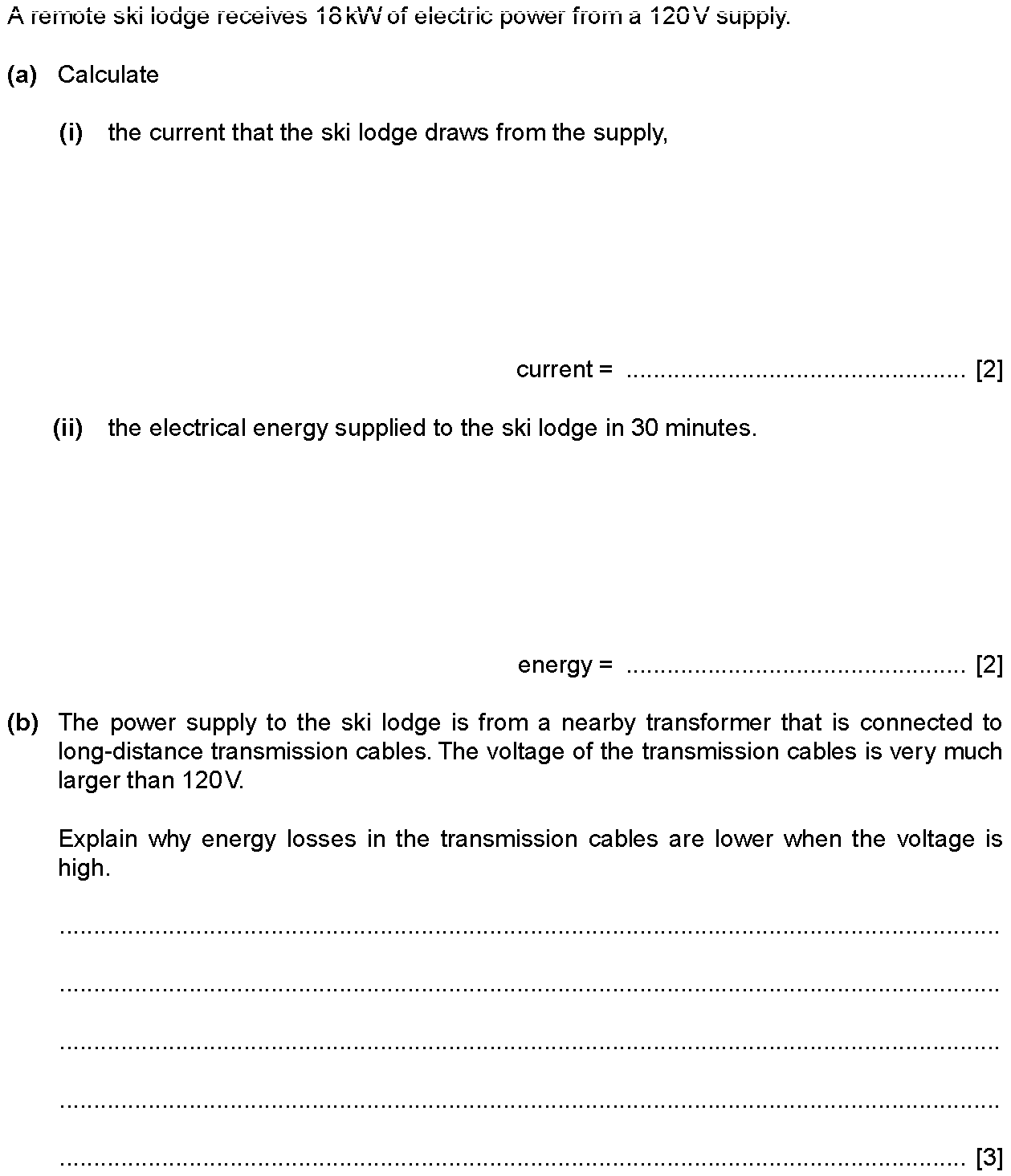

Answers to written questions are not published. Write your answer, then send the question number on WhatsApp to get the model answer.
Last updated: