Cell Structure and Molecular Biology
1. Chemistry of Life — EST 2 Biology Revision Notes & Topical Questions
10 min read 16 parts Lesson 11 of 11 Unit quiz
Lesson summary
Chemistry of Life: Water and Biological Macromolecules — notes: Explain how the properties of water and the structure of nucleic acids, proteins, carbohydrates and lipids relate to their biological functions.Polarity — oxygen and hydrogen share the electrons of their covalent bo…
- Charge distribution
- Hydrogen bonds
- Key properties
- High specific heat capacity
- Benefit of thermal stability
- High heat of vaporization
Part 1 of 14Polarity and hydrogen bonding in water
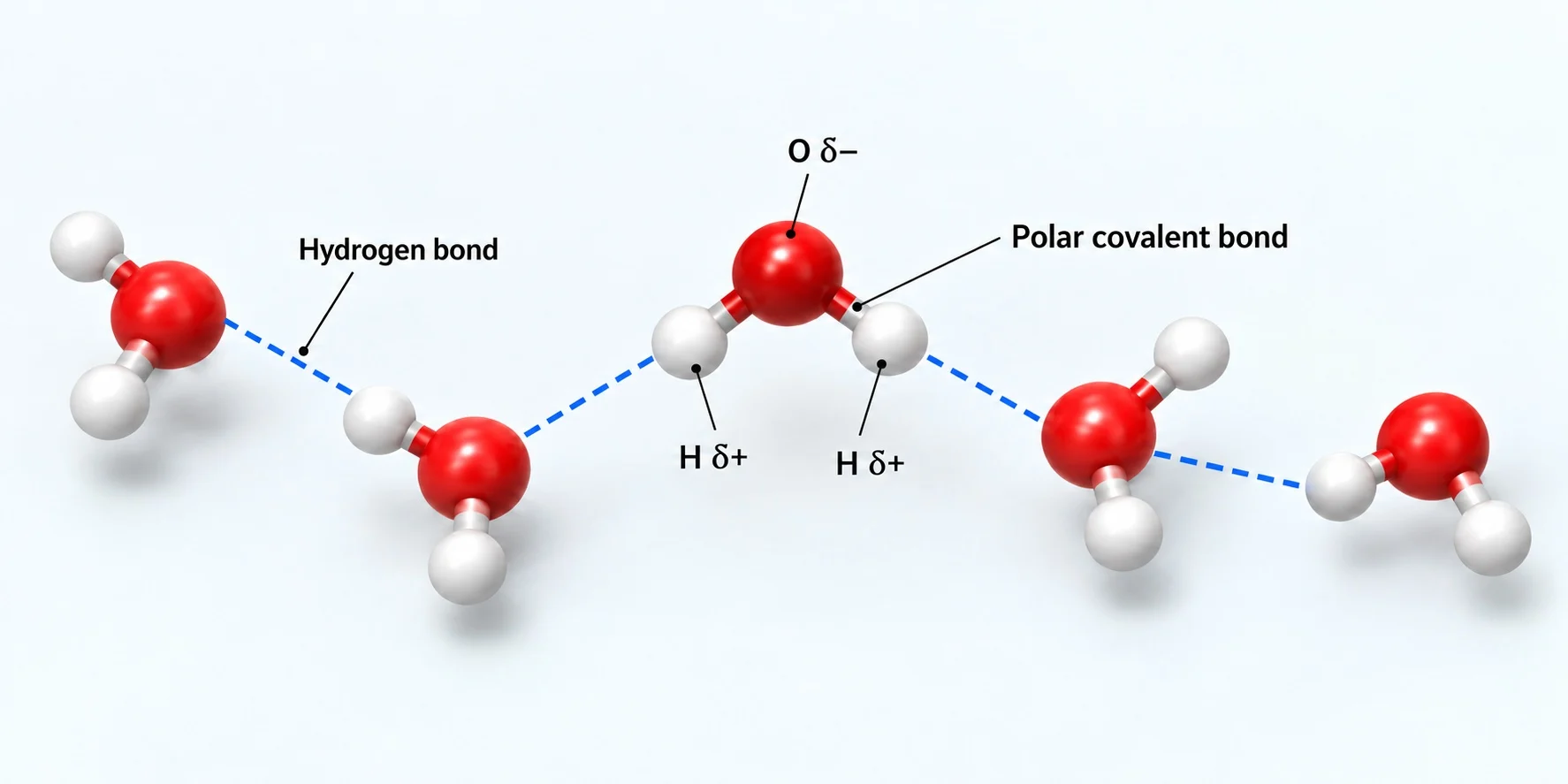
Polarity
- Polarity oxygen and hydrogen share the electrons of their covalent bonds unequally.
Charge distribution
- Charge distribution the oxygen atom carries a partial negative charge and each hydrogen atom a partial positive charge.
- This uneven distribution makes water a polar molecule.
Hydrogen bonds
- Hydrogen bonds the polar nature of water lets weak attractions form between the oxygen of one molecule and the hydrogen of another.
Key properties
- Key properties polarity, high specific heat capacity and high heat of vaporization all sustain living systems.
Part 2 of 14High specific heat capacity and heat of vaporization
1High specific heat capacity
- High specific heat capacity a lot of energy is needed to raise the temperature of water.
2
Hydrogen bonds restrict movement, so they must be disrupted before the kinetic energy of the molecules can increase.
- Water therefore changes temperature slowly and acts as a thermal buffer (thermally stable).
3Benefit of thermal stability
- Benefit of thermal stability aquatic birds and mammals use less energy on thermoregulation during homeostasis.
4
Enzyme activity in the cells of aquatic organisms stays close to optimal despite external temperature change.
5High heat of vaporization
- High heat of vaporization a lot of energy is needed to turn liquid water into gas because hydrogen bonds must first be broken.
6
When water evaporates it absorbs heat from the skin or other surface, producing a cooling effect.
- Sweating and panting let animals lose heat by evaporation.
- Transpiration keeps leaves cooler than the surrounding air.
Part 3 of 14Cohesion, adhesion and surface tension
Cohesion
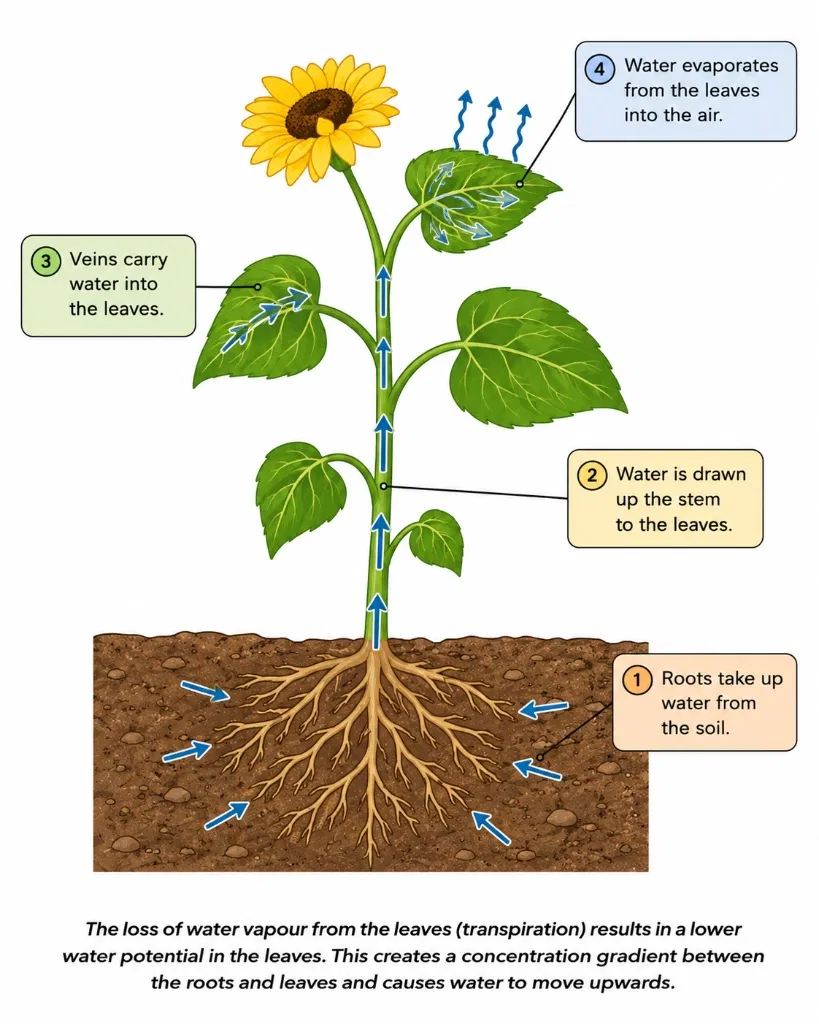
- Cohesion forces of attraction between molecules of the same type.
Plant transport: water molecules are pulled up the xylem behind one another, supplying the plant and carrying dissolved mineral ions.
- Surface tension: molecules at the surface are attracted to the water molecules below,
- so small organisms such as pond skaters can walk on ponds and lakes.
Adhesion
- Adhesion attractive forces between molecules of a different type.
Adhesion between water and the xylem walls helps draw water upwards by capillary action.
- Cohesion and adhesion work together to move water up the xylem.
Part 4 of 14Other properties of water
| Property | Description | Importance for living organisms |
|---|---|---|
| Low density when frozen | Hydrogen bonds hold molecules in an open lattice, so ice floats on liquid water | Ice provides a habitat for some animals and acts as an insulating layer over water |
| Solvent | Polar water molecules are attracted to charged particles, so ionic compounds such as NaCl dissolve | Water transports substances in solution and is a medium for chemical reactions |
Part 5 of 14Elements used to build biological molecules
Source
- Source organisms take up atoms and small molecules from the environment and use them to build new biological molecules.
Most frequent elements
- Most frequent elements carbon, hydrogen and oxygen make up carbohydrates, proteins and lipids.
Other elements
- Other elements sulfur, phosphorus and nitrogen are also commonly taken up.
| Element | Found in |
|---|---|
| Carbon (C) | Carbohydrates, proteins, lipids |
| Hydrogen (H) | Carbohydrates, proteins, lipids |
| Oxygen (O) | Carbohydrates, proteins, lipids |
| Sulfur (S) | Some amino acids (cysteine and methionine) in proteins |
| Phosphorus (P) | Phospholipids and nucleic acids (DNA and RNA) |
| Nitrogen (N) | Amino acids (proteins) and nucleic acids |
Part 6 of 14Monomers, polymers, hydrolysis and dehydration synthesis
Polymer
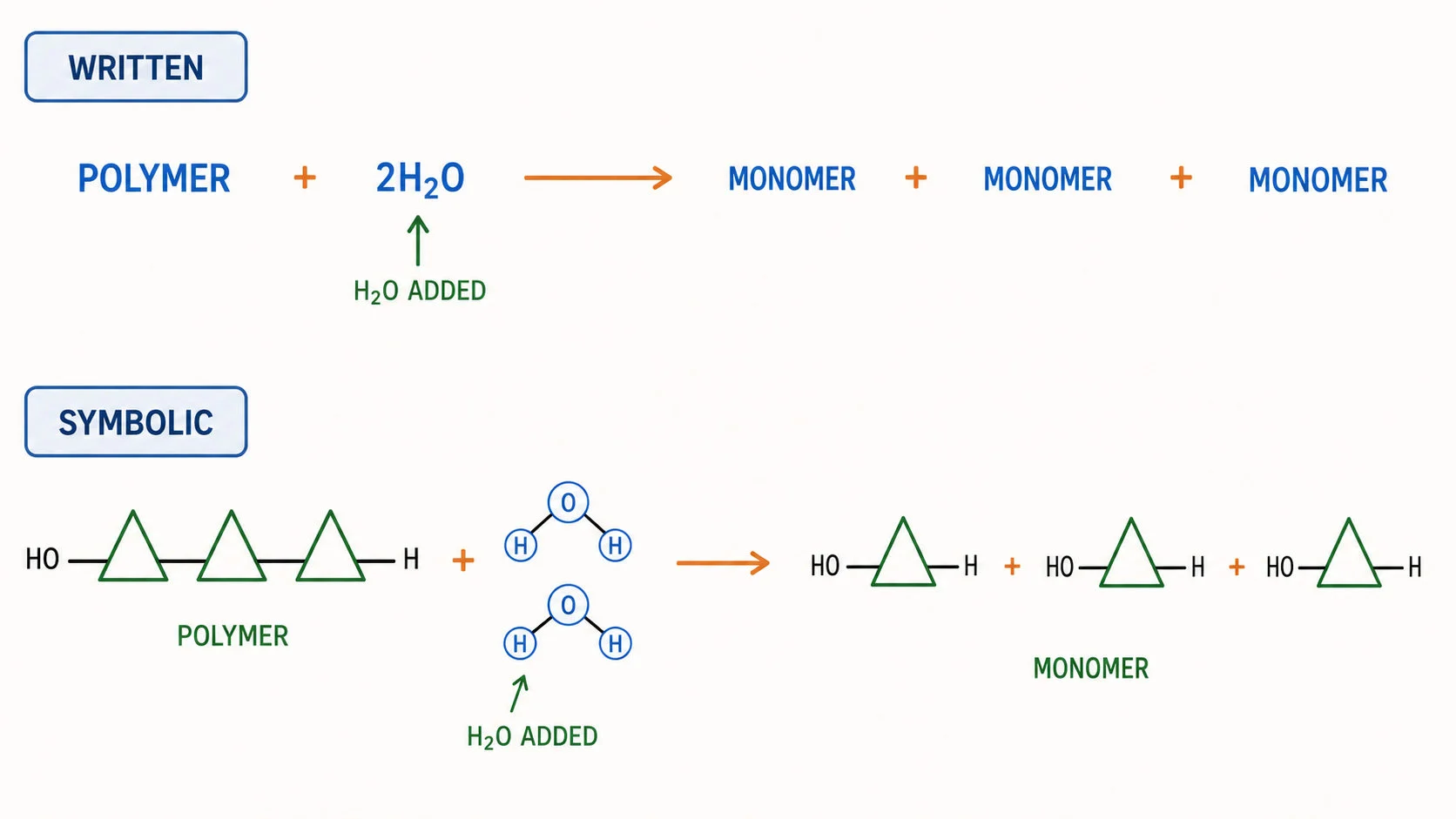
- Polymer a large molecule made of many repeated monomers; a biological polymer is also called a macromolecule.
Hydrolysis
- Hydrolysis a reaction that cleaves covalent bonds by adding water, breaking larger molecules into smaller ones.
A hydrogen ion from water is added to one monomer and the hydroxyl group to the other.
- Hydro means water and lysis means splitting.
Dehydration synthesis
- Dehydration synthesis a reaction that forms covalent bonds, joining two smaller molecules into a larger one.
A hydrogen ion is removed from one monomer and a hydroxyl group from the other, so a water molecule is released as a by-product.
- Repeating it to build a polymer is called polymerization; it is also called a condensation reaction.
| Monomer | Polymer |
|---|---|
| Monosaccharide, e.g. glucose | Polysaccharide, e.g. starch, glycogen, cellulose |
| Amino acids | Polypeptides and proteins |
| Nucleotides | Nucleic acids, e.g. DNA and RNA |
Part 7 of 14Nucleic acids: nucleotide structure and 3′/5′ ends
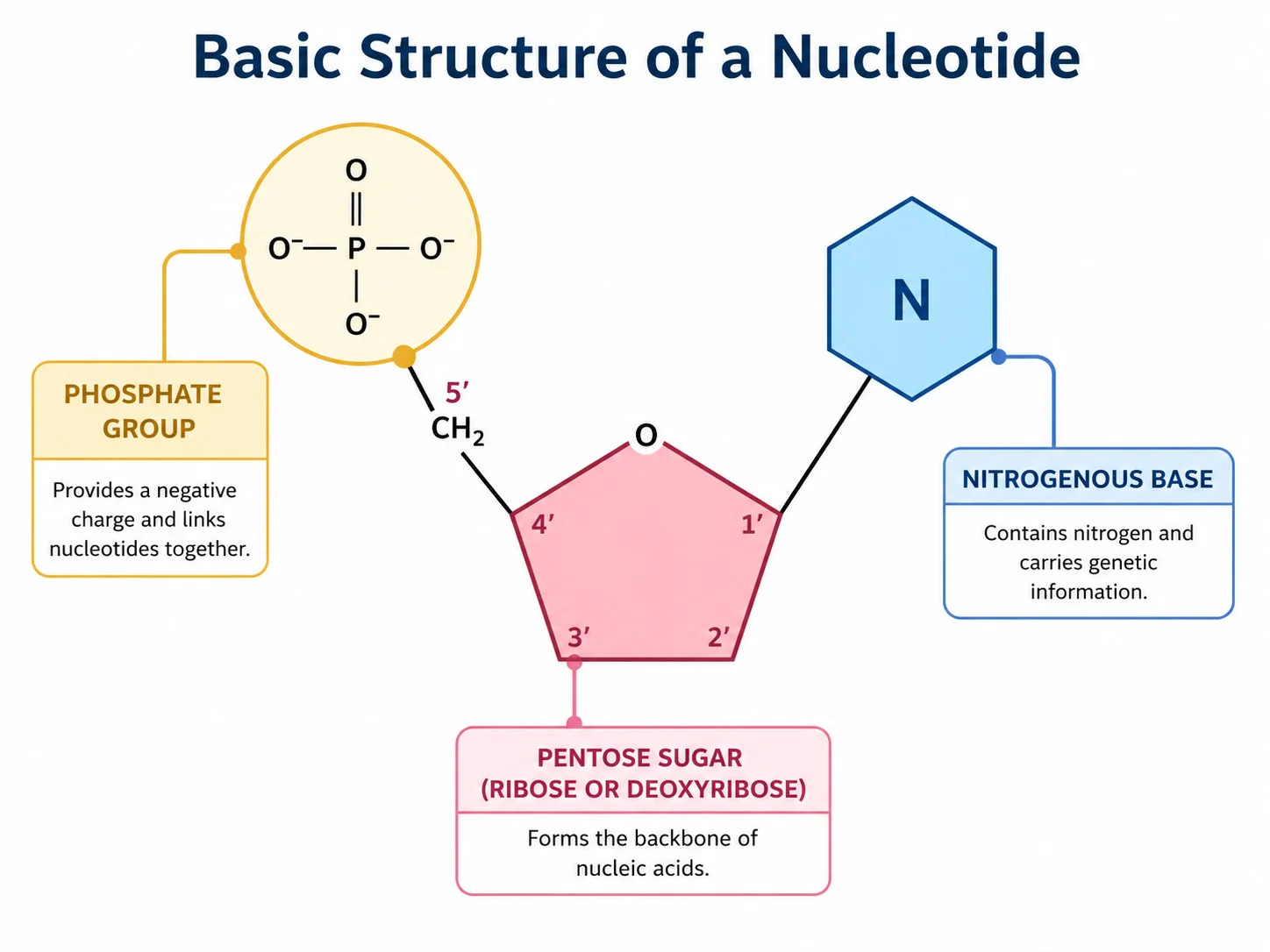
Nucleic acids: nucleotide structure and 3′/5′ ends
Polynucleotides
- DNA and RNA are chains of many nucleotide monomers.
- (polymers of nucleotides, not of bases)
Nucleotide components
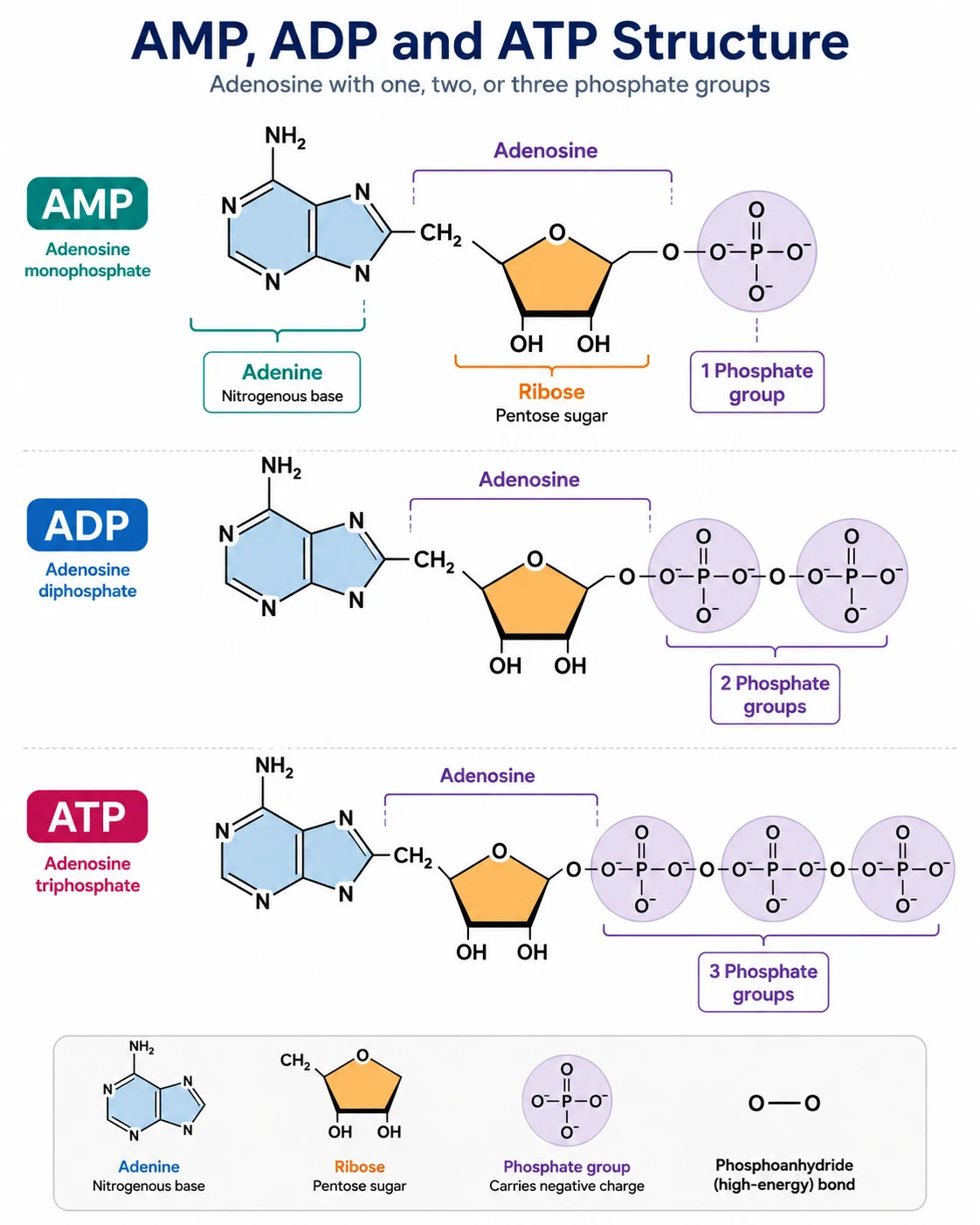
- Nucleotide components each has a five-carbon (pentose) sugar, a phosphate group and a nitrogenous base.
DNA has deoxyribose sugar with bases adenine, guanine, cytosine and thymine.
- RNA has ribose sugar with bases adenine, guanine, cytosine and uracil.
5′ and 3′ ends
- 5′ and 3′ ends a polynucleotide has two distinct ends.
The 3′ end has a terminal hydroxyl (-OH) group on carbon 3 of the pentose sugar.
- The 5′ end has a phosphate group on carbon 5 of the pentose sugar.
- New nucleotides are always added to the 3′ end of the growing strand, forming strong covalent bonds.
Part 8 of 14DNA and RNA compared
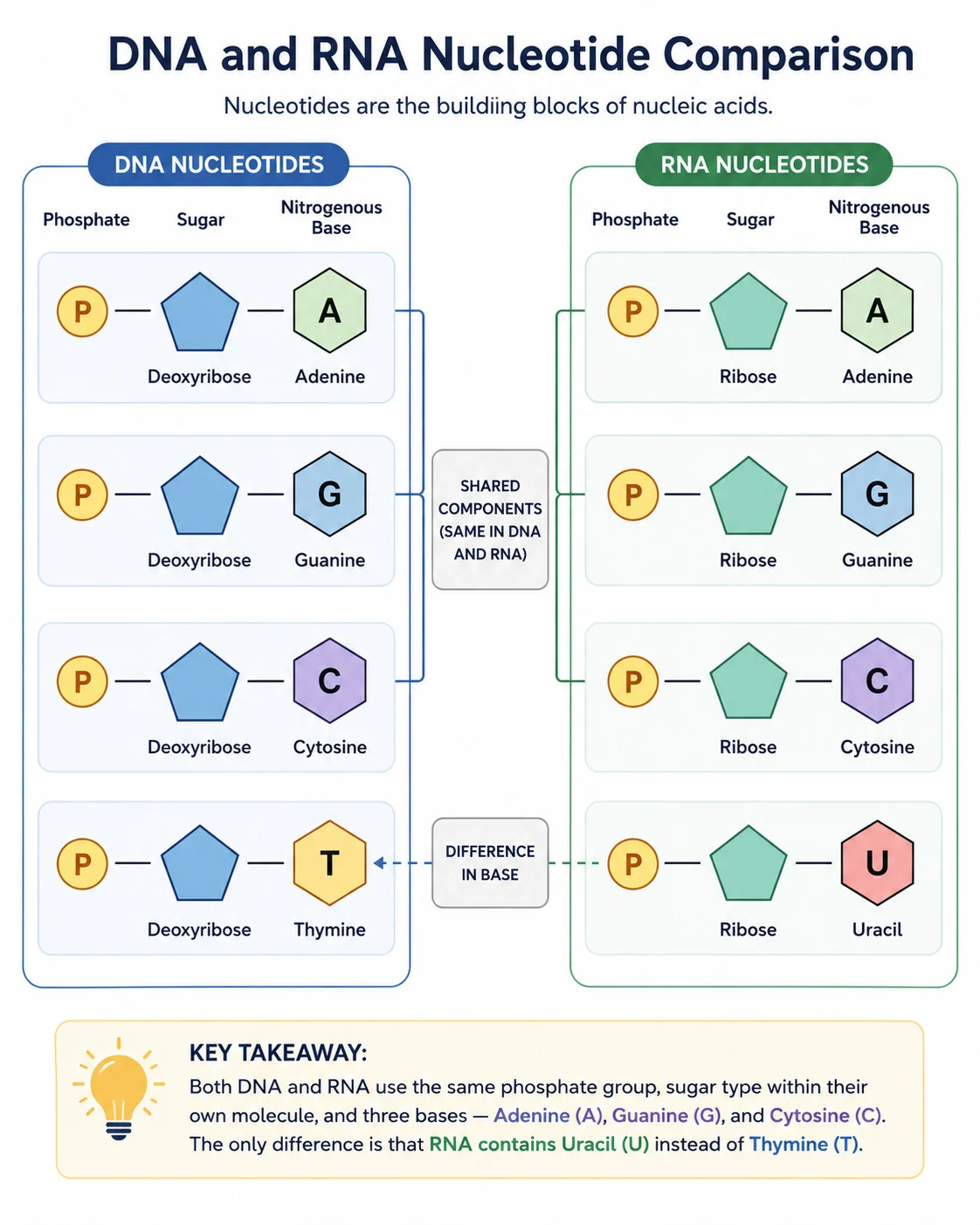
DNA and RNA compared
DNA structure
- DNA structure an antiparallel double helix whose two strands run in opposite 5′ to 3′ directions.
Bases are joined by hydrogen bonds: A pairs with T and C pairs with G.
RNA structure
- RNA structure usually single-stranded, but it can fold and base-pair internally, with A pairing with U and C with G.
| Feature | DNA | RNA |
|---|---|---|
| Pentose sugar | Deoxyribose | Ribose |
| Nitrogenous bases | A, T, C, G | A, U, C, G |
| Base pairing | A-T, C-G | A-U, C-G |
| Typical structure | Double-stranded antiparallel double helix | Usually single-stranded |
| Synthesis direction | 5′ to 3′ (nucleotides added to the 3′ end) | 5′ to 3′ (nucleotides added to the 3′ end) |
| Sugar-phosphate backbone bonds | Covalent (phosphodiester) | Covalent (phosphodiester) |
Part 9 of 14Amino acids, peptide bonds and R groups
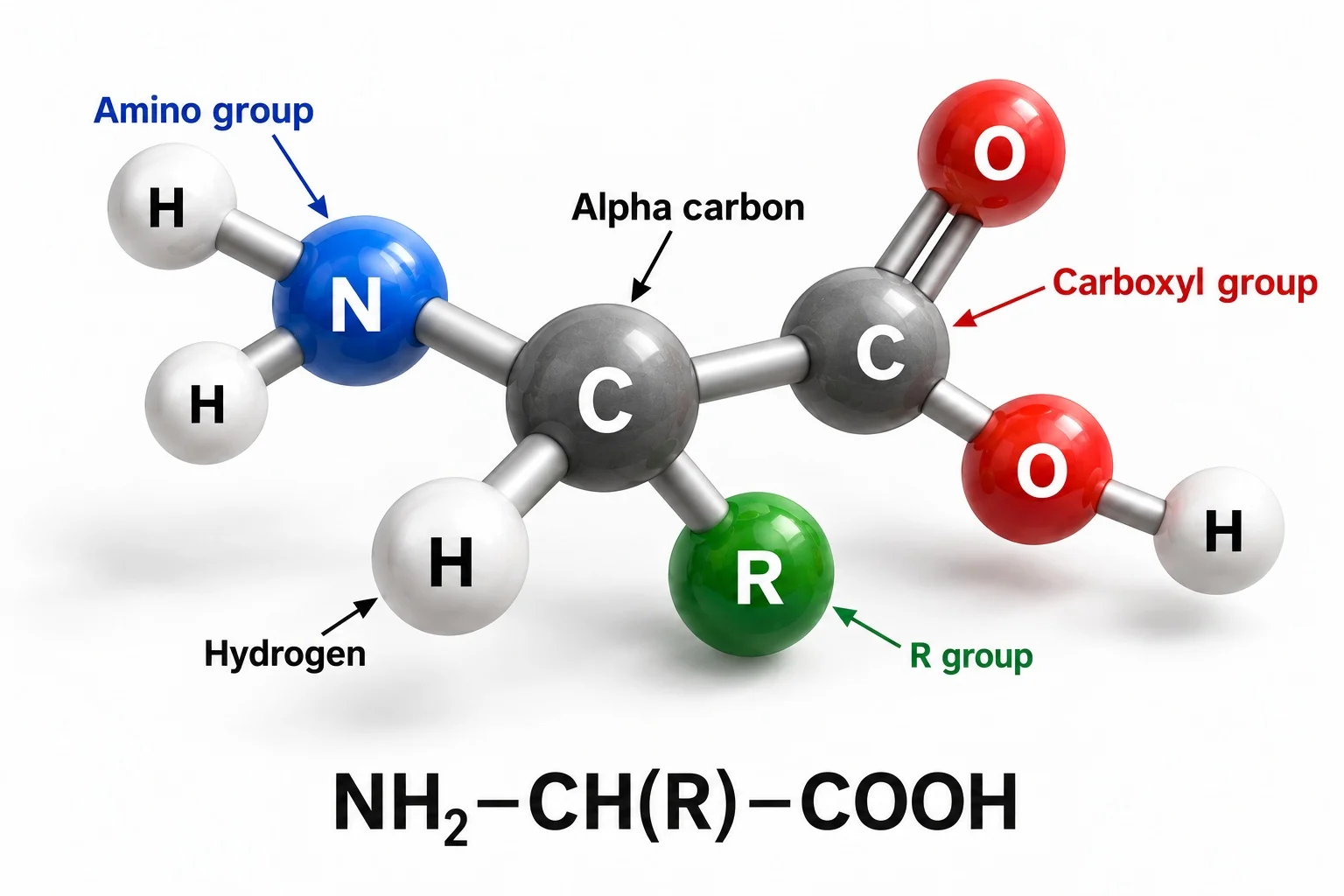
Amino acids, peptide bonds and R groups
Protein roles
- Protein roles enzymes, membrane proteins such as carriers, hormones, immunoproteins such as immunoglobulins, transport proteins such as hemoglobin, structural proteins such as keratin and collagen,
- and contractile proteins such as myosin.
All expressed genes code for specific proteins, so the reactions of life depend on protein function.
Amino acid structure
- Amino acid structure a central carbon is bonded to an amino group (NH2), a carboxyl group (COOH), a hydrogen atom and an R group.
There are 20 amino acids common to all living organisms.
- Polypeptides range from three amino acids (glutathione) to over 34,000 (titin).
Peptide bond
- Peptide bond formed at the carboxyl end of the growing chain by dehydration synthesis.
The -OH of one carboxyl group and an H from the neighbouring amino group are lost as water.
- The carbonyl carbon of the first amino acid bonds to the nitrogen of the second; the R group is not involved.
- Two amino acids form a dipeptide; three or more form a polypeptide; hydrolysis breaks peptide bonds.
R group categories
- R group categories hydrophobic (nonpolar), hydrophilic (polar),
- and hydrophilic ones that are acidic or basic by ionization of the side chain (-COOH or -NH2).
These side chains are separate from the -COOH and -NH2 groups on the central carbon.
- Interactions between R groups decide the 3-D shape of the protein;
- you need to recognise, not memorise, the R groups.
Part 10 of 14Four levels of protein structure
| Level | What it is | Held together by |
|---|---|---|
| Primary | Sequence, type and number of amino acids; one change can alter function | Covalent peptide bonds |
| Secondary | Local folding into an α-helix (H-bonds between every fourth peptide bond) or β-pleated sheet (parallel chain sections) | Hydrogen bonds between -NH (positive H) and -C=O (negative O) of the backbone |
| Tertiary | Overall 3-D shape, common in globular proteins | Bonds between R groups: disulphide bonds between cysteines, ionic bonds, hydrophobic interactions and hydrogen bonds |
| Quaternary | Two or more polypeptide subunits working as one protein, e.g. haemoglobin with four subunits | Interactions between the subunits |
Stability
- Stability hydrogen bonds are weak and are broken easily by high temperature and pH change.
Function
- Function all four levels together determine the function of the protein.
Part 11 of 14Carbohydrates: polysaccharide formation and structure
Carbohydrates: polysaccharide formation and structure
Carbohydrates
- Carbohydrates made of monosaccharide monomers; complex carbohydrates are linear or branched.
- (polysaccharides)
Forming polysaccharides
- Forming polysaccharides dehydration synthesis forms a covalent bond between monomers and releases water, and can repeat many times.
Two monosaccharides joined this way make a disaccharide.
Property link
- Property link the monomer type and the nature of the covalent bonds determine properties and function.
| Polysaccharide | Monomer and bonds | Role |
|---|---|---|
| Cellulose | β-glucose joined by 1,4 glycosidic bonds; alternate glucose molecules are rotated through 180° | Structural, in plant cell walls; many hydrogen bonds between chains give strength |
| Starch | α-glucose, 1,4 and 1,6 glycosidic bonds; branched (amylopectin) or unbranched | Storage polysaccharide in plants |
| Glycogen | α-glucose, 1,4 and 1,6 glycosidic bonds; always branched | Storage polysaccharide in animals and fungi |
Carbohydrates: polysaccharide formation and structure
Starch and glycogen
- Starch and glycogen compact, so large amounts are stored in a small space.
Insoluble
- Insoluble they do not dissolve in cytoplasm and so do not affect cell water potential.
Branching
- Branching gives more free ends, so glucose can be added or removed rapidly to match energy demand.
Part 12 of 14Lipids: fatty acids, saturation and functions
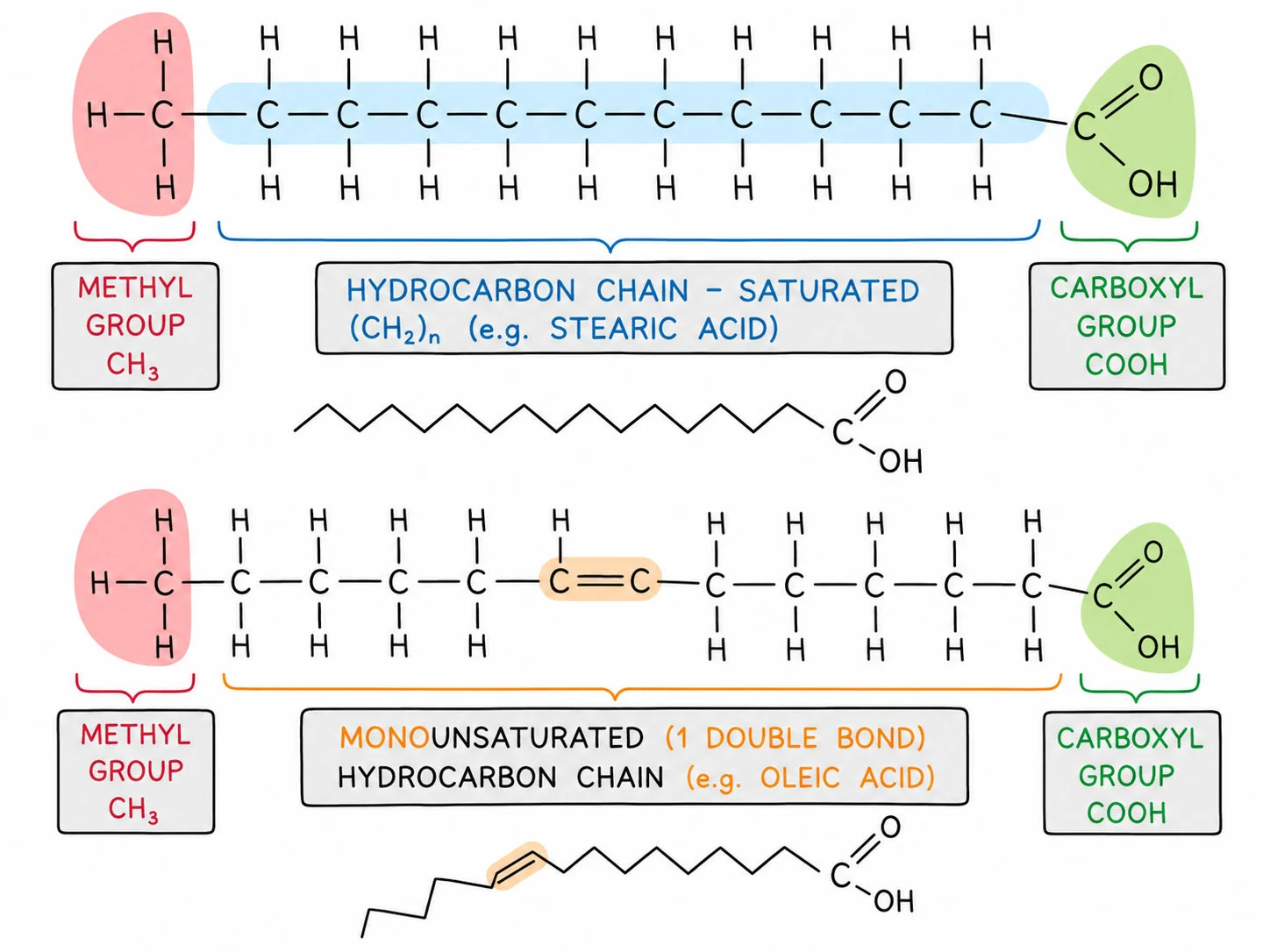
Lipids: fatty acids, saturation and functions
Lipids
- Lipids macromolecules of carbon, hydrogen and oxygen that are typically nonpolar and hydrophobic.
Fatty acid
- Fatty acid a hydrocarbon chain (R group) with a methyl group at one end and a carboxyl group at the other, written RCOOH.
Chains vary in length and in saturation.
Saturated fatty acids
- Saturated fatty acids only single carbon-carbon bonds, so chains are straight and pack tightly.
These fats are solid at room temperature, e.g. butter.
- A saturated lipid holds the maximum hydrogen atoms.
Unsaturated fatty acids
- Unsaturated fatty acids at least one carbon-carbon double bond, which bends the chain.
Bends prevent tight packing, so more double bonds mean more liquid at room temperature, e.g. olive oil.
Part 13 of 14Functions of lipids
Functions of lipids
Energy storage
- Energy storage lipids are energy-dense and support cell function.
Subcutaneous fat such as whale blubber gives thermal insulation.
Steroids
- Steroids a class of lipids that act as hormones for growth and development, energy metabolism and homeostasis.
Cholesterol
- Cholesterol gives essential structural stability to animal cell membranes.
Phospholipids
- Phospholipids fatty acids combined with glycerol and a phosphate group;
- they form the lipid bilayer of plasma and cell membranes.
Triglycerides
- Triglycerides you should recognise one and decide whether its fatty acids are saturated or unsaturated.
Part 14 of 14Worked examples
Describe how the structure of water molecules explains why water is an effective coolant for animals. [3]3 marks
Worked examplesWater is polar, so hydrogen bonds form between its molecules.A lot of energy is needed to break these bonds so water has a high heat of vaporization.Evaporation (sweat, panting) takes heat from the surface, cooling it.Two amino acids join to form a dipeptide. Name the reaction, the bond and the by-product. [3]3 marks
Worked examplesDehydration synthesis (condensation).A covalent peptide bond forms between the carboxyl carbon of one amino acid and the nitrogen of the other.A molecule of water is released.Compare DNA and RNA. [3]3 marks
Worked examplesSugar: deoxyribose in DNA, ribose in RNA.Bases: thymine in DNA, uracil in RNA.DNA is usually a double-stranded antiparallel helix, RNA usually single-stranded.Explain why glycogen is a suitable storage molecule. [3]3 marks
Worked examplesIt is compact and insoluble, so it stores a lot without changing cell water potential.It is highly branched, giving many free ends.Glucose can therefore be added or removed quickly when energy demand changes.Distinguish secondary from tertiary structure in a protein. [2]2 marks
Worked examplesSecondary: local folding into α-helices and β-pleated sheets held by backbone hydrogen bonds.Tertiary: overall 3-D shape held by bonds between R groups (disulphide, ionic, hydrophobic, hydrogen).Explain why butter is solid and olive oil is liquid at room temperature. [2]2 marks
Worked examplesButter has saturated fatty acids with straight chains that pack tightly.Olive oil has unsaturated fatty acids with bends at double bonds that prevent tight packing.
Key terms
| Term | Meaning |
|---|---|
| Polar molecule | A molecule with an uneven distribution of charge, such as water. |
| Cohesion | Attraction between molecules of the same type. |
| Adhesion | Attraction between molecules of different types. |
| Hydrolysis | Breaking covalent bonds by adding water. |
| Dehydration synthesis | Forming covalent bonds with the release of water. |
| Nucleotide | Monomer of nucleic acids: pentose sugar, phosphate and nitrogenous base. |
| Peptide bond | Covalent bond linking amino acids in a polypeptide. |
| Glycosidic bond | Covalent bond linking monosaccharides. |
| Saturated fatty acid | Fatty acid with only single carbon-carbon bonds. |
Avoid these mistakes
1
Describing DNA or RNA as polymers of bases — they are polymers of nucleotides.
2
Thinking the R group takes part in the peptide bond — only the amino and carboxyl groups do.
3
Confusing hydrolysis (adds water to split) with dehydration synthesis (releases water to join).
4
Saying cellulose and starch use the same glucose form — cellulose is β-glucose, starch and glycogen α-glucose.
5
Saying hydrogen bonds hold the primary structure — the primary structure is held by covalent peptide bonds.
Last updated:
\n