1.2Cell Structure and Molecular Biology
Cell structure and organelles — EST 2 Biology Revision Notes & Topical Questions
15 min read 31 parts Lesson 2 of 11 2 quizzes
Curriculum Equation Key قوانين الرقم الهيدروجيني والاتزان الأيوني - pH & Acid-Base Equilibrium FormulasFast Exam Solution
pH = -log[H⁺] | pOH = -log[OH⁻] | pH + pOH = 14 | [H⁺][OH⁻] = 10⁻¹⁴
Word Equation & Conditions: الرقم الهيدروجيني = -لوغاريتم تركيز أيون الهيدروجين | pH + pOH = 14
Location & Specifications: الاتزان الأيوني، كيمياء 3 ثانوي، التحصيلي، و AP Chemistry.
Lesson summary
SAT Biology cell structure: compare prokaryotic and eukaryotic cells, then relate each organelle to the job it performs. Prokaryotic cells are small cells with no nucleus and no membrane-bound organelles.
- Golgi apparatus
- Mitochondria
- Chloroplasts
Part 1 of 5Prokaryotic and eukaryotic cells
Prokaryotic cells
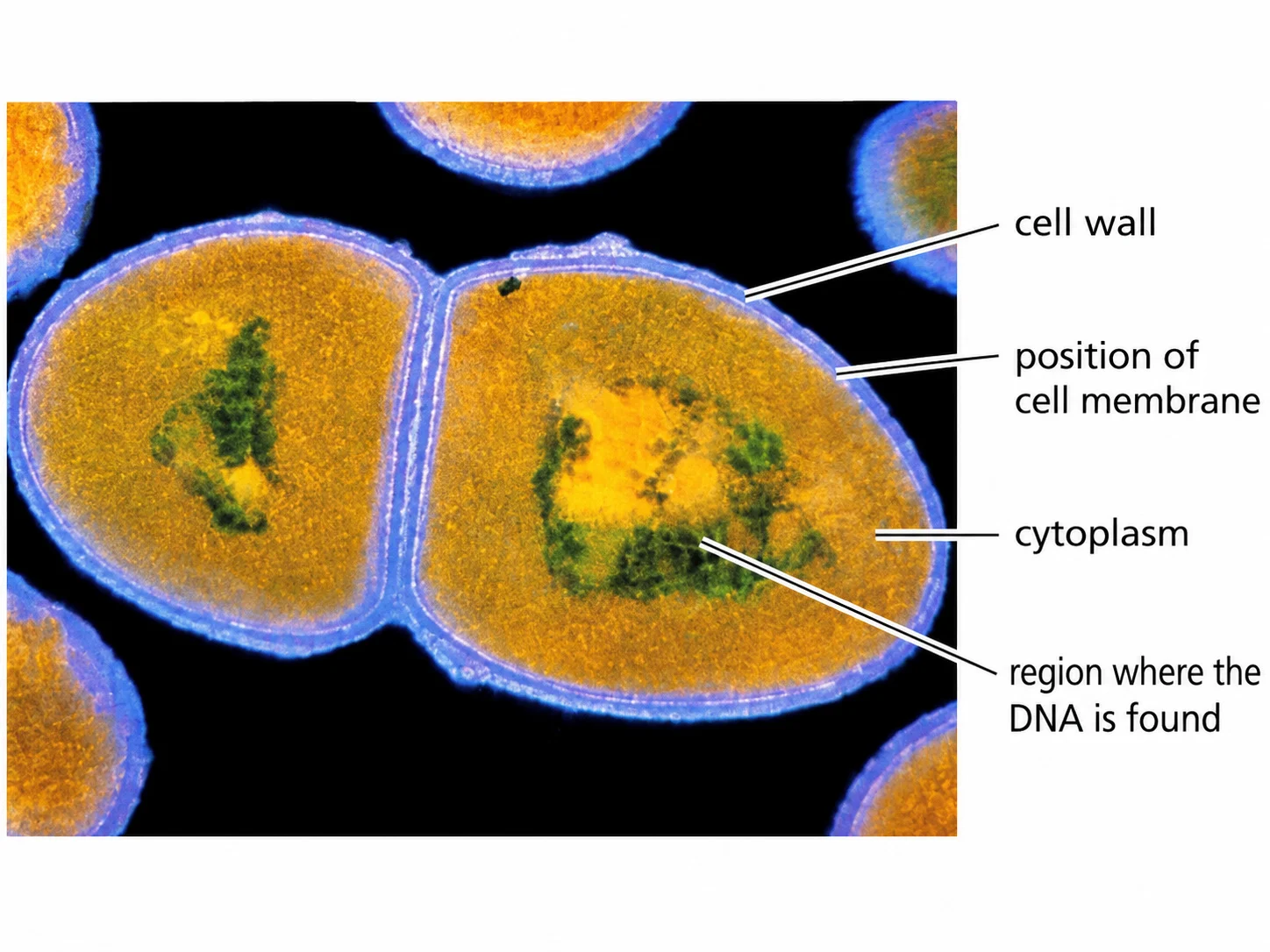
Prokaryotic cells are small cells with no nucleus and no membrane-bound organelles. Their DNA is normally one circular chromosome, they may contain plasmids, and their ribosomes are smaller than those of eukaryotes.
Eukaryotic cells
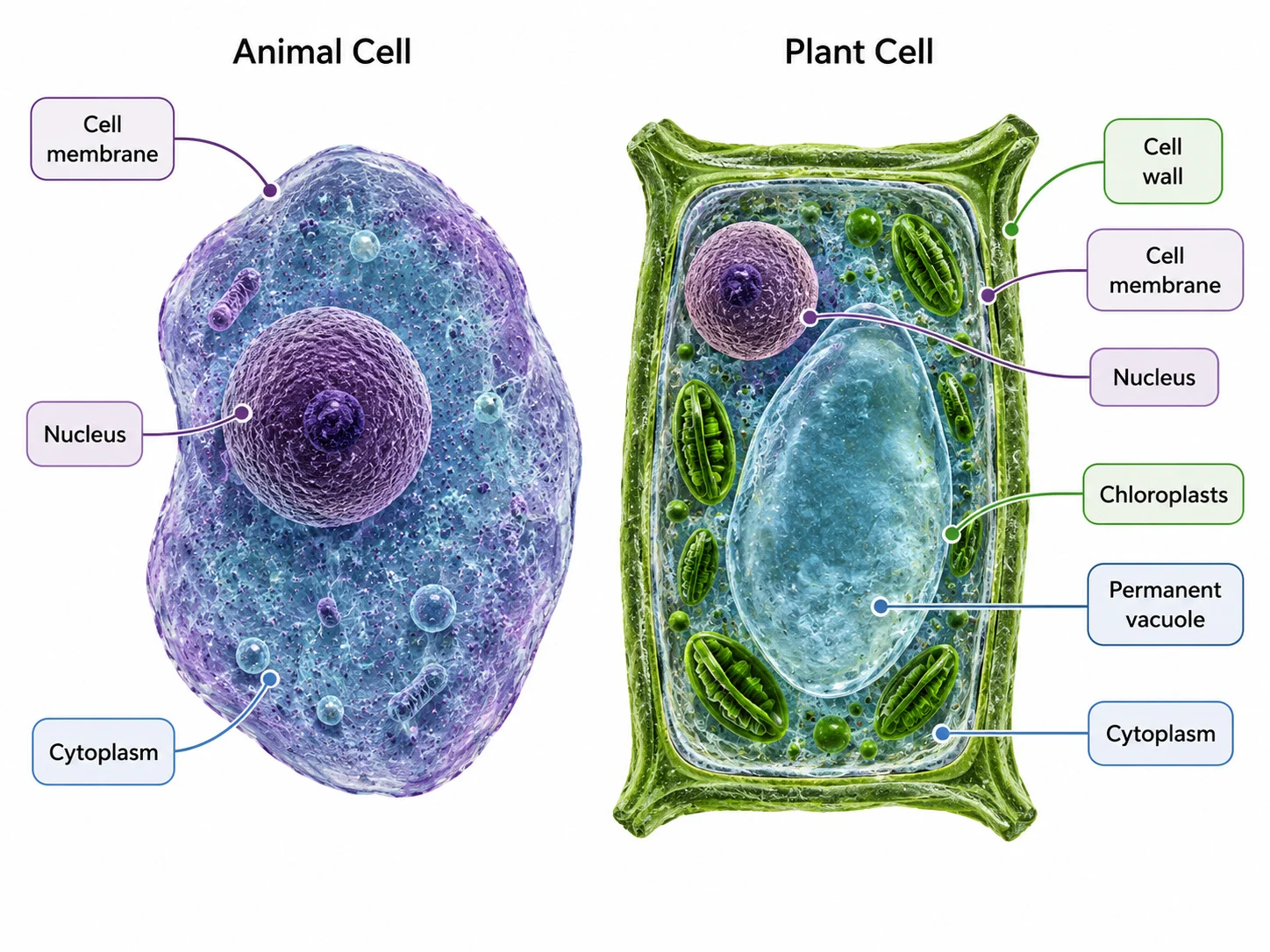
Eukaryotic cells contain a nucleus and membrane-bound organelles such as mitochondria. Their internal membranes divide the cell into specialised compartments, allowing different processes to occur efficiently.
Part 2 of 5Genetic control and protein synthesis
Nucleus
The nucleus contains chromosomes made of DNA and histone proteins. Nuclear pores allow large molecules such as RNA to move into the cytoplasm. The nucleolus produces components used to assemble ribosomes.
Ribosomes
Ribosomes are made of ribosomal RNA and protein and are the sites of protein synthesis. Free ribosomes make proteins used in the cytosol, while ribosomes attached to rough endoplasmic reticulum make proteins that enter the endomembrane system.
Part 3 of 5Endomembrane pathway
1
Rough ER
Rough ER carries ribosomes and supports protein synthesis and transport. Smooth ER makes lipids and steroid hormones, assists carbohydrate metabolism and detoxifies substances in the cell.
2
Golgi apparatus
The Golgi apparatus consists of stacks of flattened membrane sacs. It modifies, stores and packages products received from the ER, then sends them in vesicles to other parts of the cell or to the plasma membrane for secretion.
Part 4 of 5Energy, digestion and storage
Mitochondria
Mitochondria are the sites of cellular respiration. Their folded inner membranes, called cristae, contain important respiratory enzymes. Mitochondria possess their own DNA and can self-replicate.
Lysosomes
Lysosomes contain hydrolytic enzymes for intracellular digestion and recycling worn cell parts. Vacuoles store substances; plant cells usually have a large central vacuole, while small transport or secretory sacs are called vesicles.
Part 5 of 5Plant and animal cell features
Plant and animal cell features
Cell wall
Plant cells have a cellulose cell wall, a large central vacuole and plastids. Chloroplasts contain chlorophyll and carry out photosynthesis; like mitochondria, they have their own genetic material and can self-replicate.
Animal cells have centrioles and centrosomes that organise spindle fibres during cell division. Both plant and animal cells have a selectively permeable plasma membrane, cytoplasm, a nucleus, ribosomes and mitochondria.
Marked practiceQuizzes for this lesson
Last updated:
Cambridge 9700 AS Biology
Core Formula
Magnification Triangle & Unit Conversion
Formula: M = I / A ⇔ A = I / M ⇔ I = M × A
Units: 1 mm = 1,000 μm = 1,000,000 nm.
Rule: Convert Image size (ruler mm) to μm by ×1,000 before dividing by Actual size.