C3.2Theme C — Interaction and interdependence
Defence against disease — IB Biology SL Revision Notes & Topical Questions
5 min read 12 parts Lesson 7 of 9 2 quizzes
Curriculum Equation Key قوانين الرقم الهيدروجيني والاتزان الأيوني - pH & Acid-Base Equilibrium FormulasFast Exam Solution
pH = -log[H⁺] | pOH = -log[OH⁻] | pH + pOH = 14 | [H⁺][OH⁻] = 10⁻¹⁴
Word Equation & Conditions: الرقم الهيدروجيني = -لوغاريتم تركيز أيون الهيدروجين | pH + pOH = 14
Location & Specifications: الاتزان الأيوني، كيمياء 3 ثانوي، التحصيلي، و AP Chemistry.
Lesson summary
C3.2 Defence against disease — IB BIOLOGY SL notes: Describe pathogens, barriers, clotting, innate and adaptive immunity, HIV, antibiotics, zoonoses and vaccination.Pathogen = any microorganism that causes diseaseBacteria, fungi, protists and viruses can be pathogens.All viruses …
- Communicable diseases
- Signs and symptoms
- Careful observation
- Mucous membranes
- Phagocytes
- ABO blood groups
Section 1 of 12Pathogens and disease
Pathogens and disease
Pathogen
Pathogen any microorganism that causes disease
- Bacteria, fungi, protists and viruses can be pathogens.
- All viruses are pathogenic because they exist only inside living cells, and they are not cells.
- No archaea are known to cause disease in humans.
Communicable diseases
- Communicable diseases pass from a diseased host to a healthy one
- Examples are tuberculosis, athlete's foot, malaria and cholera.
Non-communicable diseases
- Non-communicable diseases not infectious, such as cancer, cardiovascular disease and malnutrition
Signs and symptoms
- Signs and symptoms each disease has a typical pattern that helps diagnosis
- Signs are measurable features and symptoms are what the patient feels.
Careful observation
- Careful observation knowing symptoms, incubation times and transmission is vital to control spread
- Cholera in Soho in 1854: John Snow mapped the cases to one water pump near a cesspit contaminated with Vibrio cholerae,
- and removing the handle ended the outbreak.
- Childbed fever in 1840s Vienna: Semmelweis linked deaths in one ward to doctors going from autopsies to deliveries without washing,
- and handwashing cut deaths sharply.
Section 2 of 12First-line barriers
1
Skin
- Skin a tough physical barrier of dead keratinised cells
- Cuts are sealed by blood clots.
- Sebum from sebaceous glands keeps the pH low and inhibits microorganisms.
2
Mucous membranes
- Mucous membranes line the airways, gut, urinary and reproductive tracts
- Goblet cells produce mucus containing glycoproteins that traps microorganisms.
- Cilia sweep the mucus upward, and it is swallowed and destroyed by stomach acid.
- Mucus also contains lysozyme, an enzyme with antibacterial action.
Section 3 of 12Blood clotting
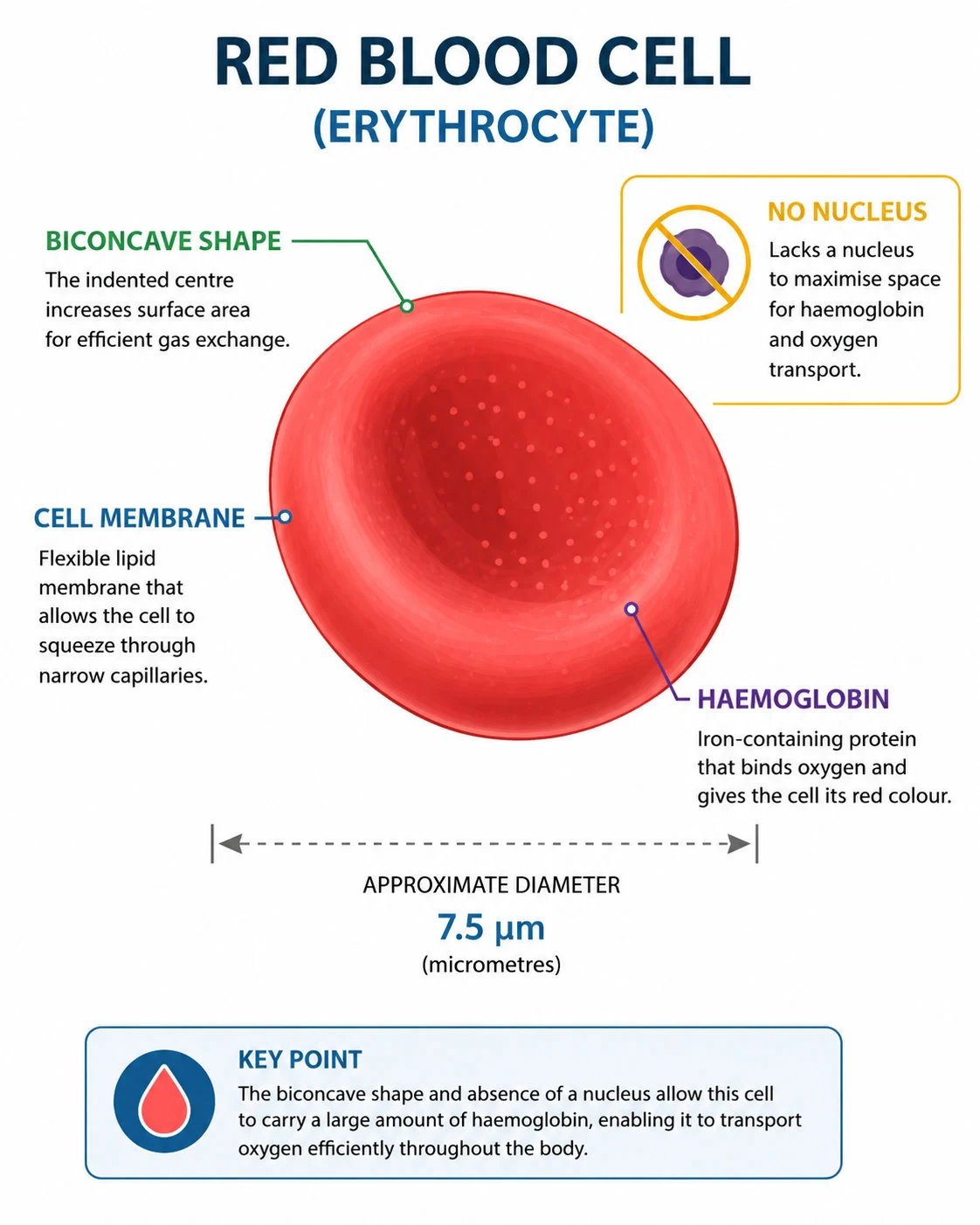
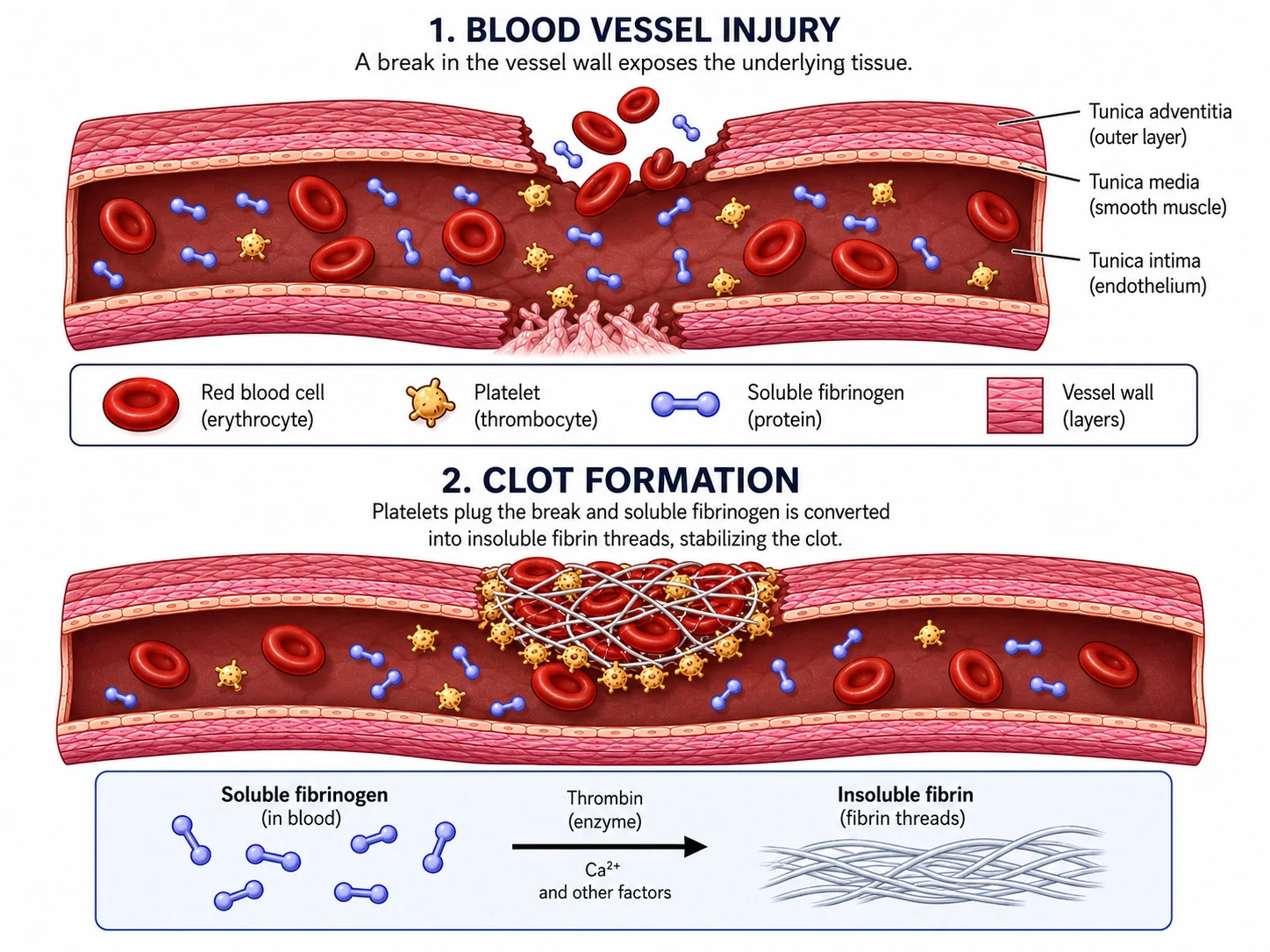
- Platelets
- cell fragments that form a temporary plug and release clotting factors
1
A blood vessel is damaged.
2
Platelets gather at the site.
3
Platelets and damaged tissue release clotting factors.
4
A cascade converts prothrombin to active thrombin.
5
Thrombin converts soluble fibrinogen to insoluble fibrin.
6
Fibrin threads trap platelets and blood cells, forming a mesh that seals the wound.
7
Exposure to air hardens the mesh into a scab.
- Cascade
- a small stimulus is amplified into a large amount of fibrin so the wound seals quickly
Section 4 of 12Innate and adaptive immunity
| Feature | Barriers | Innate response | Adaptive response |
|---|---|---|---|
| Examples | Skin, mucus, clotting | Phagocytes, inflammation | Lymphocytes, antibodies |
| Specific? | No | No | Yes, one antigen |
| Speed | Always present | Rapid, in hours | Days for a first response |
| Memory | None | None | Memory cells formed |
| Present from birth? | Yes | Yes | Develops after exposure |
Antigen
Antigen a molecule that triggers an immune response
- All cells have antigens, and self antigens are tolerated while non-self antigens start a response.
- Antigens occur on bacterial walls, virus envelopes, cancer cells and pollen, and allergies arise from them.
Phagocytes
- Phagocytes white blood cells made continuously in the bone marrow
- They move by amoeboid movement to the infection and engulf pathogens by endocytosis.
- Lysosome enzymes digest the pathogen.
- Neutrophils are short-lived and arrive first, and macrophages are long-lived and present antigens to lymphocytes.
Section 5 of 12Lymphocytes and blood groups
Lymphocytes and blood groups
T cells
- T cells produced in the bone marrow and matured in the thymus
- Each has T cell receptors specific to one antigen and is activated by an antigen-presenting cell.
- They divide by mitosis to form clones.
B cells
- B cells mature in the bone marrow with antibody receptors, each B cell binding a different antigen
- Binding of antigen and signals from T helper cells activate the B cell.
ABO blood groups
- ABO blood groups decided by antigens on the red cell surface, and mismatched transfusion causes agglutination
| Group | Antigens on red cells | Antibodies in plasma | Can donate to |
|---|---|---|---|
| A | A | Anti-B | A, AB |
| B | B | Anti-A | B, AB |
| AB | A and B | None | AB only |
| O | None | Anti-A and anti-B | All groups |
- Rhesus marker
- decides whether a person is rhesus positive or negative
1
A phagocyte engulfs the pathogen and displays its antigens on its surface.
2
A T helper cell with complementary receptors binds and is activated.
3
The activated T helper cell binds a B cell with the matching antibody receptor.
4
The activated B cell divides repeatedly by mitosis, which is clonal expansion.
5
Most clone cells become plasma cells that secrete large amounts of one antibody.
6
Some become memory cells that stay in the blood.
Lymphocytes and blood groups
Antibody action
- Antibody action agglutinates pathogens, helps phagocytosis and neutralises toxins
Plasma cells
- Plasma cells have much rough ER and their antibodies last for weeks or months
Section 6 of 12Making antibodies and immune memory
Primary response
- Primary response the first exposure produces antibodies and memory cells, slowly
Secondary response
- Secondary response memory cells recognise the antigen, divide quickly and form plasma cells and more memory cells
- It is faster, larger and longer lasting, so the infection is destroyed before symptoms appear.
Immunological memory
- Immunological memory it explains why some diseases rarely occur twice, such as measles
- Flu and colds change strain, so each new strain needs a new primary response.
Young babies
- Young babies they have no adaptive immunity, which develops with age
Section 7 of 12HIV and AIDS
HIV
Human Immunodeficiency Virus, a retrovirus with RNA and reverse transcriptase
- It cannot survive outside the body.
- It spreads by direct exchange of body fluids and not by a vector.
Transmission
- Transmission sexual contact, shared needles, blood donation, across the placenta, during birth and in breast milk
Infection
- Infection it infects T helper cells, so the body cannot make antibodies well
- In early infection antibodies are made and show in blood tests, so the person is HIV positive.
AIDS
- AIDS the late stage, in which the immune system fails and opportunistic infections take hold
- HIV is the virus and AIDS is the syndrome it causes.
- Anti-retroviral drugs slow progression and allow normal life expectancy.
Section 8 of 12Antibiotics and resistance
Antibiotics and resistance
Antibiotics
Antibiotics drugs that inhibit the growth of microorganisms, mostly bacteria
- They block processes found in prokaryotes and not in eukaryotes,
- such as cell wall formation, 70S ribosomes, transcription, translation and DNA replication.
- Penicillin comes from Penicillium fungi and blocks cell wall production.
Not effective against viruses
- Not effective against viruses viruses have no metabolism and use the host cell's processes
- Antivirals target viral enzymes without harming the host.
Evolution of resistance
1
Mutation gives a chance resistant bacterium.
2
The antibiotic kills non-resistant bacteria.
3
Resistant bacteria reproduce with less competition.
4
The resistance gene becomes more frequent and the population becomes resistant, which is natural selection.
Beta-lactamase
- Beta-lactamase an enzyme that breaks down penicillin in some bacteria
MRSA
- MRSA methicillin-resistant Staphylococcus aureus, resistant to multiple antibiotics
Reducing resistance
- Do not prescribe antibiotics for non-serious or non-bacterial infections.
- Complete the course.
- Keep high hygiene standards in hospitals.
- Limit routine use in farm animals.
- Develop new antibiotics, for example using chemical libraries.
Section 9 of 12Zoonoses, vaccines and herd immunity
Zoonosis
Zoonosis a disease that crosses the species barrier from animals to humans
- Examples are tuberculosis, rabies and COVID-19, and close contact with animals increases the risk.
- Some, such as HIV, emerged from animals and then became human strains.
Vaccine
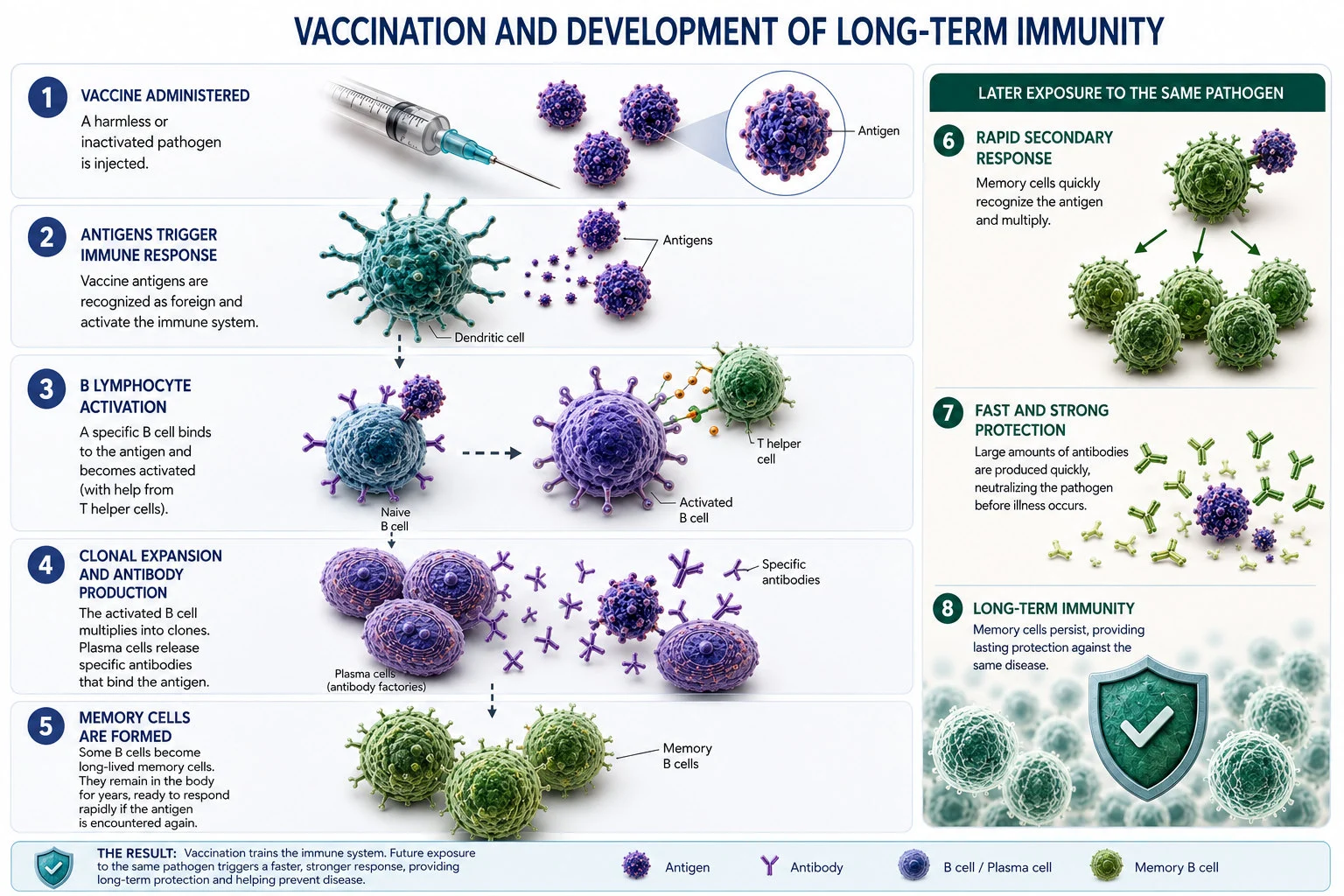
Vaccine a source of antigens, or DNA or RNA coding for antigens, that induces immunity without disease
- Live attenuated vaccines are weakened pathogens.
- Inactivated vaccines use killed pathogens or antigens alone.
- They trigger a primary response and memory cells, so a later infection gives a fast, large secondary response.
Herd immunity
- Herd immunity when enough of the population is vaccinated, the pathogen has few susceptible hosts and chains of infection break
- Smallpox was eradicated in 1980 by a vaccination programme.
Peer review
- Peer review other scientists check the accuracy and validity of published findings
- Media reports of incomplete research can bias public opinion.
Section 10 of 12Evaluating COVID-19 data
Percentage difference
Percentage difference difference between two values divided by their average, × 100, for values at the same time
- Europe 18 392 cases and South-East Asia 1584 cases give 16 808 / 9988 × 100 = 168.3%.
Percentage change
(new value - original value) / original value × 100
- A fall from 38 950 to 18 392 cases is a 52.8% decrease.
Comparing countries
- Comparing countries use cases per 100 000 people and not raw totals
- Testing policy, age structure and reporting methods affect comparisons.
Section 11 of 12Key terms
| Term | Meaning |
|---|---|
| Pathogen | A microorganism that causes disease. |
| Antigen | A molecule that triggers an immune response. |
| Phagocyte | A white blood cell that engulfs and digests pathogens by endocytosis. |
| Clonal expansion | Repeated division of an activated B cell to make many identical cells. |
| Memory cell | A long-lived lymphocyte that gives a faster, larger secondary response. |
| Antibiotic resistance | The ability of bacteria to survive an antibiotic, spread by natural selection. |
| Zoonosis | A disease that can pass from animals to humans. |
| Herd immunity | Protection of a whole population when enough people are immune to stop the spread of a pathogen. |
Section 12 of 12Exam technique
1
Saying antibiotics work against viruses — viruses have no metabolism or cell structure for them to target
2
Saying HIV and AIDS are the same — HIV is the virus and AIDS is the syndrome it causes
3
Saying bacteria become resistant because of the antibiotic — resistance arises by random mutation and is selected by the antibiotic
4
Saying vaccines give the disease — they give antigens that trigger an immune response without disease
Marked practiceQuizzes for this lesson
Last updated:
\n