20.4Human Influences on Ecosystems
Conservation — Cambridge IGCSE Biology 0610 Revision Notes & Topical Questions
5 min read 17 parts Lesson 4 of 5 1 quiz
Lesson summary
20.4 Conservation — IGCSE BIOLOGY notes: Describe sustainable resources, sustainable development, sustaining forests and fish stocks, endangered species and the reasons for conservation.Sustainable resource = one produced as rapidly as it is removed from the environment, so it do…
- Non-renewable resources
- Raw materials
- Reuse and recycling
- Conflicting demands
- Cooperation
- Replanting
Section 1 of 17Sustainable use of resources
Sustainable resource
Sustainable resource one produced as rapidly as it is removed from the environment, so it does not run out.
- Examples are food, water and wood.
Non-renewable resources
- Non-renewable resources fossil fuels (coal, oil, gas) cannot be replaced once used.
Raw materials
- Raw materials fossil fuels are also raw materials for plastics, so use should be reduced.
Reuse and recycling
- Reuse and recycling of paper, plastic, glass and metal reduce waste and the raw materials and energy needed.
Section 2 of 17Sustainable development
1Sustainable development
Sustainable development development providing for the needs of an increasing human population without harming the environment.
2Conflicting demands
- Conflicting demands local people against large companies, humans against wildlife, and present against future populations.
3Cooperation
- Cooperation needed at local, national and international levels.
Section 3 of 17Sustaining forests
Replanting
- Replanting paper forests replant similar trees when mature trees are cut.
Tropical hardwoods
- Tropical hardwoods teak and mahogany take many years to regrow.
Tracking schemes
- Tracking schemes such as the Forest Stewardship Council monitor logging companies and track wood.
Education
- Education of loggers and consumers about sustainable sources.
Section 4 of 17Sustaining fish stocks
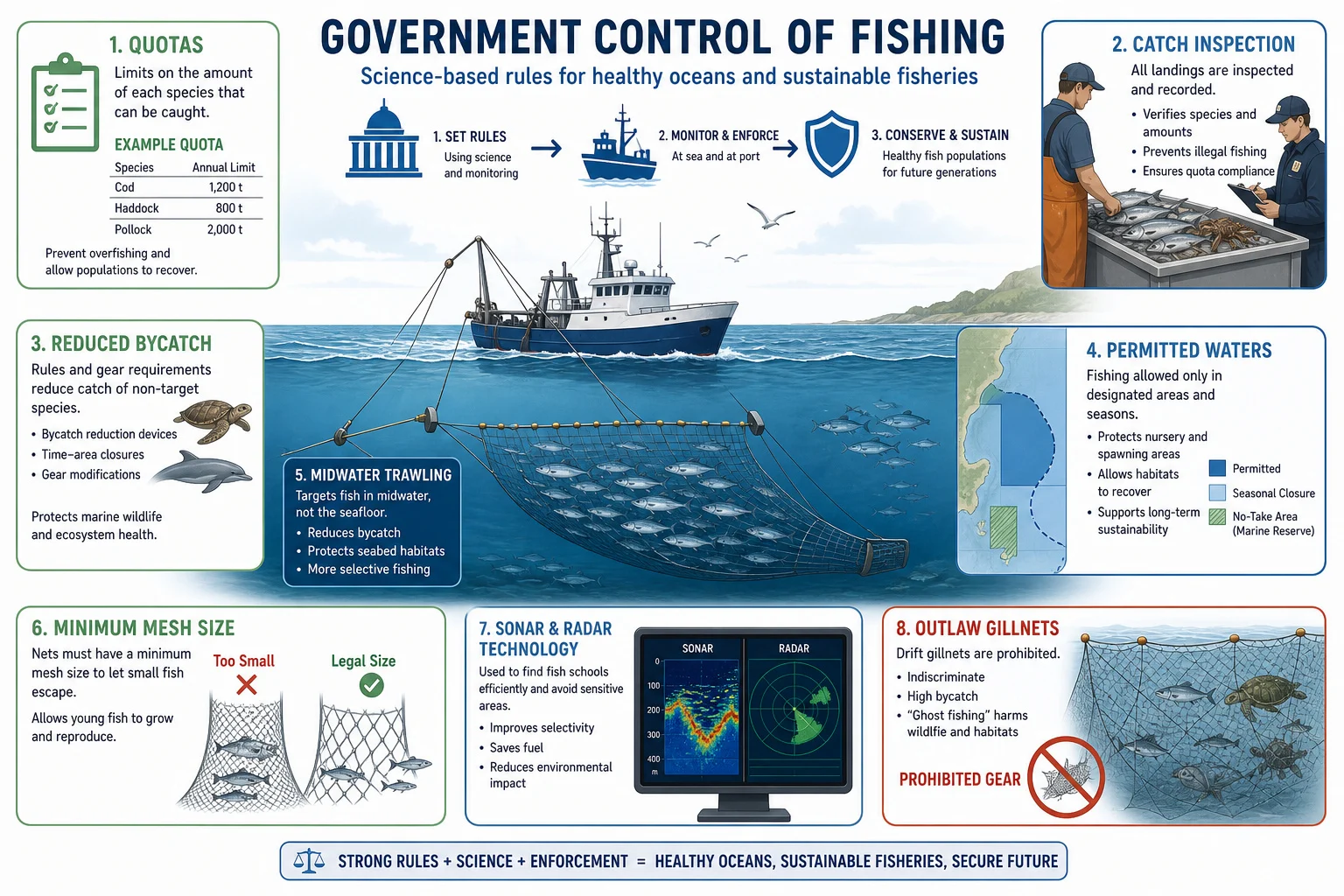
Quotas
- Quotas control the number of fish caught each year.
Size limits
- Size limits net mesh size protects small fish so enough breed.
Closed seasons
- Closed seasons stop catching fish when they gather to breed.
Restocking
- Restocking young fish are bred and released when large enough.
Education
- Education fishermen learn the laws and consumers avoid unsustainable fish.
Section 5 of 17Endangered species
Endangered species
Endangered species a species at risk of becoming extinct.
Threats
- Threats hunting, climate change, pollution, loss of habitat and introduced non-native species that outcompete natives.
Small populations
- Small populations have less genetic variation, so adapt less well to environmental change and face greater extinction risk.
Section 6 of 17Conservation methods
1Monitoring and legal protection
- Monitoring and legal protection of species and their habitats, for example hunting bans.
2Education programmes
- Education programmes raise awareness of conservation.
3Captive breeding programmes
- Captive breeding programmes breed endangered animals, using artificial insemination or IVF to keep genetic variation.
4Seed banks
- Seed banks store seeds of endangered plants in cool, dry conditions so they can be regrown.
Section 7 of 17Reasons for conservation
Reasons for conservation
Extinction
- Extinction reduces extinction of plant and animal species.
Ecosystems
- Ecosystems protects vulnerable ecosystems such as rainforests and limits damage to food chains and webs.
Biodiversity
- Biodiversity a stable ecosystem has many species.
Nutrient cycling
- Nutrient cycling for example the carbon cycle, which limits climate change.
Resources
- Resources food, drugs from plants and fuel.
Gene pool
- Gene pool a wide gene pool remains for future needs.
Section 8 of 17More from the specification
1
Renewable energy as a sustainable means
- Renewable energy as a sustainable means transitioning to solar, wind,
- and geothermal power provides a vital technological means to achieve long-term ecological sustainability.
2
Preservation of Global Biodiversity and Genetic Resources
- Maintaining global biodiversity safeguards critical ecosystem services, sustains stable food supplies,
- and preserves wild plant genomes that hold potential for life-saving pharmaceuticals and crop breeding.
3
In-Situ and Ex-Situ Conservation Strategies
- In-situ conservation protects native organisms within gazetted national parks and marine reserves,
- while ex-situ efforts utilize botanic seed banks, captive breeding programs, and artificial insemination in certified zoological facilities.
4
Sustainable Resource Management and Sustainable Development
- Sustainable practices satisfy modern socioeconomic needs without compromising the ecological capital of future generations.
- (such as regulated fishing quotas, selective forest harvesting, and renewable energy adoption)
5
Global warming
- Rise in the mean temperature of Earth's surface and lower atmosphere.
6
Intensive farming
- Producing as much food as possible from limited land and resources.
7
Monoculture
- Growing one type of crop on a large area.
8
Habitat destruction
- Damage or removal of the places where organisms live.
Section 9 of 17Why conserve biodiversity
Biodiversity
Biodiversity the variety of living organisms in an area.
Extinction
- Extinction conservation can prevent species from becoming extinct.
Habitats
- Habitats conservation protects habitats that might be lost through human activity.
Stability
- Stability a diverse community is better able to maintain its functions when conditions change.
Section 10 of 17Ecosystem functions and resources
Ecosystem functions and resources
Nutrient cycling
- Nutrient cycling for example the cycling of carbon.
Food supply
- Food supply ecosystems provide food.
Medicines
- Medicines plants may provide useful drugs.
Fuel
- Fuel ecosystems provide fuel for activities such as cooking.
Genes
- Genes a broad range of genes is valuable for future breeding or adaptation.
Section 11 of 17Conservation and genetic variation
Small population
- Small population may lose genetic variation as individuals die or fail to breed.
Fewer alleles
- Fewer alleles the species may be less able to survive a new disease or environmental change.
Extinction risk
- Extinction risk increases as variation falls.
Conservation programmes
- Conservation programmes should protect genetic diversity as well as numbers of individuals.
Section 12 of 17Artificial insemination
Artificial insemination
Artificial insemination inserting sperm from a selected male into a female's reproductive tract.
Transport
- Transport sperm can be sent between breeding centres without moving the animals.
Benefit
- Benefit allows breeding between geographically separated individuals.
Section 13 of 17In vitro fertilisation
IVF
IVF sperm fertilises eggs outside the body.
Embryo transfer
- Embryo transfer the embryo may then be placed in a female for development.
Genetic lines
- Genetic lines choosing gametes from different lines helps retain a wide range of alleles.
Result
- Result the next generation stays genetically diverse.
Section 14 of 17Risks to a species
Smaller population
- Smaller population leads to reduced genetic variation.
Environmental change
- Environmental change the species is more susceptible to it.
Resilience
- Resilience it is less resilient and has a greater risk of extinction.
Section 15 of 17More from the specification
More from the specification
Biodiversity preservation and fossil fuels
- Biodiversity preservation and fossil fuels decreasing industrial dependence on refined fossil fuels provides a vital means to protect global wildlife biomes.
Sustainable resource management
- Sustainable management balances human consumption of freshwater, timber, and arable land with long-term ecosystem conservation.
Deforestation and habitat fragmentation
- Large-scale clearing of native forests reduces biodiversity, accelerates soil erosion, and disrupts regional hydrological cycles.
Pollution mitigation in aquatic ecosystems
- Treating industrial effluents and reducing agricultural fertiliser runoff prevents eutrophication and preserves freshwater ecosystems.
Sustainable forest management
- Sustainable forest management replanting trees and establishing protected conservation areas sustains wood resources without destroying biodiversity.
Agricultural water pollution
- Agricultural water pollution excessive synthetic fertilisers from livestock farming leach into waterways, causing eutrophication and oxygen depletion.
Combustion and carbon dioxide
- Combustion and carbon dioxide clearing forests for agricultural expansion elevates atmospheric carbon dioxide, intensifying global greenhouse warming.
Monoculture
- Growing one type of crop on a large area.
Climate change
- Long-term changes in temperature and weather patterns.
Habitat destruction
- Damage or removal of the places where organisms live.
Global warming
- Rise in the mean temperature of Earth's surface and lower atmosphere.
Fossil fuel
- Fuel formed from long-dead organisms.
Captive breeding
- Breeding endangered species in zoos or reserves.
Intensive farming
- Producing as much food as possible from limited land and resources.
Pollution
- The addition of harmful substances to the environment.
Sustainable
- Able to continue without damaging resources for the future.
Endangered
- At risk of extinction.
Section 16 of 17Key terms
| Term | Meaning |
|---|---|
| Sustainable resource | A resource produced as fast as it is removed. |
| Non-renewable resource | A resource that cannot be replaced once used. |
| Sustainable development | Meeting present needs without harming the environment for the future. |
| Quota | A limit on the number of fish that may be caught. |
| Endangered species | A species at risk of extinction. |
| Seed bank | A store of seeds kept for future growth. |
| Term | Meaning |
|---|---|
| Biodiversity | The variety of living organisms in an area. |
| Genetic diversity | The range of alleles within a population. |
| Artificial insemination | Placing sperm in a female's reproductive tract without mating. |
| In vitro fertilisation | Fertilising eggs with sperm outside the body. |
| Gene pool | All the alleles in a population. |
Section 17 of 17Exam technique
1
Saying fossil fuels are sustainable — they are non-renewable.
2
Saying conservation protects only large animals — it also protects plants, ecosystems and genes.
3
Saying a small population is unaffected by disease — low variation makes it more vulnerable.
4
Saying sustainable means no use — it means use at a rate that can be replaced.
1
Saying numbers alone matter for conservation — genetic diversity matters too.
2
Saying conservation has no benefit for people — it protects food, medicines and nutrient cycles.
3
Saying AI needs animals to travel — only the sperm travels.
4
Saying a species with a small population is safe from disease — low variation increases the risk.
Marked practiceQuizzes for this lesson
Last updated:
\n