2.4Waves
The water cycle — Question Bank (Cambridge) — Cambridge IGCSE Physics 0625 Revision Notes & Topical Questions
5 min read Lesson 18 of 35 Unit quiz
Cambridge Past Paper Bank
2.4 The water cycle
4 Multiple-Choice Questions with Official Mark Schemes
Question 1
0620/21_Winter_2023_Q1
Question 2
0620/22_Spring_2021_Q1
Question 3
0620/11_Summer_2018_Q1
Question 4
0620/13_Winter_2021_Q1
Cambridge Lower Secondary Stage 7
2.4 The water cycle – Complete Question Bank & Mark Scheme
Total Questions4 Questions with Verified Solutions & Past Paper Mark Schemes
Multiple Choice Questions (Exam Practice)
Question 1
Paper Ref: 0620/21_Winter_2023_Q1
Paper Ref: 0620/21_Winter_2023_Q1
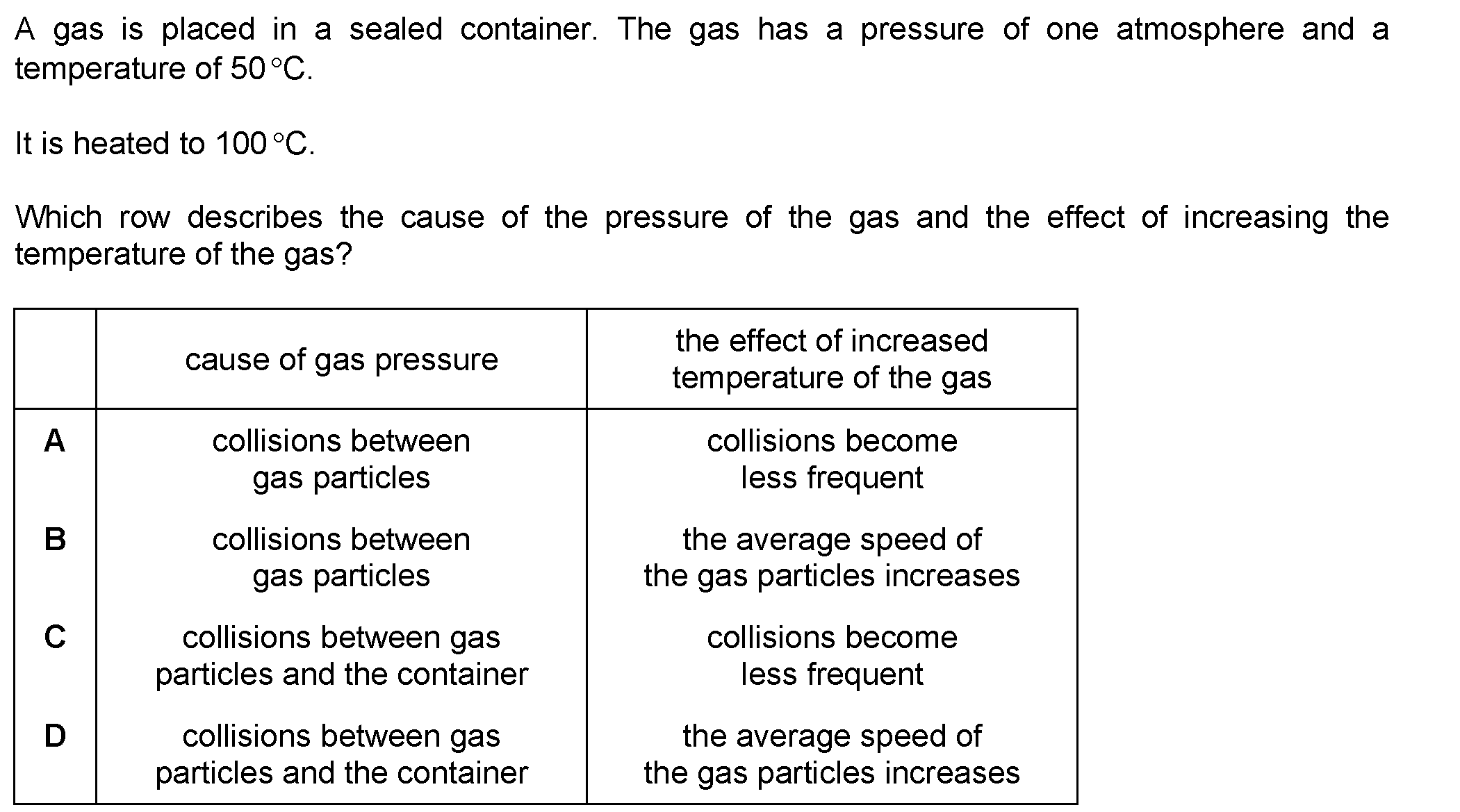
A gas is placed in a sealed container. The gas has a pressure of one atmosphere and a
temperature of 50°C.
It is heated to 100°C.
Which row describes the cause of the pressure of the gas and the effect of increasing the
temperature of the gas?
cause of aas pressure the effect of increased
gas Pp temperature of the gas
collisions between collisions become
gas particles less frequent
collisions between the average speed of
gas particles the gas particles increases
collisions between gas collisions become
particles and the container less frequent
collisions between gas the average speed of
particles and the container the gas particles increases
Options:
A
B
C
D
Correct Key: D
A
B
C
D
Correct Key: D
Question 2
Paper Ref: 0620/22_Spring_2021_Q1
Paper Ref: 0620/22_Spring_2021_Q1
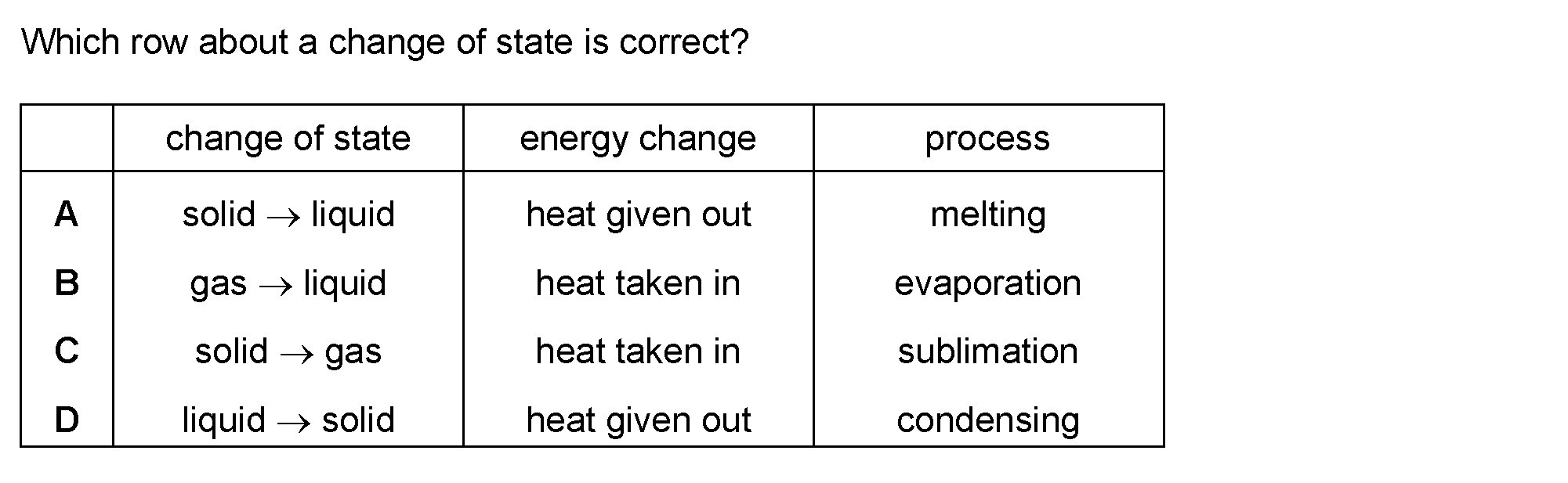
Which row about a change of state is correct?
— change of state energy change
solid — liquid heat given out melting
gas —> liquid heat taken in evaporation
solid > gas heat taken in sublimation
liquid — solid heat given out condensing
— change of state energy change
solid — liquid heat given out melting
gas —> liquid heat taken in evaporation
solid > gas heat taken in sublimation
liquid — solid heat given out condensing
Options:
A
B
C
D
Correct Key: C
A
B
C
D
Correct Key: C
Question 3
Paper Ref: 0620/11_Summer_2018_Q1
Paper Ref: 0620/11_Summer_2018_Q1
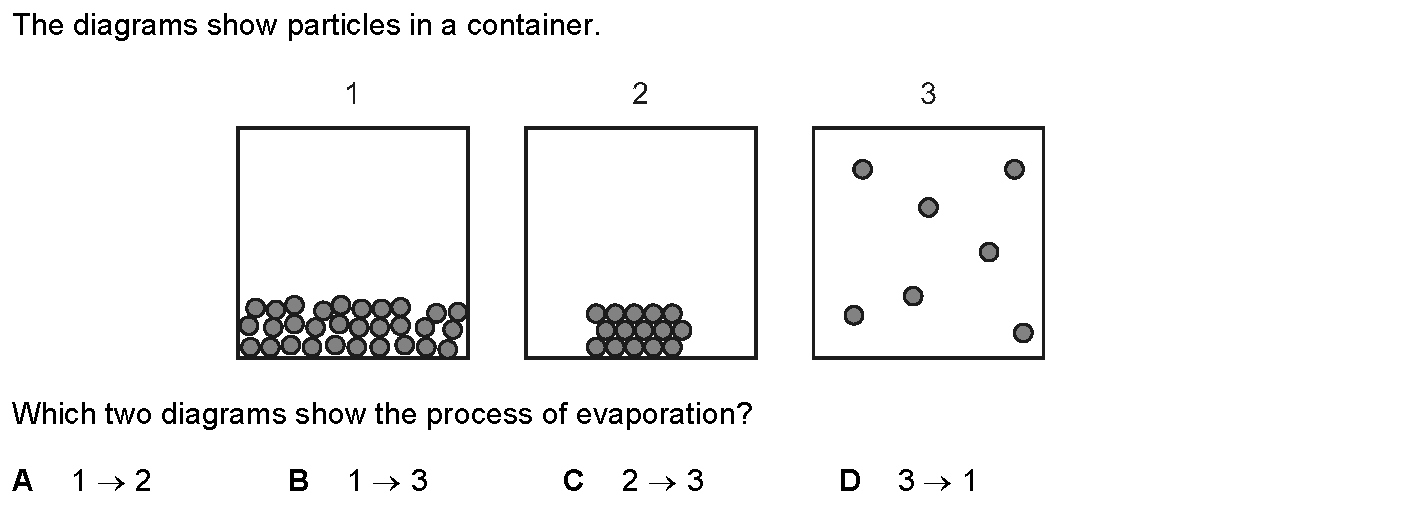
The diagrams show particles in a container.
1 2 3
Which two diagrams show the process of evaporation?
A 1>2 B 1>3 C 253 D 3 → 1
1 2 3
Which two diagrams show the process of evaporation?
A 1>2 B 1>3 C 253 D 3 → 1
Options:
A
B
C
D
Correct Key: B
A
B
C
D
Correct Key: B
Question 4
Paper Ref: 0620/13_Winter_2021_Q1
Paper Ref: 0620/13_Winter_2021_Q1
The particles in a substance are far apart, randomly arranged and moving.
The substance changes state and the particles are now close together. The particles are still
randomly arranged and able to move.
What is the change of state of the substance?
A gas to liquid
B liquid to gas
C liquid to solid
D
solid to gas
The substance changes state and the particles are now close together. The particles are still
randomly arranged and able to move.
What is the change of state of the substance?
A gas to liquid
B liquid to gas
C liquid to solid
D
solid to gas
Options:
A
B
C
D
Correct Key: A
A
B
C
D
Correct Key: A
Structured Questions Mark Scheme & Answers
•1•.• • • •[•S•P• •S•7• •P•2• • •·• • •Q•2• • •P•a•r•t• •(•a•)• • •·• • •S•p•e•c•i•m•e•n• • •·• • •L•o•w•e•r• •S•e•c• •0•8•9•3•]• • • • • • •a•n•y• •t•h•r•e•e• •f•r•o•m• •3• •e•a•c•h• •p•r•o•c•e•s•s• •=• •1• •m•a•r•k• •e•v•a•p•o•r•a•t•i•o•n• •p•r•o•c•e•s•s•e•s• •c•a•n• •b•e• •i•n• •a•n•y• •o•r•d•e•r• •c•o•n•d•e•n•s•a•t•i•o•n• •p•r•e•c•i•p•i•t•a•t•i•o•n• •••c•c•e•p•t• •r•a•i•n•f•a•l•l• •••c•c•e•p•t• •m•e•l•t•i•n•g•
•2•.• • • •[•S•P• •S•7• •P•2• • •·• • •Q•2• • •P•a•r•t• •(•b•)• • •·• • •S•p•e•c•i•m•e•n• • •·• • •L•o•w•e•r• •S•e•c• •0•8•9•3•]• • • • • • •w•a•t•e•r• •r•u•n•o•f•f• •1• •••c•c•e•p•t• •a•n•y• •c•o•r•r•e•c•t• •p•r•o•c•e•s•s• •f•r•o•m• •t•h•e• •w•a•t•e•r• •c•y•c•l•e• •n•o•t• •m•e•n•t•i•o•n•e•d• •i•n• •(•a•)• •••c•c•e•p•t• •t•r•a•n•s•p•i•r•a•t•i•o•n• •©• •U•C•L•E•S• •2•0•2•0• •P•a•g•e• •3• •o•f• •1•2• •S•7•/•0•2• •S•c•i•e•n•c•e• •S•t•a•g•e• •7• •P•a•p•e•r• •2• •M•a•r•k• •S•c•h•e•m•e• •F•r•o•m• •2•0•2•0•
•3•.• • • •[•P•R•I• •2•0•0•8•B• •P•2• • •·• • •Q•8• • •P•a•r•t• •(•a•)• • •·• • •2•0•0•8• • •·• • •P•r•i•m•a•r•y• •0•8•4•6•]• • • • • • •(•n•o• •p•u•b•l•i•s•h•e•d• •m•a•r•k• •s•c•h•e•m•e• •f•o•r• •t•h•i•s• •p•a•p•e•r•)•
•4•.• • • •[•P•R•I• •2•0•0•8•B• •P•2• • •·• • •Q•8• • •P•a•r•t• •(•b•)• • •·• • •2•0•0•8• • •·• • •P•r•i•m•a•r•y• •0•8•4•6•]• • • • • • •(•n•o• •p•u•b•l•i•s•h•e•d• •m•a•r•k• •s•c•h•e•m•e• •f•o•r• •t•h•i•s• •p•a•p•e•r•)•
•5•.• • • •[•P•R•I• •2•0•1•5•B• •P•2• • •·• • •Q•7• • •P•a•r•t• •(•a•)• • •·• • •2•0•1•5• • •·• • •P•r•i•m•a•r•y• •0•8•4•6•]• • • • • • •(•n•o• •p•u•b•l•i•s•h•e•d• •m•a•r•k• •s•c•h•e•m•e• •f•o•r• •t•h•i•s• •p•a•p•e•r•)•
•6•.• • • •[•P•R•I• •2•0•1•5•B• •P•2• • •·• • •Q•7• • •P•a•r•t• •(•b•)• • •·• • •2•0•1•5• • •·• • •P•r•i•m•a•r•y• •0•8•4•6•]• • • • • • •(•n•o• •p•u•b•l•i•s•h•e•d• •m•a•r•k• •s•c•h•e•m•e• •f•o•r• •t•h•i•s• •p•a•p•e•r•)•
•7•.• • • •[•P•R•I• •2•0•1•5•B• •P•2• • •·• • •Q•7• • •P•a•r•t• •(•c•)• • •·• • •2•0•1•5• • •·• • •P•r•i•m•a•r•y• •0•8•4•6•]• • • • • • •(•n•o• •p•u•b•l•i•s•h•e•d• •m•a•r•k• •s•c•h•e•m•e• •f•o•r• •t•h•i•s• •p•a•p•e•r•)•
•8•.• • • •[•P•R•I• •2•0•1•5•B• •P•2• • •·• • •Q•7• • •P•a•r•t• •(•d•)• • •·• • •2•0•1•5• • •·• • •P•r•i•m•a•r•y• •0•8•4•6•]• • • • • • •(•n•o• •p•u•b•l•i•s•h•e•d• •m•a•r•k• •s•c•h•e•m•e• •f•o•r• •t•h•i•s• •p•a•p•e•r•)•
Last updated:
\n