13.2Chapter 13: Sound Waves
Pitch and frequency — Alhussan Physics - Stage 9 Revision Notes & Topical Questions
5 min read 8 parts Lesson 2 of 5 2 quizzes
Physics 13.2 Pitch and frequency — Hertz (Hz), Wavelength and Audible Range — Alhussan International Academy — Physics (Stages 7–9) notes: Describe what affects the pitch of a sound, the audible range of humans and animals, and waveforms showing different frequencies.Frequency = …
- High and low
- Loud and pitch
- Infrasound
- Ultrasound
- Different ranges
- Medical scans
Part 1 of 6Frequency and pitch
- Frequency is measured in hertz (Hz), where 1 Hz is one vibration per second.
- High frequencies are measured in kilohertz, where 1 kHz = 1000 Hz.
- A high-pitched sound has a high frequency and a short wavelength.
- A low-pitched sound has a low frequency and a long wavelength.
- The pitch of a string depends on how many times it vibrates each second.
Part 2 of 6Frequency and amplitude are different
- It determines how loud the sound is, not its pitch.
- Loud sounds may be high-pitched like a scream or low-pitched like an earthquake.
| Change | Effect on oscilloscope trace | Effect on sound |
|---|---|---|
| Higher frequency | More waves in the same time, squashed together | Higher pitch |
| Greater amplitude | Taller waves | Louder |
Part 3 of 6Frequency from a trace
- Frequency = 1 ÷ period.
- A trace with twice as many waves across the screen shows twice the frequency, which is one octave higher.
- A shorter, tighter, thinner string vibrates faster and gives a higher pitch.
Part 4 of 6The audible range
- Young people can hear a bigger range than older people.
- As people get older they find it harder to hear very high frequencies.
- By the age of 30 a person may hear only up to about 14 000 Hz.
- Sound with a frequency below 20 Hz, used by some animals such as elephants.
- Sound with a frequency above 20 000 Hz, which humans cannot hear or make.
Part 5 of 6Animals and ultrasound
| Animal | Approximate audible range (Hz) |
|---|---|
| Elephant | 16 to 12 000 |
| Cow | 23 to 35 000 |
| Dog | 67 to 45 000 |
| Dolphin | 100 to 100 000 |
| Mouse | 1000 to 91 000 |
- Animals have very different audible ranges from humans.
- Some animals make and detect ultrasound, such as bats and dolphins, whereas grasshoppers make sounds they cannot hear.
Part 6 of 6Uses of ultrasound
- Ultrasound is used to scan unborn babies.
- It cleans delicate objects and detects cracks in metal.
- Bats use ultrasound echoes to find prey in the dark and ships use sonar to measure sea depth.
Key terms
| Term | Meaning |
|---|---|
| Frequency | The number of vibrations per second, in hertz. |
| Pitch | How high or low a sound is. |
| Hertz (Hz) | The unit of frequency, one vibration per second. |
| Audible range | The range of frequencies that can be heard. |
| Ultrasound | Sound with a frequency above 20 000 Hz. |
| Infrasound | Sound with a frequency below 20 Hz. |
Avoid these mistakes
Marked practiceQuizzes for this lesson
?What do you want to solve now?
✓Checkpoint Quiz
13 multiple-choice + 1 written questions from real exam papers on this lesson.
Question 1 of 13 1:30

Question 2 of 13 1:30
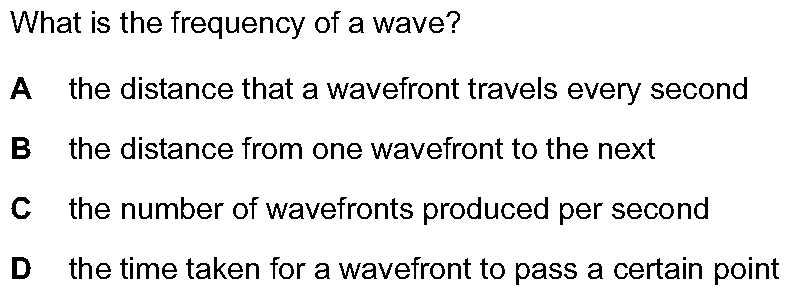
Question 3 of 13 1:30

Question 4 of 13 1:30

Question 5 of 13 1:30

Question 6 of 13 1:30
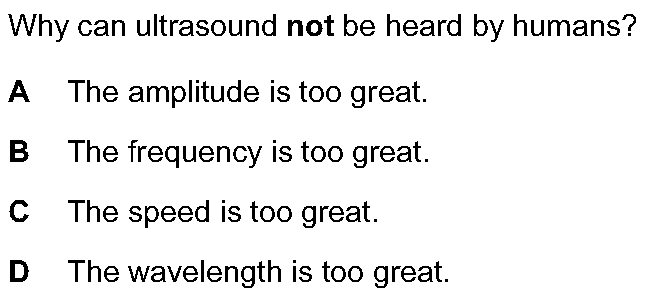
Question 7 of 13 1:30
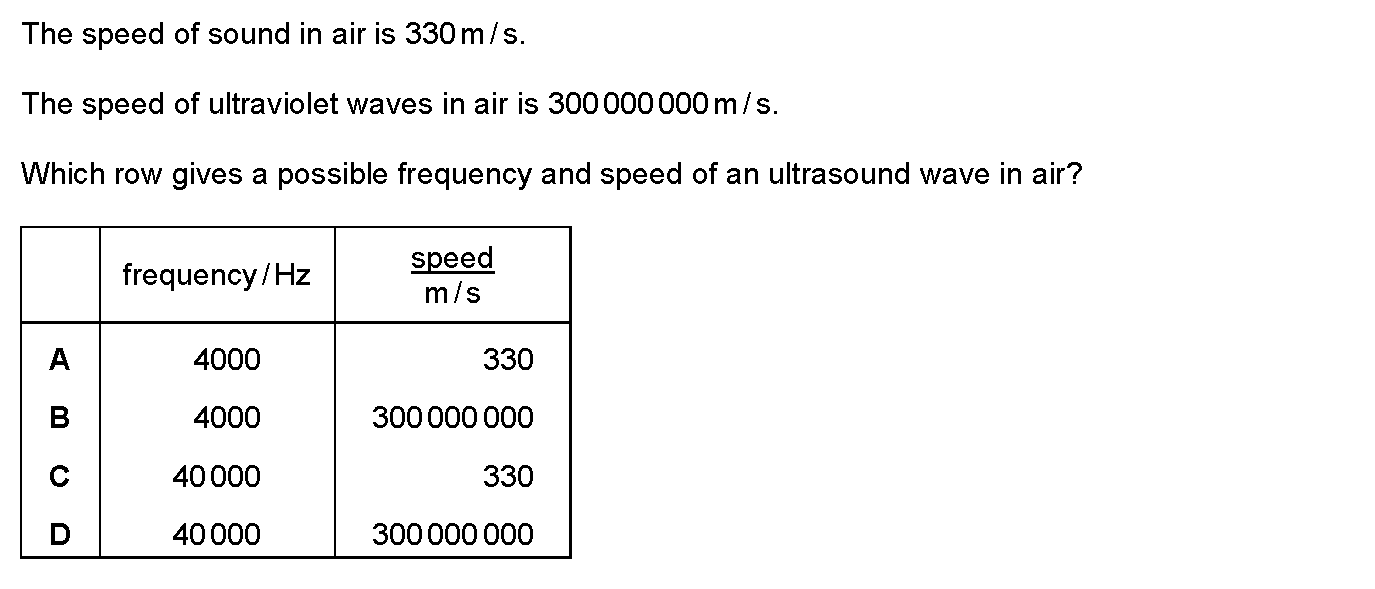
Question 8 of 13 1:30

Question 9 of 13 1:30

Question 10 of 13 1:30

Question 11 of 13 1:30
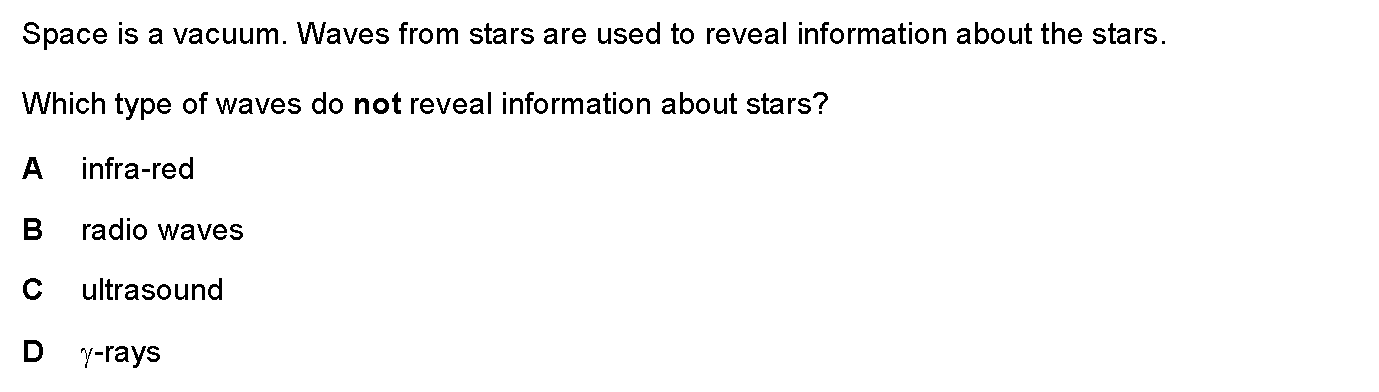
Question 12 of 13 1:30

Question 13 of 13 1:30

Answer key
1 A2 C3 D4 D5 B6 B7 C8 A9 C10 B11 C12 B13 C
Written question 1 of 1 · part (a) (1 / 3) 3:00
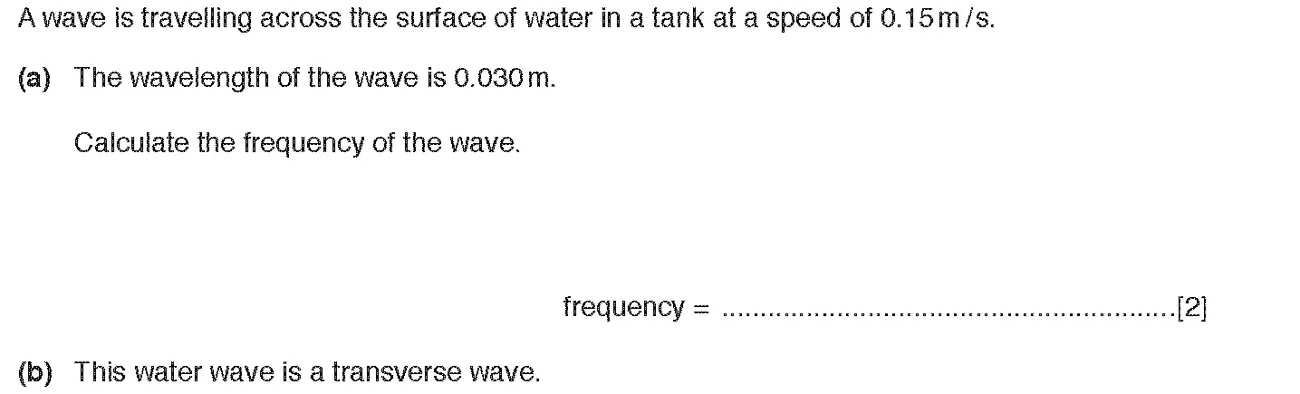
Show the answer

Written question 1 of 1 · part (b)(i) (2 / 3) 3:00

Show the answer
Written question 1 of 1 · part (b)(ii) (3 / 3) 3:00

Show the answer
Each part of a written question is on its own screen. Write your answer first, then open "Show the answer" to check it against the mark scheme.
Last updated: