Theme A — Unity and diversity
Theme A — Unity and diversity — IB Biology HL Revision Notes & Topical Questions
5 min read 12 parts Lesson 1 of 14 Unit quiz
Lesson summary
Theme A — Unity and diversity — IB BIOLOGY HL notes: Link the Theme A topics (water, nucleic acids, origins of cells, cell structure, viruses, diversity, classification and evolution) and apply them in short calculations.Hydrogen bonds — water is polar, so molecules form hydrogen…
- Latent heat of vaporisation
- Calculations use E
- DNA and RNA
- Possible sequences
- Length of a DNA molecule
- Primordial soup
Part 1 of 10Water and its thermal properties
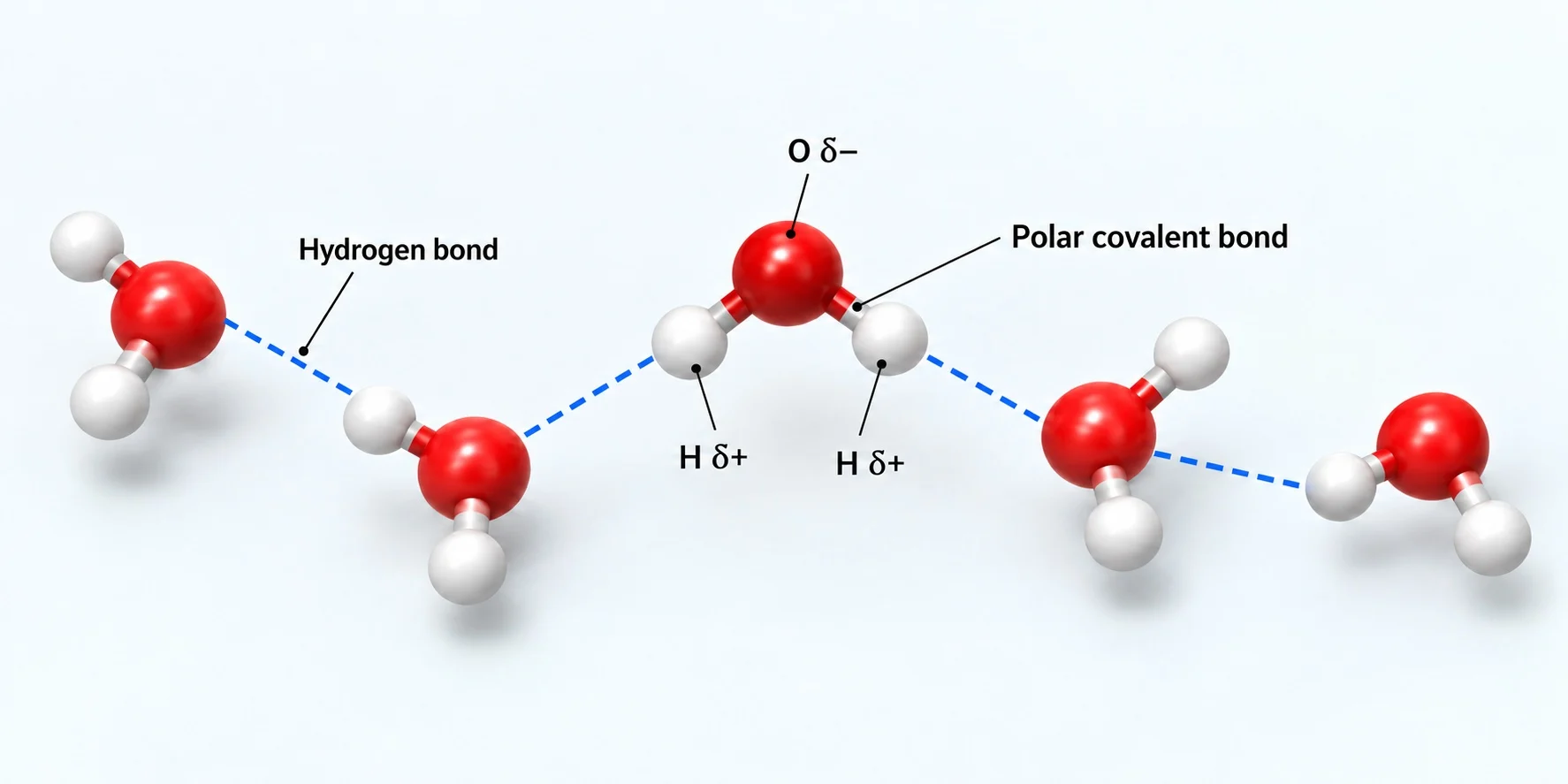
Water and its thermal properties
Hydrogen bonds
- Hydrogen bonds water is polar, so molecules form hydrogen bonds
- This gives cohesion, so a continuous water column can be pulled up the xylem under tension.
- It makes water a good solvent and gives it a high specific heat capacity.
Latent heat of vaporisation
Latent heat of vaporisation the energy absorbed when a liquid becomes a gas without a change in temperature
- It is high, about 2257 kJ kg-1, because hydrogen bonds must be broken.
- Evaporation of sweat or transpiration therefore cools organisms.
Calculations use E
Calculations use E mcΔT and E = mL
- Warming 2.0 kg of water from 15 °C to 37 °C with c = 4.18 kJ kg-1 °C-1 needs 2.0 × 4.18 × 22 ≈ 184 kJ.
- A runner evaporating 0.50 kg of sweat with L = 2.4 × 10³ kJ kg-1 loses 0.50 × 2.4 × 103 = 1200 kJ.
Part 2 of 10Nucleic acids
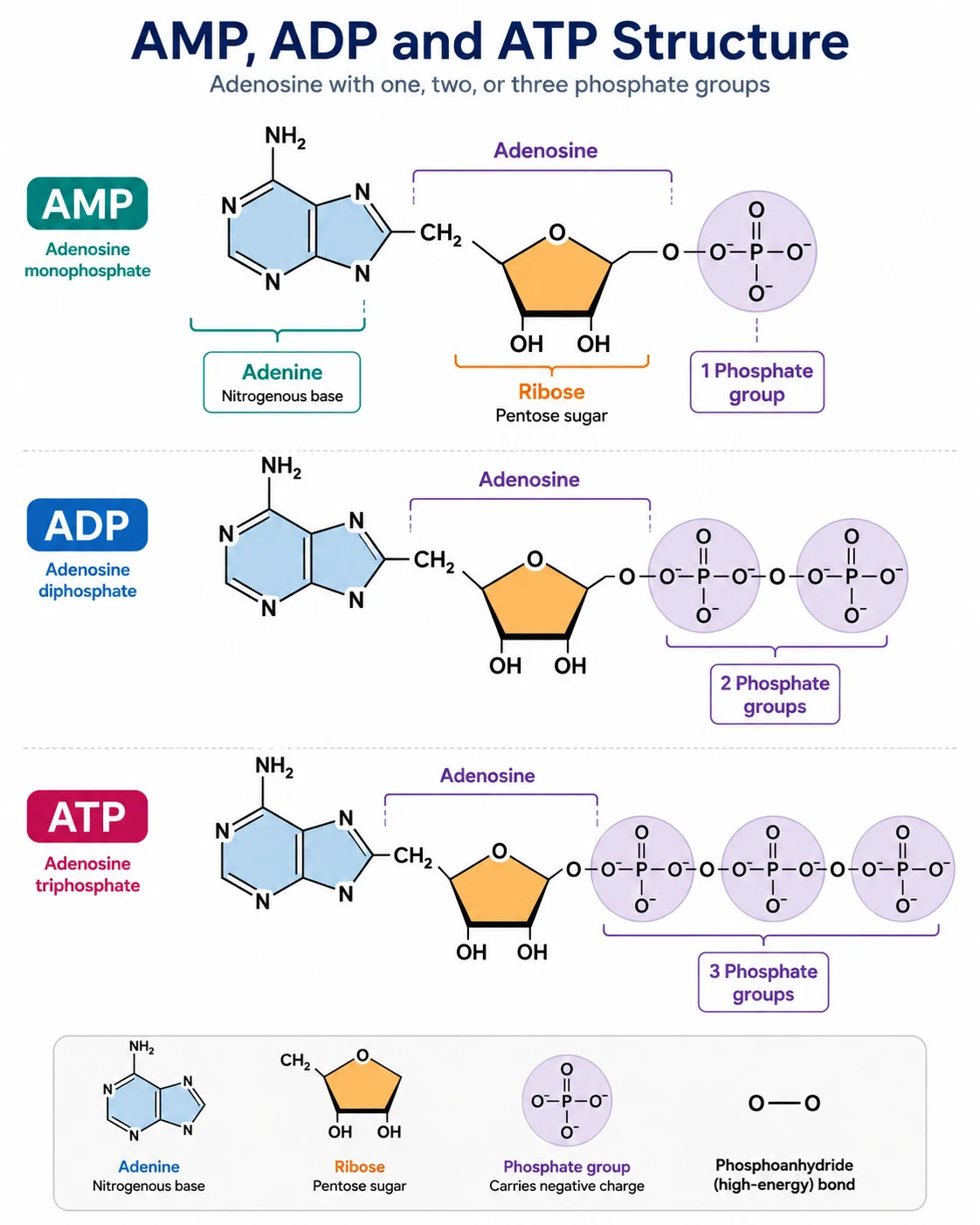
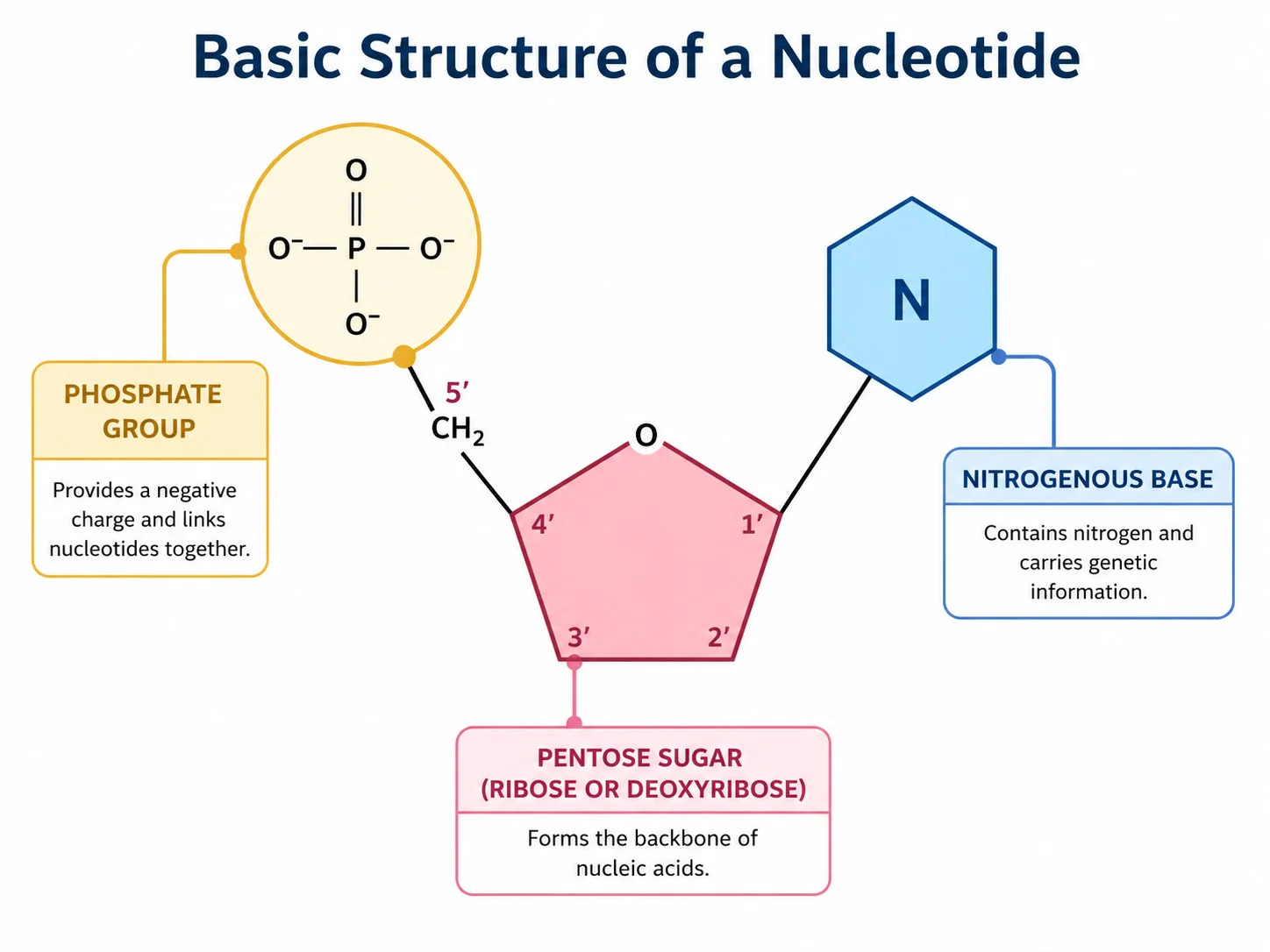
1DNA and RNA
- DNA and RNA polymers of nucleotides
- A purine has a double ring, adenine or guanine.
- A coding sequence carries instructions for a protein and other regions are non-coding.
2Possible sequences
- Possible sequences with four bases a sequence of 10 nucleotides can be arranged in 410 = 1 048 576 ways
3Length of a DNA molecule
- Length of a DNA molecule one turn of 10 base pairs is 3.4 nm, so each base pair is 0.34 nm
- A DNA molecule 6.8 µm long has 6800 nm / 0.34 nm = 2.0 × 10⁴ base pairs.
Part 3 of 10Origins of cells
Primordial soup
Primordial soup the idea that early oceans held a rich mix of simple organic compounds
Miller-Urey experiment
- Miller-Urey experiment a sealed apparatus with water, methane, ammonia and hydrogen
- An electrical discharge was the energy source instead of UV light.
- It showed that amino acids could form without living things.
- The early atmosphere may have been less reducing than assumed.
Cell
Cell the smallest unit that carries out all the functions of life
- The functions are metabolism, growth, response, homeostasis, reproduction, excretion and nutrition.
Part 4 of 10Cell structure
Cell structure
Prokaryotic cells
- Prokaryotic cells a cell wall, plasma membrane, cytoplasm, 70S ribosomes and naked DNA in a nucleoid
- Some have plasmids, pili and flagella.
Atypical cells
- Atypical cells they challenge the simple idea of one nucleus per independent unit
- Skeletal muscle fibres form by fusion of many cells.
- Aseptate hyphae have continuous multinucleate cytoplasm.
- Sieve tube elements depend on companion cells.
- Mature red blood cells lack a nucleus.
Part 5 of 10Viruses: structure
Viruses: structure
Virus
- Virus a non-cellular infectious particle, not a cell because it lacks metabolism
- It is 20-300 nm across and can only be seen with an electron microscope.
- It sits outside the three-domain system of classification.
Common features
- A small, fixed size, as viruses do not grow.
- A nucleic acid core of DNA or RNA, single or double stranded, linear or circular.
- A protein coat called a capsid with attachment proteins.
- No cytoplasm and very few or no enzymes.
Lipid envelope
- Lipid envelope some viruses have one, formed from the membrane of the cell they were made in
Host specificity
- Host specificity attachment proteins decide which host cell is infected
- HIV infects white blood cells and hepatitis infects liver cells.
Examples
- Bacteriophage lambda has double-stranded DNA in its head and injects it through a contractile tail.
- Coronaviruses have single-stranded RNA, an envelope and surface glycoproteins that give a corona.
- HIV has two RNA strands, reverse transcriptase, a capsid and an envelope from the host helper T cell.
Part 6 of 10Viruses: replication and evolution
- Lytic pathway
1
The virus attaches to the host cell using attachment proteins.
2
It injects its nucleic acid into the cytoplasm.
3
The host machinery makes viral proteins and nucleic acid by biosynthesis.
4
New particles are assembled and matured into virions.
5
The host cell lyses, releasing the virions to infect more cells.
1Lysogenic pathway
- Lysogenic pathway viral nucleic acid joins the host DNA and stays dormant
- A repressor protein prevents its transcription.
- It is copied every time the host cell divides.
- UV rays or certain chemicals can trigger the lytic pathway.
2Rapid evolution
- Rapid evolution influenza and HIV have high mutation rates, large populations and short generation times
- RNA genomes mutate readily during copying.
3Antigenic drift
Antigenic drift the gradual accumulation of small changes in viral surface antigens, which lets influenza evade immunity
4Antigenic shift
Antigenic shift a major change when two virus types infect one cell and combine their genetic material
5Origin
- Origin endogenous retroviruses make up about 8% of the human genome
- The escape, regressive and virus-first theories are still debated.
Part 7 of 10Viruses: calculations
Burst size
- Burst size a phage with a burst size of 100 gives 1003 = 1.0 × 10⁶ virions after three cycles
Image size
- Image size a virus 12 mm wide in an image at ×100 000 has an actual width of 12 / 100 000 = 1.2 × 10⁻⁴ mm = 120 nm
Part 8 of 10Diversity and classification
Diversity and classification
Binomial name
- Binomial name humans are Homo sapiens, with the genus capitalised, the species in lower case and both italicised
Species
Species a group that interbreeds to give fertile offspring
- A horse and a donkey produce infertile mules, showing they are separate species.
- In HL the biological species concept is hard to apply to bacteria, which reproduce asexually and exchange genes by horizontal transfer.
Karyogram
- Karyogram chromosomes in homologous pairs by decreasing length, with the sex chromosomes last
- Three copies of chromosome 21 (trisomy 21) indicate Down syndrome.
Genome size
- Genome size it varies greatly mainly because of non-coding and repetitive DNA, not because of complexity
Part 9 of 10Evolution and biodiversity
Evidence for evolution
- DNA and protein sequence similarities, homologous structures and selective breeding
Speciation
- Speciation it requires barriers to gene flow
- The barriers can be geographical, behavioural or temporal.
Biodiversity loss
- Biodiversity loss it is caused by habitat destruction, introduced species, pollution and overharvesting
Part 10 of 10More from the specification
- Replication
- Exact copying of chromosomes before division.
Key terms
| Term | Meaning |
|---|---|
| Latent heat of vaporisation | The energy absorbed when a liquid becomes a gas without a change in temperature. |
| Primordial soup | The idea that early oceans held a rich mix of simple organic compounds. |
| Karyogram | An image of chromosomes arranged in pairs by size and centromere position. |
| Antigenic drift | The gradual change in viral surface antigens caused by mutations. |
| Purine | A double-ring base, adenine or guanine. |
| Capsid | The protein coat that surrounds the nucleic acid of a virus. |
| Coding sequence | The part of the genome that carries instructions for a protein. |
Avoid these mistakes
1
Writing species names with a capital letter on the species word — only the genus is capitalised
2
Thinking genome size reflects organism complexity — non-coding DNA accounts for much of the variation
3
Using the biological species concept for bacteria — they reproduce asexually
4
Forgetting to convert units in magnification calculations — convert to the same unit first
Last updated:
\n