2.1Thermal Physics
Solids liquids and gases — Question Bank (Cambridge) — Cambridge IGCSE Physics 0625 Revision Notes & Topical Questions
5 min read Lesson 5 of 45 Unit quiz
Cambridge Past Paper Bank
2.1 Solids liquids and gases
4 Multiple-Choice Questions with Official Mark Schemes
Question 1
5129/12_Summer_2025_Q14
Question 2
5129/11_Winter_2024_Q14
Question 3
5129/11_Winter_2025_Q14
Question 4
0620/12_Spring_2024_Q1
Cambridge Lower Secondary Stage 7
2.1 Solids liquids and gases – Complete Question Bank & Mark Scheme
Total Questions4 Questions with Verified Solutions & Past Paper Mark Schemes
Multiple Choice Questions (Exam Practice)
Question 1
Paper Ref: 5129/12_Summer_2025_Q14
Paper Ref: 5129/12_Summer_2025_Q14
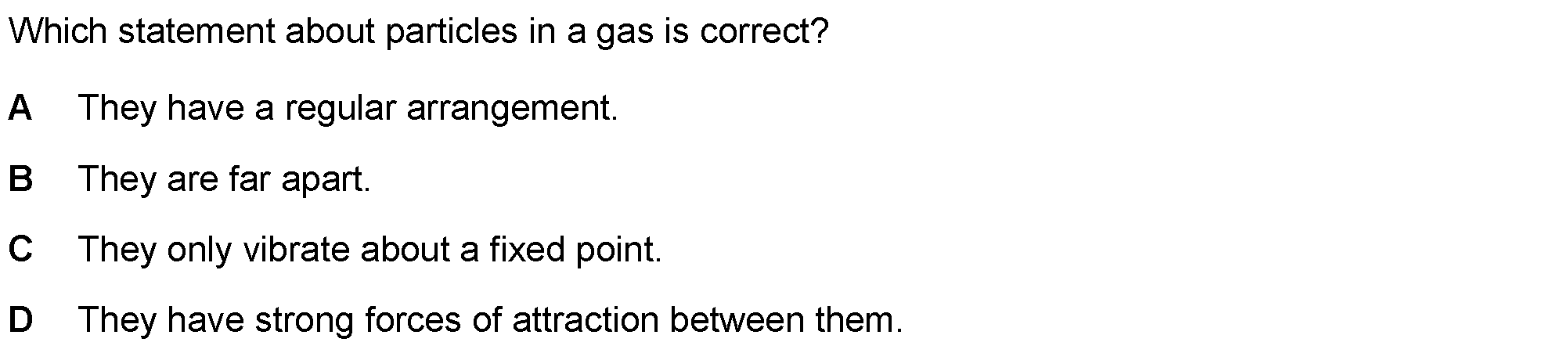
Which statement about particles in a gas is correct?
A
B
Cc
D
They have a regular arrangement.
They are far apart.
They only vibrate about a fixed point.
They have strong forces of attraction between them.
A
B
Cc
D
They have a regular arrangement.
They are far apart.
They only vibrate about a fixed point.
They have strong forces of attraction between them.
Options:
A
B
C
D
Correct Key: B
A
B
C
D
Correct Key: B
Question 2
Paper Ref: 5129/11_Winter_2024_Q14
Paper Ref: 5129/11_Winter_2024_Q14
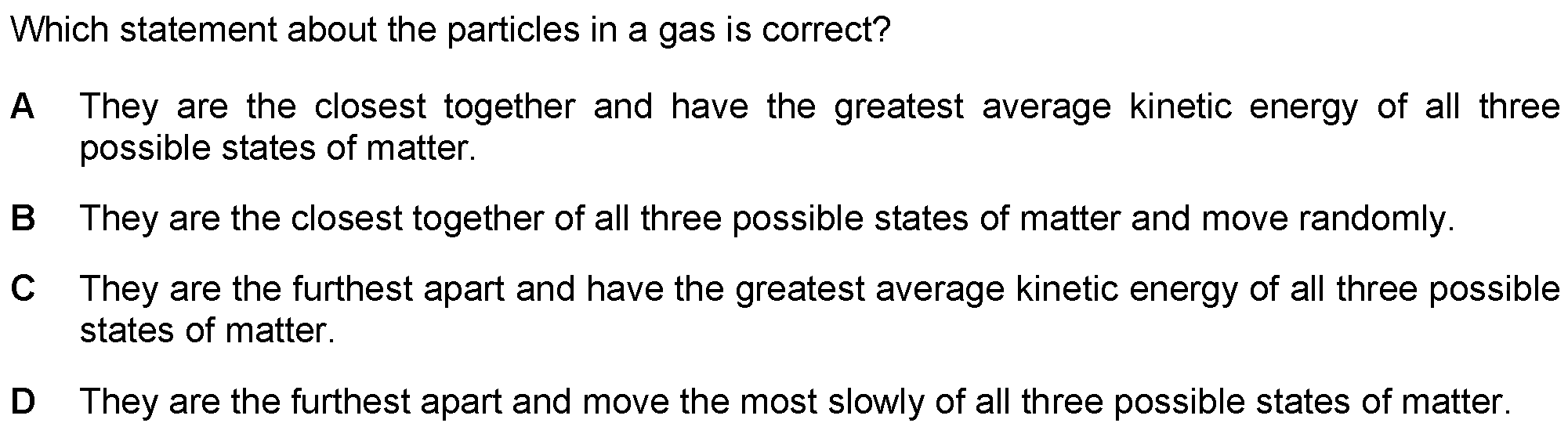
Which statement about the particles in a gas is correct?
A
They are the closest together and have the greatest average kinetic energy of all three
possible states of matter.
They are the closest together of all three possible states of matter and move randomly.
They are the furthest apart and have the greatest average kinetic energy of all three possible
states of matter.
They are the furthest apart and move the most slowly of all three possible states of matter.
Options:
A
B
C
D
Correct Key: C
A
B
C
D
Correct Key: C
Question 3
Paper Ref: 5129/11_Winter_2025_Q14
Paper Ref: 5129/11_Winter_2025_Q14
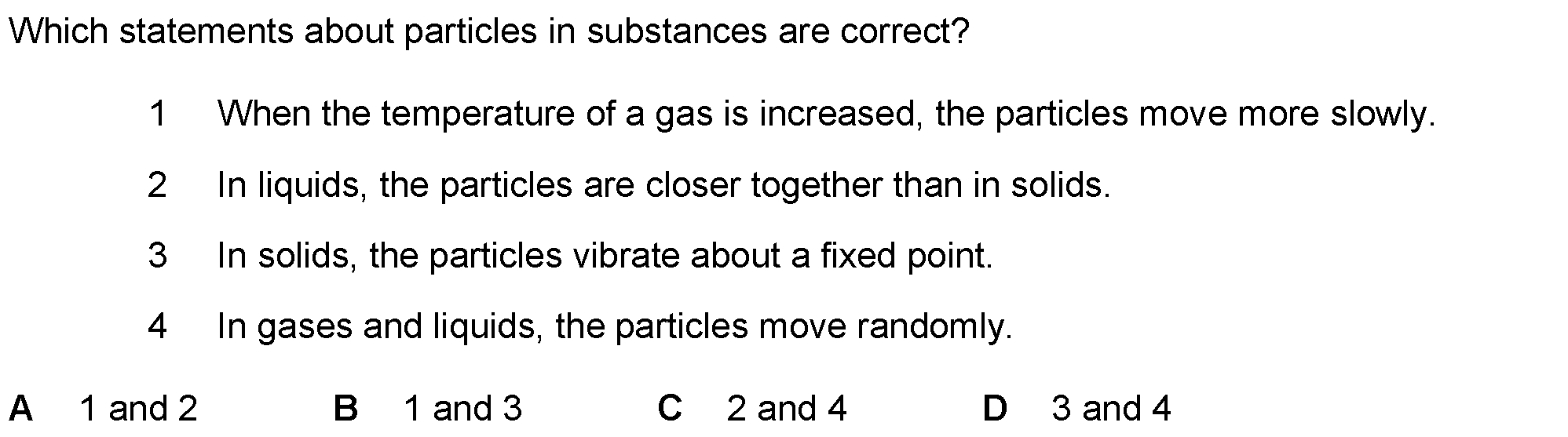
Which statements about particles in substances are correct?
1 When the temperature of a gas is increased, the particles move more slowly.
2 Inliquids, the particles are closer together than in solids.
3 In solids, the particles vibrate about a fixed point.
4
In gases and liquids, the particles move randomly.
A 1and2 B 1and3 C 2and4 D 3and4
1 When the temperature of a gas is increased, the particles move more slowly.
2 Inliquids, the particles are closer together than in solids.
3 In solids, the particles vibrate about a fixed point.
4
In gases and liquids, the particles move randomly.
A 1and2 B 1and3 C 2and4 D 3and4
Options:
A
B
C
D
Correct Key: D
A
B
C
D
Correct Key: D
Question 4
Paper Ref: 0620/12_Spring_2024_Q1
Paper Ref: 0620/12_Spring_2024_Q1
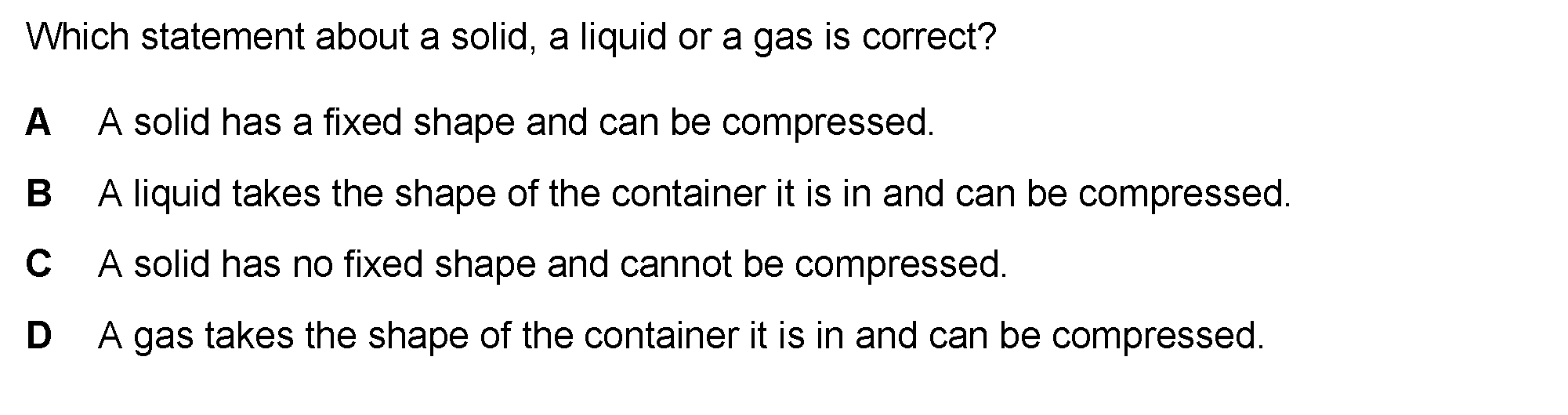
Which statement about a solid, a liquid or a gas is correct?
0 Oo DW
A solid has a fixed shape and can be compressed.
A liquid takes the shape of the container it is in and can be compressed.
A solid has no fixed shape and cannot be compressed.
A gas takes the shape of the container it is in and can be compressed.
0 Oo DW
A solid has a fixed shape and can be compressed.
A liquid takes the shape of the container it is in and can be compressed.
A solid has no fixed shape and cannot be compressed.
A gas takes the shape of the container it is in and can be compressed.
Options:
A
B
C
D
Correct Key: D
A
B
C
D
Correct Key: D
Structured Questions Mark Scheme & Answers
•1•.• • • •[•P•R•I• •2•0•0•7•B• •P•2• • •·• • •Q•5• • •P•a•r•t• •(•a•)• • •·• • •2•0•0•7• • •·• • •P•r•i•m•a•r•y• •0•8•4•6•]• • • • • • •(•n•o• •p•u•b•l•i•s•h•e•d• •m•a•r•k• •s•c•h•e•m•e• •f•o•r• •t•h•i•s• •p•a•p•e•r•)•
•2•.• • • •[•P•R•I• •2•0•0•7•B• •P•2• • •·• • •Q•5• • •P•a•r•t• •(•b•)• • •·• • •2•0•0•7• • •·• • •P•r•i•m•a•r•y• •0•8•4•6•]• • • • • • •(•n•o• •p•u•b•l•i•s•h•e•d• •m•a•r•k• •s•c•h•e•m•e• •f•o•r• •t•h•i•s• •p•a•p•e•r•)•
•3•.• • • •[•P•R•I• •2•0•0•7•B• •P•2• • •·• • •Q•6• • •P•a•r•t• •(•a•)• • •·• • •2•0•0•7• • •·• • •P•r•i•m•a•r•y• •0•8•4•6•]• • • • • • •(•n•o• •p•u•b•l•i•s•h•e•d• •m•a•r•k• •s•c•h•e•m•e• •f•o•r• •t•h•i•s• •p•a•p•e•r•)•
•4•.• • • •[•P•R•I• •2•0•0•7•B• •P•2• • •·• • •Q•6• • •P•a•r•t• •(•b•)• • •·• • •2•0•0•7• • •·• • •P•r•i•m•a•r•y• •0•8•4•6•]• • • • • • •(•n•o• •p•u•b•l•i•s•h•e•d• •m•a•r•k• •s•c•h•e•m•e• •f•o•r• •t•h•i•s• •p•a•p•e•r•)•
•5•.• • • •[•P•R•I• •2•0•0•7•B• •P•2• • •·• • •Q•6• • •P•a•r•t• •(•c•)• • •·• • •2•0•0•7• • •·• • •P•r•i•m•a•r•y• •0•8•4•6•]• • • • • • •(•n•o• •p•u•b•l•i•s•h•e•d• •m•a•r•k• •s•c•h•e•m•e• •f•o•r• •t•h•i•s• •p•a•p•e•r•)•
•6•.• • • •[•P•R•I• •2•0•0•7•B• •P•2• • •·• • •Q•6• • •P•a•r•t• •(•d•)• • •·• • •2•0•0•7• • •·• • •P•r•i•m•a•r•y• •0•8•4•6•]• • • • • • •(•n•o• •p•u•b•l•i•s•h•e•d• •m•a•r•k• •s•c•h•e•m•e• •f•o•r• •t•h•i•s• •p•a•p•e•r•)•
•7•.• • • •[•P•R•I• •2•0•0•7•C• •P•1• • •·• • •Q•8• • •P•a•r•t• •(•a•)• • •·• • •2•0•0•7• • •·• • •P•r•i•m•a•r•y• •0•8•4•6•]• • • • • • •(•n•o• •p•u•b•l•i•s•h•e•d• •m•a•r•k• •s•c•h•e•m•e• •f•o•r• •t•h•i•s• •p•a•p•e•r•)•
•8•.• • • •[•P•R•I• •2•0•0•7•C• •P•1• • •·• • •Q•8• • •P•a•r•t• •(•b•)• • •·• • •2•0•0•7• • •·• • •P•r•i•m•a•r•y• •0•8•4•6•]• • • • • • •(•n•o• •p•u•b•l•i•s•h•e•d• •m•a•r•k• •s•c•h•e•m•e• •f•o•r• •t•h•i•s• •p•a•p•e•r•)•
Last updated:
\n