2.3Thermal Physics
Explaining changes of state — Question Bank (Cambridge) — Cambridge IGCSE Physics 0625 Revision Notes & Topical Questions
5 min read Lesson 23 of 45 Unit quiz
Cambridge Past Paper Bank
2.3 Explaining changes of state
5 Multiple-Choice Questions with Official Mark Schemes
Question 1
0620/12_Spring_2023_Q1
Question 2
5129/12_Summer_2024_Q14
Question 3
5129/12_Summer_2026_Q14
Question 4
5129/12_Summer_2022_Q15
Question 5
0620/21_Summer_2024_Q1
Cambridge Lower Secondary Stage 7
2.3 Explaining changes of state – Complete Question Bank & Mark Scheme
Total Questions5 Questions with Verified Solutions & Past Paper Mark Schemes
Multiple Choice Questions (Exam Practice)
Question 1
Paper Ref: 0620/12_Spring_2023_Q1
Paper Ref: 0620/12_Spring_2023_Q1
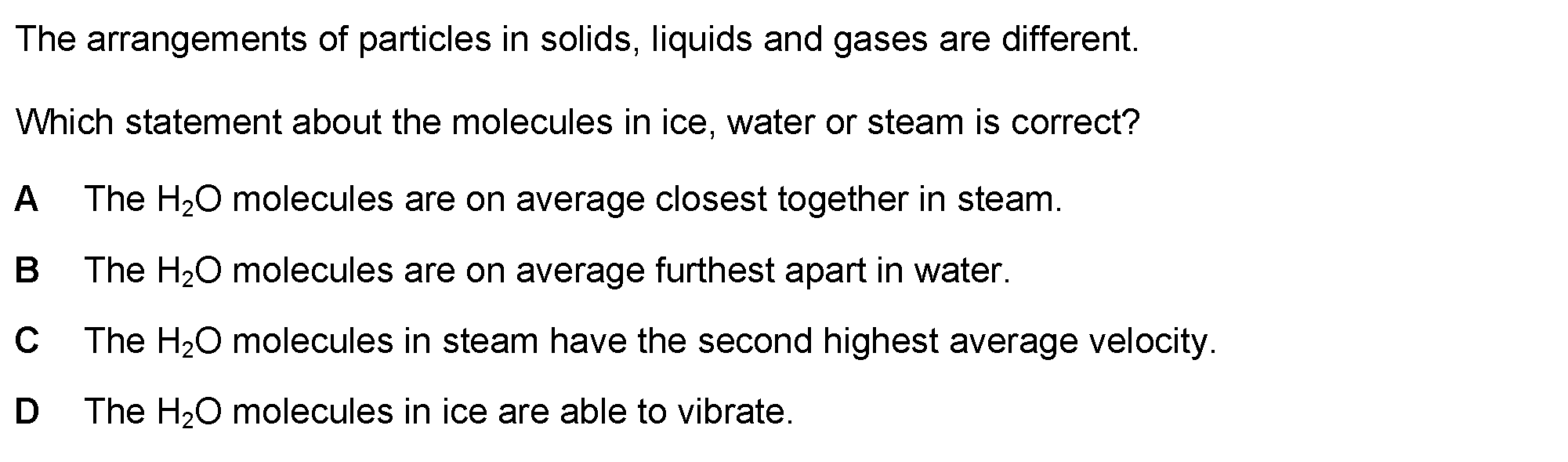
The arrangements of particles in solids, liquids and gases are different.
Which statement about the molecules in ice, water or steam is correct?
The HO molecules are on average closest together in steam.
The HO molecules are on average furthest apart in water.
The H20 molecules in steam have the second highest average velocity.
0 0O wD PY
The HzO molecules in ice are able to vibrate.
Options:
A
B
C
D
Correct Key: D
A
B
C
D
Correct Key: D
Question 2
Paper Ref: 5129/12_Summer_2024_Q14
Paper Ref: 5129/12_Summer_2024_Q14
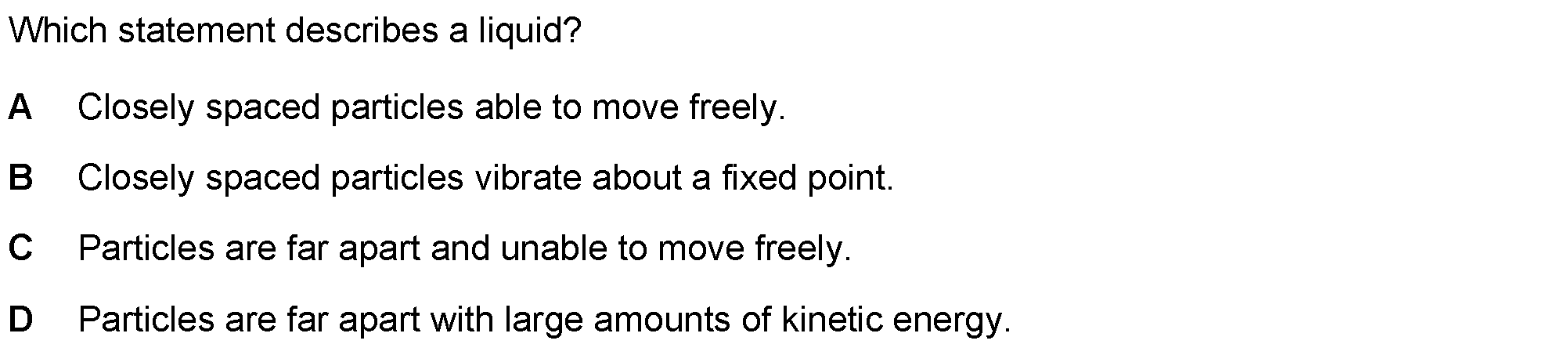
Which statement describes a liquid?
A
B
Cc
D
Closely spaced particles able to move freely.
Closely spaced particles vibrate about a fixed point.
Particles are far apart and unable to move freely.
Particles are far apart with large amounts of kinetic energy.
A
B
Cc
D
Closely spaced particles able to move freely.
Closely spaced particles vibrate about a fixed point.
Particles are far apart and unable to move freely.
Particles are far apart with large amounts of kinetic energy.
Options:
A
B
C
D
Correct Key: A
A
B
C
D
Correct Key: A
Question 3
Paper Ref: 5129/12_Summer_2026_Q14
Paper Ref: 5129/12_Summer_2026_Q14
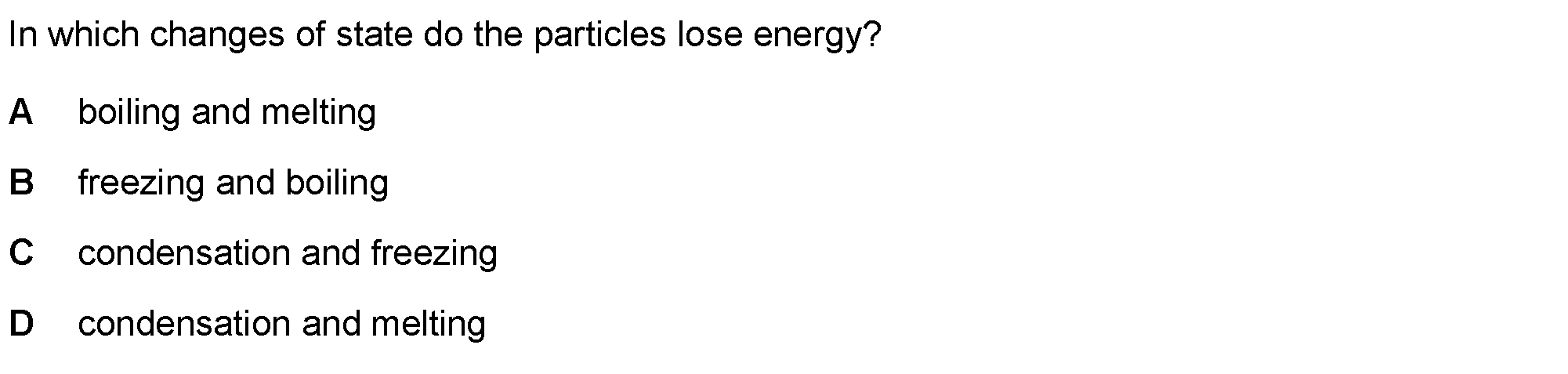
In which changes of state do the particles lose energy?
A
B
Cc
D
boiling and melting
freezing and boiling
condensation and freezing
condensation and melting
A
B
Cc
D
boiling and melting
freezing and boiling
condensation and freezing
condensation and melting
Options:
A
B
C
D
Correct Key: C
A
B
C
D
Correct Key: C
Question 4
Paper Ref: 5129/12_Summer_2022_Q15
Paper Ref: 5129/12_Summer_2022_Q15
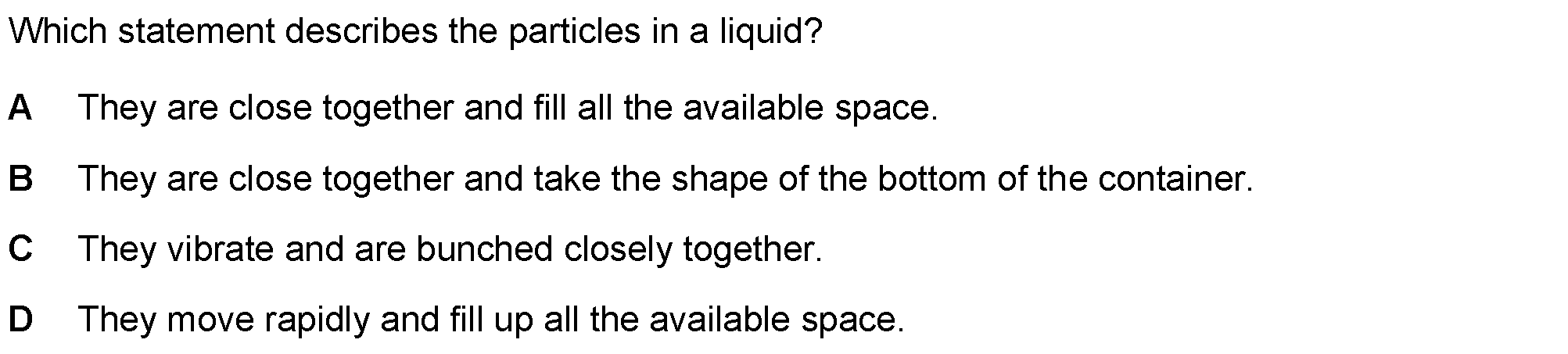
Which statement describes the particles in a liquid?
A
B
Cc
D
They are close together and fill all the available space.
They are close together and take the shape of the bottom of the container.
They vibrate and are bunched closely together.
They move rapidly and fill up all the available space.
A
B
Cc
D
They are close together and fill all the available space.
They are close together and take the shape of the bottom of the container.
They vibrate and are bunched closely together.
They move rapidly and fill up all the available space.
Options:
A
B
C
D
Correct Key: B
A
B
C
D
Correct Key: B
Question 5
Paper Ref: 0620/21_Summer_2024_Q1
Paper Ref: 0620/21_Summer_2024_Q1
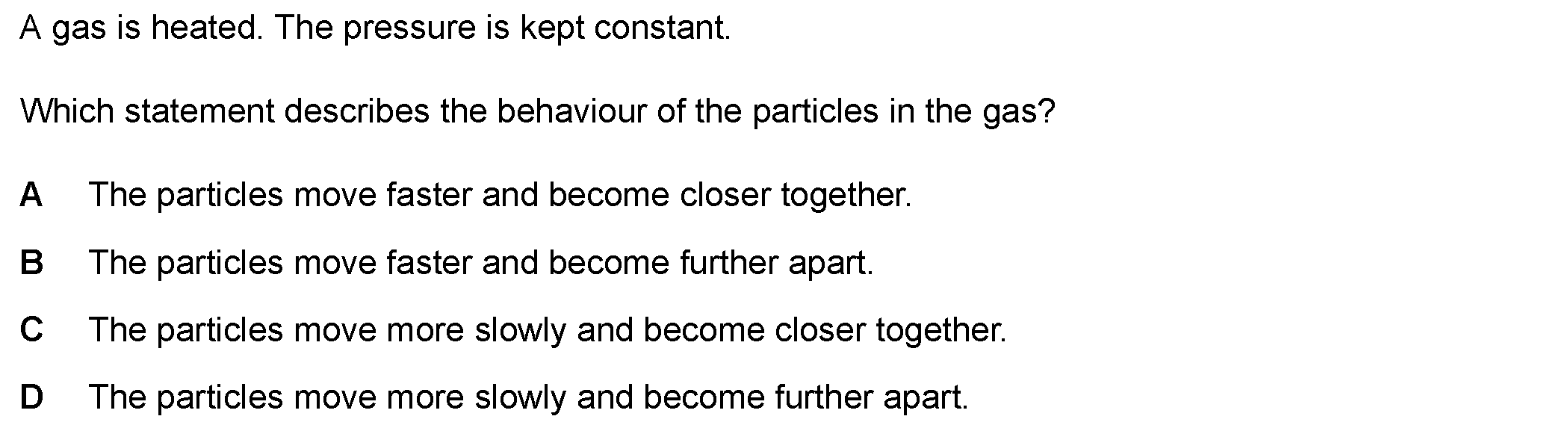
A gas is heated. The pressure is kept constant.
Which statement describes the behaviour of the particles in the gas?
A
B
Cc
D
The particles move faster and become closer together.
The particles move faster and become further apart.
The particles move more slowly and become closer together.
The particles move more slowly and become further apart.
Which statement describes the behaviour of the particles in the gas?
A
B
Cc
D
The particles move faster and become closer together.
The particles move faster and become further apart.
The particles move more slowly and become closer together.
The particles move more slowly and become further apart.
Options:
A
B
C
D
Correct Key: B
A
B
C
D
Correct Key: B
Structured Questions Mark Scheme & Answers
•1•.• • • •[•P•R•I• •2•0•0•8•B• •P•2• • •·• • •Q•7• • •P•a•r•t• •(•b•)• • •·• • •2•0•0•8• • •·• • •P•r•i•m•a•r•y• •0•8•4•6•]• • • • • • •(•n•o• •p•u•b•l•i•s•h•e•d• •m•a•r•k• •s•c•h•e•m•e• •f•o•r• •t•h•i•s• •p•a•p•e•r•)•
•2•.• • • •[•P•R•I• •2•0•0•8•C• •P•1• • •·• • •Q•2• • •·• • •2•0•0•8• • •·• • •P•r•i•m•a•r•y• •0•8•4•6•]• • • • • • •(•n•o• •p•u•b•l•i•s•h•e•d• •m•a•r•k• •s•c•h•e•m•e• •f•o•r• •t•h•i•s• •p•a•p•e•r•)•
•3•.• • • •[•P•R•I• •2•0•0•8•C• •P•1• • •·• • •Q•1•2• • •·• • •2•0•0•8• • •·• • •P•r•i•m•a•r•y• •0•8•4•6•]• • • • • • •(•n•o• •p•u•b•l•i•s•h•e•d• •m•a•r•k• •s•c•h•e•m•e• •f•o•r• •t•h•i•s• •p•a•p•e•r•)•
•4•.• • • •[•P•R•I• •2•0•0•8•D• •P•2• • •·• • •Q•1• • •·• • •2•0•0•8• • •·• • •P•r•i•m•a•r•y• •0•8•4•6•]• • • • • • •(•n•o• •p•u•b•l•i•s•h•e•d• •m•a•r•k• •s•c•h•e•m•e• •f•o•r• •t•h•i•s• •p•a•p•e•r•)•
•5•.• • • •[•P•R•I• •2•0•0•9••• •P•1• • •·• • •Q•8• • •P•a•r•t• •(•a•)• • •·• • •2•0•0•9• • •·• • •P•r•i•m•a•r•y• •0•8•4•6•]• • • • • • •(•n•o• •p•u•b•l•i•s•h•e•d• •m•a•r•k• •s•c•h•e•m•e• •f•o•r• •t•h•i•s• •p•a•p•e•r•)•
•6•.• • • •[•P•R•I• •2•0•0•9••• •P•1• • •·• • •Q•8• • •P•a•r•t• •(•b•)• • •·• • •2•0•0•9• • •·• • •P•r•i•m•a•r•y• •0•8•4•6•]• • • • • • •(•n•o• •p•u•b•l•i•s•h•e•d• •m•a•r•k• •s•c•h•e•m•e• •f•o•r• •t•h•i•s• •p•a•p•e•r•)•
•7•.• • • •[•P•R•I• •2•0•0•9••• •P•1• • •·• • •Q•8• • •P•a•r•t• •(•c•)• • •·• • •2•0•0•9• • •·• • •P•r•i•m•a•r•y• •0•8•4•6•]• • • • • • •(•n•o• •p•u•b•l•i•s•h•e•d• •m•a•r•k• •s•c•h•e•m•e• •f•o•r• •t•h•i•s• •p•a•p•e•r•)•
•8•.• • • •[•P•R•I• •2•0•0•9•B• •P•1• • •·• • •Q•4• • •·• • •2•0•0•9• • •·• • •P•r•i•m•a•r•y• •0•8•4•6•]• • • • • • •(•n•o• •p•u•b•l•i•s•h•e•d• •m•a•r•k• •s•c•h•e•m•e• •f•o•r• •t•h•i•s• •p•a•p•e•r•)•
Last updated:
\n