2.3Thermal Physics
Planning a solubility investigation — Question Bank (Cambridge) — Cambridge IGCSE Physics 0625 Revision Notes & Topical Questions
5 min read Lesson 22 of 45 Unit quiz
Cambridge Past Paper Bank
2.3 Planning a solubility investigation
2 Multiple-Choice Questions with Official Mark Schemes
Question 1
0620/12_Winter_2025_Q21
Question 2
0620/22_Winter_2014_Q3
Cambridge Lower Secondary Stage 8
2.3 Planning a solubility investigation – Complete Question Bank & Mark Scheme
Total Questions2 Questions with Verified Solutions & Past Paper Mark Schemes
Multiple Choice Questions (Exam Practice)
Question 1
Paper Ref: 0620/12_Winter_2025_Q21
Paper Ref: 0620/12_Winter_2025_Q21
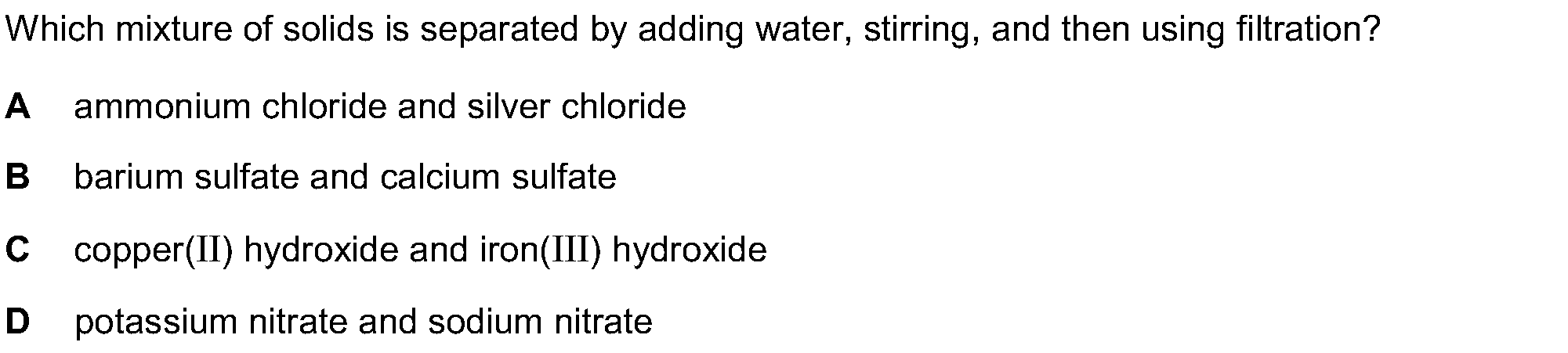
Which mixture of solids is separated by adding water, stirring, and then using filtration’?
A ammonium chloride and silver chloride
B_ barium sulfate and calcium sulfate
C copper(II) hydroxide and iron(II) hydroxide
D
potassium nitrate and sodium nitrate
A ammonium chloride and silver chloride
B_ barium sulfate and calcium sulfate
C copper(II) hydroxide and iron(II) hydroxide
D
potassium nitrate and sodium nitrate
Options:
A
B
C
D
Correct Key: A
A
B
C
D
Correct Key: A
Question 2
Paper Ref: 0620/22_Winter_2014_Q3
Paper Ref: 0620/22_Winter_2014_Q3
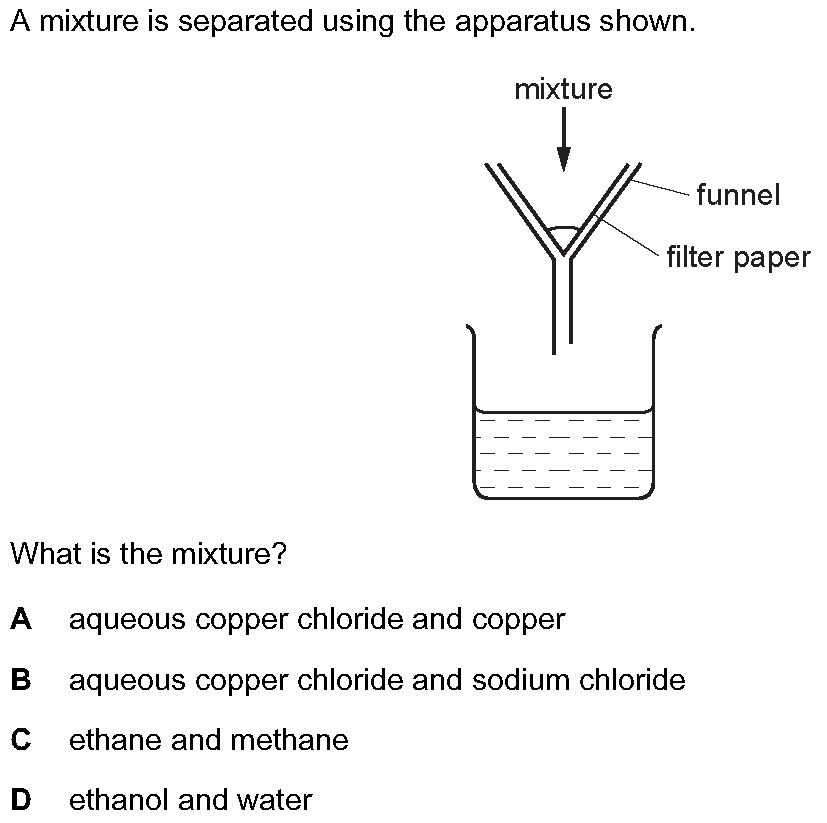
A mixture is separated using the apparatus shown.
mixture
funnel
filter paper
A aqueous copper chloride and copper
What is the mixture?
B aqueous copper chloride and sodium chloride
C ethane and methane
D
ethanol and water
mixture
funnel
filter paper
A aqueous copper chloride and copper
What is the mixture?
B aqueous copper chloride and sodium chloride
C ethane and methane
D
ethanol and water
Options:
A
B
C
D
Correct Key: A
A
B
C
D
Correct Key: A
Structured Questions Mark Scheme & Answers
•1•.• • • •[•P•R•I• •2•0•0•9•B• •P•1• • •·• • •Q•1•2• • •P•a•r•t• •(•b•)• • •·• • •2•0•0•9• • •·• • •P•r•i•m•a•r•y• •0•8•4•6•]• • • • • • •(•n•o• •p•u•b•l•i•s•h•e•d• •m•a•r•k• •s•c•h•e•m•e• •f•o•r• •t•h•i•s• •p•a•p•e•r•)•
•2•.• • • •[•P•R•I• •2•0•0•9•B• •P•1• • •·• • •Q•1•2• • •P•a•r•t• •(•c•)• • •·• • •2•0•0•9• • •·• • •P•r•i•m•a•r•y• •0•8•4•6•]• • • • • • •(•n•o• •p•u•b•l•i•s•h•e•d• •m•a•r•k• •s•c•h•e•m•e• •f•o•r• •t•h•i•s• •p•a•p•e•r•)•
•3•.• • • •[•P•R•I• •2•0•1•0•B• •P•2• • •·• • •Q•1•0• • •·• • •2•0•1•0• • •·• • •P•r•i•m•a•r•y• •0•8•4•6•]• • • • • • •(•n•o• •p•u•b•l•i•s•h•e•d• •m•a•r•k• •s•c•h•e•m•e• •f•o•r• •t•h•i•s• •p•a•p•e•r•)•
•4•.• • • •[•P•R•I• •2•0•1•0•B• •P•2• • •·• • •Q•1•0• • •·• • •2•0•1•0• • •·• • •P•r•i•m•a•r•y• •0•8•4•6•]• • • • • • •(•n•o• •p•u•b•l•i•s•h•e•d• •m•a•r•k• •s•c•h•e•m•e• •f•o•r• •t•h•i•s• •p•a•p•e•r•)•
•5•.• • • •[•P•R•I• •2•0•1•5••• •P•1• • •·• • •Q•1•6• • •P•a•r•t• •(•a•)• • •·• • •2•0•1•5• • •·• • •P•r•i•m•a•r•y• •0•8•4•6•]• • • • • • •(•n•o• •p•u•b•l•i•s•h•e•d• •m•a•r•k• •s•c•h•e•m•e• •f•o•r• •t•h•i•s• •p•a•p•e•r•)•
•6•.• • • •[•P•R•I• •2•0•1•5••• •P•1• • •·• • •Q•1•6• • •P•a•r•t• •(•b•)• • •·• • •2•0•1•5• • •·• • •P•r•i•m•a•r•y• •0•8•4•6•]• • • • • • •(•n•o• •p•u•b•l•i•s•h•e•d• •m•a•r•k• •s•c•h•e•m•e• •f•o•r• •t•h•i•s• •p•a•p•e•r•)•
•7•.• • • •[•P•R•I• •2•0•1•5••• •P•1• • •·• • •Q•1•6• • •P•a•r•t• •(•c•)• • •·• • •2•0•1•5• • •·• • •P•r•i•m•a•r•y• •0•8•4•6•]• • • • • • •(•n•o• •p•u•b•l•i•s•h•e•d• •m•a•r•k• •s•c•h•e•m•e• •f•o•r• •t•h•i•s• •p•a•p•e•r•)•
•8•.• • • •[•P•R•I• •2•0•1•5••• •P•1• • •·• • •Q•1•6• • •P•a•r•t• •(•c•)• • •·• • •2•0•1•5• • •·• • •P•r•i•m•a•r•y• •0•8•4•6•]• • • • • • •(•n•o• •p•u•b•l•i•s•h•e•d• •m•a•r•k• •s•c•h•e•m•e• •f•o•r• •t•h•i•s• •p•a•p•e•r•)•
Last updated:
\n