3.3Thermal Physics
Describing movement — Question Bank (Cambridge) — Cambridge IGCSE Physics 0625 Revision Notes & Topical Questions
20 min read Lesson 38 of 45 Unit quiz
Cambridge Past Paper Bank
3.3 Describing movement
1 Multiple-Choice Questions with Official Mark Schemes
Question 1
5129/12_Winter_2022_Q28
Cambridge Lower Secondary Stage 8
3.3 Describing movement – Complete Question Bank & Mark Scheme
Total Questions1 Questions with Verified Solutions & Past Paper Mark Schemes
Multiple Choice Questions (Exam Practice)
Question 1
Paper Ref: 5129/12_Winter_2022_Q28
Paper Ref: 5129/12_Winter_2022_Q28
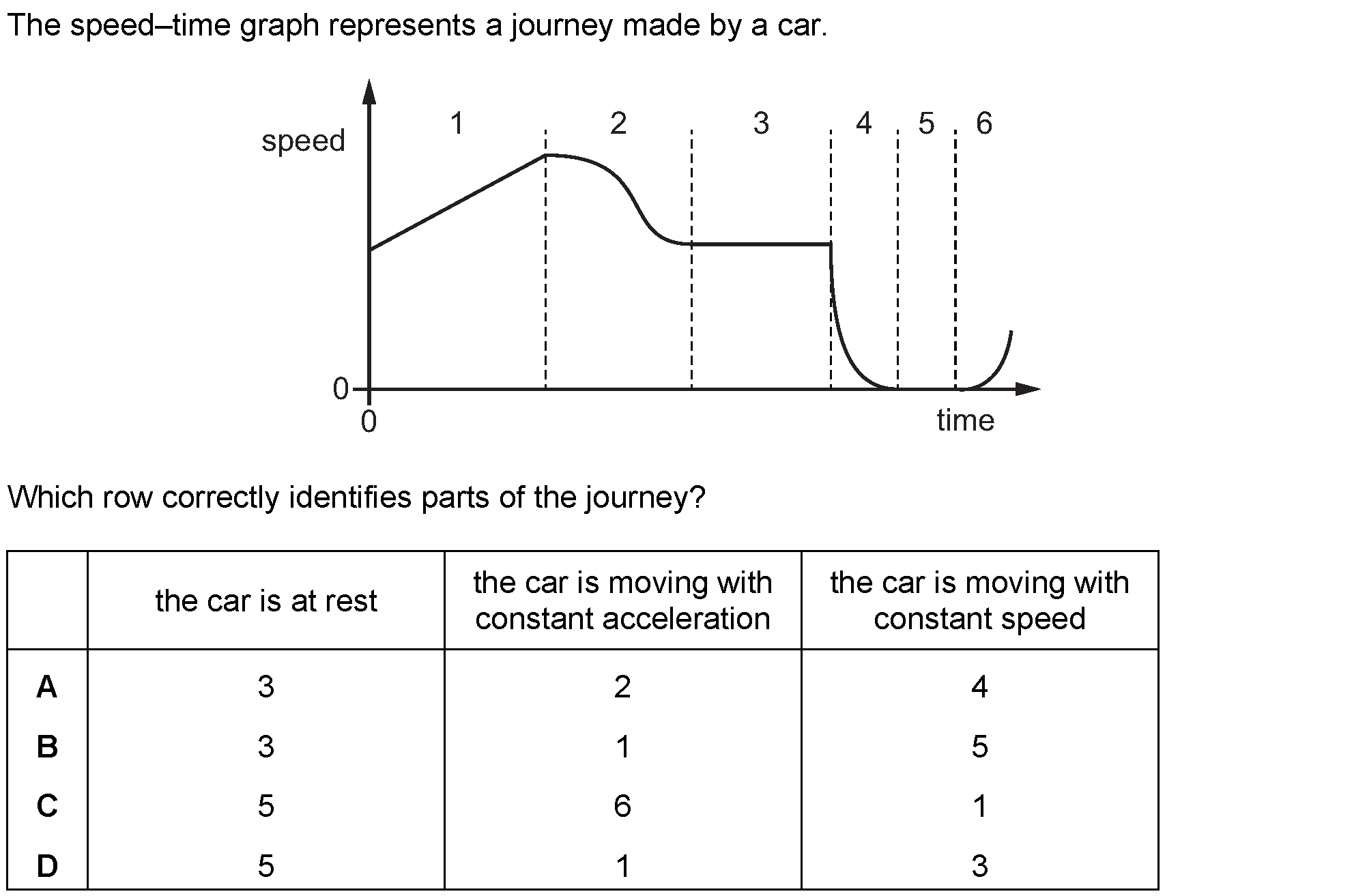
The speed-time graph represents a journey made by a car.
speed
0 time
Which row correctly identifies parts of the journey?
. the car is moving with the car is moving with
the car is at rest
constant acceleration constant speed
3 2 4
3 1 5
5 6 1
5 1 3
speed
0 time
Which row correctly identifies parts of the journey?
. the car is moving with the car is moving with
the car is at rest
constant acceleration constant speed
3 2 4
3 1 5
5 6 1
5 1 3
Options:
A
B
C
D
Correct Key: D
A
B
C
D
Correct Key: D
Structured Questions Mark Scheme & Answers
•1•.• • • •[•P•R•I• •2•0•1•7•B• •P•2• • •·• • •Q•1•6• • •P•a•r•t• •(•a•)• • •·• • •2•0•1•7• • •·• • •P•r•i•m•a•r•y• •0•8•4•6•]• • • • • • •r•u•l•e•r• •/• •r•u•l•e• •/• •t•a•p•e• •m•e•a•s•u•r•e• •1• •••c•c•e•p•t• •m•e•t•r•e• •s•t•i•c•k• •4•.•8• •c•m• •1• •m•o•r•e• •t•h•a•n• •o•n•e• •a•n•s•w•e•r• •c•i•r•c•l•e•d• •=• •0• •m•a•r•k•s• •5•.•0• •c•m• •••c•c•e•p•t• •a•n•y• •i•n•d•i•c•a•t•i•o•n• •o•f• •t•h•e• •c•o•r•r•e•c•t• •a•n•s•w•e•r• •5•.•1• •c•m• •5•.•3• •c•m• •6•.•4• •c•m• •(•n•o•)• •2• •0• •m•a•r•k•s• •f•o•r• •n•o• •e•a•c•h• •c•o•r•r•e•c•t• •a•n•s•w•e•r• •=• •1• •m•a•r•k• •(•i•d•e•a• •t•h•a•t•)• •3•.•2• •c•m• •i•s• •a• •s•h•o•r•t•e•r• •d•i•s•t•a•n•c•e• •/• •t•h•e• •d•i•s•t•a•n•c•e• •i•s• •s•h•o•r•t•e•r• •••c•c•e•p•t• •i•t• •o•n•l•y• •m•o•v•e•s• •3•.•2• •c•m• •(•i•d•e•a• •t•h•a•t•)• •s•t•r•o•n•g•e•r• •m•a•g•n•e•t• •w•o•u•l•d• •g•i•v•e• •a• •l•o•n•g•e•r• •d•i•s•t•a•n•c•e• •••c•c•e•p•t• •i•t• •s•h•o•u•l•d• •t•r•a•v•e•l• •m•o•r•e• •t•h•a•n• •5• •(•c•m•)• •••c•c•e•p•t• •r•e•v•e•r•s•e• •a•r•g•u•m•e•n•t•s• •©• •U•C•L•E•S• •2•0•1•7• •P•a•g•e• •1•2• •o•f• •1•4• •••s•s•e•m•b•l•e•d• •b•y• •N•.•S•.• •1•5•6•/•3•8•4•
•2•.• • • •[•P•R•I• •2•0•1•7•B• •P•2• • •·• • •Q•1•6• • •P•a•r•t• •(•b•)• • •·• • •2•0•1•7• • •·• • •P•r•i•m•a•r•y• •0•8•4•6•]• • • • • • •r•u•l•e•r• •/• •r•u•l•e• •/• •t•a•p•e• •m•e•a•s•u•r•e• •1• •••c•c•e•p•t• •m•e•t•r•e• •s•t•i•c•k• •4•.•8• •c•m• •1• •m•o•r•e• •t•h•a•n• •o•n•e• •a•n•s•w•e•r• •c•i•r•c•l•e•d• •=• •0• •m•a•r•k•s• •5•.•0• •c•m• •••c•c•e•p•t• •a•n•y• •i•n•d•i•c•a•t•i•o•n• •o•f• •t•h•e• •c•o•r•r•e•c•t• •a•n•s•w•e•r• •5•.•1• •c•m• •5•.•3• •c•m• •6•.•4• •c•m• •(•n•o•)• •2• •0• •m•a•r•k•s• •f•o•r• •n•o• •e•a•c•h• •c•o•r•r•e•c•t• •a•n•s•w•e•r• •=• •1• •m•a•r•k• •(•i•d•e•a• •t•h•a•t•)• •3•.•2• •c•m• •i•s• •a• •s•h•o•r•t•e•r• •d•i•s•t•a•n•c•e• •/• •t•h•e• •d•i•s•t•a•n•c•e• •i•s• •s•h•o•r•t•e•r• •••c•c•e•p•t• •i•t• •o•n•l•y• •m•o•v•e•s• •3•.•2• •c•m• •(•i•d•e•a• •t•h•a•t•)• •s•t•r•o•n•g•e•r• •m•a•g•n•e•t• •w•o•u•l•d• •g•i•v•e• •a• •l•o•n•g•e•r• •d•i•s•t•a•n•c•e• •••c•c•e•p•t• •i•t• •s•h•o•u•l•d• •t•r•a•v•e•l• •m•o•r•e• •t•h•a•n• •5• •(•c•m•)• •••c•c•e•p•t• •r•e•v•e•r•s•e• •a•r•g•u•m•e•n•t•s• •©• •U•C•L•E•S• •2•0•1•7• •P•a•g•e• •1•2• •o•f• •1•4• •••s•s•e•m•b•l•e•d• •b•y• •N•.•S•.• •1•5•6•/•3•8•4•
•3•.• • • •[•P•R•I• •2•0•1•7•D• •P•2• • •·• • •Q•3• • •P•a•r•t• •(•a•)• • •·• • •2•0•1•7• • •·• • •P•r•i•m•a•r•y• •0•8•4•6•]• • • • • • •f•r•i•c•t•i•o•n• •1• •••c•c•e•p•t• •a•i•r• •r•e•s•i•s•t•a•n•c•e• •••s•s•e•m•b•l•e•d• •b•y• •N•.•S•.• •1• •m•o•r•e• •t•h•a•n• •o•n•e• •a•n•s•w•e•r• •c•i•r•c•l•e•d• •=• •0• •m•a•r•k•s• •b•a•c•k•w•a•r•d•s• •f•o•r•w•a•r•d•s• •n•o• •d•i•r•e•c•t•i•o•n• •n•o• •f•o•r•c•e• •s•a•m•e•
•4•.• • • •[•P•R•I• •2•0•1•7•D• •P•2• • •·• • •Q•1•6• • •P•a•r•t• •(•a•)• • •·• • •2•0•1•7• • •·• • •P•r•i•m•a•r•y• •0•8•4•6•]• • • • • • •••h•m•e•d• •1• •H•a•s•s•a•n• •o•r• •n•o• •n•a•m•e• •=• •0• •m•a•r•k•s• •a•n•y• •o•n•e• •f•r•o•m• •••s•s•e•m•b•l•e•d• •b•y• •N•.•S•.• •t•h•e• •s•p•e•e•d• •o•f• •t•h•e• •f•a•n•/•w•i•n•d• •c•a•n• •b•e• •c•o•n•t•r•o•l•l•e•d• •i•t• •m•i•g•h•t• •b•e• •t•o•o• •w•i•n•d•y• •i•t• •m•i•g•h•t• •n•o•t• •b•e• •w•i•n•d•y• •w•i•n•d• •s•p•e•e•d• •c•a•n•n•o•t• •b•e• •c•o•n•t•r•o•l•l•e•d• •o•u•t•s•i•d•e• •••c•c•e•p•t• •f•a•c•t•o•r•s• •t•h•a•t• •c•a•n•n•o•t• •b•e• •c•o•n•t•r•o•l•l•e•d• •e•.•g•.• •r•a•i•n•,• •b•i•r•d• •e•a•t•i•n•g• •s•e•e•d• •(•i•d•e•a•)• •o•f• •n•o•t• •b•e•i•n•g• •a•b•l•e• •t•o• •c•o•n•t•r•o•l• •f•a•c•t•o•r•s• •o•u•t•s•i•d•e• •w•i•n•d• •c•o•u•l•d• •t•a•k•e• •s•e•e•d• •t•o•o• •f•a•r• •f•o•r• •m•e•a•s•u•r•e•m•e•n•t• •G•r•e•e•n• •s•e•e•d•s• •w•i•l•l• •t•r•a•v•e•l• •f•u•r•t•h•e•r• •t•h•a•n• •b•l•a•c•k• •s•e•e•d•s•.• •1• •m•o•r•e• •t•h•a•n• •o•n•e• •c•i•r•c•l•e•d• •=• •0• •m•a•r•k•s• •T•h•e• •h•e•a•v•i•e•r• •t•h•e• •s•e•e•d• •t•h•e• •f•u•r•t•h•e•r• •t•h•e• •s•e•e•d• •w•i•l•l• •t•r•a•v•e•l•.• •T•h•e• •s•l•o•w•e•r• •t•h•e• •w•i•n•d• •t•h•e• •f•u•r•t•h•e•r• •t•h•e• •s•e•e•d• •w•i•l•l• •t•r•a•v•e•l•.• •T•h•e• •s•t•r•o•n•g•e•r• •t•h•e• •w•i•n•d• •t•h•e• •f•u•r•t•h•e•r• •t•h•e• •s•e•e•d• •w•i•l•l• •t•r•a•v•e•l•.• •T•h•e• •w•i•n•d• •s•p•e•e•d• •w•i•l•l• •n•o•t• •a•f•f•e•c•t• •h•o•w• •f•a•r• •t•h•e• •s•e•e•d• •w•i•l•l• •t•r•a•v•e•l•.• •f•o•r• •r•e•l•i•a•b•i•l•i•t•y• •/• •t•o• •m•a•k•e• •s•u•r•e• •t•h•e• •i•n•v•e•s•t•i•g•a•t•i•o•n• •i•s• •r•e•l•i•a•b•l•e• •1• •••c•c•e•p•t• •t•o• •m•a•k•e• •s•u•r•e• •t•h•e• •r•e•s•u•l•t•s• •a•r•e• •c•o•r•r•e•c•t• •/• •t•o• •g•e•t• •a•n• •a•v•e•r•a•g•e• •D•o• •n•o•t• •a•c•c•e•p•t• •f•a•i•r• •t•e•s•t• •/• •f•o•r• •a•c•c•u•r•a•c•y• •1•8•2•/•3•8•4• •©• •U•C•L•E•S• •2•0•1•7• •P•a•g•e• •1•1• •o•f• •1•2•
•5•.• • • •[•P•R•I• •2•0•1•7•D• •P•2• • •·• • •Q•1•6• • •P•a•r•t• •(•b•)• • •·• • •2•0•1•7• • •·• • •P•r•i•m•a•r•y• •0•8•4•6•]• • • • • • •••h•m•e•d• •1• •H•a•s•s•a•n• •o•r• •n•o• •n•a•m•e• •=• •0• •m•a•r•k•s• •a•n•y• •o•n•e• •f•r•o•m• •••s•s•e•m•b•l•e•d• •b•y• •N•.•S•.• •t•h•e• •s•p•e•e•d• •o•f• •t•h•e• •f•a•n•/•w•i•n•d• •c•a•n• •b•e• •c•o•n•t•r•o•l•l•e•d• •i•t• •m•i•g•h•t• •b•e• •t•o•o• •w•i•n•d•y• •i•t• •m•i•g•h•t• •n•o•t• •b•e• •w•i•n•d•y• •w•i•n•d• •s•p•e•e•d• •c•a•n•n•o•t• •b•e• •c•o•n•t•r•o•l•l•e•d• •o•u•t•s•i•d•e• •••c•c•e•p•t• •f•a•c•t•o•r•s• •t•h•a•t• •c•a•n•n•o•t• •b•e• •c•o•n•t•r•o•l•l•e•d• •e•.•g•.• •r•a•i•n•,• •b•i•r•d• •e•a•t•i•n•g• •s•e•e•d• •(•i•d•e•a•)• •o•f• •n•o•t• •b•e•i•n•g• •a•b•l•e• •t•o• •c•o•n•t•r•o•l• •f•a•c•t•o•r•s• •o•u•t•s•i•d•e• •w•i•n•d• •c•o•u•l•d• •t•a•k•e• •s•e•e•d• •t•o•o• •f•a•r• •f•o•r• •m•e•a•s•u•r•e•m•e•n•t• •G•r•e•e•n• •s•e•e•d•s• •w•i•l•l• •t•r•a•v•e•l• •f•u•r•t•h•e•r• •t•h•a•n• •b•l•a•c•k• •s•e•e•d•s•.• •1• •m•o•r•e• •t•h•a•n• •o•n•e• •c•i•r•c•l•e•d• •=• •0• •m•a•r•k•s• •T•h•e• •h•e•a•v•i•e•r• •t•h•e• •s•e•e•d• •t•h•e• •f•u•r•t•h•e•r• •t•h•e• •s•e•e•d• •w•i•l•l• •t•r•a•v•e•l•.• •T•h•e• •s•l•o•w•e•r• •t•h•e• •w•i•n•d• •t•h•e• •f•u•r•t•h•e•r• •t•h•e• •s•e•e•d• •w•i•l•l• •t•r•a•v•e•l•.• •T•h•e• •s•t•r•o•n•g•e•r• •t•h•e• •w•i•n•d• •t•h•e• •f•u•r•t•h•e•r• •t•h•e• •s•e•e•d• •w•i•l•l• •t•r•a•v•e•l•.• •T•h•e• •w•i•n•d• •s•p•e•e•d• •w•i•l•l• •n•o•t• •a•f•f•e•c•t• •h•o•w• •f•a•r• •t•h•e• •s•e•e•d• •w•i•l•l• •t•r•a•v•e•l•.• •f•o•r• •r•e•l•i•a•b•i•l•i•t•y• •/• •t•o• •m•a•k•e• •s•u•r•e• •t•h•e• •i•n•v•e•s•t•i•g•a•t•i•o•n• •i•s• •r•e•l•i•a•b•l•e• •1• •••c•c•e•p•t• •t•o• •m•a•k•e• •s•u•r•e• •t•h•e• •r•e•s•u•l•t•s• •a•r•e• •c•o•r•r•e•c•t• •/• •t•o• •g•e•t• •a•n• •a•v•e•r•a•g•e• •D•o• •n•o•t• •a•c•c•e•p•t• •f•a•i•r• •t•e•s•t• •/• •f•o•r• •a•c•c•u•r•a•c•y• •1•8•2•/•3•8•4• •©• •U•C•L•E•S• •2•0•1•7• •P•a•g•e• •1•1• •o•f• •1•2•
•6•.• • • •[•P•R•I• •2•0•1•8•C• •P•1• • •·• • •Q•1•6• • •P•a•r•t• •(•a•)• • •·• • •2•0•1•8• • •·• • •P•r•i•m•a•r•y• •0•8•4•6•]• • • • • • •u•s•e•d• •d•i•f•f•e•r•e•n•t• •m•a•s•s•e•s• •o•r• •d•i•f•f•e•r•e•n•t• •a•m•o•u•n•t•s• •o•f• •s•u•b•s•t•a•n•c•e•s• •1• •••s•s•e•m•b•l•e•d• •b•y• •N•.•S•.• •s•a•l•t• •1• •••c•c•e•p•t• •2• •g• •o•f• •s•a•l•t• •4•5• •(•s•e•c•o•n•d•s•)• •1• •D•o• •n•o•t• •a•c•c•e•p•t• •i•n•c•o•r•r•e•c•t• •u•n•i•t•s• •e•.•g•.• •4•5• •m•i•n•u•t•e•s• •2• •a•l•l• •t•h•r•e•e• •t•i•c•k•s• •c•o•r•r•e•c•t• •=• •2• •m•a•r•k•s• •m•a•s•s• •o•f• •a•s•p•i•r•i•n• •t•w•o• •t•i•c•k•s• •c•o•r•r•e•c•t• •=• •1• •m•a•r•k• •s•p•e•e•d• •o•f• •s•t•i•r•r•i•n•g• •• •o•n•e• •t•i•c•k• •c•o•r•r•e•c•t• •=• •0• •m•a•r•k•s• •f•o•u•r• •t•i•c•k•s• •3• •c•o•r•r•e•c•t• •=• •1• •m•a•r•k• •t•e•m•p•e•r•a•t•u•r•e• •o•f• •w•a•t•e•r• •• •f•o•u•r• •t•i•c•k•s• •2• •c•o•r•r•e•c•t• •=• •0• •m•a•r•k•s• •t•i•m•e• •t•o• •d•i•s•s•o•l•v•e• •f•i•v•e• •t•i•c•k•s• •=• •0• •m•a•r•k•s• •v•o•l•u•m•e• •o•f• •w•a•t•e•r• •• •1•1•6•/•3•8•4• •©• •U•C•L•E•S• •2•0•1•8• •P•a•g•e• •1•2• •o•f• •1•2•
•7•.• • • •[•P•R•I• •2•0•1•8•C• •P•1• • •·• • •Q•1•6• • •P•a•r•t• •(•b•)• • •·• • •2•0•1•8• • •·• • •P•r•i•m•a•r•y• •0•8•4•6•]• • • • • • •u•s•e•d• •d•i•f•f•e•r•e•n•t• •m•a•s•s•e•s• •o•r• •d•i•f•f•e•r•e•n•t• •a•m•o•u•n•t•s• •o•f• •s•u•b•s•t•a•n•c•e•s• •1• •••s•s•e•m•b•l•e•d• •b•y• •N•.•S•.• •s•a•l•t• •1• •••c•c•e•p•t• •2• •g• •o•f• •s•a•l•t• •4•5• •(•s•e•c•o•n•d•s•)• •1• •D•o• •n•o•t• •a•c•c•e•p•t• •i•n•c•o•r•r•e•c•t• •u•n•i•t•s• •e•.•g•.• •4•5• •m•i•n•u•t•e•s• •2• •a•l•l• •t•h•r•e•e• •t•i•c•k•s• •c•o•r•r•e•c•t• •=• •2• •m•a•r•k•s• •m•a•s•s• •o•f• •a•s•p•i•r•i•n• •t•w•o• •t•i•c•k•s• •c•o•r•r•e•c•t• •=• •1• •m•a•r•k• •s•p•e•e•d• •o•f• •s•t•i•r•r•i•n•g• •• •o•n•e• •t•i•c•k• •c•o•r•r•e•c•t• •=• •0• •m•a•r•k•s• •f•o•u•r• •t•i•c•k•s• •3• •c•o•r•r•e•c•t• •=• •1• •m•a•r•k• •t•e•m•p•e•r•a•t•u•r•e• •o•f• •w•a•t•e•r• •• •f•o•u•r• •t•i•c•k•s• •2• •c•o•r•r•e•c•t• •=• •0• •m•a•r•k•s• •t•i•m•e• •t•o• •d•i•s•s•o•l•v•e• •f•i•v•e• •t•i•c•k•s• •=• •0• •m•a•r•k•s• •v•o•l•u•m•e• •o•f• •w•a•t•e•r• •• •1•1•6•/•3•8•4• •©• •U•C•L•E•S• •2•0•1•8• •P•a•g•e• •1•2• •o•f• •1•2•
•8•.• • • •[•P•R•I• •2•0•1•8•C• •P•1• • •·• • •Q•1•6• • •P•a•r•t• •(•c•)• • •·• • •2•0•1•8• • •·• • •P•r•i•m•a•r•y• •0•8•4•6•]• • • • • • •u•s•e•d• •d•i•f•f•e•r•e•n•t• •m•a•s•s•e•s• •o•r• •d•i•f•f•e•r•e•n•t• •a•m•o•u•n•t•s• •o•f• •s•u•b•s•t•a•n•c•e•s• •1• •••s•s•e•m•b•l•e•d• •b•y• •N•.•S•.• •s•a•l•t• •1• •••c•c•e•p•t• •2• •g• •o•f• •s•a•l•t• •4•5• •(•s•e•c•o•n•d•s•)• •1• •D•o• •n•o•t• •a•c•c•e•p•t• •i•n•c•o•r•r•e•c•t• •u•n•i•t•s• •e•.•g•.• •4•5• •m•i•n•u•t•e•s• •2• •a•l•l• •t•h•r•e•e• •t•i•c•k•s• •c•o•r•r•e•c•t• •=• •2• •m•a•r•k•s• •m•a•s•s• •o•f• •a•s•p•i•r•i•n• •t•w•o• •t•i•c•k•s• •c•o•r•r•e•c•t• •=• •1• •m•a•r•k• •s•p•e•e•d• •o•f• •s•t•i•r•r•i•n•g• •• •o•n•e• •t•i•c•k• •c•o•r•r•e•c•t• •=• •0• •m•a•r•k•s• •f•o•u•r• •t•i•c•k•s• •3• •c•o•r•r•e•c•t• •=• •1• •m•a•r•k• •t•e•m•p•e•r•a•t•u•r•e• •o•f• •w•a•t•e•r• •• •f•o•u•r• •t•i•c•k•s• •2• •c•o•r•r•e•c•t• •=• •0• •m•a•r•k•s• •t•i•m•e• •t•o• •d•i•s•s•o•l•v•e• •f•i•v•e• •t•i•c•k•s• •=• •0• •m•a•r•k•s• •v•o•l•u•m•e• •o•f• •w•a•t•e•r• •• •1•1•6•/•3•8•4• •©• •U•C•L•E•S• •2•0•1•8• •P•a•g•e• •1•2• •o•f• •1•2•
Last updated:
\n