3.2Thermal Physics
Heat and temperature — Question Bank (Cambridge) — Cambridge IGCSE Physics 0625 Revision Notes & Topical Questions
5 min read Lesson 32 of 45 Unit quiz
Cambridge Past Paper Bank
3.2 Heat and temperature
3 Multiple-Choice Questions with Official Mark Schemes
Question 1
5129/12_Summer_2024_Q32
Question 2
5129/12_Summer_2026_Q33
Question 3
5129/11_Summer_2020_Q32
Cambridge Lower Secondary Stage 9
3.2 Heat and temperature – Complete Question Bank & Mark Scheme
Total Questions3 Questions with Verified Solutions & Past Paper Mark Schemes
Multiple Choice Questions (Exam Practice)
Question 1
Paper Ref: 5129/12_Summer_2024_Q32
Paper Ref: 5129/12_Summer_2024_Q32
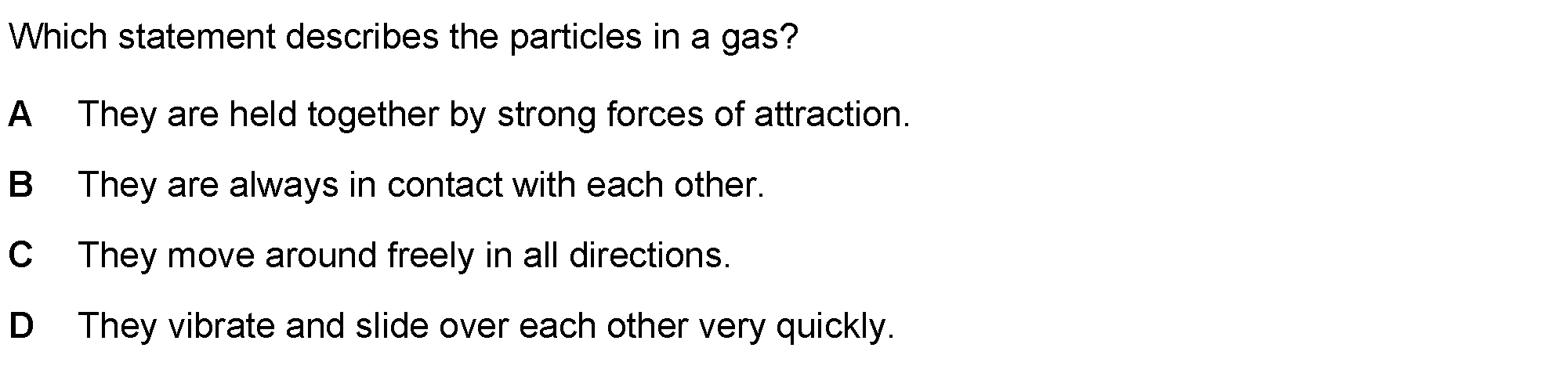
Which statement describes the particles in a gas?
A
B
Cc
D
They are held together by strong forces of attraction.
They are always in contact with each other.
They move around freely in all directions.
They vibrate and slide over each other very quickly.
A
B
Cc
D
They are held together by strong forces of attraction.
They are always in contact with each other.
They move around freely in all directions.
They vibrate and slide over each other very quickly.
Options:
A
B
C
D
Correct Key: C
A
B
C
D
Correct Key: C
Question 2
Paper Ref: 5129/12_Summer_2026_Q33
Paper Ref: 5129/12_Summer_2026_Q33
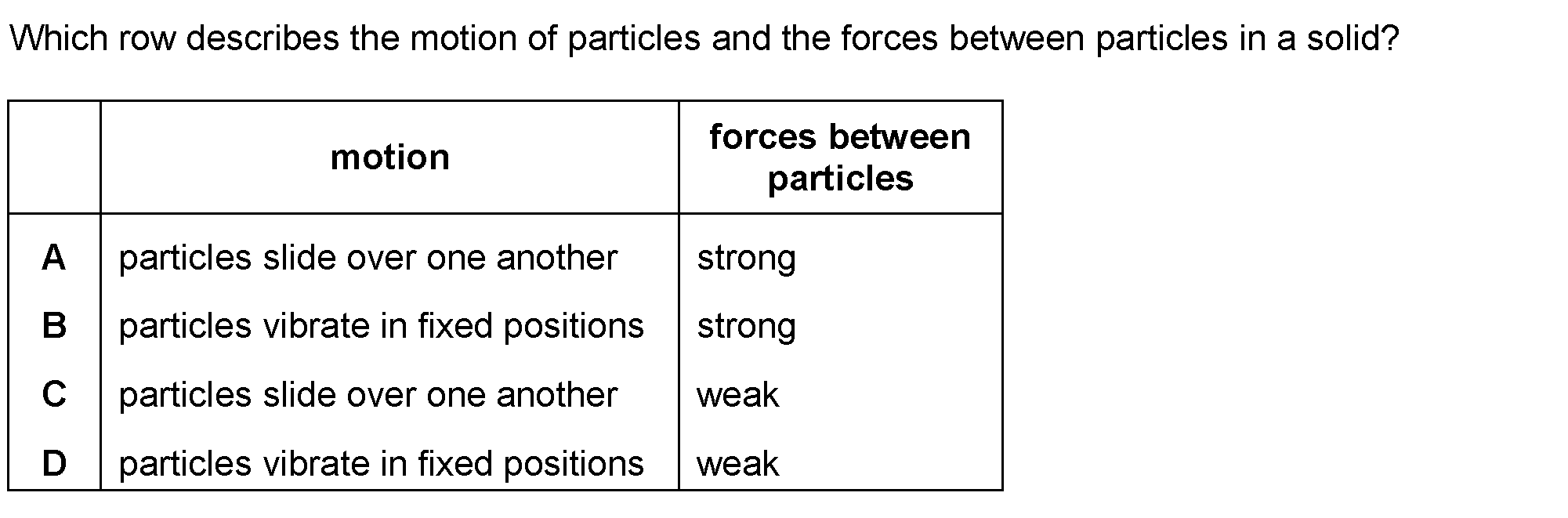
Which row describes the motion of particles and the forces between particles in a solid?
forces between
particles
particles slide over one another strong
particles vibrate in fixed positions | strong
particles slide over one another weak
particles vibrate in fixed positions | weak
forces between
particles
particles slide over one another strong
particles vibrate in fixed positions | strong
particles slide over one another weak
particles vibrate in fixed positions | weak
Options:
A
B
C
D
Correct Key: B
A
B
C
D
Correct Key: B
Question 3
Paper Ref: 5129/11_Summer_2020_Q32
Paper Ref: 5129/11_Summer_2020_Q32
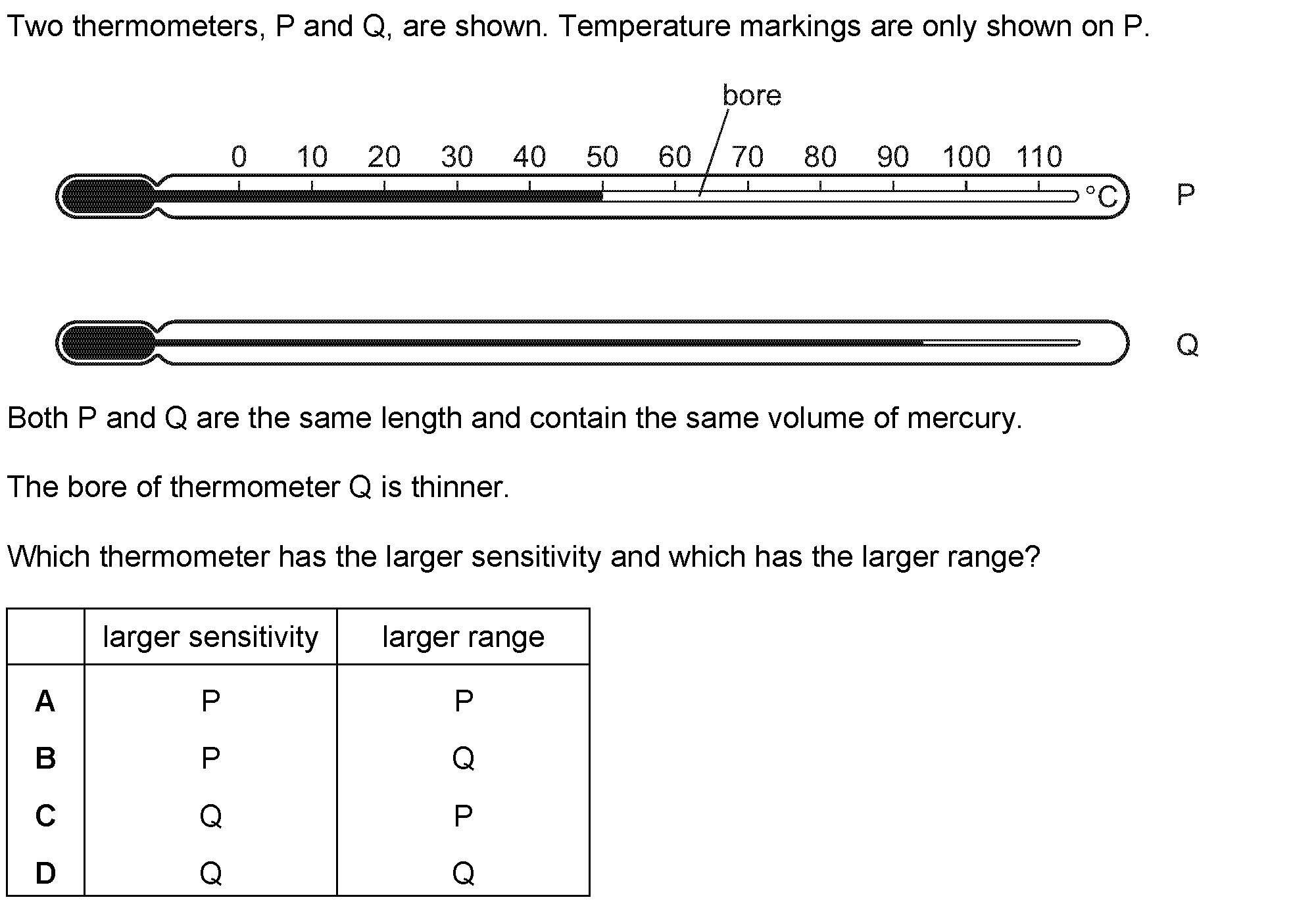
Two thermometers, P and Q, are shown. Temperature markings are only shown on P.
bore
O 10 20 30 40 50 60/70 80 90 100 110
Both P and Q are the same length and contain the same volume of mercury.
The bore of thermometer Q is thinner.
Which thermometer has the larger sensitivity and which has the larger range?
larger sensitivity larger range
Pp
Pp
Q
Q
Q
bore
O 10 20 30 40 50 60/70 80 90 100 110
Both P and Q are the same length and contain the same volume of mercury.
The bore of thermometer Q is thinner.
Which thermometer has the larger sensitivity and which has the larger range?
larger sensitivity larger range
Pp
Pp
Q
Q
Q
Options:
A
B
C
D
Correct Key: C
A
B
C
D
Correct Key: C
Structured Questions Mark Scheme & Answers
•1•.• • • •[•S•P• •S•8• •P•1• • •·• • •Q•1•2• • •·• • •S•p•e•c•i•m•e•n• • •·• • •L•o•w•e•r• •S•e•c• •0•8•9•3•]• • • • • • •p•r•e•d•i•c•t•i•o•n• •–• •d•i•a•m•e•t•e•r• •o•f• •b•a•l•l•o•o•n• •i•n•c•r•e•a•s•e•s• •3• •e•a•c•h• •c•o•r•r•e•c•t• •a•n•s•w•e•r• •=• •1• •m•a•r•k• •b•e•c•a•u•s•e• •a•t• •h•i•g•h•e•r• •t•e•m•p•e•r•a•t•u•r•e•s• •p•a•r•t•i•c•l•e•s• •m•o•v•e• •f•a•s•t•e•r• •o•r• •••c•c•e•p•t• •p•a•r•t•i•c•l•e•s• •h•i•t• •s•u•r•f•a•c•e• •o•f• •b•a•l•l•o•o•n• •h•a•r•d•e•r• •h•a•v•e• •m•o•r•e• •e•n•e•r•g•y• •p•a•r•t•i•c•l•e•s• •s•p•r•e•a•d• •o•u•t• •/• •g•r•e•a•t•e•r• •d•i•s•t•a•n•c•e• •b•e•t•w•e•e•n• •p•a•r•t•i•c•l•e•s• •/• •••c•c•e•p•t• •a•t•o•m•s• •o•r• •m•o•l•e•c•u•l•e•s• •i•n•s•t•e•a•d• •o•f• •p•a•r•t•i•c•l•e•s• •b•a•l•l•o•o•n• •w•a•l•l•s• •p•u•s•h•e•d• •o•u•t• •©• •U•C•L•E•S• •2•0•2•0• •P•a•g•e• •1•1• •o•f• •1•2• •S•8•/•0•1• •S•c•i•e•n•c•e• •S•t•a•g•e• •8• •P•a•p•e•r• •1• •M•a•r•k• •S•c•h•e•m•e• •F•r•o•m• •2•0•2•0• •B•L•••N•K• •P•••G•E• •©• •U•C•L•E•S• •2•0•2•0• •P•a•g•e• •1•2• •o•f• •1•2•
•2•.• • • •[•P•R•I• •2•0•0•8•D• •P•2• • •·• • •Q•1•0• • •P•a•r•t• •(•a•)• • •·• • •2•0•0•8• • •·• • •P•r•i•m•a•r•y• •0•8•4•6•]• • • • • • •(•n•o• •p•u•b•l•i•s•h•e•d• •m•a•r•k• •s•c•h•e•m•e• •f•o•r• •t•h•i•s• •p•a•p•e•r•)•
•3•.• • • •[•P•R•I• •2•0•0•8•D• •P•2• • •·• • •Q•1•0• • •P•a•r•t• •(•b•)• • •·• • •2•0•0•8• • •·• • •P•r•i•m•a•r•y• •0•8•4•6•]• • • • • • •(•n•o• •p•u•b•l•i•s•h•e•d• •m•a•r•k• •s•c•h•e•m•e• •f•o•r• •t•h•i•s• •p•a•p•e•r•)•
•4•.• • • •[•P•R•I• •2•0•0•8•D• •P•2• • •·• • •Q•1•0• • •P•a•r•t• •(•c•)• • •·• • •2•0•0•8• • •·• • •P•r•i•m•a•r•y• •0•8•4•6•]• • • • • • •(•n•o• •p•u•b•l•i•s•h•e•d• •m•a•r•k• •s•c•h•e•m•e• •f•o•r• •t•h•i•s• •p•a•p•e•r•)•
•5•.• • • •[•P•R•I• •2•0•1•5••• •P•1• • •·• • •Q•1•1• • •P•a•r•t• •(•a•)• • •·• • •2•0•1•5• • •·• • •P•r•i•m•a•r•y• •0•8•4•6•]• • • • • • •(•n•o• •p•u•b•l•i•s•h•e•d• •m•a•r•k• •s•c•h•e•m•e• •f•o•r• •t•h•i•s• •p•a•p•e•r•)•
•6•.• • • •[•P•R•I• •2•0•1•5••• •P•1• • •·• • •Q•1•1• • •P•a•r•t• •(•b•)• • •·• • •2•0•1•5• • •·• • •P•r•i•m•a•r•y• •0•8•4•6•]• • • • • • •(•n•o• •p•u•b•l•i•s•h•e•d• •m•a•r•k• •s•c•h•e•m•e• •f•o•r• •t•h•i•s• •p•a•p•e•r•)•
•7•.• • • •[•P•R•I• •2•0•1•5•B• •P•2• • •·• • •Q•8• • •·• • •2•0•1•5• • •·• • •P•r•i•m•a•r•y• •0•8•4•6•]• • • • • • •(•n•o• •p•u•b•l•i•s•h•e•d• •m•a•r•k• •s•c•h•e•m•e• •f•o•r• •t•h•i•s• •p•a•p•e•r•)•
•8•.• • • •[•P•R•I• •2•0•1•7•D• •P•2• • •·• • •Q•1•3• • •P•a•r•t• •(•a•)• • •·• • •2•0•1•7• • •·• • •P•r•i•m•a•r•y• •0•8•4•6•]• • • • • • •f•o•r•c•e• •1• •m•o•r•e• •t•h•a•n• •o•n•e• •a•n•s•w•e•r• •c•i•r•c•l•e•d• •=• •0• •m•a•r•k•s• •••s•s•e•m•b•l•e•d• •b•y• •N•.•S•.• •l•e•n•g•t•h• •s•i•z•e• •t•e•m•p•e•r•a•t•u•r•e• •v•o•l•u•m•e• •m•e•a•s•u•r•i•n•g• •c•y•l•i•n•d•e•r• •1• •D•o• •n•o•t• •a•c•c•e•p•t• •m•e•a•s•u•r•i•n•g• •c•u•p• •/• •b•e•a•k•e•r• •(•n•o•)• •2• •n•o• •m•a•r•k• •f•o•r• •n•o• •b•u•t• •a•n•s•w•e•r• •m•u•s•t• •b•e• •n•o• •f•o•r• •m•a•r•k•s• •t•o• •b•e• •a•w•a•r•d•e•d• •s•t•a•t•e•m•e•n•t•s• •m•u•s•t• •b•e• •c•o•m•p•a•r•a•t•i•v•e• •g•l•a•s•s• •E• •h•a•s• •t•h•e• •l•e•a•s•t• •w•a•t•e•r• •/• •l•e•s•s• •w•a•t•e•r• •=• •1• •m•a•r•k• •t•h•e• •g•l•a•s•s• •w•i•t•h• •t•h•e• •l•e•a•s•t• •w•a•t•e•r• •h•a•s• •t•h•e• •h•i•g•h•e•s•t• •p•i•t•c•h• •=• •2• •m•a•r•k•s• •g•l•a•s•s• •E• •h•a•s• •t•h•e• •h•i•g•h•e•s•t• •p•i•t•c•h• •/• •h•i•g•h•e•r• •p•i•t•c•h• •=• •1• •m•a•r•k• •o•r• •g•l•a•s•s• ••• •h•a•s• •t•h•e• •m•o•s•t• •w•a•t•e•r• •/• •m•o•r•e• •w•a•t•e•r• •=• •1• •m•a•r•k• •t•h•e• •g•l•a•s•s• •w•i•t•h• •t•h•e• •m•o•s•t• •w•a•t•e•r• •h•a•s• •t•h•e• •l•o•w•e•s•t• •p•i•t•c•h• •=• •2• •m•a•r•k•s• •g•l•a•s•s• ••• •i•s• •t•h•e• •l•o•w•e•s•t• •p•i•t•c•h• •/• •a• •l•o•w•e•r• •p•i•t•c•h• •=• •1• •m•a•r•k• •1•8•0•/•3•8•4• •©• •U•C•L•E•S• •2•0•1•7• •P•a•g•e• •9• •o•f• •1•2•
Last updated:
\n