5.4Physical Chemistry and Transition Elements
Thermodynamics — OCR A Level Chemistry A H432 Revision Notes & Topical Questions
15 min read 25 parts Lesson 18 of 40
Curriculum Equation Key Gibbs Free Energy FormulaFast Exam Solution
ΔG = ΔH - TΔS | (ΔG < 0: تلقائي Spontaneous, ΔG > 0: غير تلقائي, ΔG = 0: اتزان)
Lesson summary
Complete PDF with figures and original page layoutPage 1 OCR A Level Chemistry A Your notes Thermodynamics Contents Lattice Enthalpy Building Born-Haber Cycles Calculations Using Born-Haber Cycles Enthalpy of Solution & Hydration The Effect of Ion…
Part 1 of 7Thermodynamic terms
1Thermodynamics
- Thermodynamics the branch of physical chemistry dealing with heat, energy, temperature and the physical properties of matter
2Energy cycles
- Energy cycles representations of enthalpy changes for ionic compounds using Hess law
3Enthalpy change, ΔH
Enthalpy change, ΔH the heat energy transferred in a reaction at constant pressure
- Standard conditions are 298 K and 100 kPa.
Part 2 of 7Enthalpy of formation and ionisation enthalpy

1Enthalpy of formation, ΔHf
Enthalpy of formation, ΔHf the enthalpy change when one mole of a compound is formed from its elements under standard conditions
- It can be endothermic or exothermic.
- It refers only to compounds, and is zero for elements by definition.
- Na(s) + ½Cl2(g) → NaCl(s), ΔHf = −411 kJ mol−1.
2Ionisation enthalpy, ΔHie
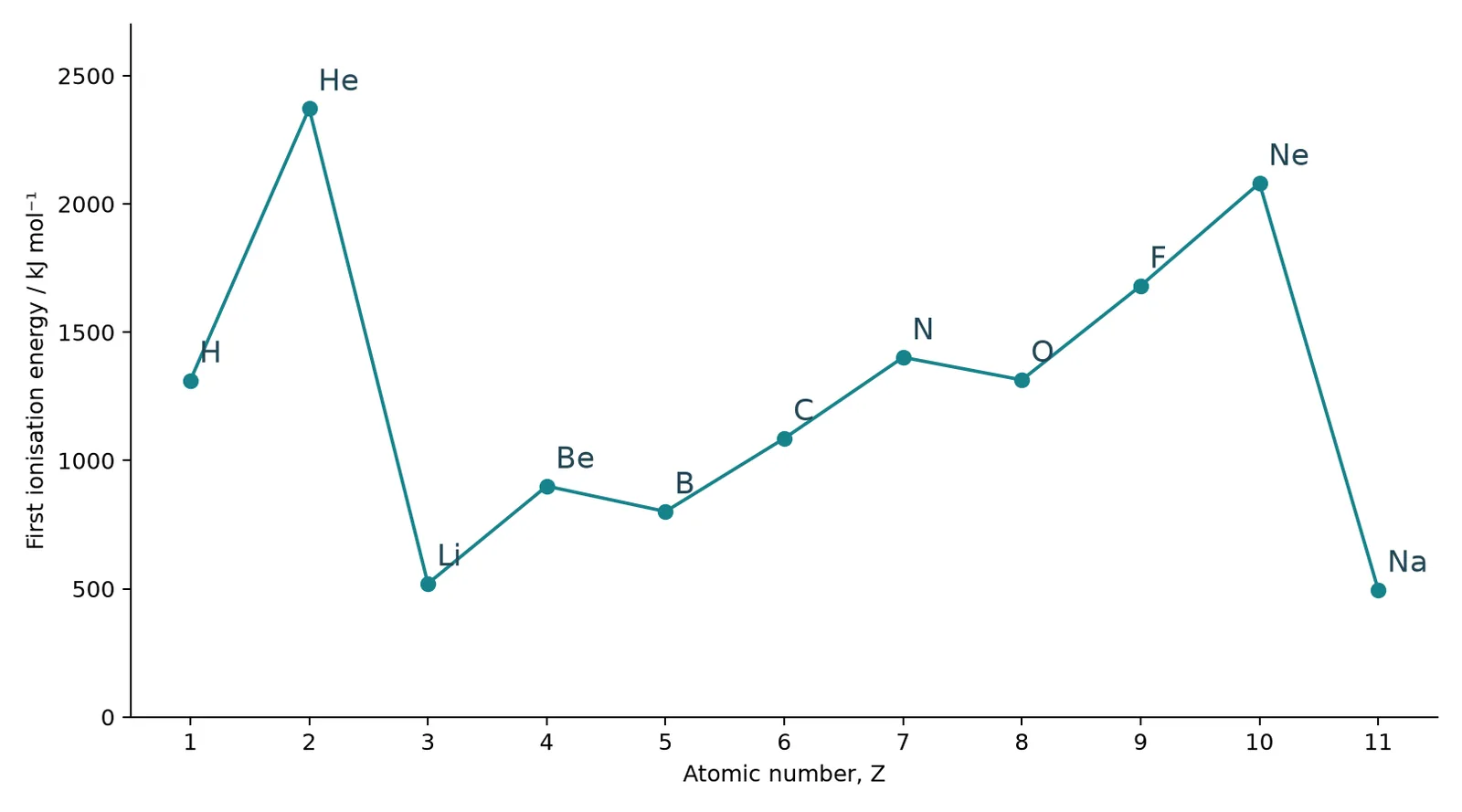
Ionisation enthalpy, ΔHie the energy to remove an electron from a gaseous atom to form a gaseous ion under standard conditions
- It is always endothermic because energy is needed to overcome the attraction between electron and nucleus.
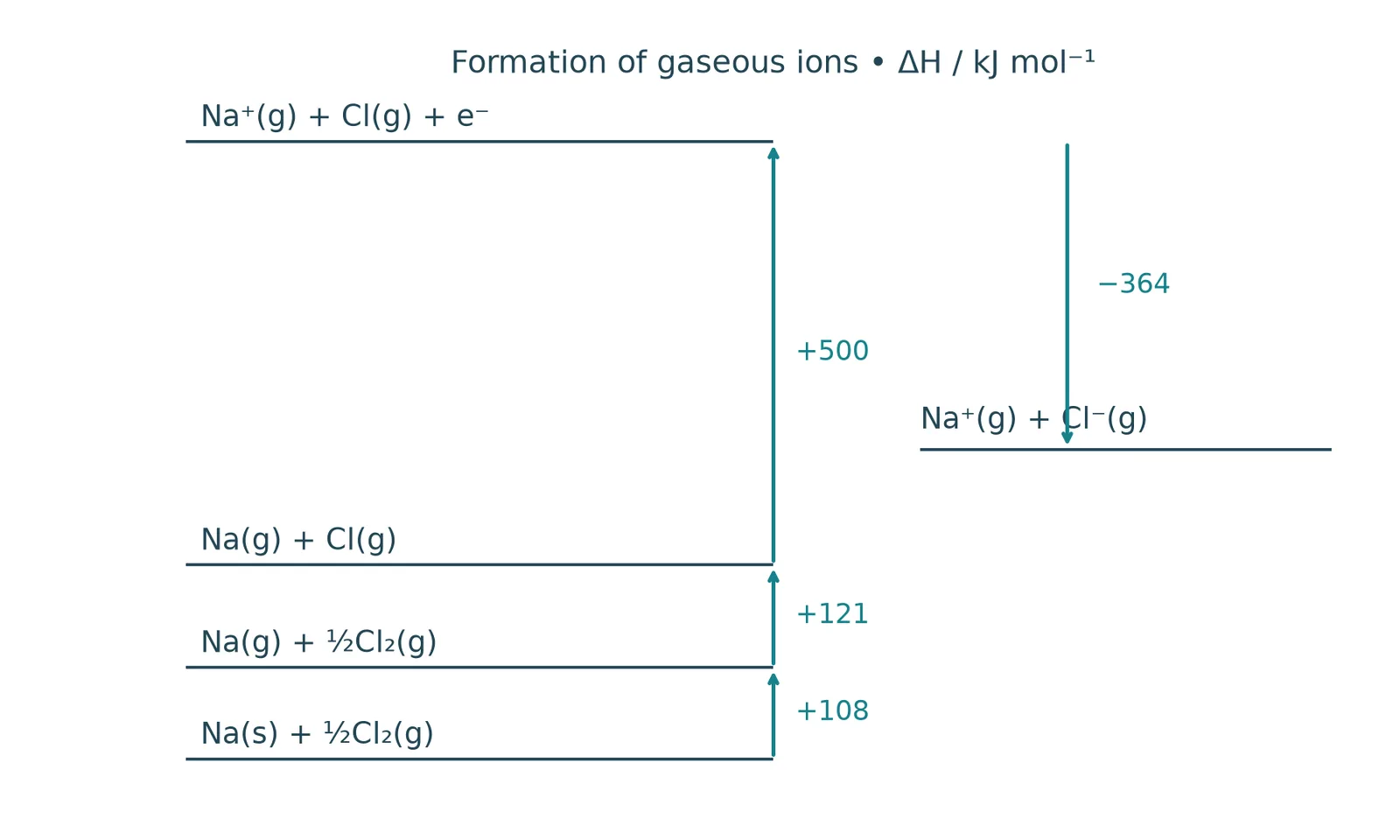
- The first ionisation energy removes one mole of electrons from one mole of gaseous atoms to form 1+ ions, e.g. Na(g) → Na+(g) + e−, +500 kJ mol−1.
Part 3 of 7Atomisation and bond enthalpy
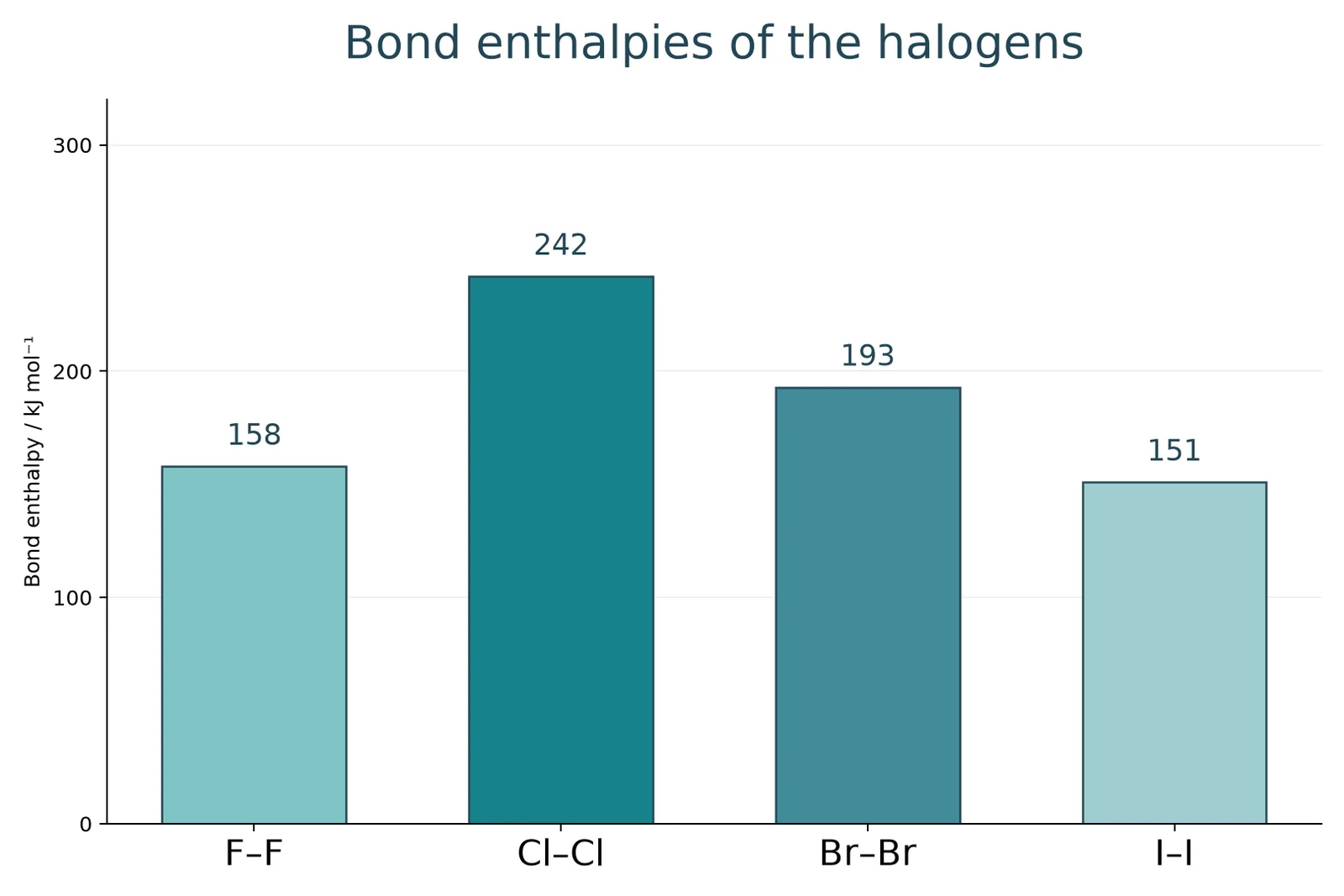
Atomisation and bond enthalpy
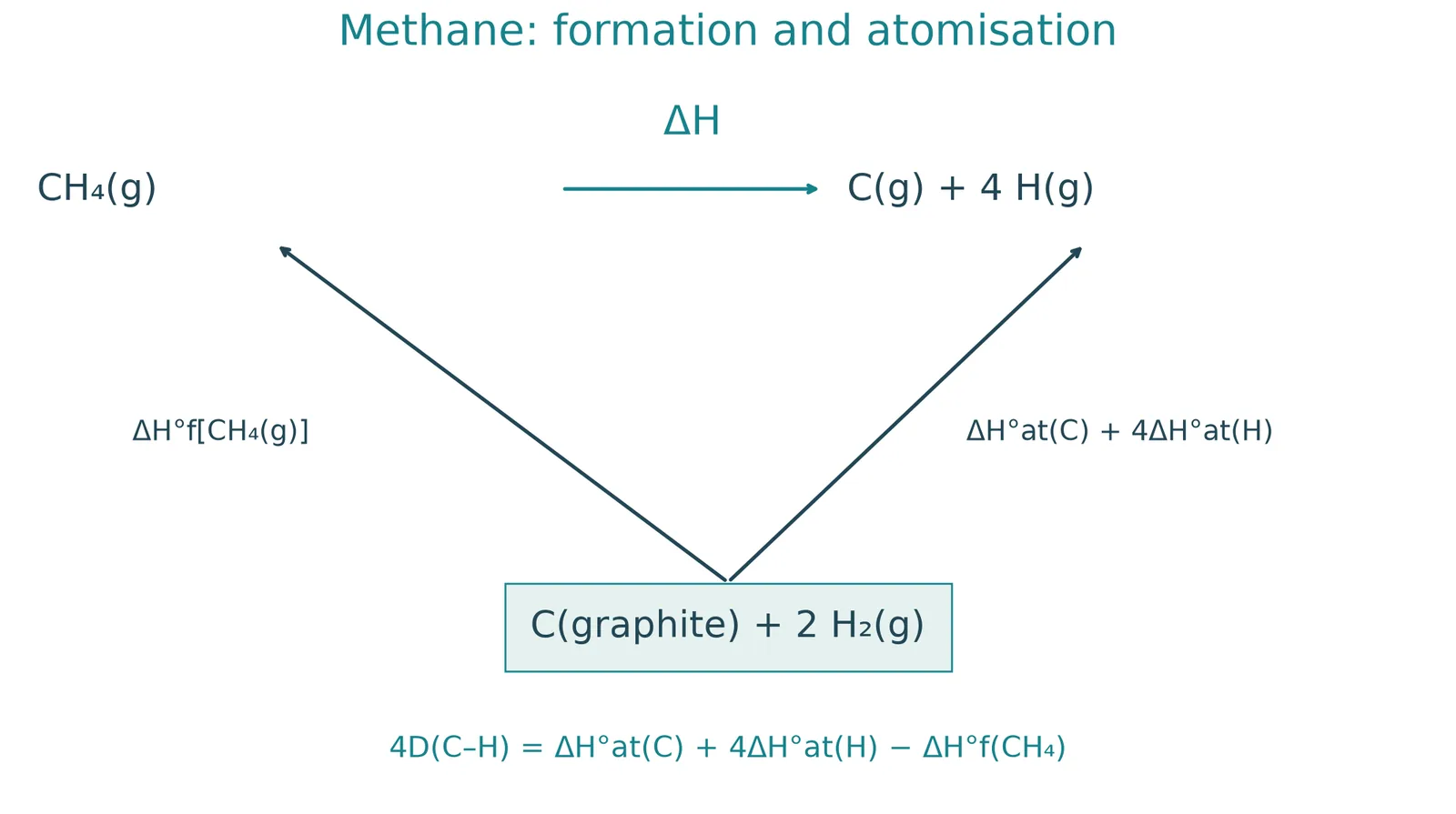
Enthalpy of atomisation, ΔHat
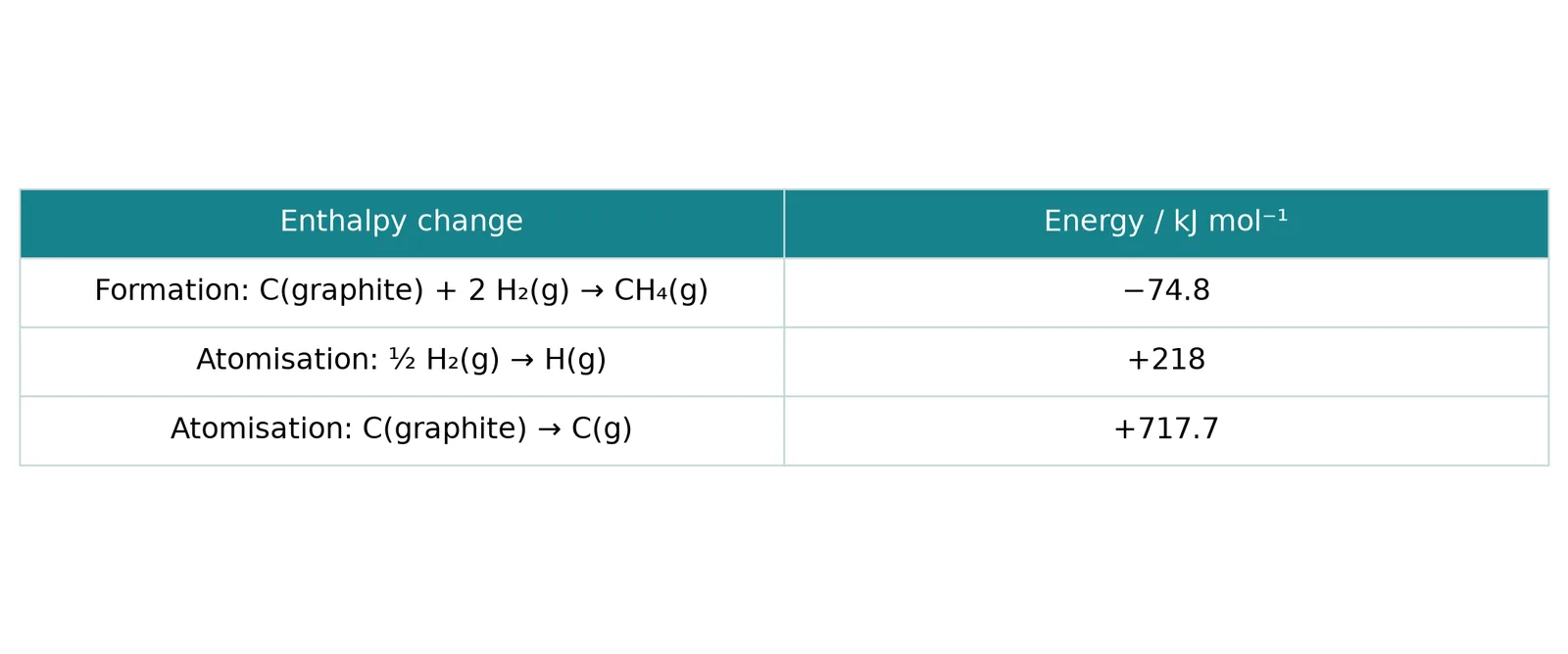
Enthalpy of atomisation, ΔHat the enthalpy change when one mole of gaseous atoms is formed from the element under standard conditions
- It is always endothermic because bonds between atoms must be broken.
- Na(s) → Na(g), +108 kJ mol−1.
Bond enthalpy, E
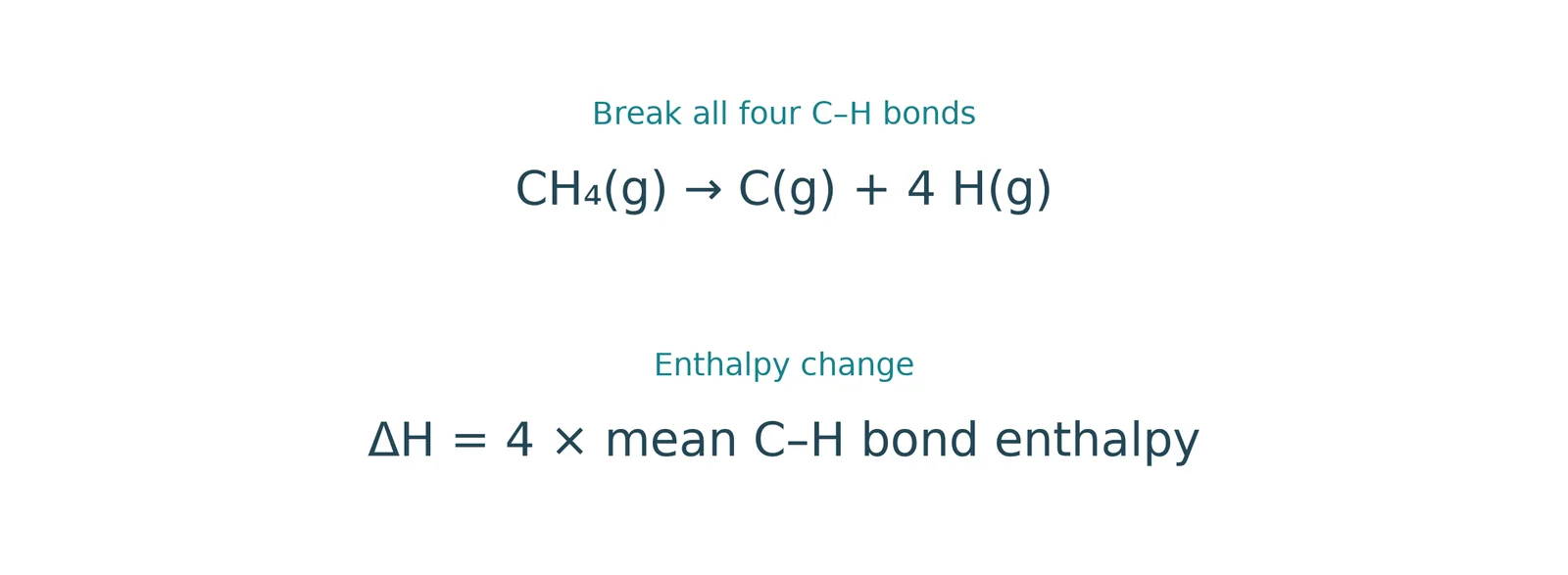
Bond enthalpy, E the energy to break one mole of a specific covalent bond in the gas phase
- It is quoted as a positive, endothermic value; for bond forming, put a negative sign in front.
- Cl2(g) → 2Cl(g), E(Cl–Cl) = +242 kJ mol−1.
Comparison
- Comparison atomisation gives one mole of atoms but bond enthalpy is per mole of bonds
- ½Cl2(g) → Cl(g) has ΔHat = +121 kJ mol−1, half the bond enthalpy.
- For a liquid element, atomisation also includes the enthalpy of vaporisation before bonds are broken.
Part 4 of 7Lattice enthalpy
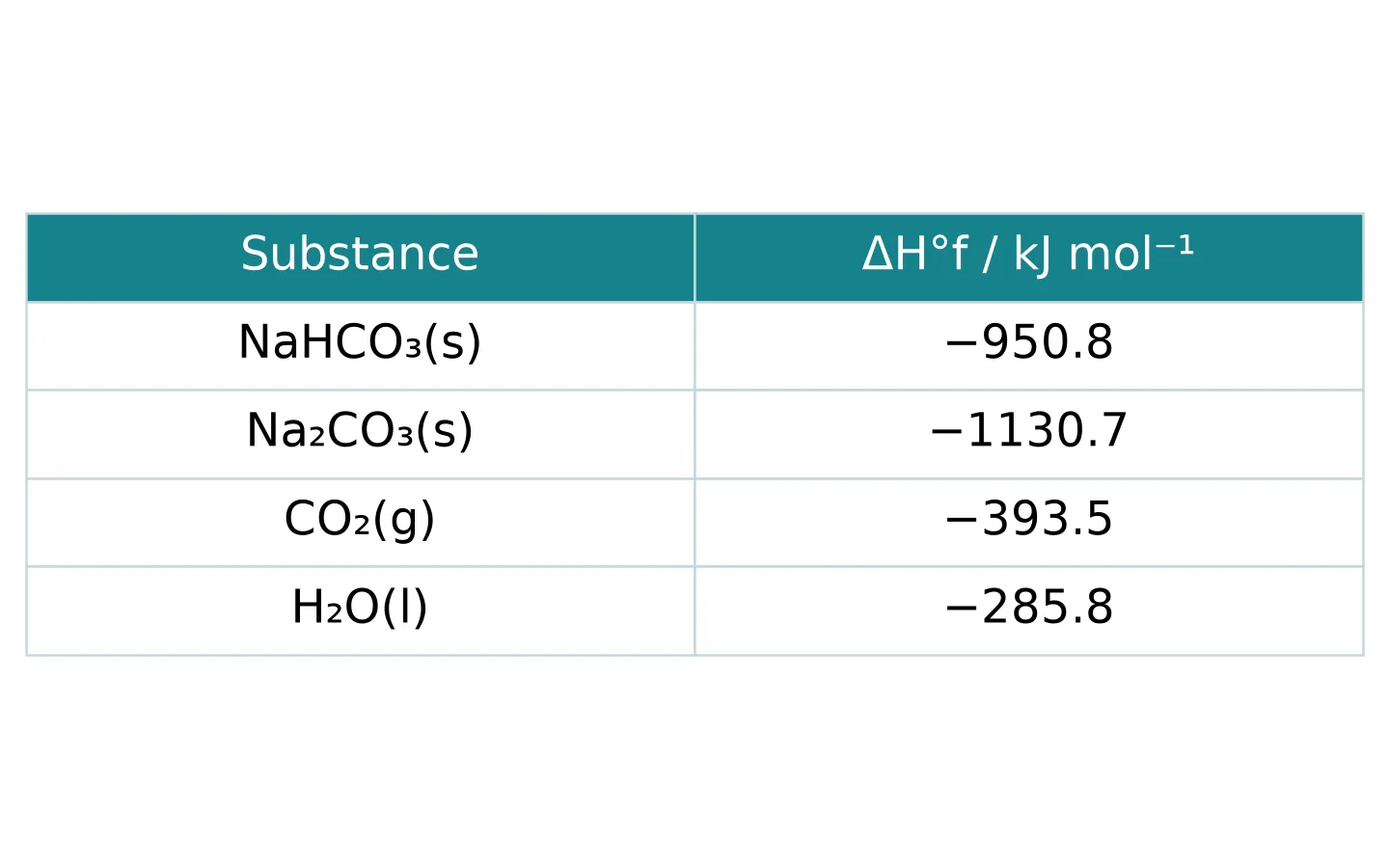
Lattice enthalpy, ΔHlatt
Lattice enthalpy, ΔHlatt the enthalpy change when one mole of an ionic compound is formed from its gaseous ions under standard conditions (formation definition)
- Na+(g) + Cl−(g) → NaCl(s), ΔHlatt = −776 kJ mol−1.
- It can also be defined as a dissociation process, as for bond enthalpy.
Sign and size
- Sign and size it is exothermic with a very large negative value
- This is because of the strong electrostatic attraction between oppositely charged ions in the lattice.
- Gaseous ions have no such attractions, so they are less stable than the lattice.
- The more exothermic the value, the stronger the ionic bonding.
Finding it
- Finding it it cannot be measured directly in one experiment, so an energy cycle with several experimental values is used
Part 5 of 7Electron affinity
- First electron affinity = the enthalpy change when one mole of gaseous atoms gains one mole of electrons to form one mole of gaseous 1− ions
- Cl(g) + e− → Cl−(g), ΔHea = −364 kJ mol−1.
- It is exothermic for the first electron added to most non-metals.
Part 6 of 7Constructing a Born–Haber cycle
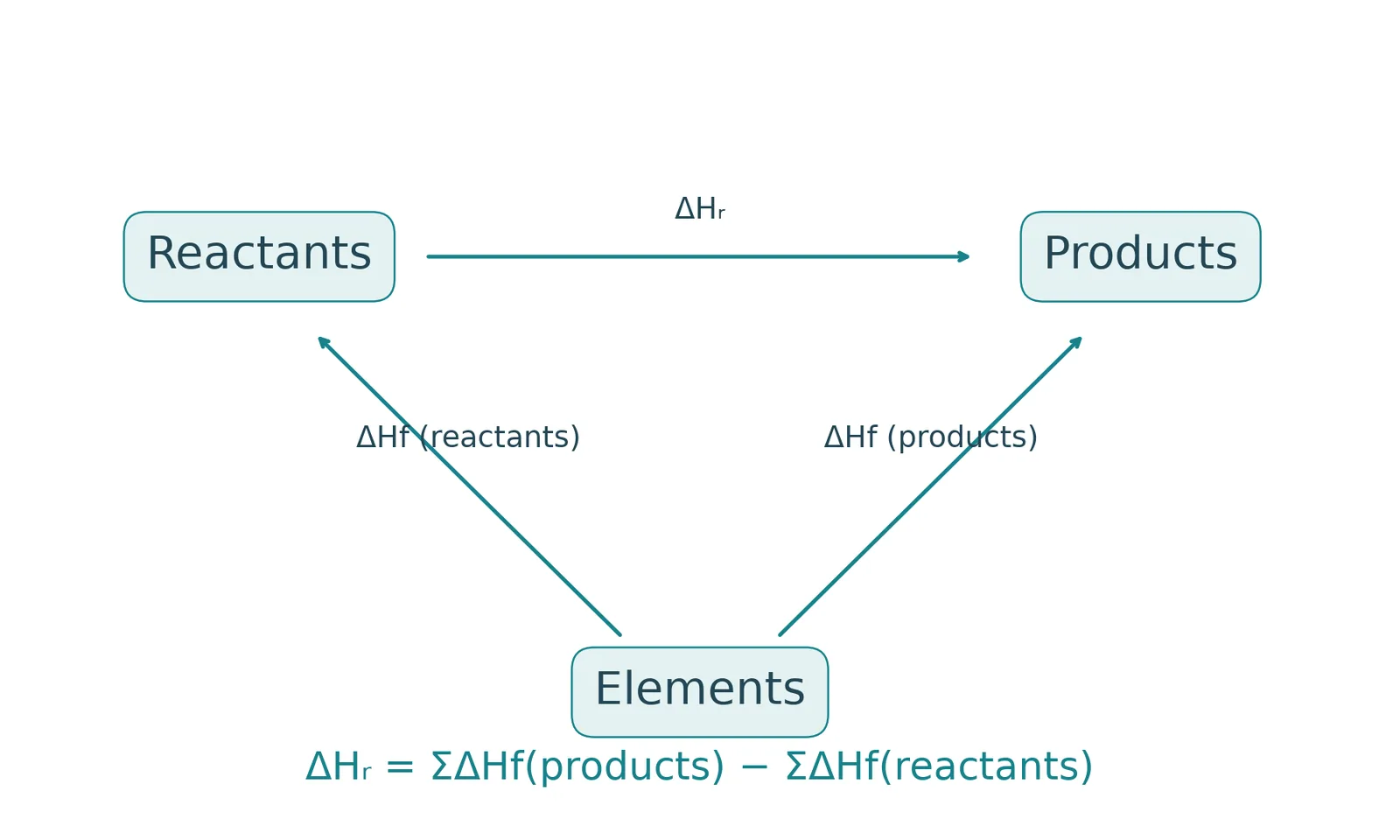
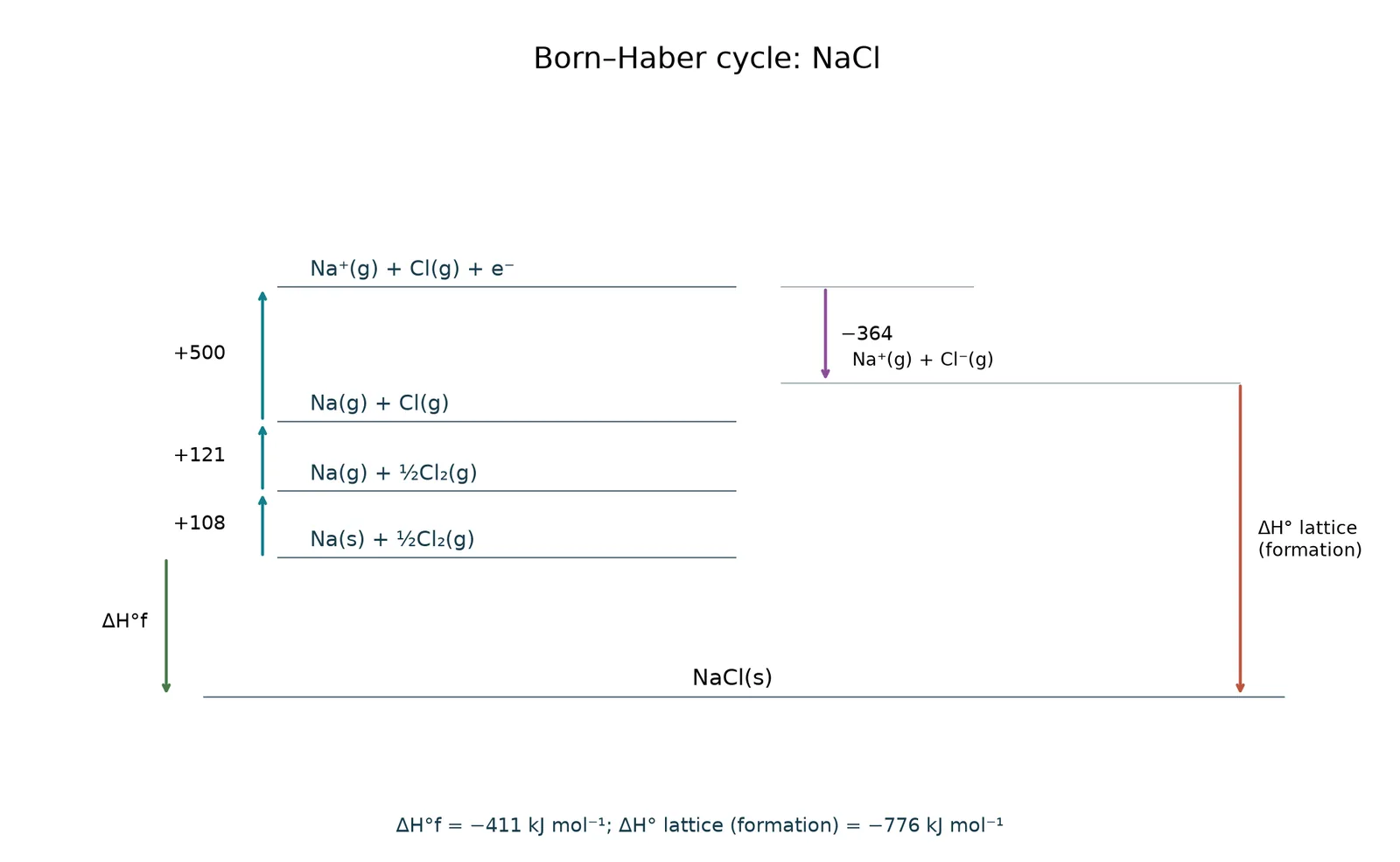
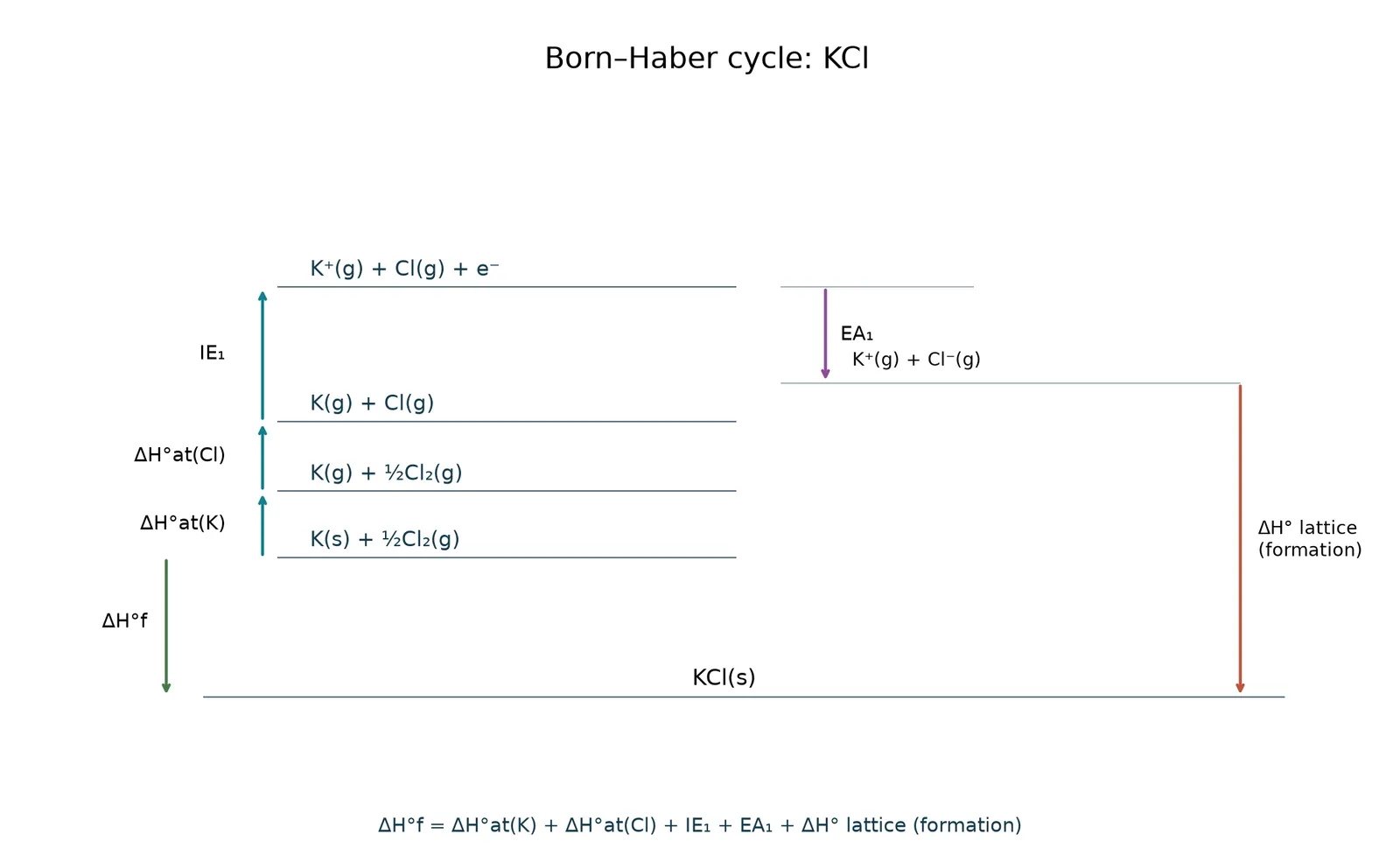
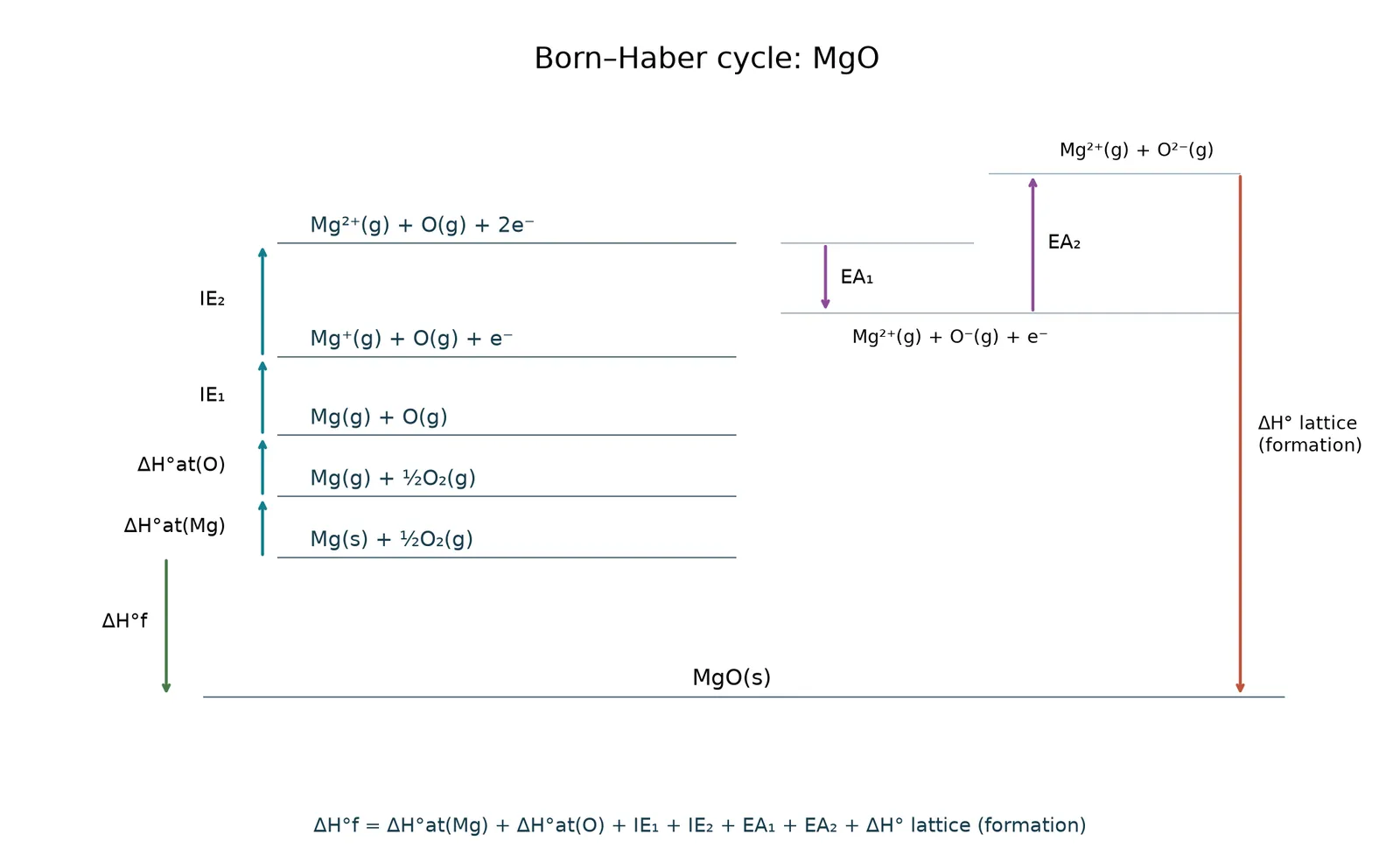
- Born–Haber cycle = an application of Hess law to ionic compounds that allows calculation of lattice enthalpy, which cannot be found by experiment
- Energy increases going up the diagram.
- It gives one route from atoms to gaseous ions to the lattice, and another from the elements via the enthalpy of formation.
1
Draw the elements in their standard states with state symbols about a third of the way up, as a horizontal bar.
2
Draw upward arrows for atomisation of each element: Na(s) → Na(g) +108 and ½Cl2(g) → Cl(g) +121 kJ mol−1.
3
Draw an upward arrow for ionisation of the metal: Na(g) → Na+(g) + e−, +500 kJ mol−1.
4
Draw a downward arrow for electron affinity of the non-metal: Cl(g) + e− → Cl−(g), −364 kJ mol−1, displaced to the right for clarity.
5
Draw the enthalpy of formation from the elements down to the solid, NaCl(s), −411 kJ mol−1 (upward if endothermic, displaced to the right).
6
Draw the lattice enthalpy from the gaseous ions down to the solid, as a formation process.
- Other uses
- the cycle can find any enthalpy change if the lattice enthalpy is given
Part 7 of 7Calculating with a Born–Haber cycle
1Hess law
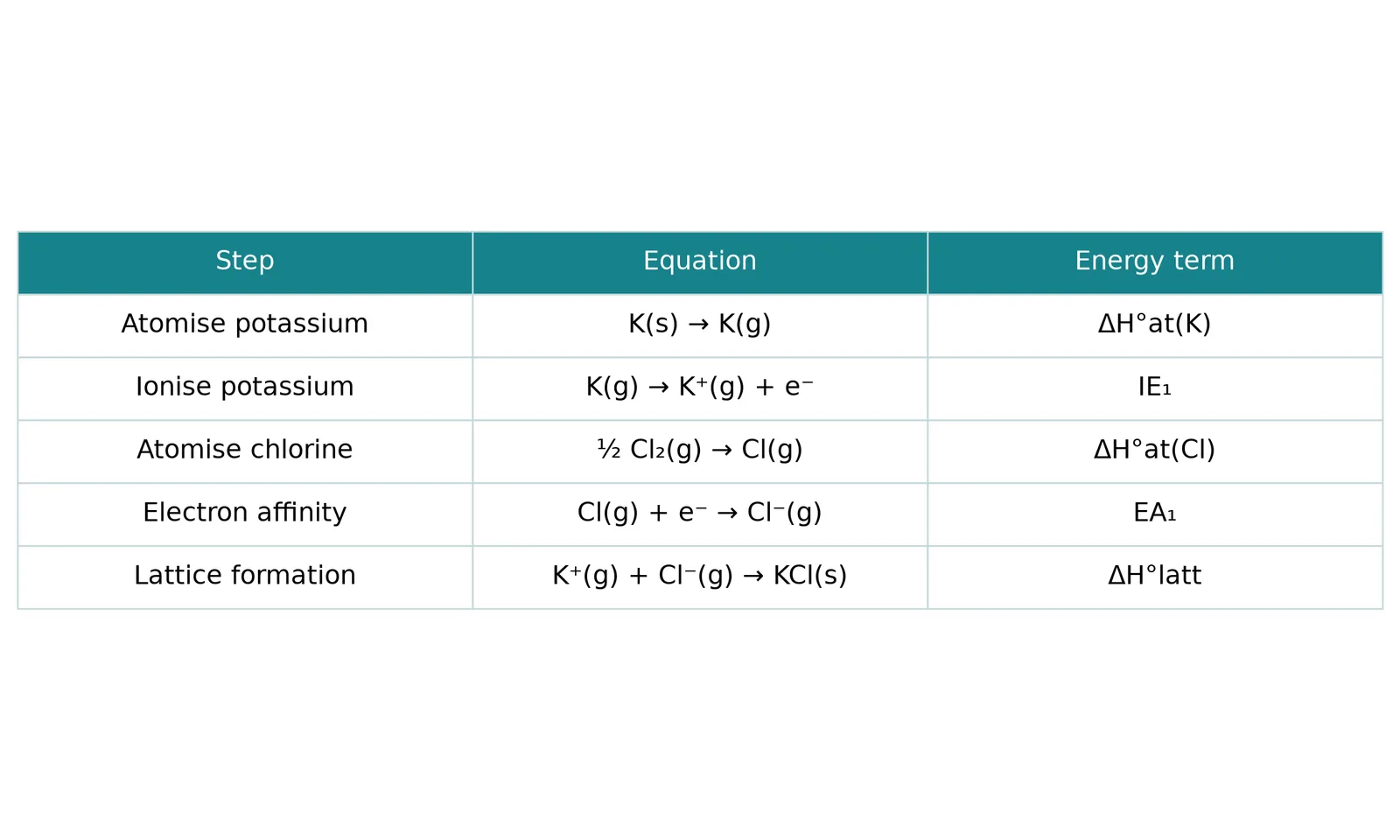
- ΔHf = ΔHat(metal) + ΔHat(non-metal) + IE + EA + ΔHlatt
- Let ΔH1 be the sum of all the steps converting the elements to gaseous ions.
- Then ΔHf = ΔH1 + ΔHlatt, so ΔHlatt = ΔHf − ΔH1.
2Any stage
- Any stage the unknown stage is treated as the direct route
- Write the equation in terms of enthalpy changes and rearrange.
3Numbers of moles
- Numbers of moles double or halve values to suit the formula
- For MgCl2 the chlorine atomisation and electron affinity are doubled because two moles of Cl atoms form two moles of Cl−.
4Example
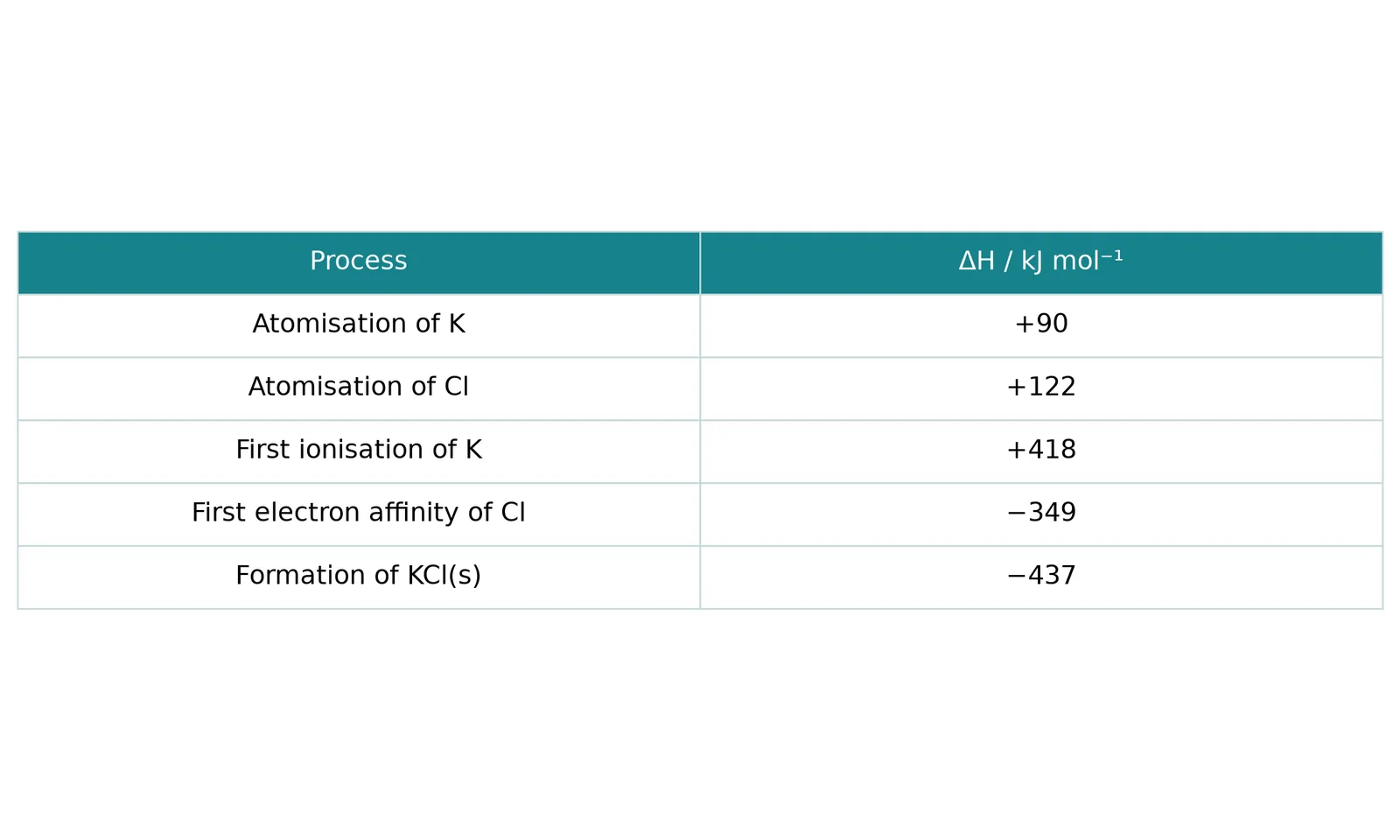
- KCl
- ΔHlatt = (−437) − [(+90) + (+122) + (+418) + (−349)] = −718 kJ mol−1.
5Example
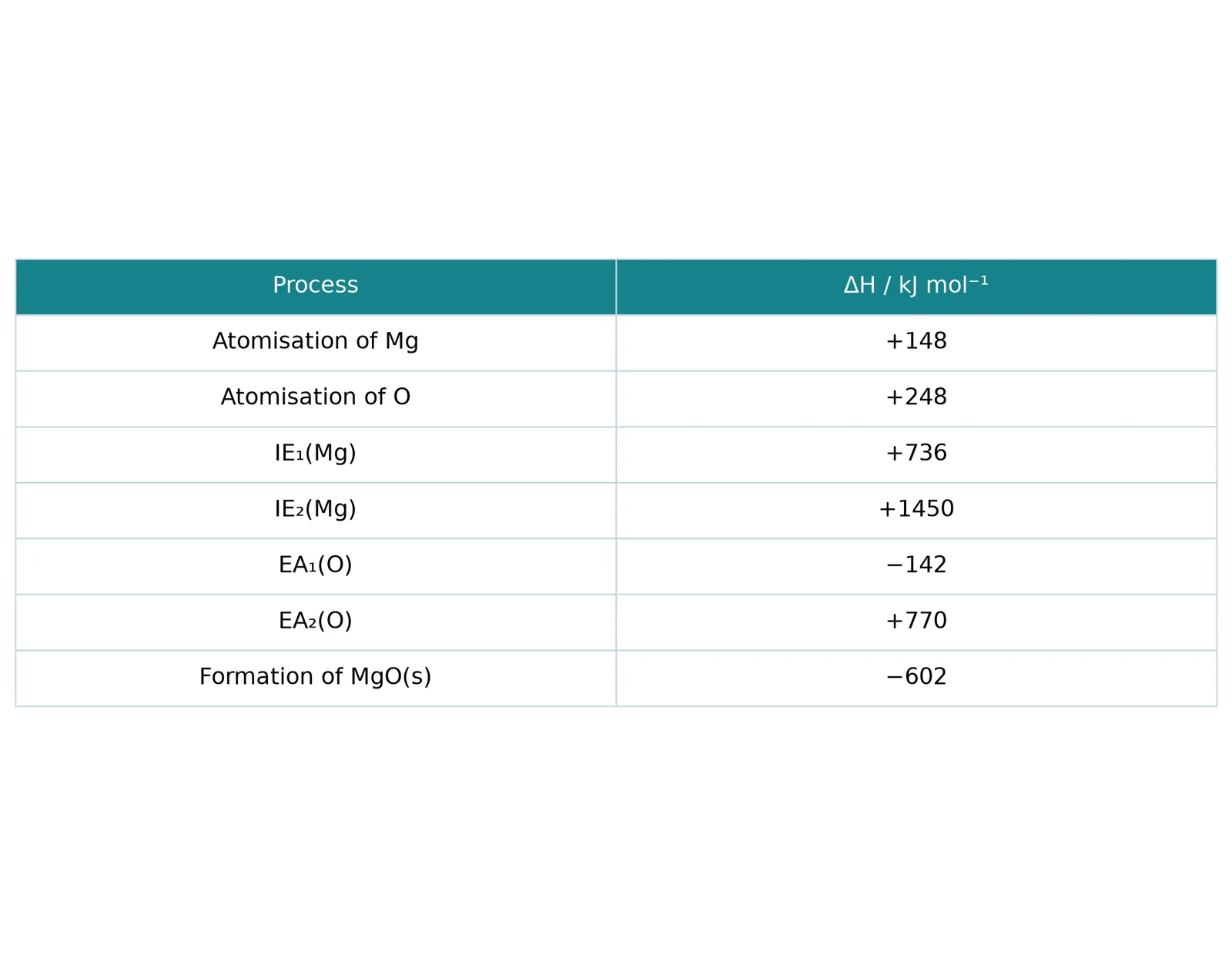
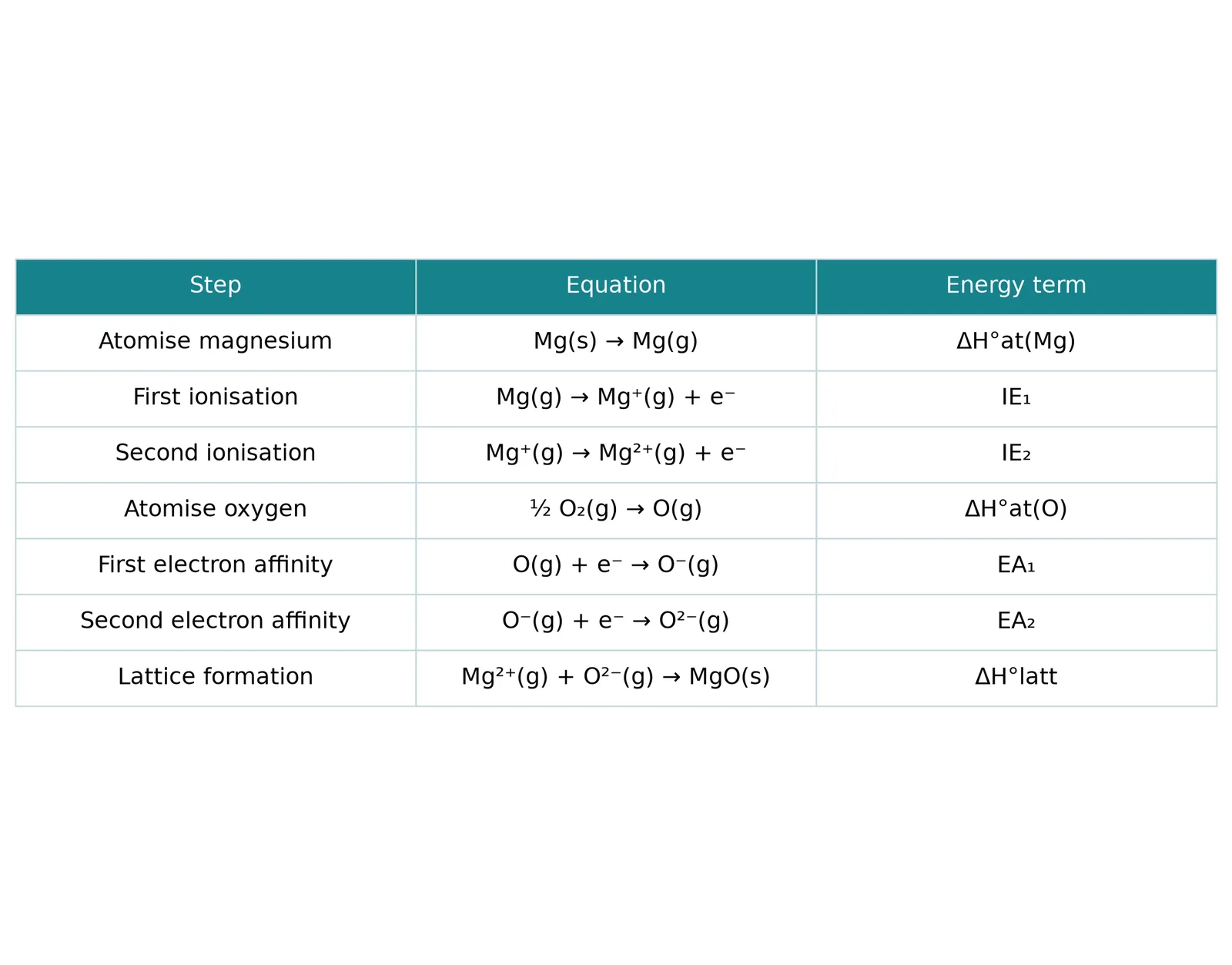
- MgO needs more steps
- Include atomisation of Mg and ½O2, the first and second ionisation energies of Mg, and the first and second electron affinities of O.
- The second electron affinity of oxygen is endothermic.
Key terms
| Term | Meaning |
|---|---|
| Lattice enthalpy | Enthalpy change when one mole of an ionic compound forms from its gaseous ions |
| Enthalpy of atomisation | Enthalpy change to form one mole of gaseous atoms from an element |
| Electron affinity | Enthalpy change when one mole of gaseous atoms gains one mole of electrons |
| Ionisation enthalpy | Energy to remove an electron from a gaseous atom or ion |
| Born–Haber cycle | A Hess law cycle for ionic compounds used to find lattice enthalpy |
| Enthalpy of formation | Enthalpy change when one mole of a compound forms from its elements |
Avoid these mistakes
1
Giving lattice enthalpy a positive sign when defined as formation — it is exothermic
2
Forgetting to double values for ions needed in a formula such as MgCl2
3
Including ΔHf of an element — it is zero
4
Confusing atomisation enthalpy (per mole of atoms) with bond enthalpy (per mole of bonds)
Last updated:
\n