3.3Organic Chemistry
Halogenoalkanes — Oxford AQA International A Level Chemistry Revision Notes & Topical Questions
5 min read 11 parts Lesson 11 of 55
Lesson summary
Complete PDF with figures and original page layoutPage 1 Oxford AQA International Your notes A Level (IAL) Chemistry Halogenoalkanes Contents Nucleophilic Substitution Elimination Reactions of Halogenoalkanes Page 2 Nucleophilic Substitu…
Part 1 of 9Nucleophilic substitution
Nucleophilic substitution
Nucleophile = an electron-rich species that donates a pair of electrons and is attracted to positive centres, with examples H2O, OH-, NH3 and CN-
Reaction
- Reaction a nucleophile attacks a carbon with a partial positive charge and replaces an atom with a partial negative charge
Why halogenoalkanes react
- Why halogenoalkanes react the C–X bond is polar because the halogen is much more electronegative than carbon
Part 2 of 9The mechanism
The mechanism
Draw a curly arrow from the lone pair on the nucleophile to the δ+ carbon of the C–X bond.
Draw a second curly arrow from the C–X bond to the X atom.
The halide leaves as X- and the nucleophile bonds to carbon.
- Amines
- the nucleophilic substitution forming an amine needs an extra step to remove the positive charge on nitrogen, with an arrow from the N–H bond to the N atom
Part 3 of 9Formation of nitriles
Nucleophile
- Nucleophile the CN- ion
Reagent and conditions
- Reagent and conditions aqueous ethanolic potassium cyanide, warmed with the halogenoalkane
- (heated under reflux)
Product
- Product a nitrile, extending the carbon chain by one carbon
Example
- CH3CH2Br + CN- → CH3CH2CN + Br-, giving propanenitrile
Part 4 of 9Formation of primary amines
Nucleophile
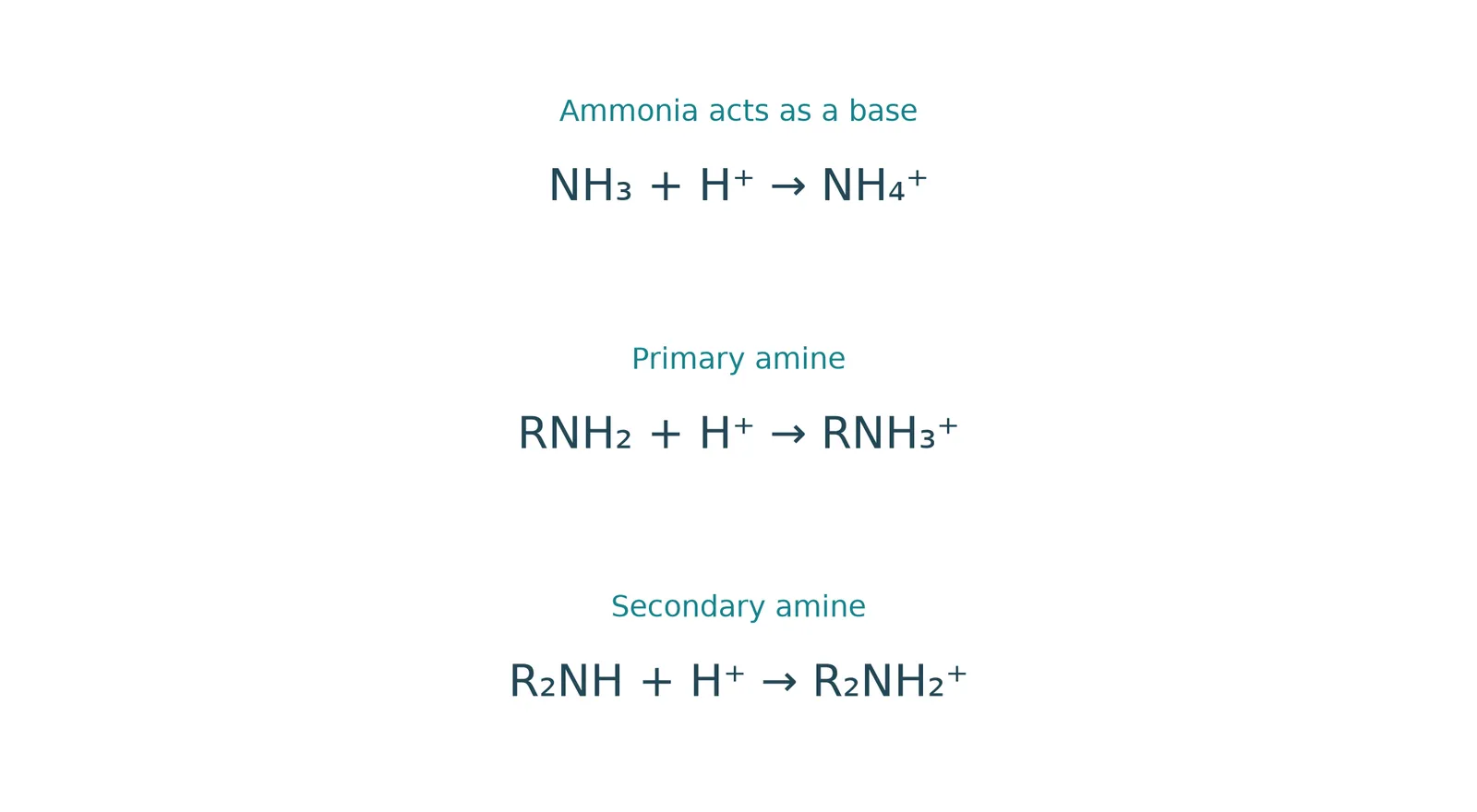
- NH3
Reagent and conditions
- Reagent and conditions excess ethanolic ammonia heated under pressure
Product
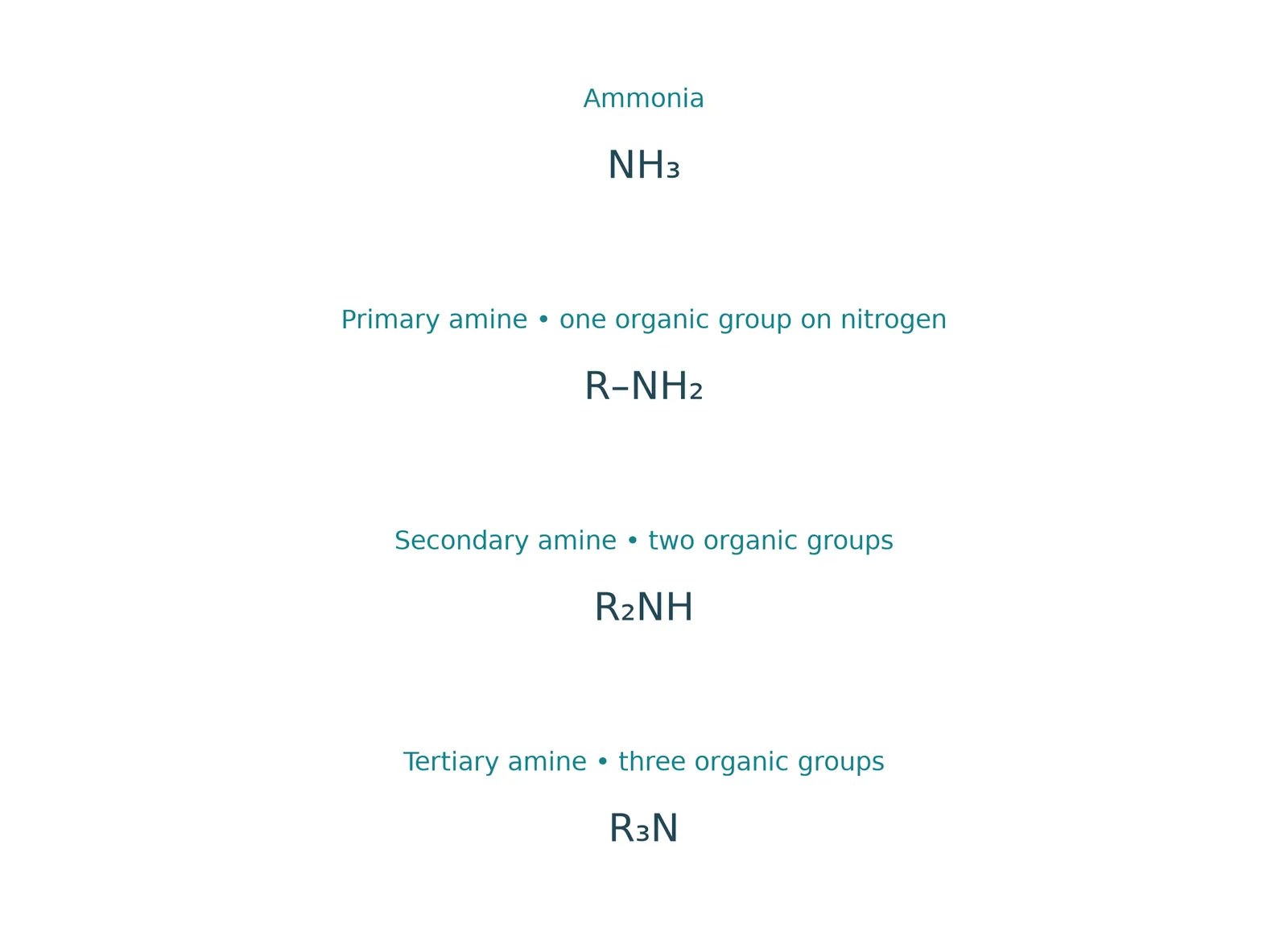
- Product a primary amine, with ammonium halide
Example
- CH3CH2Br + 2NH3 → CH3CH2NH2 + NH4Br, giving ethylamine
Part 5 of 9Formation of alcohols by hydrolysis


Nucleophile
- OH-
Reagent
- Reagent aqueous sodium or potassium hydroxide, warmed, with ethanol as solvent to increase the solubility of the halogenoalkane
Rate
- Rate the reaction is very slow at room temperature
Example
- CH3CH2Br + OH- → CH3CH2OH + Br-
Part 6 of 9Substitution against elimination

Competition
- Competition hydroxide can cause nucleophilic substitution or elimination, depending on conditions
Favouring substitution
- A higher proportion of water in the solvent.
- Aqueous NaOH at room temperature or warmed.
- Primary halogenoalkanes.
Favouring elimination
- A higher proportion of ethanol.
- Higher temperature and higher hydroxide concentration.
- Tertiary halogenoalkanes.
Part 7 of 9C–X bond enthalpy and reactivity
- Reason
- substitution involves breaking the C–X bond, so bond energy explains the rates
| Bond | Bond enthalpy / kJ mol-1 |
|---|---|
| C–F | 467 |
| C–Cl | 346 |
| C–Br | 290 |
| C–I | 228 |
C–I
- C–I it is the weakest bond, so iodoalkanes react fastest: R3C–I + OH- → R3C–OH + I-
C–F
- C–F it is the strongest bond, so fluoroalkanes are least likely to react
Part 8 of 9Elimination reactions

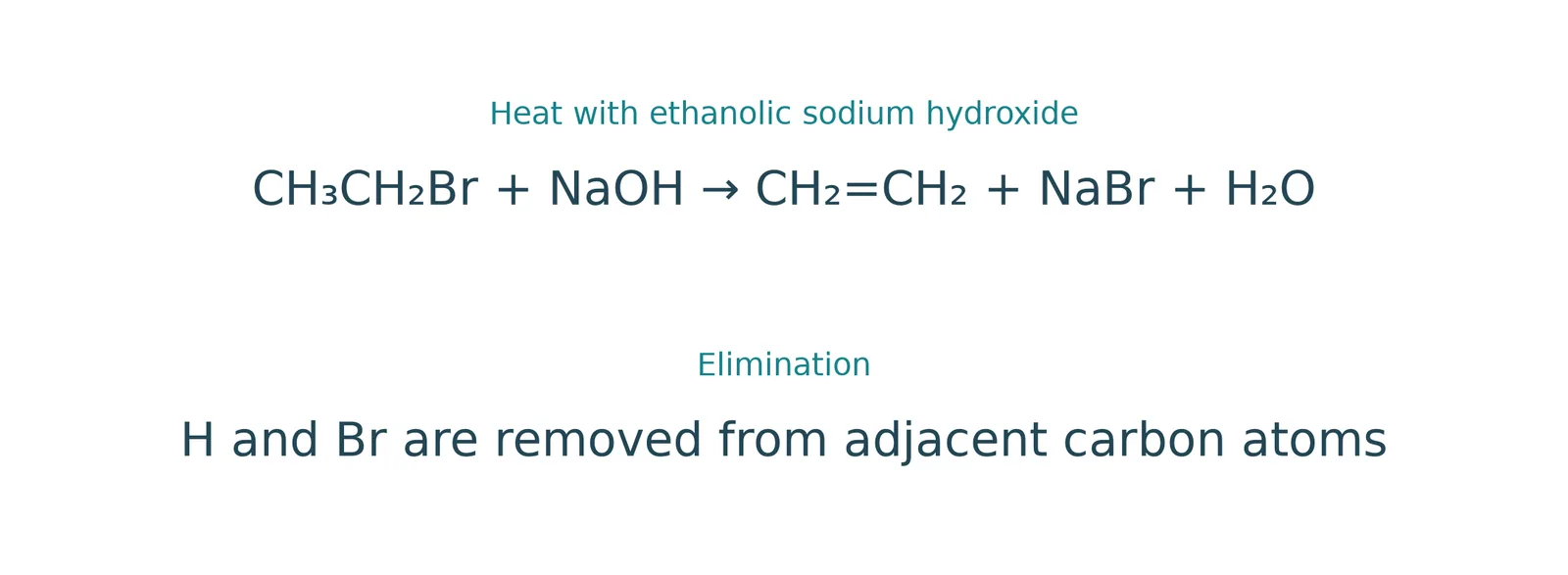
Elimination = a molecule loses a small molecule, here a hydrogen halide, forming an alkene
Conditions
- Conditions heat the halogenoalkane with ethanolic sodium hydroxide, with no water present
Role of OH−
- Role of OH− it acts as a base, removing an H+ from the carbon next to the C–X carbon
Elimination reactions
Draw an arrow from the lone pair on OH- to the H on the adjacent carbon.
Draw an arrow from that C–H bond to form the C=C bond.
Draw an arrow from the C–X bond to X, which leaves as X-.
Example
- Example hydrogen bromide is eliminated to form ethene
Aid
- Aid the mechanism resembles a staircase, so check the first arrow goes to the correct hydrogen
Part 9 of 9Which product forms
| Pathway | Conditions | Product |
|---|---|---|
| Nucleophilic substitution | NaOH in water, room temperature, favoured by primary halogenoalkanes | Alcohol |
| Elimination | NaOH in ethanol (no water), high temperature, favoured by tertiary halogenoalkanes | Alkene |
Isomers
- Isomers elimination can give a mixture of alkenes, which can show E/Z isomerism
Exam point
- Exam point state the conditions correctly because different conditions give different reactions
Key terms
| Term | Meaning |
|---|---|
| Nucleophile | An electron-pair donor that attacks a δ+ carbon. |
| Nucleophilic substitution | A reaction in which a nucleophile replaces a halogen. |
| Elimination | Loss of a small molecule from a larger one to form a double bond. |
| Nitrile | A compound with the –C≡N group. |
| Hydrolysis | Reaction with water or hydroxide breaking the C–X bond. |
| Bond enthalpy | The energy to break a bond. |
Avoid these mistakes
1
Saying fluoroalkanes react fastest — C–F is the strongest bond.
2
Using aqueous NaOH for elimination — ethanolic NaOH with no water is used.
3
Starting the curly arrow at the carbon — it must start at the nucleophile’s lone pair.
4
Forgetting the extra step for amine formation — the positive nitrogen loses H+.
Last updated:
\n