7.1Chapter 7: The Health of the Environment
Ecosystems of the Earth — Alhussan Biology - Stage 8 Revision Notes & Topical Questions
5 min read 8 parts Lesson 1 of 8 2 quizzes
7.1 Ecosystems of the Earth — Biomes and Biodiversity — Alhussan International Academy — Biology (Stages 7–9) notes: Describe the main biomes, explain how climate shapes them and define biodiversity.Ecosystem — a community of living organisms together with the non-living parts of…
- Abiotic factors
- Deciding factors
- Tropical rainforests
- Temperate regions
- Aquatic ecosystems
- Desert plants
Part 1 of 6Ecosystems and the biosphere
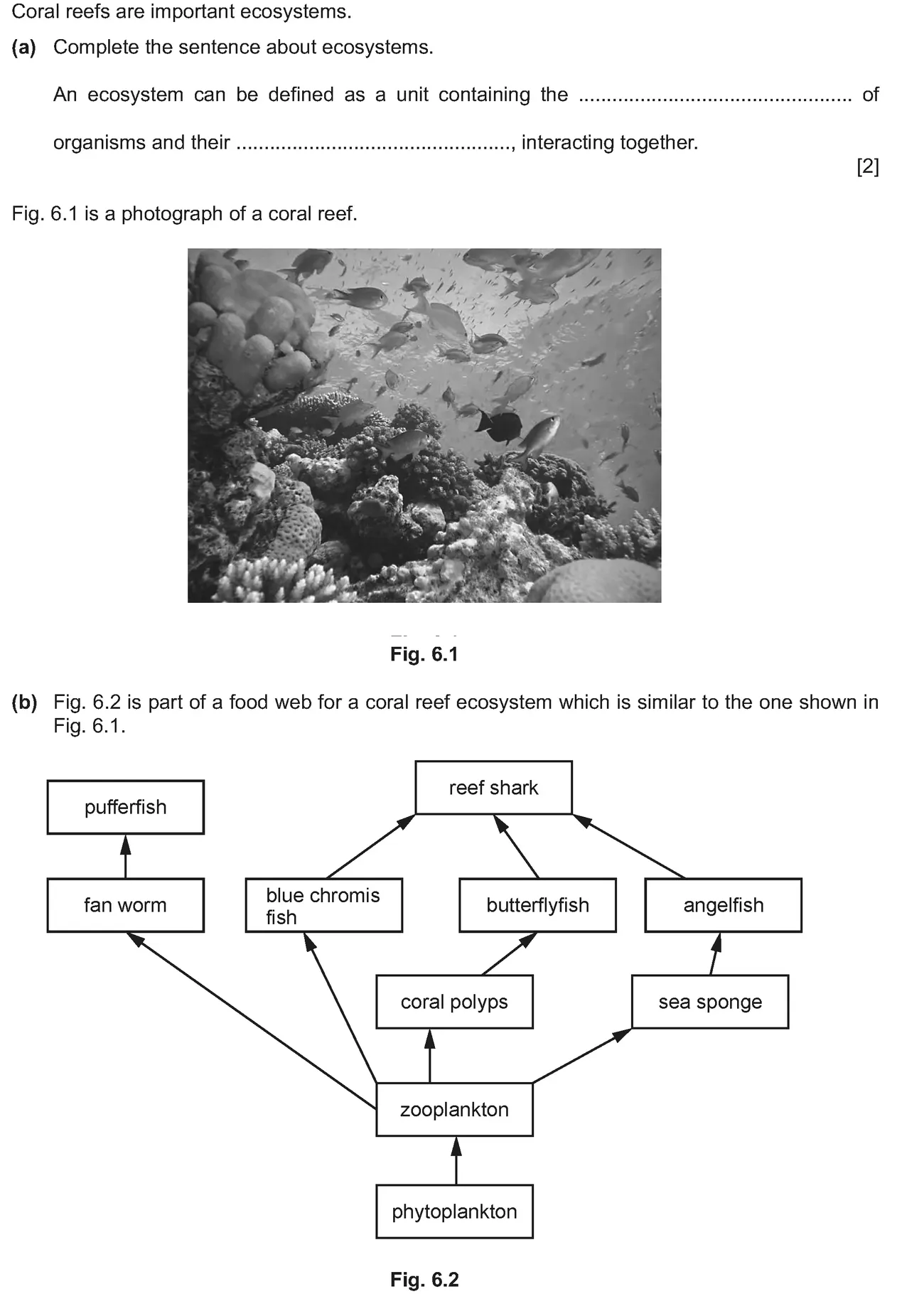
- Ecosystem a community of living organisms together with the non-living parts of their environment, such as soil, water and climate.
- An ecosystem is an environment that supports life and may be as big as the Sahara or as small as a pond.
- Biosphere the Earth itself is the biggest ecosystem, and each part of it is an ecosystem in its own right.
- Abiotic factors they are non-living, such as soil, temperature and water supply.
- Biotic factors they are living, such as food supply, numbers of predators and prey, and diseases and parasites.
Part 2 of 6Biomes and what decides them
- Biome a very large ecosystem covering a huge area with a characteristic climate and type of vegetation.
- Deciding factors temperature and rainfall decide which biome occurs in a place.
- Temperature and rainfall depend on latitude, altitude and distance from the sea.
Part 3 of 6Major land biomes
| Biome | Climate | Typical features |
|---|---|---|
| Tropical rainforest | Hot and wet all year | Tall evergreen trees, very high biodiversity |
| Savanna | Warm, distinct wet and dry seasons | Grassland with scattered trees, grazing animals |
| Desert | Very little rain | Cacti and succulents; animals active at night |
| Temperate forest | Moderate with four seasons | Deciduous trees that lose leaves in winter |
| Taiga (coniferous forest) | Long cold winters | Evergreen conifers with needle-like leaves |
| Tundra | Very cold, frozen soil | Mosses, lichens, low shrubs |
Part 4 of 6Rainforest, desert, temperate and aquatic ecosystems
- Tropical rainforests they grow where there is a lot of rain, sun and warmth all year.
- These ideal conditions support many species, so biodiversity is high.
- Deserts they are very dry areas with little water.
- Hot deserts and cold deserts (where water is frozen) are both tough for living organisms.
- Temperate regions temperature and light change a lot through the year.
- Summer has plenty of sunlight, warmth and water.
- Winter is cold with short days, so plants struggle to grow even when water is plentiful.
- They have many more species than deserts but far fewer than tropical rainforests.
- Aquatic ecosystems about 71% of the Earth's surface is water, so there are more aquatic than land ecosystems.
- Most water is salty (oceans and seas), and a small percentage is fresh water in rivers, streams, lakes and ponds.
- Coral reefs are the tropical rainforests of the sea, found only in warm, clean, relatively shallow seas.
Part 5 of 6Adaptation to the biome
- Desert plants they store water in thick stems and have spines instead of leaves, which cuts water loss.
- Tundra animals the Arctic fox has thick fur and a rounded body to reduce heat loss.
- Rainforest trees they grow very tall to compete for light and have leaves with drip tips to shed heavy rain.
Part 6 of 6Biodiversity
- Pattern it is highest near the equator, where warmth and water allow plants to grow all year and support many food chains.
- It is lower near the poles.
- Stability a high-biodiversity ecosystem is generally more stable, because other species can fill the role of a lost species.
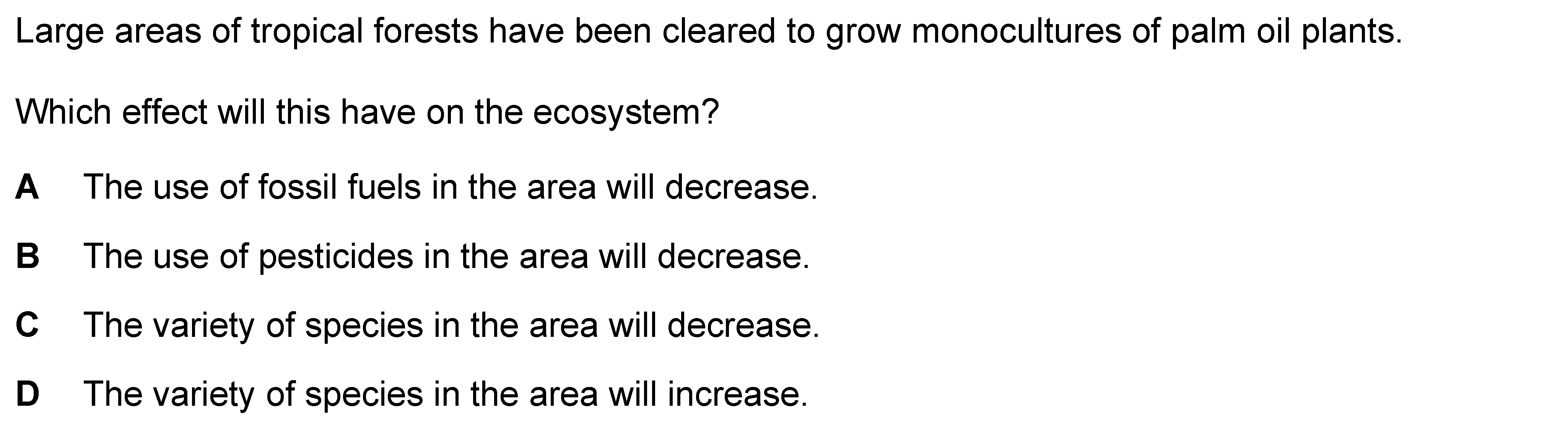
- Human threats deforestation, farming and pollution reduce biodiversity, which is why conservation matters.
Key terms
| Term | Meaning |
|---|---|
| Ecosystem | A community of organisms together with the non-living parts of their environment. |
| Biome | A very large ecosystem with a characteristic climate and vegetation. |
| Biosphere | The whole Earth as one ecosystem. |
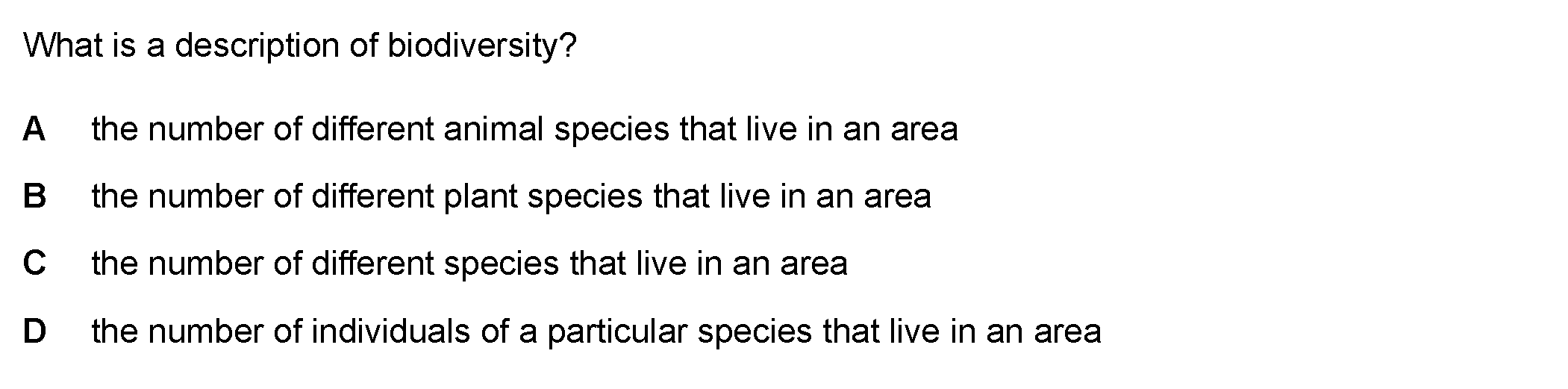
| Biodiversity | The variety of living organisms in an area. |
| Abiotic factor | A non-living part of the environment. |
| Biotic factor | A living part of the environment. |
Avoid these mistakes
Marked practiceQuizzes for this lesson
?What do you want to solve now?
✓Checkpoint Quiz
2 multiple-choice + 1 written questions from real exam papers on this lesson.
Question 1 of 2 1:30
Question 2 of 2 1:30
Answer key
1 C2 C
Written question 1 of 1 · part (a) (1 / 7) 3:00
Show the answer

Written question 1 of 1 · part (b)(i) (2 / 7) 3:00

Show the answer

Written question 1 of 1 · part (b)(ii) (3 / 7) 3:00

Show the answer

Written question 1 of 1 · part (b)(iii) (4 / 7) 3:00

Show the answer

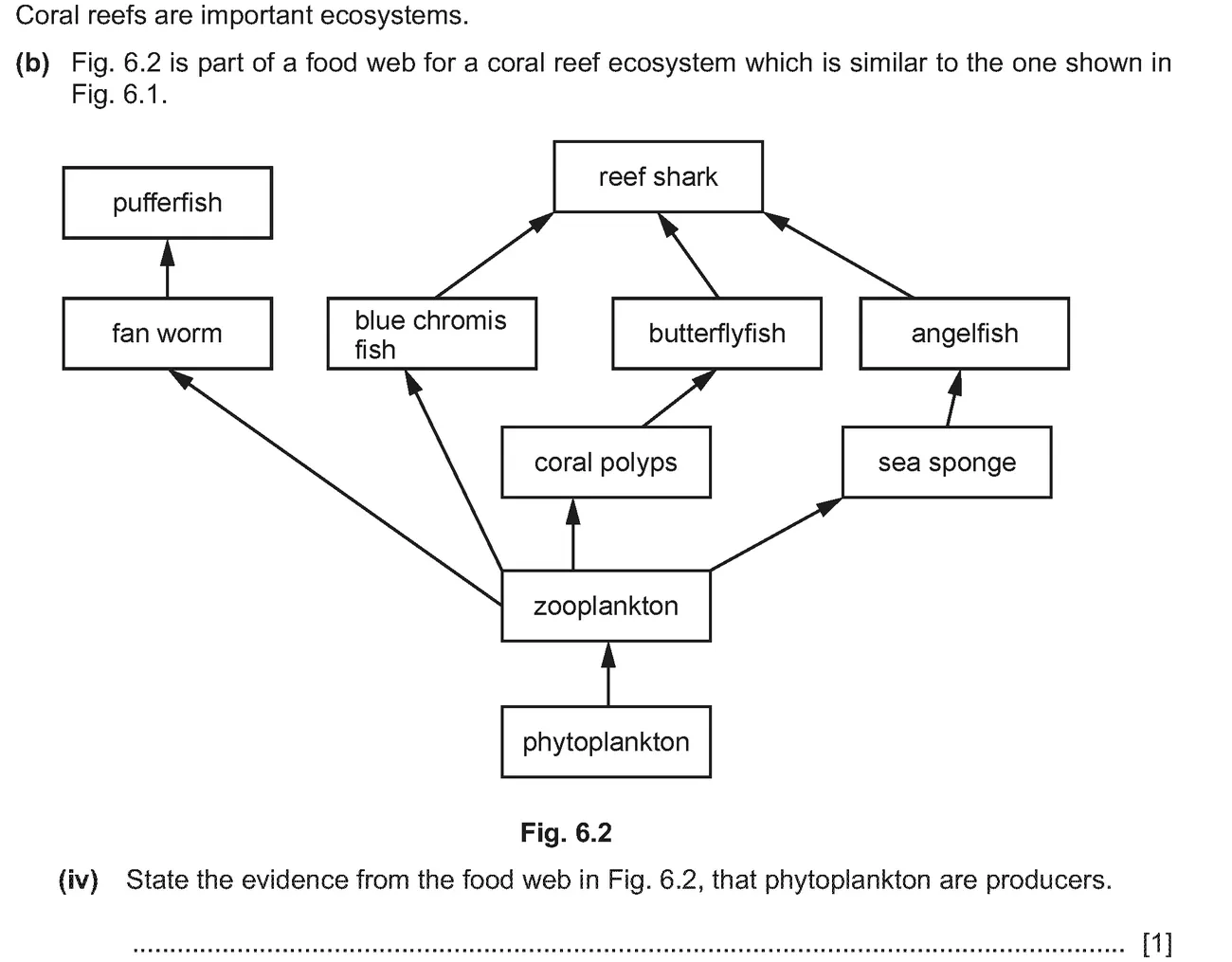
Written question 1 of 1 · part (b)(iv) (5 / 7) 3:00
Show the answer

Written question 1 of 1 · part (b)(v) (6 / 7) 3:00
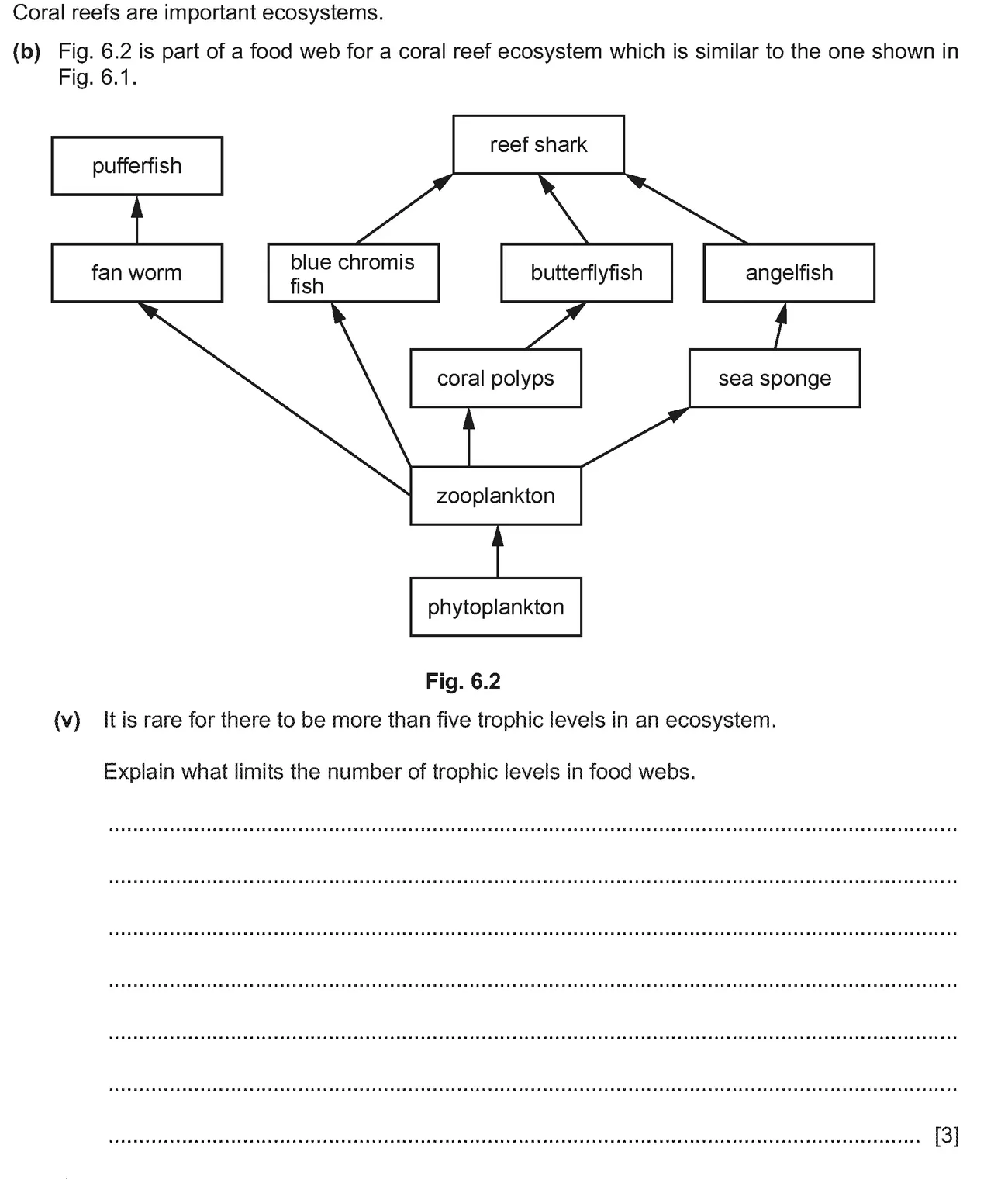
Show the answer

Written question 1 of 1 · part (c) (7 / 7) 3:00
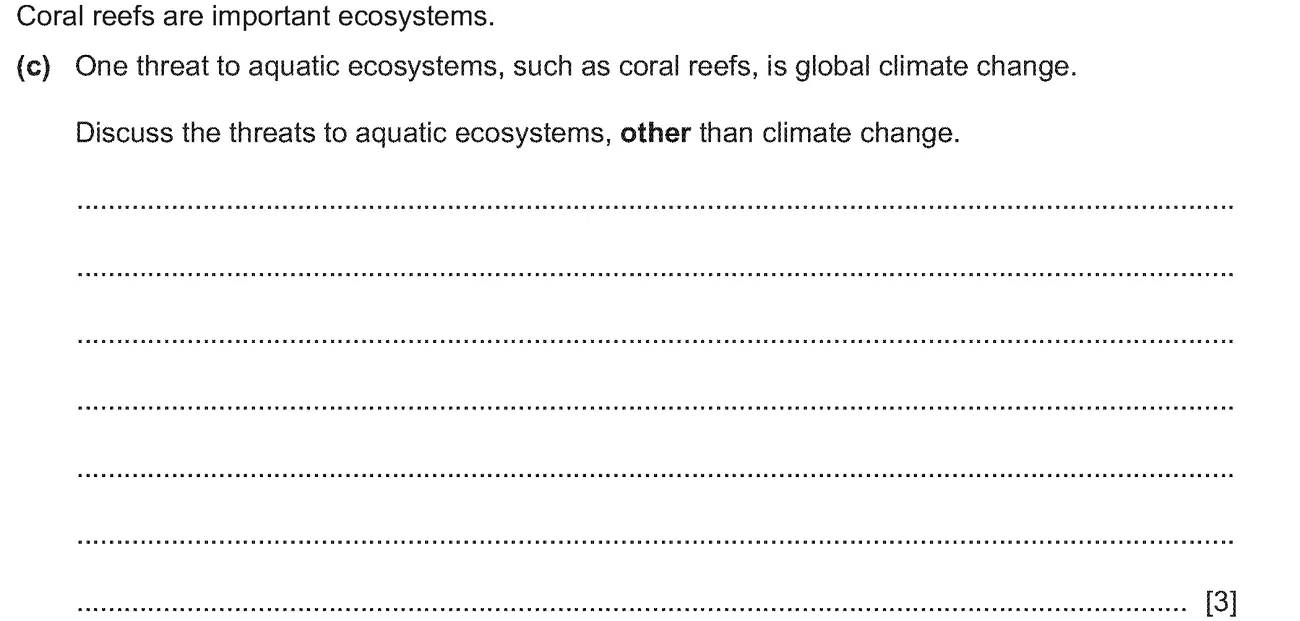
Show the answer

Each part of a written question is on its own screen. Write your answer first, then open "Show the answer" to check it against the mark scheme.
Last updated: