5.1Chapter 5: Respiration and the Respiratory System
Diffusion in biology — Alhussan Biology - Stage 8 Revision Notes & Topical Questions
5 min read 8 parts Lesson 1 of 12 2 quizzes
Biology 5.1 Diffusion in biology — Particle Movement Across Membranes — Alhussan International Academy — Biology (Stages 7–9) notes: Define diffusion, explain the factors that affect its rate, and give examples from living organisms.Matter — it is made of moving particles too sma…
- Passive process
- Net movement
- Smelling food
- Digestive system
- Pollination
- Cell membrane
Part 1 of 6What is diffusion
- Matter it is made of moving particles too small to see.
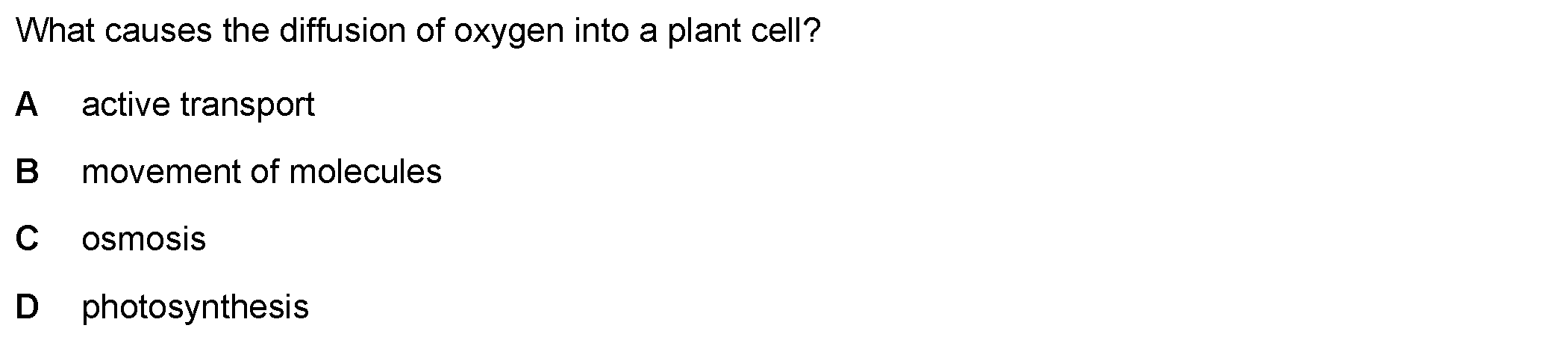
- It takes place in gases and liquids as a result of the random movement of particles.
- It happens because more particles move out of the crowded region than into it, until they are evenly spread.
- Passive process diffusion needs no energy from the cell.
- Net movement particles move in both directions, so the word "net" must be used, and they do not stop moving at equilibrium.
Part 2 of 6Diffusion in everyday life
- Smelling food particles escape from cooking food, where they are at a high concentration, and spread through the air down a concentration gradient.
- You breathe some in and your nose sends signals to the brain, which recognises the food.
- Digestive system digested food moves into the blood by diffusion down a concentration gradient, so it reaches the cells.
- Pollination flowers produce a scent that diffuses through the air to tell pollinators they are there.
- Insects such as butterflies and moths follow the scent up the concentration gradient until they reach the flower.
- Sharks blood from an injured animal diffuses through the water, and sharks swim up the concentration gradient, smelling it at very low concentrations.
Part 3 of 6Diffusion across cell membranes
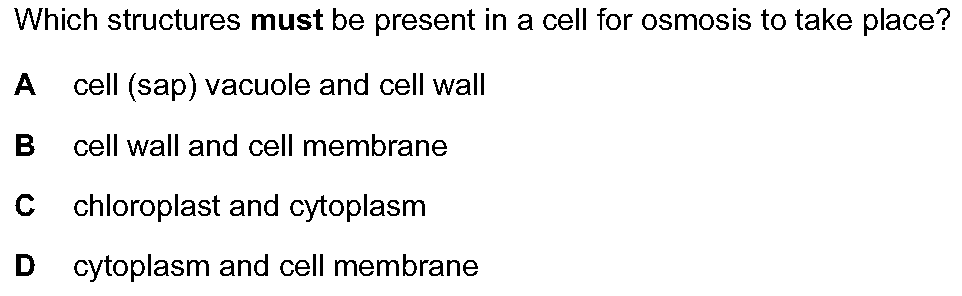
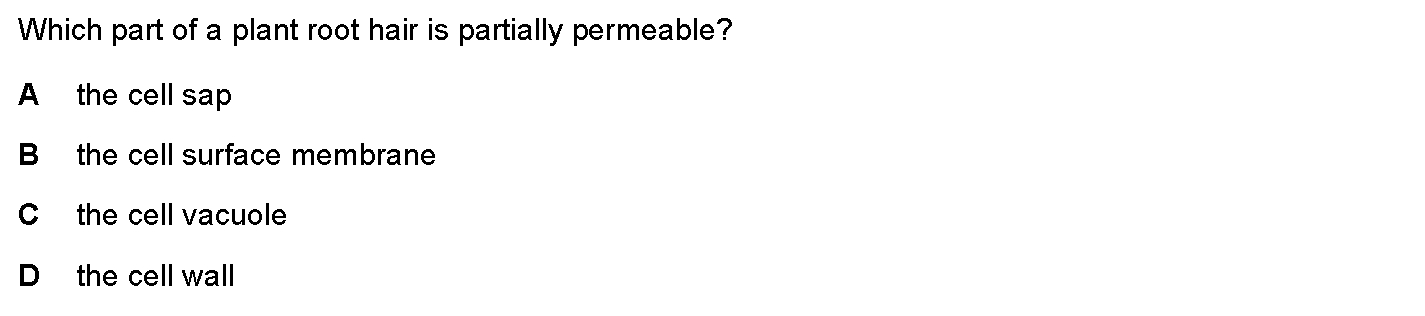
- Cell membrane it is partially permeable,
- so small molecules such as oxygen, carbon dioxide and water pass through but large molecules such as starch cannot.
- Oxygen it diffuses from the alveoli into the blood and from the blood into respiring cells, where its concentration is low because it is used up.
- Carbon dioxide it diffuses the opposite way, from respiring cells to the blood and then to the alveoli.
- Leaves carbon dioxide diffuses in through the stomata for photosynthesis, and oxygen diffuses out.
- Digested food glucose diffuses from the small intestine into the blood.
- Link diffusion is important for gas exchange in the respiratory system and for transport in the blood.
Part 4 of 6Factors affecting the rate of diffusion
| Factor | Effect on rate | Reason |
|---|---|---|
| Concentration gradient | A steeper gradient gives a faster rate | More particles move in one direction |
| Temperature | Higher gives faster | Particles have more kinetic energy |
| Surface area | Larger gives faster | More space for particles to cross |
| Distance | Shorter gives faster | Particles have a shorter way to travel |
- Exchange surfaces
- alveoli, villi and root hairs have a large surface area, a thin wall and a good blood supply that keeps the gradient steep by carrying the substance away.
Part 5 of 6Investigating diffusion
- Agar cubes cubes of agar jelly with indicator, of different sizes, are placed in acid and the time for the colour change to reach the centre is measured.
- Small cubes change colour faster because they have a larger surface area compared with their volume.
- Potassium permanganate a crystal placed in water at different temperatures shows how far the purple colour spreads in a given time.
- Planning state the variable changed, the variable measured and the variables controlled, and repeat to get a mean.
Part 6 of 6Diffusion compared with other processes
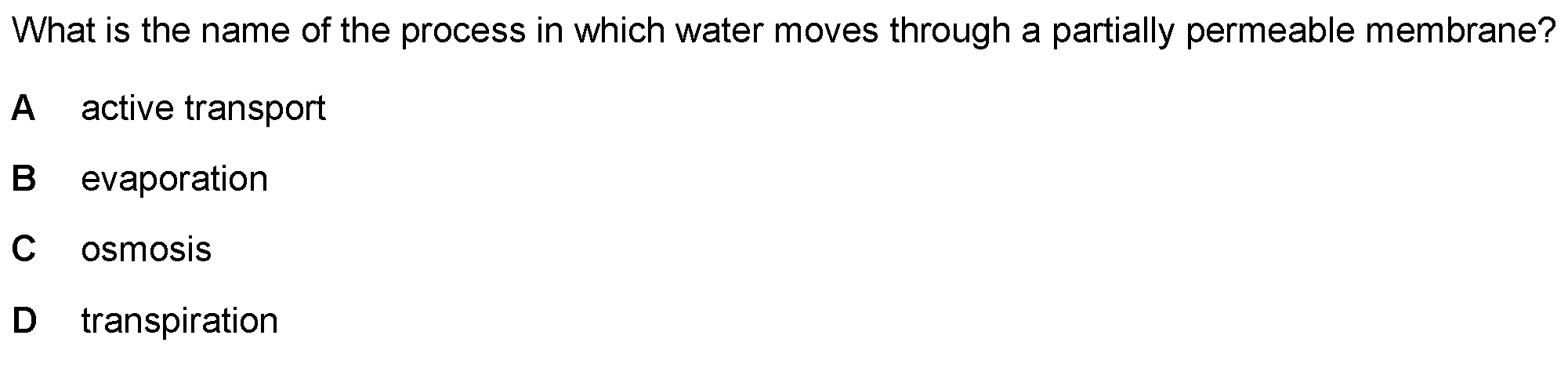
- Osmosis the diffusion of water across a partially permeable membrane.
- Active transport movement of substances against a concentration gradient, which needs energy from respiration.
- A root hair cell takes in mineral ions from soil where their concentration is low.
- Identifying the process check whether the movement is down or against the concentration gradient and whether energy is needed.
Key terms
| Term | Meaning |
|---|---|
| Diffusion | The net movement of particles from high to low concentration. |
| Concentration gradient | The difference in concentration between two regions. |
| Partially permeable membrane | A membrane that lets some substances pass but not others. |
| Passive process | A process that does not need energy from the cell. |
| Surface area | The total area of a surface. |
| Equilibrium | An even spread of particles. |
Avoid these mistakes
Marked practiceQuizzes for this lesson
?What do you want to solve now?
✓Checkpoint Quiz
15 multiple-choice questions from real exam papers on this lesson.
Question 1 of 15 1:30
Question 2 of 15 1:30
Question 3 of 15 1:30

Question 4 of 15 1:30
Question 5 of 15 1:30

Question 6 of 15 1:30

Question 7 of 15 1:30

Question 8 of 15 1:30
Question 9 of 15 1:30
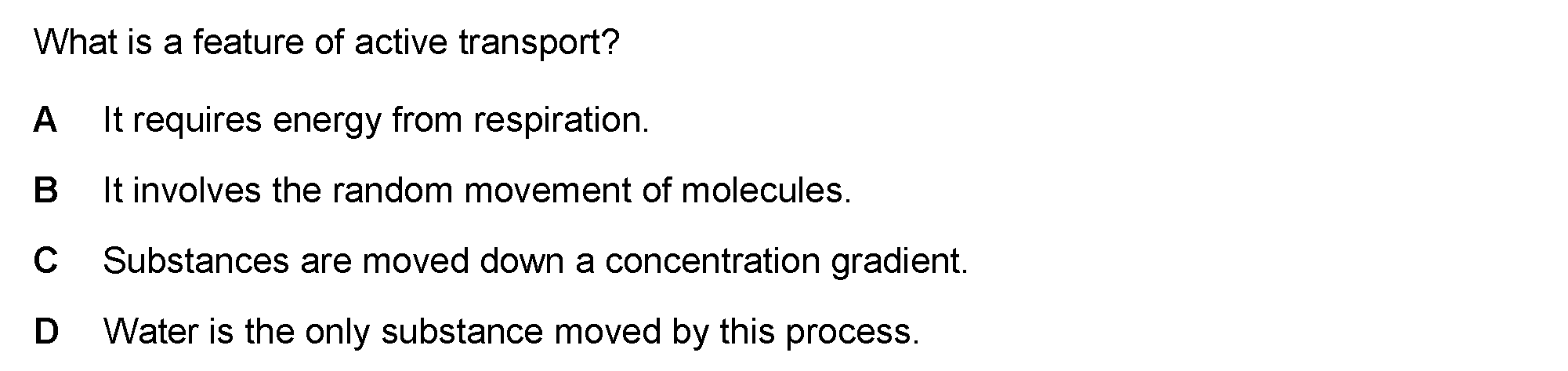
Question 10 of 15 1:30
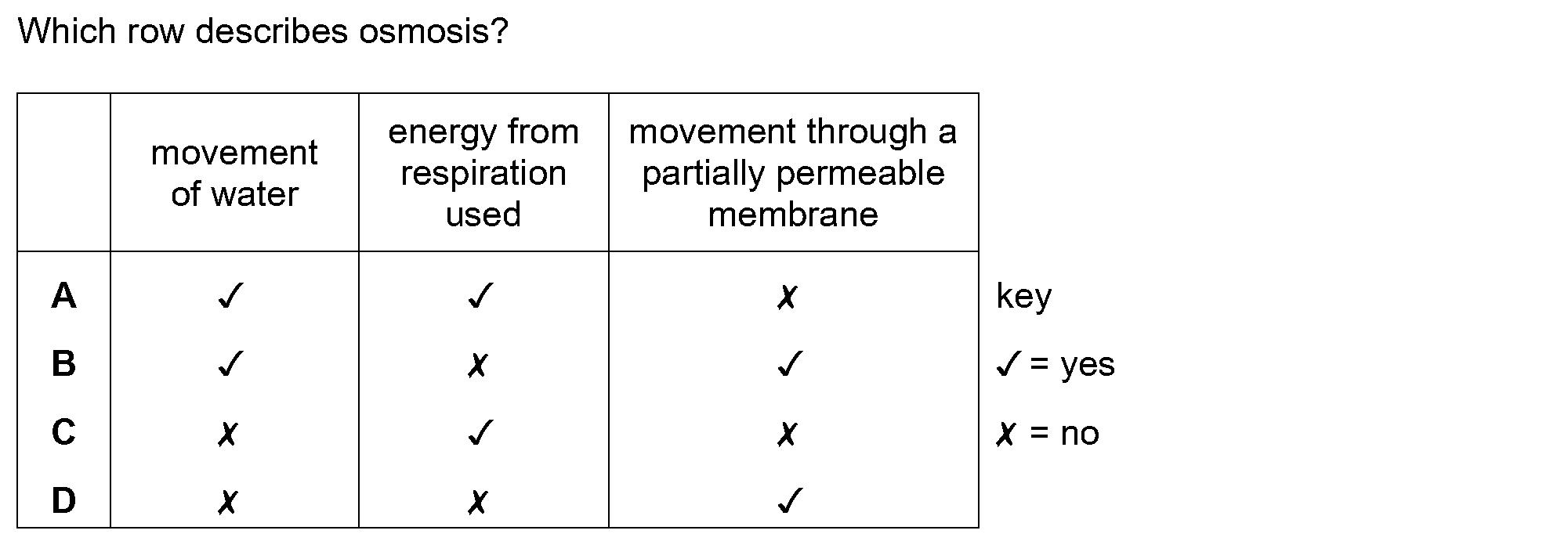
Question 11 of 15 1:30
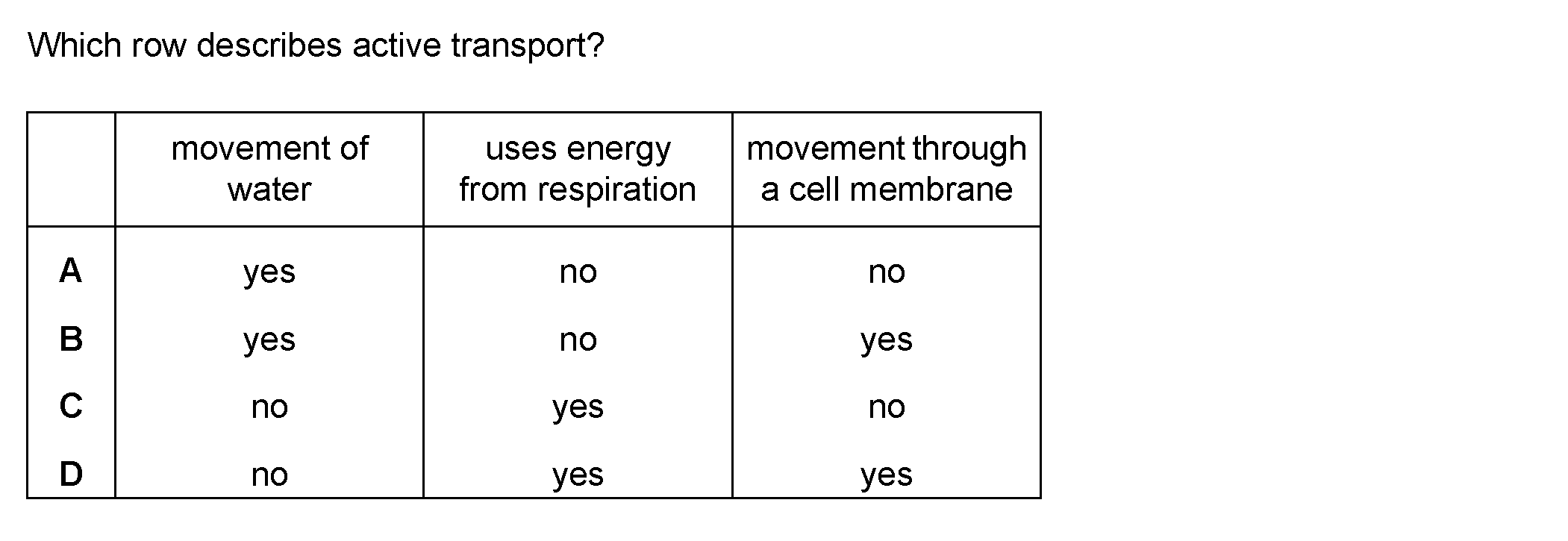
Question 12 of 15 1:30
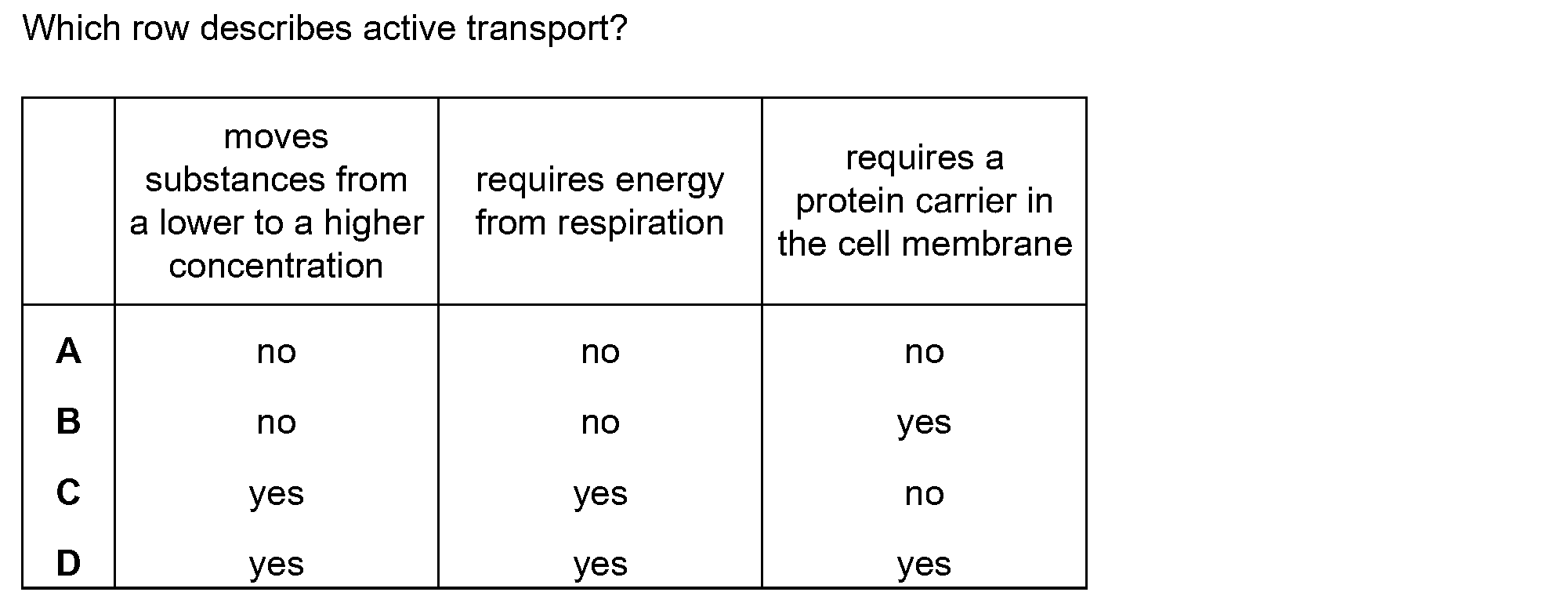
Question 13 of 15 1:30

Question 14 of 15 1:30

Question 15 of 15 1:30

Answer key
1 D2 B3 A4 C5 B6 A7 B8 B9 A10 B11 D12 D13 D14 A15 C
Last updated: