2.6Chapter 2: Elements, Compounds and Mixtures
Compounds — Alhussan Chemistry - Stage 7 Revision Notes & Topical Questions
5 min read 9 parts Lesson 6 of 13 4 quizzes
Lesson summary
2.6 Compounds — Chemical Bonding and New Properties — Alhussan International Academy — Chemistry (Stages 7–9) notes: Define compound and molecule, explain how compounds form and why a compound's properties differ from those of the elements in it.Compound = a substance made up of …
- Fixed ratio
- Separation
- Carbon compounds
- Limitations
- Chemical bonds
- Hydrogen, oxygen and water
Section 1 of 9What a compound is
Compound
Compound a substance made up of atoms of two or more different elements strongly joined together, in fixed proportions.
- An element has one type of atom, but a compound has two or more types.
Example
- Example in tooth enamel the atoms of calcium, phosphorus and oxygen are not just mixed up but joined to make one substance, calcium phosphate.
Fixed ratio
- Fixed ratio water, H2O, always has two hydrogen atoms for every oxygen atom, and carbon dioxide always has one carbon atom for every two oxygen atoms.
- This fixed ratio is why each compound has its own formula.
Separation
- Separation a compound can only be split into elements by a chemical reaction, such as strong heating or electricity, and not by filtering.
Section 2 of 9Molecules
Molecule
Molecule a particle made up of two or more atoms strongly joined together.
Hydrogen
- Hydrogen in hydrogen gas atoms join in pairs, so the two-atom particles are molecules of hydrogen.
Oxygen
- Oxygen each molecule has two oxygen atoms.
Water
- Water each molecule has three atoms: one oxygen atom joined to two hydrogen atoms.
Carbon compounds
- Carbon compounds carbon and oxygen make two different compounds.
- A carbon monoxide molecule has one carbon atom joined to one oxygen atom, and the gas is poisonous.
- A carbon dioxide molecule has one carbon atom joined to two oxygen atoms,
- and the gas is not poisonous but is a greenhouse gas that makes the Earth's surface hotter.
Section 3 of 9Modelling molecules
Strength
- Strength a model of molecules made from coloured balls shows the number and type of atom in each particle.
Limitations
- Limitations real atoms are not coloured balls, and the model does not show that hydrogen and oxygen atoms are different sizes.
Section 4 of 9How compounds form
Chemical bonds
- Chemical bonds atoms join by forming bonds that involve their outer electrons.
- In covalent bonding atoms share electrons, which is typical of non-metals as in water and carbon dioxide.
- In ionic bonding electrons transfer from a metal to a non-metal so charged ions form and attract each other, as in sodium chloride.
Reaction
- Reaction a chemical reaction takes place and new substances with new properties are formed.
Section 5 of 9New properties
New properties
Reason
- Reason the properties of a substance depend on its particles, and elements and compounds have different particles.
Hydrogen, oxygen and water
- Hydrogen, oxygen and water hydrogen is a gas that burns easily, oxygen is a gas that helps other substances burn,
- and water is a liquid that puts out fires.
Tooth enamel
- Tooth enamel calcium fizzes in water and phosphorus is poisonous and catches fire easily, yet the compound enamel protects teeth.
| Compound | Elements | Properties of the compound |
|---|---|---|
| Sodium chloride | Sodium (soft, reactive metal) and chlorine (toxic gas) | Safe white solid used as food seasoning |
| Water | Hydrogen (flammable gas) and oxygen (supports burning) | Liquid that puts out fires |
| Iron sulfide | Iron (magnetic) and sulfur (yellow) | Grey-black and not magnetic |
Section 6 of 9Compound or mixture
1Mixture of iron and sulfur
- Mixture of iron and sulfur a magnet can separate it, because each substance keeps its own properties and they can be mixed in any ratio.
2Heating them strongly
- Heating them strongly it makes iron sulfide, a compound, and energy is given out.
- A magnet no longer works because the iron is chemically bonded to the sulfur.
- The new substance cannot be separated by physical means.
Section 7 of 9Evidence of chemical change
Signs
- Signs a change in colour, heat or light given out, a gas produced, a new solid appearing, or a change that cannot easily be reversed.
Magnesium
- Magnesium burning it in air gives a bright white flame and white magnesium oxide, whose mass is greater than the magnesium because oxygen has joined it.
- Atoms are conserved, and the extra mass is the oxygen bonded to the metal.
Section 8 of 9Key terms
| Term | Meaning |
|---|---|
| Compound | A substance with atoms of two or more elements strongly joined together. |
| Molecule | A particle of two or more atoms strongly joined together. |
| Chemical bond | A force of attraction that holds atoms together. |
| Mixture | Substances together that are not chemically joined. |
| Element | A substance with only one type of atom. |
| Formula | Symbols and numbers showing the atoms in a substance. |
Section 9 of 9Exam technique
1
Thinking a compound keeps the properties of its elements.
2
Believing a compound is the same as a mixture of the elements.
3
Saying that compounds can be separated by filtering.
4
Thinking that bonds are physical objects rather than forces of attraction.
Marked practiceQuizzes for this lesson
?What do you want to solve now?
✓Checkpoint Quiz
8 multiple-choice questions from real exam papers on this lesson.
Question 1 of 8 1:30
Question 2 of 8 1:30
Question 3 of 8 1:30
Question 4 of 8 1:30

Question 5 of 8 1:30
Question 6 of 8 1:30
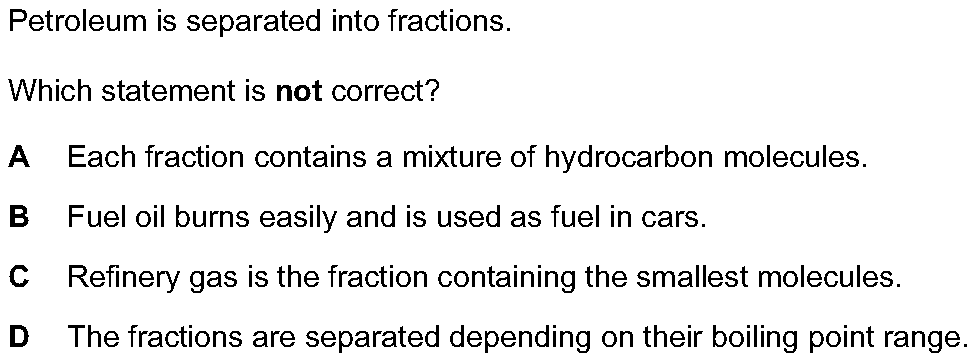
Question 7 of 8 1:30
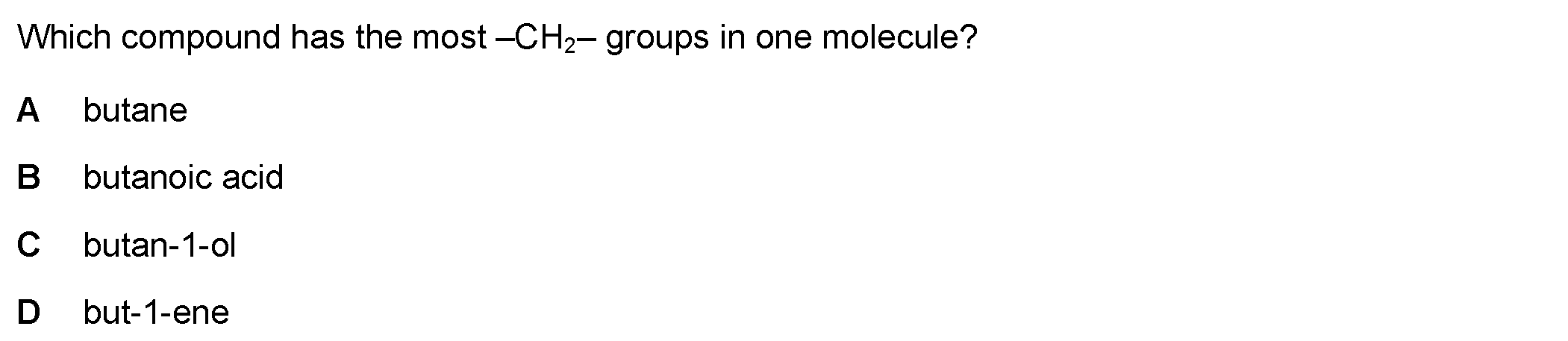
Question 8 of 8 1:30
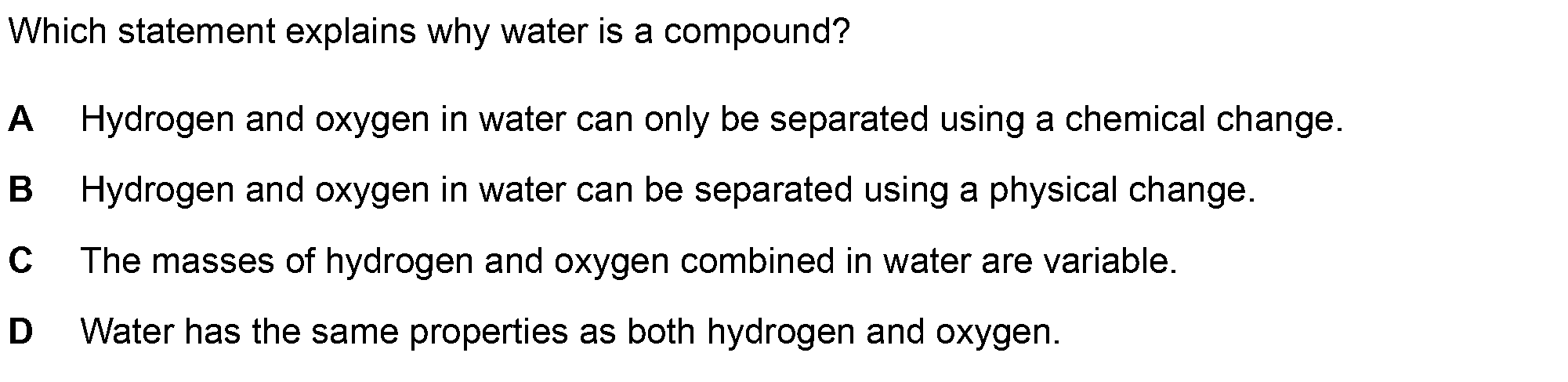
Score: 0 / 8
Answer key
1 A2 A3 D4 A5 B6 B7 C8 A
Last updated: