2.2Unit 2 — Multicellular Organisms
Control and Communication — SQA National 5 Biology Revision Notes & Topical Questions
5 min read 4 parts Lesson 5 of 39
Part 1 of 2The Central Nervous System (CNS) and neurons



The Central Nervous System (CNS) and neurons
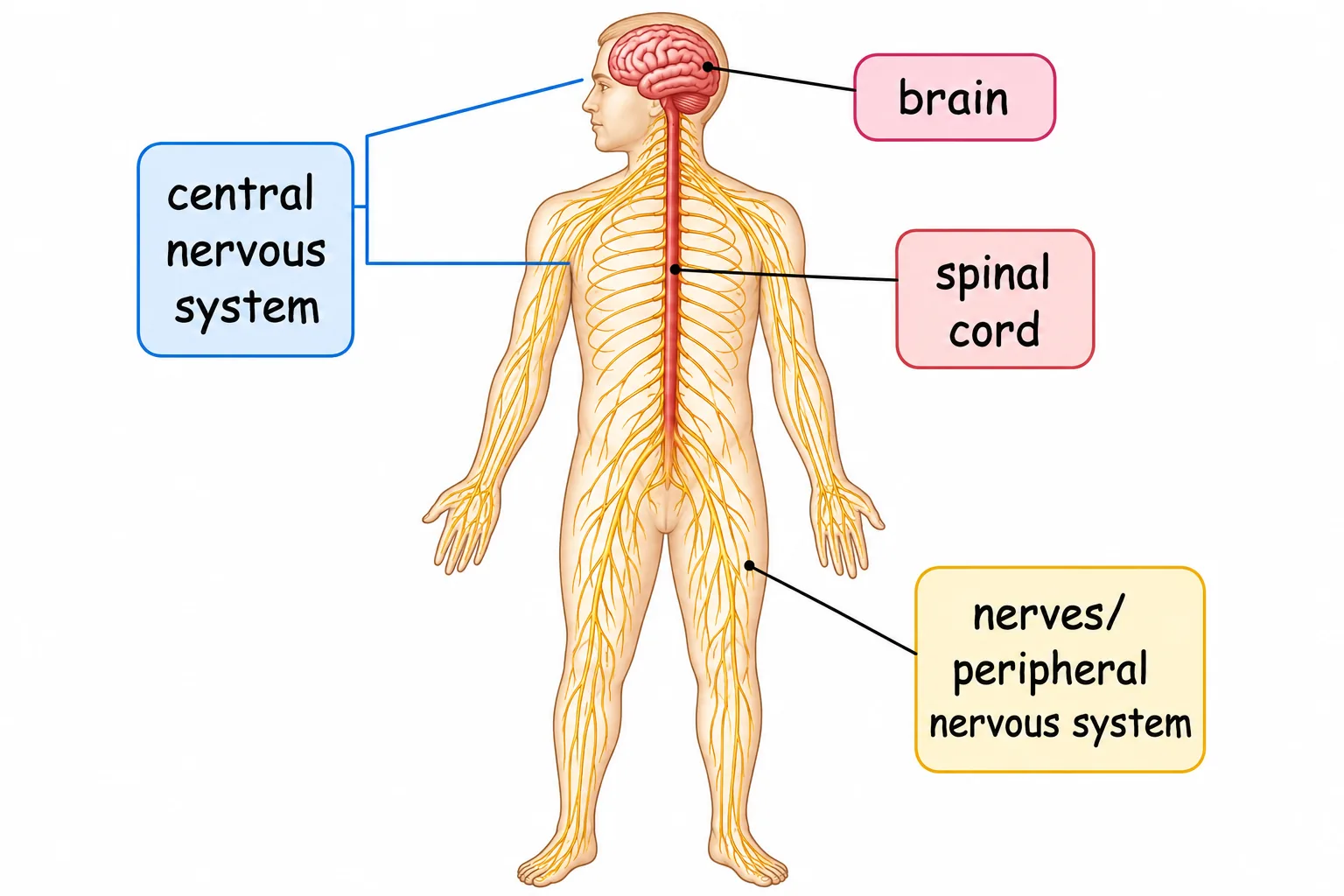
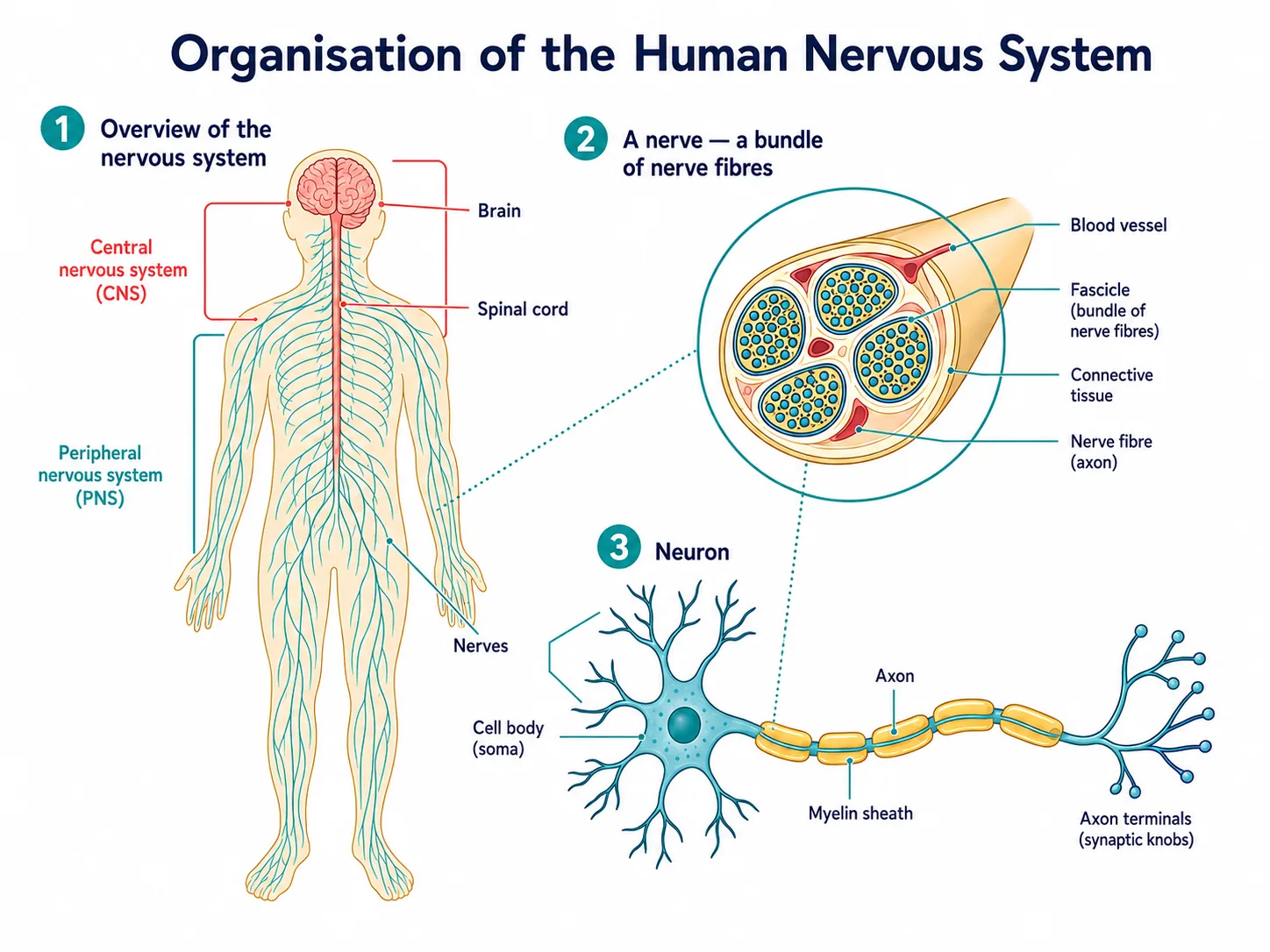
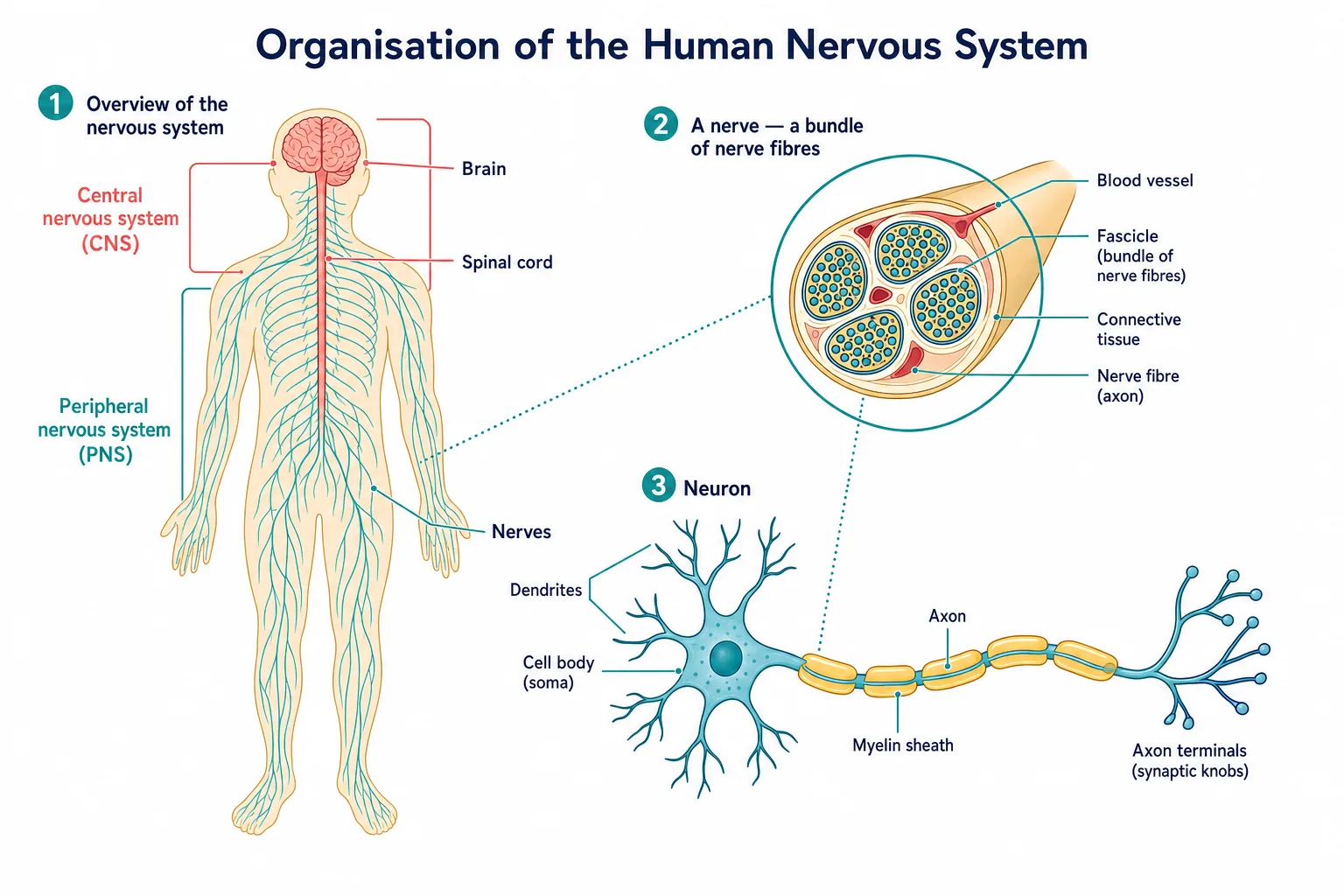
Components of CNS
The brain and spinal cord. Connected to body receptors and effectors by peripheral nerves.
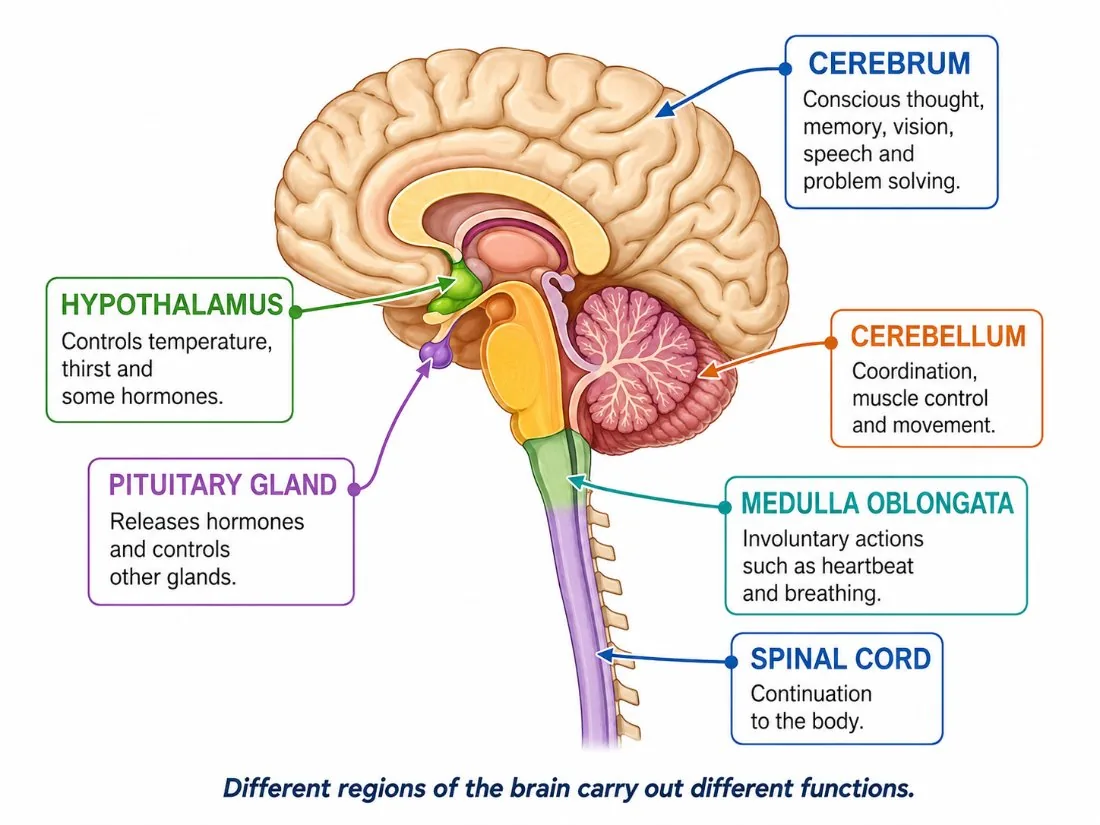
Main regions of the brain
- CerebrumControls conscious thought, intelligence, reasoning, memory, personality, and conscious senses.
- CerebellumCoordinates muscular movement, balance, and posture.
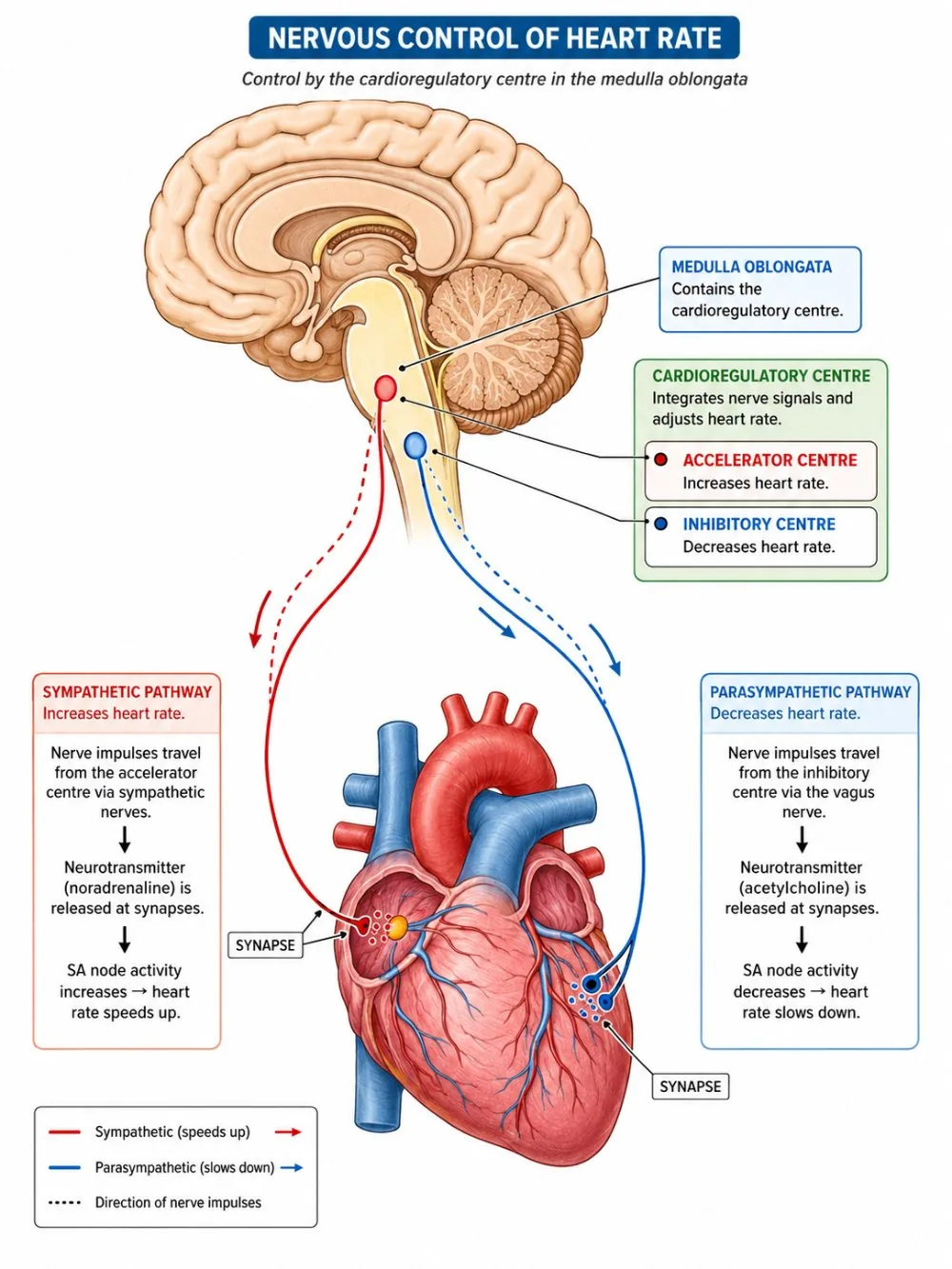
- MedullaControls involuntary vital functions including heart rate and breathing rate.
Types of neurons
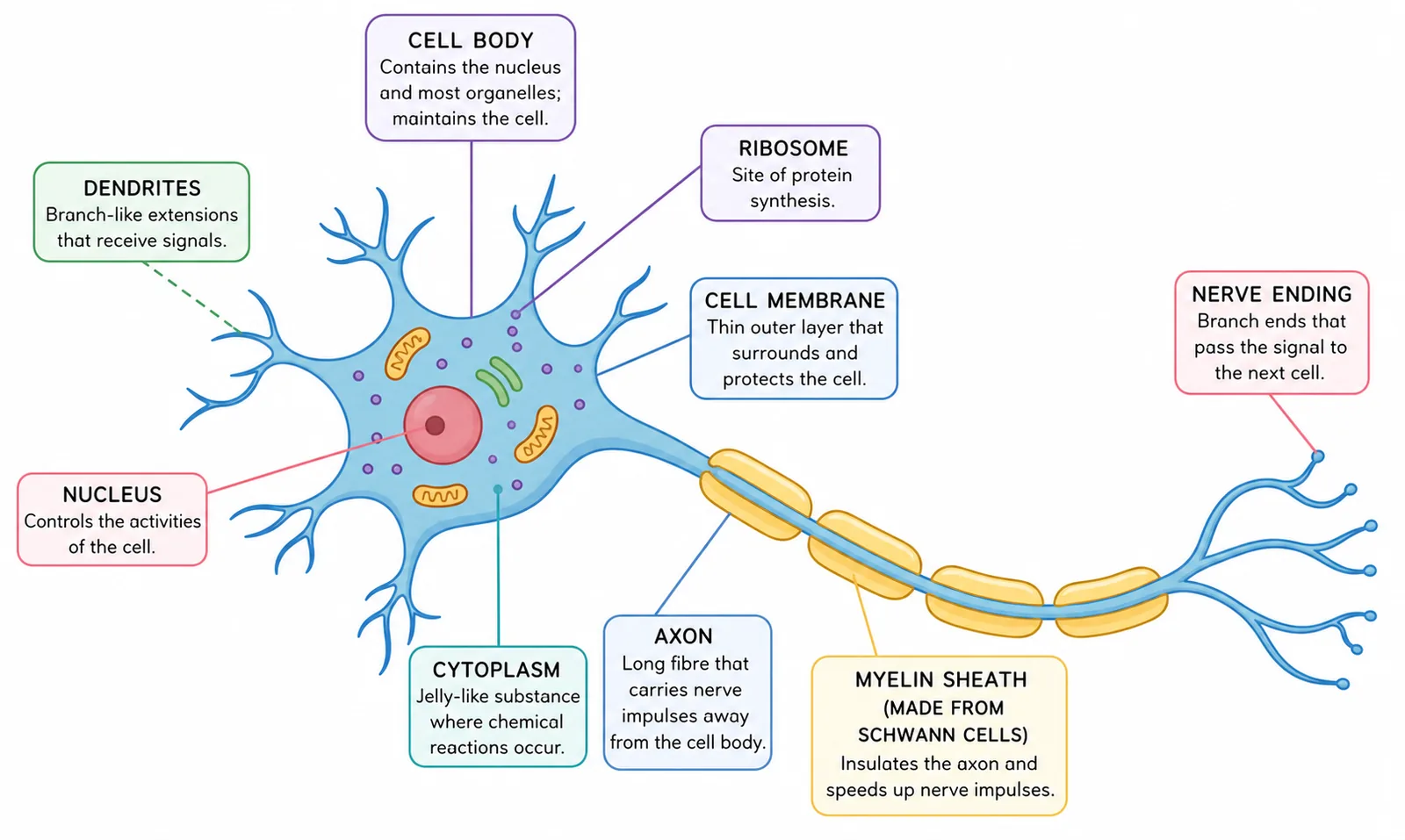
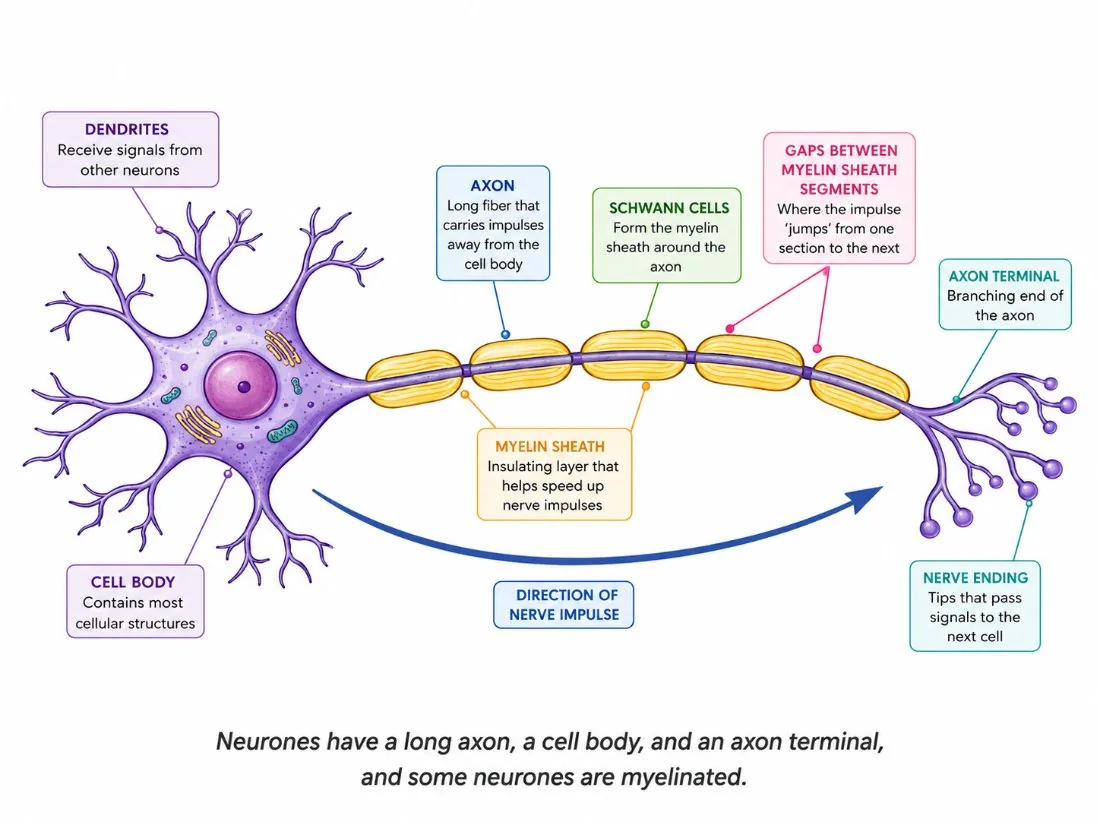
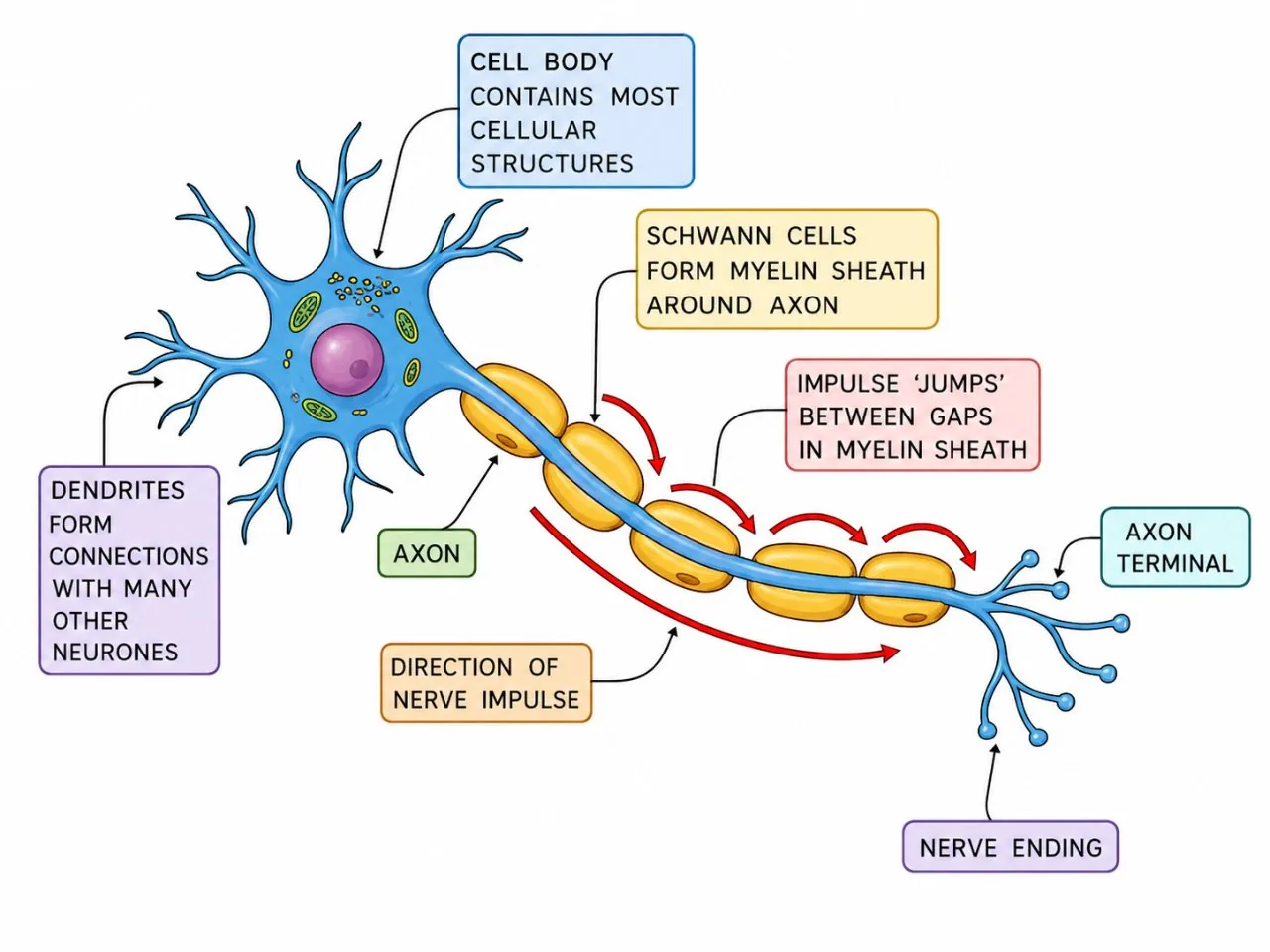
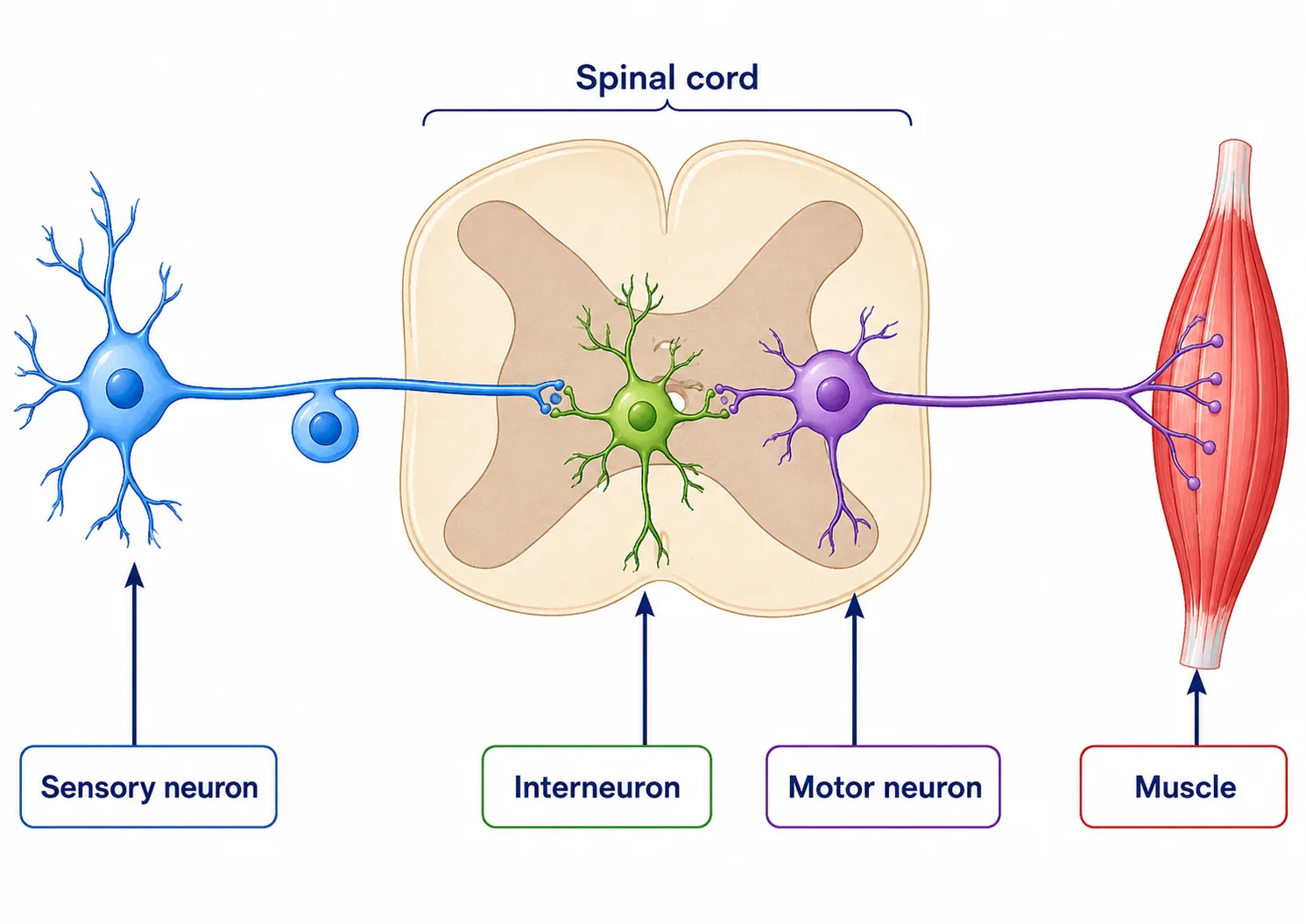
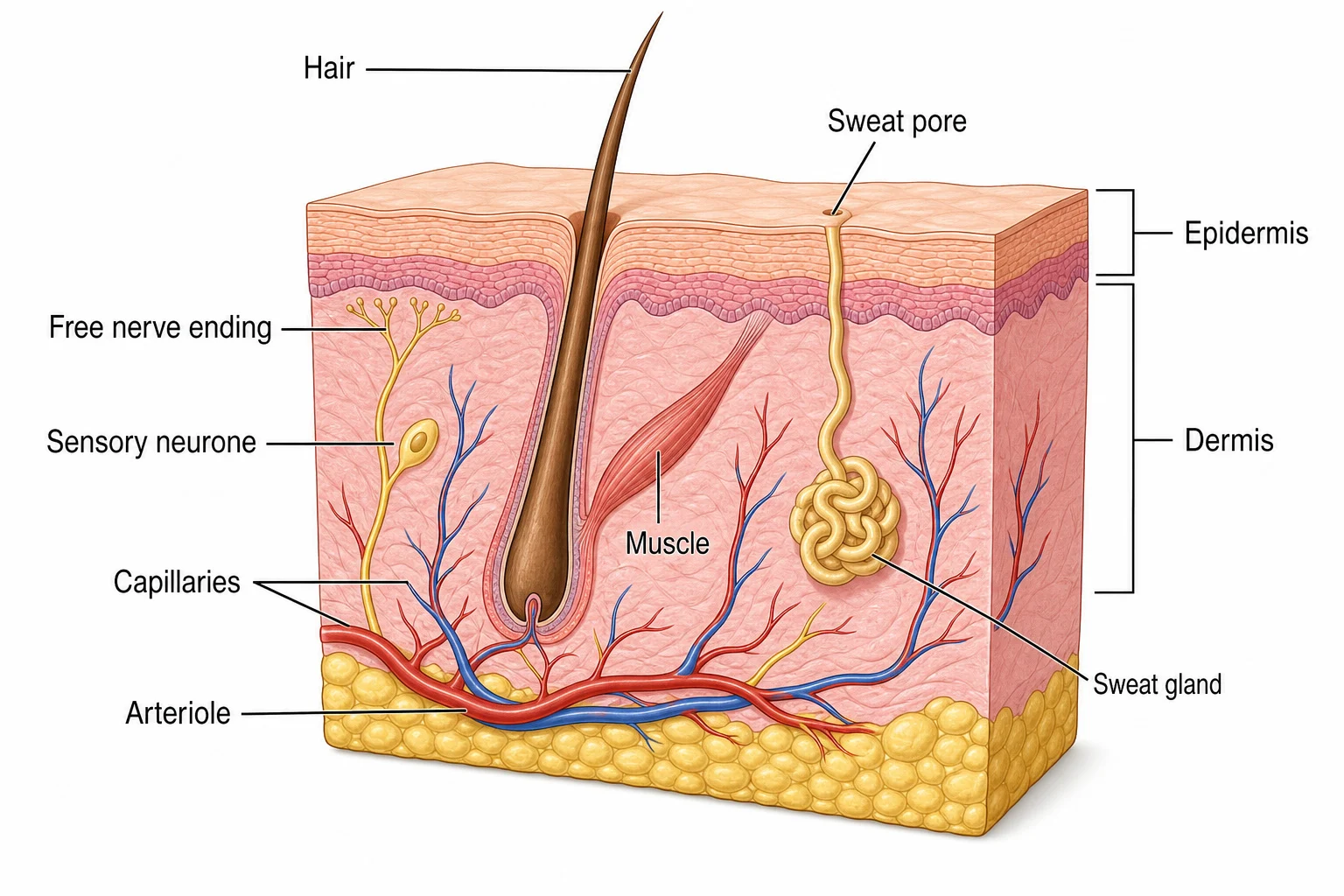
- Sensory neuronTransmits electrical nerve impulses from sense organ receptors to the CNS.
- Inter neuron
- Located inside the CNS;
- processes information and connects sensory neurons to motor neurons.
- Located inside the CNS;
- Motor neuronTransmits impulses from the CNS to an effector (muscle or gland).
Synapses
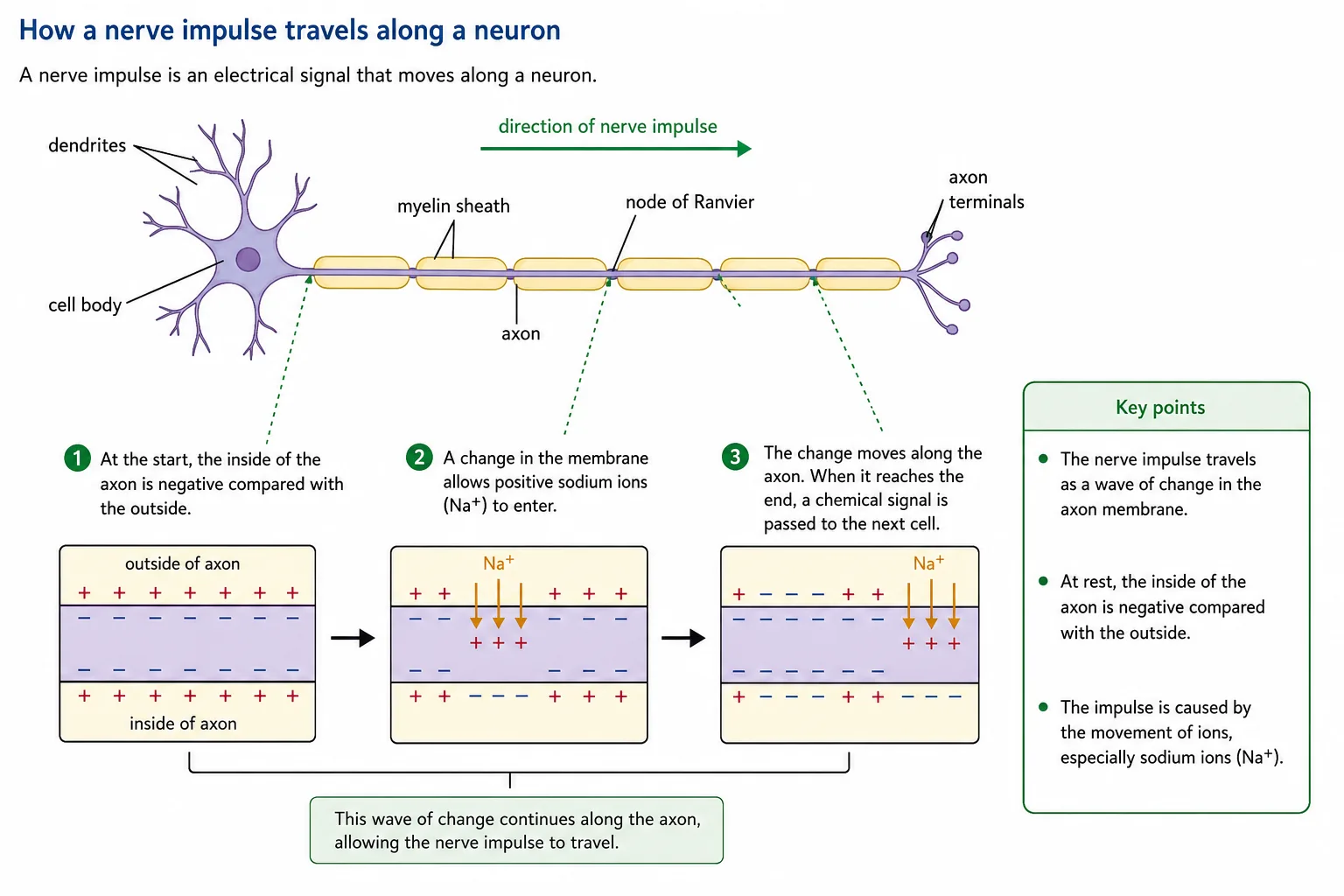
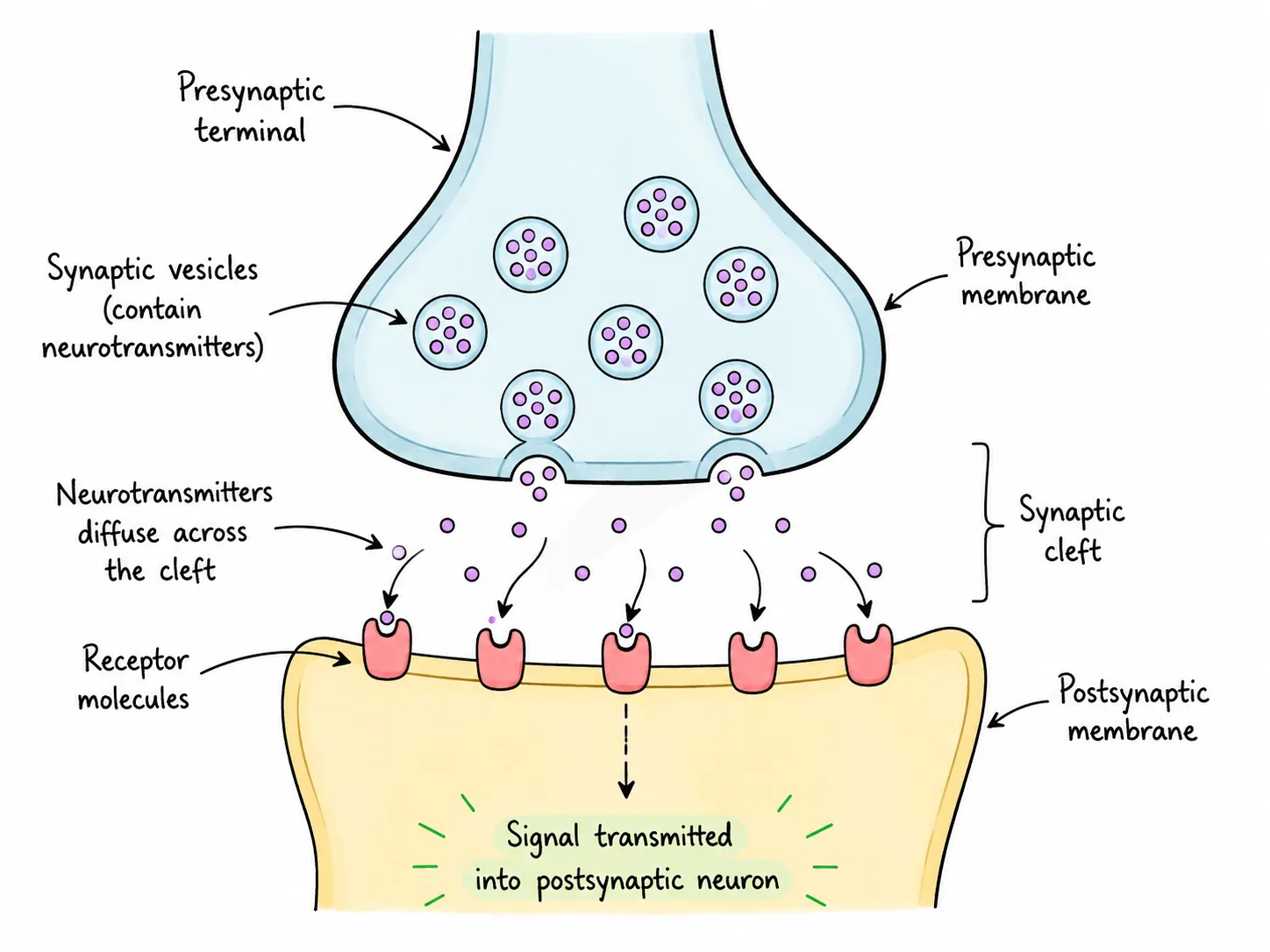
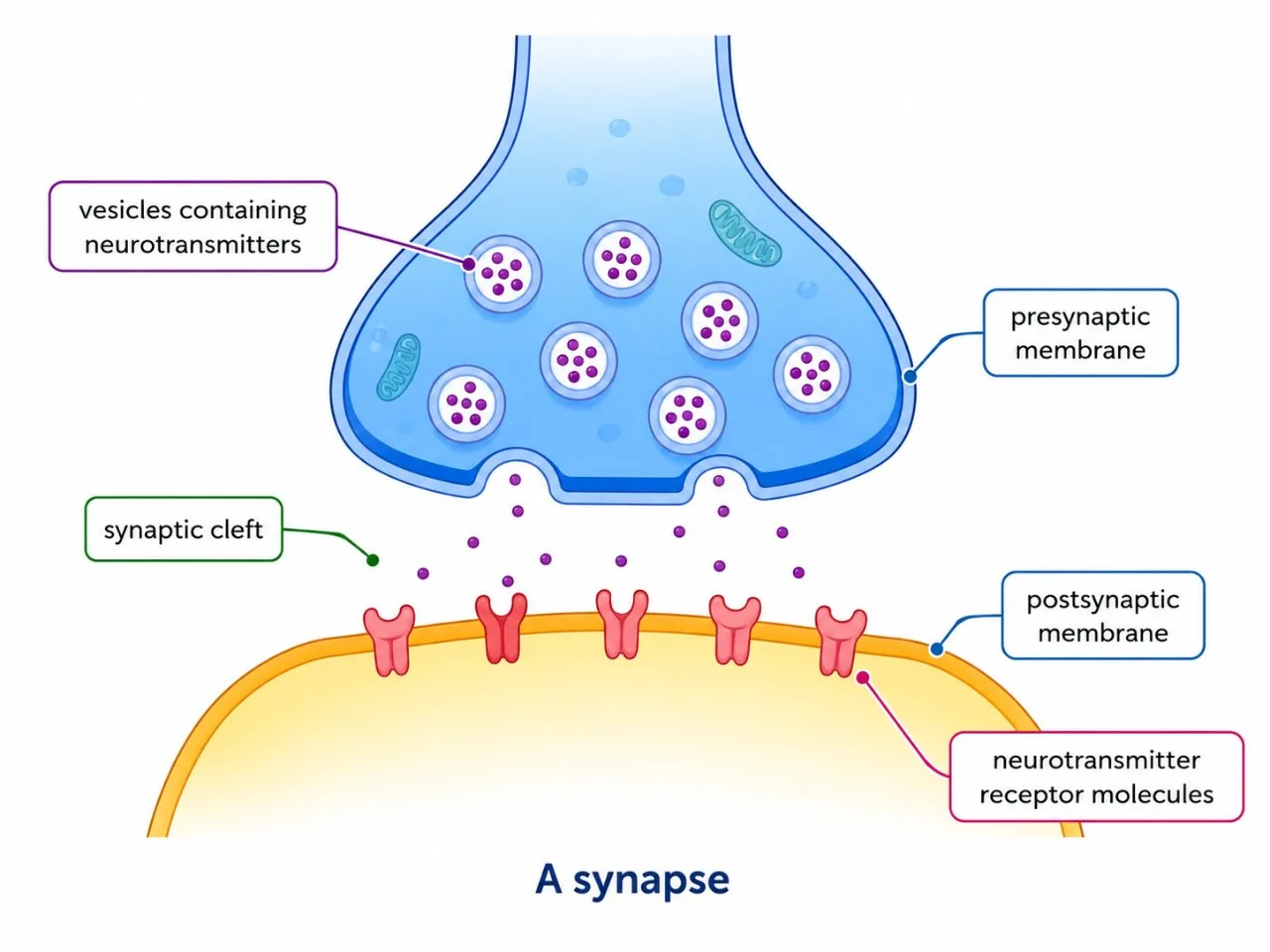
Microscopic gaps between adjacent neurons. Impulses cannot cross electrically; chemical neurotransmitters diffuse across the synapse to trigger an impulse in the next neuron.
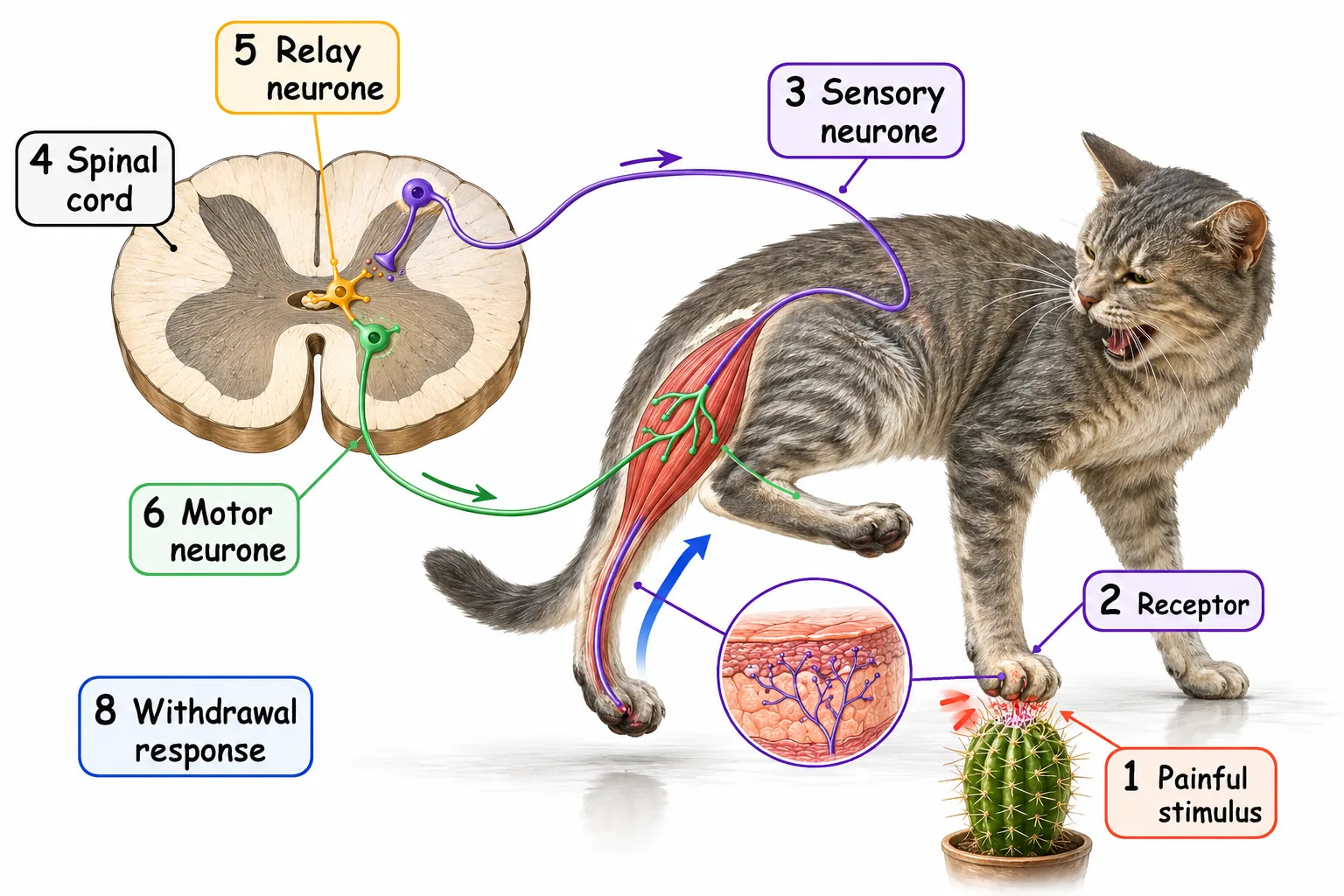
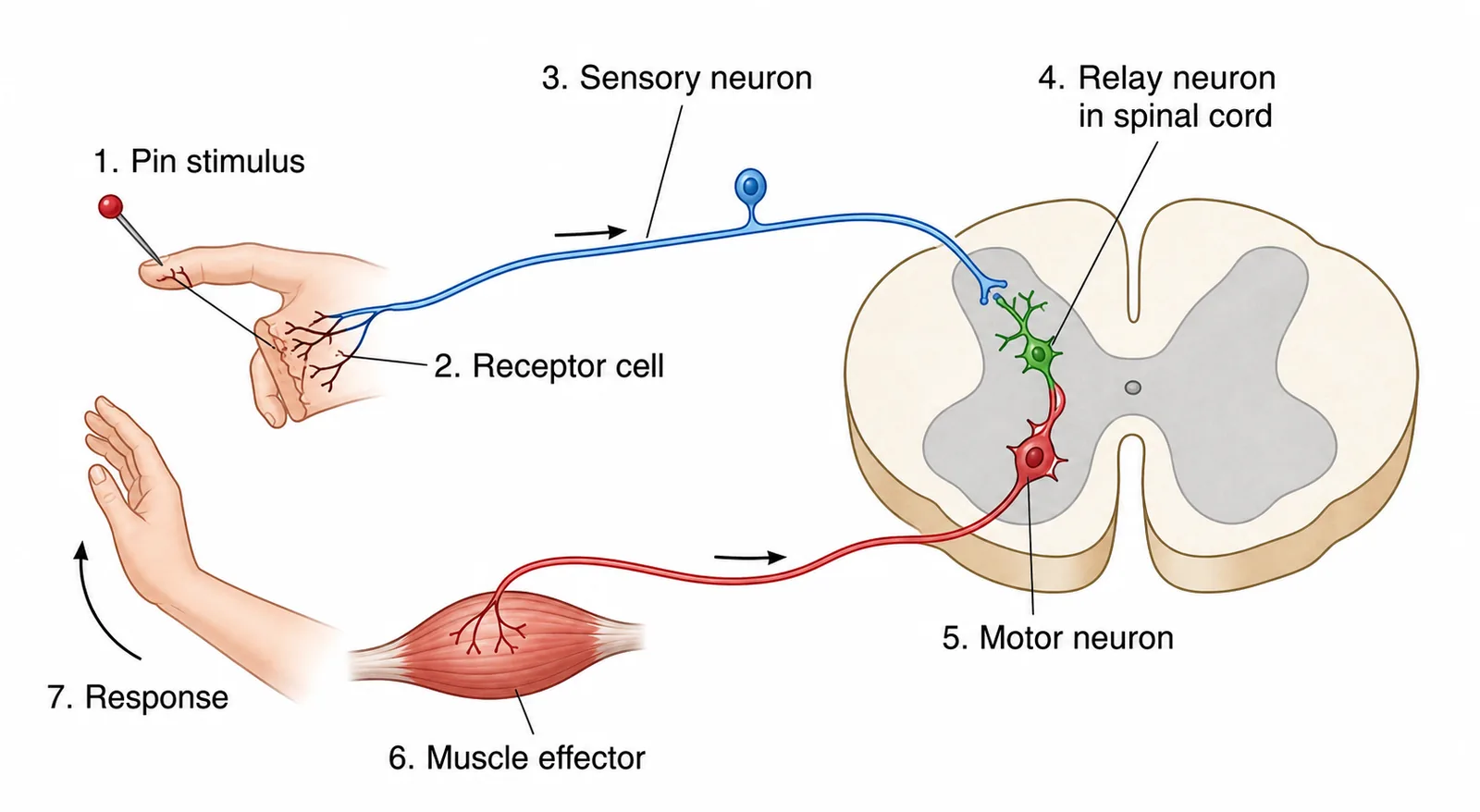
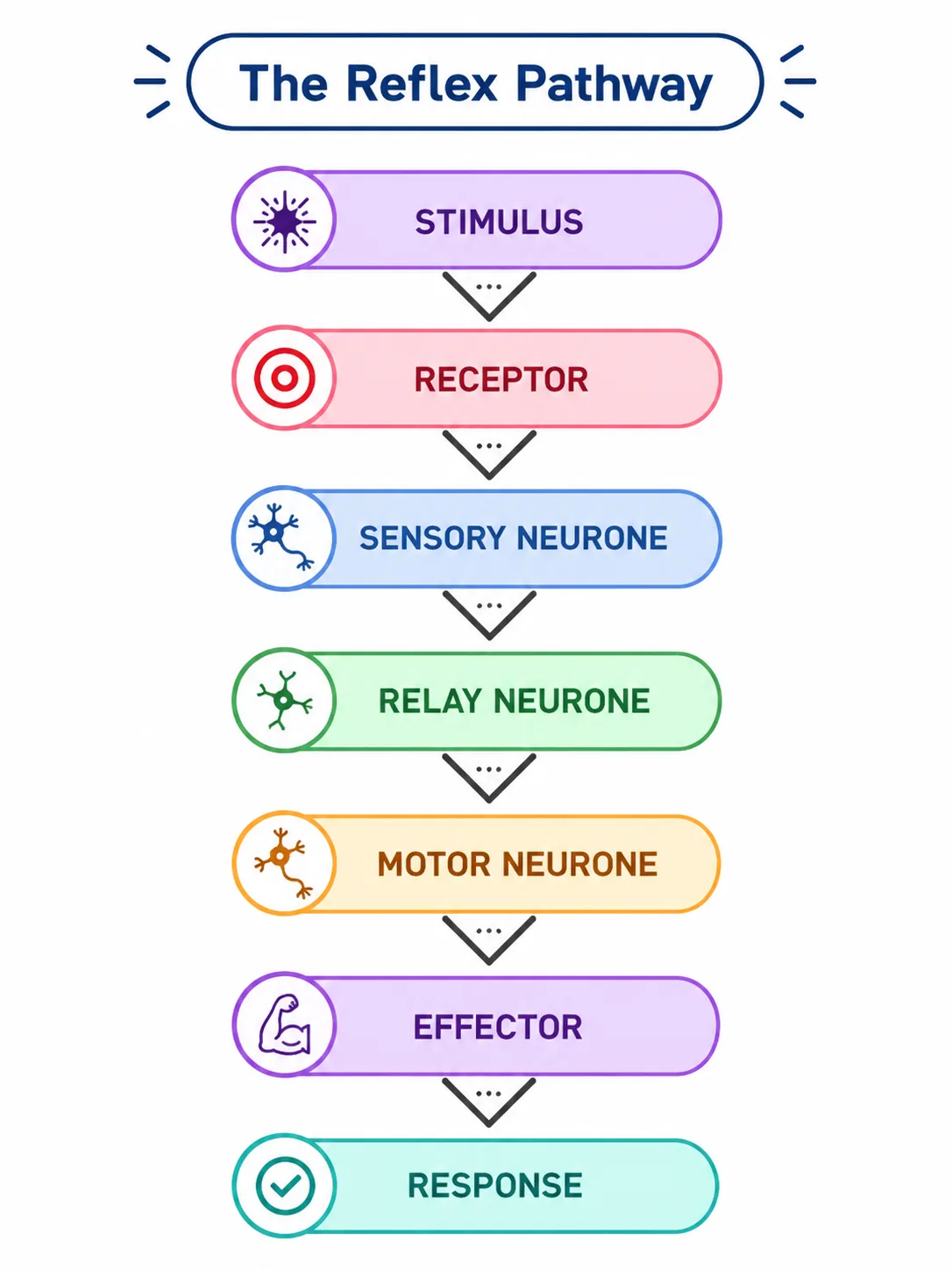
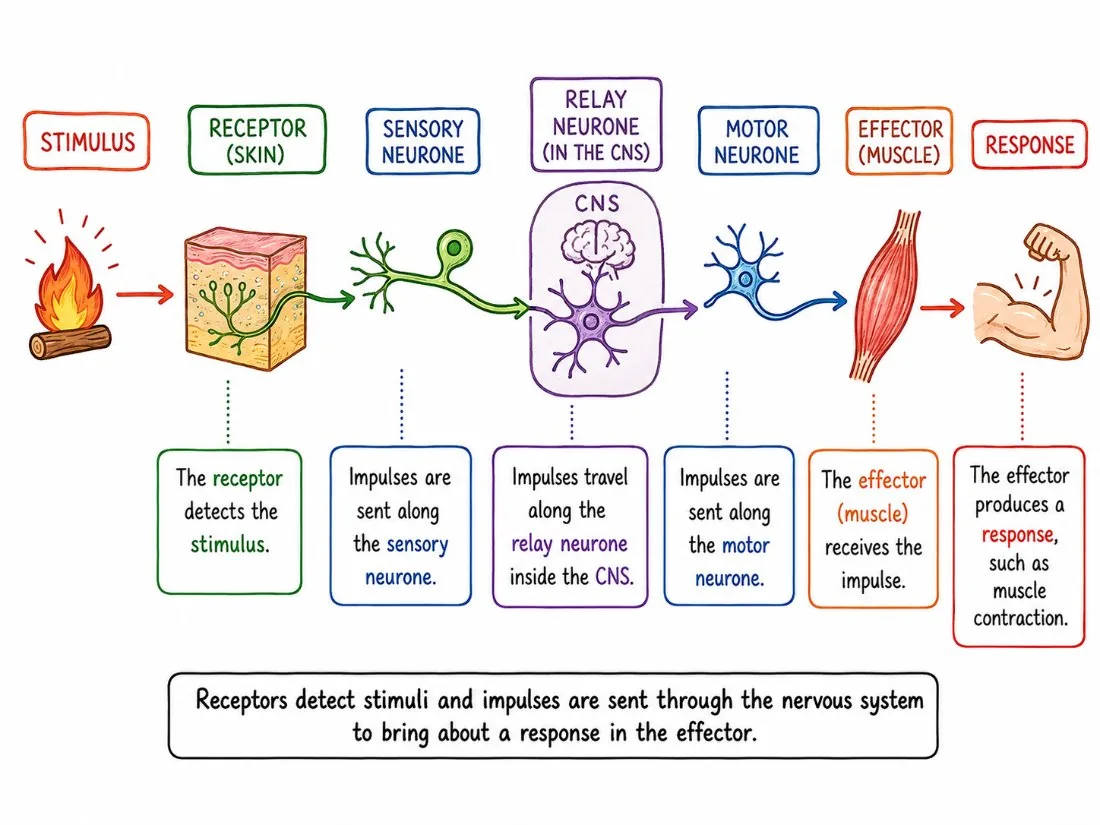
Reflex arc
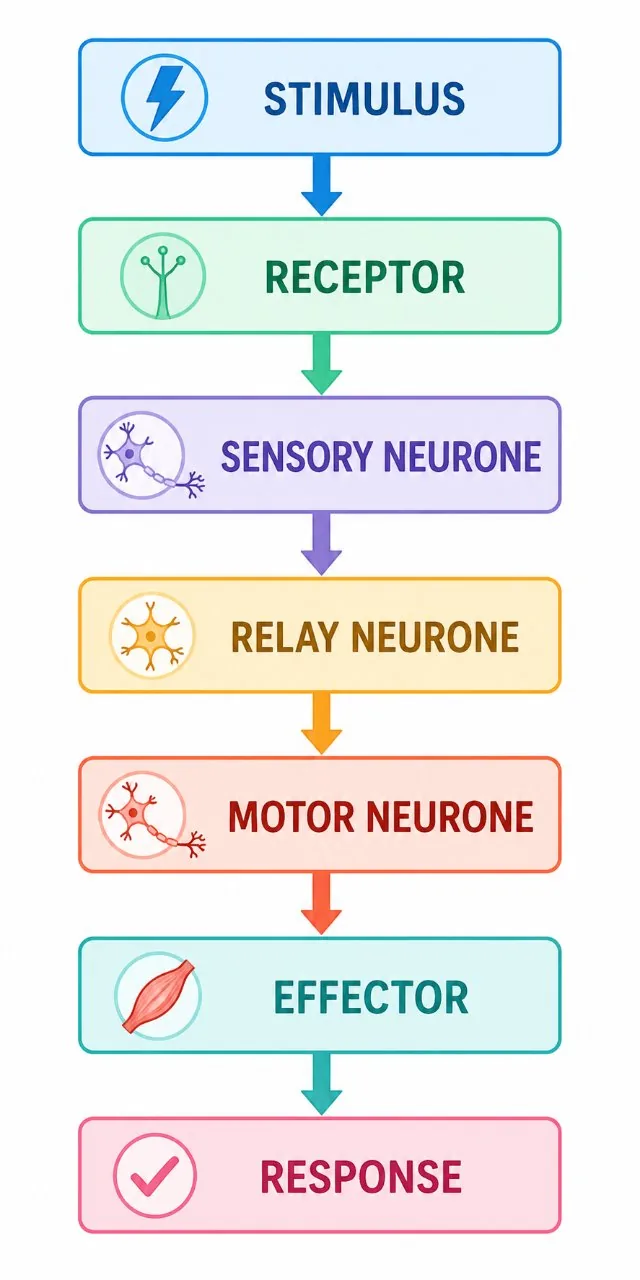
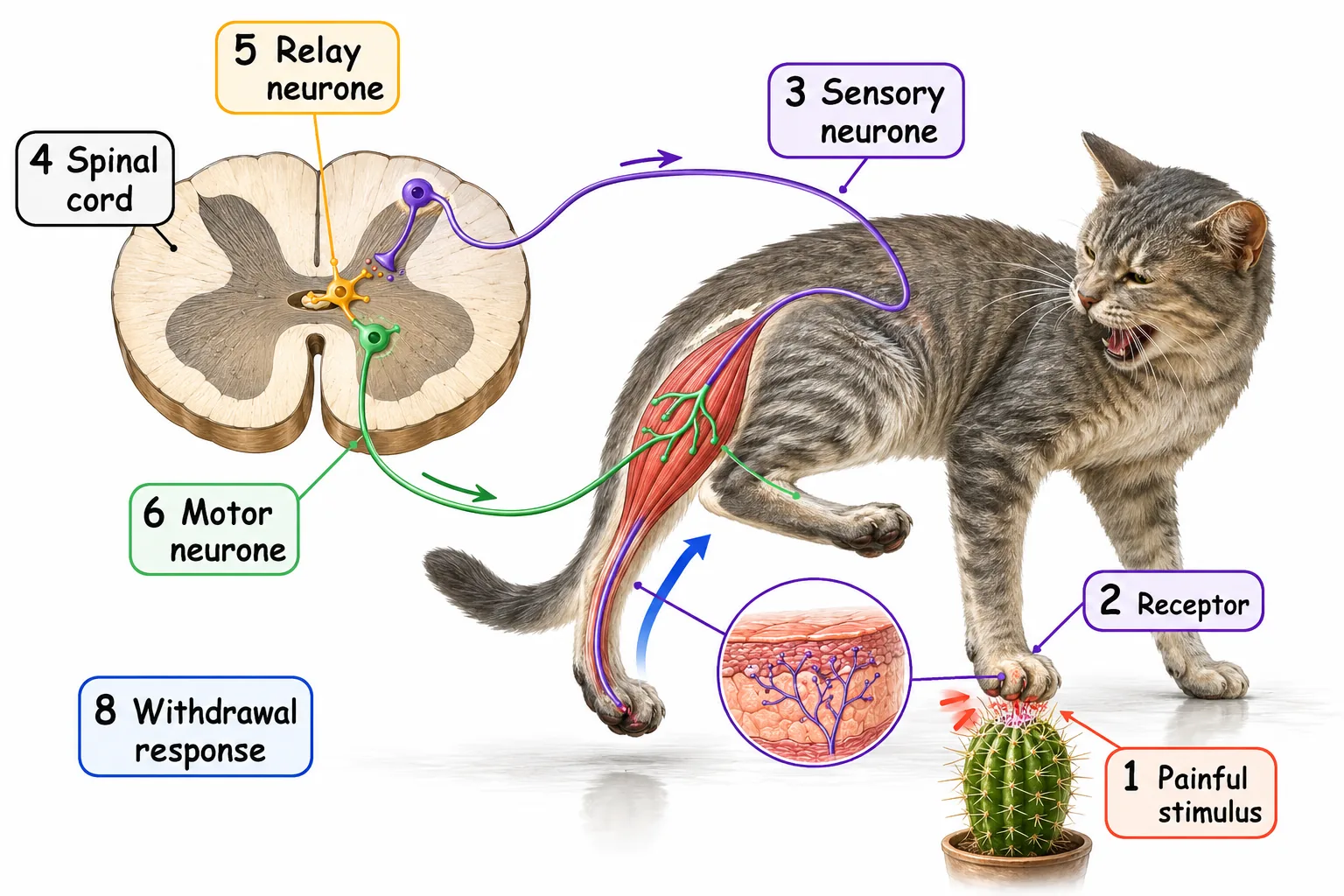
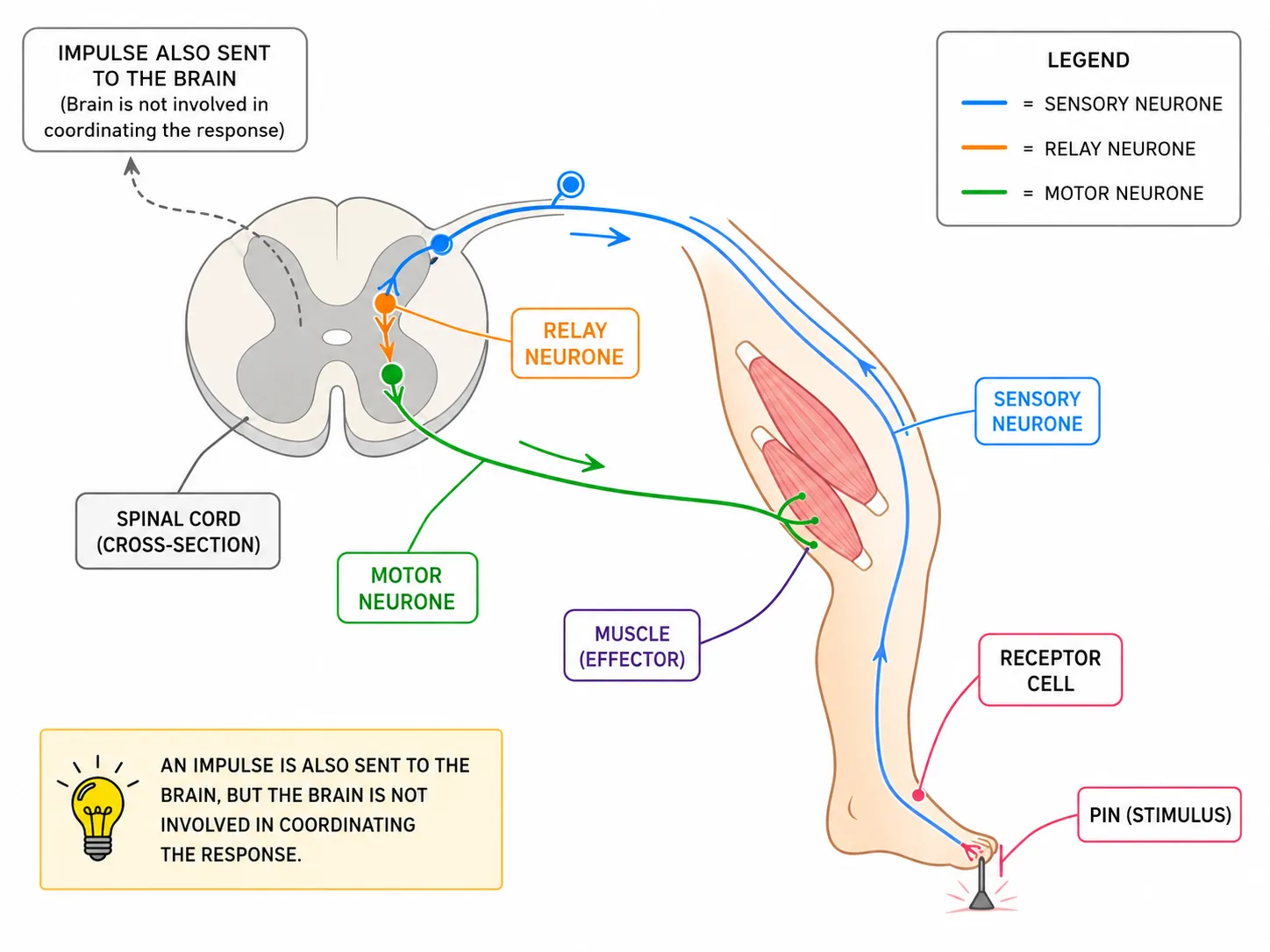
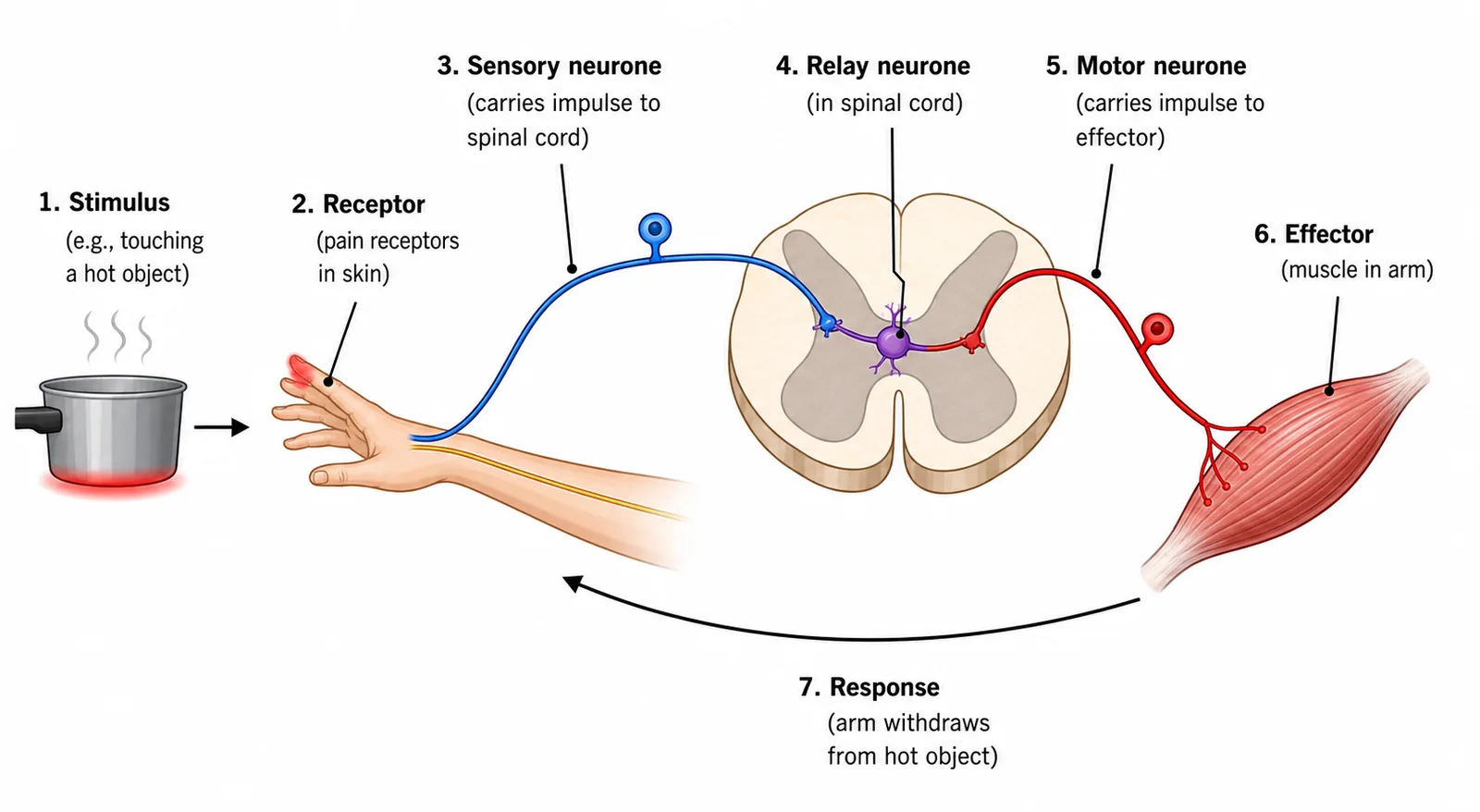
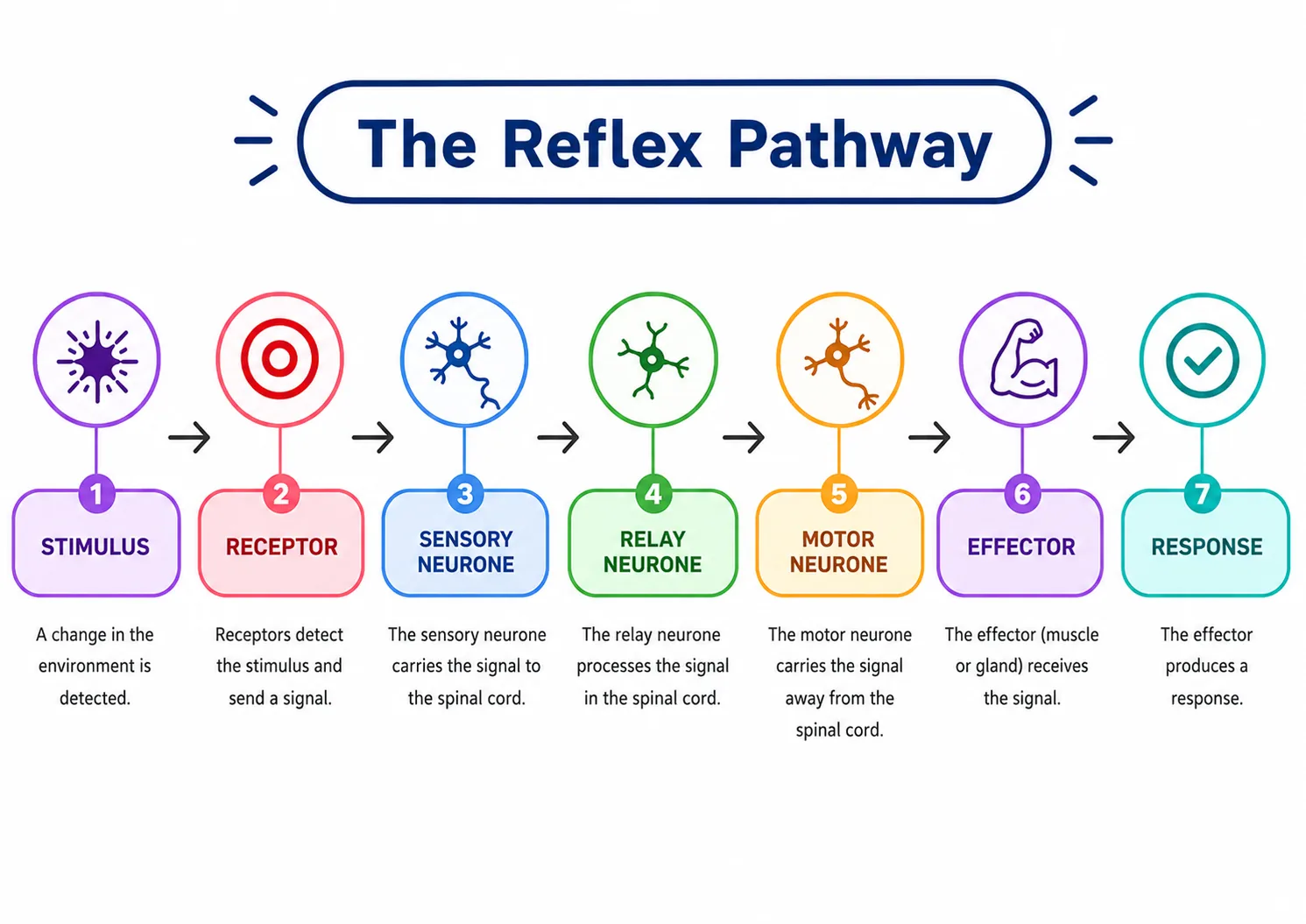
Rapid, automatic, involuntary response to a potentially harmful stimulus protecting the body from injury (e.g. pulling hand away from a hot surface):
Stimulus → Receptor → Sensory Neuron → Inter Neuron (Spinal Cord) → Motor Neuron → Effector (Muscle contracts)
Part 2 of 2Hormonal control and blood glucose regulation

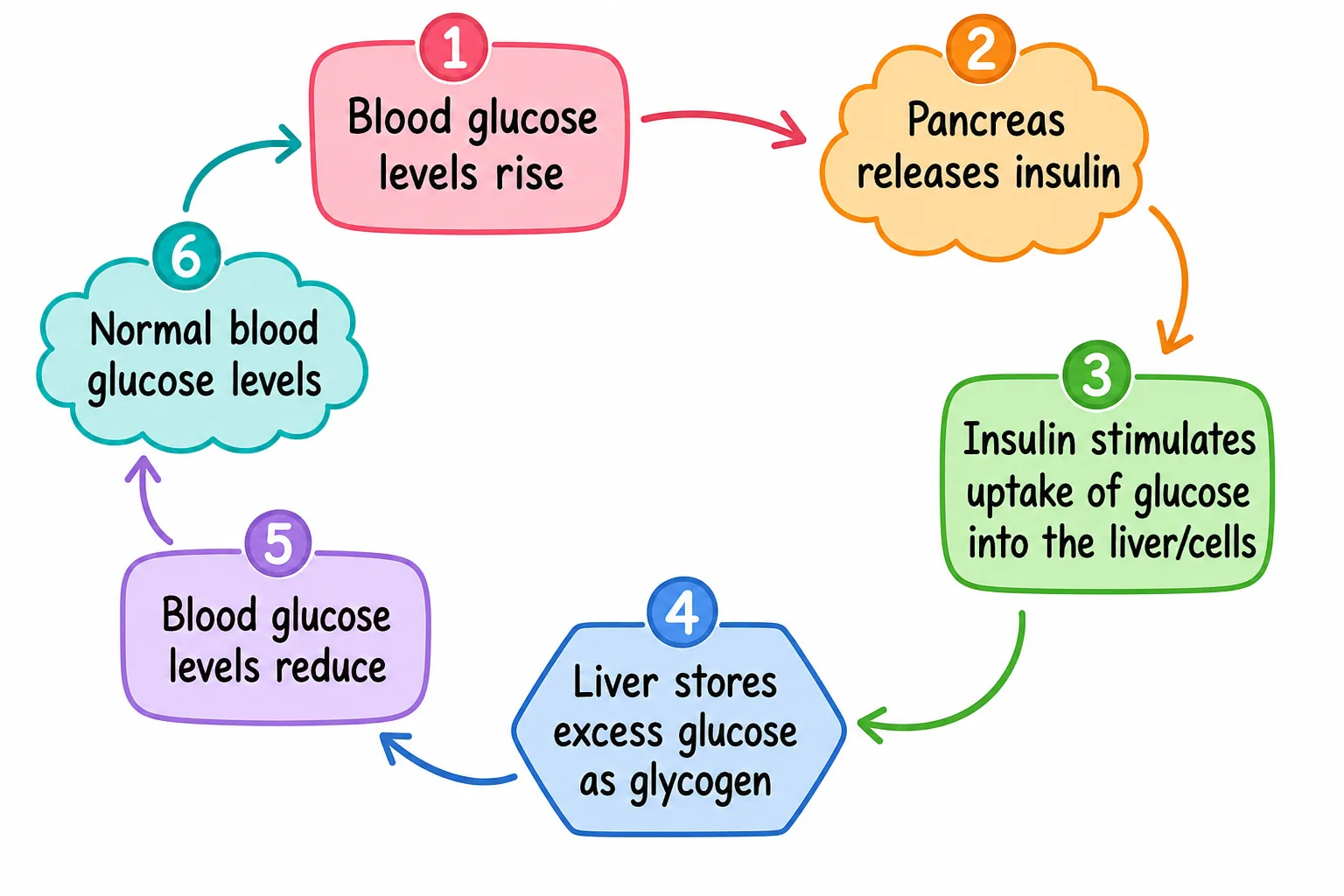
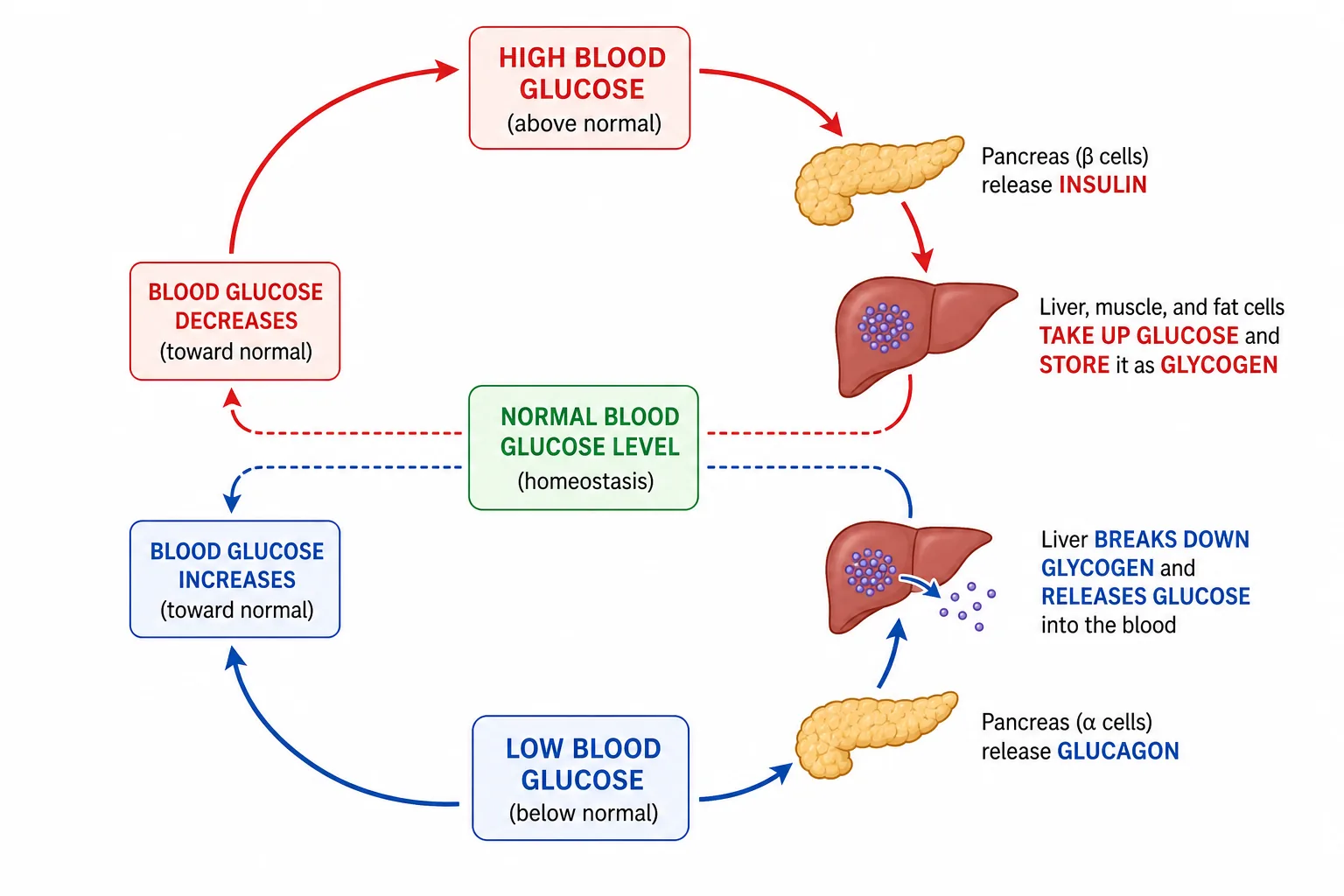

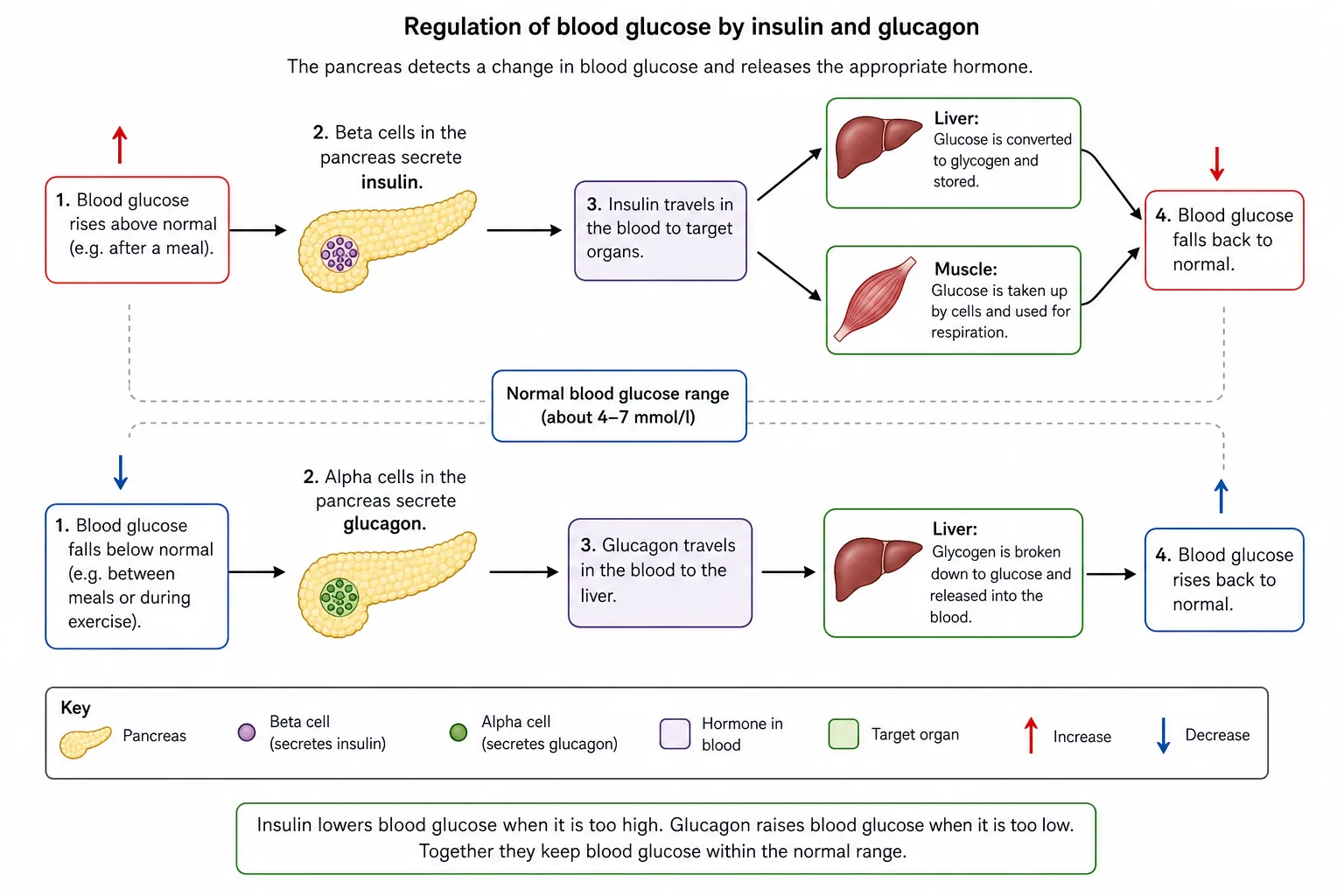







Hormonal control and blood glucose regulation
Endocrine glands
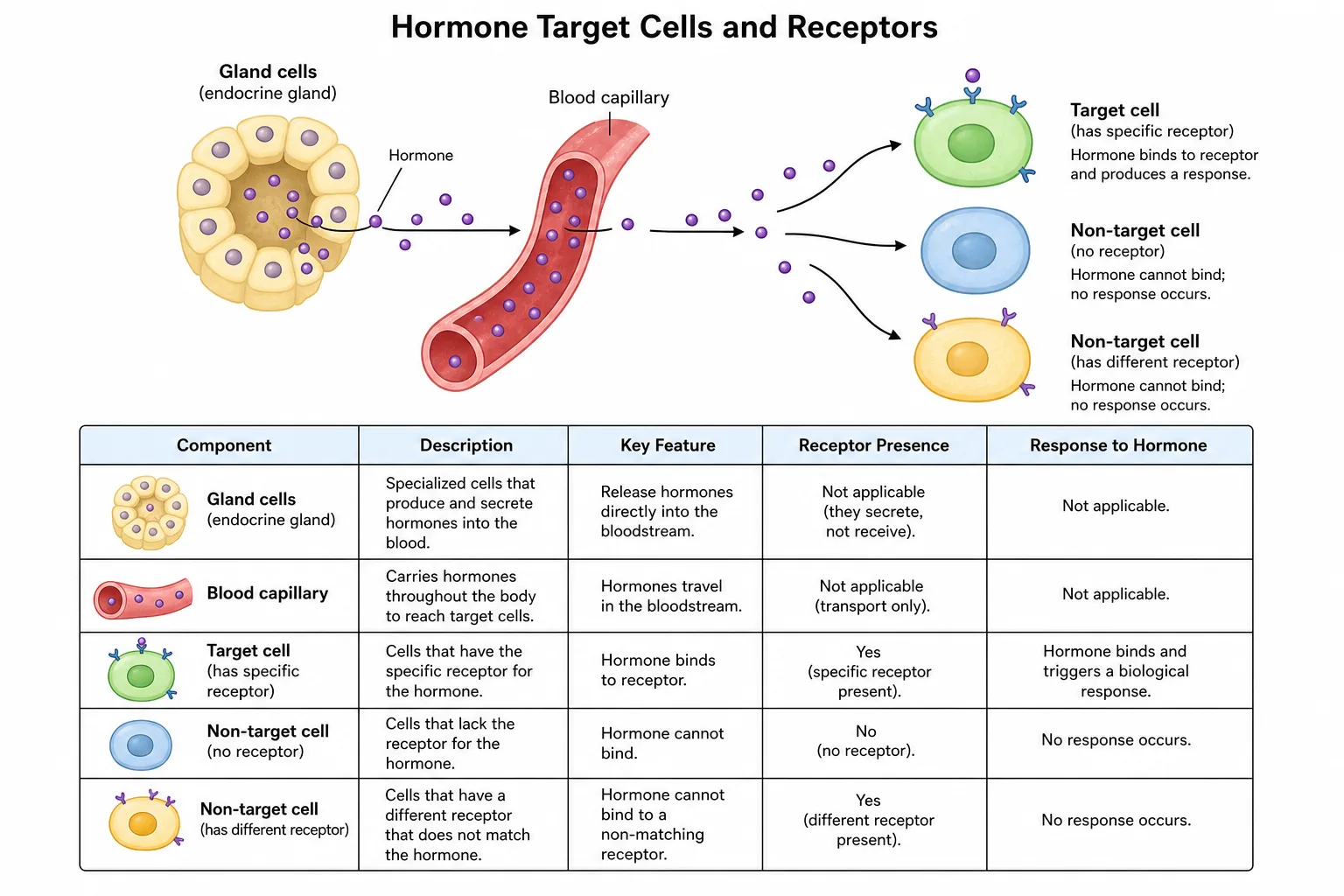
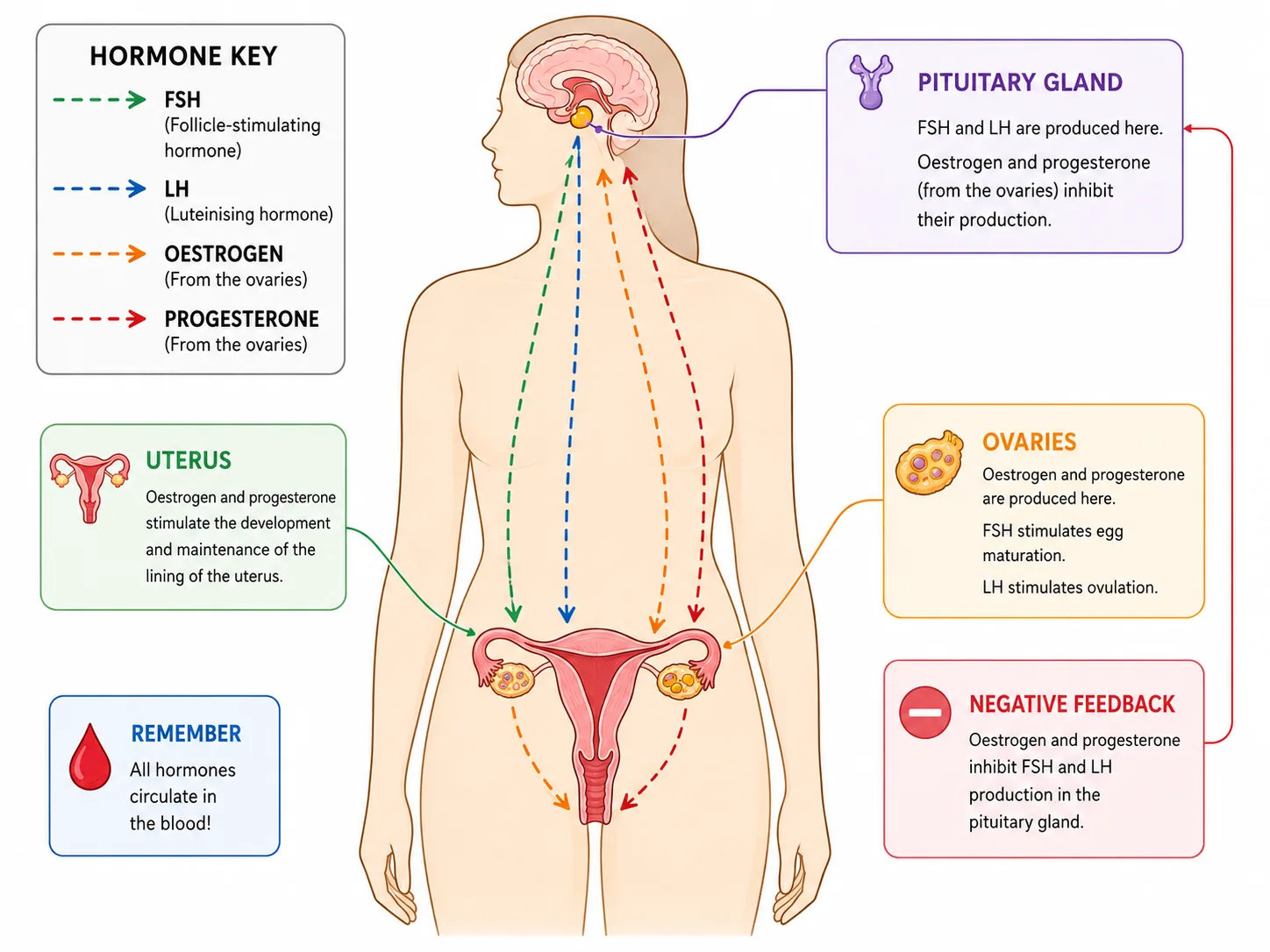
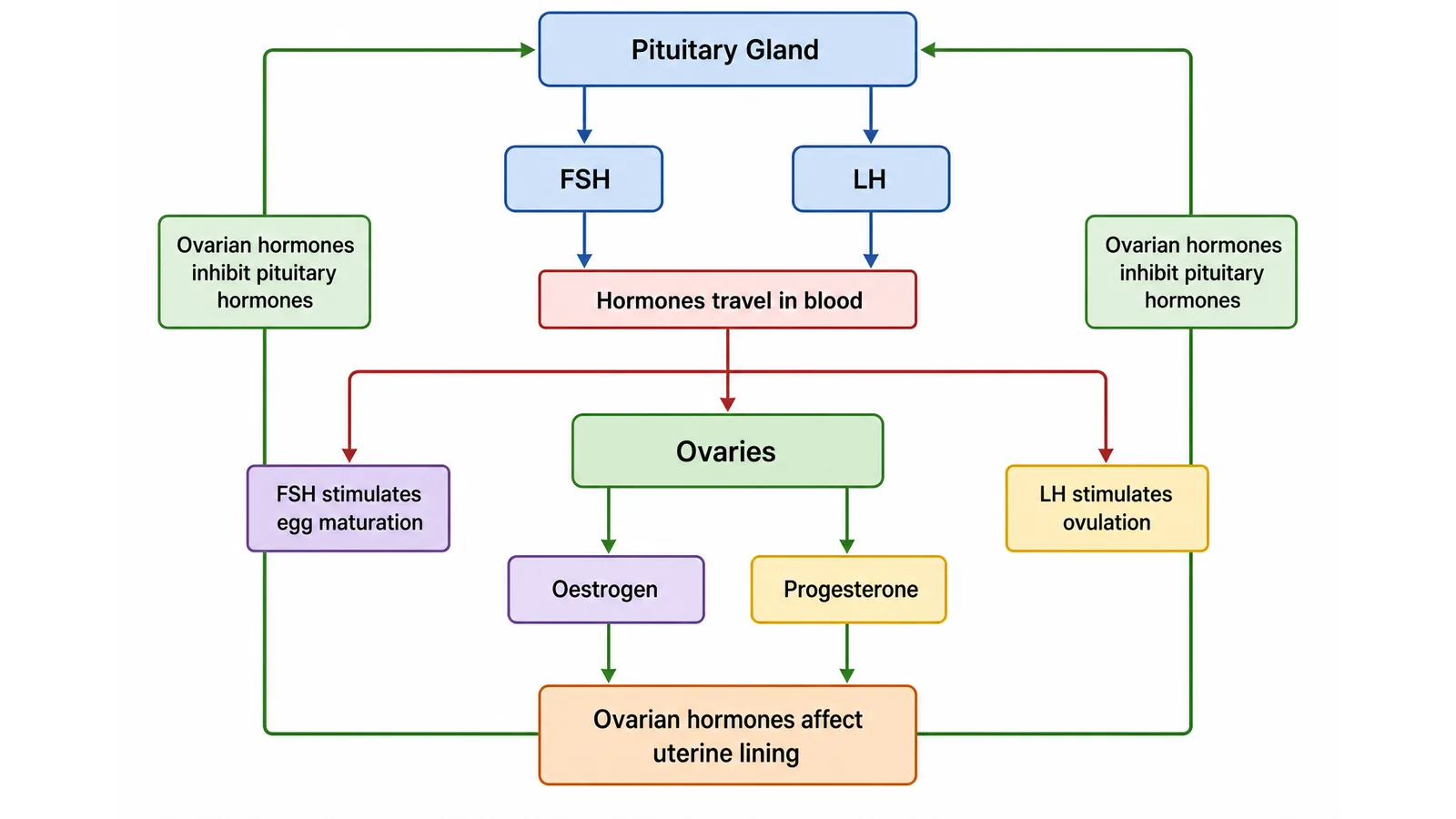
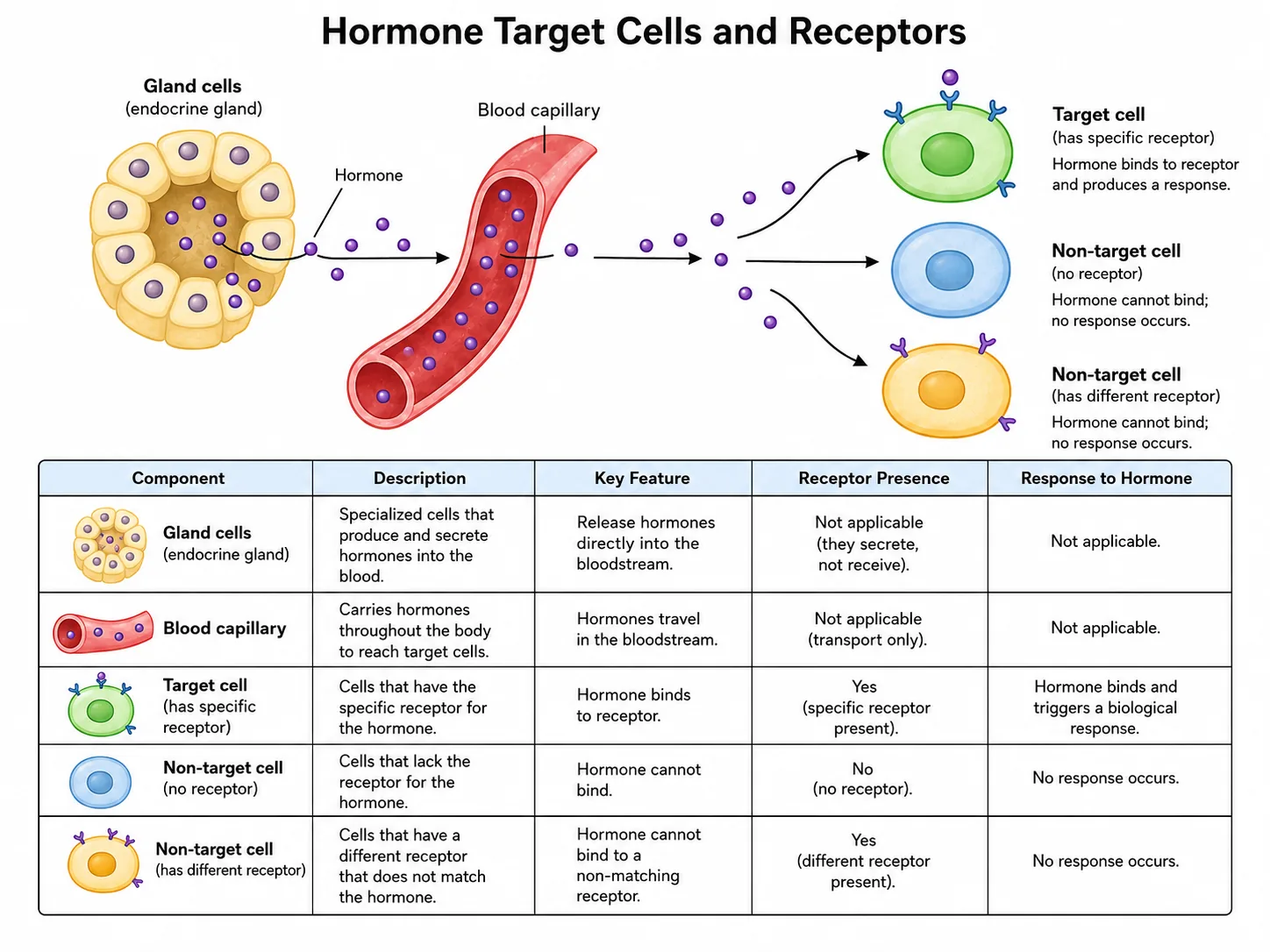
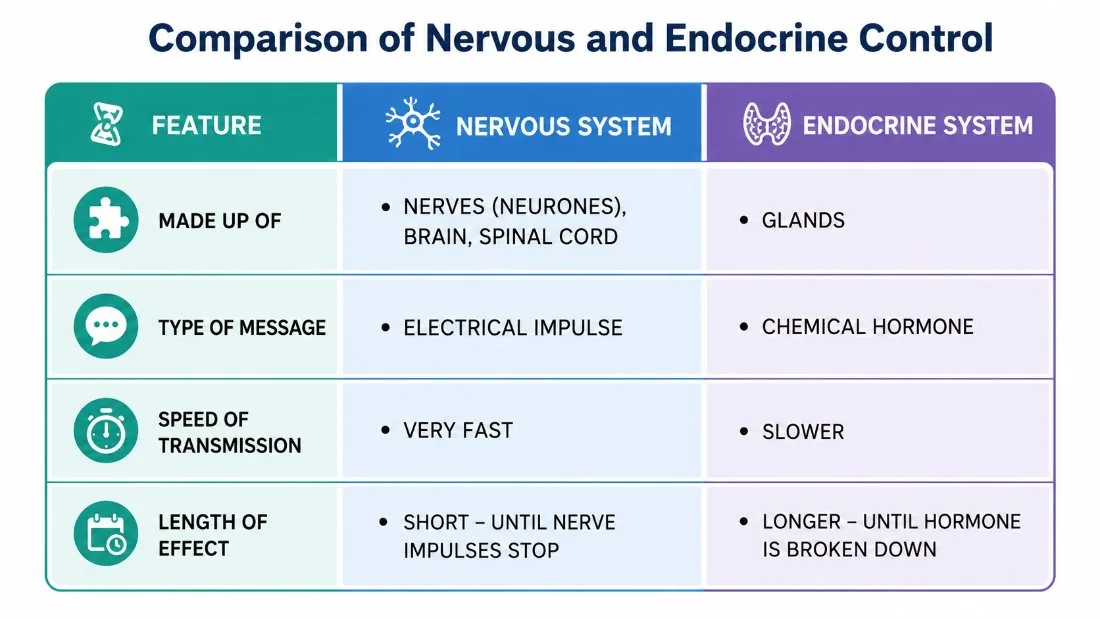
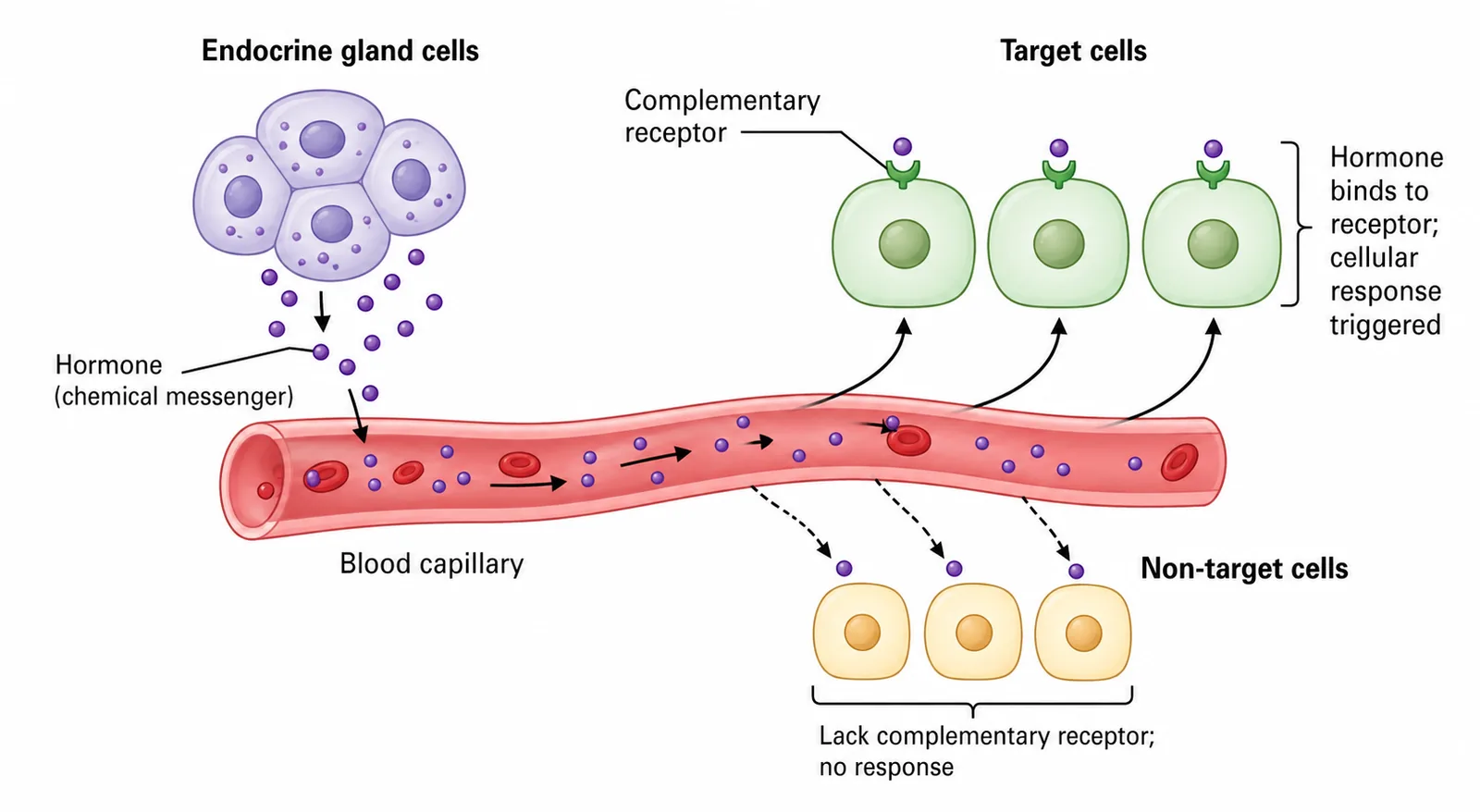
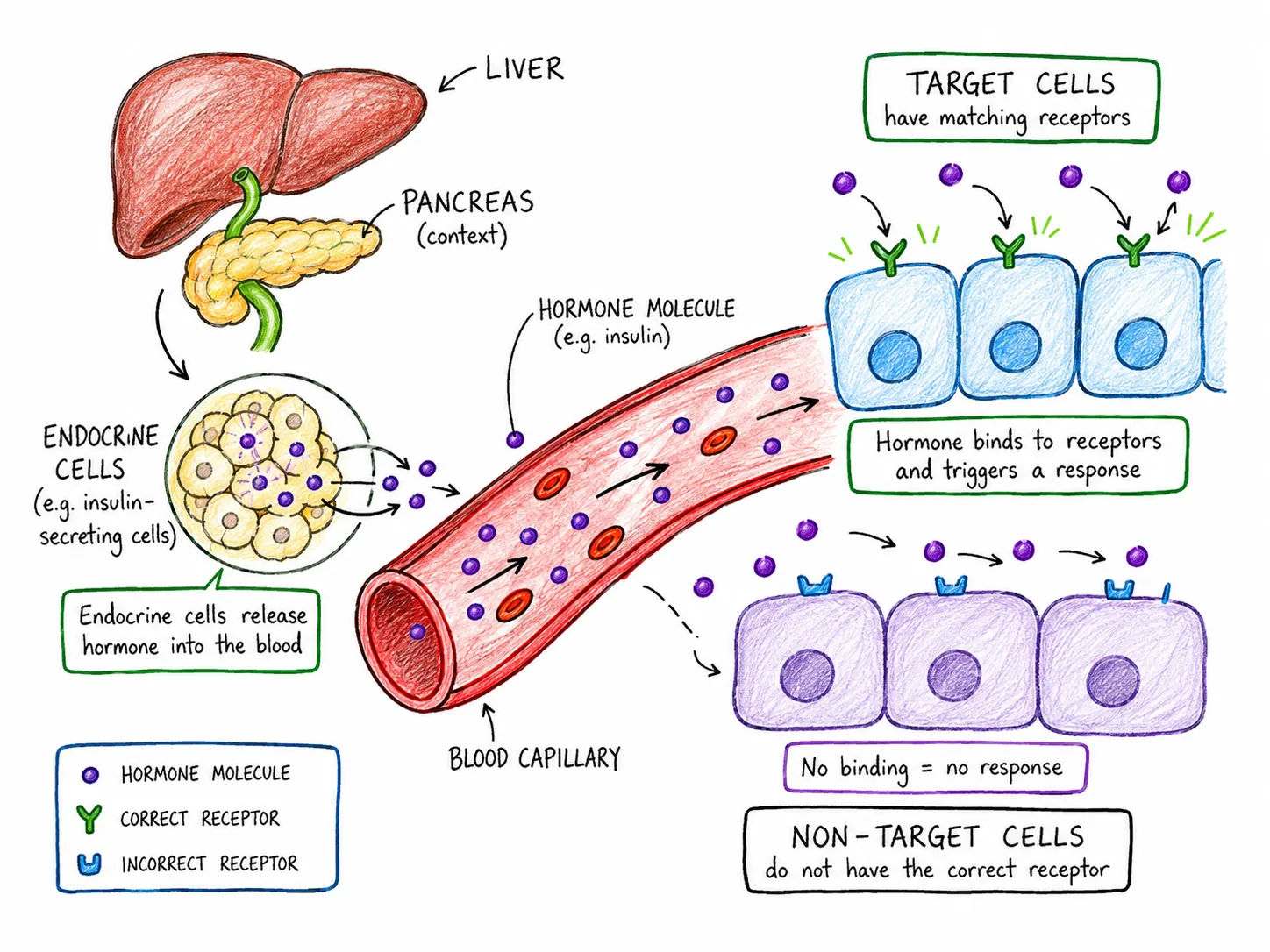
Endocrine glands release chemical messengers called hormones directly into the bloodstream.
Target tissues
Hormones travel via blood throughout the body but only affect specific target tissues that possess complementary receptor proteins on their cell membranes.
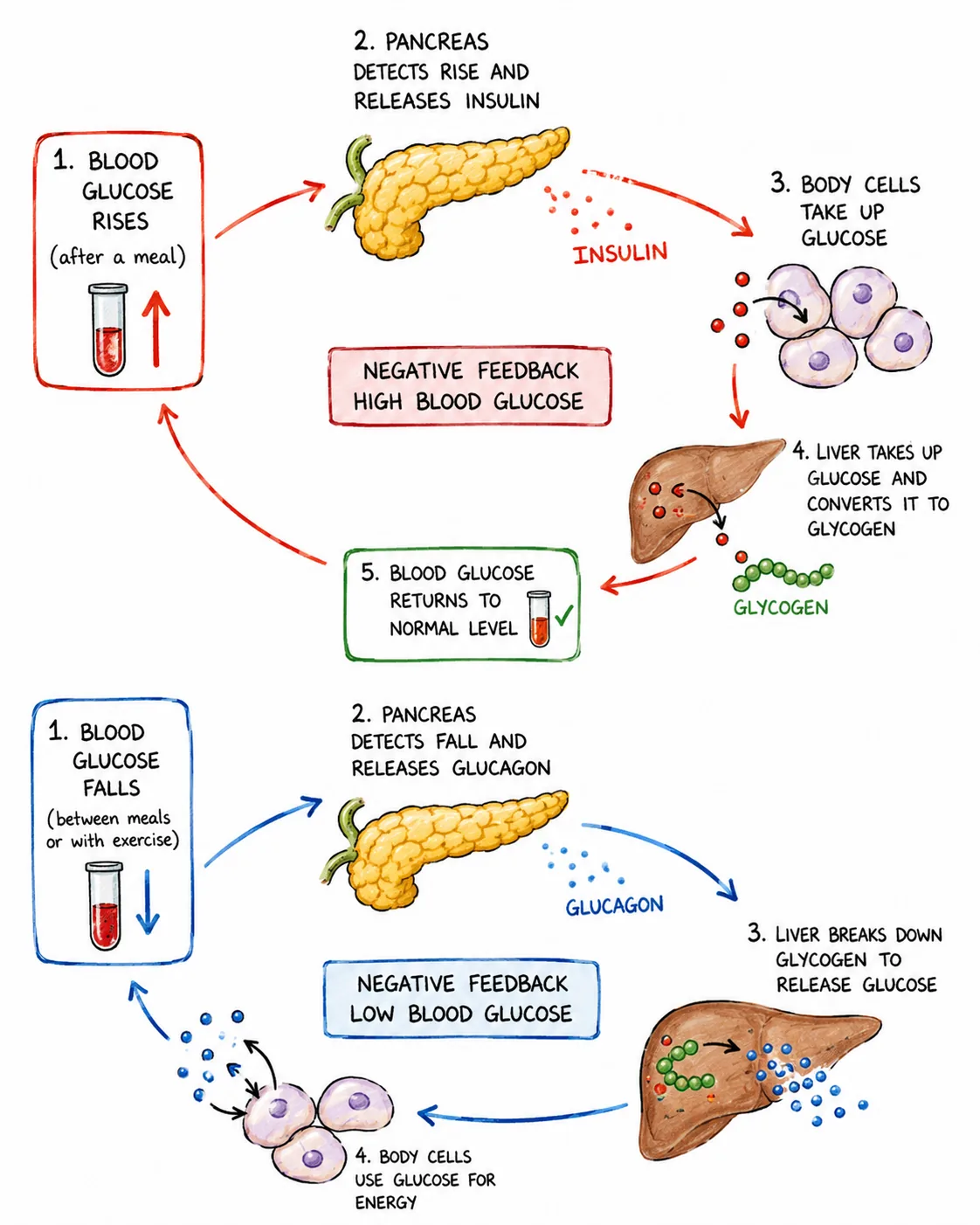
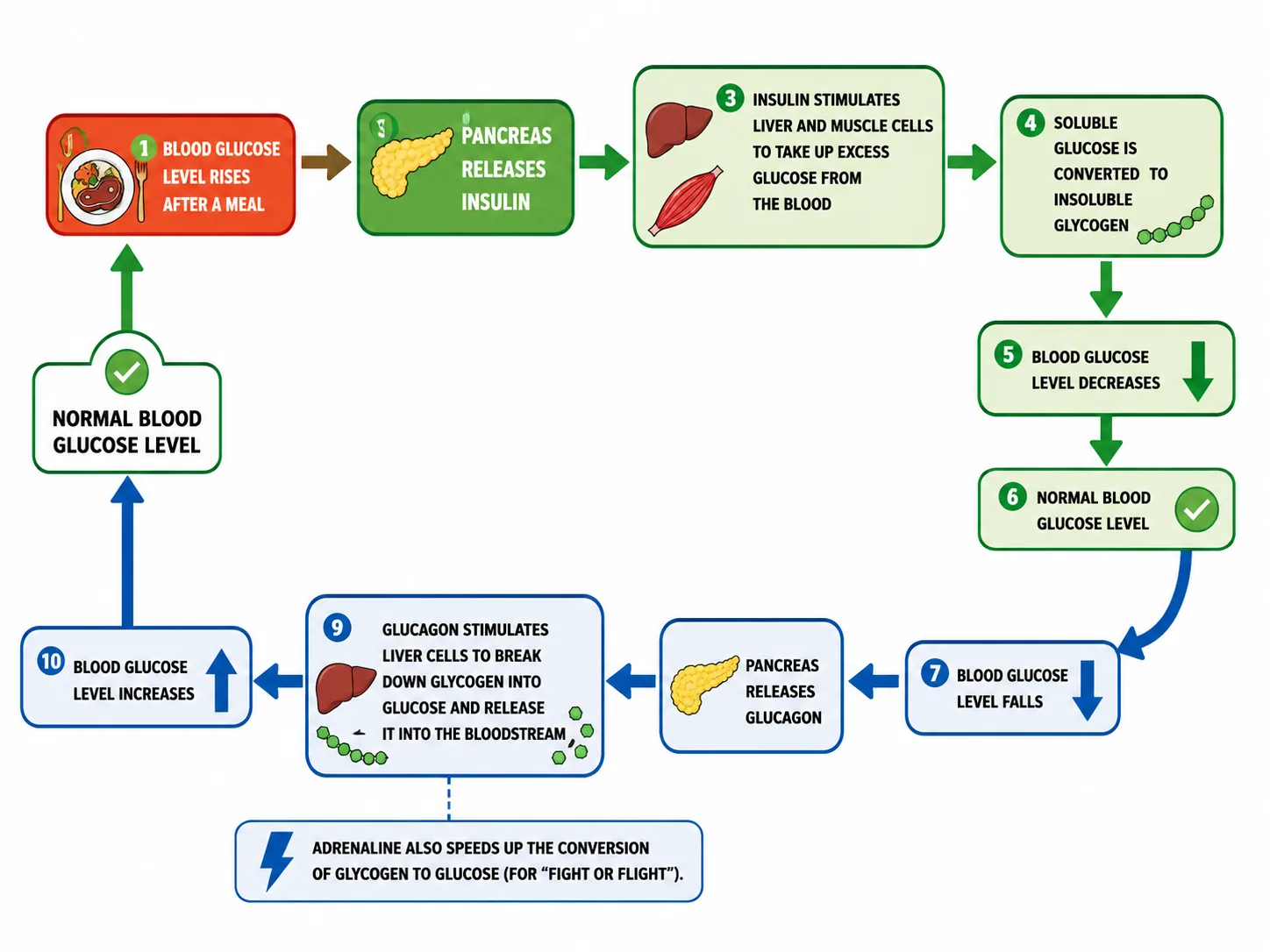
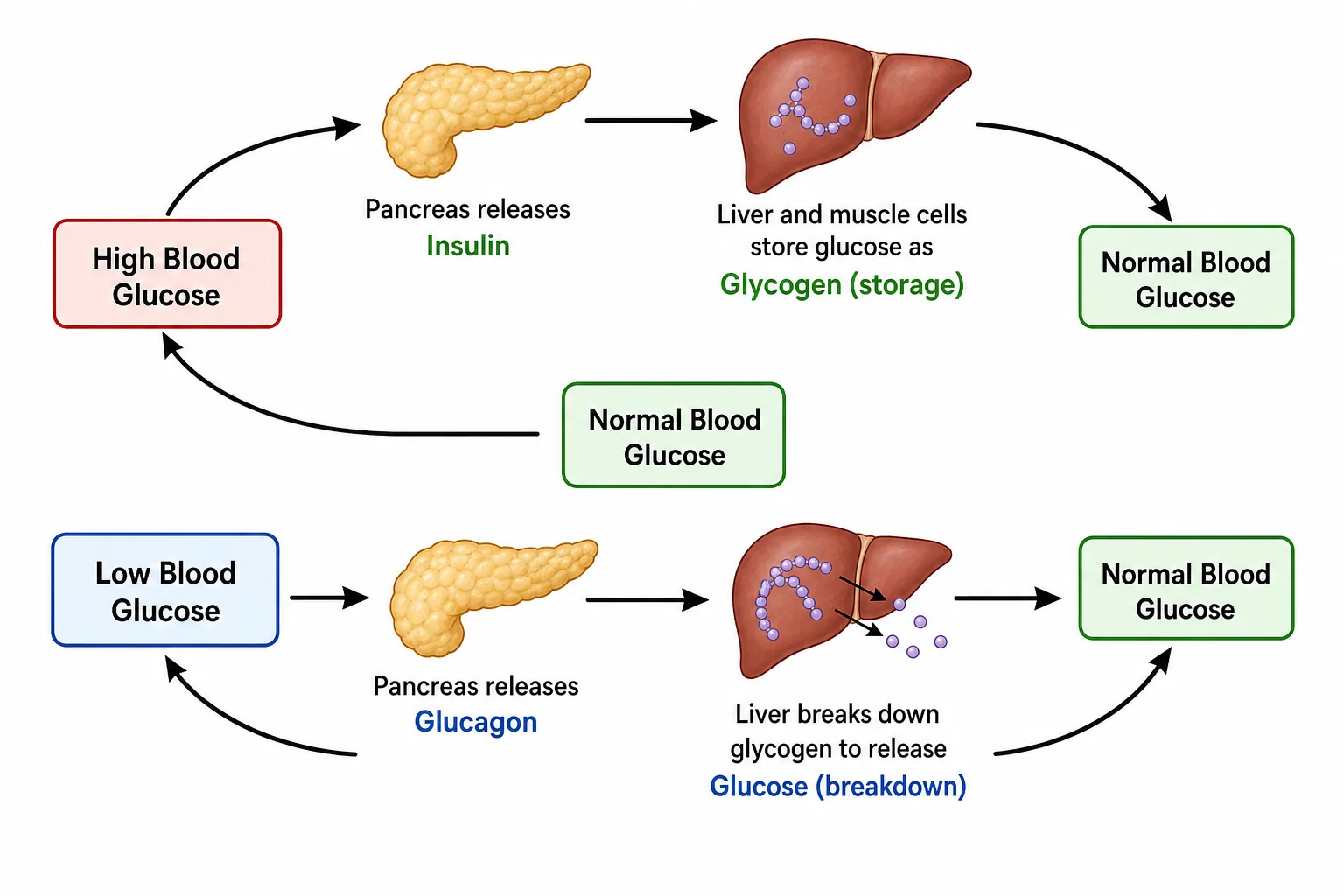
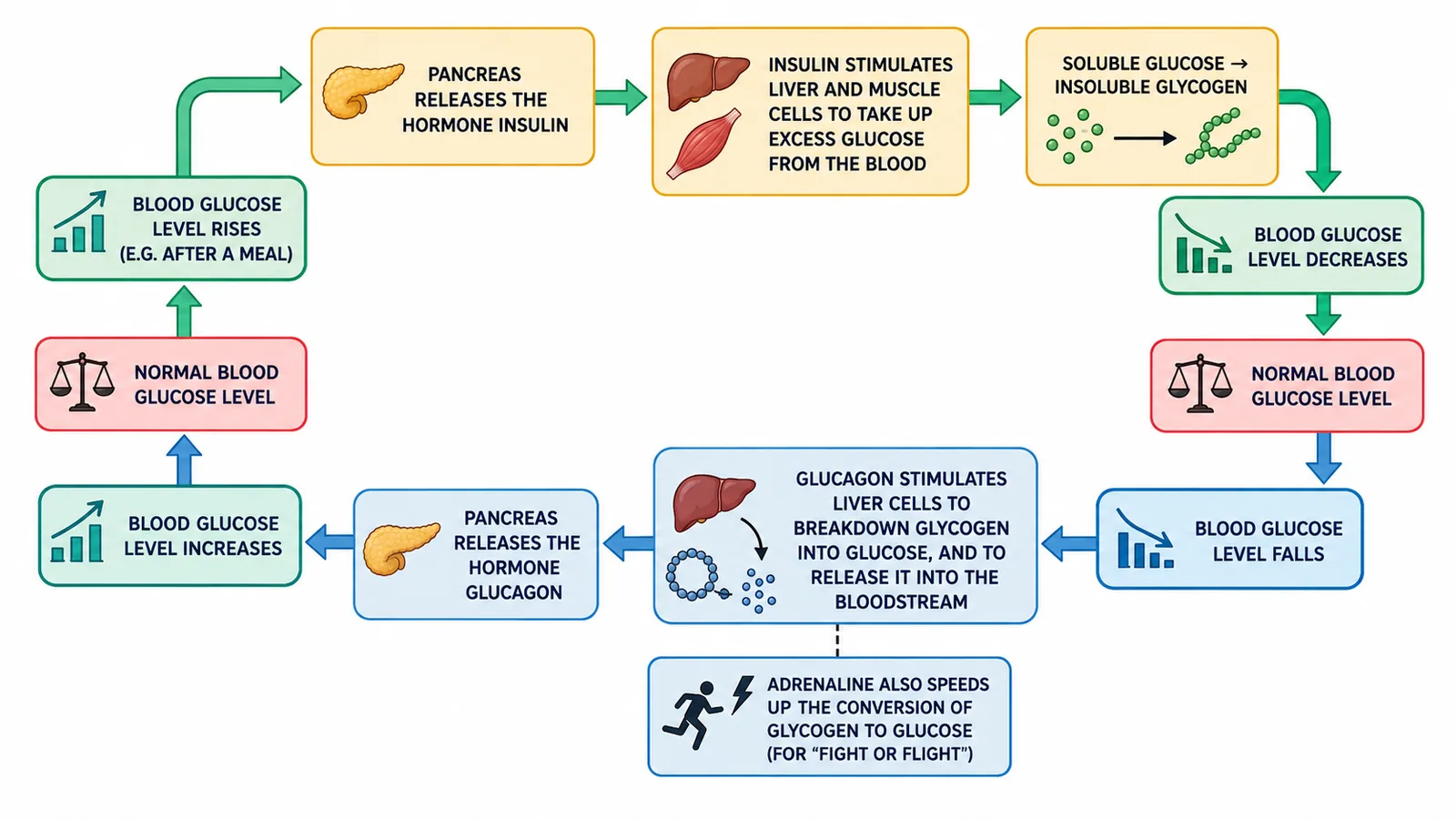
Regulation of blood glucose (Negative Feedback)
| Condition | Pancreas Response | Hormone Released | Action on Liver | Effect on Blood Glucose |
|---|---|---|---|---|
| Blood glucose rises (after eating) | Detects high glucose | Insulin | Converts excess soluble glucose into insoluble storage carbohydrate glycogen | Blood glucose level falls back to normal |
| Blood glucose drops (exercise / fasting) | Detects low glucose | Glucagon | Breaks stored glycogen back down into soluble glucose, releasing it into blood | Blood glucose level rises back to normal |
Key terms
| Term | Meaning |
|---|---|
| Central nervous system | The brain and spinal cord, responsible for integrating and coordinating bodily responses. |
| Reflex arc | The neural pathway mediating an involuntary, instantaneous protective reflex action. |
| Synapse | The microscopic junction across which neurotransmitters diffuse between adjacent nerve cells. |
| Insulin | A pancreatic hormone stimulating the liver to convert blood glucose into glycogen. |
| Glucagon | A pancreatic hormone stimulating the liver to break down glycogen into glucose. |
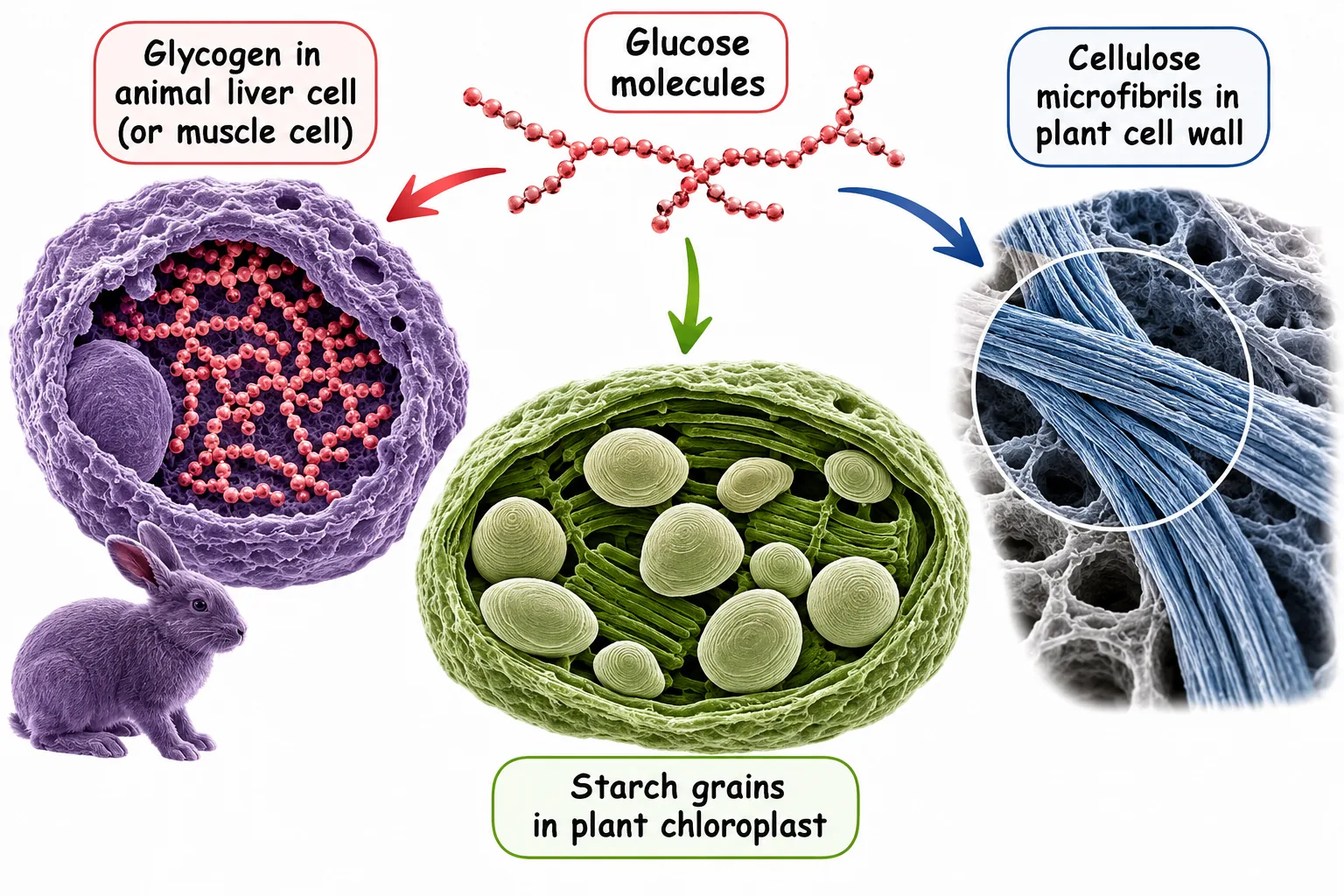
| Glycogen | The insoluble storage carbohydrate stored in animal liver and muscle tissues. |
Avoid these mistakes
Avoid these mistakes
Confusing glucagon and glycogen — glucagon is the hormone, glycogen is the storage carbohydrate. (Remember: "Gluca-GONE is when glucose is gone").
Thinking reflex actions go to the cerebrum — reflex signals pass through the spinal cord (inter neuron) so the response occurs before conscious thought.
Last updated:
\n