2.7Unit 2 — Multicellular Organisms
Absorption of Materials
5 min read 4 parts Lesson 34 of 39 Virtual lab
Part 1 of 2Common features of absorption surfaces


- All specialised exchange and absorption surfaces share three fundamental adaptations to maximise the rate of diffusion:
- 1. Large surface areaFolded or branching architecture (e.g. millions of alveoli or villi) provides a vast area across which molecules can diffuse simultaneously.
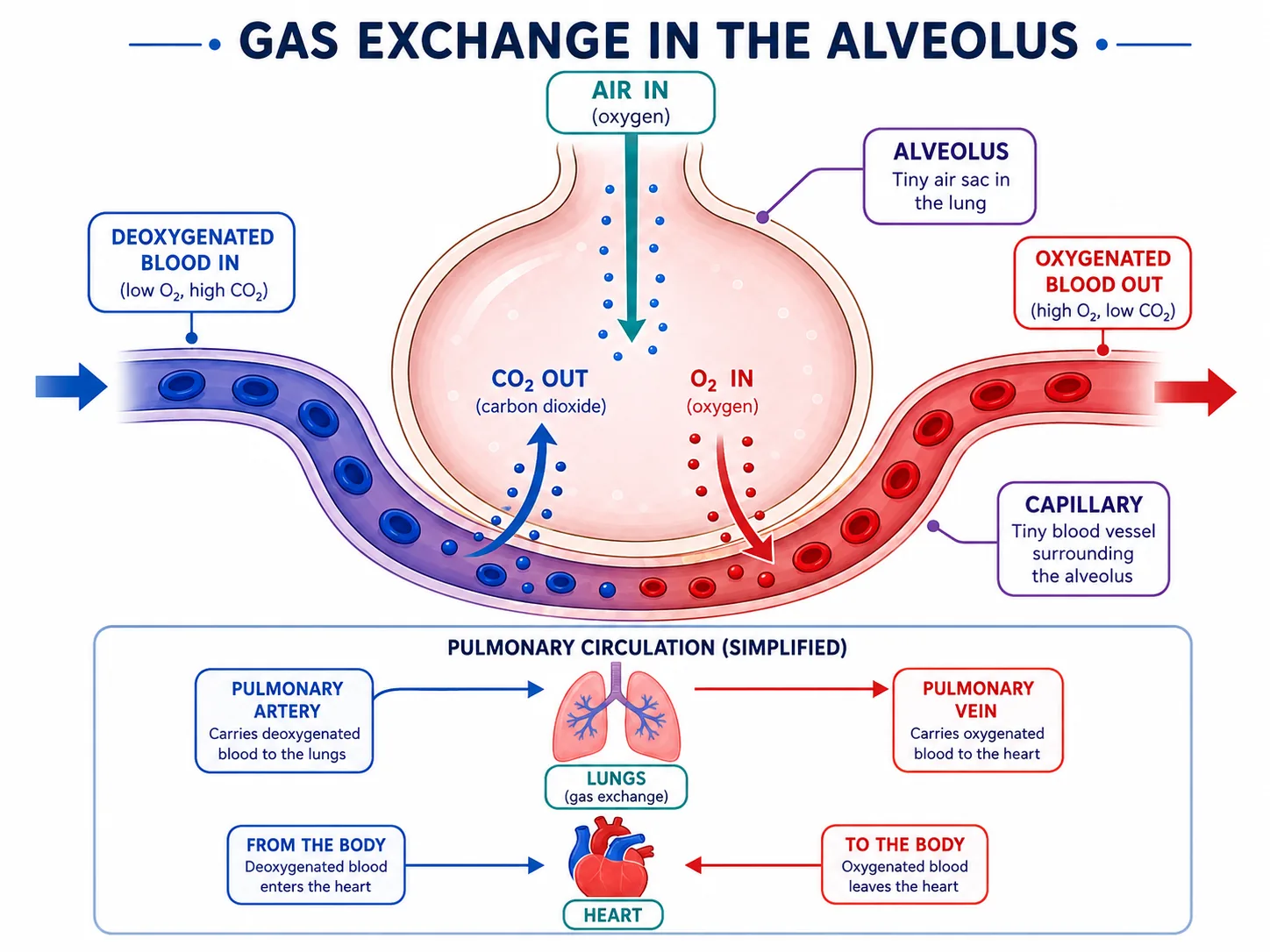
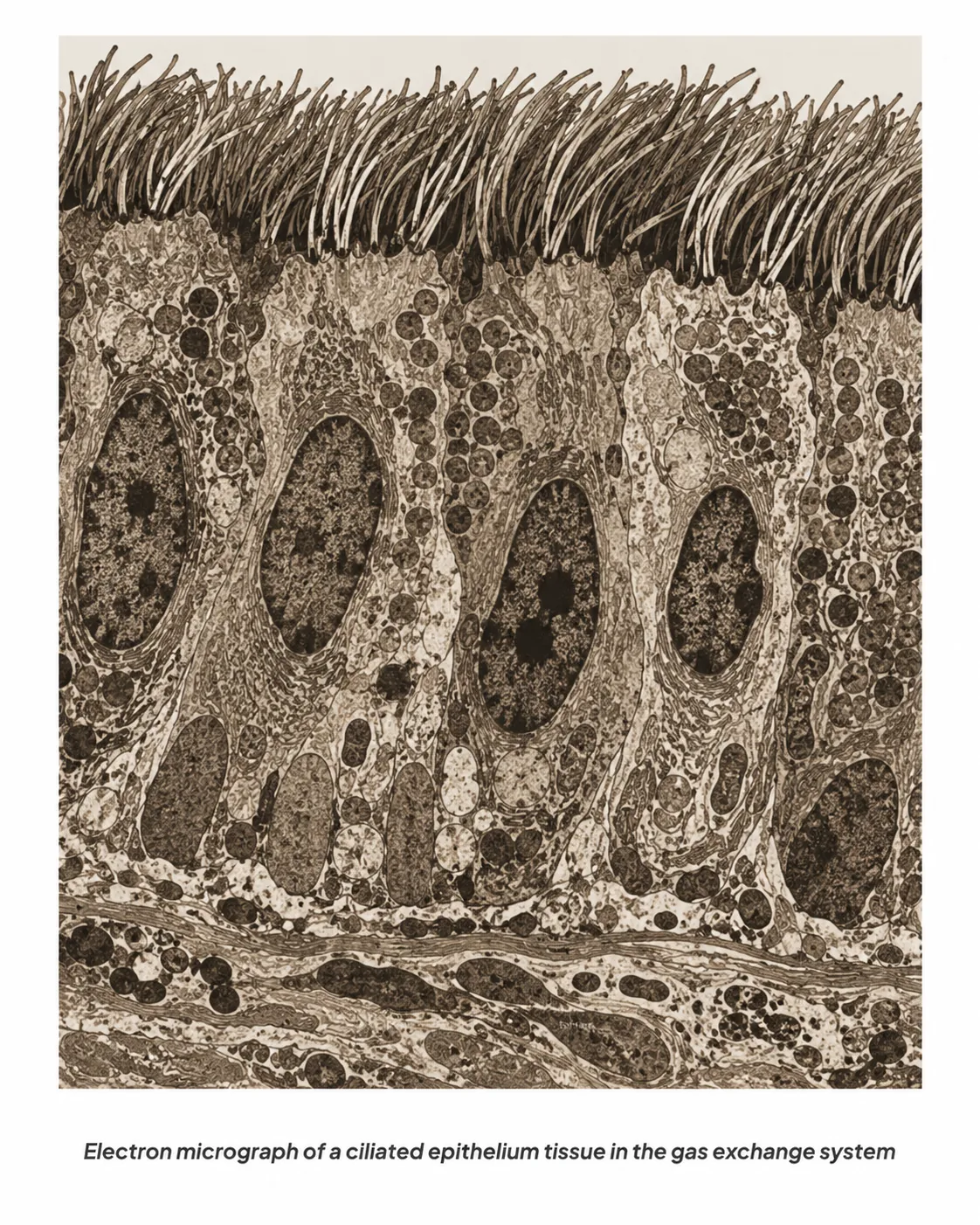
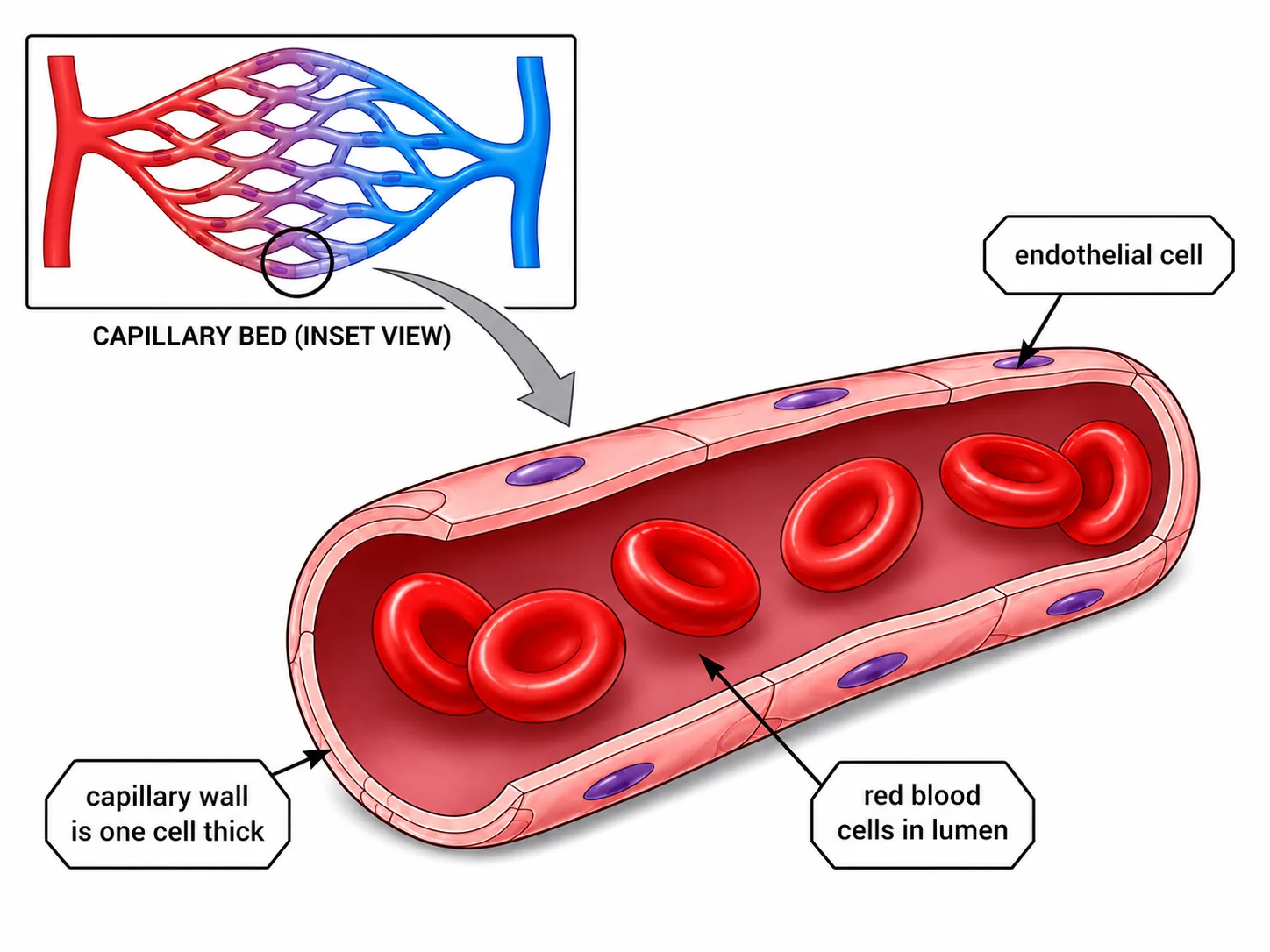
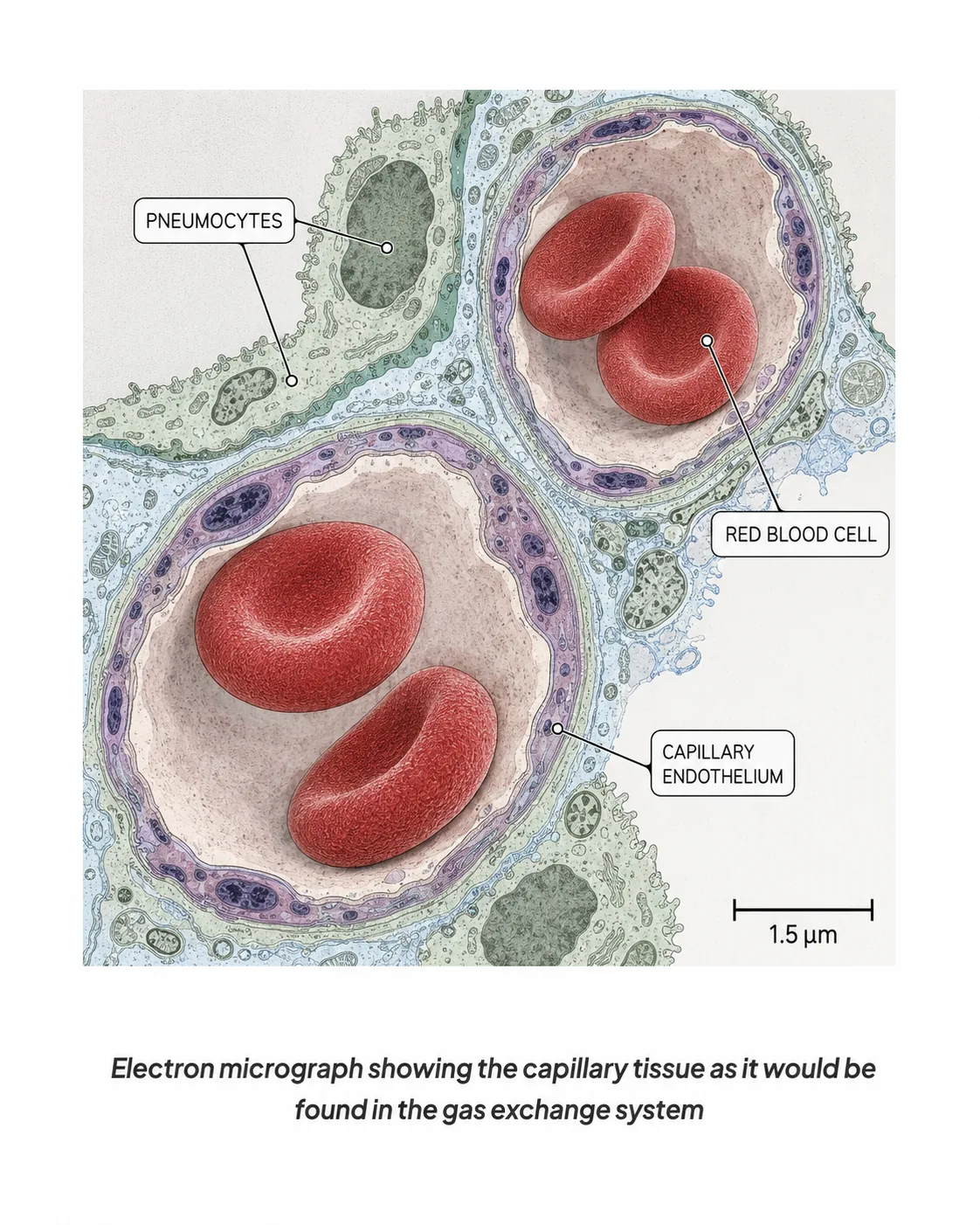
- 2. Thin walls (short diffusion distance)Epithelial barriers are only one cell thick, minimising the distance that gases and dissolved nutrients must travel.
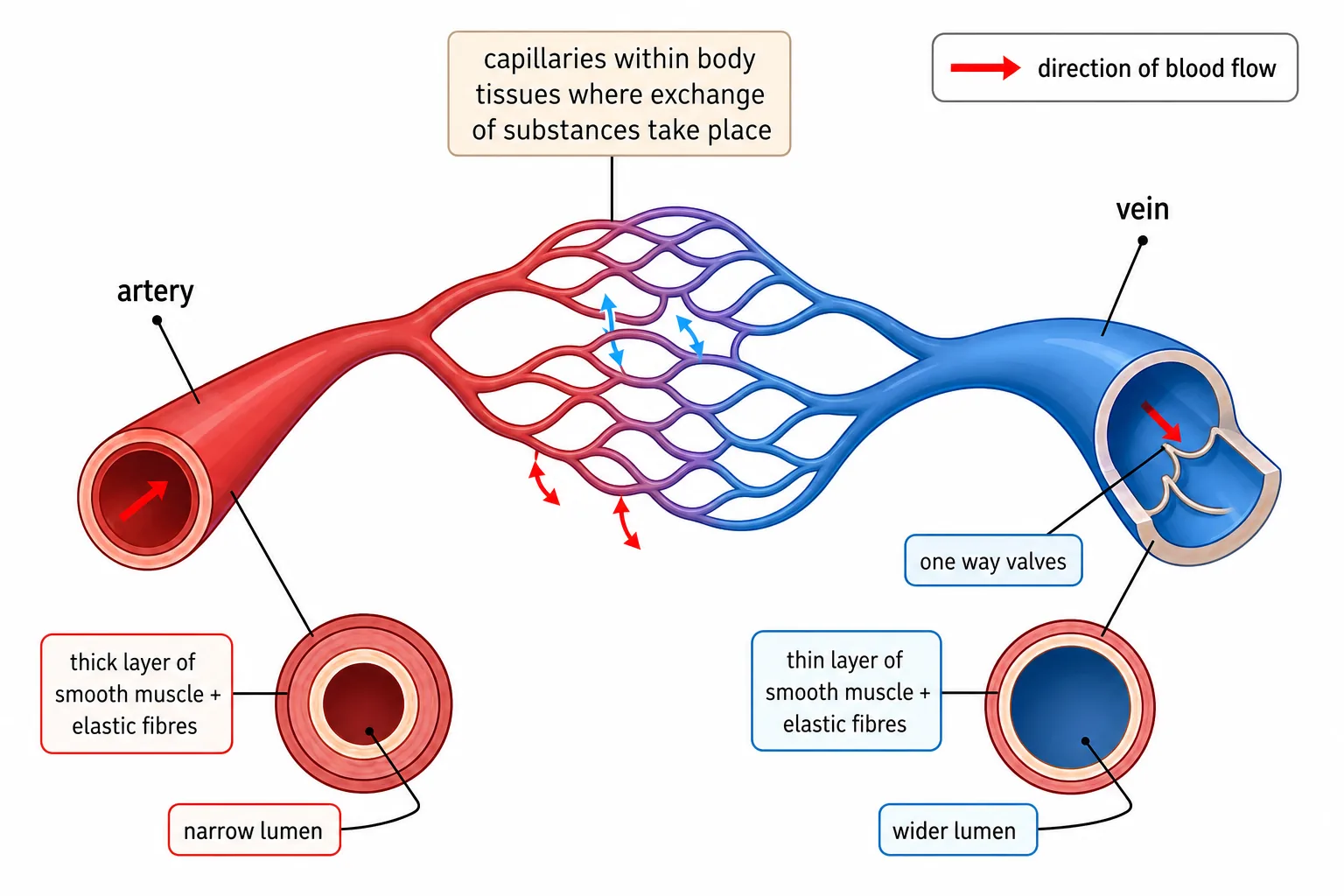
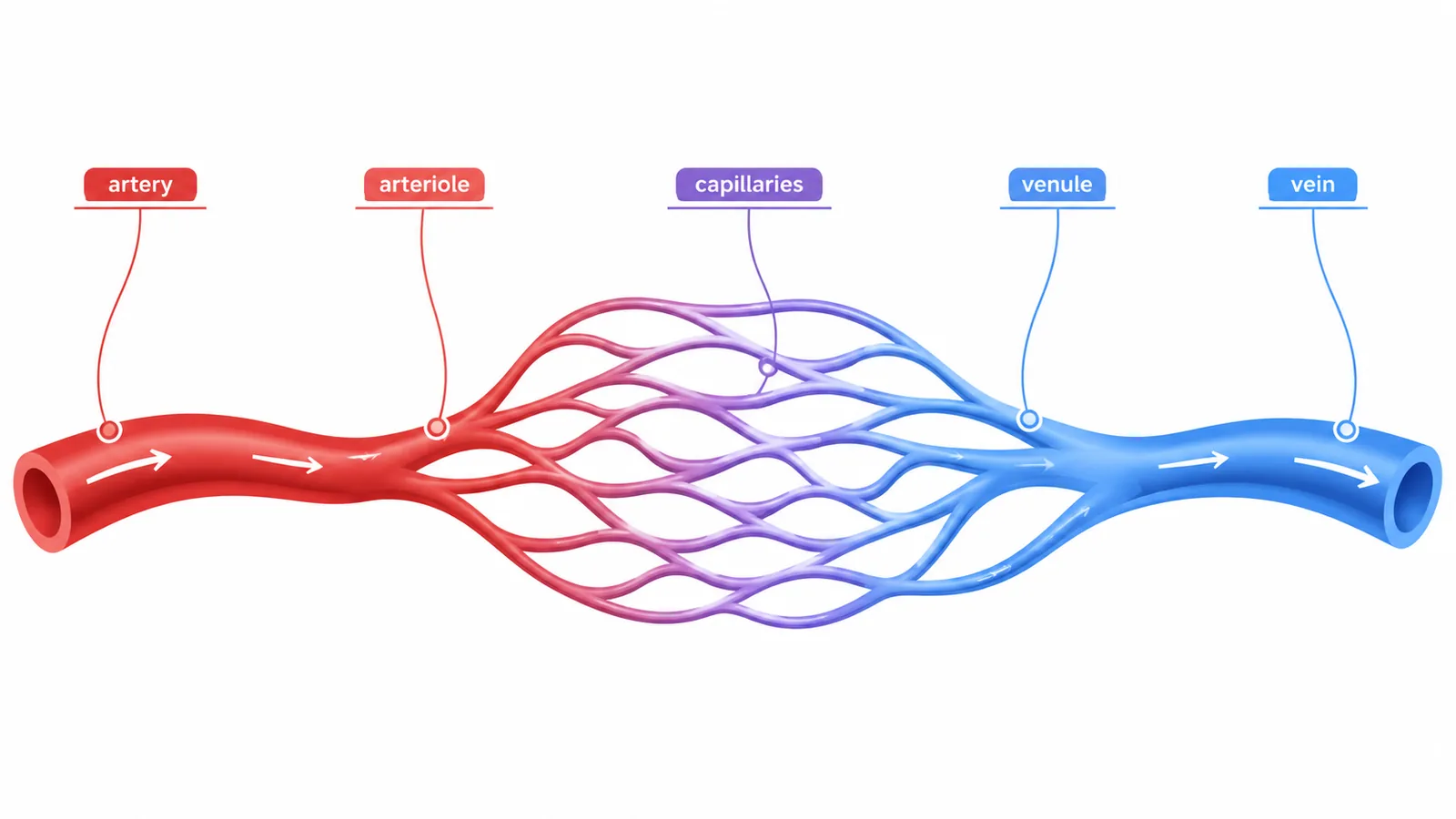
- 3. Extensive capillary blood networkDense blood capillary supply continuously transports absorbed materials away, maintaining a steep concentration gradient.
Part 2 of 2Alveoli in lungs and Villi in small intestine










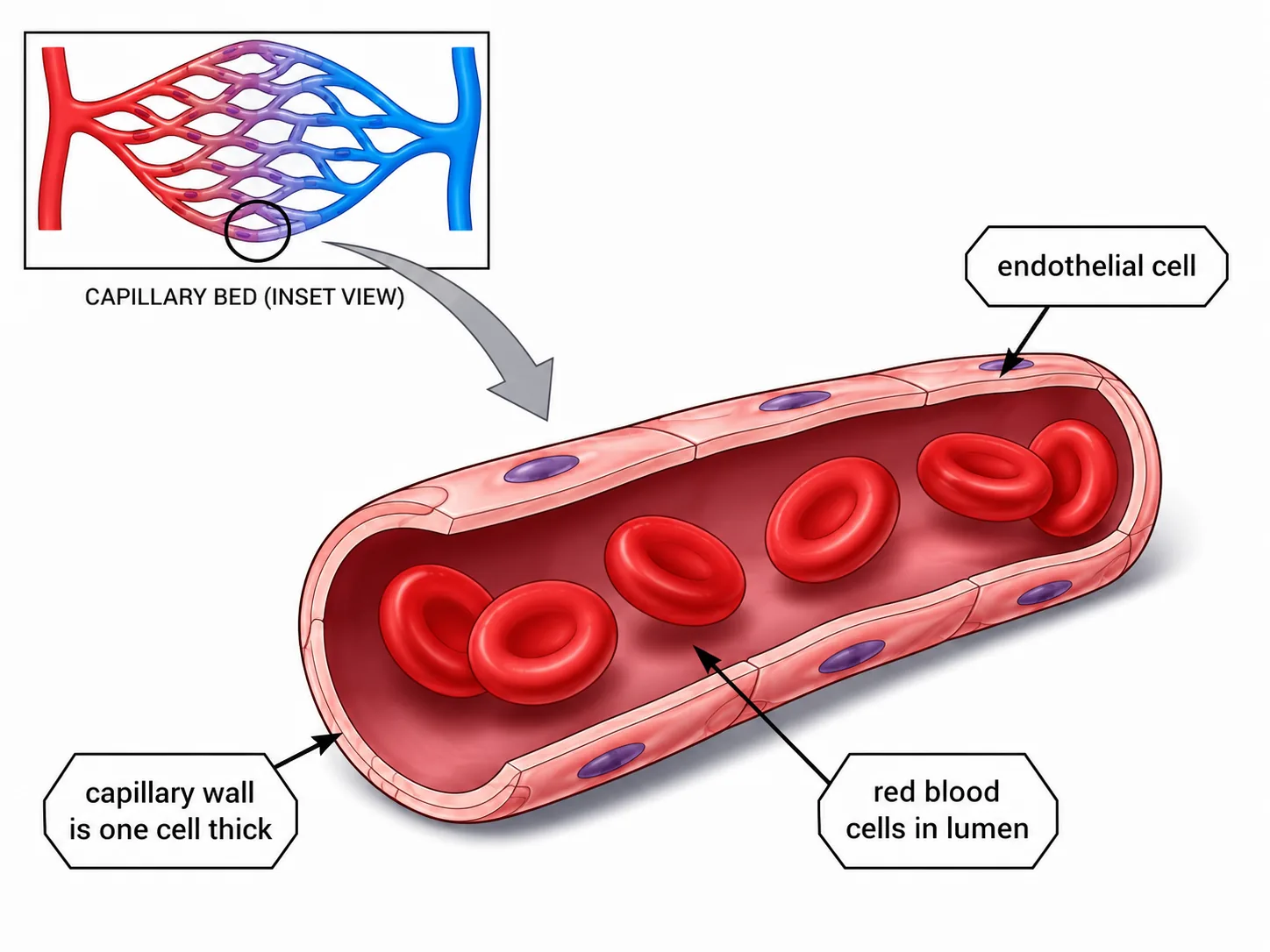

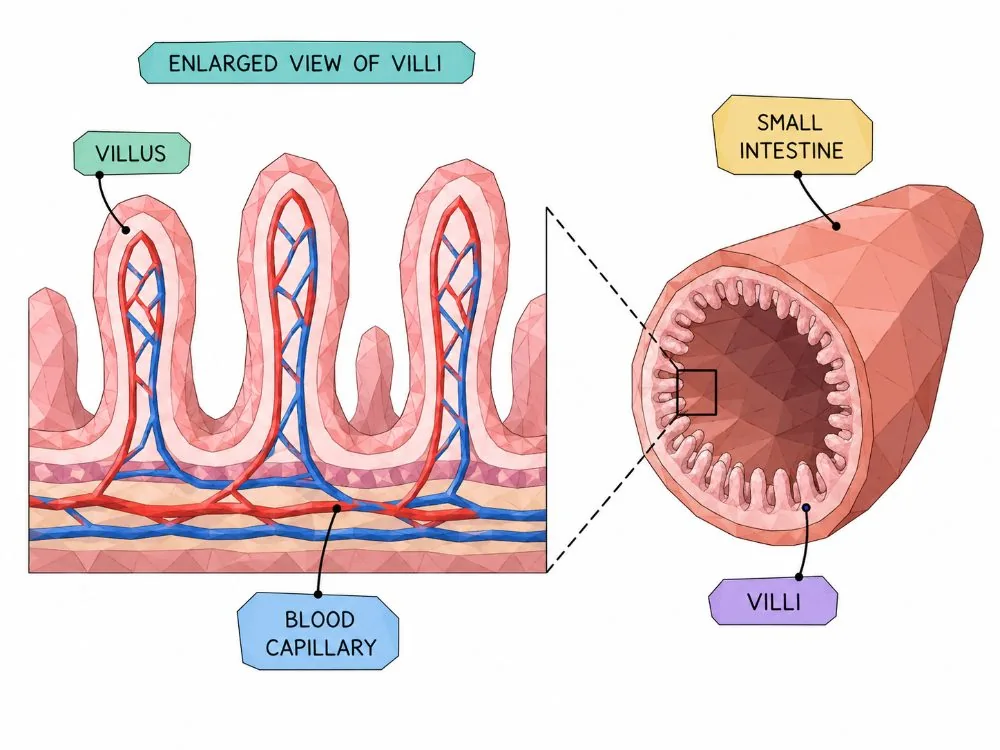
| Absorption Organ | Specialised Structure | Absorbed Substances | Specific Structural Adaptations |
|---|---|---|---|
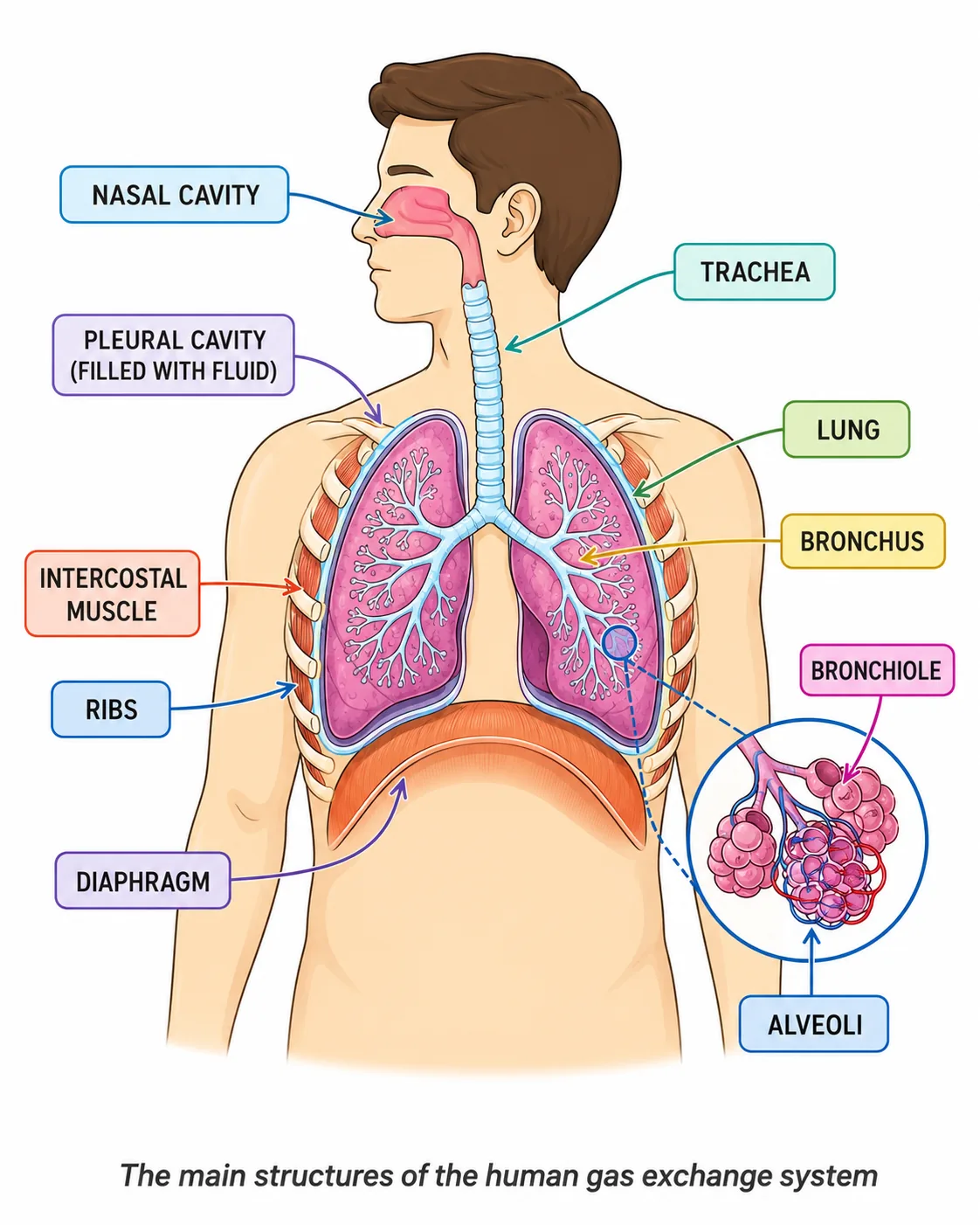
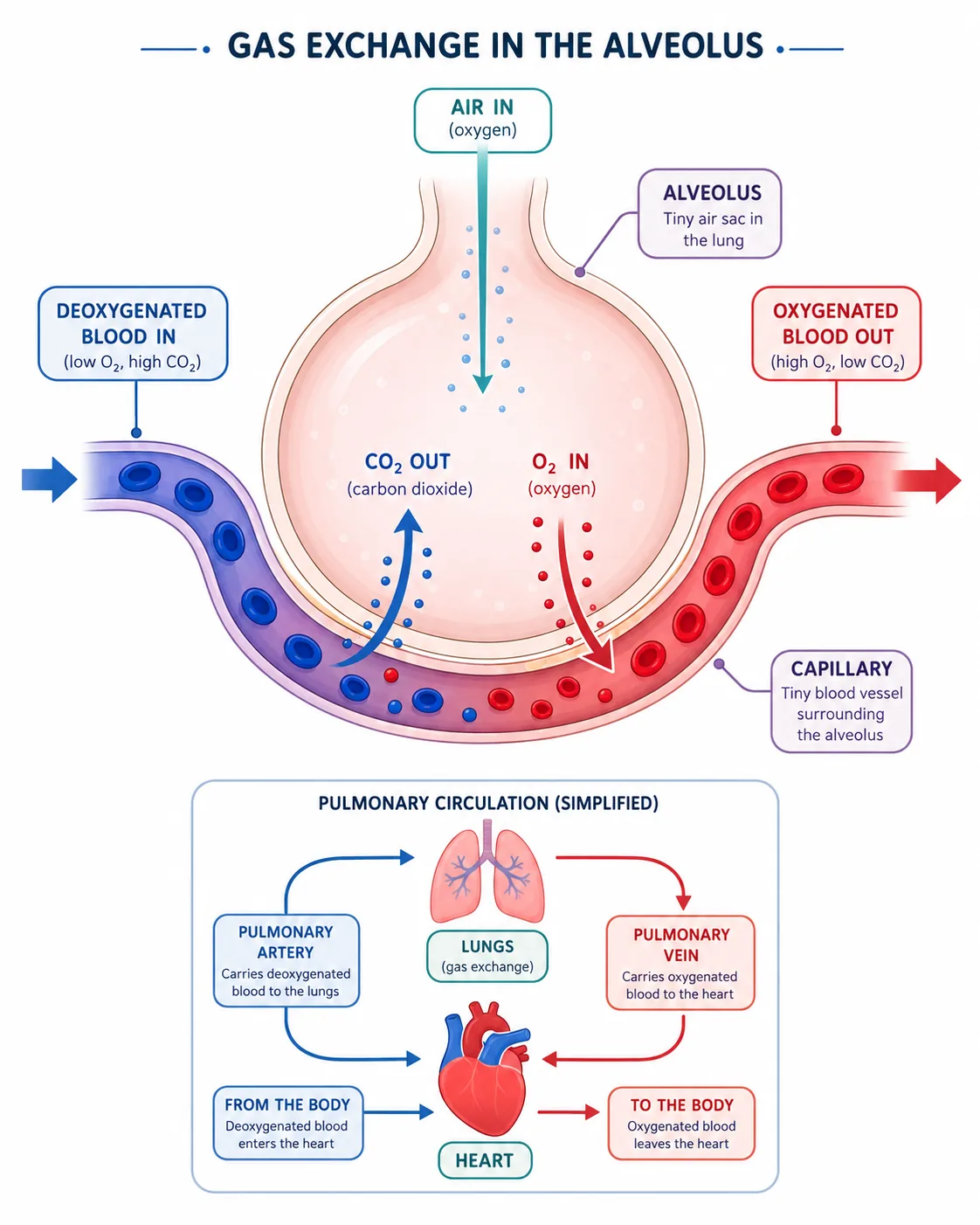
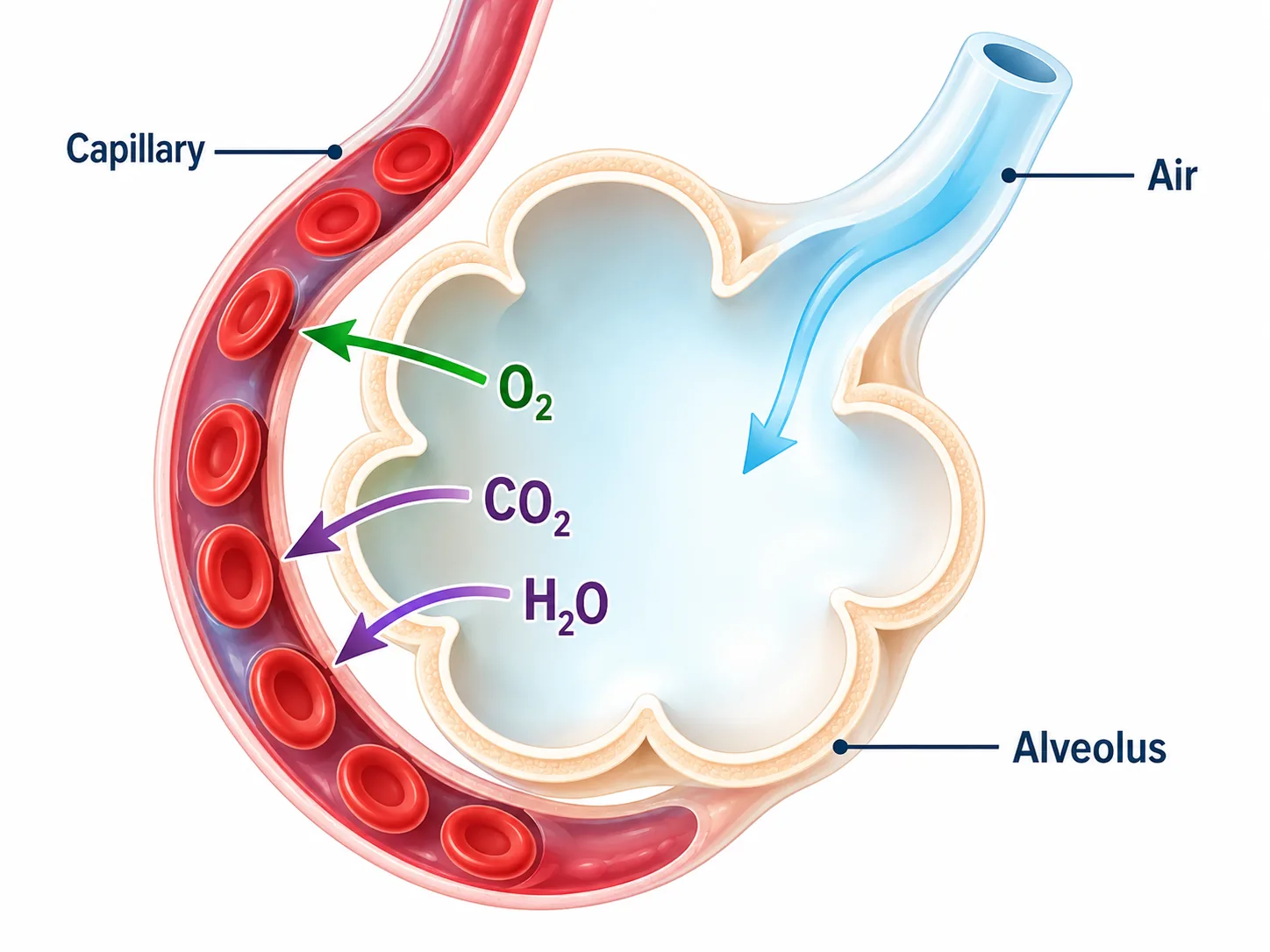
| Lungs | Alveoli (air sacs) | Oxygen diffuses into blood; Carbon dioxide diffuses into lungs | Moist inner lining allows gases to dissolve; thin squamous epithelium (one cell thick); surrounded by dense pulmonary capillary network |
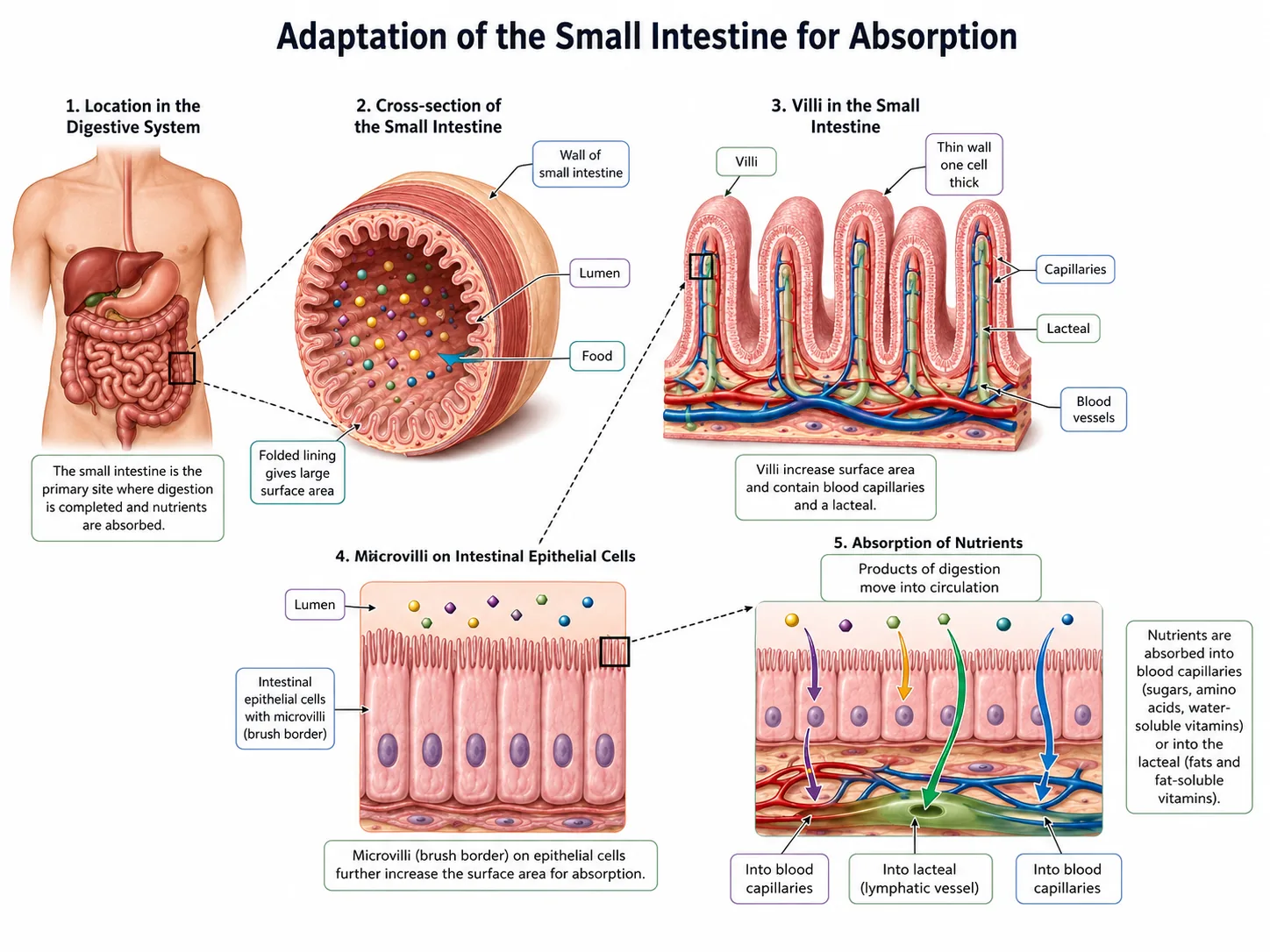
| Small Intestine | Villi (finger-like projections) | Glucose, amino acids, fatty acids, glycerol | Each villus has a central lacteal and a surrounding blood capillary network; lined with single-cell-thick epithelium with microvilli |
- Fate of digested products in a villus:
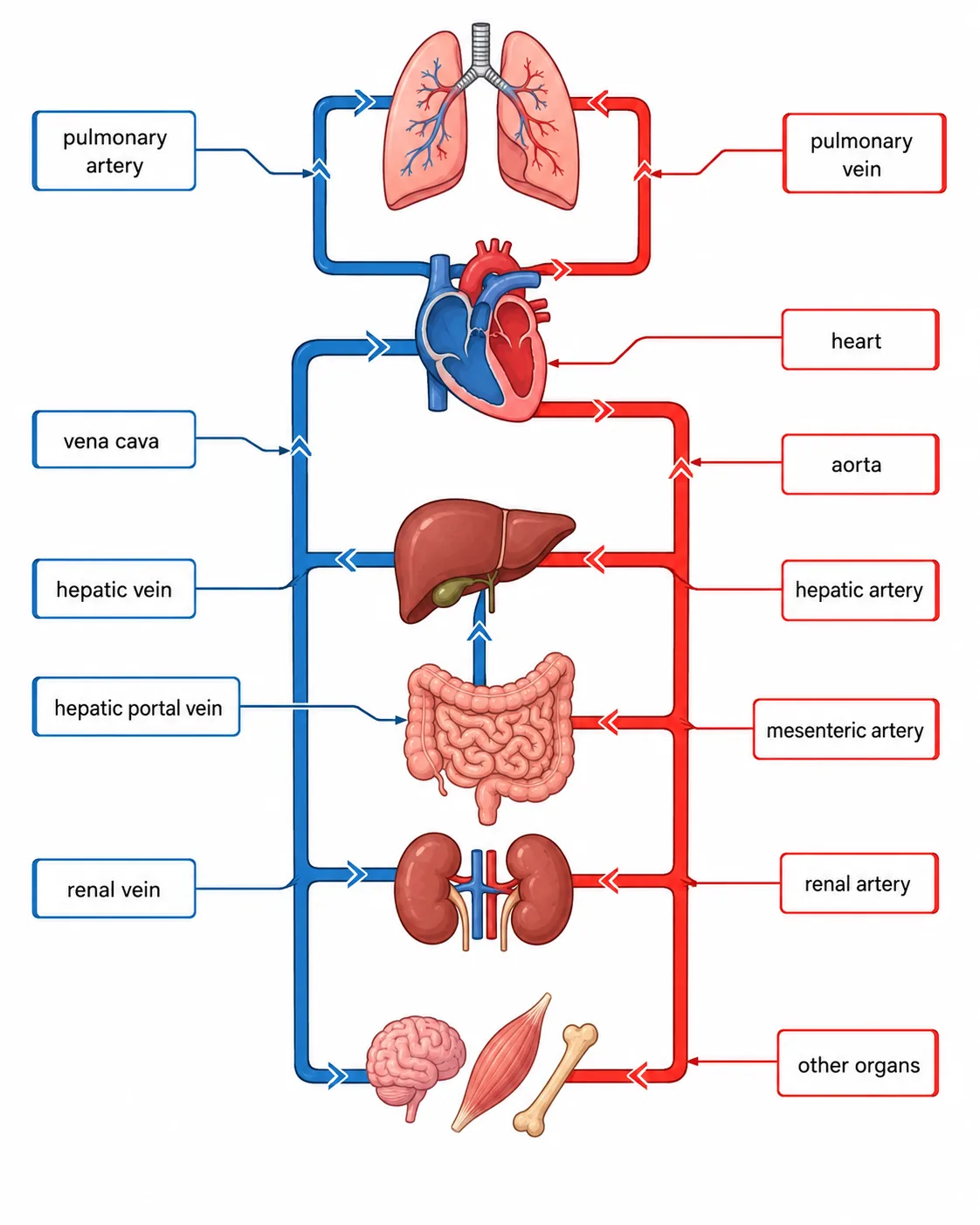
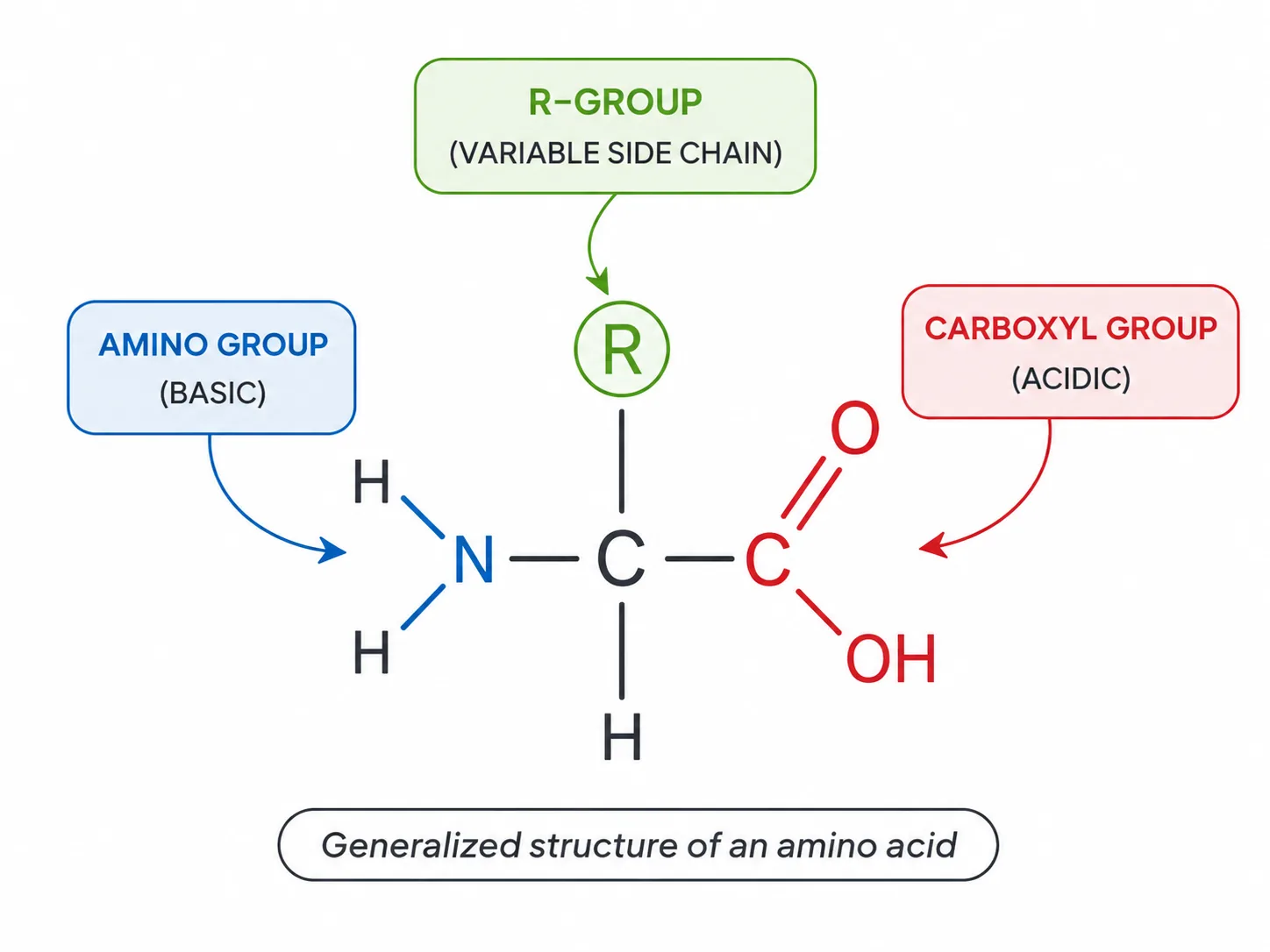
- Blood capillariesAbsorb water-soluble breakdown products — glucose and amino acids — which are transported directly to the liver via the hepatic portal vein.
- Central lacteal
- Part of the lymphatic system;
- absorbs water-insoluble fat digestion products — fatty acids and glycerol.
- Part of the lymphatic system;
Key terms
| Term | Meaning |
|---|---|
| Alveolus | A microscopic thin-walled air sac in lungs where respiratory gas exchange occurs. |
| Villus | A finger-like projection lining the inner wall of the small intestine that absorbs nutrients. |
| Lacteal | A central lymphatic vessel within an intestinal villus that absorbs fatty acids and glycerol. |
| Concentration gradient | The difference in molecular concentration between two adjacent areas driving diffusion. |
Avoid these mistakes
Avoid these mistakes
Stating glucose is absorbed into lacteals — glucose and amino acids enter blood capillaries; only fatty acids and glycerol enter the lacteal.
Forgetting to mention the thin walls (one cell thick) as a short diffusion pathway adaptation.