12.1Chapter 12: The Carbon Cycle and Climate Change
The carbon cycle — Alhussan Biology - Stage 9 Revision Notes & Topical Questions
5 min read 8 parts Lesson 1 of 6 2 quizzes
Lesson summary
12.1 The carbon cycle — Photosynthesis, Respiration, Feeding and Decomposition — Alhussan International Academy — Biology (Stages 7–9) notes: Describe how carbon moves between the atmosphere, living things, soil, oceans and fossil fuels through photosynthesis, feeding, respiratio…
- Carbon stores
- Effect on carbon
- Passing on carbon
- Remaining carbon
- Combustion
- Fossil fuel formation
Section 1 of 8The carbon cycle and why it matters
1
Carbon
- Carbon it is an important element in the carbohydrate, protein and lipid molecules that make up cells,
- and in the DNA passed from parents to offspring.
2
Carbon cycle
Carbon cycle a series of processes that move carbon between living organisms and the physical environment.
- It returns carbon dioxide from organisms to the atmosphere to be used again in photosynthesis.
- It makes sure the carbon needed for life is always available.
3
Carbon stores
- Carbon stores carbon dioxide in the atmosphere, dissolved carbon dioxide and carbonates in the oceans, living organisms, dead material in the soil,
- and fossil fuels and limestone rocks.
- (about 0.04% of air)
Section 2 of 8Photosynthesis
1Process
- Process green plants, algae and some bacteria use light energy trapped by chlorophyll to combine carbon dioxide and water into glucose and oxygen.
2Effect on carbon
- Effect on carbon carbon is removed from the atmosphere and builds the biomass of plants as sugars, starch and cellulose.
3Oceans
- Oceans carbon dioxide also dissolves in the oceans, where marine organisms use it to make calcium carbonate shells that eventually form limestone.
Section 3 of 8Feeding
Passing on carbon
- Passing on carbon animals eat plants or other animals, break down the biomass and rebuild it as animal biomass.
- Herbivores take in carbon compounds from plants and carnivores eat herbivores.
Losses
- Losses at each stage some carbon is released as carbon dioxide by respiration.
Remaining carbon
- Remaining carbon some stays in the body until the organism dies, when it passes to decomposers.
Section 4 of 8Respiration and decomposition
Respiration
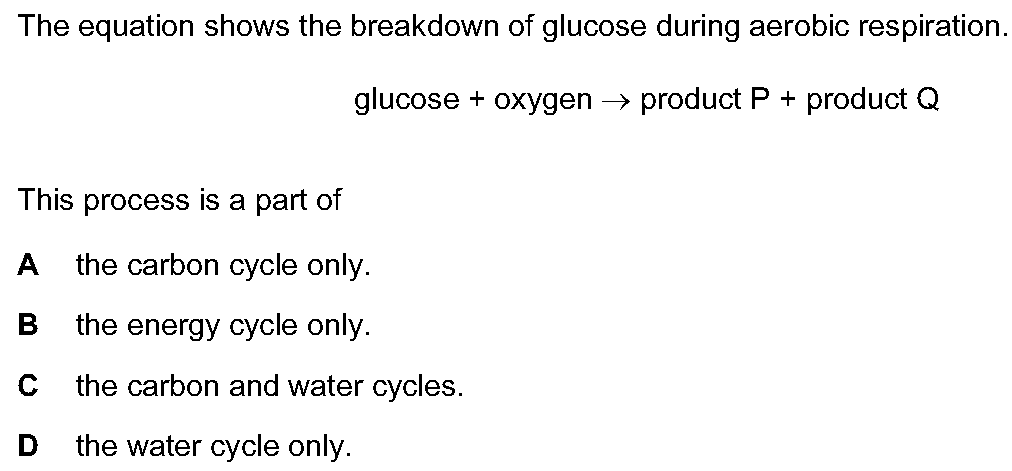
- Respiration all living things, plants, animals and microorganisms, break down glucose using oxygen,
- producing carbon dioxide and water and releasing energy.
Decomposition
- Decomposition bacteria and fungi feed on animal waste, dead leaves and the dead bodies of animals and plants.
- They break these down and release carbon dioxide into the atmosphere by respiration.
Section 5 of 8Combustion and fossil fuels
Combustion
Combustion burning, in which a substance reacts with oxygen and the energy transferred heats the surroundings and produces light.
- Wood and fossil fuels are carbon compounds, so burning them produces carbon dioxide and water, released quickly into the air.
Fossil fuel formation
- Fossil fuel formation dead material buried and compressed without oxygen for millions of years forms coal, oil and gas.
- The carbon is locked away for a very long time.
Section 6 of 8Effect of each process on atmospheric carbon dioxide
| Process | Effect on atmospheric CO2 |
|---|---|
| Photosynthesis | Decreases |
| Respiration | Increases |
| Decomposition | Increases |
| Combustion | Increases |
| Dissolving in oceans | Decreases |
- Balance
- over a long time the processes balance, so the proportion of carbon dioxide in the air stays steady until human activity upsets it.
Section 7 of 8Key terms
| Term | Meaning |
|---|---|
| Carbon cycle | The movement of carbon between living things and the environment. |
| Photosynthesis | Making glucose from carbon dioxide and water using light. |
| Respiration | Breaking down glucose to release energy, producing carbon dioxide. |
| Decomposition | Breakdown of dead material by bacteria and fungi. |
| Combustion | Burning a substance in oxygen. |
| Fossil fuel | A fuel formed from the buried remains of ancient organisms. |
Section 8 of 8Exam technique
1
Saying plants do not respire — they respire all the time and photosynthesise in the light.
2
Thinking carbon is lost from the cycle when organisms die.
3
Confusing the photosynthesis and respiration equations.
4
Writing that animals take in carbon dioxide from the air to build their bodies.
Marked practiceQuizzes for this lesson
?What do you want to solve now?
✓Checkpoint Quiz
1 multiple-choice + 3 written questions from real exam papers on this lesson.
Question 1 of 1 1:30
Score: 0 / 1
Answer key
1 C


Each part of a written question is on its own screen. Write your answer first, then open "Show the answer" to check it against the mark scheme.
Last updated: