12.1Chapter 12: The Carbon Cycle and Climate Change
The carbon cycle — Alhussan Biology - Stage 9 Revision Notes & Topical Questions
5 min read 8 parts Lesson 1 of 6 2 quizzes
Lesson summary
12.1 The carbon cycle — Photosynthesis, Respiration, Feeding and Decomposition — Alhussan International Academy — Biology (Stages 7–9) notes: Describe how carbon moves between the atmosphere, living things, soil, oceans and fossil fuels through photosynthesis, feeding, respiratio…
- Carbon stores
- Effect on carbon
- Passing on carbon
- Remaining carbon
- Combustion
- Fossil fuel formation
Section 1 of 8The carbon cycle and why it matters
1
Carbon
- Carbon it is an important element in the carbohydrate, protein and lipid molecules that make up cells,
- and in the DNA passed from parents to offspring.
2
Carbon cycle
Carbon cycle a series of processes that move carbon between living organisms and the physical environment.
- It returns carbon dioxide from organisms to the atmosphere to be used again in photosynthesis.
- It makes sure the carbon needed for life is always available.
3
Carbon stores
- Carbon stores carbon dioxide in the atmosphere, dissolved carbon dioxide and carbonates in the oceans, living organisms, dead material in the soil,
- and fossil fuels and limestone rocks.
- (about 0.04% of air)
Section 2 of 8Photosynthesis
1Process
- Process green plants, algae and some bacteria use light energy trapped by chlorophyll to combine carbon dioxide and water into glucose and oxygen.
2Effect on carbon
- Effect on carbon carbon is removed from the atmosphere and builds the biomass of plants as sugars, starch and cellulose.
3Oceans
- Oceans carbon dioxide also dissolves in the oceans, where marine organisms use it to make calcium carbonate shells that eventually form limestone.
Section 3 of 8Feeding
Passing on carbon
- Passing on carbon animals eat plants or other animals, break down the biomass and rebuild it as animal biomass.
- Herbivores take in carbon compounds from plants and carnivores eat herbivores.
Losses
- Losses at each stage some carbon is released as carbon dioxide by respiration.
Remaining carbon
- Remaining carbon some stays in the body until the organism dies, when it passes to decomposers.
Section 4 of 8Respiration and decomposition
Respiration
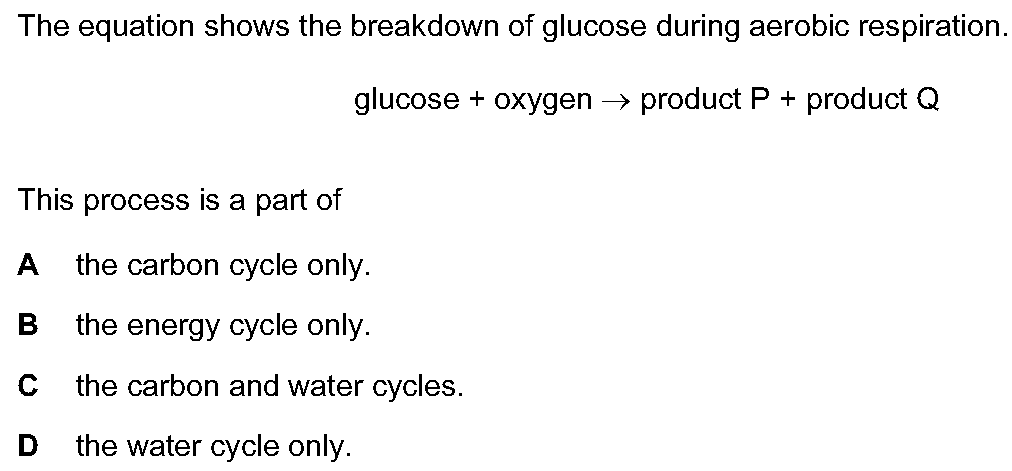
- Respiration all living things, plants, animals and microorganisms, break down glucose using oxygen,
- producing carbon dioxide and water and releasing energy.
Decomposition
- Decomposition bacteria and fungi feed on animal waste, dead leaves and the dead bodies of animals and plants.
- They break these down and release carbon dioxide into the atmosphere by respiration.
Section 5 of 8Combustion and fossil fuels
Combustion
Combustion burning, in which a substance reacts with oxygen and the energy transferred heats the surroundings and produces light.
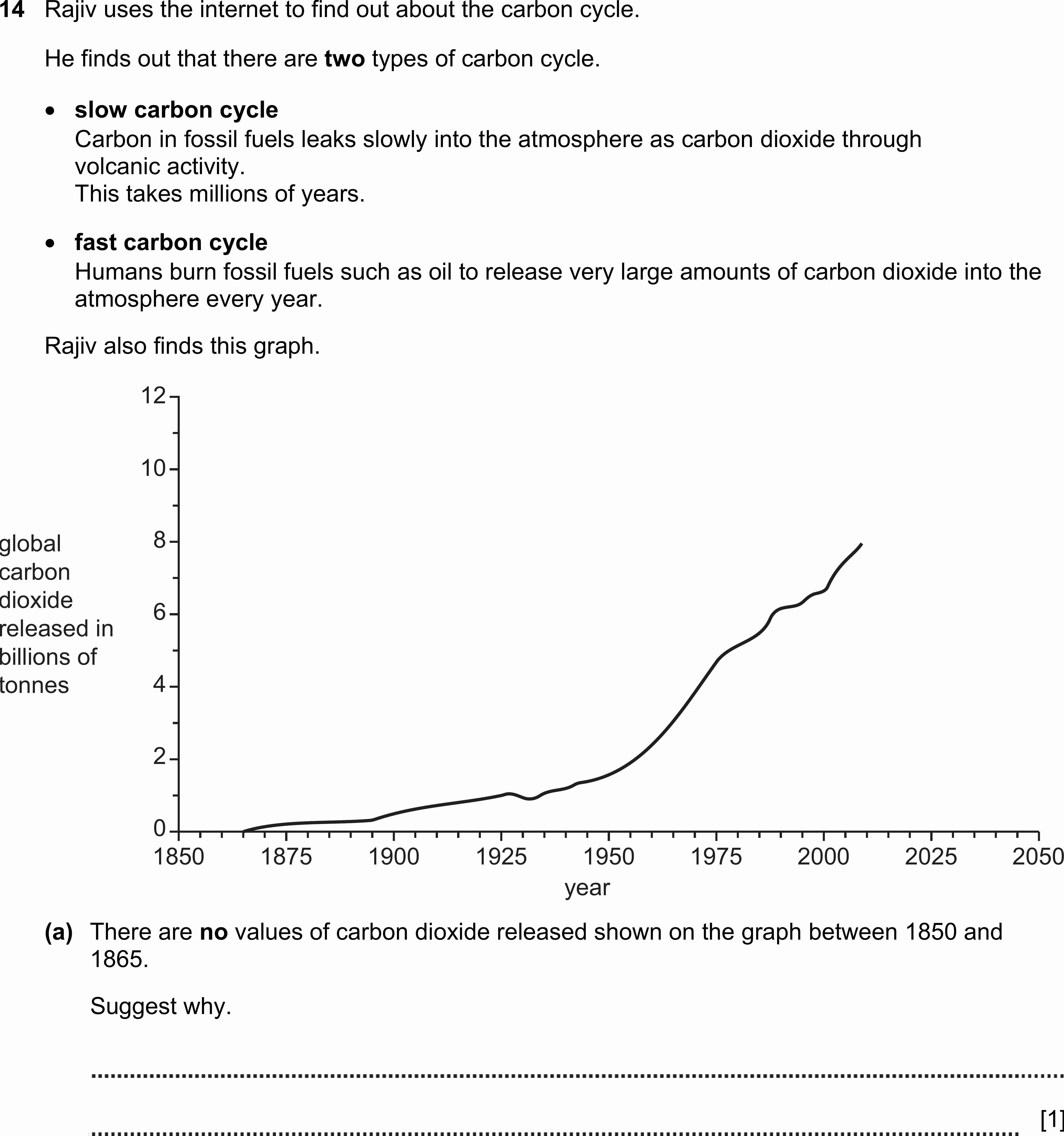
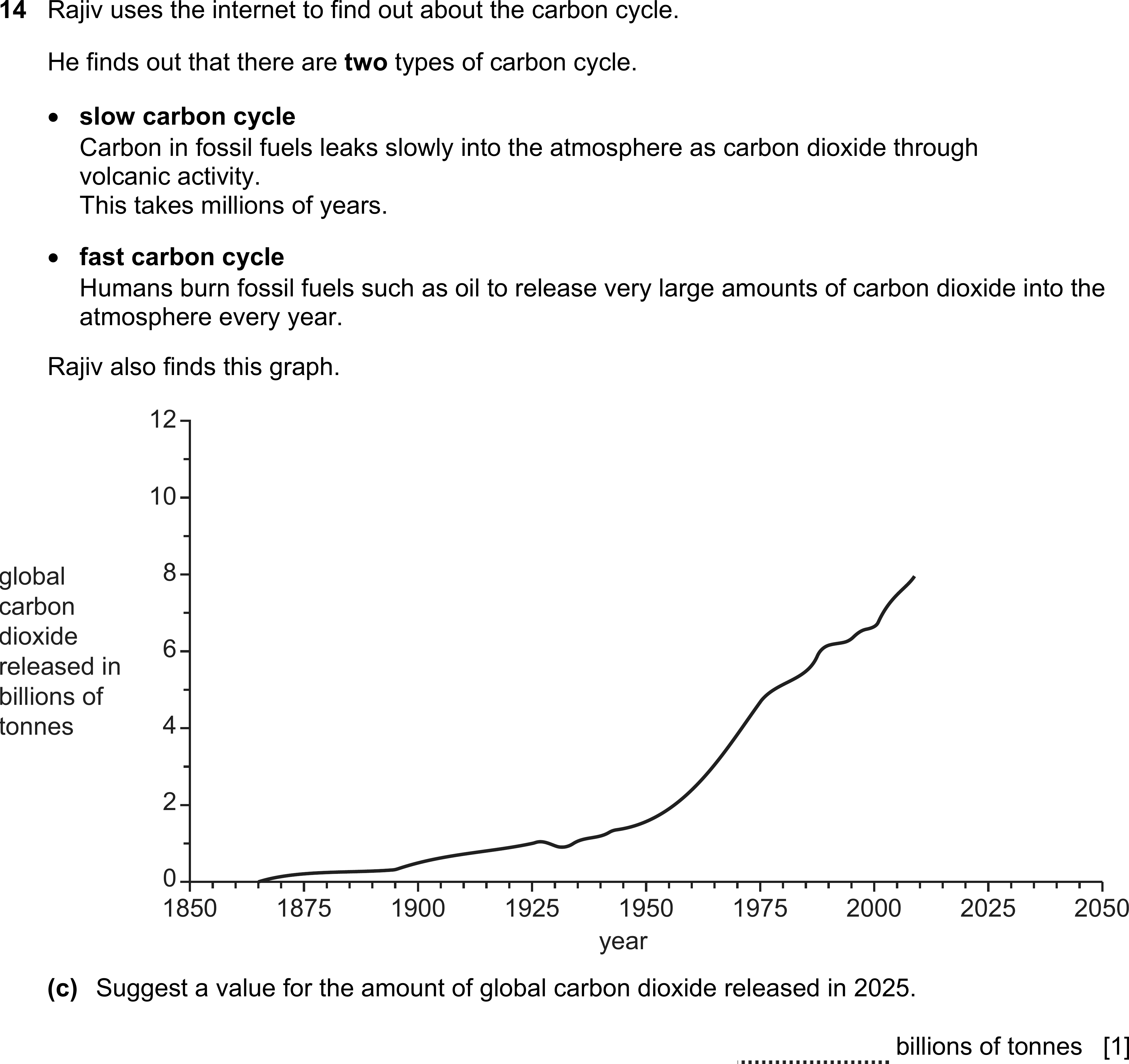
- Wood and fossil fuels are carbon compounds, so burning them produces carbon dioxide and water, released quickly into the air.
Fossil fuel formation
- Fossil fuel formation dead material buried and compressed without oxygen for millions of years forms coal, oil and gas.
- The carbon is locked away for a very long time.
Section 6 of 8Effect of each process on atmospheric carbon dioxide
| Process | Effect on atmospheric CO2 |
|---|---|
| Photosynthesis | Decreases |
| Respiration | Increases |
| Decomposition | Increases |
| Combustion | Increases |
| Dissolving in oceans | Decreases |
- Balance
- over a long time the processes balance, so the proportion of carbon dioxide in the air stays steady until human activity upsets it.
Section 7 of 8Key terms
| Term | Meaning |
|---|---|
| Carbon cycle | The movement of carbon between living things and the environment. |
| Photosynthesis | Making glucose from carbon dioxide and water using light. |
| Respiration | Breaking down glucose to release energy, producing carbon dioxide. |
| Decomposition | Breakdown of dead material by bacteria and fungi. |
| Combustion | Burning a substance in oxygen. |
| Fossil fuel | A fuel formed from the buried remains of ancient organisms. |
Section 8 of 8Exam technique
1
Saying plants do not respire — they respire all the time and photosynthesise in the light.
2
Thinking carbon is lost from the cycle when organisms die.
3
Confusing the photosynthesis and respiration equations.
4
Writing that animals take in carbon dioxide from the air to build their bodies.
Marked practiceQuizzes for this lesson
?What do you want to solve now?
✓Checkpoint Quiz
1 multiple-choice + 3 written questions from real exam papers on this lesson.

Answers to written questions are not published. Write your answer, then send the question number on WhatsApp to get the model answer.
Last updated: