10.2Chapter 10: Structure, Bonding, and Properties
Electrons in atoms — Alhussan Chemistry - Stage 9 Revision Notes & Topical Questions
5 min read 8 parts Lesson 2 of 9 2 quizzes
10.2 Electrons in atoms — Electron Shells and Electronic Configurations — Alhussan International Academy — Chemistry (Stages 7–9) notes: Define electron configuration and write and draw the electron configurations of the first 20 elements.Neutral atom — it has the same number of …
- Chemical properties
- Filling order
- Maximum numbers
- Same column
- Full outer shell
- Non-metals
Part 1 of 6Electrons in atoms
- Neutral atom it has the same number of protons and electrons, so hydrogen has 1 of each, sodium has 11 and silver has 47.
- Chemical properties the number and arrangement of electrons give an element its chemical properties.
- Silver and sodium have similar physical properties (shiny when freshly cut, conduct electricity) but different chemical properties because their atoms have different numbers of electrons.
- Sodium reacts vigorously with water but silver does not.
Part 2 of 6Electron shells
- Shells electrons are arranged in shells (energy levels) around the nucleus.
- Filling order the shell closest to the nucleus has the lowest energy and fills first.
- Maximum numbers the first shell holds up to 2 electrons, the second up to 8 and the third up to 18.
- For the first 20 elements the third shell fills to 8 before the fourth shell starts.
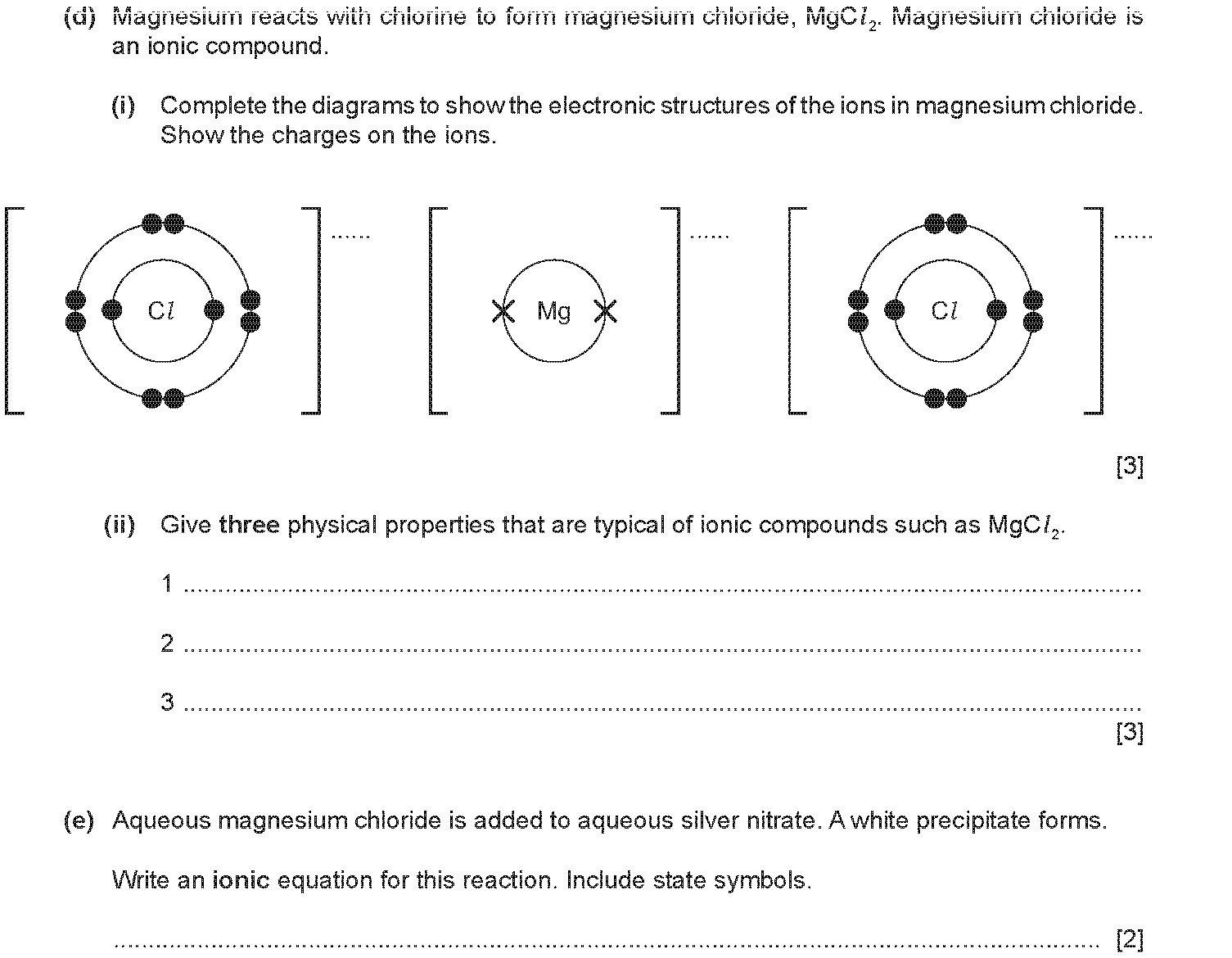
- Sodium has 2 electrons in the first shell, 8 in the second and 1 in the outer shell, written 2,8,1.
Part 3 of 6Writing a configuration
- Examples lithium (3) is 2,1;
- carbon (6) is 2,4;
- sodium (11) is 2,8,1;
- aluminium (13) is 2,8,3;
- chlorine (17) is 2,8,7;
- calcium (20) is 2,8,8,2.
- Drawing draw concentric circles around a nucleus labelled with its symbol and place electrons as crosses on each circle, counting carefully so that there are not too many shells.
Part 4 of 6Links to the periodic table
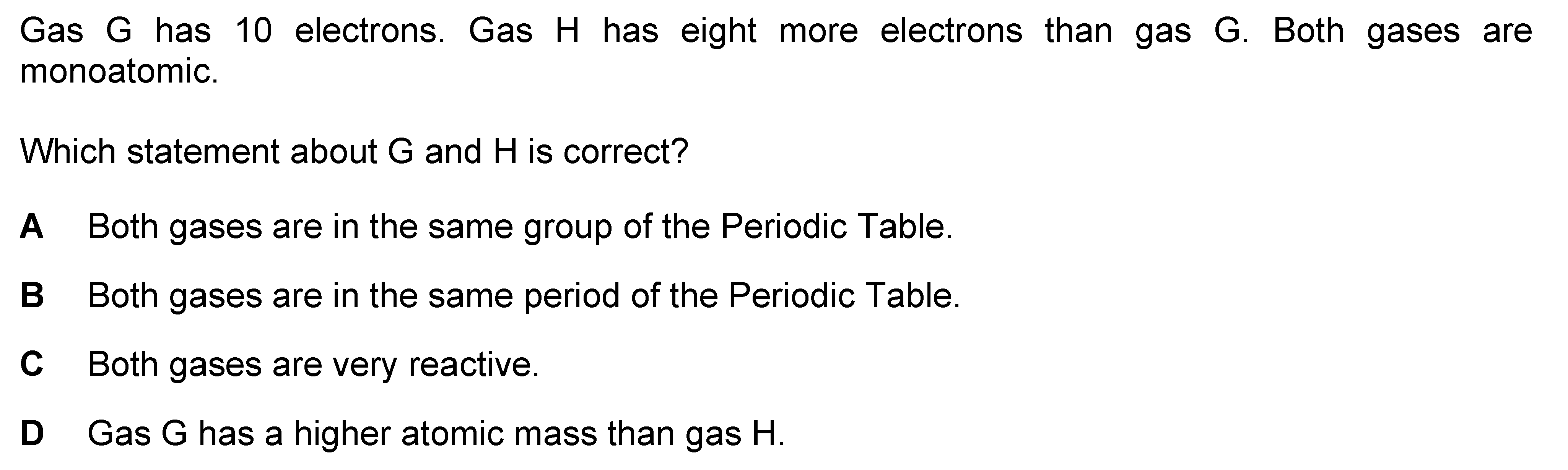
- Period the period number equals the number of occupied shells.
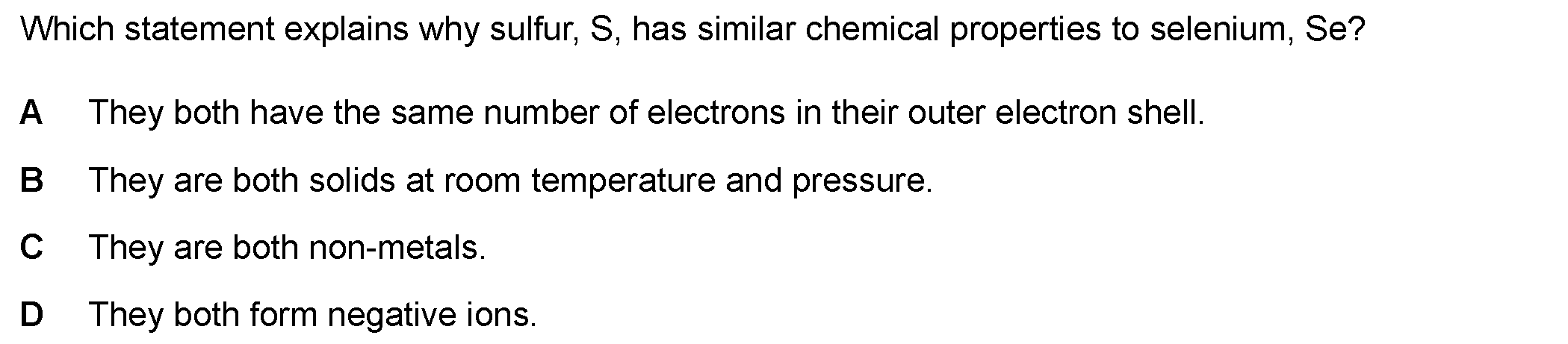
- Group for Groups 1 to 7 the group number equals the number of outer-shell electrons.
- Group 1 atoms have one outer electron and Group 2 atoms have two.
- Same column all elements in the same column have the same number of outer-shell electrons and therefore similar chemical properties.
- Group 0 the noble gases have full outer shells, which explains their lack of reactivity.
| Element | Atomic number | Configuration | Group | Period |
|---|---|---|---|---|
| Oxygen | 8 | 2,6 | 6 | 2 |
| Magnesium | 12 | 2,8,2 | 2 | 3 |
| Argon | 18 | 2,8,8 | 0 | 3 |
Part 5 of 6Why outer electrons matter
- Reactions chemical reactions involve the outer-shell electrons.
- Full outer shell atoms react to achieve a full outer shell by losing, gaining or sharing electrons.
- Metals they tend to lose outer electrons.
- Non-metals they tend to gain or share electrons.
Part 6 of 6Electron configurations and ions
- 2,8,1 loses its single outer electron to reach the stable 2,8 arrangement of neon.
- 2,8,7 gains one electron to become 2,8,8, like argon.
- Two or three outer electrons elements such as magnesium and aluminium lose them.
- Six or seven outer electrons elements tend to gain electrons.
- Four outer electrons elements such as carbon usually share electrons.
- Atoms and ions comparing the numbers of protons and electrons shows whether a particle is an atom or an ion, for example 2,8,8 could be argon, K+ or Cl-.
Key terms
| Term | Meaning |
|---|---|
| Electron shell | an energy level where electrons are found around the nucleus. |
| Electron configuration | the arrangement of electrons in shells. |
| Outer shell | the shell farthest from the nucleus that holds electrons. |
| Noble gas | an unreactive Group 0 element with a full outer shell. |
| Group | a vertical column of the periodic table. |
| Period | a horizontal row of the periodic table. |
Avoid these mistakes
Marked practiceQuizzes for this lesson
?What do you want to solve now?
✓Checkpoint Quiz
6 multiple-choice + 2 written questions from real exam papers on this lesson.
Question 1 of 6 1:30

Question 2 of 6 1:30

Question 3 of 6 1:30

Question 4 of 6 1:30

Question 5 of 6 1:30
Question 6 of 6 1:30


Answers to written questions are not published. Write your answer, then send the question number on WhatsApp to get the model answer.
Last updated: