10.3Chapter 10: Structure, Bonding, and Properties
Making ions — Alhussan Chemistry - Stage 9 Revision Notes & Topical Questions
5 min read 9 parts Lesson 3 of 9 2 quizzes
Lesson summary
10.3 Making ions — Cations, Anions and Full Outer Shells — Alhussan International Academy — Chemistry (Stages 7–9) notes: Define ion, describe how ions form, explain why atoms form ions and write formulae for simple ions.Ion = a particle with a positive or negative charge, formed…
- Negative ion
- Positive ion
- Importance
- Sodium ion
- Chloride ion
- Stable atoms
Part 1 of 7What ions are
Ion
Ion a particle with a positive or negative charge, formed when an atom gains or loses electrons.
Negative ion
- Negative ion an atom that gains one or more electrons becomes negatively charged, because electrons are negative.
Positive ion
- Positive ion an atom that loses one or more electrons becomes positively charged.
Protons
- Protons the number of protons does not change, only the number of electrons.
Importance
- Importance animals such as goats need sodium ions from salt to make their hearts and nerves work.
Part 2 of 7How sodium chloride ions form
Before
- Before a sodium atom has 11 protons and 11 electrons, and a chlorine atom has 17 protons and 17 electrons, so neither has a net charge.
Transfer
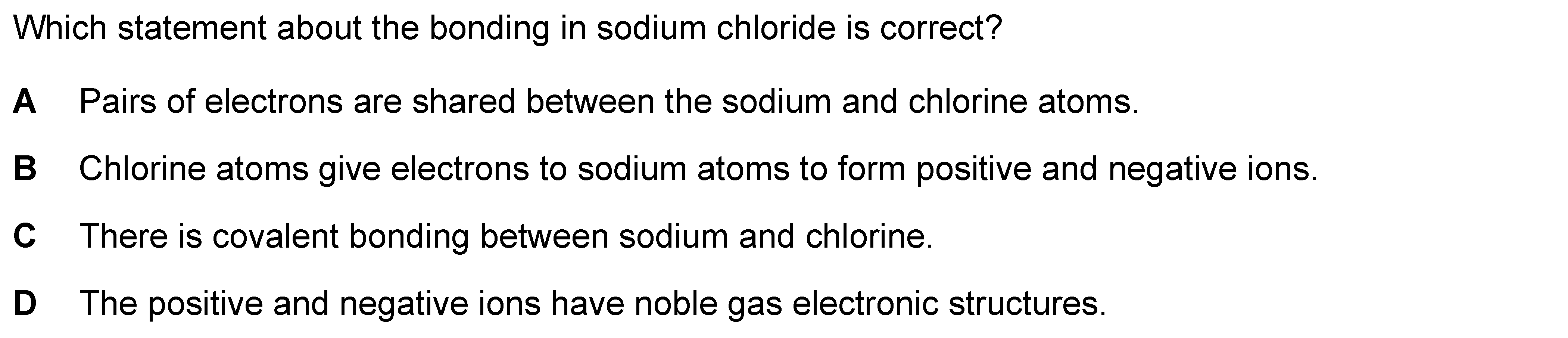
- Transfer in the reaction one electron moves from the sodium atom to the chlorine atom.
Sodium ion
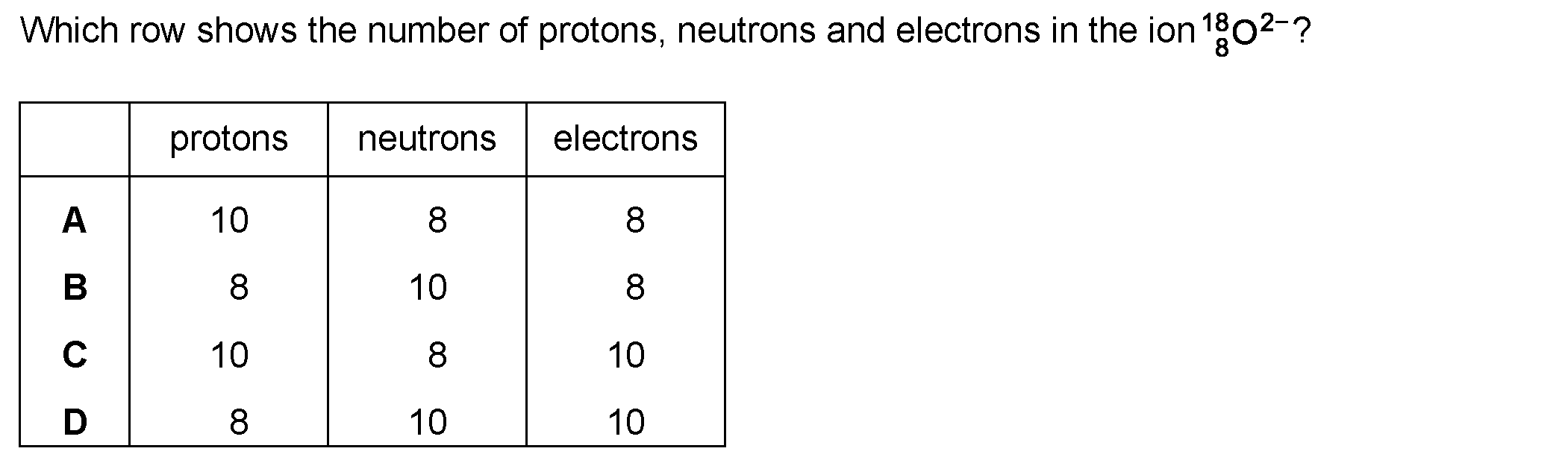
- Sodium ion it has 11 protons and 10 electrons, so its charge is +1.
Chloride ion
- Chloride ion it has 17 protons and 18 electrons, so its charge is -1.
Part 3 of 7Cations and anions
Cations
- Cations metals lose outer electrons to form positive ions called cations.
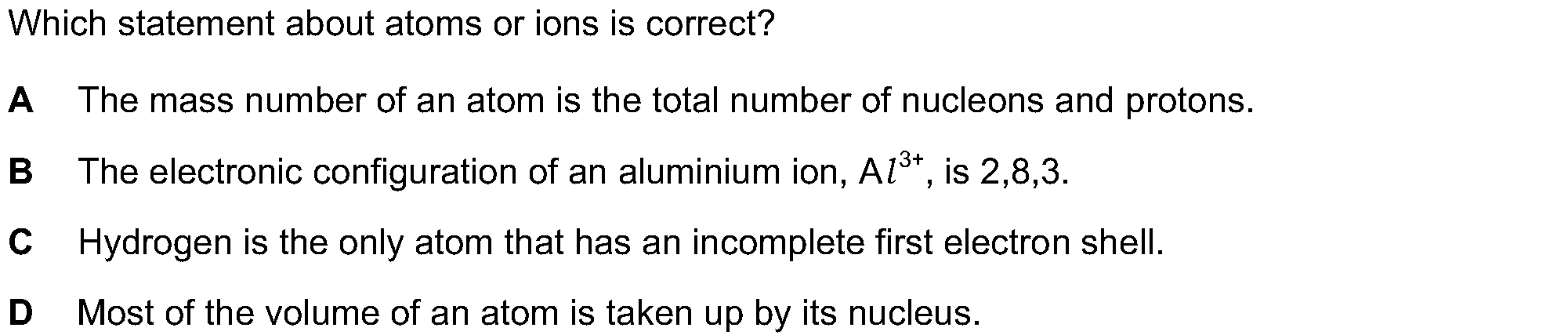
- Sodium (2,8,1) loses one electron to become Na+ (2,8), and magnesium (2,8,2) loses two to become Mg2+.
Anions
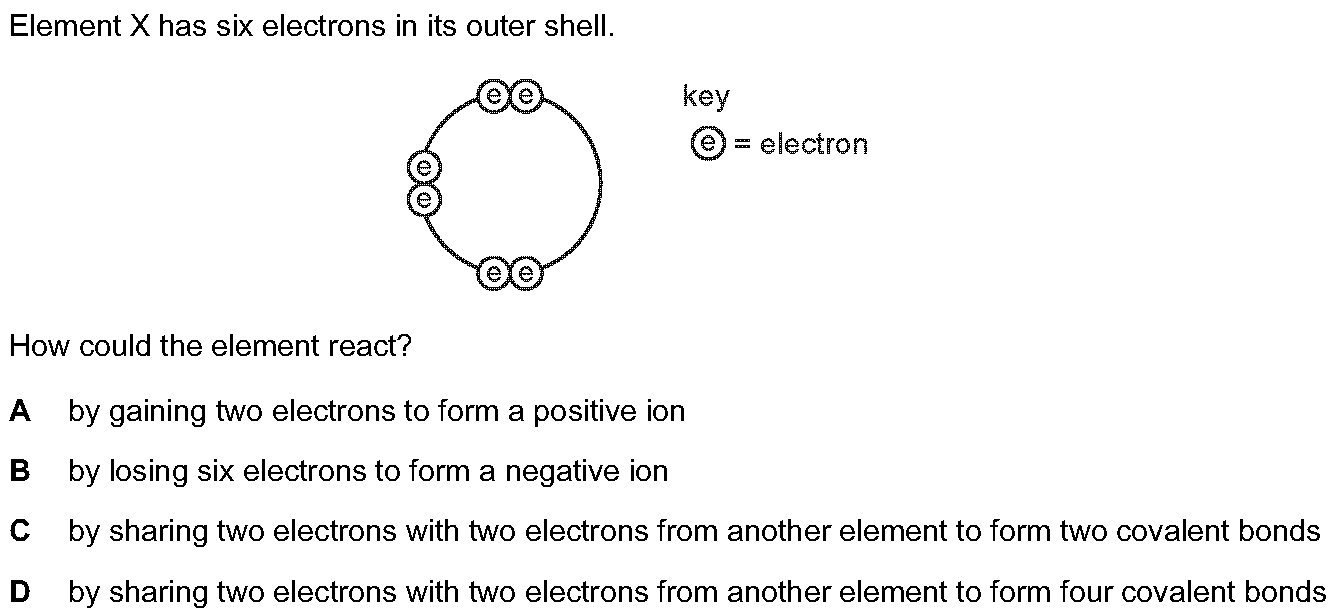
- Anions non-metals gain electrons to form negative ions called anions.
- Chlorine (2,8,7) gains one to become Cl- (2,8,8), and oxygen (2,6) gains two to become O2-.
| Group | Change | Charge | Example |
|---|---|---|---|
| 1 | Lose 1 | +1 | Li+ |
| 2 | Lose 2 | 2+ | Ca2+ |
| 3 | Lose 3 | 3+ | Al3+ |
| 6 | Gain 2 | 2- | S2- |
| 7 | Gain 1 | 1- | F- |
Part 4 of 7Why atoms form ions
Stable atoms
- Stable atoms argon makes up 1% of the air and is inert because its atoms have eight electrons in a full outer shell.
Full outer shell
- Full outer shell any atom or ion with a full outer shell is stable.
Purpose
- Purpose ions form to achieve a stable noble gas electron arrangement.
- Na+, Mg2+, F- and O2- have the neon arrangement 2,8.
- K+, Ca2+, Cl- and S2- have the argon arrangement 2,8,8.
Sodium chloride
- Sodium chloride it is made of stable ions, each with a full outer shell, which explains why it takes part in few chemical reactions.
Part 5 of 7Formulae for ions
Formulae for ions
Format
- Format the formula gives the chemical symbol of the element and the charge on the ion.
- The + or - sign is written to the right of the symbol and above the line.
Examples
- Examples a sodium ion is Na+, a chloride ion is Cl-, a potassium ion is K+, a magnesium ion is Mg2+ and a bromide ion is Br-.
Charge style
- Charge style write the number first then the sign, as in 2-.
Counting particles
- Counting particles for Mg2+ the electrons are 12 - 2 = 10, and for O2- (atomic number 8) they are 8 + 2 = 10.
- (atomic number 12)
Part 6 of 7Size of atoms and ions
Positive ions
- Positive ions a sodium ion is smaller than a sodium atom because the whole outer shell is lost.
Negative ions
- Negative ions a chloride ion is bigger than a chlorine atom because the extra electron increases repulsion in the outer shell.
Part 7 of 7Ionic formulae
Balanced charges
- Balanced charges the total positive charge must equal the total negative charge, and the charges are not written in the formula.
Crossover method
- Crossover method the number of each ion's charge becomes the subscript of the other ion.
Examples
- Examples aluminium oxide is Al2O3, calcium fluoride is CaF2, potassium sulfide is K2S and sodium oxide is Na2O.
Key terms
| Term | Meaning |
|---|---|
| Ion | a charged atom or group of atoms. |
| Cation | a positively charged ion. |
| Anion | a negatively charged ion. |
| Full outer shell | a stable electron arrangement like a noble gas. |
| Inert | not taking part in chemical reactions. |
| Chloride ion | the Cl- ion formed when chlorine gains an electron. |
Avoid these mistakes
1
Saying metals gain electrons — metals lose electrons to form positive ions.
2
Changing the number of protons when forming ions — only electrons are gained or lost.
3
Writing the charge as -2 after the symbol instead of 2- — write the number first then the sign.
4
Saying negative ions are larger because they lose electrons — they are larger because they gain electrons.
Marked practiceQuizzes for this lesson
?What do you want to solve now?
✓Checkpoint Quiz
7 multiple-choice questions from real exam papers on this lesson.
Question 1 of 7 1:30
Question 2 of 7 1:30

Question 3 of 7 1:30
Question 4 of 7 1:30
Question 5 of 7 1:30
Question 6 of 7 1:30
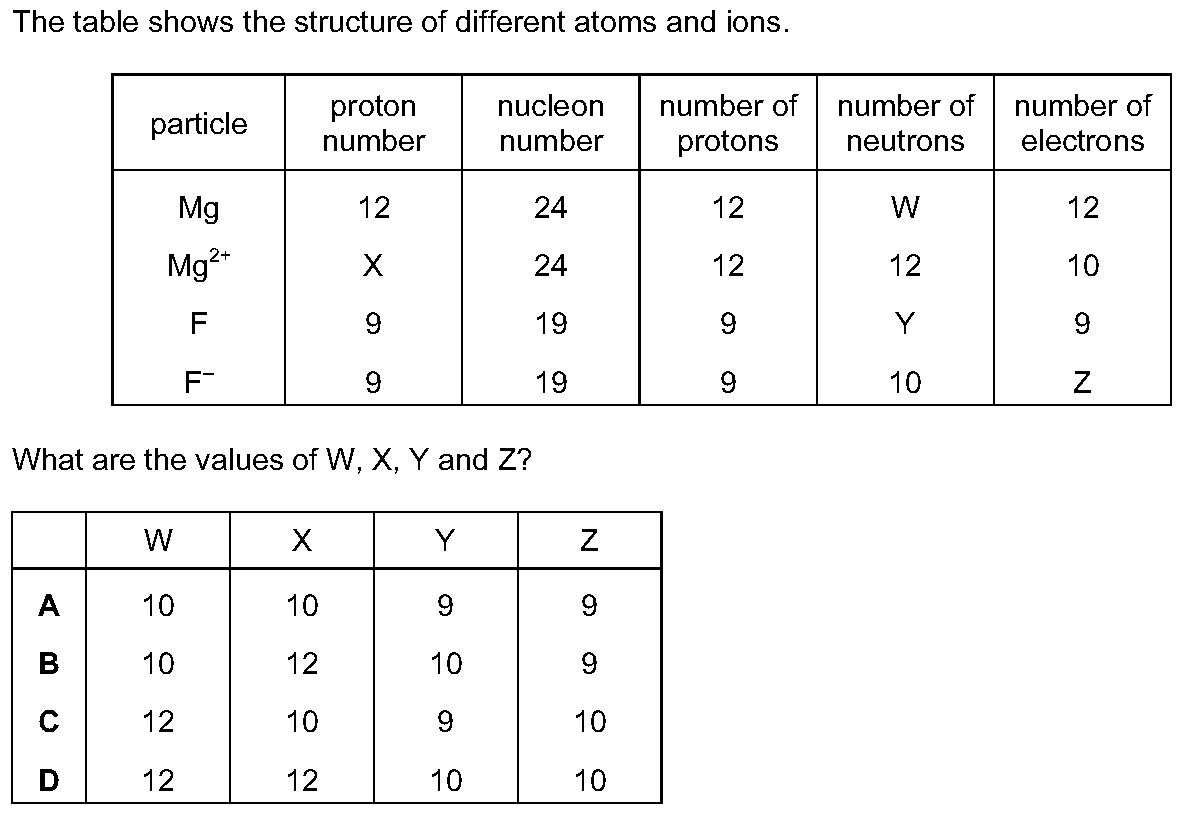
Question 7 of 7 1:30

Score: 0 / 7
Answer key
1 D2 D3 D4 C5 C6 D7 D
Last updated: