10.7Chapter 10: Structure, Bonding, and Properties
More about structures — Alhussan Chemistry - Stage 9 Revision Notes & Topical Questions
5 min read 9 parts Lesson 7 of 9 2 quizzes
10.7 More about structures — Bonding, Melting Points and Conductivity — Alhussan International Academy — Chemistry (Stages 7–9) notes: Describe giant metallic structures, summarise the four types of structure and use data to identify bonding and structure.Alloys — steel is mainly…
- Metallic bonding
- High strength and melting points
- Steel in buildings
- Explanation pattern
- Comparisons
- Non-metals
Part 1 of 7Giant metallic structures
- Alloys steel is mainly iron with small amounts of other elements, and metal elements and alloys are strong because of their structure.
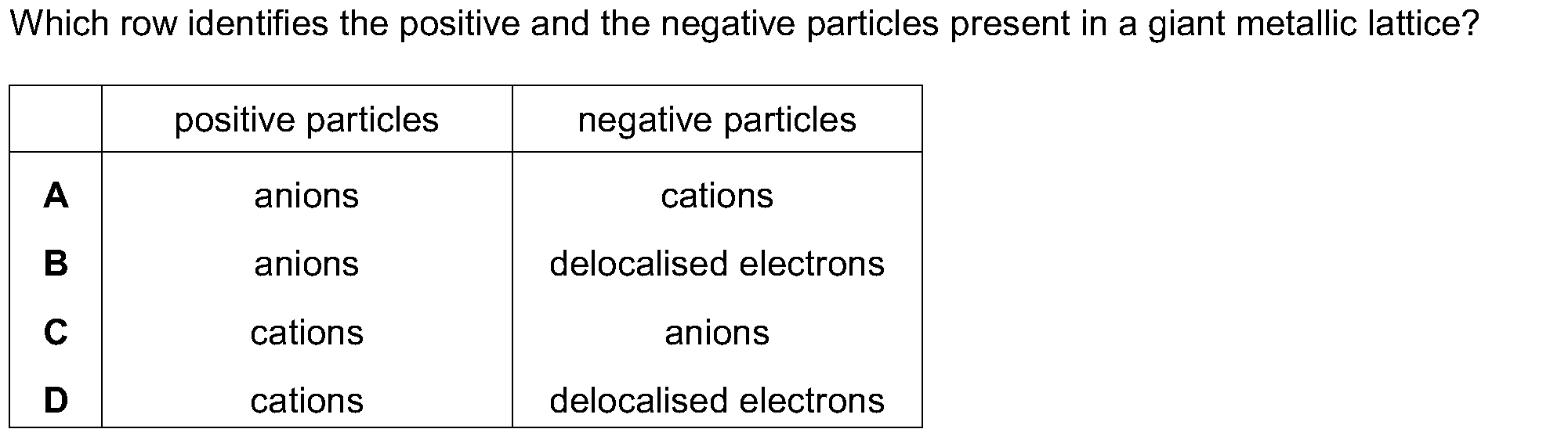
- Particles metal atoms lose their outer electrons to achieve a stable electron configuration,
- so a metal contains two types of particle: positive ions and negative electrons.
- The ions are in fixed positions in layers.
- The electrons move around between the ions.
Part 2 of 7Properties of metals
- High strength and melting points the strong electrostatic attraction between fixed positive ions and moving electrons needs a lot of energy to overcome.
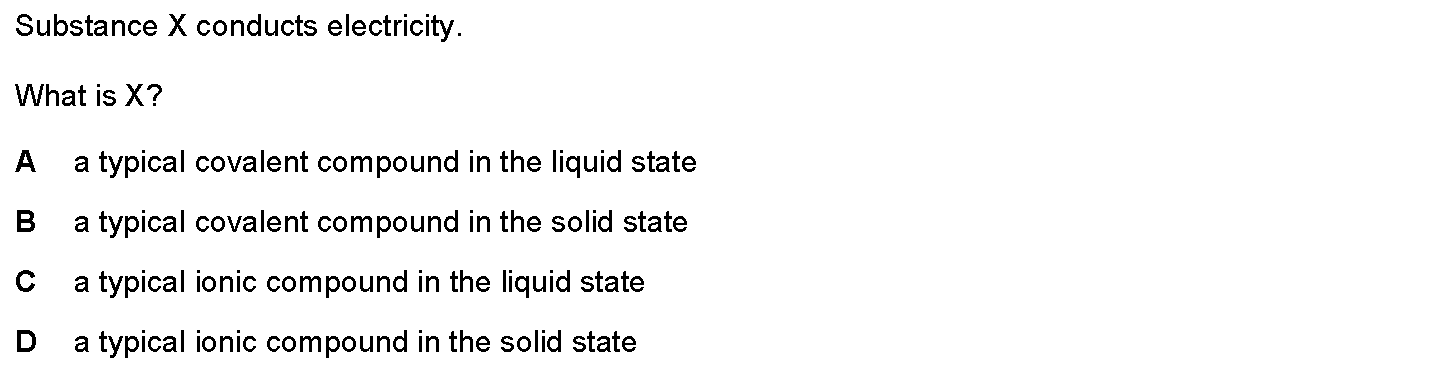
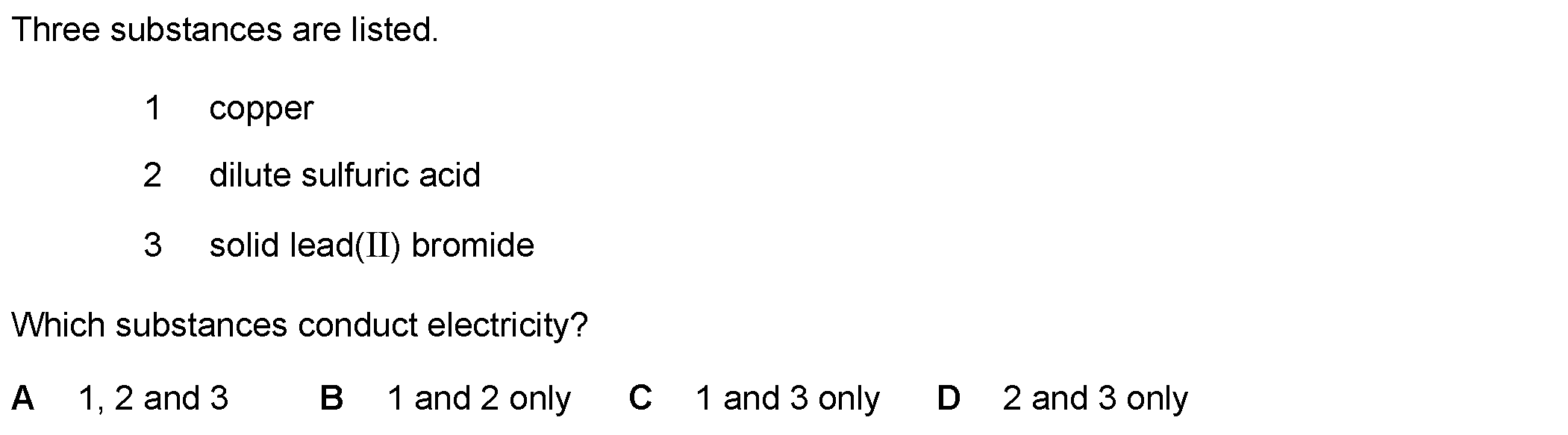
- Conductivity the moving electrons allow metals to conduct electricity, even as solids.
- Steel in buildings steel bars embedded in concrete give the strength needed in a tall building such as the Burj Khalifa in Dubai.
Part 3 of 7Four types of structure
| Structure | Particles | Elements or compounds | Typical state at 20 °C | Examples |
|---|---|---|---|---|
| Ionic (giant) | Positive and negative ions | Compounds | Solid | Sodium chloride |
| Metallic (giant) | Positive ions and negative electrons | Elements | Solid | Gold |
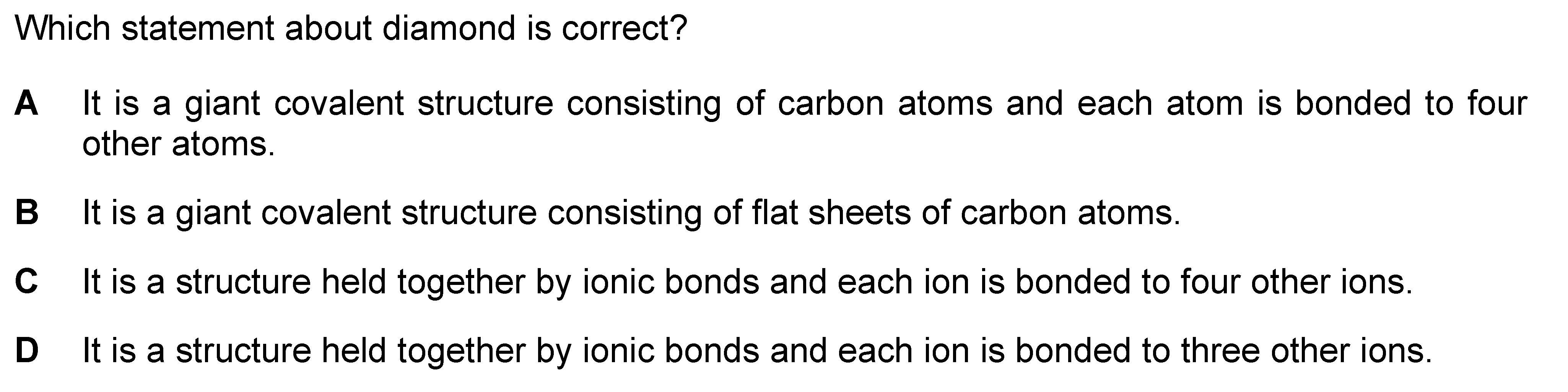
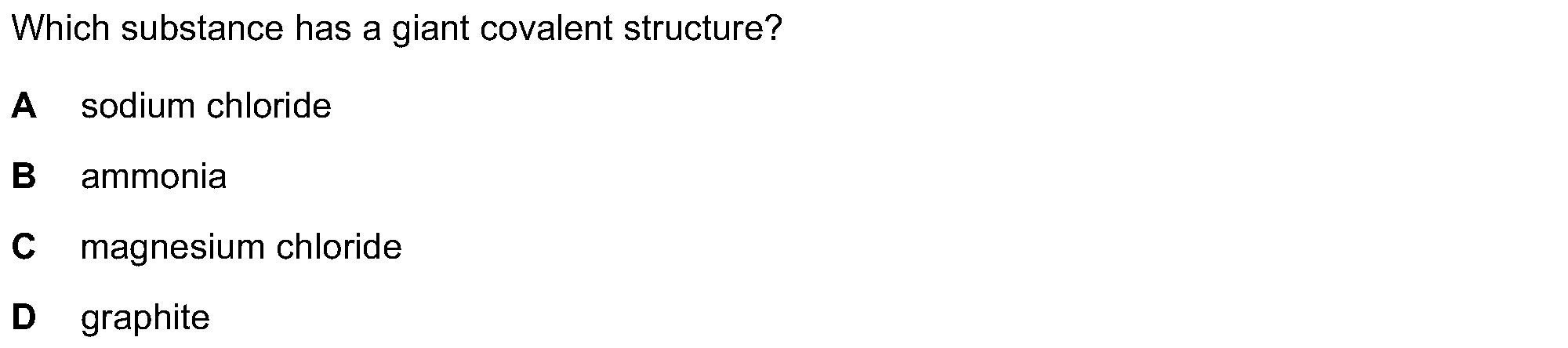
| Giant covalent | Atoms joined by covalent bonds | Elements and compounds | Solid | Diamond, silicon dioxide |
| Simple covalent | Molecules joined by covalent bonds | Elements and compounds | Liquid or gas | Hydrogen, carbon dioxide |
Part 4 of 7Evidence for each structure
| Property | Ionic lattice | Simple molecular | Giant covalent | Metallic |
|---|---|---|---|---|
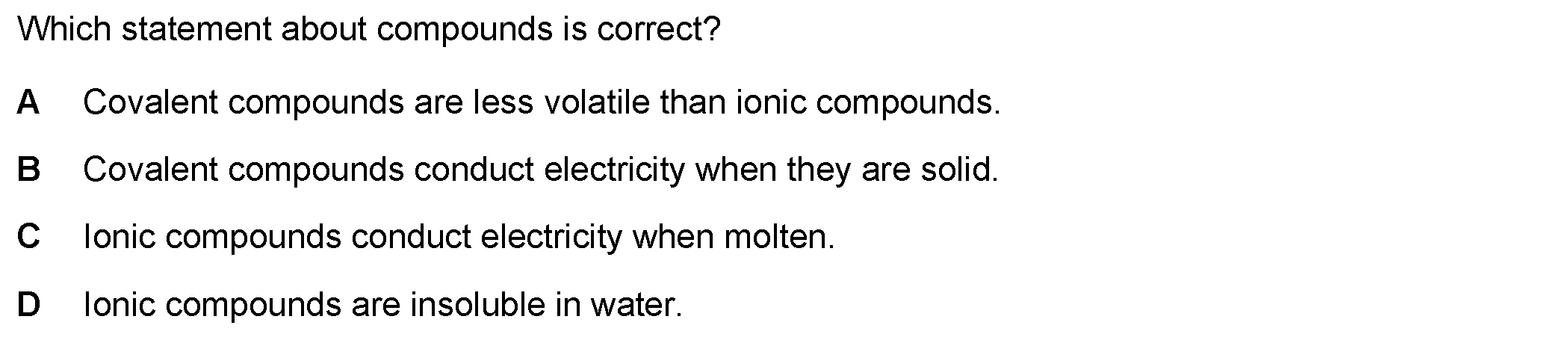
| Melting point | High | Low | Very high | Usually high |
| Conducts as solid | No | No | No (graphite yes) | Yes |
| Conducts when molten | Yes | No | No | Yes |
| Soluble in water | Often | Rarely | No | No |
Part 5 of 7Why bonding determines the property
- Melting point it depends on how much energy is needed to overcome the attractions between particles.
- In ionic compounds there are strong electrostatic forces in all directions.
- In simple molecular substances only the weak forces between molecules are overcome.
- In giant covalent structures many strong covalent bonds must be broken.
- Conductivity it needs charged particles that can move.
- Ions carry charge when molten or dissolved.
- Delocalised electrons carry charge in metals and graphite.
Part 6 of 7Identifying an unknown substance
- Explanation pattern state the structure, describe the particles and forces, and link them to the property.
- Comparisons magnesium oxide melts higher than sodium chloride because of higher charges and stronger attraction.
- Diamond is harder than graphite because of a rigid network versus sliding layers.
Part 7 of 7Structure and the periodic table
- Metals all metal elements have giant metallic structures.
- Non-metals most exist as molecules, and a few have giant covalent structures.
- Noble gases they exist as single atoms.
- No ionic elements no element has a giant ionic structure, because ionic structures need two different types of ion, so they occur only in compounds.
- Prediction knowing the structure of an element helps predict its properties.
Key terms
| Term | Meaning |
|---|---|
| Melting point | the temperature at which a solid turns to liquid. |
| Electrical conductor | a material that allows charge to flow. |
| Intermolecular force | a weak attraction between molecules. |
| Metallic bonding | attraction between positive ions and moving electrons. |
| Alloy | a mixture of a metal with other elements. |
| Giant metallic structure | a pattern of positive metal ions held by moving electrons. |
Avoid these mistakes
Marked practiceQuizzes for this lesson
?What do you want to solve now?
✓Checkpoint Quiz
12 multiple-choice questions from real exam papers on this lesson.
Question 1 of 12 1:30

Question 2 of 12 1:30

Question 3 of 12 1:30
Question 4 of 12 1:30

Question 5 of 12 1:30

Question 6 of 12 1:30

Question 7 of 12 1:30

Question 8 of 12 1:30
Question 9 of 12 1:30
Question 10 of 12 1:30
Question 11 of 12 1:30
Question 12 of 12 1:30
Answer key
1 C2 C3 A4 D5 A6 D7 A8 D9 D10 C11 C12 B
Last updated: