7.5Chapter 7: Light
Refraction: air and glass — Alhussan Physics - Stage 8 Revision Notes & Topical Questions
5 min read 7 parts Lesson 5 of 12 2 quizzes
Physics 7.5 Refraction: air and glass — Refractive Index and Total Internal Reflection — Alhussan International Academy — Physics (Stages 7–9) notes: Describe refraction through a glass block, explain different amounts of refraction and describe total internal reflection and its …
- Air into glass
- Glass into air
- Emergent ray
- Along the normal
- Prediction
- Hypothesis
Section 1 of 7Refraction in a glass block
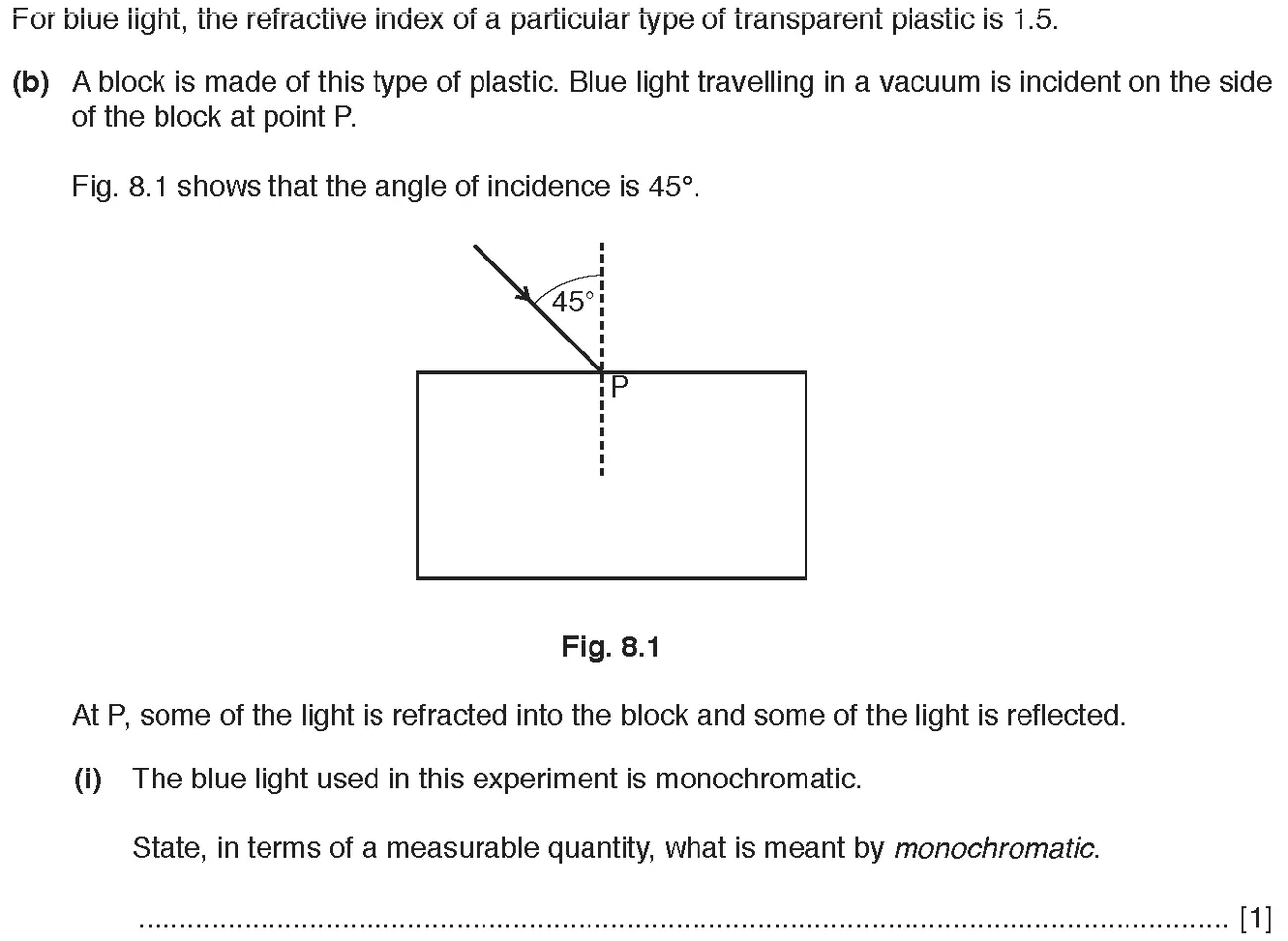
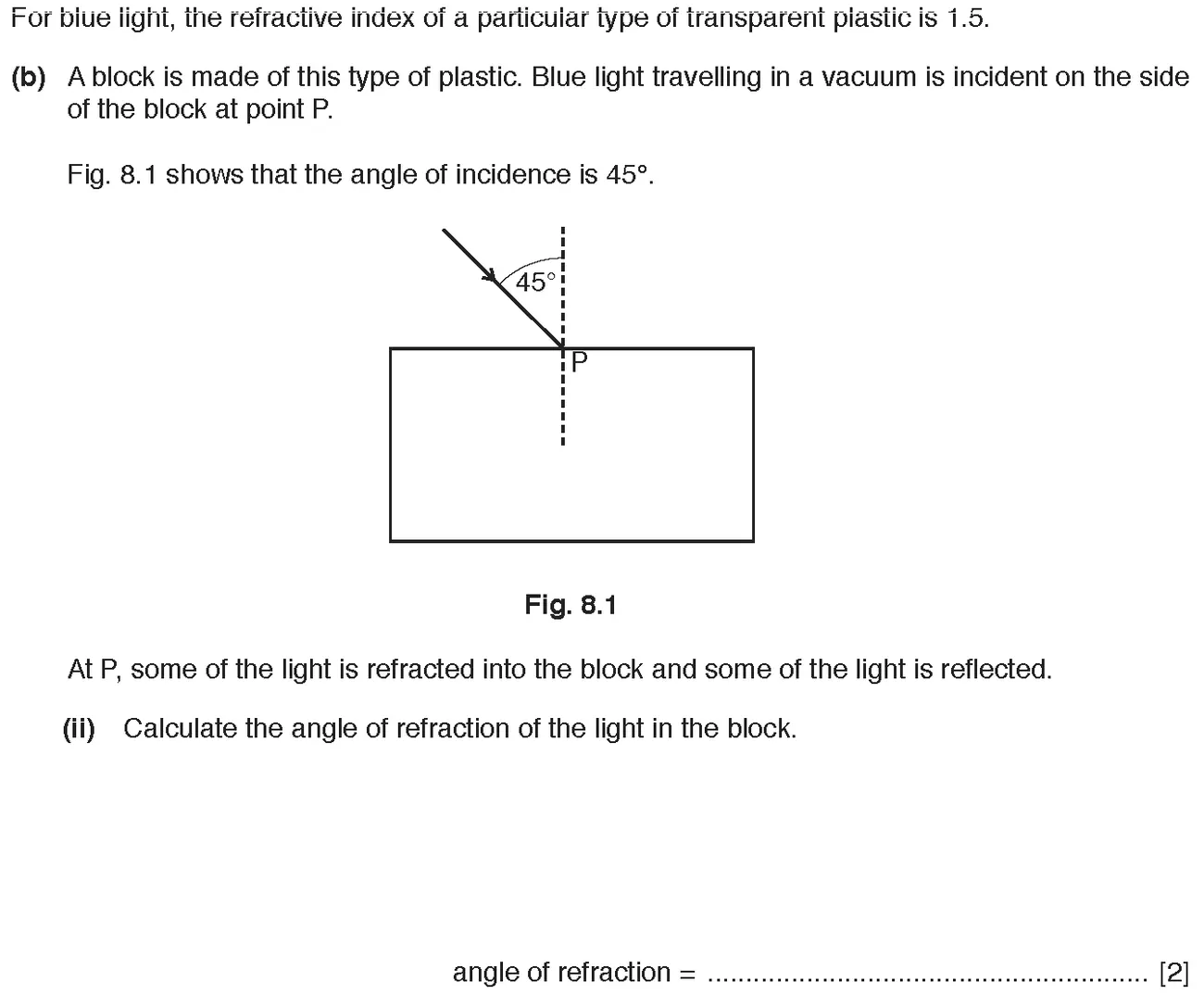
- Light slows down and bends towards the normal, so the angle of refraction is smaller than the angle of incidence.
- Light speeds up and bends away from the normal, so the angle of refraction is bigger than the angle of incidence.
- The ray leaving a rectangular block is parallel to the ray entering, because the bends are equal and opposite.
- The ray does not change direction but still slows down.
Section 2 of 7Predictions and hypotheses
- It should say what will happen and why, using scientific knowledge.
- For example, denser glass slows light more than plastic, so it refracts light more.
- The prediction is tested by an experiment to collect data.
Section 3 of 7Different materials refract differently
- It compares the speed of light in a vacuum (or air) with its speed in the material and has no unit.
- The more light slows down, the higher the refractive index and the more it bends.
- Diamond about 2.4, glass about 1.5, water about 1.3.
- Denser materials refract light more than less dense materials.
Section 4 of 7Total internal reflection
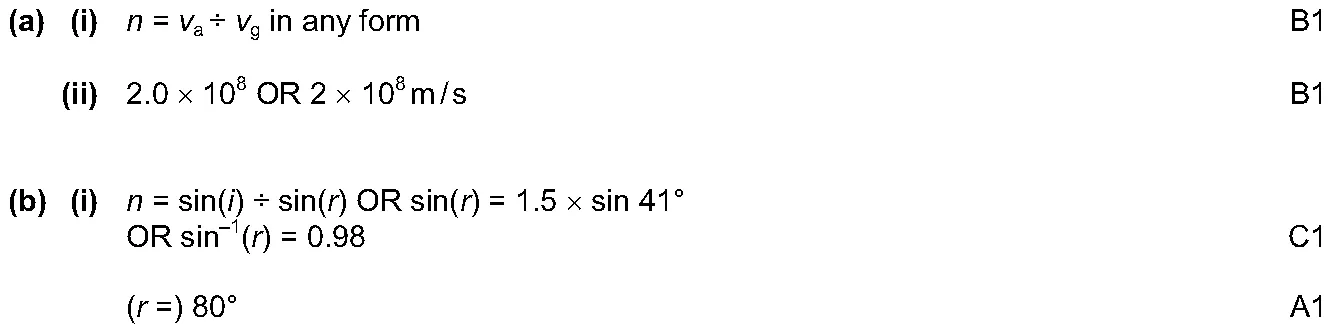
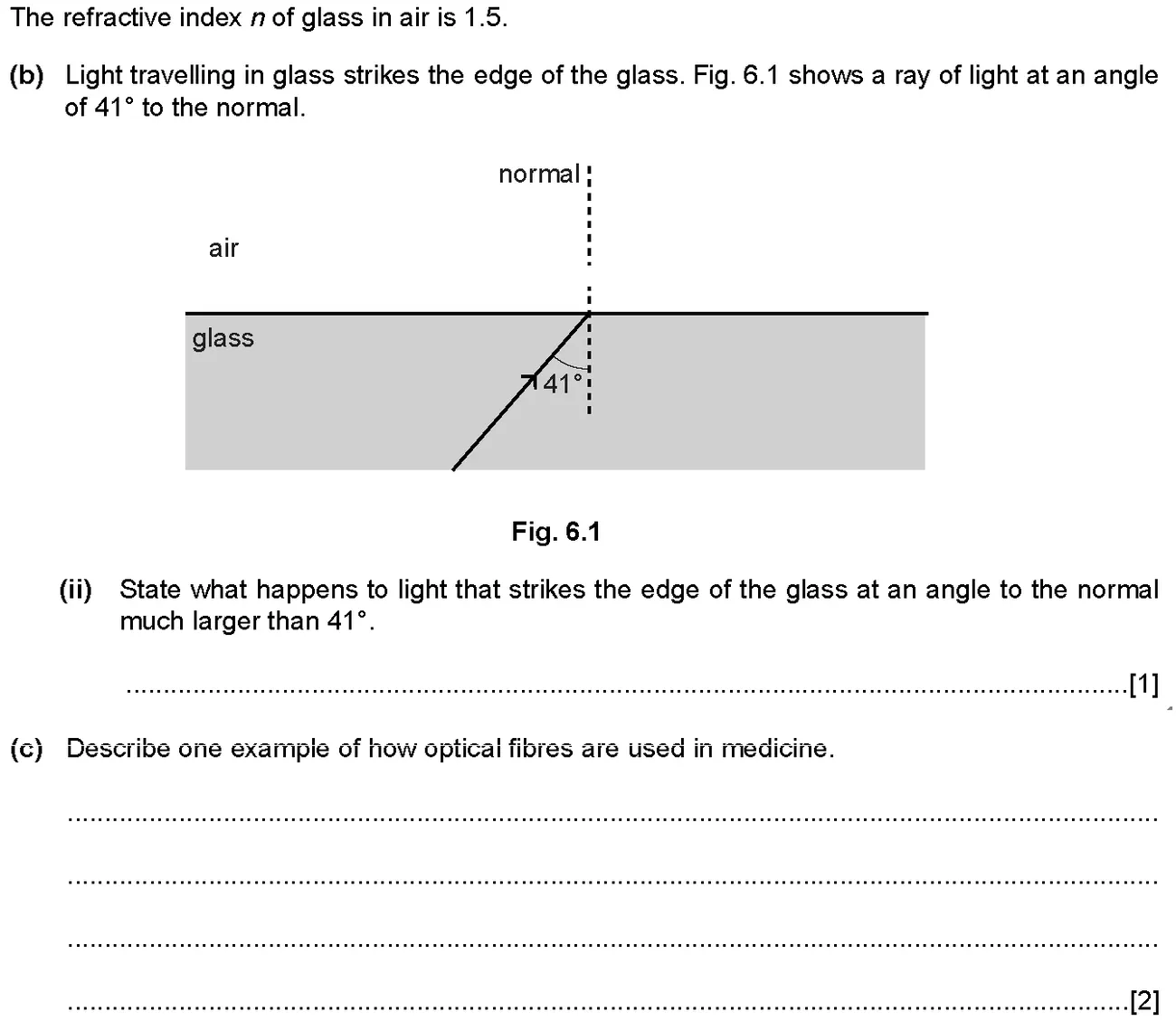
- When light goes from glass or water into air, the angle of refraction is bigger than the angle of incidence.
- As the angle of incidence increases, the refracted ray bends closer to the surface.
- At the critical angle the refracted ray travels along the boundary.
- When the angle of incidence is bigger than the critical angle, all the light is reflected back inside.
- Light must travel from a denser to a less dense medium and the angle of incidence must exceed the critical angle.
Section 5 of 7Uses of total internal reflection
- A very thin fibre of glass or plastic acts as a light pipe, with light totally internally reflected along it.
- Optical fibres also carry telephone and internet signals.
- It is used to see inside the human body.
- One bundle of optical fibres sends light onto a structure inside the body.
- Another bundle carries reflected light to a camera, so a doctor can see an image and diagnose a problem.
- Binoculars and periscopes use prisms that rely on total internal reflection.
Section 6 of 7Key terms
| Term | Meaning |
|---|---|
| Critical angle | The angle of incidence at which the angle of refraction is 90°. |
| Total internal reflection | Complete reflection of light inside a denser medium when the angle exceeds the critical angle. |
| Optical fibre | A thin glass or plastic fibre that carries light by total internal reflection. |
| Endoscope | An instrument using optical fibres to see inside the body. |
| Hypothesis | Scientific knowledge used to explain why a prediction should be true. |
| Refractive index | A measure of how much a material slows and bends light. |
Section 7 of 7Exam technique
Marked practiceQuizzes for this lesson
?What do you want to solve now?
✓Checkpoint Quiz
5 multiple-choice + 6 written questions from real exam papers on this lesson.
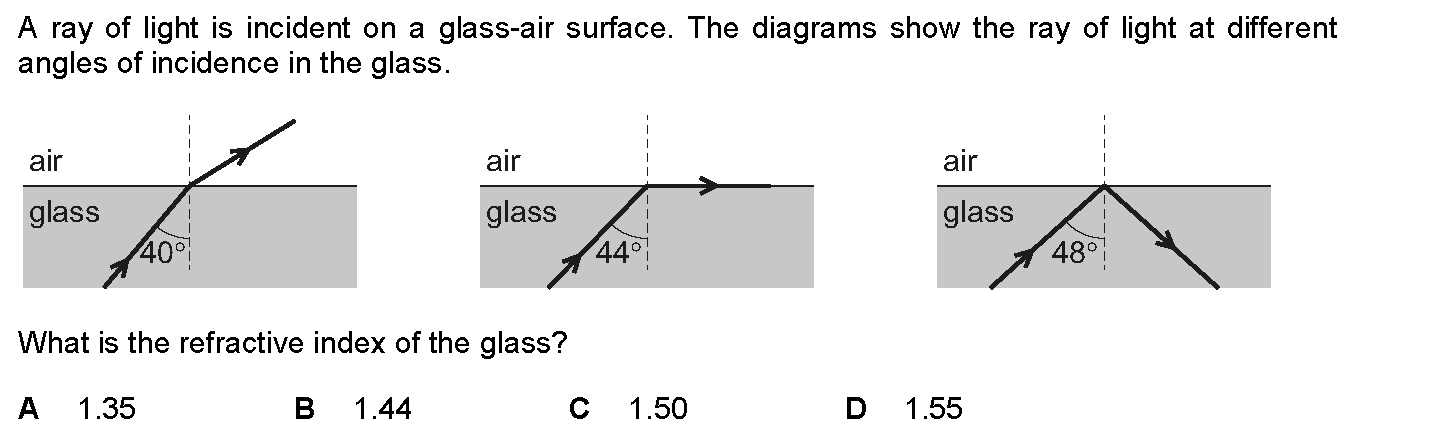
Question 1 of 5 1:30
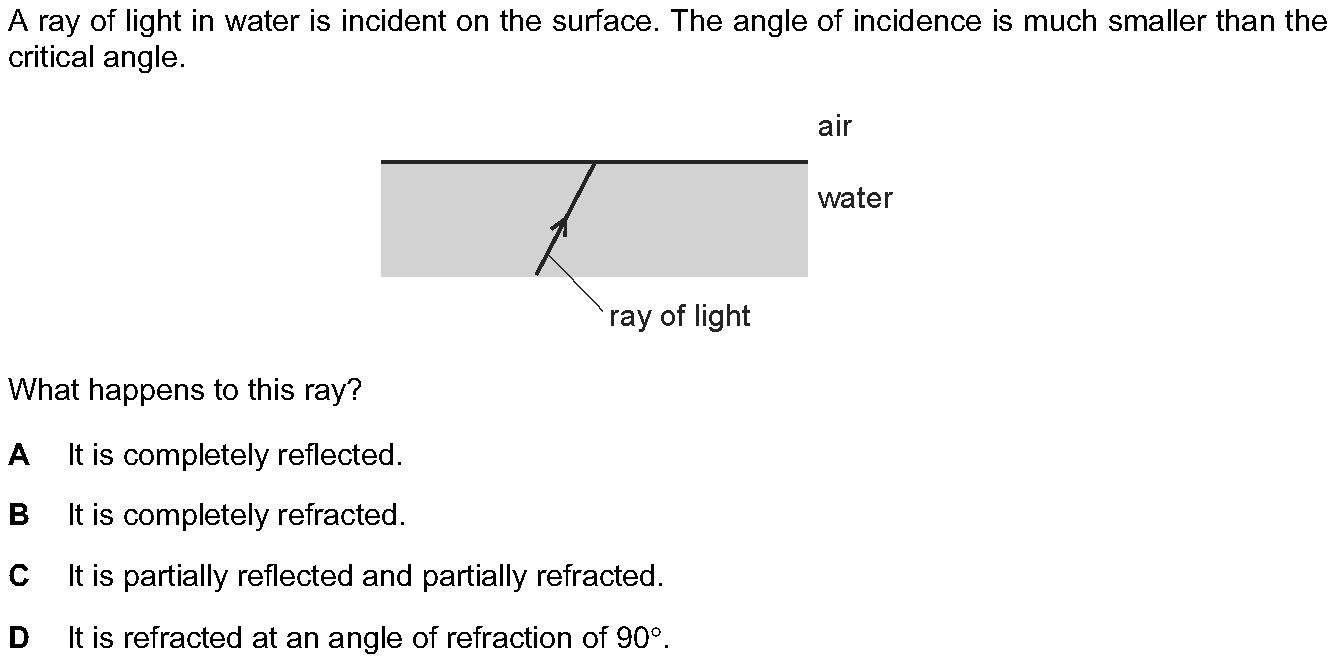
Question 2 of 5 1:30
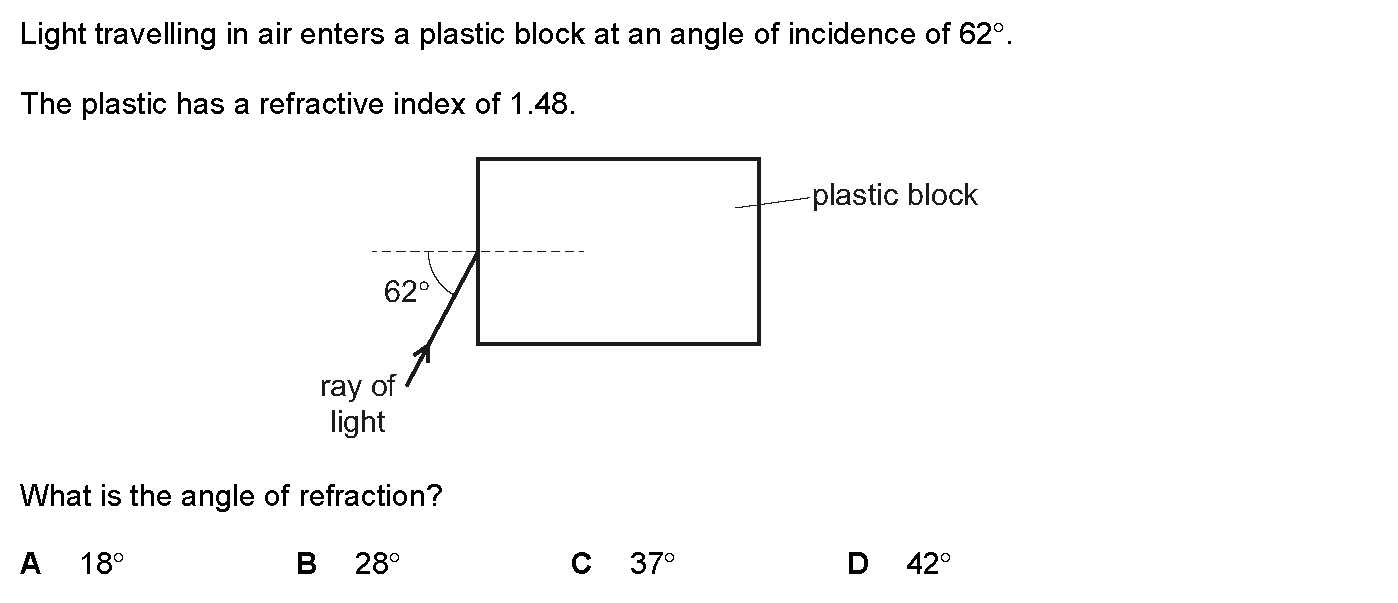
Question 3 of 5 1:30
Question 4 of 5 1:30

Question 5 of 5 1:30

Answer key
1 B2 C3 C4 B5 A
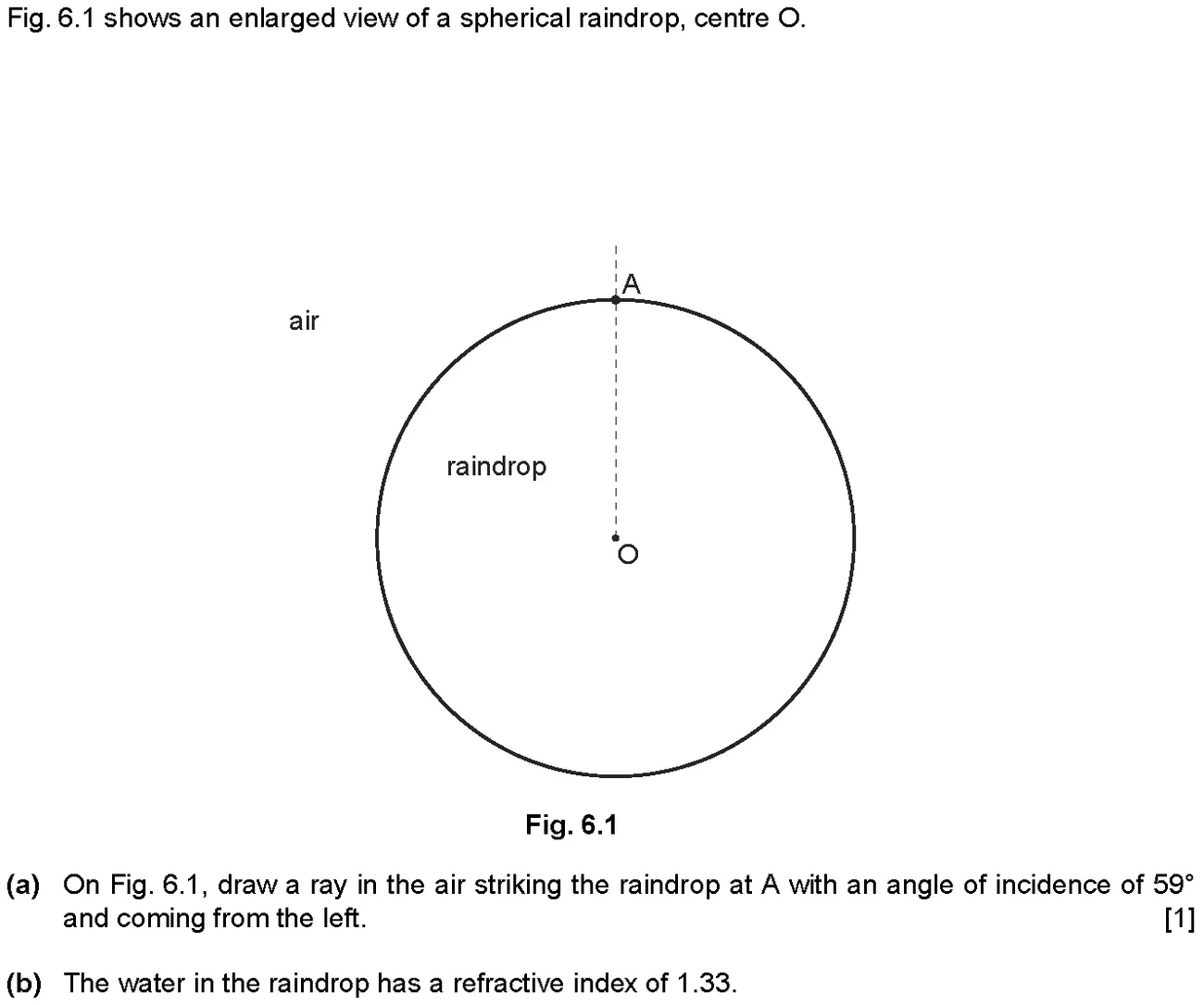
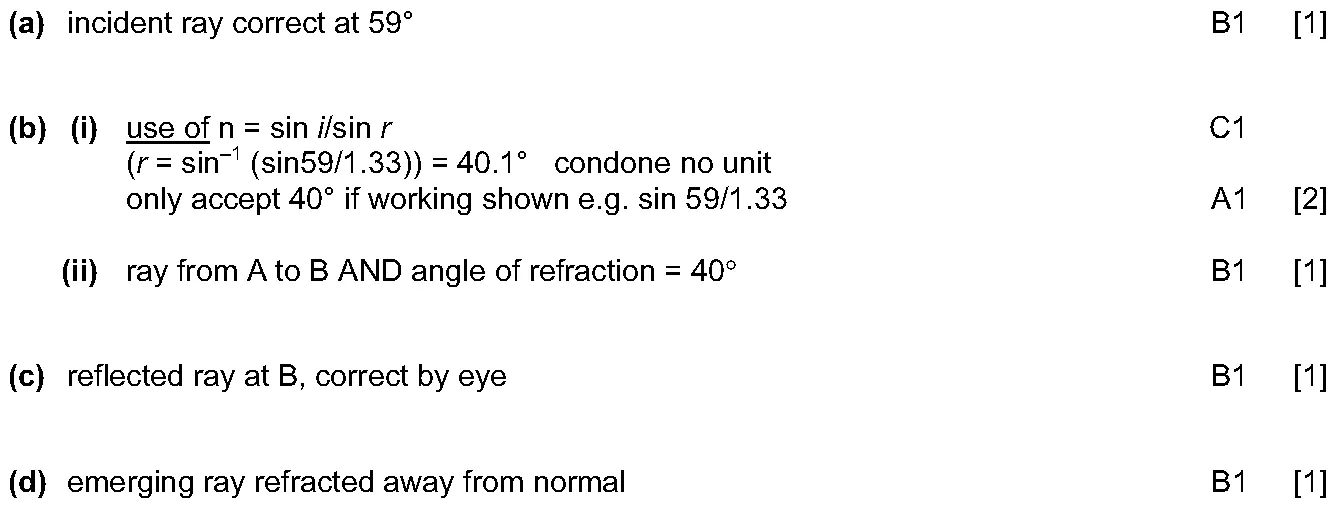
Written question 1 of 6 · part (a) (1 / 5) 3:00
Show the answer
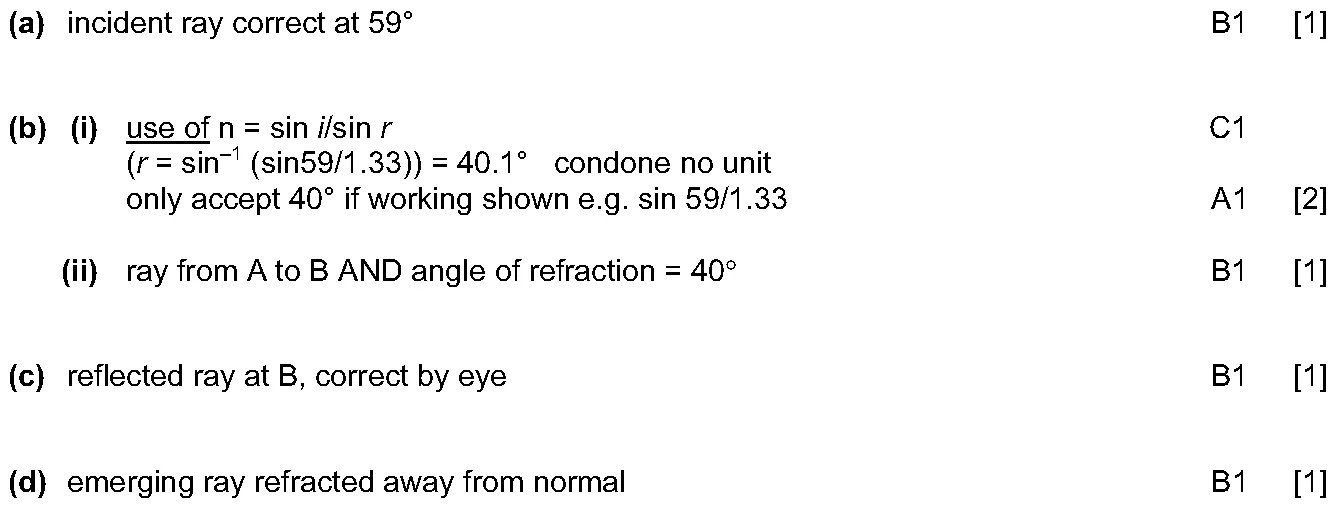
Written question 1 of 6 · part (b)(i) (2 / 5) 3:00

Show the answer
Written question 1 of 6 · part (b)(ii) (3 / 5) 3:00
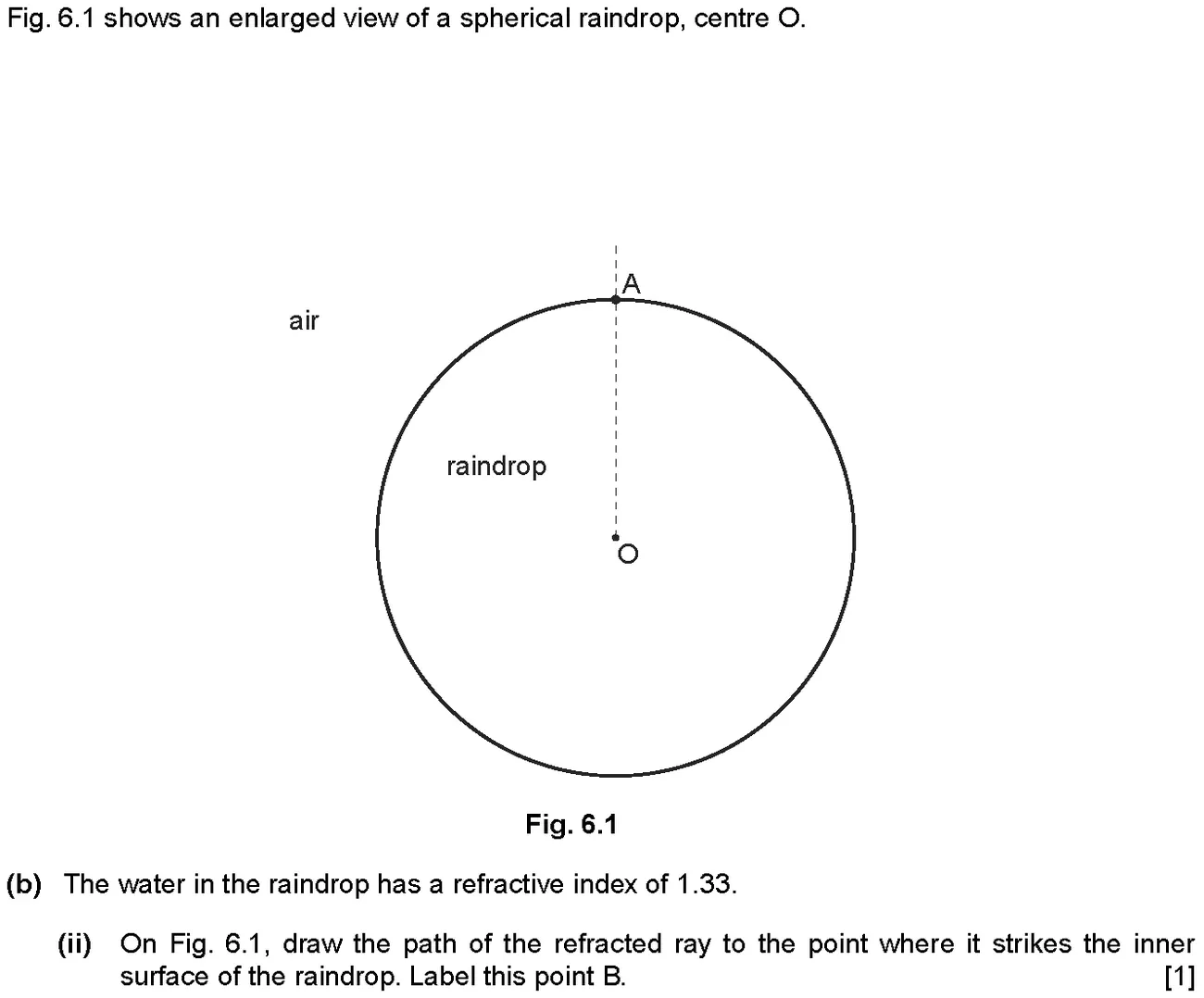
Show the answer
Written question 1 of 6 · part (c) (4 / 5) 3:00

Show the answer
Written question 1 of 6 · part (d) (5 / 5) 3:00
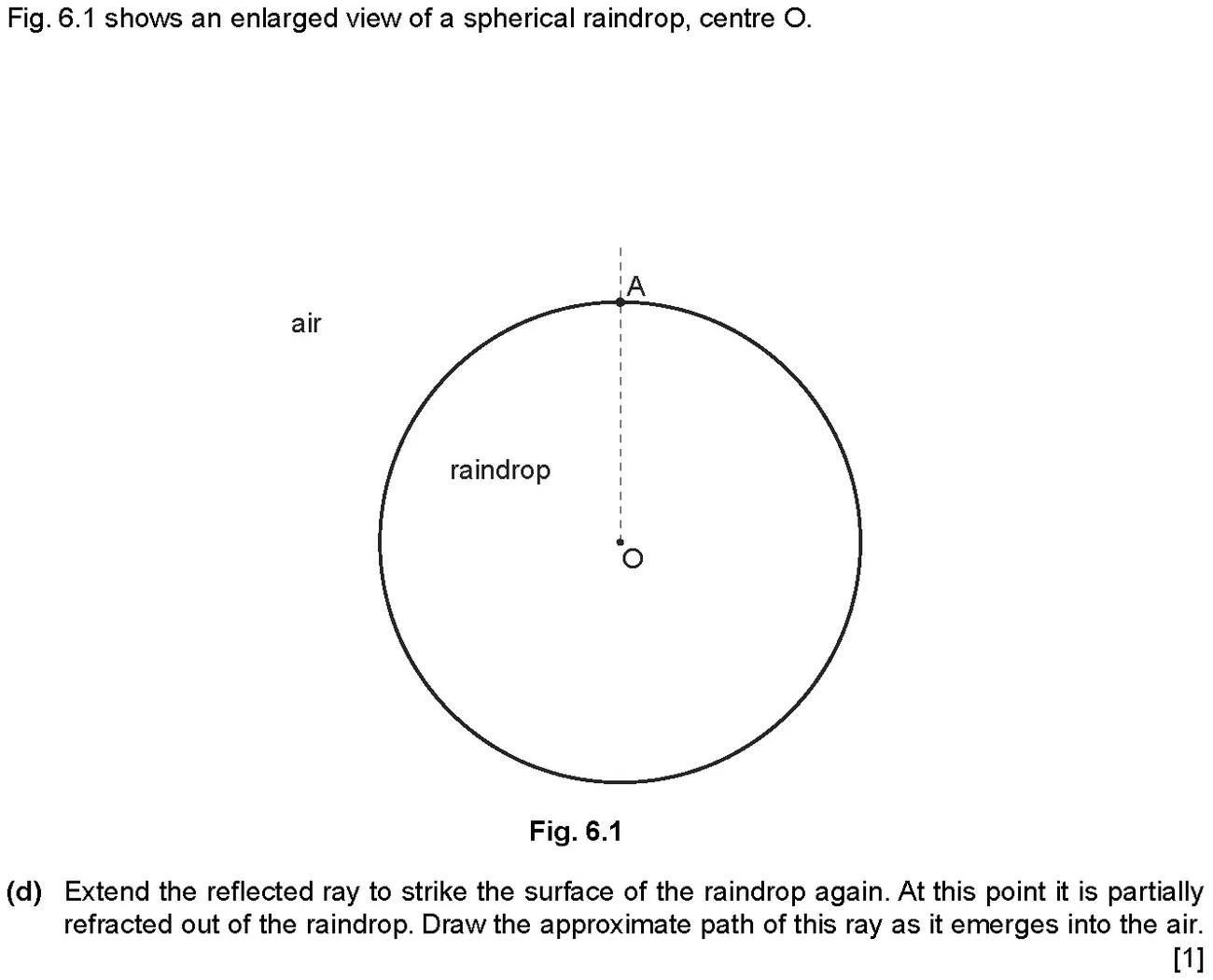
Show the answer
Written question 2 of 6 · part (a)(i) (1 / 4) 3:00

Show the answer
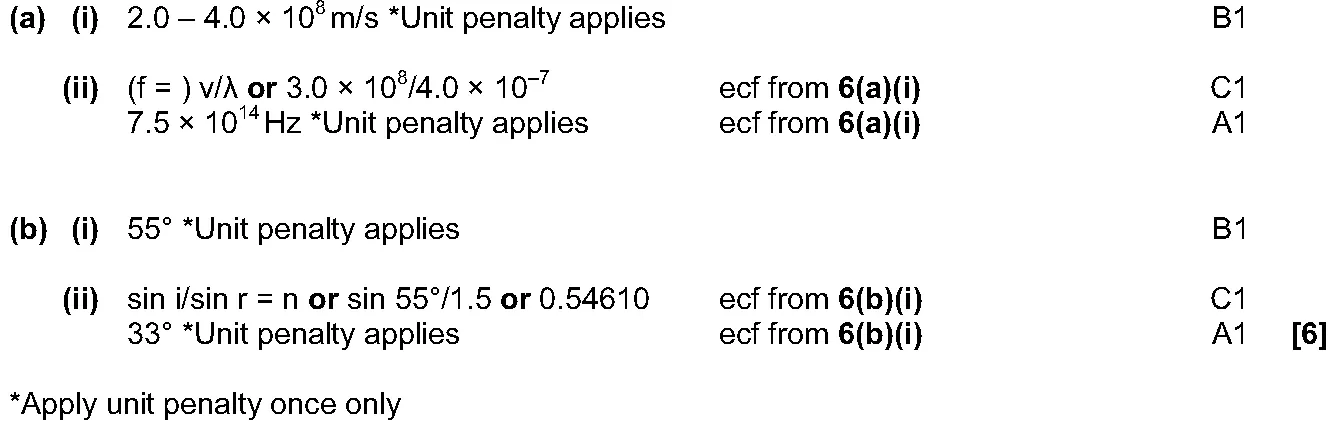
Written question 2 of 6 · part (a)(ii) (2 / 4) 3:00
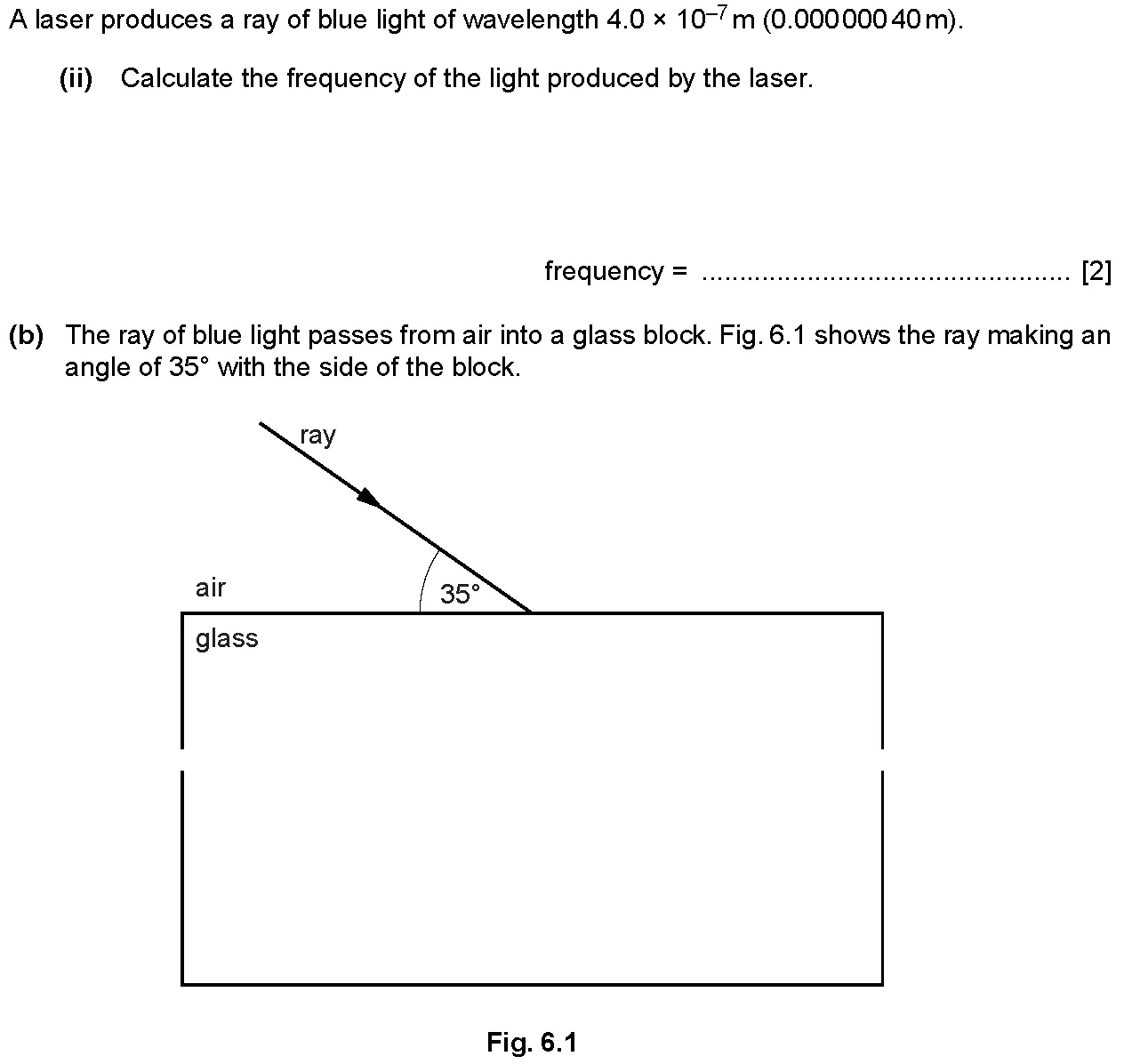
Show the answer

Written question 2 of 6 · part (b)(i) (3 / 4) 3:00
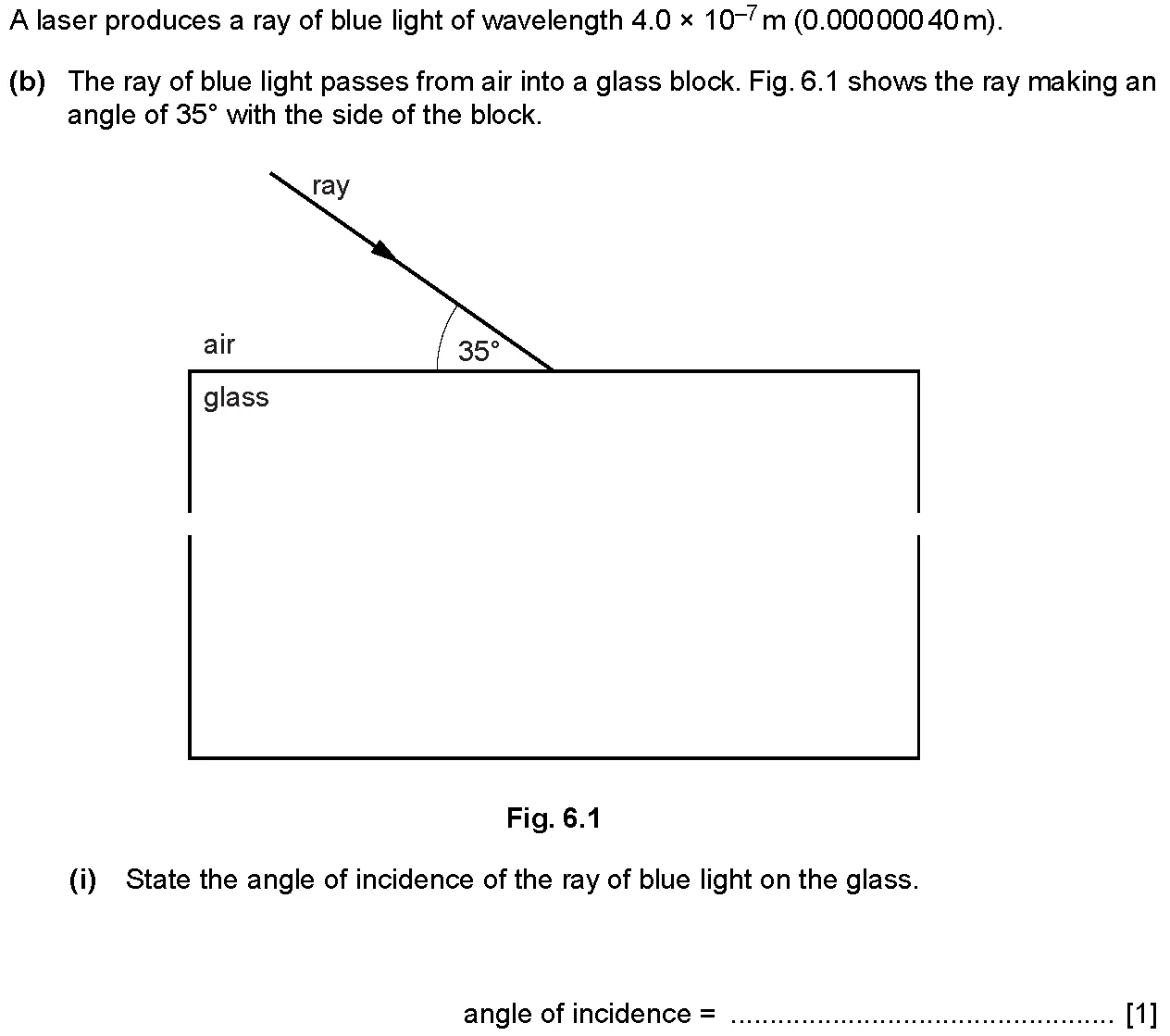
Show the answer
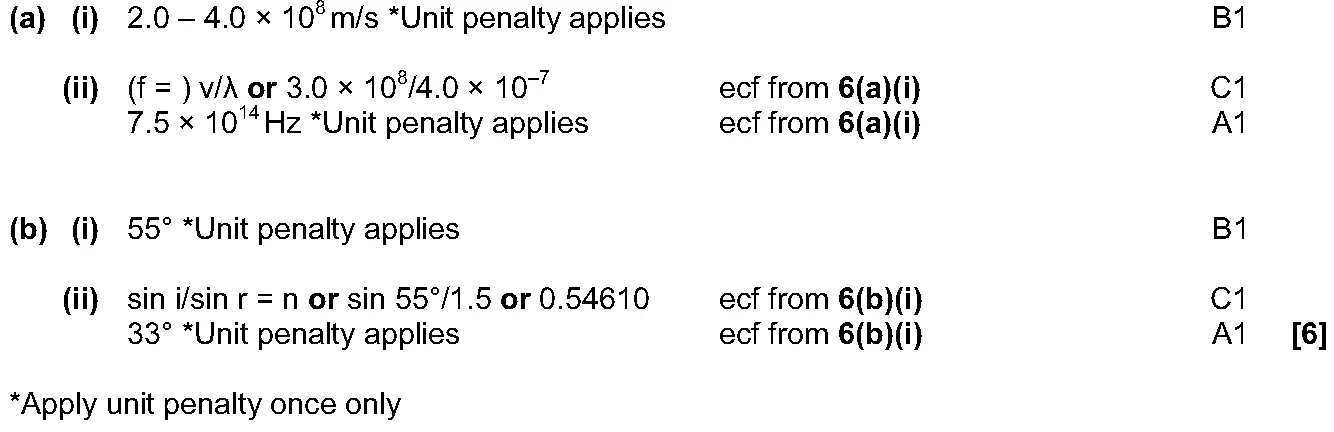
Written question 2 of 6 · part (b)(ii) (4 / 4) 3:00
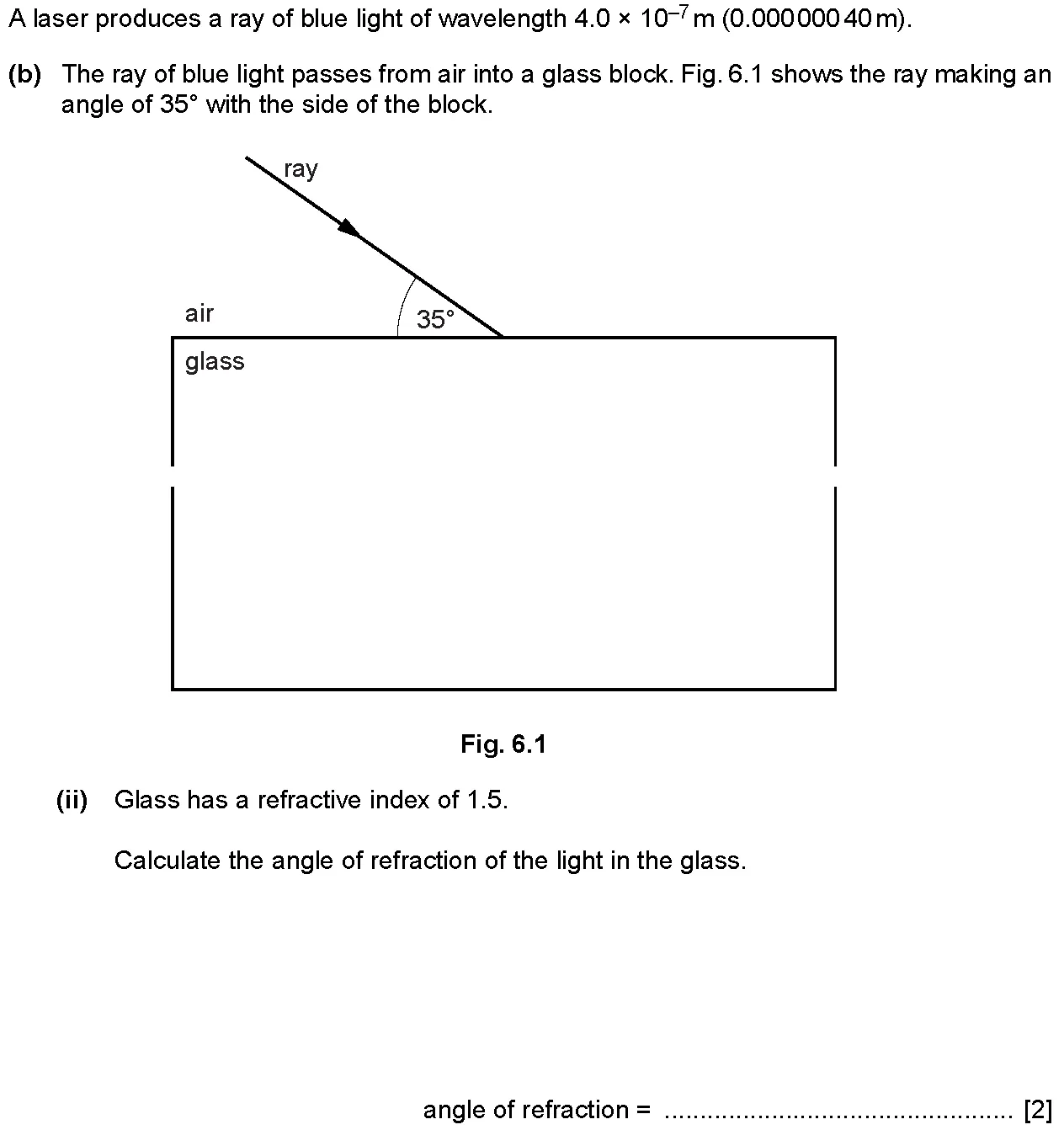
Show the answer
Written question 3 of 6 · part (a)(i) (1 / 4) 3:00

Show the answer

Written question 3 of 6 · part (a)(ii) (2 / 4) 3:00
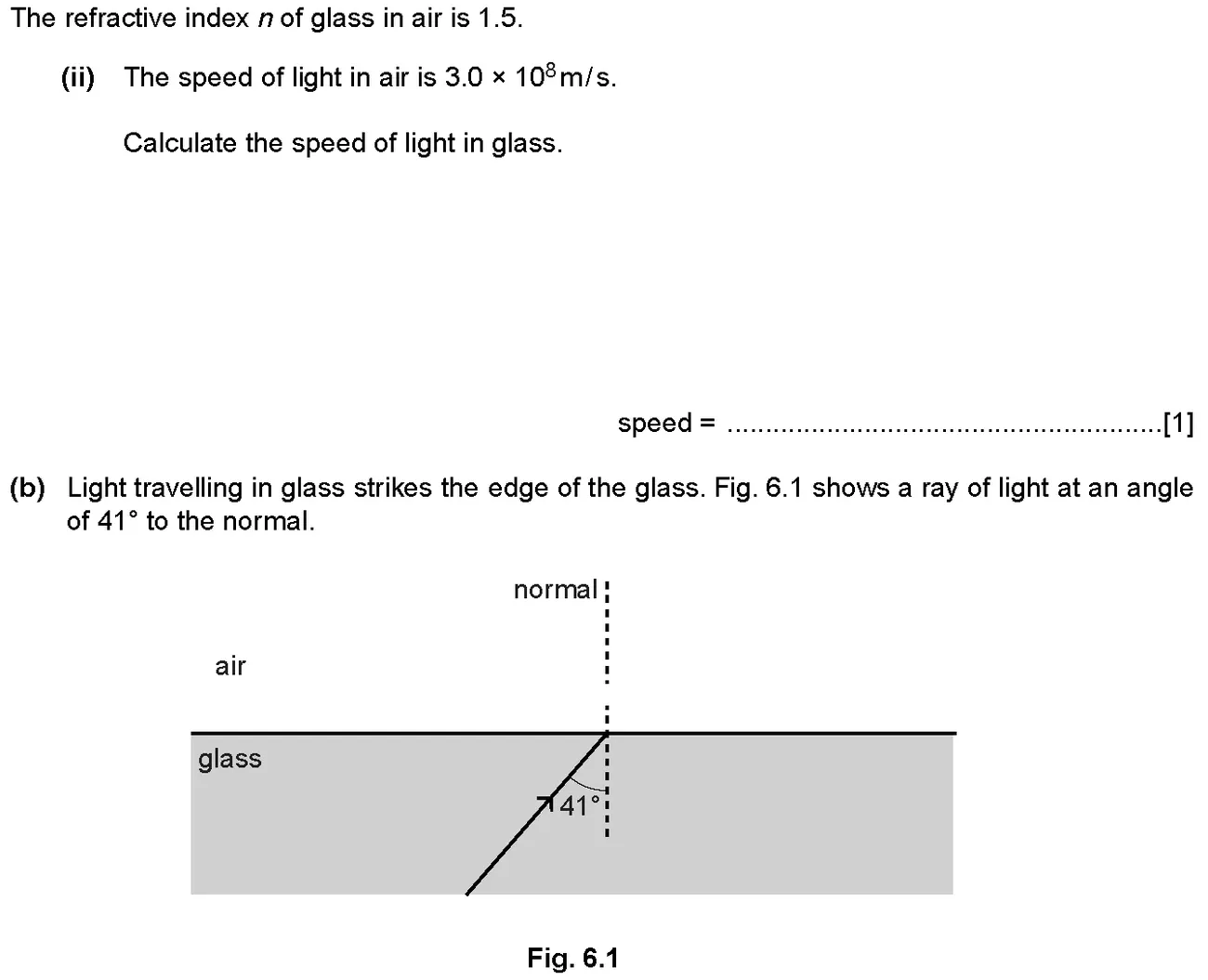
Show the answer
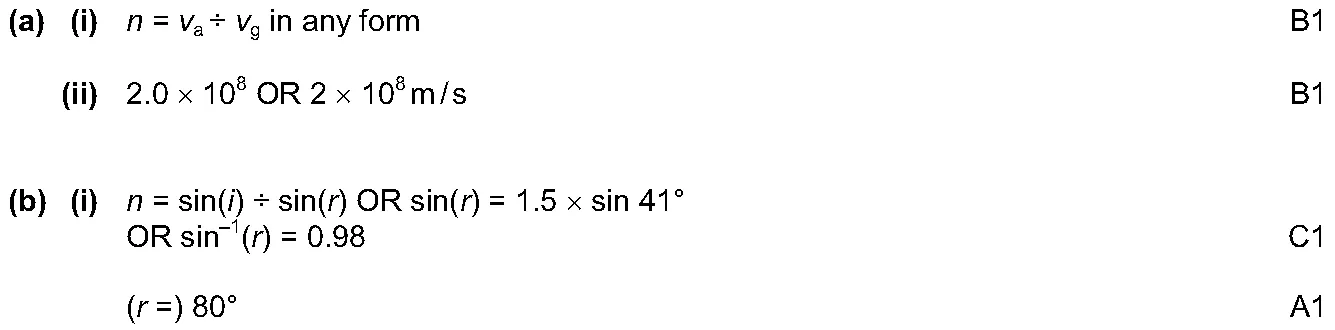
Written question 3 of 6 · part (b)(i) (3 / 4) 3:00
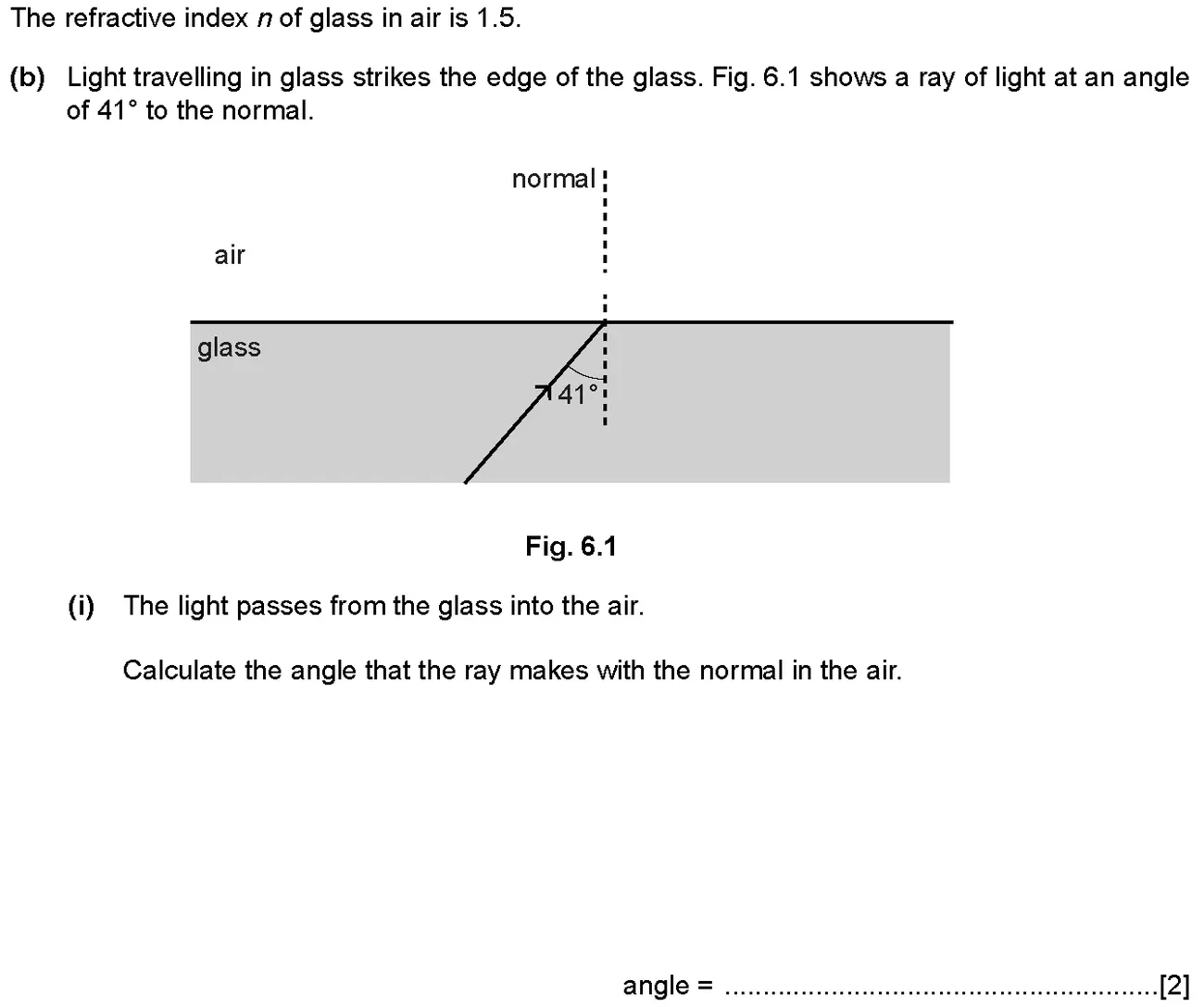
Show the answer
Written question 3 of 6 · part (b)(ii) (4 / 4) 3:00
Show the answer
Written question 4 of 6 · part (a) (1 / 4) 3:00

Show the answer

Written question 4 of 6 · part (b)(i) (2 / 4) 3:00
Show the answer

Written question 4 of 6 · part (b)(ii) (3 / 4) 3:00
Show the answer

Written question 4 of 6 · part (b)(iii) (4 / 4) 3:00
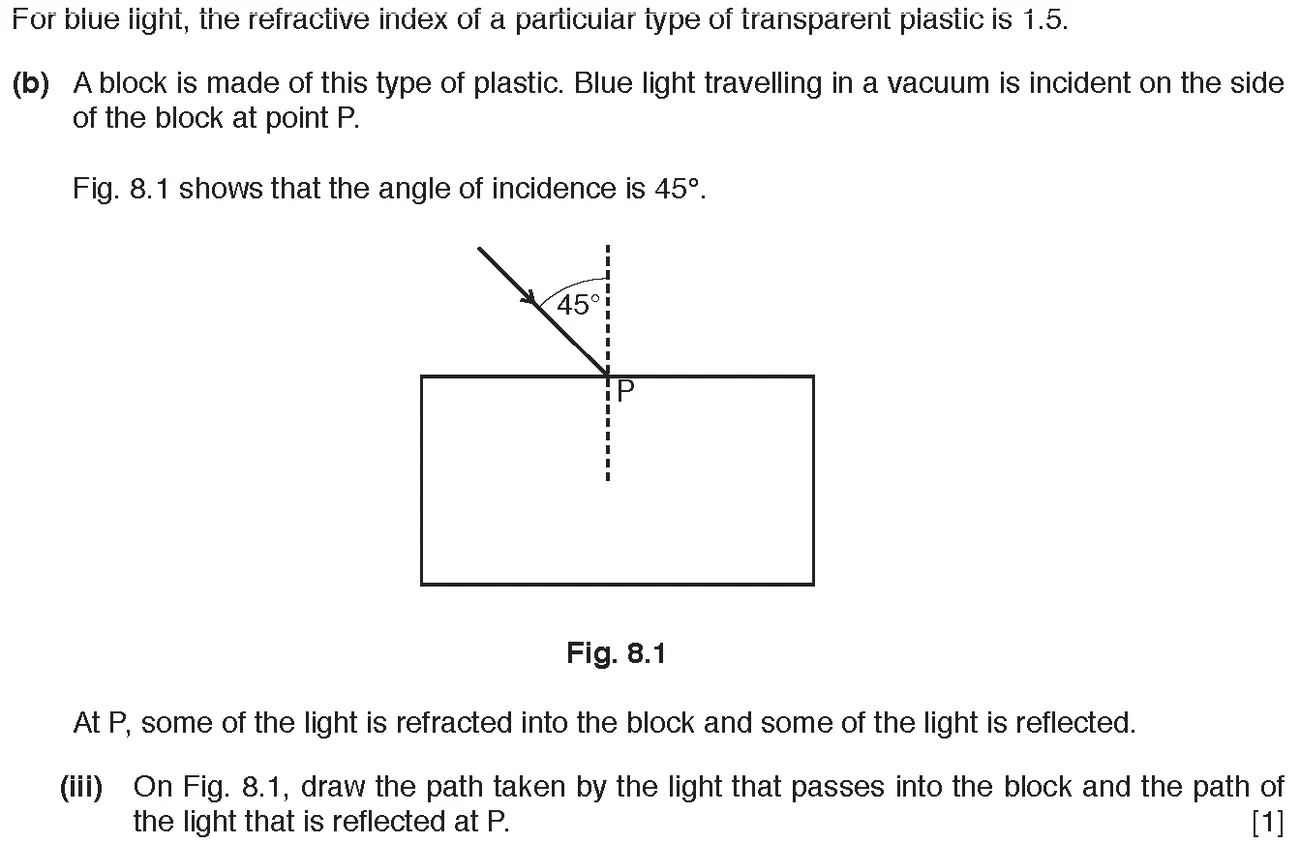
Show the answer

Written question 5 of 6 · part (a) (1 / 4) 3:00

Show the answer

Written question 5 of 6 · part (b) (2 / 4) 3:00
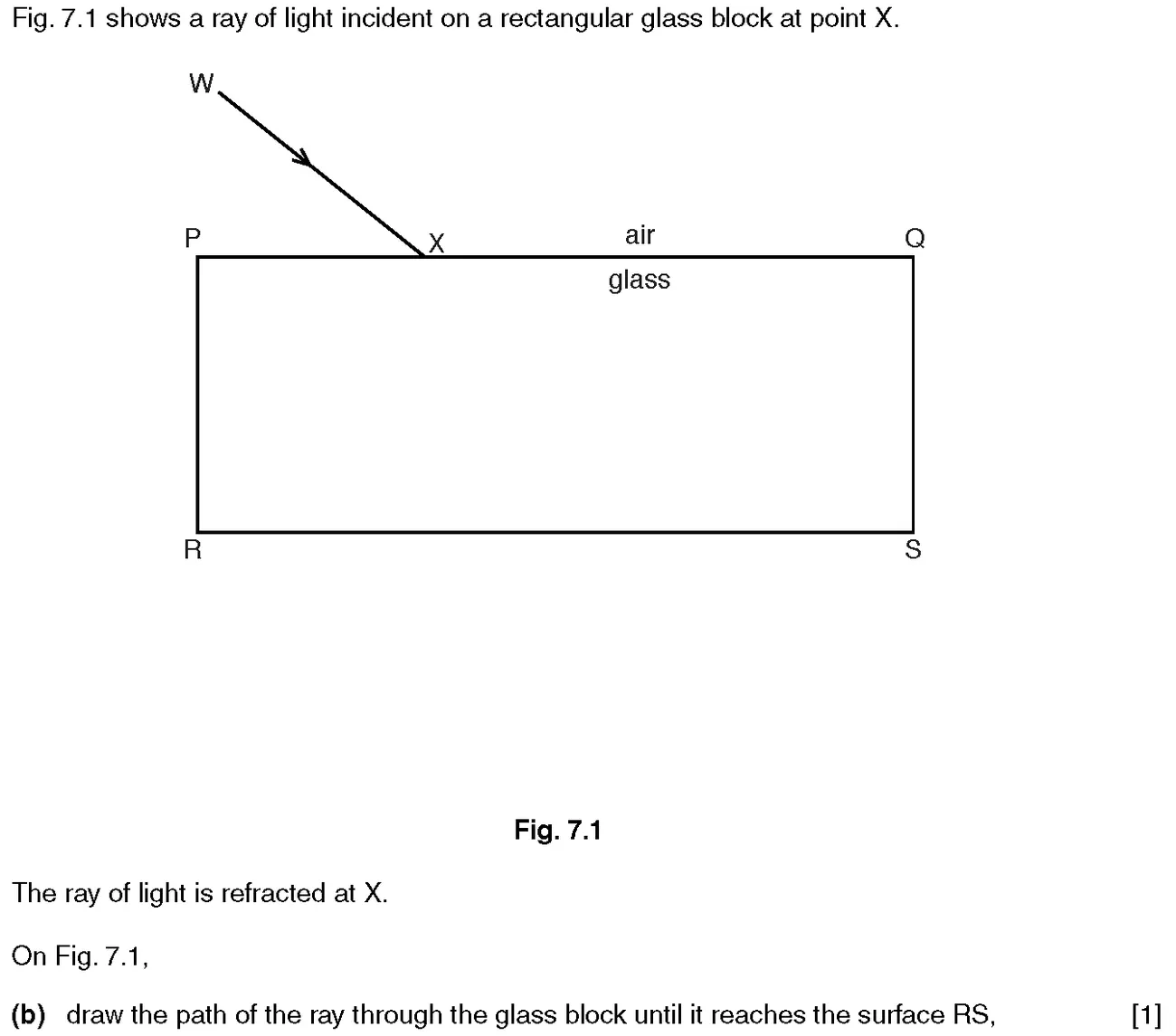
Show the answer
Written question 5 of 6 · part (c) (3 / 4) 3:00
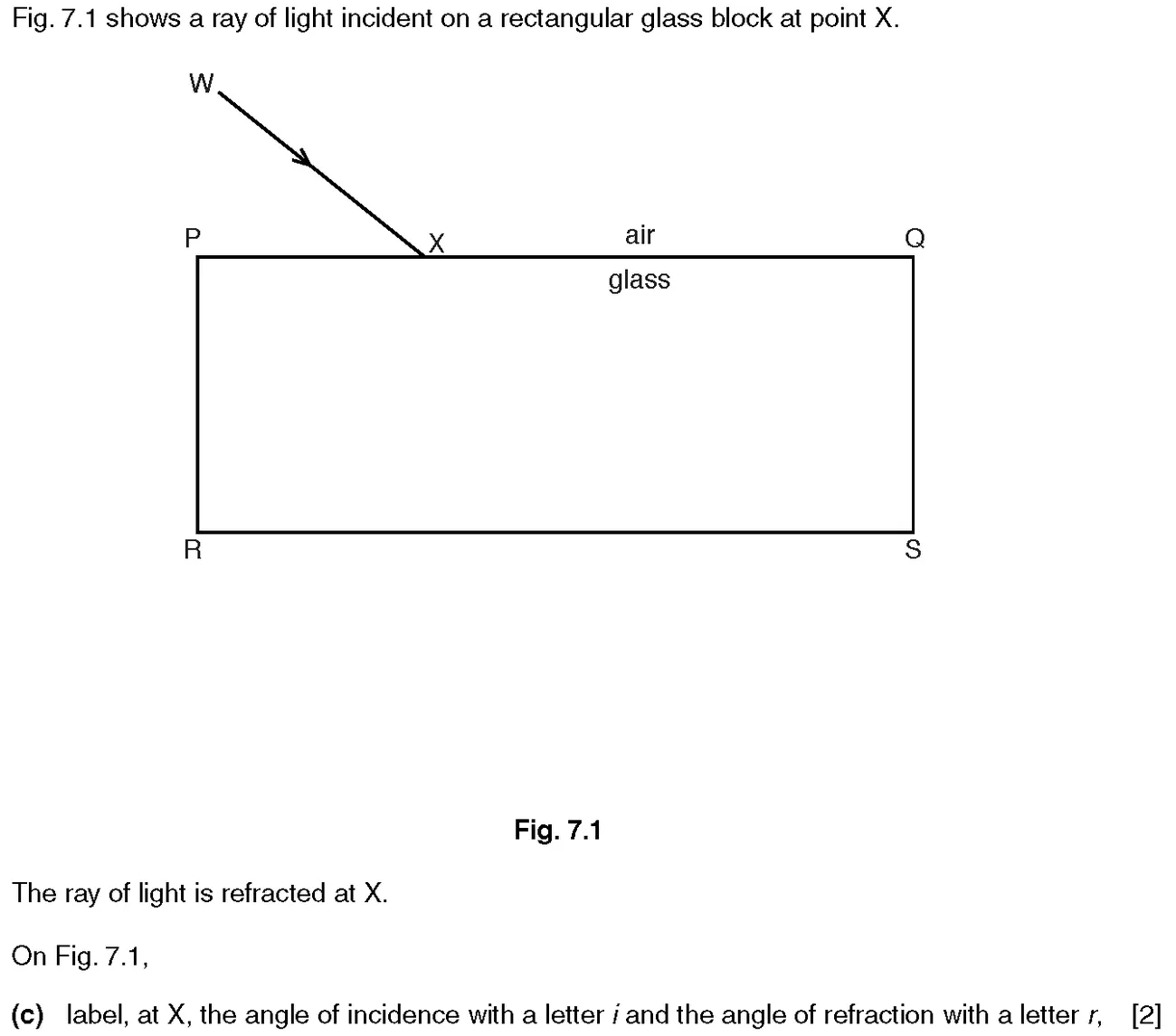
Show the answer

Written question 5 of 6 · part (d) (4 / 4) 3:00

Show the answer
Written question 6 of 6 · part (a) (1 / 3) 3:00
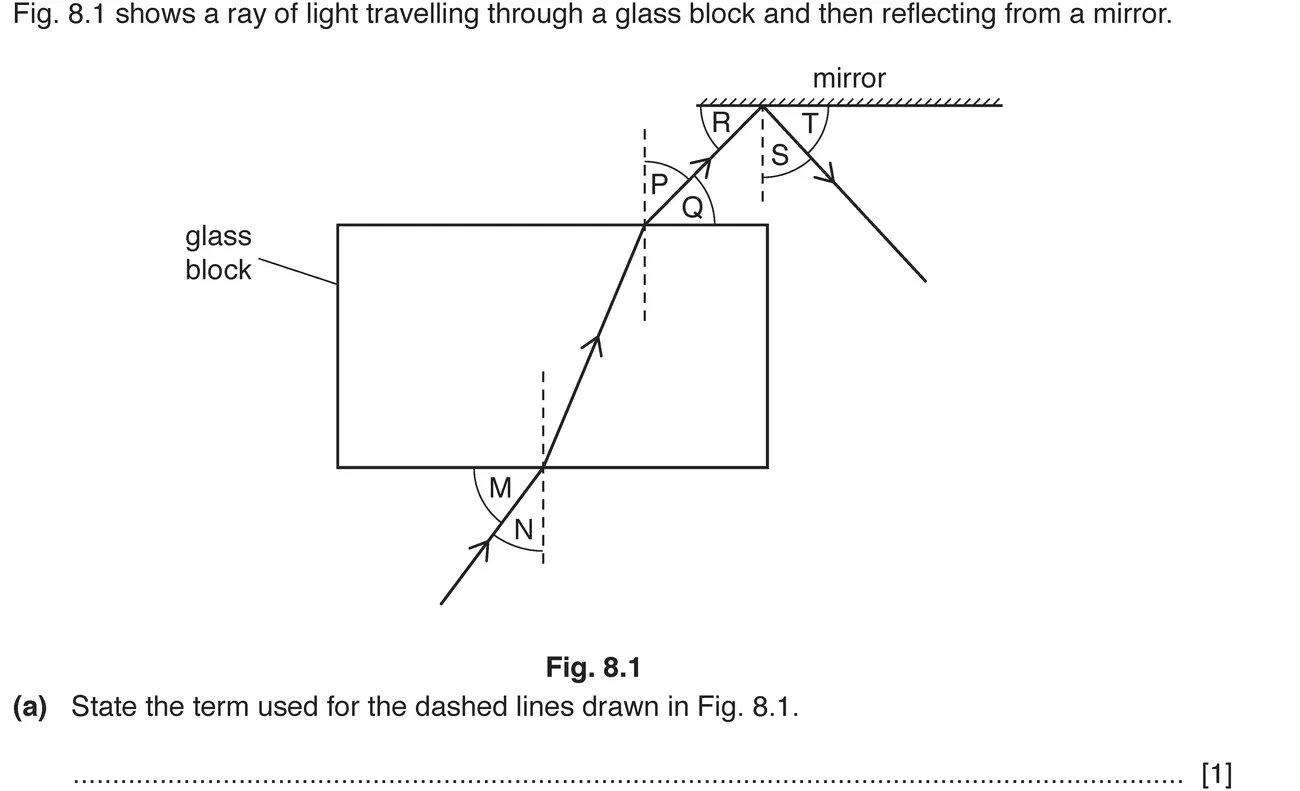
Show the answer

Written question 6 of 6 · part (b) (2 / 3) 3:00

Show the answer

Written question 6 of 6 · part (c) (3 / 3) 3:00

Show the answer

Each part of a written question is on its own screen. Write your answer first, then open "Show the answer" to check it against the mark scheme.
Last updated: