7.7Chapter 7: Light
Dispersion — Alhussan Physics - Stage 8 Revision Notes & Topical Questions
5 min read 9 parts Lesson 7 of 12 2 quizzes
Physics 7.7 Dispersion — Prisms, White Light and the Visible Spectrum — Alhussan International Academy — Physics (Stages 7–9) notes: Explain how a spectrum of light is produced and why we see rainbows.White light — A normal light bulb looks white, but white light is a mixture of …
- Rectangular block
- Triangular prism
- Inside the prism
- Continuous spectrum
- Second prism
- Conclusion
Part 1 of 7White light is a mixture
- A normal light bulb looks white, but white light is a mixture of colours.
- A ray of white light entering and leaving a glass block refracts but stays white.
- At a particular angle of incidence the light leaving the prism is split into colours.
Part 2 of 7Dispersion
- Different colours are slowed down by different amounts in glass, so they are refracted by different amounts.
- Red light is slowed the least, so it is refracted the least and travels fastest in glass.
- Violet light is slowed the most, so it is refracted the most and travels slowest in glass.
- We cannot see the light inside, but the colours leaving show the different paths.
Part 3 of 7The colours of the spectrum
| Colour | Refraction | Speed in glass |
|---|---|---|
| Red | Least | Fastest |
| Orange | Less | Fast |
| Yellow | Medium | Medium |
| Green | Medium | Medium |
| Blue | More | Slow |
| Indigo | More | Slower |
| Violet | Most | Slowest |
- The colours are red, orange, yellow, green, blue, indigo and violet.
- The colours blend smoothly with no gaps.
Part 4 of 7Recombining the colours
- In 1666 he showed that sunlight can be split into colours by a prism.
- Placed upside down in the path of the spectrum, it recombines the colours into white light.
- The prism does not make the colours; it separates colours that were mixed in white light.
Part 5 of 7Refraction and dispersion
- Different colours must be refracted by different amounts, so refraction must happen first.
- A single-colour ray, such as from a laser, refracts in glass without splitting.
Part 6 of 7Rainbows
- They behave like small prisms.
- Sunlight from behind you is refracted, reflected inside the drop and dispersed.
- You see the spectrum, which we call a rainbow.
- You see a rainbow when facing falling rain with the Sun behind you, not when the Sun is in front.
- About 700 years ago the Iranian scientist Al-Farisi correctly explained how raindrops disperse white light.
Part 7 of 7Observing a spectrum
Key terms
| Term | Meaning |
|---|---|
| Dispersion | The splitting of white light into the colours of the spectrum. |
| Spectrum | The range of colours that make up white light. |
| Prism | A transparent block, often triangular, that refracts and disperses light. |
| Monochromatic | Of a single colour. |
| Continuous spectrum | A spectrum in which colours blend with no gaps. |
Avoid these mistakes
Marked practiceQuizzes for this lesson
?What do you want to solve now?
✓Checkpoint Quiz
6 multiple-choice + 1 written questions from real exam papers on this lesson.
Question 1 of 6 1:30

Question 2 of 6 1:30

Question 3 of 6 1:30

Question 4 of 6 1:30
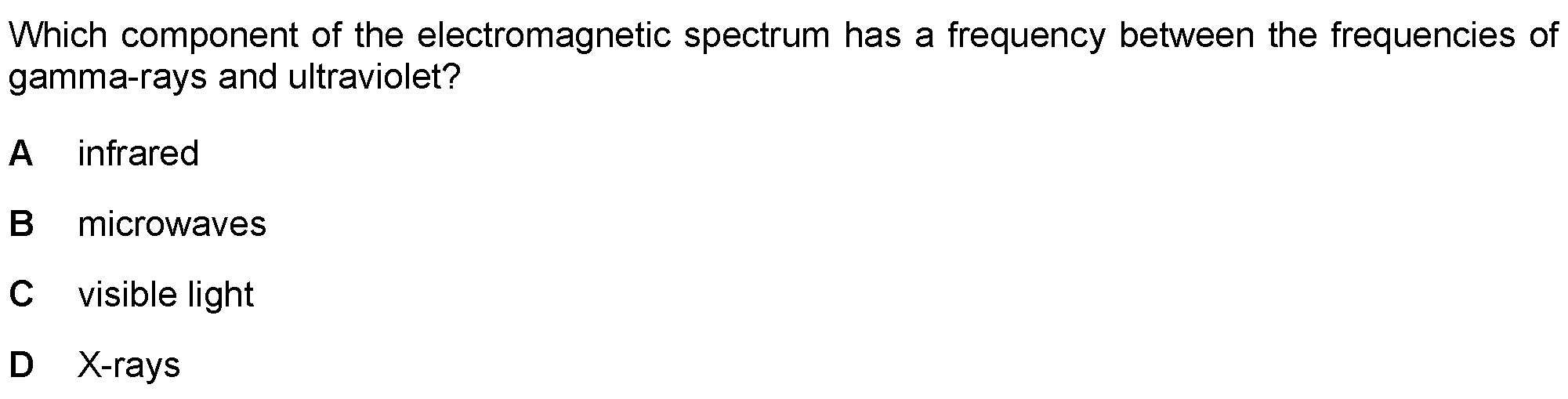
Question 5 of 6 1:30

Question 6 of 6 1:30

Answer key
1 D2 B3 D4 D5 A6 A
Written question 1 of 1 · part (a)(i) (1 / 5) 3:00
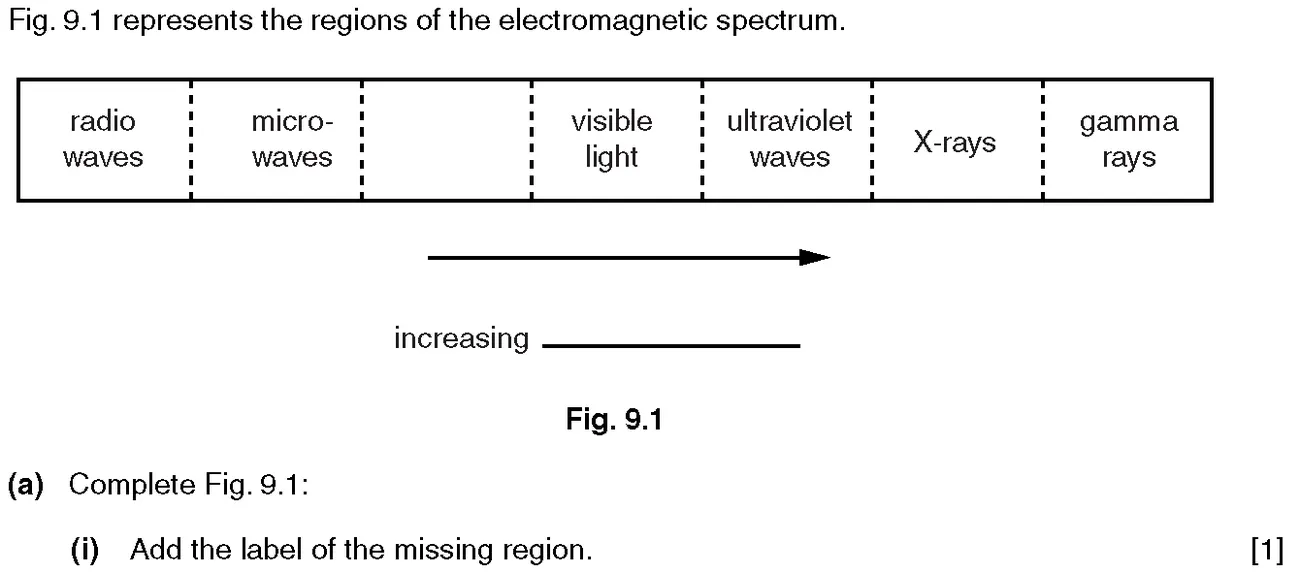
Show the answer

Written question 1 of 1 · part (a)(ii) (2 / 5) 3:00

Show the answer
Written question 1 of 1 · part (b)(i) (3 / 5) 3:00

Show the answer
Written question 1 of 1 · part (b)(ii) (4 / 5) 3:00
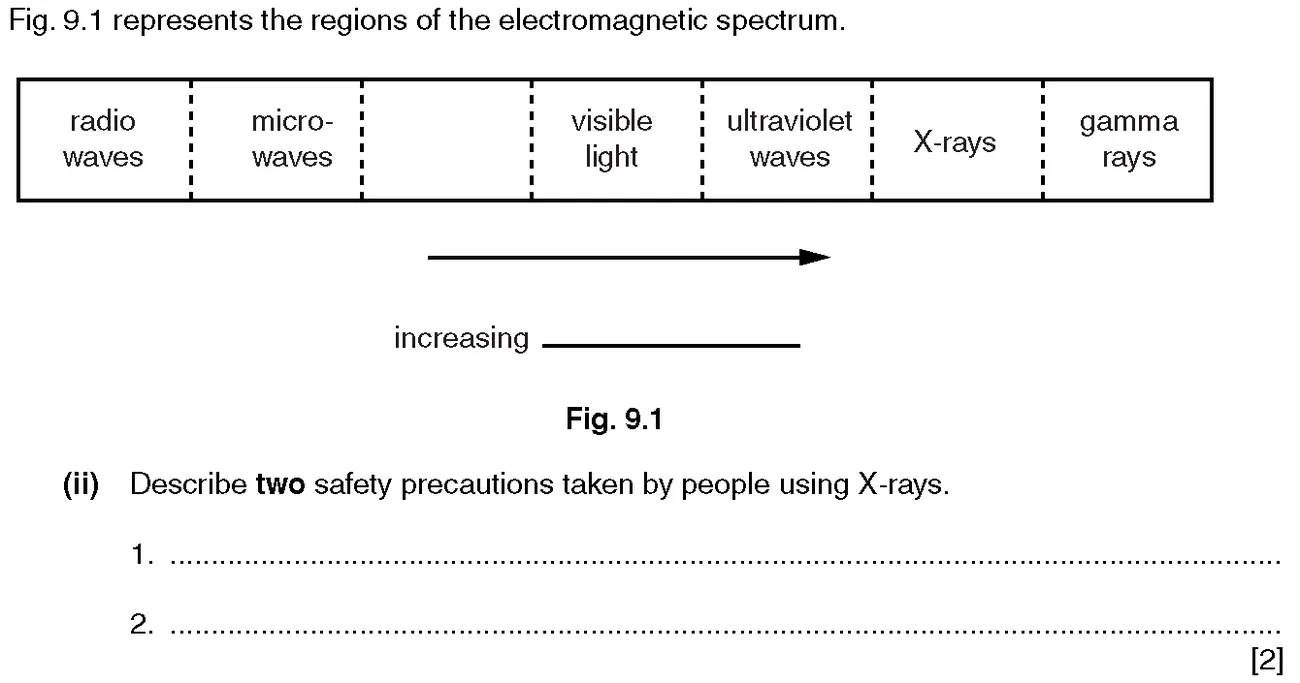
Show the answer
Written question 1 of 1 · part (b)(iii) (5 / 5) 3:00

Show the answer
Each part of a written question is on its own screen. Write your answer first, then open "Show the answer" to check it against the mark scheme.
Last updated: