7.8Chapter 7: Light
Colour — Alhussan Physics - Stage 8 Revision Notes & Topical Questions
5 min read 7 parts Lesson 8 of 12 1 quiz
Physics 7.8 Colour — Primary and Secondary Colours of Light and Colour Filters — Alhussan International Academy — Physics (Stages 7–9) notes: Explain what happens when coloured lights are mixed and how colour filters work.Primary colours — Red, green and blue; every colour of lig…
- Cannot be made
- Red filter
- Dimmer light
- Not adding colour
- Red light through a green filter
- Two primary colour filters together
Part 1 of 5Primary colours of light
- Red, green and blue; every colour of light can be made from these three.
- Red, green or blue cannot be made from any combination of other colours, which is why they are called primary.
- The cells in the back of the eye absorb different amounts of red, green and blue light.
- You perceive different colours when different amounts of the three are detected.
- The eye can distinguish thousands or millions of colours.
Part 2 of 5Secondary colours and adding light
| Mixture | Colour produced |
|---|---|
| Red + green | Yellow |
| Green + blue | Cyan |
| Red + blue | Magenta |
| Red + green + blue | White |
- Yellow, cyan and magenta, made by adding two primary colours.
- Televisions, computers and phones combine primary colours of light to produce all the colours seen.
Part 3 of 5Colour filters
- White light through it gives red light.
- Red is transmitted.
- All the other colours are absorbed.
- Light seen through a filter is dimmer than without it, because some light has been absorbed.
- A filter does not add colour; it removes the other colours already present in white light.
- Coloured lights in theatres are made by putting filters over white lights.
Part 4 of 5Combining filters
- No light gets through.
- No light passes, so white light looks black.
- The brain perceives no light as black.
- A filter can only remove colours; it cannot produce a colour that is missing from the incoming light.
Part 5 of 5Secondary colour filters
- It transmits red and blue light and absorbs green light.
- It transmits red and green and absorbs blue.
- It transmits green and blue and absorbs red.
- List the primaries each transmits;
- only the colour passed by both gets through, such as green for yellow and cyan together.
Key terms
| Term | Meaning |
|---|---|
| Primary colours | Red, green and blue light, which cannot be made from other colours. |
| Secondary colours | Yellow, cyan and magenta, made by adding two primary colours. |
| Filter | A material that transmits some colours of light and absorbs others. |
| Transmit | To let light pass through. |
| Absorb | To take in light so that it is not transmitted or reflected. |
Avoid these mistakes
Topic quiz · 160 questionsQuiz for this lesson
?What do you want to solve now?
✓Checkpoint Quiz
1 written questions from real exam papers on this lesson.
Written question 1 of 1 · part (a)(i) (1 / 5) 3:00

Show the answer

Written question 1 of 1 · part (a)(ii) (2 / 5) 3:00

Show the answer

Written question 1 of 1 · part (a)(iii) (3 / 5) 3:00

Show the answer

Written question 1 of 1 · part (b)(i) (4 / 5) 3:00
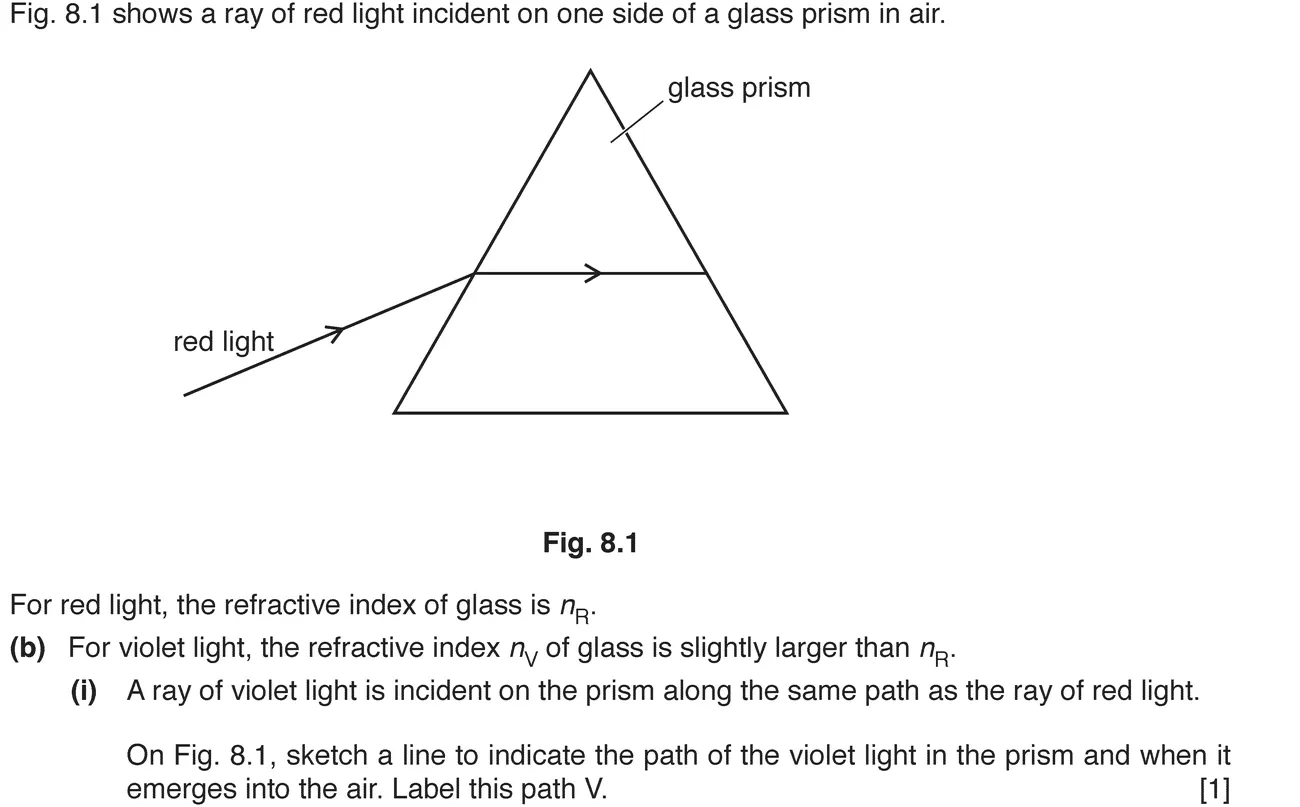
Show the answer

Written question 1 of 1 · part (b)(ii) (5 / 5) 3:00

Show the answer

Each part of a written question is on its own screen. Write your answer first, then open "Show the answer" to check it against the mark scheme.
Last updated: