2.8Structure & Functions in Living Organisms
Transport Systems — Edexcel International GCSE Biology 4BI1 Revision Notes & Topical Questions
10 min read 8 parts Lesson 8 of 21 1 quiz
Transport Systems Edexcel IGCSE Biology 4BI1 notes: Explain why multicellular organisms need transport systems.Single-celled organisms rely on diffusion because their surface area to volume ratio is large.Mineral ions are absorbed into root hairs by active transport, using energy…
- Antibodies are specific
- The need for a transport system
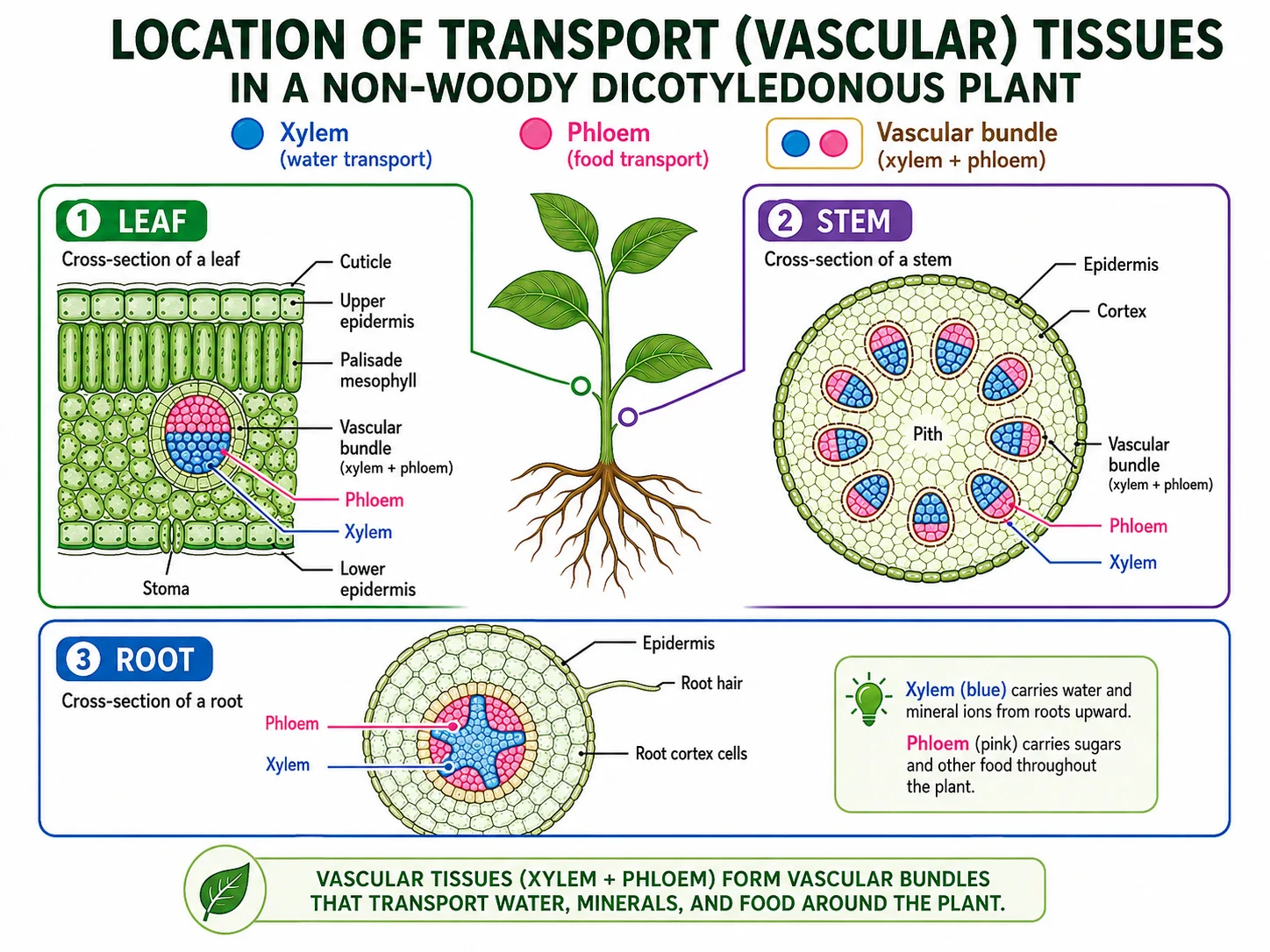
- Role of xylem and phloem
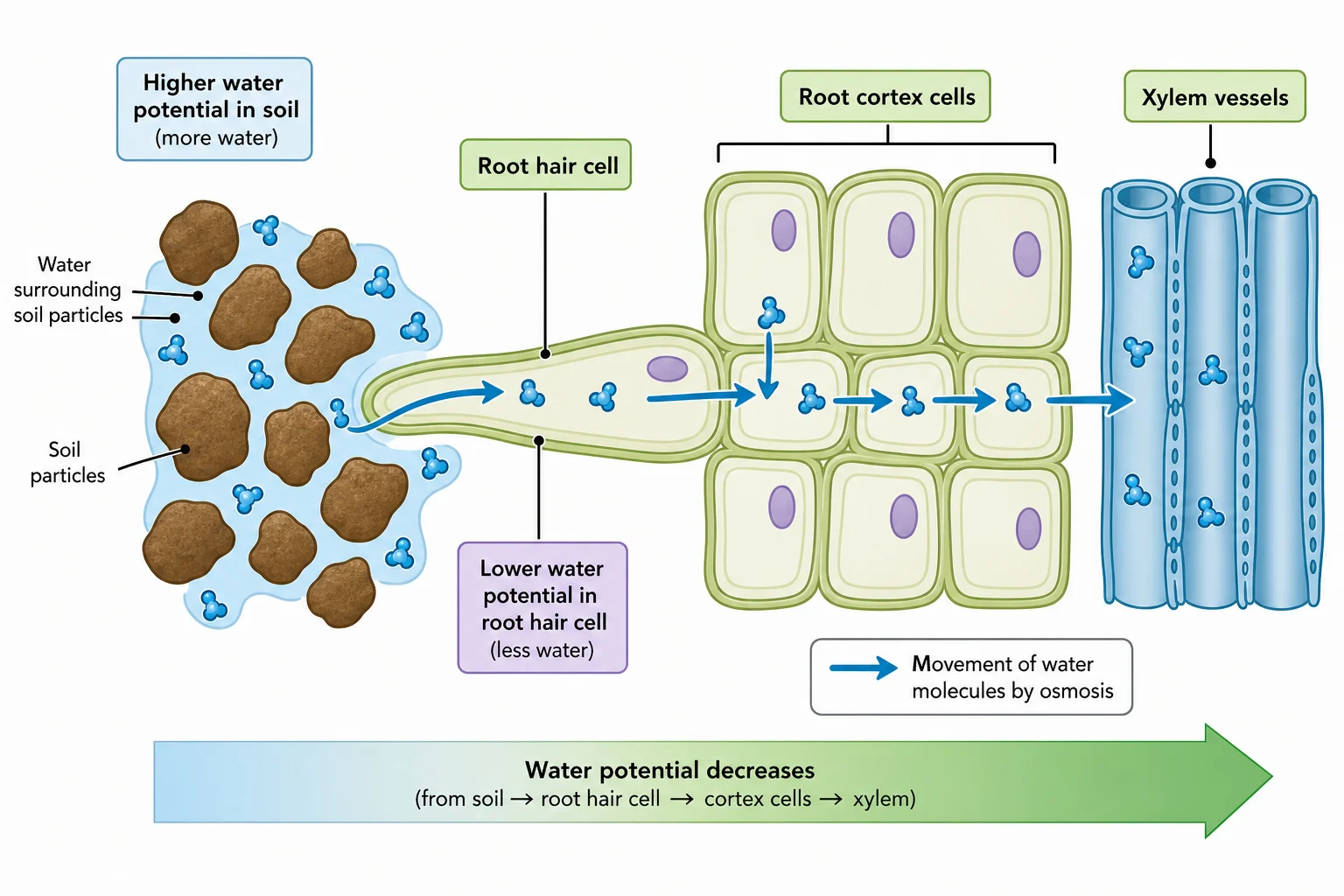
- Absorption of water by root hair cells
- Transpiration
- White blood cells and immunity
Part 1 of 8Key ideas
Part 2 of 8Learning objectives
Part 3 of 8Essential knowledge
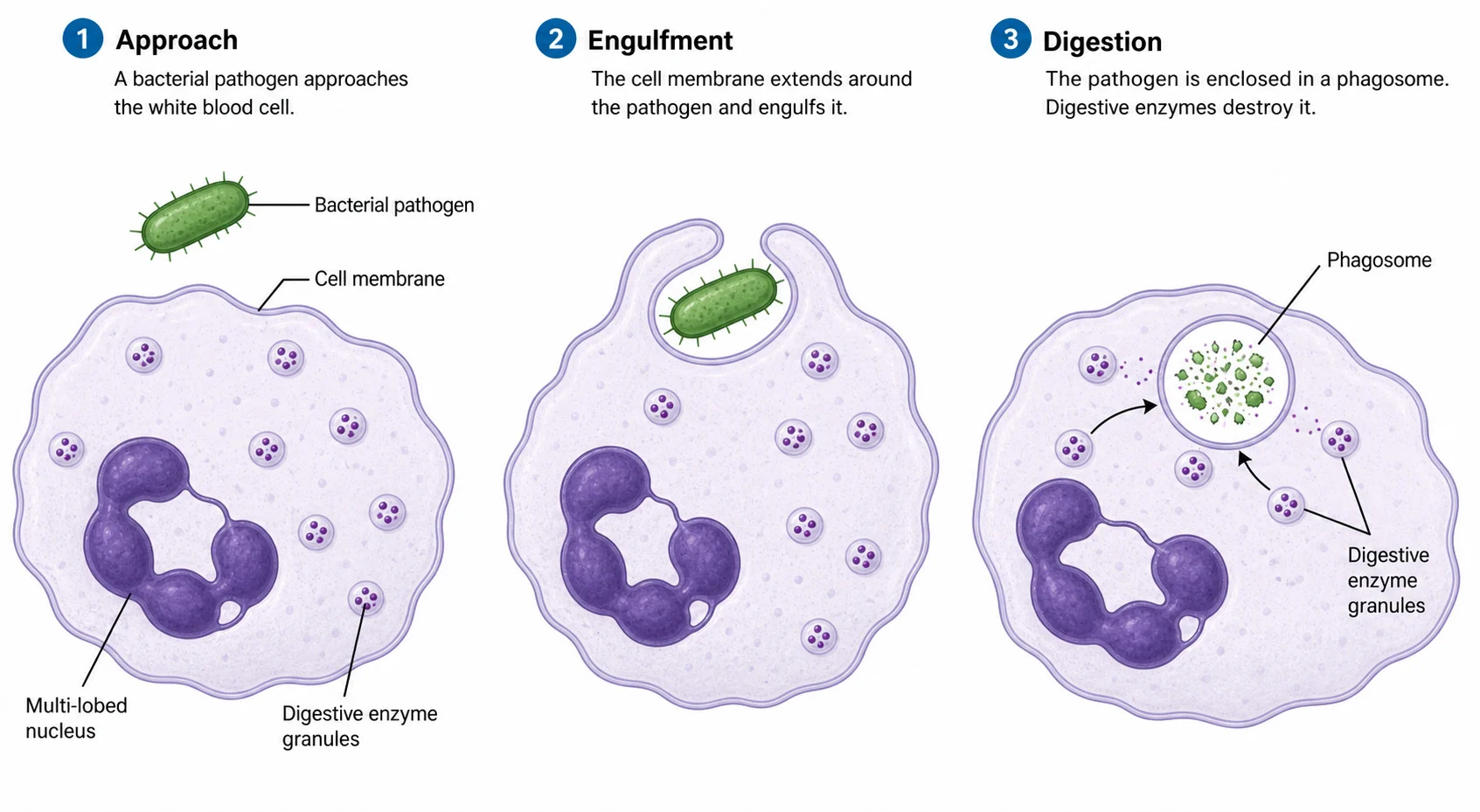
- Lymphocytes produce antibodies and memory cells.
- On later infection, memory cells cause a rapid, large production of antibodies,
- (secondary response)
- so the pathogen is destroyed before symptoms develop.
- High vaccination rates give herd immunity.
- Less oxygen reaches the heart muscle, causing chest pain (angina); a complete blockage causes a heart attack.
- Risk factors include a diet high in saturated fat, smoking, high blood pressure, obesity and lack of exercise.
- vena cava and pulmonary vein bring blood in;
- aorta and pulmonary artery take it out.
- Lungs: pulmonary artery in, pulmonary vein out.
- Liver: hepatic artery and hepatic portal vein in, hepatic vein out.
- Kidneys: renal artery in, renal vein out.
Part 4 of 8Process & sequence
- Water enters root hair cells from soil by osmosis.
- Water moves across the root cortex cell to cell into the xylem.
- Water rises up xylem vessels in a continuous column.
- Water leaves xylem into leaf mesophyll cells.
- Water evaporates from mesophyll cell surfaces into air spaces.
- Water vapour diffuses out through stomata, pulling the column up (transpiration stream).
Water through a plantwrite these steps in this order; each step is a marking point.
- Osmosis into root hair
- Across root to xylem
- Up xylem vessels
- Into leaf mesophyll
- Evaporation into air spaces
- Diffuses out of stomata
Part 5 of 8Worked examples
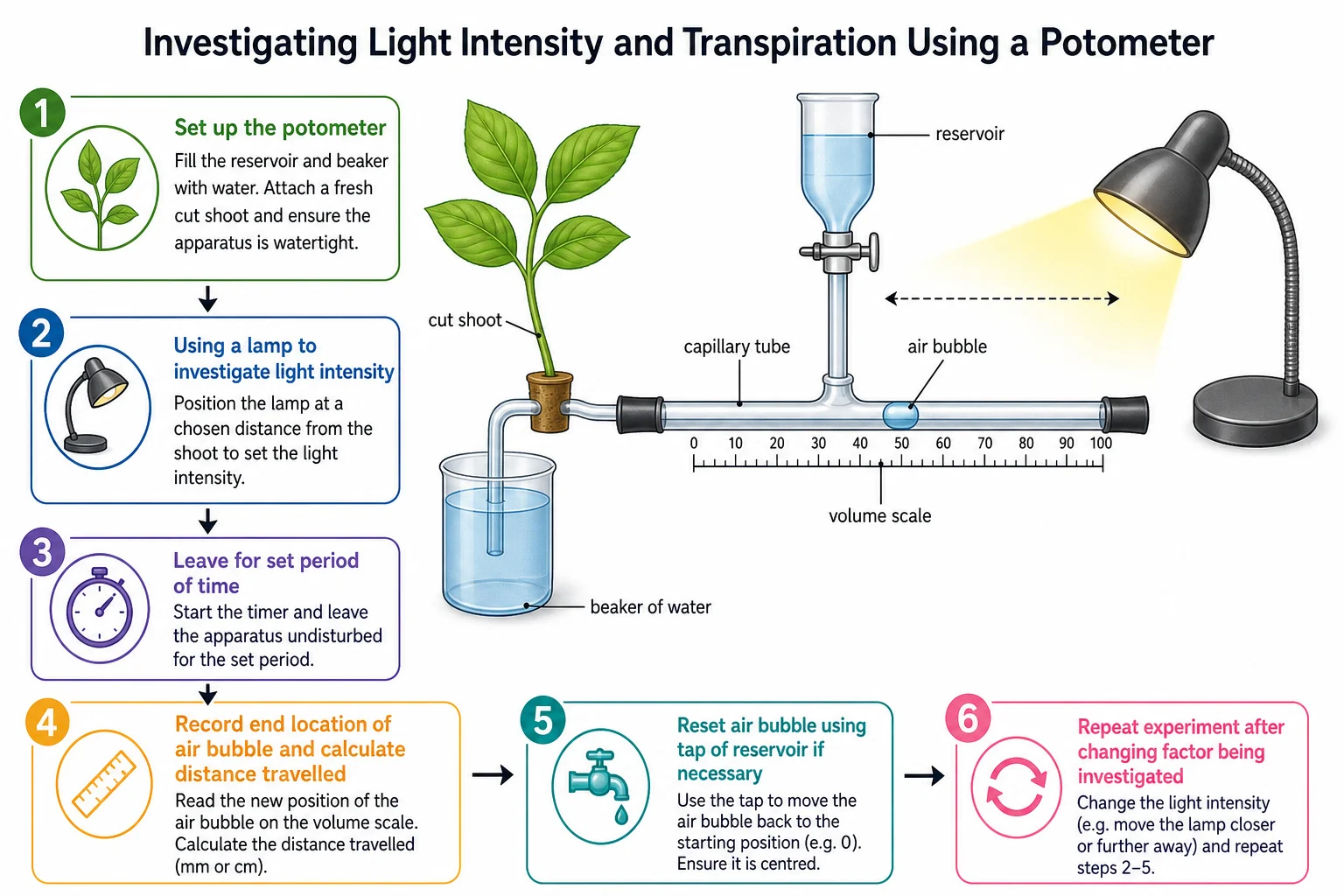
- Volume = distance × area = 45 × 0.8 = 36 mm3. Rate = 36 ÷ 5 = 7.2 mm3 per minute.
- The vaccine caused lymphocytes to produce memory cells specific to the antigen.
- On infection, memory cells rapidly trigger production of large amounts of specific antibodies,
- which destroy the pathogen before it can multiply enough to cause symptoms.
Part 6 of 8Summary
- Large organisms need transport systems because of a small SA:V ratio.
- Xylem carries water; phloem carries sugars.
- Transpiration is increased by heat, wind and light, reduced by humidity.
- White blood cells defend by phagocytosis and antibodies.
- Vaccines produce memory cells for long-term immunity.
Part 7 of 8Keep going
Transport Systems Edexcel IGCSE Biology 4BI1: what to do next
These Transport Systems Edexcel IGCSE Biology 4BI1 notes covered the key ideas, worked examples and exam technique for this topic. Check your Transport Systems Edexcel IGCSE Biology 4BI1 understanding with the practice questions below, then reread any Transport Systems Edexcel IGCSE Biology 4BI1 point you were unsure about before moving on.
Transport Systems Edexcel IGCSE Biology 4BI1: revision checklist
- Revise the main Transport Systems Edexcel IGCSE Biology 4BI1 definitions until you can write them from memory.
- Practise Transport Systems Edexcel IGCSE Biology 4BI1 exam questions under timed conditions.
- Link each Transport Systems Edexcel IGCSE Biology 4BI1 idea to a diagram or a worked example.
- List the common Transport Systems Edexcel IGCSE Biology 4BI1 mistakes and how to avoid them.
- Practice: Transport Systems Edexcel IGCSE Biology 4BI1 practice questions
- Previous lesson: 2.7 Gas Exchange — Notes
- Next lesson: 2.9 Excretion — Notes
- Course: Edexcel International Gcse Biology 4BI1 — all units
- Official syllabus: Pearson Edexcel International GCSEs
Part 8 of 8Compare: Compare
| Component | Structure | Function |
|---|---|---|
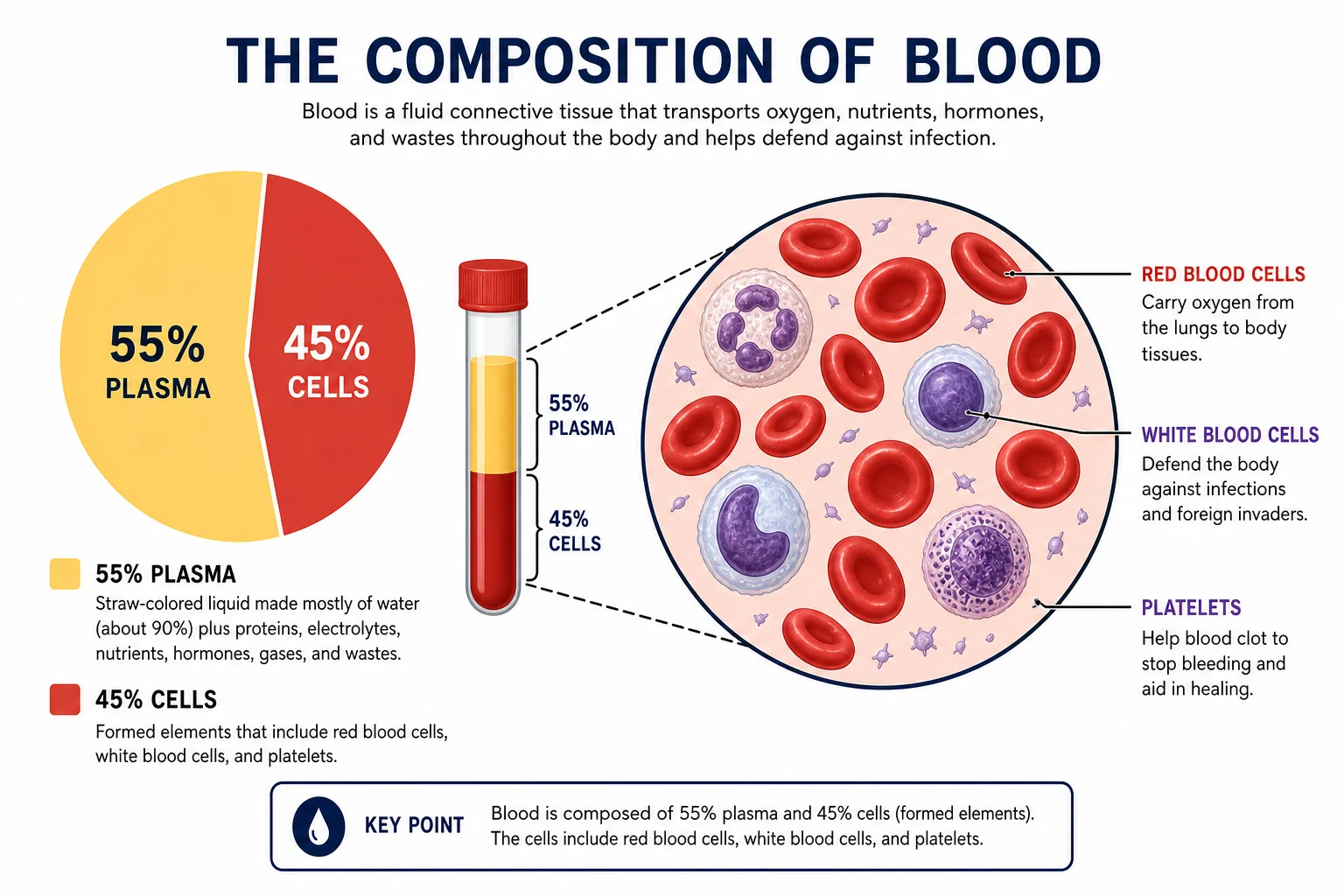
| Red blood cells | Biconcave, no nucleus, contain haemoglobin | Carry oxygen as oxyhaemoglobin |
| Phagocytes | Lobed nucleus, can change shape | Engulf and digest pathogens |
| Lymphocytes | Large round nucleus | Produce antibodies; form memory cells |
| Platelets | Cell fragments | Help blood clot, sealing wounds |
| Plasma | Liquid, mostly water | Transports CO2, glucose, urea, hormones, heat |
| Factor increased | Effect on rate | Reason |
|---|---|---|
| Temperature | Increases | Water molecules have more kinetic energy; faster evaporation and diffusion |
| Humidity | Decreases | Smaller concentration gradient of water vapour |
| Wind speed | Increases | Water vapour blown away, keeping gradient steep |
| Light intensity | Increases | Stomata open wider for photosynthesis |
Key terms
Command terms
Exam technique
Keywords the mark scheme looks for in this lesson
How to get full marks (examiner guidance)
Marked practiceQuizzes for this lesson
Last updated:
\n